
- articles
Best Dropshipping Software for New Dropshippers in 2023
Are you looking for the best dropshipping software for new dropshippers in 2023? Are dropshipping tools worth it? What should you look for in the best dropshipping tools? If you are still a beginner and wondering what software suits you best, keep it right here.
There are hundreds of dropshipping tools with different features and capabilities. Furthermore, some are suitable for beginners, while others are designed for expert dropshippers.
As a beginner, you definitely want a dropshipping tool that is easy to get started with. In this article, we have focused on user-friendly tools only.
These handpicked tools are easy to get started with, and anyone can use them to start their dropshipping journey without much hassles.

What is Dropshipping Software?
Dropshipping software, often called dropshipping tools, are solutions enabling dropshippers to manage, streamline, optimize, and scale dropshipping operations.
The dropshipping software industry has grown exponentially in the last decade, indicating that both cloud and web-based dropshipping tools are in demand. More and more entrepreneurs are discovering that dropshipping tools are invaluable additions to their toolboxes.
Data from Data Intelo shows that the global dropshipping software market was valued at $1.02 Billion in 2017, and projections show it will register a Compound Annual Growth Rate (CAGR) of 10.5% between 2017 and 2030.
Why Use Dropshipping Software?
Dropshipping tools have increasingly become popular. But are they worth it as a beginner? Yes. All the successful dropshippers use dropshipping tools, so for you as a beginner, they are a must-have if you want to keep up with the competition and the ever-changing eCommerce landscape.
About 27% of online retailers today primarily use dropshipping to fulfill customers’ orders. (Statista)
Importantly, dropshipping tools help you launch and manage your business professionally. They are customized with features that enable you to handle operations the right way, eliminating chances of errors. They also act as frameworks for dropshipping operations.
With dropshipping tools, you can eliminate mistakes in product research and offer get insights to ensure you make data-driven decisions.
Now, on to the main business of the day: which are the best dropshipping tools for beginners? Before going further, it will be important to share how chose the tools on this list. We considered the following;
- Brand reputation
- Usability
- Core Features
- Integration
- Plans and pricing
There are hundreds of dropshipping software, some reliable while others are not worth your time. However, all the brands in this review are trusted brands with excellent reputations.
We also assessed usability so you can be sure that, as a beginner, you can get started immediately without any complexities. Everything is straightforward with these apps – no rocket science!
The core features: what they do was also a consideration. Remember, there are different dropshipping tools, each designed for specific functions. We have explained what each tool is best for, especially the universal selling points (USPs).
Integration and compatibility were also criteria, considering some software can integrate with the common marketplaces and other tools while others have limited integration options.
Last is plans and pricing. Some of the software on this list have free plans and free trials, so as a beginner, you can try them before committing. The pricing models have also been explained.
Top 10 Best Dropshipping Software for New Dropshippers in 2023
Without further ado, below are the top 10 best dropshipping software for beginners. To ensure you get the most out of this guide, we have shared with you software in 3 categories: dropshipping automation tools, product research tools, and dropshipping spy tools.
1. Easync – Affordable, User-Friendly All-in-One Dropshipping Automation Tool
Let’s face it: dropshipping automation is the way to go. Maybe you want more time for your full-time job or for vacation. If you are thinking automation, think Easync, the go-to solution for over 30,000 successful stores. As the name suggests, Easync has excellent usability and ranks as the easiest dropshipping software to get started with as a beginner. The pricing is friendly, and there is a free trial.
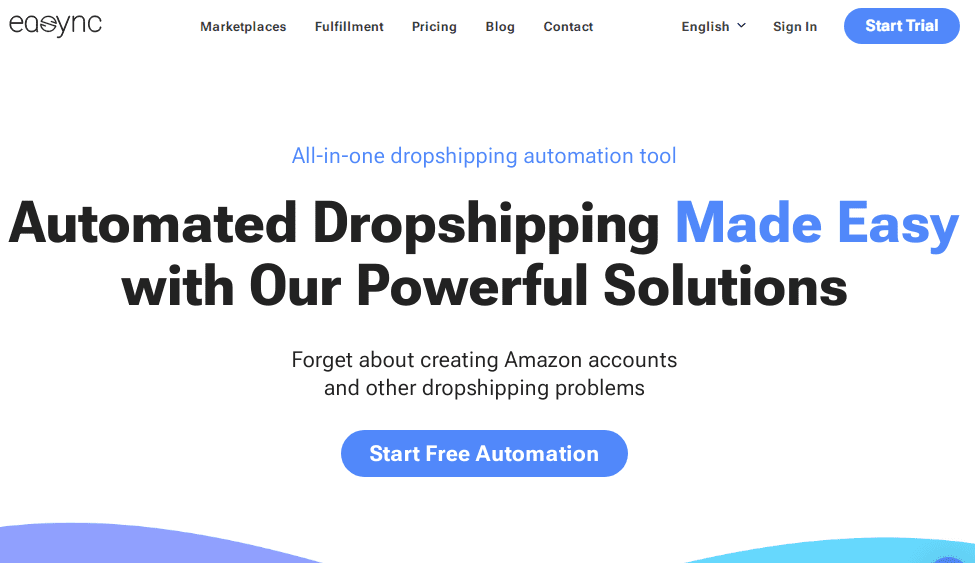
With Easync, you can find all the best-selling products using the product research tool dubbed Hot Items. It offers detailed analytics of a product’s sales, product reviews, and estimated profits. It is a must-have feature now that you are new to dropshipping. If you are short of suppliers, Easync links you to over a dozen markets, giving you the edge over your competition. Besides, you can use it to automate product import and repricing.
Easync works with all the popular marketplaces, including eBay, Amazon, Shopify, and Walmart. Also worth mentioning is Fulfillment by Easync, which allows you to fulfill as many Amazon orders as you want without worrying about account bans.
As a beginner, you also get the benefit of exclusive dropshipping resources, including guides and tutorials. Easync is the ultimate solution for handling your entire dropshipping tasks. You will also benefit from the ever-responsive 24/7 customer support available on live chat.
2. Zik Analytics – Product Research, Listing Optimization and Competitor Research
A list of the best dropshipping software can’t miss Zik Analytics. This tool is also suitable for beginners looking for a reliable AliExpress and eBay market research tool. It also has several other extras. However, all these come at a heavy cost that may not be favorable for budget dropshipping.
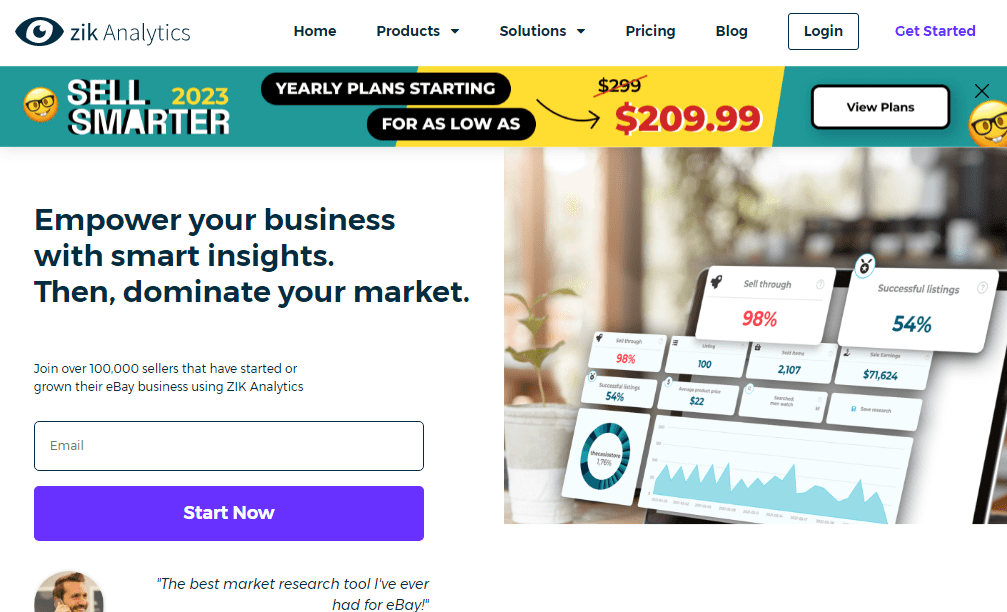
The eBay Product Research suite helps you find winning products on eBay and scans competitor sites, giving you an edge in your niche. Besides product research, Zik Analytics has an eBay fee calculator that saves you time and eliminates chances of errors and a product title builder for eBay title optimization. There is also an eBay dropshipping course. As for AliExpress, you can find hot-selling products on AliExpress, analyze sellers, and analyze product data quickly.
There is also Zik Pro Tools that give you the power to do more. You can sell eBay products faster and find the best products to sell from market sources such as Walmart and Amazon. But all said and done, it lacks some crucial features, and considering its price, Easync is a better deal. Easync has almost all Zik functions plus extras, such as Fulfillment By Easync (FBE), an all-in-one Amazon fulfillment solution.
3. AutoDS – Full Featured Dropshipping Automation Tool But Not User Friendly
This is another great tool for dropshipping, an all-in-one solution. It excels just like Easync, but when it comes to usability, it tails behind Easync and several other software in this list. It is ideal for expert dropshippers dealing with many products and has some advanced features not necessary for a beginner. Also worth noting, the free trial is not absolutely free like Easync’s.
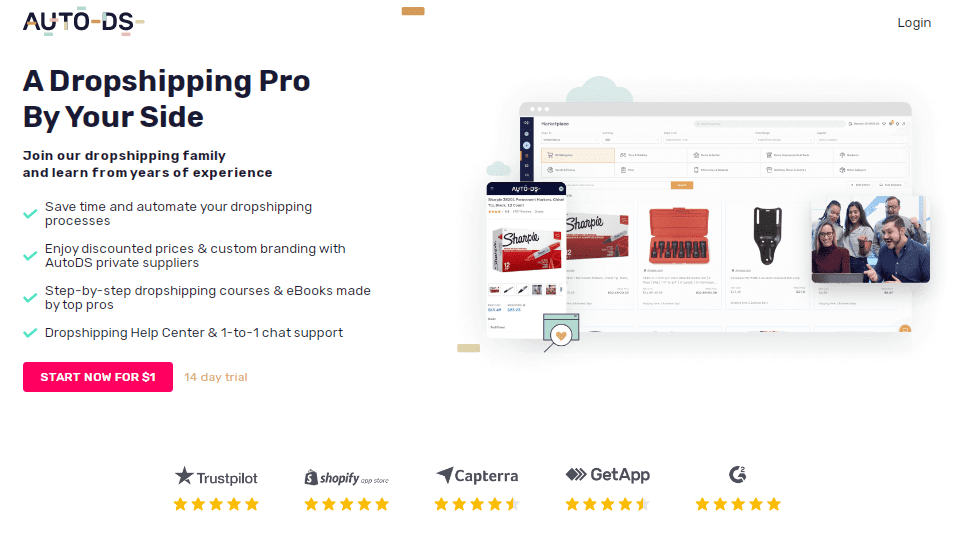
With AutoDS, you can find winning products and import them from over 25 global suppliers. Other product management features include price and stock monitoring, onscreen inventory management, automatic price adjustments, automatic tracking updates, and more. As for integrations, AutoDS works with WooCommerce, eBay, Etsy, Facebook, Wix, and Shopify.
AutoDS follows in the footsteps of Easync with a complete order fulfillment feature dubbed Fulfilled by AutoDS, so you don’t have to worry about account bans. You also get peace of mind with one-click returns. But at the end of the day, it is not suitable for a beginner as the many features on the cluttered interface may be confusing. Notably, you won’t need many of them as a beginner, especially if you have a small store.
4. Google Lens – Dropshipping Spy Tool
Today, dropshipping is a game of espionage, so you need to closely examine what your competitors are doing with a dropshipping spy tool like Google Lens. While there are many dropshipping spy tools out there, we love Google Lens as it is easy to use, so it won’t be a problem for you as a beginner. Notably, it is available for free.
Google Lens leverages image recognition technology to find relevant product information. All you need to do is upload a product image. It then uses deep machine learning to come up with similar products found on the web. The result is key product details based on relevance.
However, note that Google Lens may not be a very resourceful product research tool. It comes in handy in cases where you have an image only, and you are looking for sources with the same product. It can’t help as much as Easync or other product research tools. Besides, the product research process with Google Lens is tedious. But as it is a free tool, it doesn’t hurt if it is in your dropshipping toolbox.
5. AliExpress Dropshipping Center – Free AliExpress Product Research
There’s no doubt AliExpress dropshipping should be a priority as a beginner. AliExpress is among the biggest dropshipping suppliers. Interestingly, it is a dropshipping-first supplier that has designed an in-house tool for product research. Dubbed AliExpress Dropshipping Center, it is a free product unlike most of the other tools in this list.
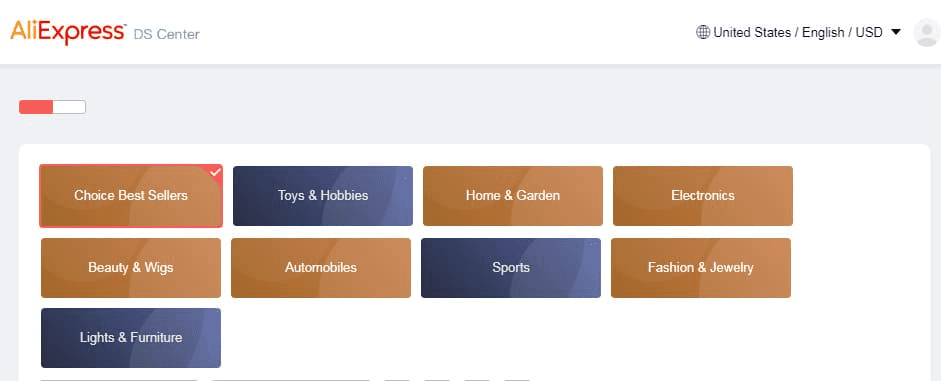
AliExpress Dropshipping Center is a product research tool developed by AliExpress. It has been designed to help you find all the AliExpress winning products with Product Research. There is also Product Analysis, a solution designed to offer key insights into the potential profitability of a product. Other features include a Dashboard that shows your account performance, a logistics handler, and a levels program.
But there is a catch: ADC is quite complex and might take you some time to grasp the ropes. The layout, overall navigation, and filters are quite confusing. But considering it is free, there is no problem trying it. Another shortcoming is that it may not suffice for wholesome dropshipping, too, as it is for basic product research, unlike Easync, a full-featured dropshipping tool. Complementing it with Easync will be great. Check out our exclusive AliExpress Dropshipping Center Guide.
6. Terapeak – Beginner eBay Product Research
eBay dropshipping is among the best markets to start your dropshipping career. The renowned marketplace gives you a wide audience and millions of products. Like AliExpress, the company champions dropshipping and has developed an in-house dropshipping tool to help sellers grow their businesses. Dubbed Terapeak, the tool has two features. Product Research and Sourcing Insights.
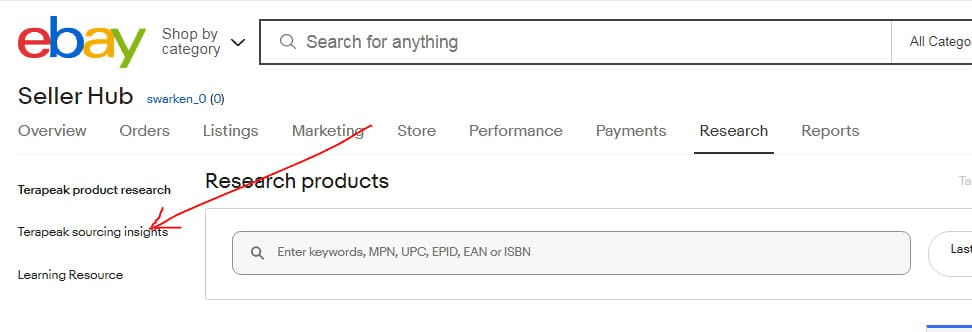
Terapeak Product Research is a product research tool that enables you to find the best eBay dropshipping products. It shows crucial data such as the number of listings sold, sell-through rates, average prices, sales trends, etc. On the other hand, with Sourcing Insights, you can access real-time eBay sales data to get insights that can shape your sourcing strategy. Some of the data you get include active listings, search volumes, CTR, etc.
But unlike the AliExpress Dropshipping Center, Terapeak is not free. You need at least the Basic store subscription to access Sourcing Insights. Product Research is the only free feature. But still, Terapeak doesn’t suffice as a dropshipping tool as a standalone. When paired with Easync, however, you are good to go. Check out how Terapeak works and everything there is to know.
7. Minea – Free Dropshipping Spy For Ads
Google Lens might be a basic dropshipping spy tool, but Minea is the ultimate deal. In fact, it does more than spy on your competitors. It also enables you to test ad campaigns, plus a lot of other tasks. Interestingly, there is a free plan, but of course, it limits some features and capabilities. All the same, it can be a great place to start as a beginner.
Minea is an ad search tool. One of the best features of Minea is TikTok Spy. This newly launched addon scans over 10 million ads and has a filter system to help you find the best ad strategies for your campaign. Some of the info you can get include the media of the ad, ad text, ad link, store link, etc. Interestingly, it is available for free. Considering Minea shows products performing best on the ads scene, it can be an alternative for a product research tool.
However, you should note that the product research mechanism may not be practical for a beginner unless you have started running ads. That said, you need a typical product research tool, that is Easync. You can then complement your product research with Minea after you start running ads.
8. Doba – Product Research For Trendy Products But Expensive
There is no doubt Doba is a household name when it comes to product research tools for trendy products. As a beginner, starting with trendy products can be the perfect plan, and Doba will be your companion. One thing we like about Doba is the limitless integration. It works with Amazon, Shopify, BigCommerce, NewEgg, eBay, Shift4Shop, Square, Walmart, WooCommerce, and Wix, and has an API.
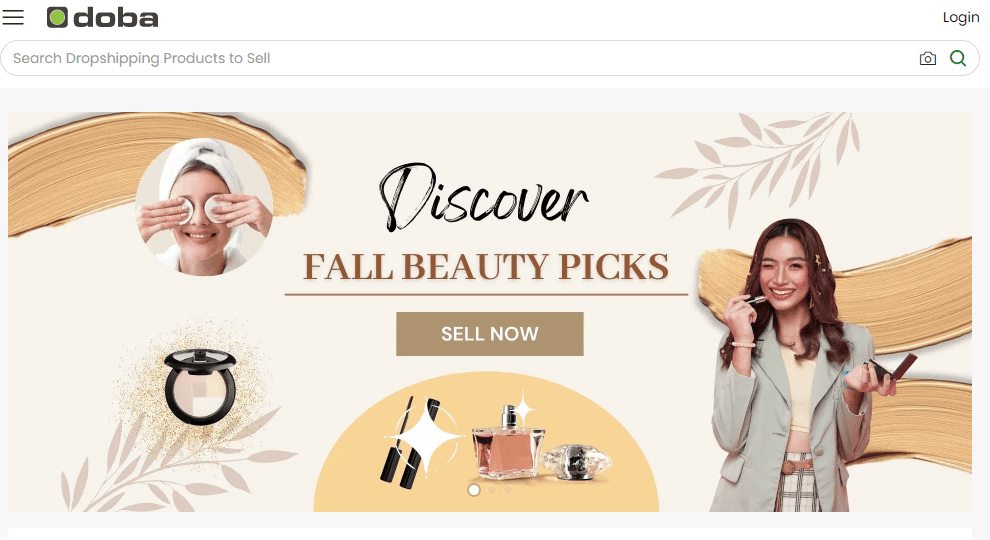
Doba has been designed to offer updated lists of the trending high-margin products you can start selling immediately and rake in high profits. It is easy to get started with Doba, and there are support tools to ensure everything stays afloat in your journey into dropshipping. You get a visual view of the account’s performance by displaying alerts on low inventory, supplier performance, and other crucial information.
However, Doba is quite expensive when you compare the subscription fee and what it offers. Instead of Doba, you are better off with Easync, as the Easync Hot Items feature does exactly what Doba does. Plus, Easync has other features, including automation, so you get better value for money overall.
9. Niche Scraper – Product and Market Research and Marketing Tool
If you are looking for a solution that merges product research and marketing, Niche Scraper is the best choice. While it may not necessarily be the best for beginners as it doesn’t have all the features, we like that it brings on board a marketing tool, so you get to kill one bird with two stones.
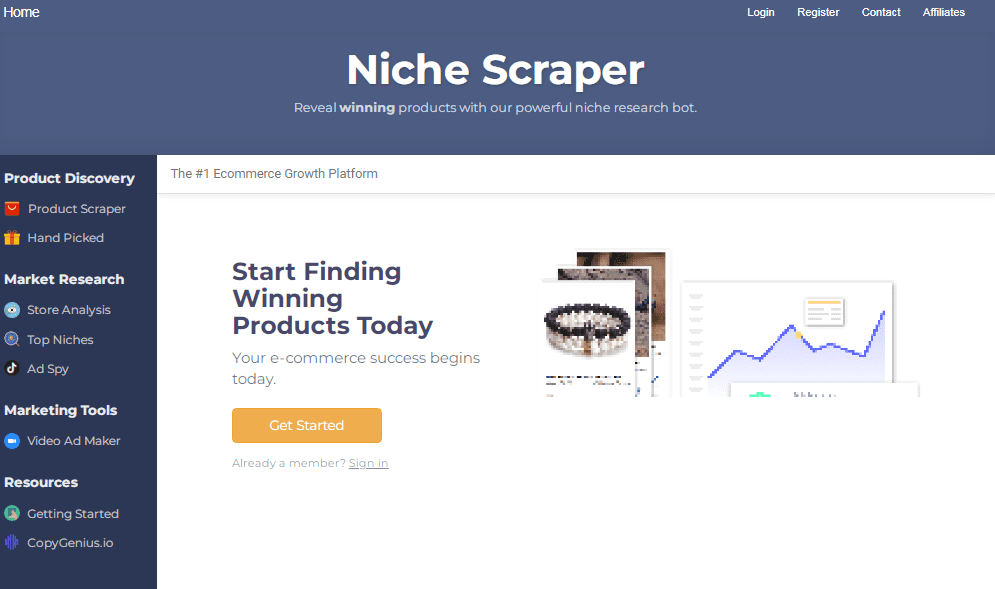
Niche Scraper has a marketing research functionality that enables you, as a beginner, to find the right niche. Remember, finding a niche is a crucial step to the success of your business. For product research, there are two features: Product Discovery and HandPicked. The former lists the best dropshipping products, while the latter is a list of expertly handpicked products that guarantee sales. You can also spy on ads and do store analysis.
Niche Scraper also has a Video Maker, but a basic one. It can, however, help you generate Facebook videos with ease. But considering it lacks many other features. It is not a go-to solution for a beginner unless you complement it with a complete tool like Easync.
10. Sell The Trend – The New Kid On The Block
One of the newest dropshipping software is Sell The Trend, and as the name suggests, this is what you need to sell trendy products on your store. However, it is quite expensive and doesn’t really fit beginners as it doesn’t come with all the features you require to run your store as a beginner unless you pair it up with another tool, for example, Easync.
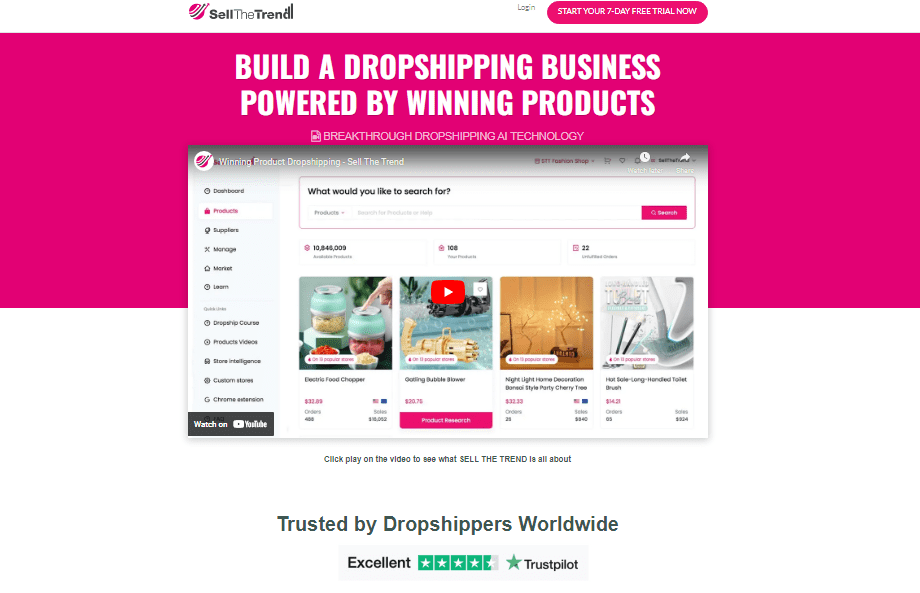
The best feature of Sell The Trend, dubbed The Nexus, will come in handy in your product discovery journey. It uses AI to find all the trending products in a flash. It offers data on the number of AliExpress and Shopify selling a product, product cost, price and profit, monthly orders, and links to all Shopify stores with the product.
Nexus isn’t the only tool. You also get Explorers, which is basically the main product research tool, a video ad creator, and an engagement rating calculator. There is also a course to get you started in your dropshipping journey.
Wrapping Up
That’s the end of this list of the top 10 best dropshipping software for new dropshippers. As you have seen, there are many dropshipping tools for beginners. Sell The Trend is among the biggest names currently, together with AutoDS and Zik Analytics.
However, Easync is the ultimate deal for several reasons. First, it is an all-in-one automation tool with features such as product research, supplier research, product import, inventory monitoring and repricing, and so on. The usability is excellent, so you don’t have to worry about getting stuck as a beginner. It is also fairly priced when you consider the features and subscription costs.
What are you waiting for? Start your Easync 14-day trial today and launch your dropshipping business the smart way!
Frequently Asked Questions
1. Can you start dropshipping without money?
Well. It is possible to start dropshipping without any money with free tools and free trials. But ultimately, you will have to spend, though not much.
2. Can you automate dropshipping?
Yes. You can automate your dropshipping store with tools like Easync to free time for other duties or vacations.
3. Is Easync free?
No. Easync has no free version, but you can take advantage of the Easync 14-day free trial to gauge whether it’s the right tool for you as a beginner.