
- articles
SaleHoo Review 2026: Is It Worth It? Pros, Cons & Pricing
Quick answer: SaleHoo is a legitimate supplier directory and Shopify dropshipping toolkit that has been running since 2005 and holds an A+ Better Business Bureau rating. In 2026 the Starter plan costs $9 a month billed annually, or $299 as a one-time payment. It suits beginners who sell on Shopify. Its automation still doesn’t reach eBay, Amazon, or Walmart, so sellers on those marketplaces list and fulfill orders by hand or with a second tool.
Founded in 2005, SaleHoo was one of the first tools built to connect online sellers with wholesale suppliers. It promised a simpler way to find vendors worth dealing with, research products, and start a business with less risk. It did that well, but online selling looked very different back then.
In 2026, the dropshipping market is crowded with tools, and sellers who started with SaleHoo increasingly need automation on the marketplaces they actually sell on. This SaleHoo review checks what the platform includes today, what each plan costs, what users and reviewers say about it, and where it stops being enough.
What Is SaleHoo?
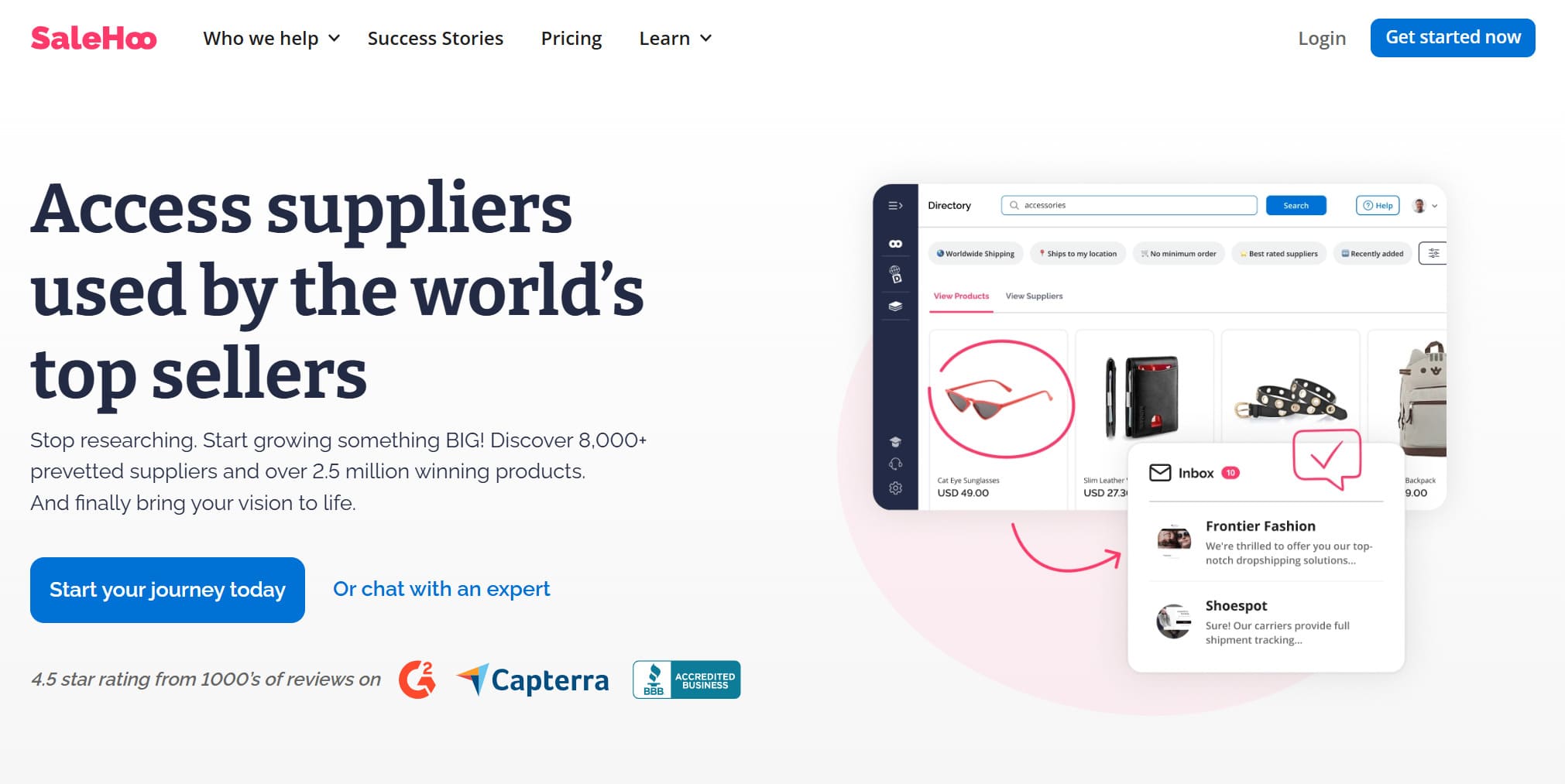
SaleHoo is a paid platform for online sellers that combines four things: a directory of more than 8,000 vetted wholesale and dropship suppliers, a product research tool, a Shopify import tool called SaleHoo Dropship, and a library of training courses. SaleHoo was founded in 2005 in Christchurch, New Zealand, by Simon Slade and Mark Ling. Today it lists more than 2.5 million products and has a seller community of over 137,000 members.
Put simply, SaleHoo helps you decide what to sell and who to buy it from. It doesn’t sell products itself and doesn’t issue supplier invoices, which SaleHoo’s support team confirms in its Trustpilot replies. That detail matters if you need invoices for Amazon category approval. How much of the platform you can use depends on your plan.
SaleHoo Wholesale and Supplier Directory
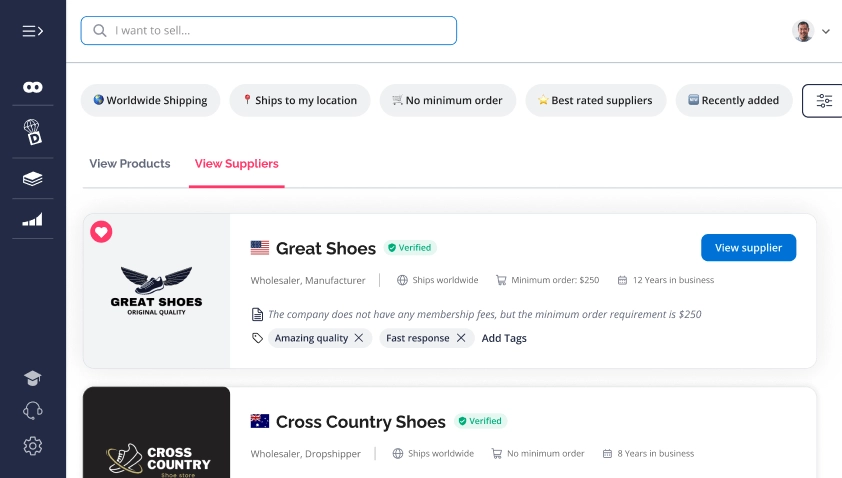
The directory is the oldest part of SaleHoo and the main reason most people pay for it. It gives you access to over 8,000 pre-vetted suppliers, including wholesalers, dropshippers, and manufacturers across North America, Europe, Asia, and Australia. You can filter by product type, price range, and supplier type, and narrow the list by supplier location or shipping destination. That helps if you sell in the UK or want a US-based supplier for faster delivery. A “Ships Worldwide” filter shows suppliers that deliver internationally, and SaleHoo says the database is refreshed daily.
Each listing shows the supplier’s contact details, product categories, and order terms. From there, the legwork is yours: contacting the supplier, agreeing on prices and shipping, and placing orders. The directory doesn’t automate any of it.
SaleHoo Dropship
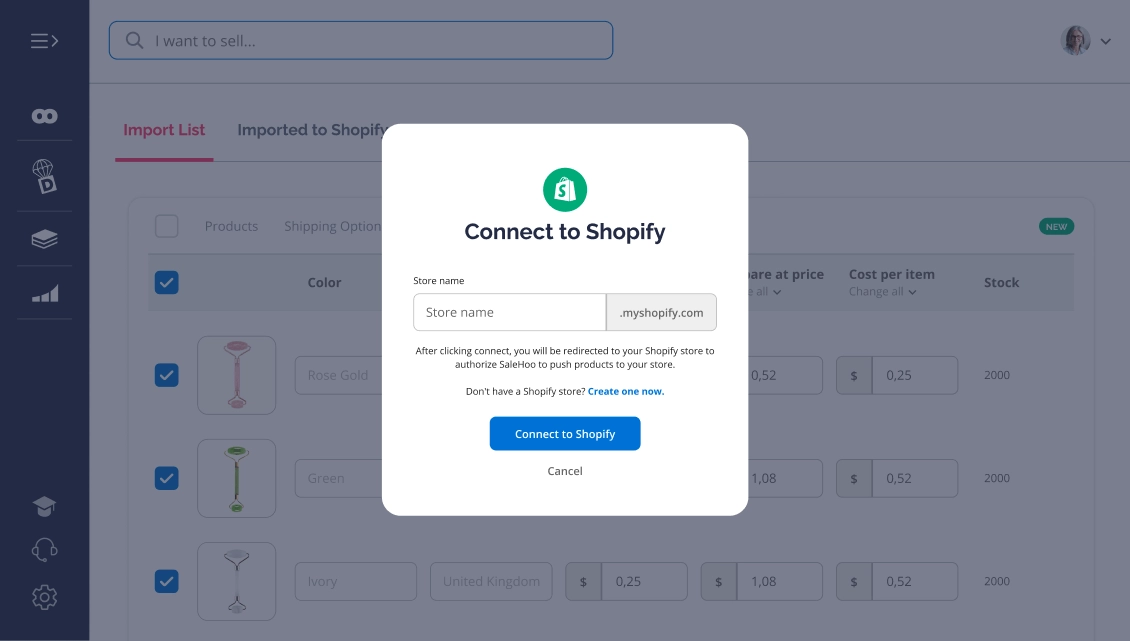
SaleHoo Dropship is the Shopify side of the platform. You link your store with the Connect Store button in the SaleHoo dashboard, browse a catalog of products hand-picked from AliExpress, and import them to Shopify in one click, with images and descriptions included. A Pricing Control tool adds your chosen margin to every product, so a supplier price change doesn’t quietly eat your profit.
Fulfillment is semi-automated. When a Shopify order comes in, it appears on your SaleHoo Orders page. You click Pay Now or Notify Supplier, SaleHoo pre-fills the order on AliExpress, and you complete the payment yourself. In practice, it’s an AliExpress-based dropshipping tool that only works with Shopify. Every plan includes it; the plan changes how many stores you can connect (one on Starter, up to three on Pro) and how many products you can import each month (200 or 600).
SaleHoo Market Insights
SaleHoo’s product research tool is now called SaleHoo Market Insights; older reviews call it the Market Research Lab. For any product you look up, it shows two years of interest data, a 12-month popularity forecast, seasonality, and the top 10 trusted suppliers. The data comes from global trade figures, consumer interest trends, and marketplace reviews. It works well as a first check on a product idea, but sellers who already pay for a dedicated research tool will find it basic.
Courses
Starter includes the Dropshipping on Shopify course, which runs to 56 video lessons. Pro adds the Amazon Product Launch course, and Enterprise includes every course SaleHoo offers. The material covers niche validation, store setup, product listings, Facebook ads, SEO, and email marketing.
SaleHoo Store Builder
SaleHoo Store Builder is a separate done-for-you service: SaleHoo’s team builds a Shopify store for you, with packages starting at $997 as a one-time payment. The process starts with a 15-minute questionnaire about your niche and brand, followed by 3 to 5 days of building and 1 to 2 days of review with unlimited revision rounds, so expect 5 to 7 days in total. The package covers store design, legal pages, basic SEO setup, and product selection from SaleHoo’s supplier network. It comes with its own 30-day money-back guarantee, separate from the 60-day guarantee on subscription plans.
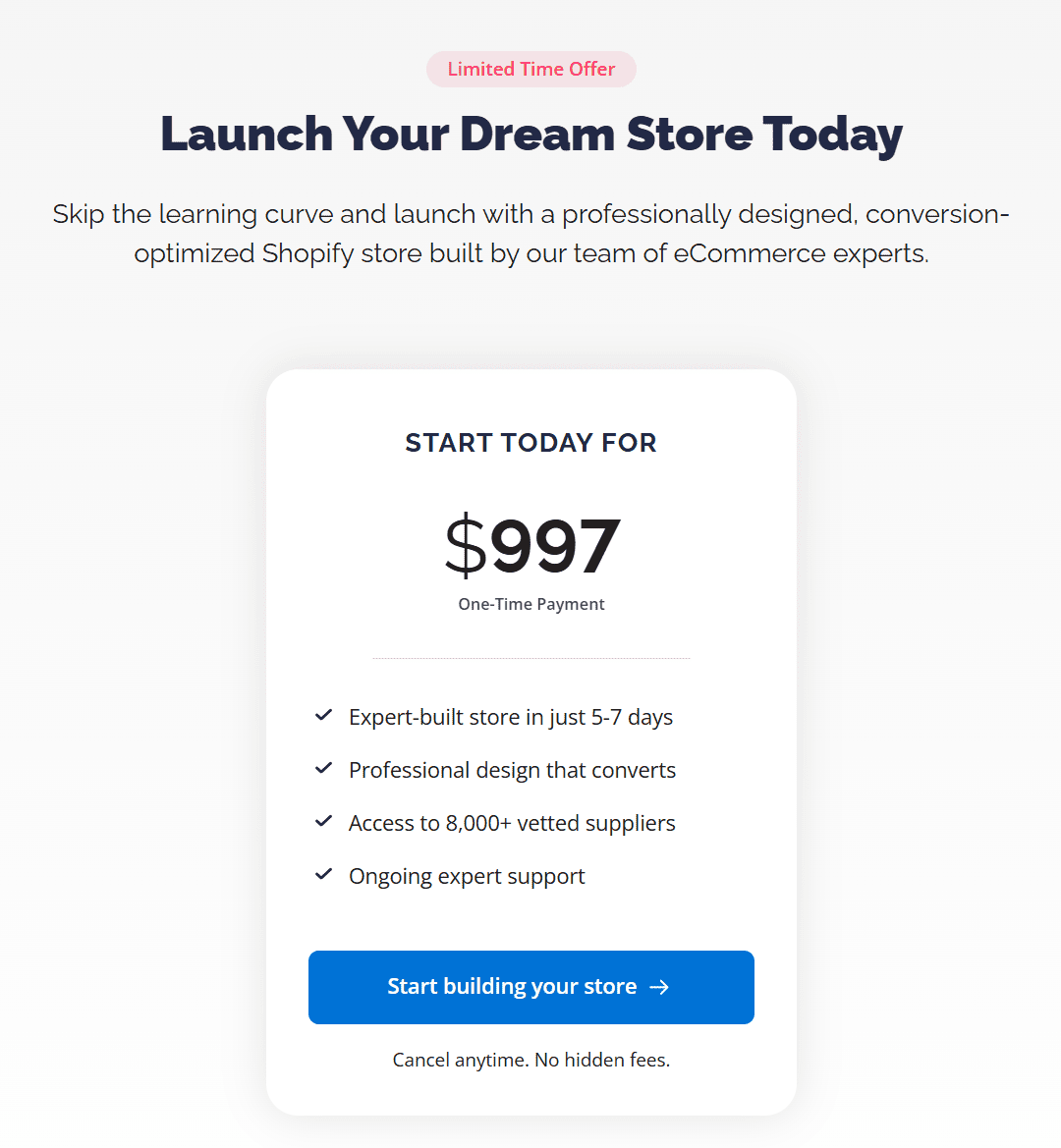
Store Builder is aimed at someone starting from zero who doesn’t want to touch Shopify settings. If you already run a store and only need better sourcing, a subscription plan is enough. Enterprise subscribers get a custom-built store as part of their plan.
Is SaleHoo Legit or a Scam?
SaleHoo is legit. The company has operated since 2005 and has been accredited by the Better Business Bureau since 2006 with an A+ rating, with Simon Slade listed as CEO. The BBB is a US nonprofit that rates businesses on how they handle complaints, how transparent they are, and how long they’ve been operating. Companies pay for accreditation, so treat it as a trust signal rather than a guarantee.

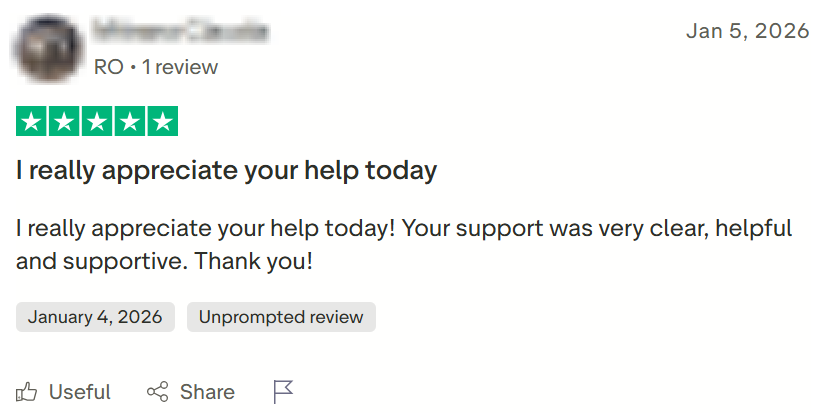
On Trustpilot, SaleHoo holds a TrustScore of 4.1 from about 460 reviews. Every subscription plan comes with a 60-day money-back guarantee, and suppliers go through a vetting check before they’re listed. That rules out the classic “take the money and disappear” scam. It doesn’t guarantee that every supplier fits your niche, and most complaints in reviews are about fit, such as Shopify-only automation or generic products, rather than fraud.
SaleHoo Pricing in 2026
SaleHoo no longer sells the directory, Dropship, and courses as separate products. Everything now sits inside three plans, each paid yearly or as a one-time lifetime payment.
| Plan | Pay Yearly | One-Time (Lifetime) | What’s Included | Best For |
|---|---|---|---|---|
| Starter | $9/month, billed annually | $299 | 1 Shopify store, 200 product imports/month, up to 100 supplier contacts/month, Dropshipping on Shopify course, supplier reports, profit calculator | Beginners testing products on a first store |
| Pro | $49/month, billed annually | $1,699 | Everything in Starter, plus 3 Shopify stores, 600 imports/month, unlimited supplier contacts, 3 sub-users, Amazon Product Launch course, concierge supplier research | Sellers scaling past one store or working with a small team |
| Enterprise | $499/month, billed annually (1-year term) | On request | Everything in Pro, plus unlimited imports, multi-store integrations, a custom-built store, a dedicated account manager, all courses, priority onboarding | Established sellers who want hands-on setup and support |
The Enterprise price is easy to miss: the plan card on SaleHoo’s pricing page only says “Contact us,” and the $499 figure appears in the Compare plans table further down the page.
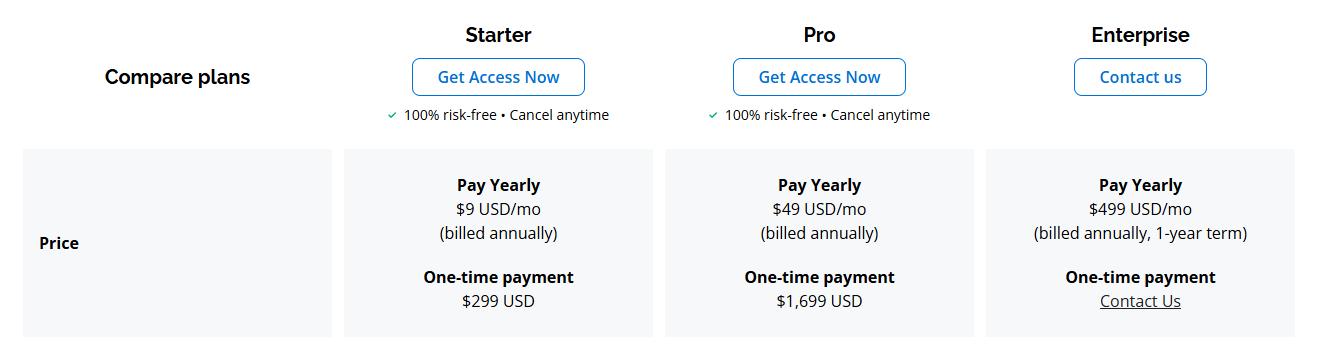
Is lifetime access worth it? SaleHoo labels its lifetime option “save 60%,” but the real answer depends on how long you plan to sell. Starter costs $108 a year on annual billing, so the $299 lifetime payment pays for itself after about 2.8 years. Pro costs $588 a year, so $1,699 breaks even after about 2.9 years. If you’re not sure you’ll still be selling in three years, annual billing is the safer choice.
Trial and refunds. There’s no free plan. Every plan carries a 60-day money-back guarantee, and some SaleHoo pages, such as this version of the pricing page, offer a 7-day trial for $1 before regular billing starts. To cancel, contact support at least 48 hours before your renewal date.
Key takeaway: pricing is simpler than it used to be, but the trade-off hasn’t changed. Even on Enterprise, SaleHoo doesn’t sync listings or orders with Amazon, eBay, or Walmart, so multichannel sellers end up pairing it with a separate automation tool.
How SaleHoo Works: From Signup to First Order
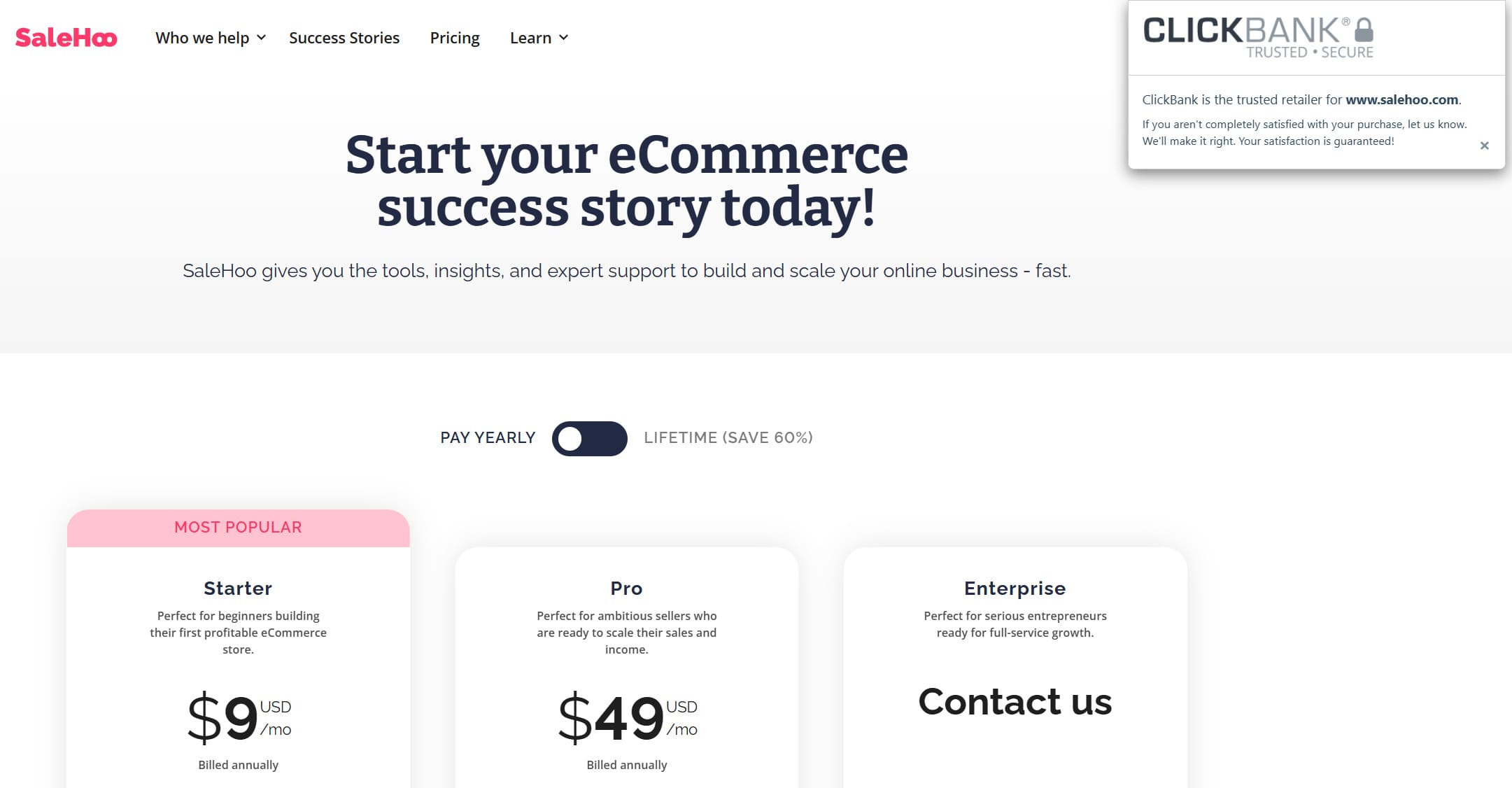
- Pick a plan and sign up. You enter your name and email on SaleHoo, then pay through ClickBank, SaleHoo’s payment processor. If the payment doesn’t go through, turn off your VPN and try again.
- Connect your Shopify store. In the SaleHoo dashboard, click Connect Store to link the store to SaleHoo Dropship.
- Find products and suppliers. Search the directory or the Dropship catalog, check demand in Market Insights, and contact suppliers through their directory listings.
- Import and price products. Import Dropship products to Shopify in one click and set your margin in Pricing Control. For directory suppliers, export product details as a CSV file and upload them to your store.
- Fulfill orders. Shopify orders for Dropship products appear on your SaleHoo Orders page, where you notify the supplier and pay on AliExpress. Orders from directory suppliers are placed with the supplier directly.
Where You Can Sell With SaleHoo
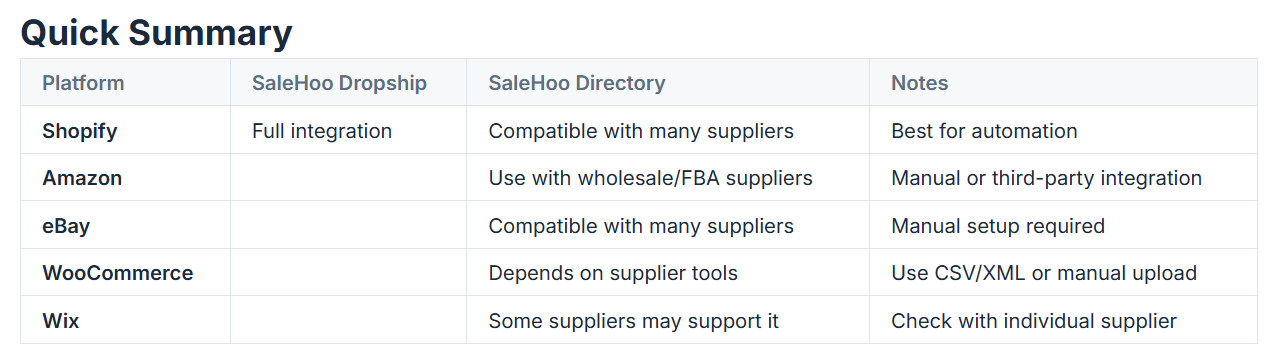
- Shopify: one-click import, Pricing Control, and order syncing through SaleHoo Dropship.
- eBay: directory suppliers only, with listings and orders handled manually. SaleHoo’s own help docs mark eBay as “manual setup required.”
- Amazon: sourcing only, with no listing or order integration. Pro and Enterprise include the Amazon Product Launch course.
- WooCommerce, BigCommerce, and other platforms: CSV export from the directory, then manual upload and fulfillment.
SaleHoo Pros and Cons
Most of what sellers like about SaleHoo comes down to supplier vetting and price. Most of the frustration comes from how much still has to be done by hand once a store is running.
SaleHoo Pros
The vetted supplier network is the biggest selling point. With more than 8,000 listed companies across categories like health, electronics, and apparel, the directory filters out the obvious scams, and many listed suppliers don’t require a minimum order, which matters when you want to test a product before committing to stock.
It’s built with beginners in mind. The dashboard is clean, the filters are straightforward, and the included course walks you through store setup step by step. The Starter plan costs less per month than most single-purpose tools, and the lifetime option removes recurring fees altogether.
Support runs 24/7 by live chat and email, and the community of more than 137,000 members is a useful place to check a supplier’s reputation or ask what has worked for someone else before you place an order.
SaleHoo Cons
Automation stops at Shopify. If you sell on eBay, Amazon, or anywhere else, you list products, update prices and stock, place orders, and add tracking by hand. That raises the chance of selling an item that is already out of stock or priced below cost.
Even on Shopify, fulfillment is only semi-automated: you still confirm and pay for each order on AliExpress. Coverage in narrow niches can be thin, since the directory is strongest in mainstream categories, and many directory products are generic items that other sellers can source from the same suppliers. Some suppliers also set minimum order quantities. A dedicated account manager is only available on Enterprise, so most users rely on standard support.
SaleHoo Reviews: What Users Say in 2026
Reviews of SaleHoo tend to praise the same two things, supplier vetting and the support team, and criticize the same limitation: what SaleHoo automates and where.
SaleHoo on Trustpilot
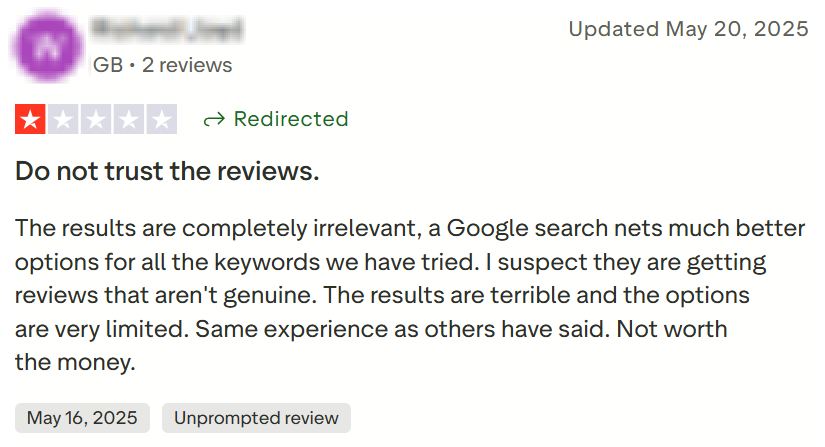
SaleHoo has a 4.1 TrustScore on Trustpilot from about 460 reviews. Read that number with some care. Trustpilot notes that SaleHoo hasn’t invited customers to leave reviews recently, and only three reviews were posted in the last 12 months, so the score mostly reflects older experiences. The positive reviews mostly thank individual support agents. The negative ones focus on results: in one of the most recent, from May 2025, a seller says the directory returned irrelevant suppliers with limited options and that a regular Google search worked better for their keywords. The same reviewer doubted that SaleHoo’s positive reviews are genuine, and SaleHoo replied that all of its reviews come from real users.
SaleHoo on Capterra and GetApp
On Capterra, SaleHoo is rated 4.7, though from only seven reviews, so the sample is small. Reviewers there and on GetApp like the verified suppliers and the training material. The complaints are practical: some suppliers have minimum order requirements, not every supplier is local so shipping times vary, and some users want more US-based options or better negotiated product prices.
Can You Make Money With SaleHoo?
Yes, but SaleHoo isn’t what makes the money. It lowers the risk of choosing a bad supplier. Margins, traffic, and customer service are still up to you.
Drew Mann, a SaleHoo member since 2020, is blunt about the numbers in his SaleHoo review: pure dropshipping margins run around 10% before ad spend, and most stores need $1,000 to $3,000 a month in paid ads on Facebook, Google, or both. Next to that budget, the SaleHoo subscription is a small cost.
Here’s a simple example. A product that costs you $10 delivered and sells for $25 leaves $15. Payment and platform fees, returns, and the ad spend it takes to win each sale all come out of that $15. If each sale costs $10 in ads, the profit per order is only a few dollars. SaleHoo’s built-in profit calculator helps you run this math before you list a product, not after.
Sellers who make it work usually test products with no-minimum suppliers first, keep the store focused on one niche, and move to wholesale pricing once a product sells consistently.
Is SaleHoo Worth It in 2026?
For beginners on Shopify, yes. It’s worth it mostly if you’re using Shopify or want SaleHoo to build that Shopify store for you. At $9 a month billed annually, the Starter plan bundles vetted suppliers, product research, one-click Shopify import, and a full course. That’s hard to match at the price. The value drops quickly once you sell on more than one channel, because nothing outside Shopify is automated.
Who SaleHoo Is For
- New sellers building a first Shopify store who want vetted suppliers and training in one place.
- Sellers moving away from AliExpress-only sourcing toward more reliable or US-based suppliers.
- eBay and Amazon sellers looking for wholesale suppliers to buy stock from, as long as they’re fine handling listings by hand.
Who Should Skip It
- Sellers who need automation on eBay, Amazon, Walmart, or Facebook Marketplace.
- Sellers in narrow niches where mainstream supplier coverage is thin.
- Experienced sellers who already have an established supplier network.
- High-ticket stores that depend on authorized dealer agreements with specific brands.
SaleHoo Alternatives Worth Comparing
If SaleHoo doesn’t fit, these three tools cover the same ground from different angles: a supplier directory, a supplier marketplace, and an AliExpress automation app.
| Service | What It Is | Price | Trial |
|---|---|---|---|
| Worldwide Brands | Directory of certified wholesalers and dropshippers | $197 lifetime or $119 for one year | Free preview of the directory |
| Spocket | Marketplace of mostly US and EU suppliers | $39.99 to $299.99/month, or from $24/month billed annually | 7 days |
| DSers | AliExpress order automation | Free plan; paid plans from $19.90/month | 14 days on paid plans |
Worldwide Brands
Worldwide Brands is the closest match to SaleHoo’s directory: a list of certified wholesalers and dropshippers for sellers on Amazon, eBay, and their own stores. Its order page currently lists $197 for lifetime access or $119 for one year, which is less than the $299 many older reviews still quote. The order page sells directory access only, with no Shopify import tool like SaleHoo Dropship. According to SaleHoo’s own comparison, Worldwide Brands focuses mainly on suppliers in the US and Canada.
Spocket
Spocket is a supplier marketplace built around faster shipping from US and EU suppliers. Monthly plans run from $39.99 (Starter) to $299.99 (Unicorn), and annual billing brings Professional down to $24 a month, Empire to $57, and Unicorn to $79. There’s a 7-day trial. eBay and Amazon dropshipping are only included from the Empire plan up. Compared with SaleHoo, Spocket costs more to start but focuses on shipping speed rather than a supplier directory.
DSers
DSers automates AliExpress orders, which makes it the closest alternative to SaleHoo Dropship. The free Basic plan covers 3 stores and 3,000 products. Paid plans cost $19.90 a month (Advanced), $49.90 (Pro), and $499.90 (Enterprise), with 20% off on yearly billing and a 14-day trial on paid plans. It handles bulk ordering and price and stock sync, but it’s an order automation tool rather than a vetted supplier directory.
How to Sync SaleHoo and Easync With eBay
SaleHoo leans on the supplier directory side and its Shopify integration, which leaves eBay sellers with a common question: how do you connect it to eBay? The answer is different for SaleHoo and for an automation tool like Easync.
Syncing SaleHoo With eBay
SaleHoo has no eBay integration, and its own help docs list eBay as manual setup. There are two workable ways to get SaleHoo products onto eBay.
Option 1: CSV upload. Export a supplier’s product details from the directory as a CSV file, adapt it to eBay’s bulk listing template, and upload it in Seller Hub. After that, prices, stock, orders, and tracking are all handled by hand.
Option 2: Shopify as a bridge. Import products to Shopify through SaleHoo Dropship, then use a Shopify app that connects Shopify to eBay, such as CedCommerce eBay Integration, to push listings and sync stock and orders. SaleHoo doesn’t officially support this route, so test it with one product first. Check whether eBay orders that reach Shopify show up in SaleHoo Dropship, and whether AliExpress shipping times fit the delivery time you promise on eBay.
Syncing Easync With eBay
Easync works differently. It doesn’t use a supplier directory; it lists products from Amazon or AliExpress on eBay, or from Amazon on Shopify, and then keeps those listings in sync. Setup takes four steps:
- Connect your eBay store. Click Add store on the dashboard.
- Add products. Click Add product to add items from Amazon or AliExpress. New products appear in Drafts before you publish them as eBay listings.
- Set repricing rules. In Store Settings, open Repricing to set your margin and turn on Prevent Out-Of-Stock Orders, which sets the eBay quantity to 0 when the source has no offers. Easync rechecks Amazon prices every 30 minutes.
- Turn on auto ordering for Amazon products. In Fulfillment Methods, choose Auto Ordering and add your Amazon buyer account under Fulfillment Accounts. When an eBay sale comes in, Easync places the Amazon order and uploads tracking to eBay as soon as Amazon provides it.
AliExpress-sourced listings get the same listing tools and price and stock monitoring. Compared with SaleHoo’s Shopify-only tools, that’s a deeper automation suite for eBay, with support for multiple marketplaces as product sources.
Check eBay’s rules first. eBay’s drop shipping policy is built around wholesale suppliers, and it has separate conditions for orders bought from another retailer or marketplace and shipped straight to your buyer. It’s worth reading before you decide how to fulfill orders, since eBay can remove listings or limit accounts that don’t follow it. The model’s appeal is real: no stock to buy up front, no warehouse to rent, and no unsold inventory. Some sellers prefer to buy stock first and ship it themselves, which takes more cash and storage space but keeps things simpler from a policy point of view. Either way, automatic price and stock tracking helps keep listings from selling items that are out of stock, one of the most common reasons eBay accounts run into trouble.
SaleHoo vs Easync at a Glance
| Feature | SaleHoo | Easync |
|---|---|---|
| What it is | Supplier directory, product research, and a Shopify import tool | Listing, repricing, and order automation for eBay and Shopify |
| Supplier access | 8,000+ vetted suppliers and 2.5M+ products | No supplier directory; products come from Amazon and AliExpress |
| Where automation works | Shopify only | eBay and Shopify |
| Order fulfillment | Semi-automated on Shopify: you confirm and pay each order on AliExpress | Automatic ordering from Amazon, with tracking uploaded to eBay |
| Entry price | $9/month billed annually, or $299 lifetime | $49.99/month |
| Trial and guarantee | 60-day money-back guarantee; $1 7-day trial on some pages | 7-day free trial, no credit card required |
| Done-for-you store | Store Builder from $997 | Not offered |
SaleHoo wins on supplier access, entry price, and its money-back guarantee. Easync is the stronger choice if you sell on eBay and need listings, prices, and orders kept in sync automatically.
Easync has four plans, scaled by how many listings you reprice and how many orders it places automatically: Basic at $49.99/month (2,000 listings and 200 orders), Progressive at $65.99, Advanced at $89.99, and Expert at $219.99. The full toolset and 24/7 support are included in every plan. You can start with a 7-day free trial with no credit card, and current details are on the Easync pricing page.
Frequently Asked Questions
Is SaleHoo legit or a scam?
SaleHoo is legit. It has operated since 2005, has been BBB-accredited with an A+ rating since 2006, and holds a 4.1 TrustScore on Trustpilot. Suppliers are vetted before they’re listed, and every plan has a 60-day money-back guarantee. That doesn’t mean every supplier will suit your niche.
How much does SaleHoo cost in 2026?
Starter costs $9 a month billed annually, or $299 one time. Pro costs $49 a month billed annually, or $1,699 one time. Enterprise costs $499 a month billed annually on a one-year term, with lifetime pricing on request. Store Builder is a separate service starting at $997.
Does SaleHoo have a free trial?
There’s no free plan or free trial. Some SaleHoo pages offer a 7-day trial for $1, and every plan comes with a 60-day money-back guarantee.
Does SaleHoo have minimum order requirements?
SaleHoo itself doesn’t, but some suppliers in the directory do. Minimum order quantities usually apply to wholesale purchases, and many dropship suppliers have none. Each supplier listing shows its order terms, so check them before you get in touch.
Does SaleHoo build your store for you?
Yes, through SaleHoo Store Builder, a separate service starting at $997 one time. SaleHoo’s team designs and launches a Shopify store in 5 to 7 days, with a 30-day money-back guarantee. Enterprise subscribers get a custom-built store as part of their plan.
Does SaleHoo work with Amazon or eBay?
Not through automation. One-click import, Pricing Control, and order syncing only work with Shopify. You can use the directory to find suppliers for Amazon or eBay, and Pro and Enterprise include an Amazon Product Launch course, but listings and orders on those marketplaces are handled manually or through a separate tool.
Is SaleHoo good for beginners?
Yes, mostly because of what it removes. A first-time seller who vets suppliers alone can spend weeks checking company details, and SaleHoo’s directory does most of that filtering upfront. It gets less beginner-friendly after sourcing: traffic, ads, and store design are still on you.
What’s the difference between SaleHoo and AliExpress?
AliExpress is an open marketplace where anyone can sell, so quality and shipping times vary from seller to seller. SaleHoo adds a vetting layer: its Dropship catalog is hand-picked from AliExpress, and its directory lists thousands of wholesalers that aren’t on AliExpress at all. The vetting is what you pay for; AliExpress itself is free to browse and order from.
Final Take: Does SaleHoo Still Make Sense in 2026?
SaleHoo built its reputation when finding a trustworthy supplier online was much harder than it is today, and its vetted directory is still the strongest part of the product. The 2026 plans make it cheaper and simpler to start, and the training and Shopify tools give beginners a clear path to a first store.
Where it hasn’t kept up is selling on more than one channel. Everything outside Shopify is still manual, so if eBay is part of your plan, you’ll need a tool built for eBay automation, such as Easync, alongside it or instead of it.
