
- articles
eBay Selling Limits: How to Check and Increase Them in 2026
Quick answer: eBay selling limits are monthly caps on how many items an account can list and sell and on the total value of those items. eBay sets them per account, shows them in Seller Hub under Monthly limits, and reviews them monthly based on your sales and buyer feedback. To raise yours, keep your orders clean, request an increase online, or link an older seller account.
Key takeaways
- Your real numbers live in Seller Hub, on the Overview tab. Figures quoted online, including the popular 10 items / $500, are examples.
- Active and sold listings both count toward the cap.
- The 250 free listings sellers get without a Store are a fee allowance and don’t add room to your selling limit.
- A second account opened to dodge a limit breaks eBay policy. Linking an established account through eBay’s own request flow is allowed.
- For dropshippers, out-of-stock cancellations cost slots and metrics at once, so stock sync matters most while limits are low.
You can start selling on eBay without any upfront investment, and that makes it a natural first channel for dropshippers. What they hit first is the cap on how much a new account can list. A seller who needs dozens of listings to find one product that sells runs into that cap early, often before the first sale comes in.
eBay selling limits apply to every new account and to some established ones. They give eBay time to see whether a seller ships on time and handles problems, and they rise as that record builds. Below you’ll find where to check your limit, what uses it up, which numbers quoted online are misleading and what actually gets a limit raised, with a separate section on what it all means if you dropship.
What are eBay selling limits?
Selling limits on eBay cap how much an account can list and sell in a month, counted both in items and in dollars. Whichever runs out first is the one that stops you, as eBay’s cross-border team explains to new sellers.
Why does eBay have selling limits? Its help page frames them as a way to grow at a manageable pace and keep buyers well served, with the cap rising as you show you can meet demand. A brand-new account, in other words, can’t take hundreds of orders before anyone knows whether it can deliver them.
| Limit type | What it restricts | How it usually lifts |
|---|---|---|
| Monthly account limit | The number of items and the total value you can list and sell in a month | The monthly review of your sales volume and buyer feedback, or an approved request |
| Category limit | How much you can sell in a category that’s new to you | Removed automatically for most categories once you have a clean track record |
| Item-level restriction | Specific items and brands with a high risk of counterfeits or rights complaints | Case by case, helped by accurate listings and a history free of IP complaints |
Monthly account limits
This is the cap most sellers mean when they talk about an eBay selling limit. It covers your whole account across categories, it’s the number shown in Seller Hub, and eBay revisits it every month.
Category limits
Moving into a category you’ve never sold in can trigger a separate, smaller cap. eBay says most of these are lifted automatically once you’re fulfilling orders comfortably and following the rules, though some categories keep extra limits of their own. Listing an item in the wrong category to slip past a category cap breaks eBay’s search manipulation policy. That rules it out as a workaround.
Item-level restrictions
Some products carry their own limits because they’re counterfeited so often. Electronics, watches, designer clothing and designer shoes are the usual examples. On top of that, eBay’s VeRO (Verified Rights Owner) program lets brand and copyright owners report listings that infringe their rights. On a young account, a takedown like that is a bad mark to carry into a monthly review.
How to check your eBay selling limit
The number that matters is the one eBay shows you, and it takes a few clicks to find.
- Open Seller Hub and stay on the Overview tab.
- Scroll down to the Monthly limits section to see your current limit.
- If you don’t use Seller Hub, look for the Monthly selling limits section in My eBay’s Selling Overview.
How eBay monthly selling limits work
Two things count toward eBay monthly selling limits: your active and sold listings. A listing doesn’t hand its slot back when it sells, and quantity counts unit by unit. One listing with nine items takes nine places in a ten-item allowance. An eBay Community mentor recently pointed out that some new sellers get suspended this way, by replacing a sold item and landing over the cap.
The dollar cap is easy to overlook. With the 10 items and $500 that eBay uses as an example, two products priced at $240 leave eight item slots open and only $20 of value. In practice the month ends after two listings.
Good ‘Til Cancelled listings count too. If you’re at the cap when they come up for renewal, eBay won’t renew them automatically, and it may end any listings created above your limit. You can list those items again once the allowance renews or your limit goes up.
What happens when you hit your limit
New listings stop. You can’t add items or push quantities past the cap, while listings already inside your allowance keep selling as normal. From there you can wait for the monthly allowance to renew or ask eBay for more room, which is covered further down.
eBay seller limits for new accounts
Search for eBay new seller limits and you’ll find several figures for eBay listing limits stated as fact, often with different reset dates attached. Most of them blend eBay examples, fee rules and seller anecdotes. Checked against eBay’s own pages, they look quite different.
Is 10 items and $500 the standard limit?
eBay’s US help page on limits gives no fixed starting number. The 10 items / $500 figure comes from eBay’s export hub, which uses it as an example of a new seller’s limit, and plenty of new sellers report starting near it. Your account may start higher or lower, and the figure in Seller Hub is the one to plan around.
How many listings can you have on eBay, and where does 250 come from?
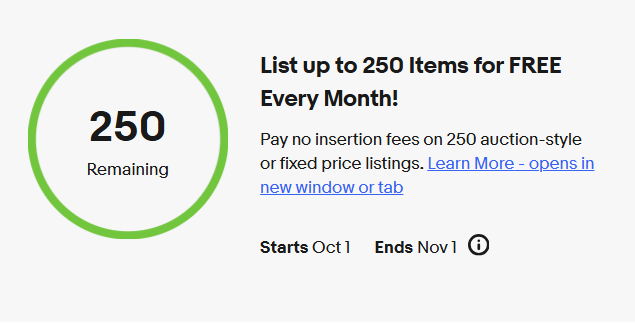
Every month, sellers without a Store get up to 250 listings with no insertion fee, then pay $0.35 per listing in most categories. That allowance is about fees. eBay’s export hub spells out that free listings can’t exceed your selling limit, so 250 free listings on a 10-item account still means 10 items. How many listings you can have is decided by your selling limit, and the insertion fees calculator shows what listing past the free allowance would cost.
When does the eBay selling limit reset?
Depending on where you read, it resets on the 1st, on the day you registered, or after a review on a set day of the month. eBay doesn’t confirm any of these. Its help only says you can relist items when your monthly allowance renews. If timing matters for a product launch, ask eBay support about your own cycle instead of relying on a date from a forum post.
Does an eBay Store raise your limit?
An eBay store brings more free listings and lower final value fees, yet eBay’s Store fee page still notes that selling limits apply. Subscribing to a big Store tier before eBay raises your limit means paying for capacity you can’t use yet.
How to increase your eBay selling limit
eBay raises limits when your selling performance and sales metrics are strong, and it reviews every account monthly. The steps below give that review something to work with, and two of them let you ask for more directly.
Let the monthly review work for you
Start with small, inexpensive items. They tend to sell faster, they leave room under the dollar cap, and a mistake on a $15 item costs far less than one on a $300 item. Spend your slots on products that already have demand; our guide on what to sell on eBay is a good place to start.
Listing quality matters while every slot is precious. Write detailed descriptions with all the specifics a buyer needs and add several sharp photos, collages included. The buyer should see exactly what will arrive. Good eBay listing tools make this faster once you have more slots to fill.
Then look after the buyers you do get. Answer messages quickly and ship on time with tracking. If someone wants to return an item, let them. Losing a little on one sale protects the feedback every monthly review leans on. More eBay selling tips cover the daily habits behind good metrics, and working with reliable fulfillment companies helps once volume grows.
Check this before you ask for more
- You’re using most of your current allowance, with listings that actually sell. A half-empty cap gives eBay little reason to raise it.
- No open cases, return requests or unanswered buyer messages.
- Every active listing is in stock. End or restock anything showing zero quantity.
- Your seller level in the Seller Dashboard isn’t Below Standard.
How to increase selling limits on eBay without calling
You can usually ask for more without a phone call. Use the limit increase request on eBay’s help page, or the link inside the message eBay sends when you’re close to your cap. eBay may ask for contact or business details along the way. If a request is turned down, spend a few weeks building sales before you ask again.
If the online option doesn’t appear for your account, eBay’s Help & Contact pages are the route to a support agent.
Link an established seller account
If you already run an older account in good standing, eBay may let the new one lean on its track record. Open Request higher selling limits in the Monthly selling limits section of My eBay’s Selling Overview, and if the accounts can be linked, the option shows up there. The link works in both directions, though. eBay’s multiple accounts rules say restrictions on one linked account may be applied to the others. Only connect an account you trust.

How to get around eBay selling limits, and what backfires
The legitimate routes are the ones above. A second account opened to get more room is off the table. eBay’s multiple accounts policy doesn’t allow registering new accounts to avoid selling limits, and the possible actions run from removed listings to suspension.
The quieter mistake is filling the cap with listings that don’t sell. Unsold listings still count, and a month with ten listings and one sale gives the review little reason to loosen your eBay limits. Fewer, stronger listings usually do more for a new seller than a full cap of guesses.
Why selling limits hit dropshippers hardest
A reseller with a garage full of stock can list their ten best items and wait. A dropshipper usually tests many products to find the few that sell, and a small cap cuts straight into that testing.
Before planning around limits, be clear about the rules. eBay’s dropshipping policy allows fulfilling orders directly from a wholesale supplier. Listing an item and then buying it from another retailer or marketplace that ships straight to your buyer is not allowed, and eBay names removed listings, warnings, restrictions and suspension among the possible actions.
Sellers doing Amazon to eBay arbitrage generally pick one of two routes. Buying stock and shipping it yourself ties up money and space, but packing and tracking stay in your hands, and so does policy compliance. Having the retailer ship directly to the eBay buyer means no stock to hold and no warehouse to rent, and startup costs stay low, but it runs against the policy above and puts the account at risk if eBay acts on it.
Whichever route you choose, out-of-stock items quietly drain a small limit. Picture ten slots. If the source sells out on two of them and you cancel those orders, a fifth of your allowance has gone to cancellations rather than sales, and cancellations weigh on the same metrics eBay checks each month. Frequent price and stock checks, plus ending dead listings quickly, protect both the slots and the record.
Tracking is the other weak point. Amazon Logistics shipments often carry TBA or AMZL numbers that eBay’s system doesn’t read as a supported carrier, and the order can look untracked while the parcel is already moving. Conversion services such as Aquiline translate those numbers into a format eBay recognizes. With valid tracking uploaded, you also have something to show if a buyer opens an item-not-received case. Conversion changes only the tracking format, and the policy on retailer-direct shipping still applies.
Finally, bring your own buyers. Social media works as free advertising, and even a modest account on Instagram, TikTok or Facebook can send shoppers to the listings you already have. Faster sell-through inside a small cap is exactly the signal eBay wants to see.
Is eBay still worth it with selling limits?
For most new sellers, yes. eBay reported 136 million active buyers in the second quarter of 2026. That’s a lot of traffic to borrow while you build an account. Unlike Amazon, eBay doesn’t sell its own retail stock, so you never end up competing with the marketplace itself. Auctions and Buy It Now give you two ways to price, and the eBay Community forums are a useful place to learn from sellers who’ve been through the early months.
There are downsides as well. Run the numbers in an eBay fees calculator before committing to a product, since fees cut into every sale. eBay sets the rules and can change them. Competition for the same buyers is heavy, and many shoppers arrive hunting for a bargain, which makes high-priced items harder to move. Dropshippers also stay responsible for the delivery time promised in each listing, even when the source is slow. If you’re weighing channels, our comparison of selling on eBay, Amazon and Shopify lays out the differences, and the Easync blog has more marketplace guides.
Matching your Easync plan to your eBay limit
Easync is an Amazon to eBay dropshipping tool that also handles AliExpress to eBay and Amazon to Shopify. Only eBay can raise your limit, and Easync works on the problems that hold limits back. Easync repricing updates prices and stock for eBay listings every 30 minutes and narrows the window in which a buyer can order something your source no longer has.
Plans start at $49.99 a month for 2,000 repricing listings and go up to 10,000 listings on Expert. A new account capped at ten items or a few dozen won’t fill even the entry plan, so Basic covers the start, and the bigger tiers pay off once eBay raises your limit into the thousands.
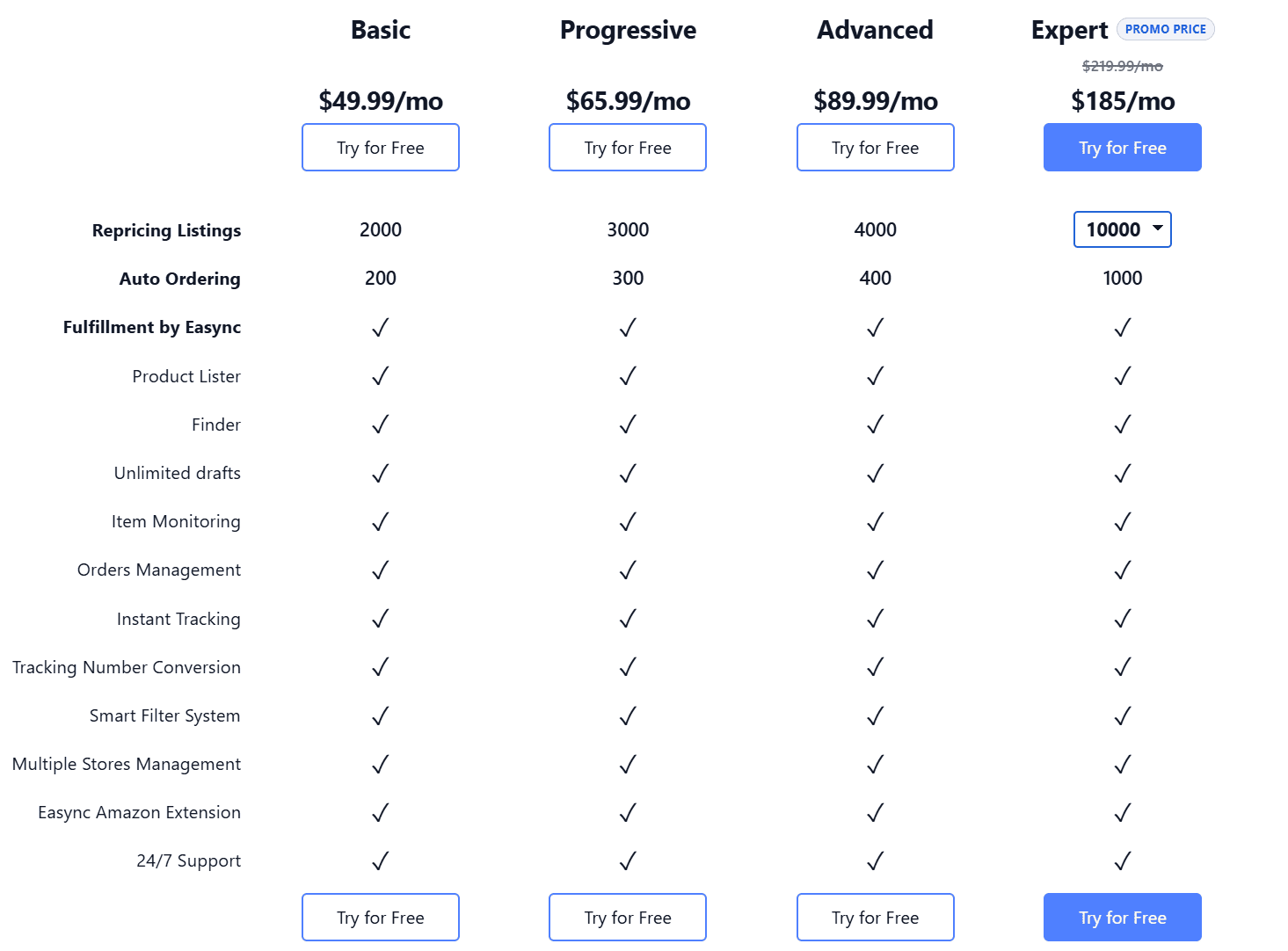
Instant Tracking, Tracking Number Conversion and item monitoring come with every plan, and Easync supports Aquiline conversion. VeRO and blacklist protection helps keep risky brands out of your listings. If you’d rather not handle shipping at all, Fulfillment by Easync is part of every plan too. The free trial lasts 7 days and doesn’t need a card.
FAQ
Do eBay selling limits go away after 90 days?
No date switches them off. Guides often describe eBay seller limits after 90 days as the end of a probation period, but eBay’s help describes a monthly review instead, based on your sales volume and buyer feedback. Increases can come before the three-month mark or well after it.
Do eBay business accounts have higher selling limits?
Business details tend to matter more than the account type itself. eBay doesn’t publish separate numbers for business accounts, and eBay business account selling limits go through the same monthly check as personal ones. Where a business profile helps is the increase request, because eBay may ask for contact or business information at that stage.
Does eBay ever remove selling limits completely?
It has. In 2024 eBay lifted selling limits for a large group of sellers with little explanation, and many of them hadn’t asked for an increase. Insertion fees past the free allowance still applied to those accounts.
Why did my old eBay account get low selling limits?
One seller ran into this in a September 2026 thread. His account had been inactive since 2020, and eBay treated his return date as the account’s reactivation date, then invited him back later for a review. A long break can count against you. Coming back after years away, expect a smaller limit at first and rebuild sales history before asking for more.
Can eBay lower your selling limit?
Yes. The monthly review adjusts limits in either direction, and eBay UK’s seller centre says allowances may be placed on accounts that fall below the minimum performance standard. Keeping an eye on your Seller Dashboard is the simplest early warning.
Is the eBay selling limit related to the 1099-K threshold?
Form 1099-K is a tax report and has nothing to do with eBay’s cap on listings. Under the One, Big, Beautiful Bill, the federal threshold for that form is back to more than $20,000 in payments and more than 200 transactions in a year. Some states set lower thresholds, and the form only decides what gets reported, not whether your income is taxable.
Ready to automate your dropshipping?
Join 41,000+ dropshippers using Easync.
Start Your Free 7-Day Trial G24.6/5
 Capterra4.8/5SourceForge4.8/5