
- articles
SHEIN Dropshipping Guide (2026): Rules, Margins & Setup
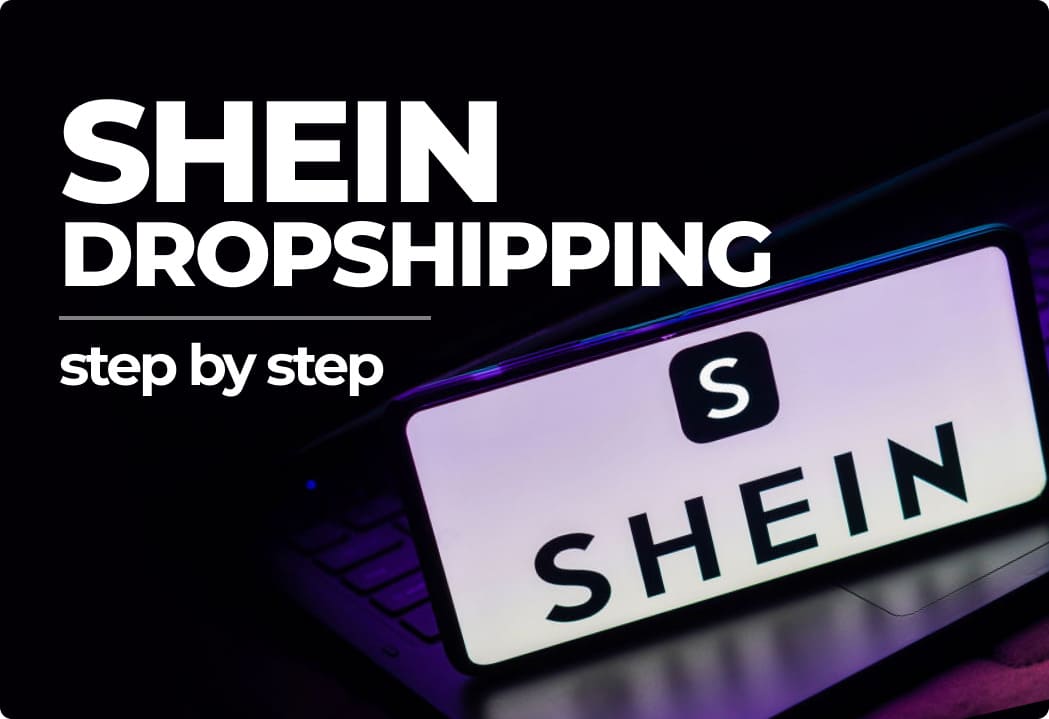
Quick Answer: SHEIN dropshipping means listing SHEIN’s fashion catalog in your own store and buying the item from SHEIN only after a customer orders it. SHEIN runs no dropshipping program, no wholesale portal and no reseller API, and its European and UK terms of sale state that products are sold for personal use and should not be bought for resale. Sellers who work this way carry the operational risk themselves: SHEIN-branded parcels, copyrighted product photos, and import duties that now apply to low-value parcels in the US, the EU and South Africa. A branded storefront, original photography and pricing built on landed cost are what keep the model workable in 2026.
Plenty of guides still describe SHEIN dropshipping the way it looked in 2023, when parcels under $800 entered the US duty free and the packaging problem was easy to ignore. That version of the business no longer exists. This guide covers what changed, what still works, and how to avoid the two mistakes that close beginner accounts fastest: using SHEIN’s product photos, and selling on a marketplace that bans the way you source.
By the end you will know:
- What SHEIN dropshipping actually is, and where it sits legally
- Whether SHEIN is a good supplier compared with the alternatives
- How to dropship SHEIN products in 8 steps
- What the 2025 and 2026 duty changes did to your margins
- What the model looks like in South Africa, and what it costs there
- Which suppliers to consider instead
Still choosing between business models? Our comparison of affiliate marketing and dropshipping covers that decision before you commit to a supplier.
What is SHEIN Dropshipping?
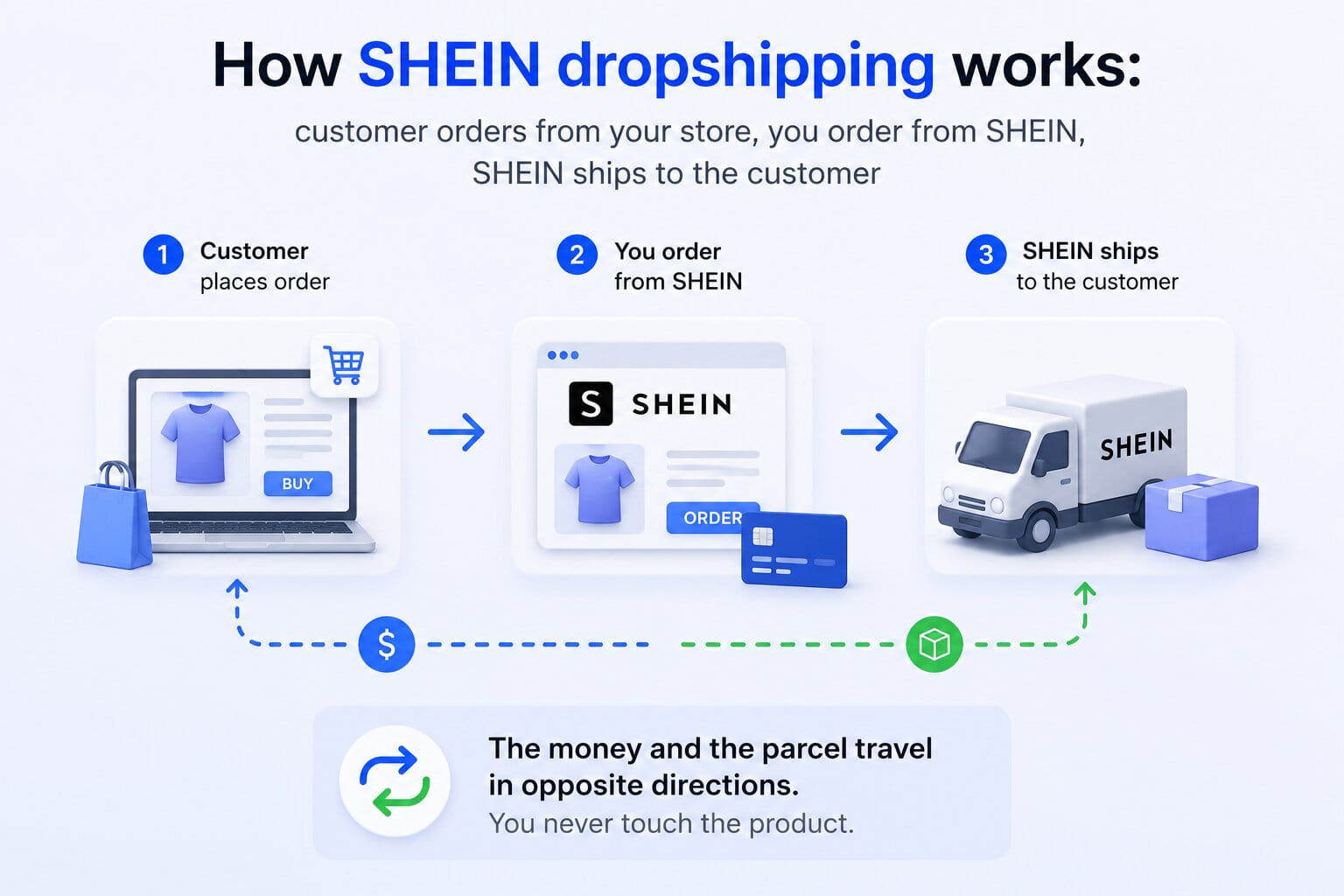
Dropshipping is a model where you sell items you do not hold. A customer buys from your store, you place the same order with a supplier, and the supplier ships it to the customer. You keep the difference.
Put SHEIN in the supplier slot and you have SHEIN dropshipping. Sellers who dropship SHEIN products act as a retail middleman with none of the standing a distributor has, which is the detail that shapes every rule further down this page. You are not buying at wholesale. You are buying at the same retail price your customer could pay if they found the item themselves.
That single fact explains most of the difficulties in this article, and also most of the opportunity. Your margin has to come from curation, presentation and audience, because it cannot come from a supplier discount you do not have.
The model itself is legitimate, whatever the noise online suggests. We took that argument apart separately in is dropshipping a scam.
About SHEIN
SHEIN started in 2008 as SheInside, selling women’s fashion out of China. It later expanded into menswear, kids, home goods, beauty and electronics, moved its holding company to Singapore, and became one of the largest fashion sellers in the world.
The company published a draft prospectus for a Hong Kong listing on 26 July 2026, which is the first detailed look anyone has had at its numbers. Revenue reached $41.8 billion in 2025 across roughly 1.08 billion orders, growth slowed to 8% from almost 21% the year before, and active customers stood at 273 million for 2025 and 281 million by March 2026. It now sells in about 160 countries. Investors valued the business at $98.2 billion in 2022 and at $64 billion in 2024. The Hong Kong listing is reported to target $40 to $50 billion, and the trading date has not been announced.
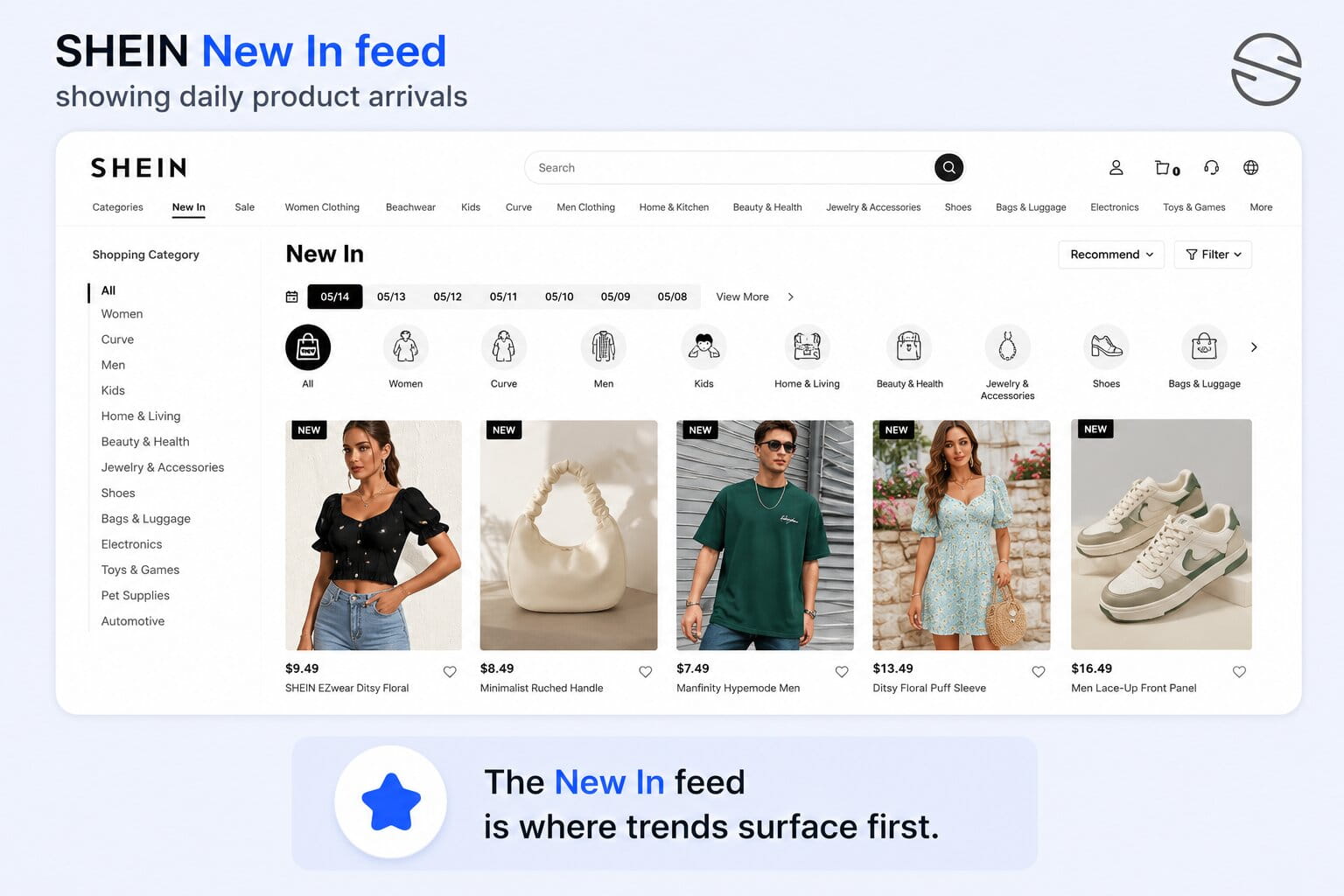
The catalog turns over faster than any traditional retailer’s. Thousands of new items appear every day, which is the reason dropshippers keep coming back to it despite everything else on this page.
Is SHEIN Legit?
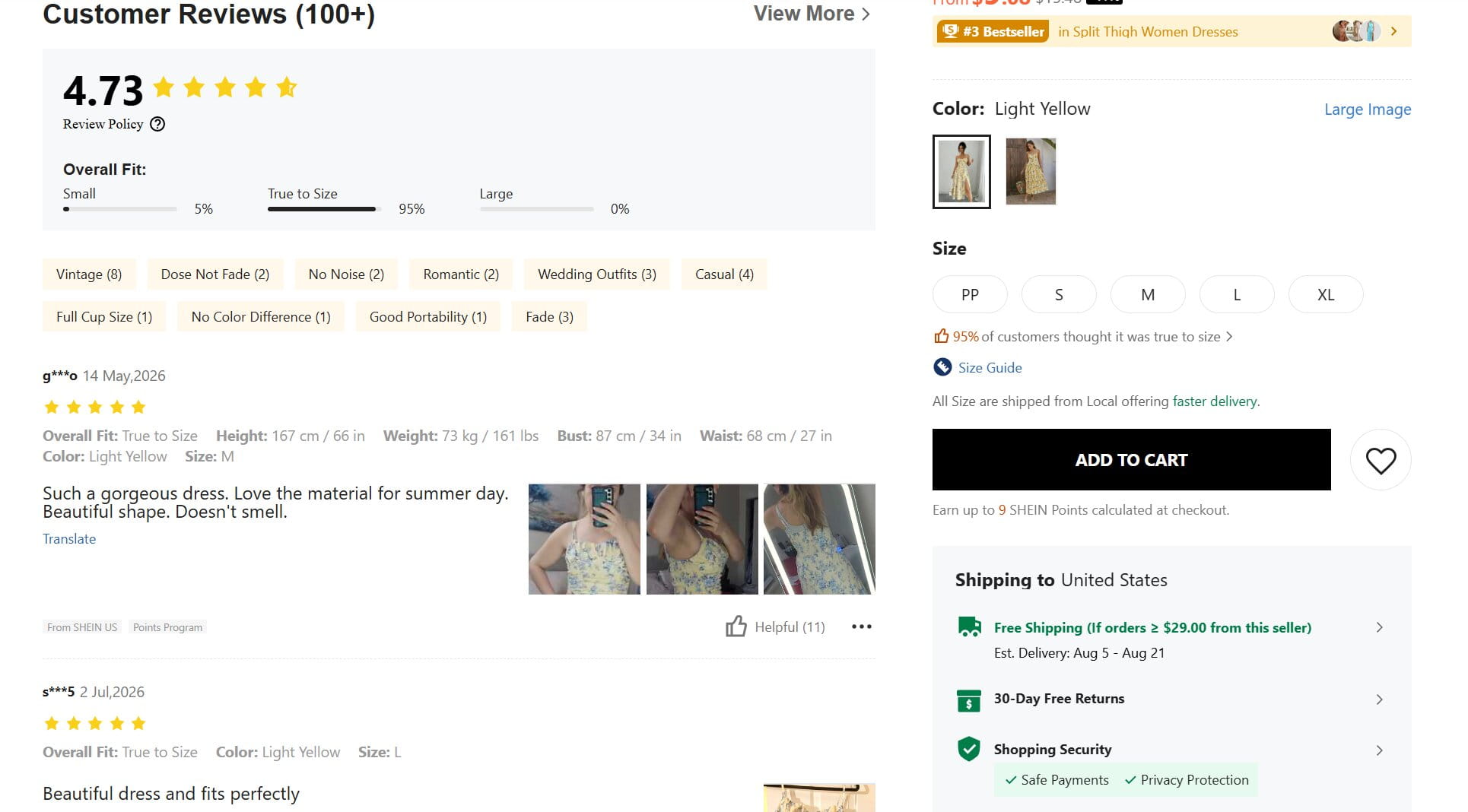
Yes. SHEIN is a real retailer with more than 270 million active customers, audited financials published in its Hong Kong listing filing, a published returns policy and functioning customer support. Quality varies by item and sizing complaints are common, so lean on verified purchase reviews and photo reviews rather than the listing images when you decide what to sell.
It is also under regulatory pressure on several fronts. SHEIN disclosed an FTC consumer protection investigation into its US business in its listing documents on 28 July 2026, and the European Commission opened a Digital Services Act case in February 2026. Neither affects whether your customer’s order arrives, though both are worth following if you intend to build a business on a single supplier.
Does SHEIN Allow Dropshipping?
SHEIN has never launched a dropshipping program. There is no wholesale portal, no merchant dashboard and no reseller API, so everything a dropshipper does runs through an ordinary customer account. The company does not publicly police the practice, but its terms of sale in the EU and the UK state that products are sold for personal and domestic use and that the customer undertakes not to buy them for resale.
In practice this makes SHEIN dropshipping a tolerated grey area rather than a permitted one. The realistic downside is a closed buyer account with pending orders inside it, not a lawsuit. Plan for that risk instead of pretending it is not there.
We look at the risk side in more detail in SHEIN dropshipping in 2026.
Is SHEIN a Good Platform for Dropshipping?
It depends entirely on where you sell and how you price.
SHEIN sits at the cheap end of fast fashion and the quality reflects that. Some items are genuinely good for the money. Others arrive with loose stitching or sizing that bears no relation to the chart.
For a dropshipper this is a selection problem. Nobody at SHEIN is going to solve it for you. Read the review photos, ignore anything with a thin review history, and never scale a listing you have not held in your hands.
Low Prices Do Not Automatically Mean Margin
SHEIN prices are low and the temptation is to assume a large markup follows. That was true when cross-border parcels arrived duty free. It is no longer true anywhere in the US or the EU.
Your margin now depends on landed cost, which includes duty, VAT, shipping and payment fees. Run that calculation before you set a price, and run it again when tariff rates move.
Shipping Is Reasonable, Packaging Is Not
Orders from Chinese warehouses typically take seven to fifteen days. Where SHEIN holds local stock, delivery drops to a few days. Both numbers are workable if you publish the slower one and let fast deliveries be a pleasant surprise.
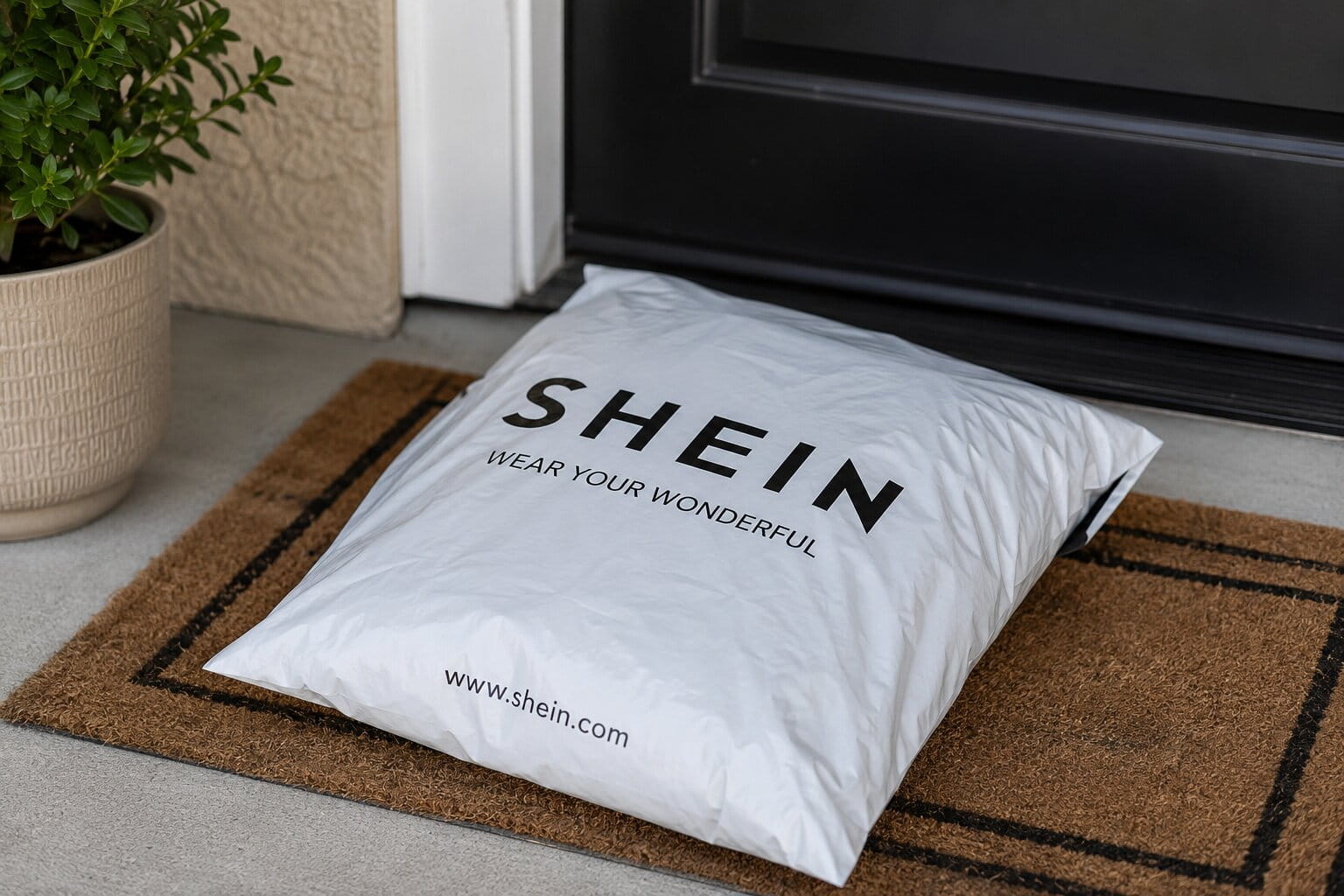
Packaging is the real problem. Every parcel arrives in a SHEIN bag with SHEIN paperwork inside, which tells your customer exactly where to shop next time and, on some sales channels, breaks the rules outright.
SHEIN Dropshipping vs. Wholesale Fashion Suppliers
| Parameter | SHEIN | AliExpress and wholesale suppliers |
|---|---|---|
| Supplier relationship | A normal retail buyer account. No reseller agreement, no invoices in your business name, no B2B support channel. | Seller-level accounts, wholesale pricing and invoices you can show to a marketplace on request. |
| Catalog and trend speed | Thousands of new arrivals every day, with micro-trends visible in the New In feed before they reach other suppliers. | Slower rotation, closer to seasonal cycles. |
| Product photos | Images and descriptions are copyrighted and licensed for personal use only. You need your own shots or samples. | Many sellers tolerate reuse of their listing images, though nothing gives you a formal licence. Ask first. |
| Packaging | Arrives in SHEIN-branded bags with SHEIN paperwork inside. | Blind or white-label shipping is available from a large share of suppliers. |
| Import duties in 2026 | Same rules as any other cross-border parcel. No duty-free threshold in the US since 29 August 2025, a flat €3 per item in the EU since 1 July 2026, and the UK’s £135 relief still standing until 2028. Items held in a local SHEIN warehouse ship domestically and escape the charge. | Identical exposure, unless the supplier ships from a local EU or US warehouse. |
| Marketplace policy fit | eBay treats buying from a retailer to fulfil an order as retail arbitrage and restricts accounts for it. Amazon requires you to be the seller of record with no third-party paperwork in the box. | Wholesale sourcing is what both platforms expect, provided packaging and invoices carry your name. |
| Automation | No API and no supplier feed, so order placement and stock checks stay manual. | Broad support across most dropshipping software. |
Import Duties Changed the Math in 2025 and 2026
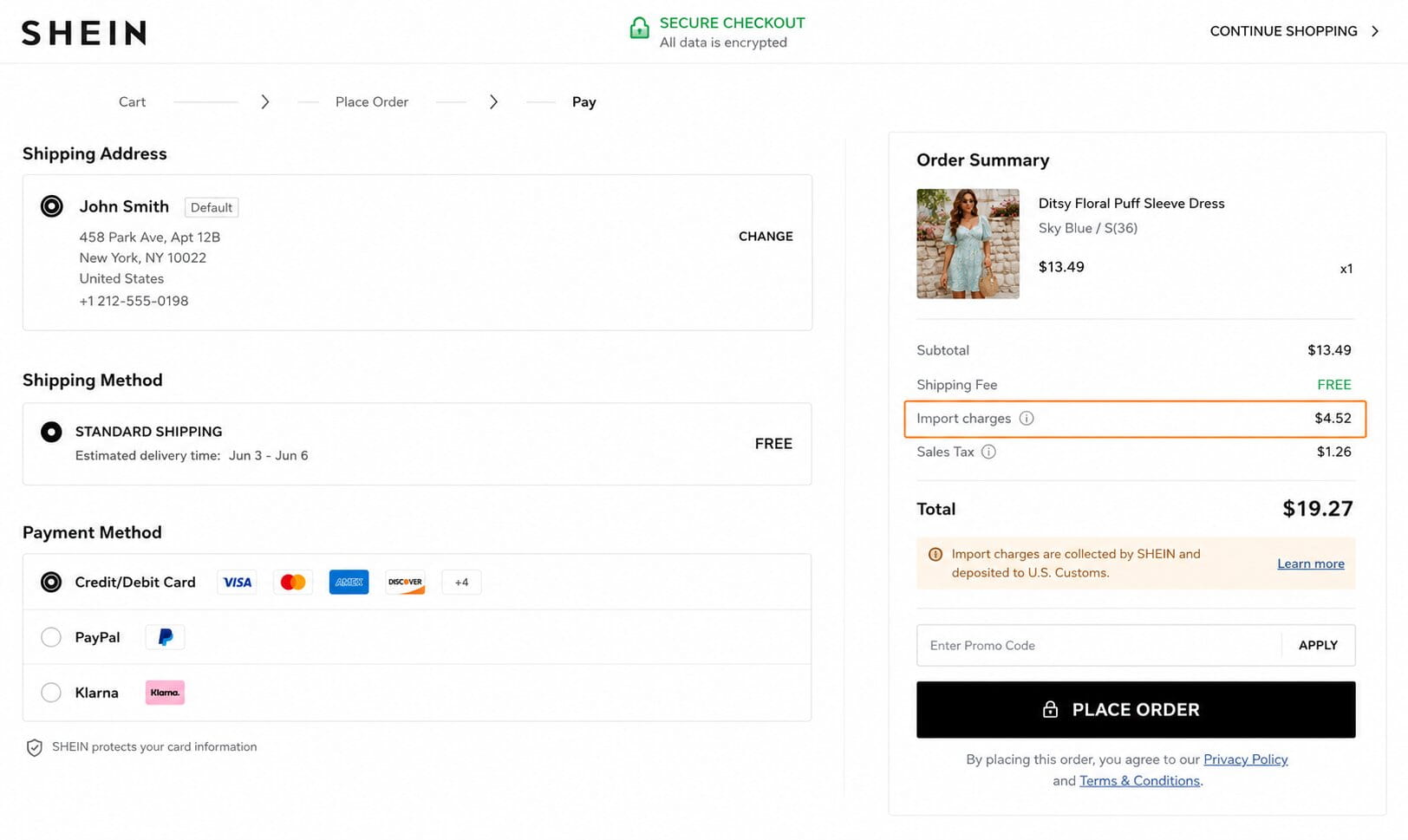
The $800 de minimis exemption that made cheap cross-border parcels viable in the US is gone. It ended for China and Hong Kong on 2 May 2025 and for every other origin on 29 August 2025, and CBP moved the suspension into permanent regulation on 24 June 2026. Every parcel now needs a customs entry and pays duty according to its HTS code and country of origin.
The rate on top of that base has moved twice in 2026 alone. The Supreme Court struck down the IEEPA reciprocal tariffs in February, a 10% Section 122 surcharge replaced them for 150 days, and when that expired on 24 July 2026 a Section 301 forced-labour duty of 10% or 12.5% took its place across 60 economies. China’s older Section 301 lists were never affected and still add 7.5% on apparel. Whatever number you used in the spring is already out of date.
The EU followed on 1 July 2026, replacing the €150 duty-free threshold with a flat €3 charge per item, counted by tariff heading rather than per parcel. An order containing a silk blouse and two wool blouses is charged twice. The measure runs until July 2028, when the permanent customs system takes over. A separate EU handling fee is due to start on 1 November 2026, and its amount is still being argued over, so the €3 is a floor and not a ceiling. Import VAT is a separate charge, it has applied to every consignment since 2021, and it is calculated with the duty inside its base.
The UK is the exception for now. Its £135 relief still stands, so a low-value parcel arriving from China pays import VAT but no customs duty. HMRC published its reform paper on 13 July 2026 confirming the relief will go, with the deadline brought forward to October 2028, and the Treasury has said it will not copy the EU’s flat levy. If the UK is your main market, you have roughly two years of the old economics left.
SHEIN itself is not immune. Its IPO filing names the end of de minimis as a drag on the US business, where revenue fell 14% year on year in the first quarter of 2026 while the group as a whole grew.
For a seller this means one thing. A markup calculated on the SHEIN price alone is fiction. Price on landed cost, and treat any guide quoting effortless 70% margins as written before the rules changed.
How to Dropship From SHEIN: Step-By-Step Guide
Step 1: Find a Niche and a Winning Product
Beginners fail here more often than anywhere else, usually by listing whatever looks good on the front page.
Pick a narrow niche first. Dresses, loungewear, activewear, jewellery, accessories for a specific subculture. A narrow catalog lets you write listings for one person instead of for everyone, and it makes your ad targeting cheap enough to survive testing.
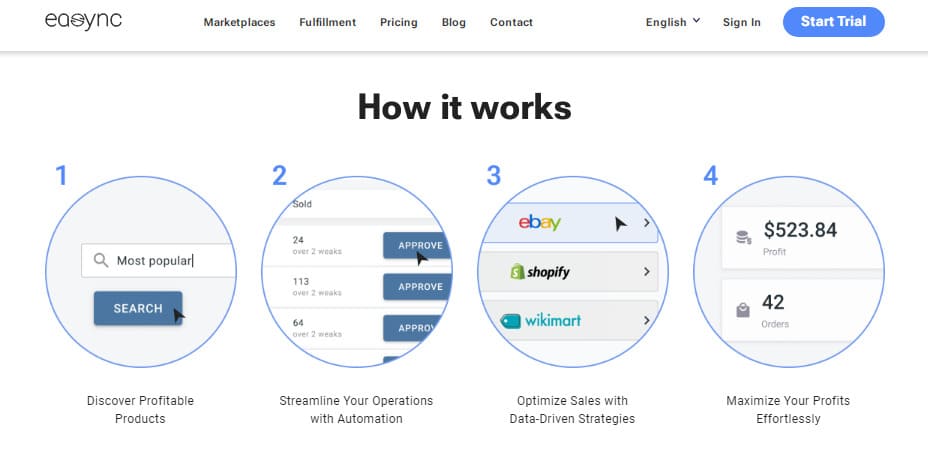
Then find products inside that niche with real demand. Cross-check SHEIN’s best-seller and New In feeds against Google Trends and TikTok search volume, and look at what is already selling on the marketplaces, where sales data is public and a front-page placement cannot fake it. Easync Finder and Hot Items surface trending products with real volume behind them, and Terapeak does the same job from eBay’s own sales history.
From practice: order three to five sample units before you scale a listing. You get photos and video that belong to you, you find out how the item actually fits before customers do, and you see the real transit time for your region instead of the estimate on the checkout page. The sample budget usually pays for itself on the first product you decide not to launch.
Step 2: Check Who Actually Ships the Item
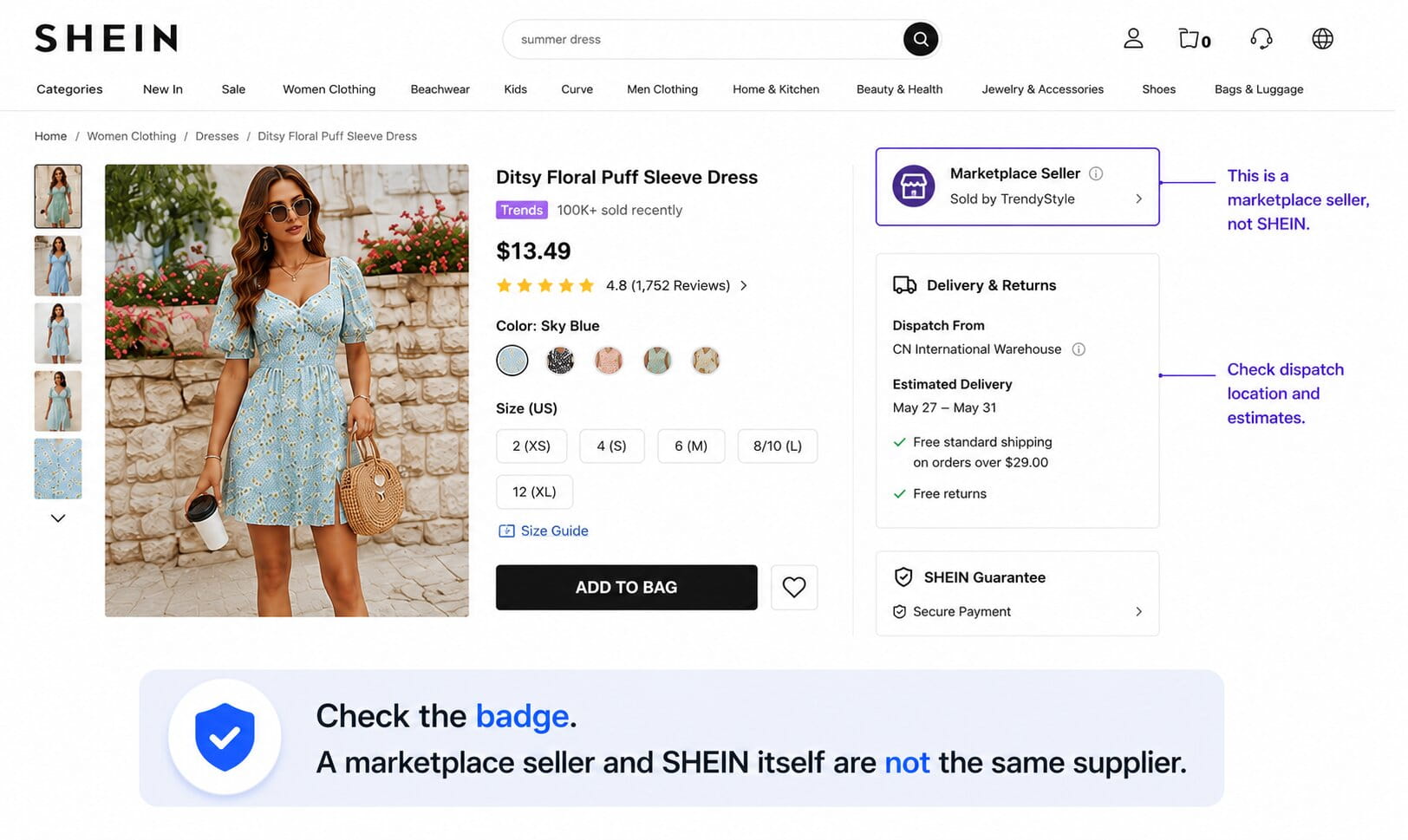
SHEIN sells its own manufactured goods alongside third-party sellers on SHEIN Marketplace. The badge on the listing tells you which one you are looking at, and it matters more than it sounds.
Marketplace items can have different dispatch times, different stock reliability and different return handling. Before you commit to a product, check the seller badge, the shipping estimate for your customer’s country, and whether the item ships from a local warehouse or from China. An item that looks identical to another can carry a week’s difference in delivery time.
Stock volatility is the other thing to watch. SHEIN drops sizes and colours without warning, and a listing that sells a size you can no longer buy turns into a cancellation, which is what damages your metrics on every sales channel.
Step 3: Set Up Your SHEIN Buying Account
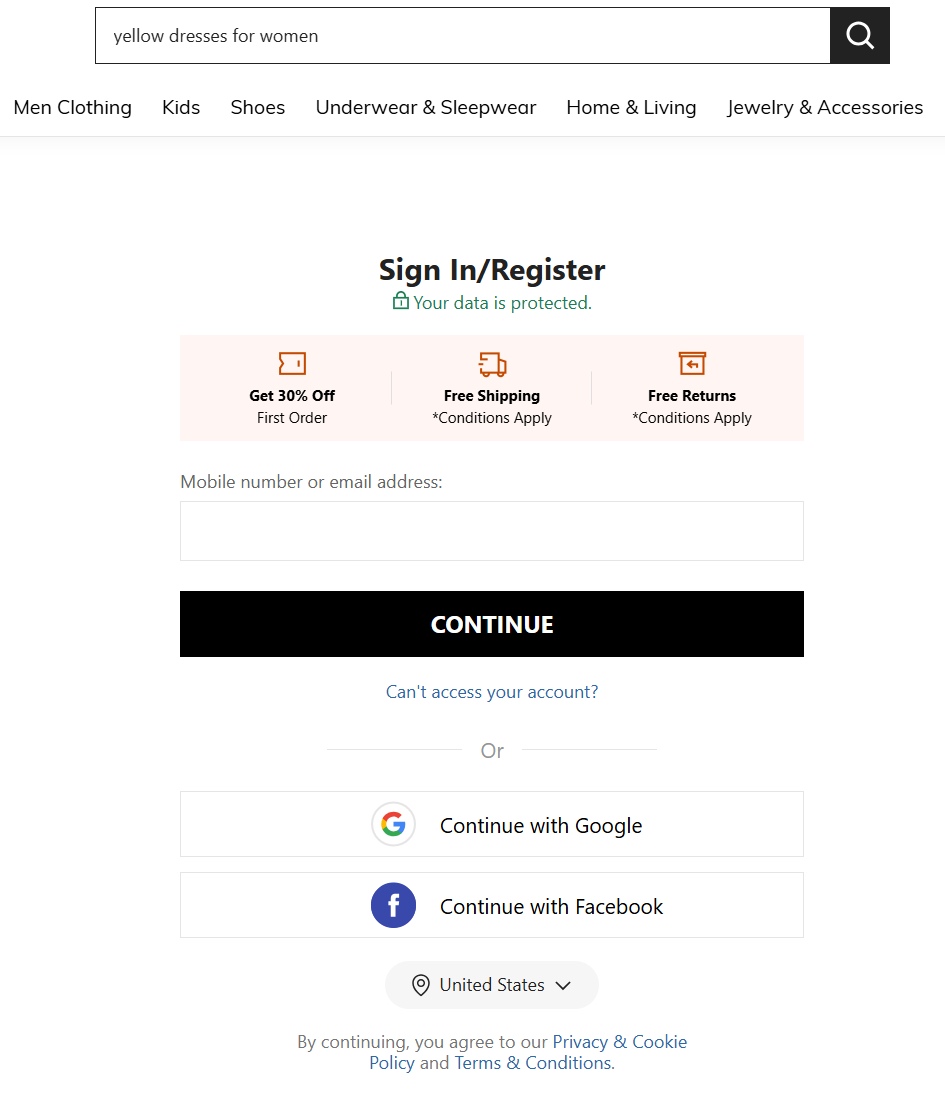
There is no dropshipping account to sign up for. You register as a normal customer:
- Open the SHEIN site or app and choose Register
- Enter your email and a password
- Confirm the email
- Add your payment method and a delivery address
A few practical notes. Keep one account for the business so order history and returns stay in one place. Expect the occasional order verification, especially when many different shipping addresses appear on one account, since that pattern is exactly what SHEIN’s fraud checks look for. And keep enough balance on the payment card to cover a spike, because a declined order on a Friday becomes a cancelled sale on a Monday.
Step 4: Create Your Store
You have two options and they are not equally viable.
Your own store gives you control over branding, prices and the checkout. Shopify and WooCommerce both get you live in a day or two, and our roundup of dropshipping platforms for beginners compares the options in detail. You pay for that freedom in traffic, which you have to buy or earn.
Marketplaces hand you traffic on day one, and this is where SHEIN sourcing runs into trouble. eBay prohibits fulfilling an order by buying from another retailer and treats it as retail arbitrage. Amazon requires you to be the seller of record with no third-party invoices or branding in the parcel. Repacking through a prep centre fixes the Amazon problem, because the box then carries your name and nothing else. It does not fix the eBay problem. eBay objects to where the goods came from, and no amount of repackaging changes where you bought them.
If you are starting out, your own store is the lower-risk route.
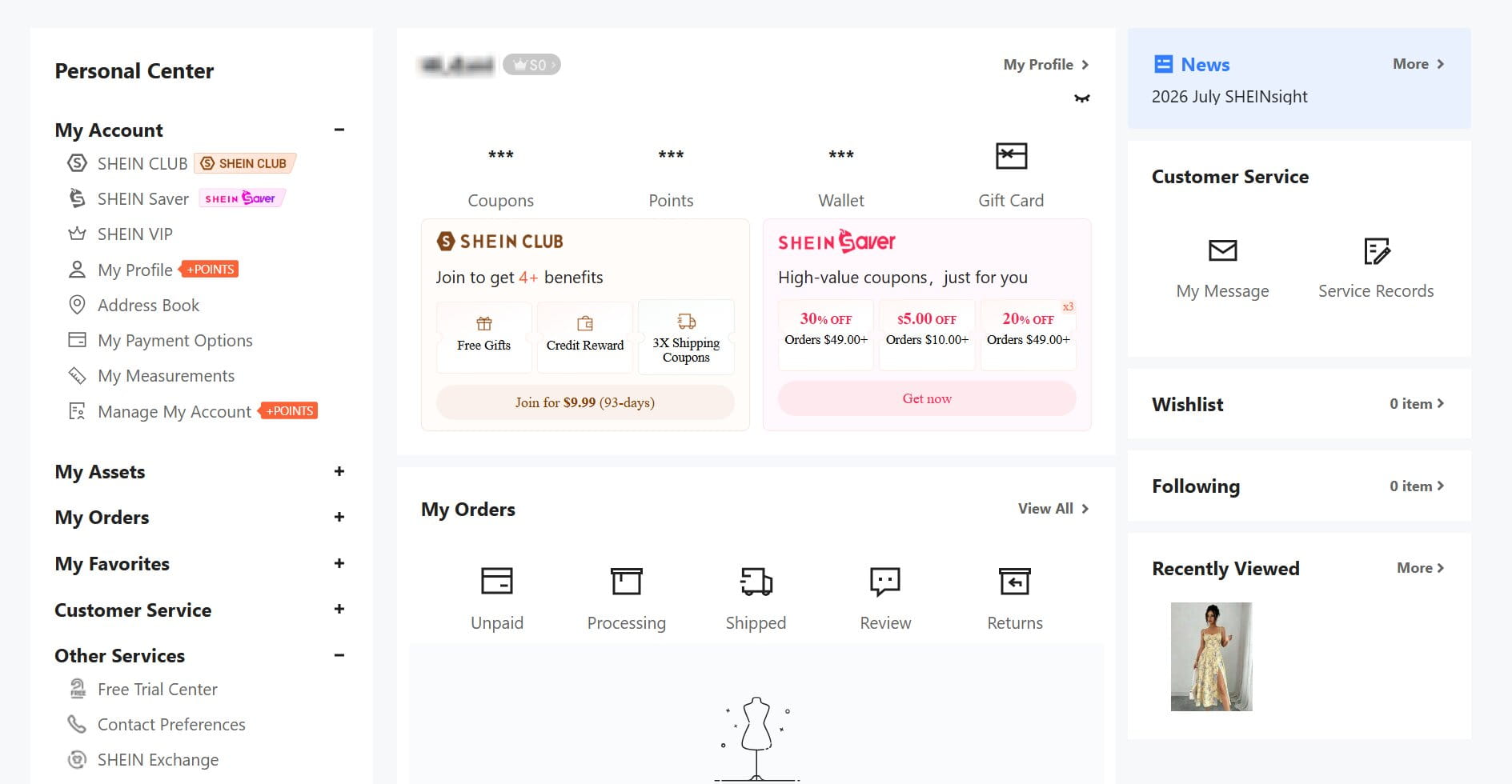
SHEIN Dropshipping on Shopify
An independent storefront, on Shopify or on WooCommerce, gives you control over branding, price tiers and the checkout, and it is the one route where SHEIN sourcing does not immediately collide with platform rules. Shopify lets you build narrow collections around one aesthetic, which matters when your edge is curation instead of price.
Two things break first as volume climbs: placing every order by hand, and noticing when a price changes or a size sells out. SHEIN publishes no API and no supplier feed, so both stay manual here. Build a routine for them from the first week and keep the catalog small enough that one person can hold it in their head. Our Shopify dropshipping page covers the setup side of the store itself.
Step 5: Create Proper Listings
Your listing is where a SHEIN product stops being a SHEIN product and becomes yours.
Write titles around the words buyers type, and put the specifics in the description: fabric, fit, measurements from the actual garment, care instructions. Copying SHEIN’s description word for word puts you in a queue behind every other seller who did the same.
Photos are the harder part, and the rule is not negotiable. SHEIN owns the photography on its listings, and the same restriction covers descriptions and video. Three approaches work in practice:
- Order samples of the items you plan to push and shoot them yourself, which also gives you material for TikTok and Reels
- Commission a photographer or a UGC creator for a small batch if you are testing several products at once
- Where the product is generic enough, source clean studio shots from a manufacturer on Alibaba or 1688 who supplies the same category
Editing SHEIN’s own images, cropping out a watermark or replacing the background does not create a new copyright and will not survive a complaint.
Step 6: Calculate Pricing and Set Margins
Build your price from landed cost. The SHEIN price is only the first line of it.
Landed cost includes the item, SHEIN’s shipping, import duty, VAT or sales tax, the payment processor’s cut, and your expected return rate. In the US the duty depends on the HTS classification and origin, so a category that worked last quarter can stop working after a tariff revision. In the EU the flat €3 per item lands hardest on cheap products, because it is the same €3 whether the item cost €8 or €80. SHEIN has said it is raising US prices to recover part of the duty, so your cost base moves even when the tariff schedule does not.
If you sell on eBay as well, our eBay fee calculator and insertion fee calculator give you the platform side of the same equation. Add your advertising cost per sale on top of that. Most beginners discover their real problem is the cost per acquisition. A €25 dress cannot absorb €14 of ad spend.
Worked Example: One Dress, Three Markets
The table below prices the same dress for a customer in the US, the EU and South Africa. The figures illustrate the method. They are not a quote. Duty rates, shipping fees and ad costs move, so run your own version with your own numbers before you set a price.
| Cost line | US (USD) | EU (EUR) | South Africa (ZAR) |
|---|---|---|---|
| SHEIN item price | 15.00 | 14.00 | 280 |
| SHEIN shipping | 3.99 | 3.50 | 150 |
| Import duty | 5.25 (35% assumed) | 3.00 (flat, one tariff heading) | 109 (import charge collected by SHEIN at checkout) |
| VAT or sales tax | Collected from the buyer and remitted, so not a cost line | 4.31 import VAT, plus 8.50 remitted on the sale | Included in the import charge above |
| Payment processing | 1.75 | 0.94 | 30 |
| Ad cost per sale | 12.00 | 11.00 | 180 |
| Total cost | 37.99 | 45.25 | 749 |
| Retail price | 49.99 | 49.00 | 949 |
| Profit per order | 12.00 | 3.75 | 200 |
| Margin | 24% | 8% | 21% |
Assumptions behind the numbers:
- A single-item order that pays shipping in all three markets. Thresholds exist everywhere and SHEIN waives the fee above them, R1 050 in South Africa at the time of writing. Fees and thresholds move with promotions, so check the current ones before you copy these figures.
- The US duty rate is a placeholder that happens to be close to reality for a Chinese-origin garment in mid-2026: an MFN base averaging 16.5% on apparel, 7.5% from the older Section 301 list, and the 12.5% forced-labour duty introduced on 24 July 2026. Your real rate comes from the 10-digit HTS code and the origin, and a merchandise processing fee may apply on top.
- The EU column uses a 21% VAT rate as its example. Rates run from 17% to 27% across the member states, so your own figure will differ. Import VAT is calculated on the item, the freight and the €3 duty together, so the duty is inside the VAT base and not beside it.
- National charges have come and gone on top of the €3. France ran its own handling fee of €2 per item category from 1 March 2026 and stepped back from it when the EU duty arrived on 1 July. An EU-wide Union Handling Fee is due on 1 November 2026, with the amount still unsettled and figures between €2 and €5 discussed. Add €3 of handling to the column above and the order stops making money, so build the November change into your prices before it lands rather than after.
- EU retail prices include VAT, US prices do not. That difference alone explains most of the gap between the two columns.
- The EU column assumes a VAT-registered seller. The import VAT SHEIN charges you at checkout is not reclaimable, because you bought as a private customer without a business invoice, so it stays a real cost on both sides of the transaction.
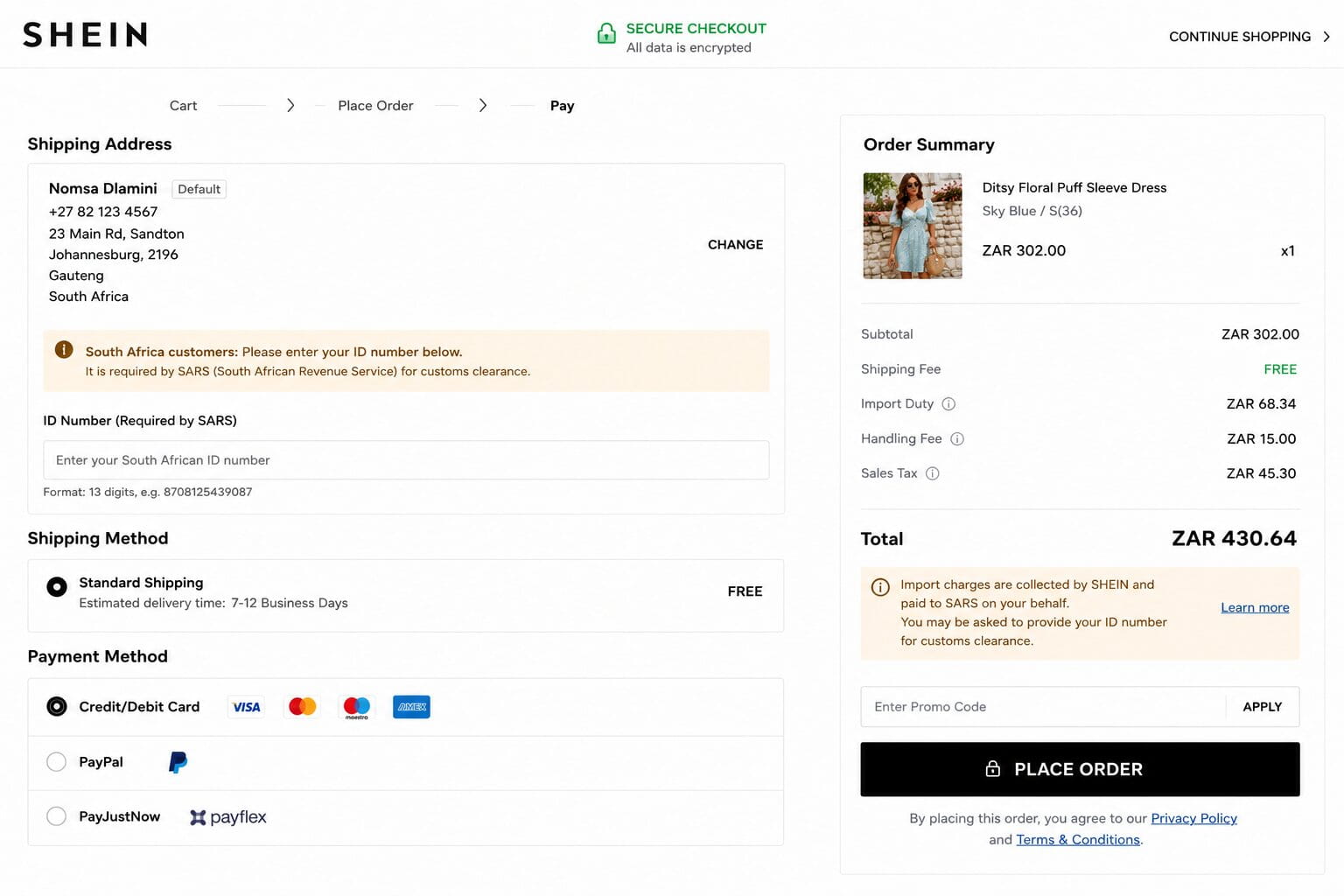
- The South African import charge is what SHEIN actually collects at checkout, not a statutory calculation. On a live South African order in July 2026, a R116 item carried a R45 import charge, which is close to 39% of the item price. The column applies the same proportion. Shipping was waived by a promotion on that order, so a charge calculated on item plus freight would come out higher. Note that the statutory position for clothing is 45% duty plus 15% VAT, so SHEIN is charging well under that, and a future reassessment by SARS would change the arithmetic sharply.
- The column assumes a seller below the R1 million VAT registration threshold.
- SHEIN also ticks a Shipping Guarantee of about R17 by default on South African orders. Small, and it comes out of your margin unless you untick it.
- Returns are not in the table. Fashion return rates run high enough that a 15% allowance is realistic, and on the EU column that allowance is larger than the profit.
Three conclusions follow. Cheap items are the worst candidates, because fixed costs such as the €3 duty and the payment fee do not shrink with the price. The EU is the tightest of the three markets, because VAT hits you on the way in and again on the way out. And a market that works is a market you priced for, so set prices per region instead of converting one number into three currencies.
Two adjustments help across all three columns. Push average order value with bundles and free-shipping thresholds so the fixed costs spread across more items. And favour products where perceived value is high relative to weight and category duty, which usually means accessories and statement pieces instead of basics.
Step 7: Market Your Store
Short-form video does the heavy lifting in this niche, which is another reason to own your photography.
- TikTok and Reels. Sample hauls, try-ons and styling clips. This is the cheapest traffic available to a fashion store and the format the audience already watches.
- SEO. Slow to start and worth it if you plan to keep the store. Write for the specific searches your niche generates instead of for “cheap dresses”.
- Paid ads. Test small, kill fast, and judge by profit after landed cost rather than by ROAS on revenue.
- Email and SMS. The only audience you own. Collect from day one.
- Promotions. Free shipping thresholds and bundles work better than blanket discounts, because they raise order value instead of cutting margin.
Step 8: Fulfil Orders
SHEIN handles the physical fulfilment. Your job is everything around it.
Place orders promptly, since every hour you wait is an hour added to a delivery estimate the customer is already watching. Pass tracking to the customer as soon as it exists. Answer the “where is my order” message before it becomes a dispute.
The packaging question needs an actual decision. On your own store, manage expectations: say on the shipping page that orders are dispatched from a partner warehouse, and answer the question before it turns into a support ticket. On Amazon, nothing in the box may carry another retailer’s name, so orders have to run through a prep centre or third-party fulfilment service, with the extra handling cost and the extra days in transit that implies. On eBay, repacking conceals the sourcing without making it compliant, so treat that channel as closed while SHEIN is your supplier.
Our dropshipping fulfilment guide covers the operational side in more depth.
SHEIN Africa Dropshipping: Demand Is Real, Logistics Are Not Simple
South Africa is SHEIN’s strongest African market and the demand is genuine. The logistics are less friendly than the opportunity suggests. SHEIN has not announced a fulfilment centre of its own in South Africa. Some listings now carry a local warehouse label, which in this market normally means stock held by a third-party logistics partner, the same arrangement Temu confirmed when it launched local delivery there. Everything else ships from China and lands in nine to fifteen business days, which is two to three calendar weeks, before a local courier takes over. Check the label on the listing before you promise anyone a date.
The tax picture changed as well. Until 2024, clothing parcels under R500 cleared at a flat 20% with no VAT, which is what made SHEIN so much cheaper than local retail. That concession is gone. SARS added 15% VAT to all parcels from 1 September 2024 and replaced the flat 20% with standard tariff rates from 1 November 2024, and the standard rate on clothing is 45% duty plus 15% VAT.
What SHEIN charges you is a different number. On a live South African checkout in July 2026 the import charge came to under 40% of the item price, well below the statutory rate applied to a declared retail value. The worked example earlier in this guide uses that observed figure. Price on the charge you actually pay, and treat the gap between the two as a risk you are carrying and not a discount you have earned.
One detail catches most sellers out. SHEIN’s South African checkout requires a South African ID number or a foreigner’s passport number for customs clearance before the order can be placed. On a dropshipping order that is your customer’s ID number, which means asking a stranger for a national identity number at your own checkout and holding it. Decide how you handle that before you advertise in this market, because there is no way around the field.
There is good news on the same screen. The import charge appears as a line in the order summary and is collected with the payment, so your customer should not be handed a separate bill by the courier on delivery.
Three things decide whether a store works in this market.
Quote delivery in weeks and say plainly on the product page that an ID number will be needed and that clearance can add days. Nobody abandons a cart over an honest estimate. They do complain about a surprise.
Offer the payment methods people actually use. SHEIN’s own South African checkout runs card, Capitec Pay, Apple Pay, Payflex and PayPal, and Payflex alone signals how normal instalments have become at this price point. Instant EFT through Ozow or PayFast belongs on the list too.
Favour higher-value baskets. The import charge scales with the order, so it never goes away, but shipping, the courier fee and the clearance admin cost the same on a R200 basket as on a R950 one, and only the larger one can carry them. SHEIN’s own free-shipping threshold of R1 050 points in the same direction.
The same logic applies to Nigeria, Kenya and Ghana, with the added complication that duty regimes and courier coverage differ sharply between them. Test one country properly before adding a second.
How to Scale Your SHEIN Dropshipping Business
Competition is heavier than it was three years ago, though the category keeps growing, and we ran the numbers on whether dropshipping is still profitable separately. Scaling a SHEIN dropshipping store is mostly a shift from doing tasks to watching numbers: margin after duty, cancellation rate, and how long an item stays in stock.
Data-driven product research. Stop guessing once you have sales data. The products that scale are rarely the ones you expected, and product research tools shorten the gap between a hunch and a decision.
Automation. Manual ordering caps you at the number of orders you can personally process in an evening. Most sellers reach that ceiling and add a second supplier that supports automated ordering alongside SHEIN, which is also how they stop being exposed to one account. Our comparison of dropshipping software and automation tools covers what each one handles.
Customer support. Fashion generates size questions, and size questions unanswered become returns. A same-day reply is worth more here than in almost any other category.
Buying ahead on proven items. Once an item sells consistently, holding a small buffer of stock locally removes the delivery time from the equation entirely. This stops being dropshipping, which is the point. Note that SHEIN sells at retail and does not run a published bulk-purchase programme, so ignore the tiered wholesale discounts quoted in older guides.
Third-party fulfilment. A prep and fulfilment service that receives SHEIN parcels, repacks them into your own packaging and forwards them solves the branding problem and opens up marketplaces. It adds cost and a day or two, and for a store selling above a certain order value it is usually worth both.
Advantages and Disadvantages of SHEIN Dropshipping
Advantages
- Enormous catalog with genuine daily trend turnover
- Low product prices and frequent promotions
- Fulfilment to about 160 countries with no minimum order
- Local warehouses in several regions, which cuts delivery time sharply where they exist
- Strong brand recognition among the Gen Z audience you are selling to
Disadvantages
- No dropshipping programme, no wholesale pricing, no reseller support
- Terms of sale that treat purchases as personal use and warn against resale
- SHEIN-branded packaging on every parcel
- Product images you cannot use
- Stock and size availability that changes without warning
- Import duties in the US, the EU and South Africa that have removed the easy margin
SHEIN Alternatives
If the packaging and photo restrictions are dealbreakers, several suppliers solve exactly those problems.
AliExpress
Part of the Alibaba Group, AliExpress hosts a very large number of independent sellers across fashion, electronics, home and beauty. The advantage over SHEIN is structural: you are buying from sellers who know they are supplying resellers, which means blind shipping is common and many sellers will confirm in writing that you can use their listing images.
Do get that confirmation. Product photos on AliExpress belong to the seller who uploaded them, and the widespread habit of reusing them is tolerance rather than a licence. Delivery times vary enormously by seller, so filter by shipping method and check the seller’s rating history before you list anything.
AliExpress also has a free research tool of its own, and our AliExpress Dropshipping Center guide walks through the product research and analysis screens. If you decide to switch supplier, see AliExpress dropshipping automation.
Others Worth Testing
- CJdropshipping. Sourcing plus warehousing and custom packaging, built for dropshippers from the ground up.
- Temu. Similar pricing to SHEIN and the same packaging and photo issues, so treat it as a price comparison and not a fix.
- Alibaba. For the point where you stop dropshipping and start buying inventory.
- Local and regional fashion wholesalers. Higher unit cost, dramatically shorter delivery, and no customs surprises for the customer.
Whichever supplier you land on, the operational demands are the same: place orders fast, catch price and stock changes before your customer does, and keep tracking flowing. Start a free Easync trial and connect your store to handle that part automatically.
Frequently Asked Questions
Does SHEIN allow dropshipping?
No official programme exists. SHEIN offers no wholesale portal or reseller API, and its EU and UK terms of sale state that products are bought for personal use and not for resale. Dropshippers operate through ordinary buyer accounts and accept the risk that comes with it.
Is SHEIN dropshipping still profitable in 2026?
It can be, on your own store, with original photography and prices calculated on landed cost. The duty changes of 2025 and 2026 removed the automatic margin that used to come from duty-free parcels, so profitability now depends on positioning more than on the price gap.
Can I dropship SHEIN products on eBay or Amazon?
On Amazon it is possible if you repack through a prep centre, because the rules there concern the seller of record and what the customer finds in the box. On eBay it is not. eBay bans sourcing from another retailer outright, and repacking hides that without curing it.
Can I use SHEIN’s product photos in my store?
No. They are copyrighted and licensed for personal use. Order samples, work with a UGC creator, or get clean studio images from a manufacturer supplying the same category.
How long does SHEIN shipping take to my customer?
Roughly seven to fifteen days from Chinese warehouses and two to seven days where SHEIN holds local stock. Publish the slower figure.
What is SHEIN’s return policy, and how does it affect me?
In the US, most items can be returned within 30 days of delivery. The first return from an order is free and additional returns from the same order carry a $7.99 fee deducted from the refund. Since your customer returns to you and not to SHEIN, you absorb the difference between your return policy and SHEIN’s, which is a cost worth pricing in from the start.
Are SHEIN and Temu still suing each other?
Yes, in a narrowed form. The 2023 suits were withdrawn, then Temu filed again in Washington DC and SHEIN countersued in August 2024. In September 2025 the court dismissed Temu’s antitrust and trade secret claims for falling outside US jurisdiction while allowing the intellectual property claims to proceed, and the two cases were later consolidated. None of this changes anything for a dropshipper.
Where does SHEIN ship from, and why is it cheap?
Mostly from manufacturing and fulfilment hubs around Guangzhou, with regional warehouses covering parts of Europe, North America and the Middle East. The low prices come from small production runs, tight supplier margins and fast design cycles. None of that is a discount available to you as a buyer.