
- articles
12 Best AliExpress Payment Methods for Dropshipping (2026)
Quick Answer: For buyers in the US, UK, and Europe the practical AliExpress payment methods in 2026 are a Visa, Mastercard, Amex, or Discover card, PayPal, Google Pay or Apple Pay, and the instalment options at checkout, which differ by market (Klarna and PayPal Pay Later in both the US and UK, Cash App Afterpay in the US, Clearpay in the UK). A multi-currency card from Wise or Revolut sits behind any of them and cuts the conversion cost. All of these settle through AliExpress checkout, which keeps the order covered by AliExpress escrow and Buyer Protection.
Picking a payment rail sounds like a five-minute decision until you are running fifty orders a day and one declined card freezes half of them. The payment methods AliExpress works with come to about a dozen main options plus a long tail of regional ones, and what you see depends on where you are billed. A US checkout looks nothing like an Indonesian one. Some of these gateways are excellent for dropshipping, a few are effectively dead for international buyers and still show up in old blog posts, and one of them is ranked first by almost every guide in the search results while being unavailable to American buyers entirely.
What follows is a current breakdown of the payment options for AliExpress, how they compare on fees and speed, what to do when a payment fails, and how to keep your funds protected while you scale.
Dropshipping From AliExpress in 2026
AliExpress remains one of the largest sourcing platforms for dropshippers, and AliExpress dropshipping as a model has kept growing through the 2020s. Market trackers such as Statista and Grand View Research put the global dropshipping market in the hundreds of billions of dollars, with growth forecast to continue through the rest of the decade, and the spread of AliExpress-integrated automation tools has pulled a large share of that volume onto the platform.
Sourcing is the easy part. AliExpress gives you a huge catalog and prices low enough to leave room for a real margin. The part that quietly eats that margin is the payment layer. A gateway that charges 3% on conversion instead of 1% costs you real money at a hundred orders a month, and a gateway that takes three days to settle costs you customer complaints instead.
Three things matter when you evaluate an AliExpress payment method for a business rather than for a one-off personal purchase: total cost per transaction including foreign exchange, how quickly the payment posts so the supplier can ship, and whether you keep dispute rights if something goes wrong.
Is AliExpress Secure?
The short answer is yes, with the usual caveats about individual sellers. Founded in 2010, AliExpress operates under Alibaba Group and has a long track record of processing cross-border consumer payments. Buyer funds sit in escrow until delivery is confirmed, which gives you a refund path that does not depend on the seller’s goodwill. Card data entered at checkout is tokenized and handled by Alipay’s processing infrastructure rather than passed to individual sellers, so the supplier never sees your card number. That processing layer runs underneath every AliExpress order, including in markets where the Alipay wallet itself is not offered as a checkout option.
Security still depends partly on you. Use a dedicated business email, enable two-factor authentication, and never process an order through a link a supplier sends you over chat.
AliExpress Buyer Protection and Money Back Guarantee
Every order placed through AliExpress checkout carries Buyer Protection. You can open a dispute and claim a full or partial refund if the item never arrives inside the promised window, arrives damaged, or does not match the listing. For dropshippers this is the safety net that makes the model workable at all, since you are shipping to a customer you have never met from a supplier you have never met.
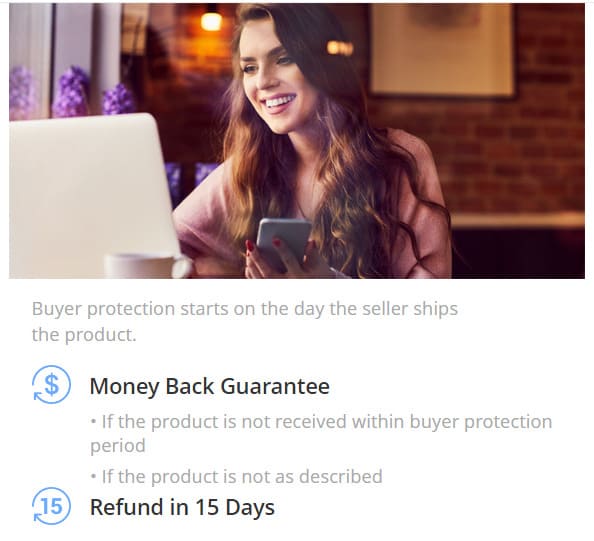
Keep your evidence tidy. Screenshots of the listing, tracking history, and photos from your end customer resolve disputes much faster than a written complaint alone.
AliExpress Escrow System
The AliExpress escrow model is simple. When you pay, the money goes to AliExpress, not directly to the supplier. The seller only gets released funds after you confirm receipt or after the Buyer Protection period expires without a dispute. If you file a claim during that window, the funds are frozen while the case is reviewed.
This is why dropshipping escrow matters more than the fee difference between two gateways. Paying a supplier by bank wire outside the platform saves you a percentage point and removes every protection you have. Sellers occasionally ask for exactly that, usually framed as a discount. Decline it, always.
AliExpress Payment Methods Compared
Cards and wallets clear fastest and keep full escrow coverage. PayPal buys you the strongest external dispute rights at the highest cost, the instalment options solve timing rather than price, and local rails such as iDEAL, BLIK, and Boleto are cheap but usable in one country only. The table below sets the main options against each other, ordered roughly as a US or European buyer would meet them at checkout.
| Payment Gateway | Processing Speed | Average Fees | Escrow Protection | Best Used For |
|---|---|---|---|---|
| Debit and Credit Cards | Instant to a few hours | Issuer FX markup, commonly 1–3%, plus any foreign transaction fee | Full | Most dropshippers, virtual cards for spend control |
| PayPal | Minutes | Cross-border and conversion charges, typically the costliest option | Full, plus PayPal’s own buyer claims | High-value orders, buyers who want a second dispute route |
| Google Pay / Apple Pay | Instant | Whatever the underlying card charges | Full | Fast checkout without exposing card details |
| Klarna and Buy Now, Pay Later | Instant to the seller | Free on schedule, late fees otherwise; varies by provider | Full | Splitting a basket into instalments (options vary by market) |
| Wise, Revolut, Multi-Currency Cards | Instant | Wise ~0.4–0.6% on major pairs; Revolut free up to a monthly allowance, then ~0.5%, plus ~1% on weekends | Full | Cutting FX cost on every order |
| Payoneer | Instant at checkout | Near zero when card and balance currency match; several percent otherwise, plus annual fee on low-volume accounts | Full | Sellers holding USD/EUR marketplace balances |
| Wire Transfer | One to four business days | Low percentage, fixed wire cost, $20.01 minimum order | Full | Large one-time restocking orders |
| Alipay | Instant to a few minutes | No platform fee, FX applied at the AliExpress rate | Full | Markets where it’s offered (not US checkout) |
| Carte Bleue and Cartes Bancaires (France) | Instant to a few hours | Same as underlying card; possible non-eurozone fee | Full | French buyers with a co-badged CB/Visa/Mastercard |
| Pay By Bank and European Local Rails | Near instant | Very low or none | Full | Domestic buyers in the UK, Netherlands, Poland, Germany, Belgium |
| Cash on Delivery | Only on delivery | Flat AliExpress service charge per order | Limited | Gulf-region consumer purchases, rarely dropshipping |
| Boleto, OXXO, and Cash Vouchers | One to three business days | Low | Full | Brazil and Mexico |
The AliExpress payment options you actually see are decided mainly by your billing country. Testing one US account against two different sellers returned the same list both times, so the older advice that each supplier enables its own subset no longer holds up, at least in the US. Options do grey out below their minimum order value, which is a separate thing from being unavailable. Open “View more” on the checkout page to see the full list with those minimums spelled out.
Top 12 Payment Methods For AliExpress Dropshipping
The list below runs in the order that matters for a US, UK, or European seller. Cards carry most of the volume, PayPal and the wallets sit right behind them, and the instalment providers have quietly become the most interesting part of the checkout. Further down are the options that only make sense in one country, plus Alipay, which needs its own explanation.
1. Debit and Credit Cards
Cards remain the most widely accepted method on the platform. Visa, Mastercard, Maestro, and American Express work everywhere, with Discover added for US accounts and JCB accepted in several Asian markets. The exact set is drawn by your billing country: a US checkout shows five brands, a UK one shows four, with Discover dropped.
Pros
- Accepted by nearly every seller on the platform
- Instant authorization
- Cashback and points on business spend
- Easy to cancel and reissue if the number is compromised
Cons
- Foreign transaction and conversion fees from your issuer
- Fraud blocks triggered by high-frequency small purchases
- One declined card can stall a whole batch of orders
The practical advice here is to use a virtual card issued specifically for supplier spend. Most business banking providers now issue them free, and they let you cap monthly spend, freeze a card instantly, and keep supplier charges separated from the rest of your accounting. It also means a compromised card number costs you a two-minute reissue rather than a frozen main account.
Expect your bank’s fraud system to flag you in the first weeks. Twenty small charges to a Chinese merchant in one afternoon looks exactly like card testing. Call your issuer in advance and tell them what the pattern will look like.
2. PayPal
PayPal availability is gated by your billing country rather than by the individual seller. Checking the same US account against a third-party trader store and a Choice listing shipped by AliExpress returned an identical payment list both times, PayPal included. That contradicts a common claim in older guides, which is that each seller switches PayPal on or off for their own store. Reported supported markets include the United States, the United Kingdom, Germany, Spain, Portugal, France, Italy, the Netherlands, Poland, Norway, Sweden, Israel, Saudi Arabia, and the UAE, and the list has changed more than once, so confirm on your own checkout rather than trusting any published version of it.
Pros
- An independent buyer claims process on top of AliExpress escrow
- Strong encryption and two-factor authentication
- Fast transfers and Pay Later options in eligible markets
Cons
- The highest effective cost here once cross-border and conversion charges land
- Real risk of account limitation if PayPal’s risk system dislikes your pattern
- Not offered at all in a long list of countries, with no workaround
The dispute layer is the genuine advantage. If AliExpress rules against you on a case you believe you should have won, PayPal gives you a second and entirely separate route to your money. For a $12 phone case that is irrelevant. For a $400 order it can matter.
The account risk is not theoretical. PayPal freezes funds for up to 180 days when it decides an account breached its terms, and dropshipping is on its list of elevated-risk activities. Never route your entire operation through one PayPal account, and never let a large balance sit in it.
3. Google Pay and Apple Pay
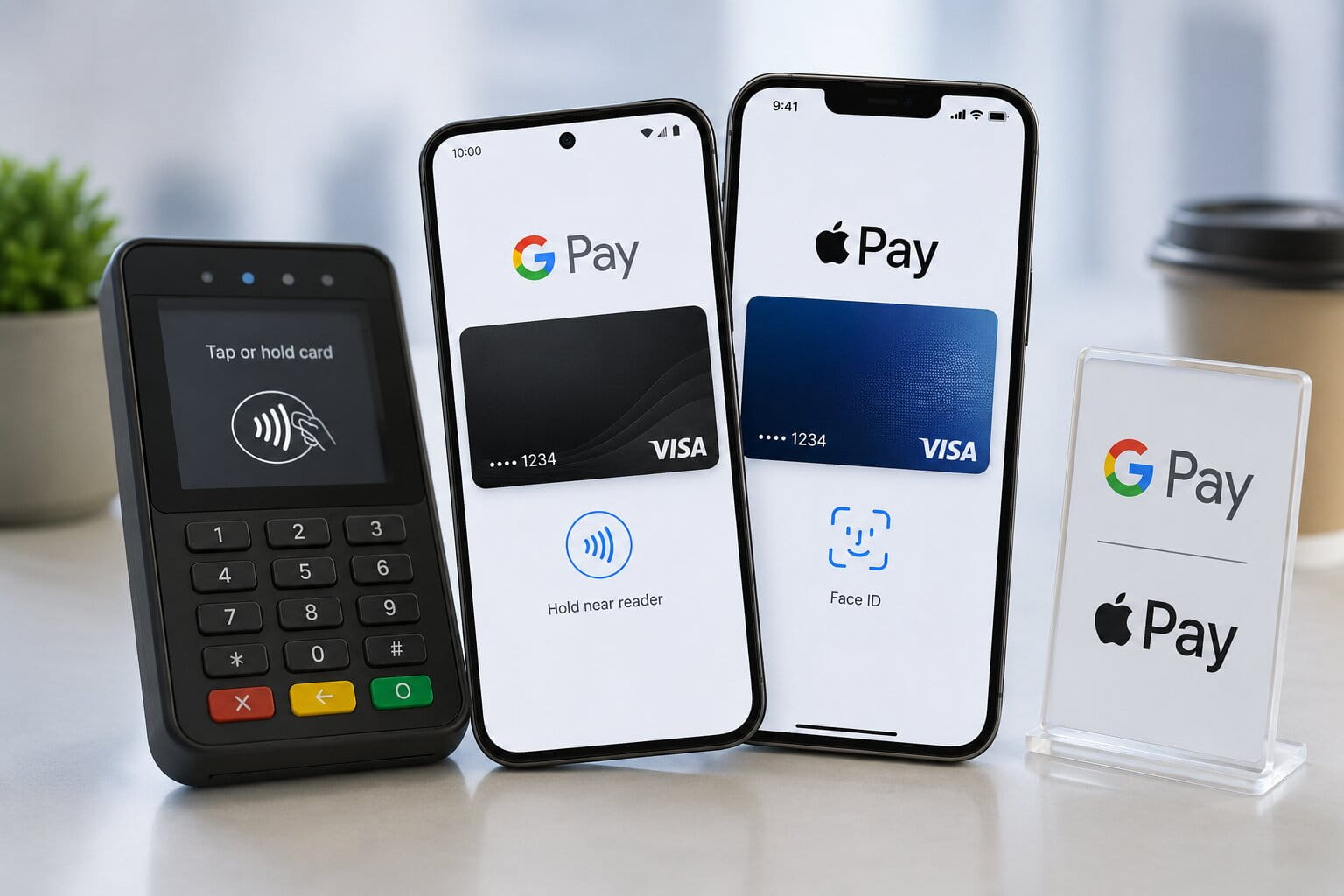
Both wallets turn up at AliExpress checkout across a long list of markets, including the US, UK, Canada, Australia, and most of Western Europe. Google Pay shows up in desktop browser checkout as well as the Android app, sitting in the payment list alongside PayPal and the card option. Apple Pay follows the Apple ecosystem, so expect it on iOS and in Safari rather than in Chrome on a Windows machine. Several guides claim these wallets are app-only, which does not match what the current web checkout actually offers.
Pros
- The fastest checkout available on the platform
- Biometric authorization instead of typed card numbers
- Tokenization, so the real card number never reaches AliExpress
Cons
- Which wallet you get depends on your device and browser rather than your preference
- Availability set by your billing country, and Apple Pay needs Apple hardware
- No effect on cost, since the fees come from the card behind the wallet
Treat these as a security and convenience layer rather than a separate AliExpress payment method. Chargeback rights come from the underlying card and survive intact, so a Visa credit card behind Apple Pay gives you escrow, Buyer Protection, and scheme chargeback rules all at once.
The one place they do not fit is automation. Fulfilment tools that place orders on your behalf need stored card credentials, and a wallet that requires a fingerprint on your phone for every transaction cannot supply that. Most sellers who scale end up using a wallet for manual and one-off purchases while a virtual card handles the automated flow.
4. Klarna and Buy Now, Pay Later
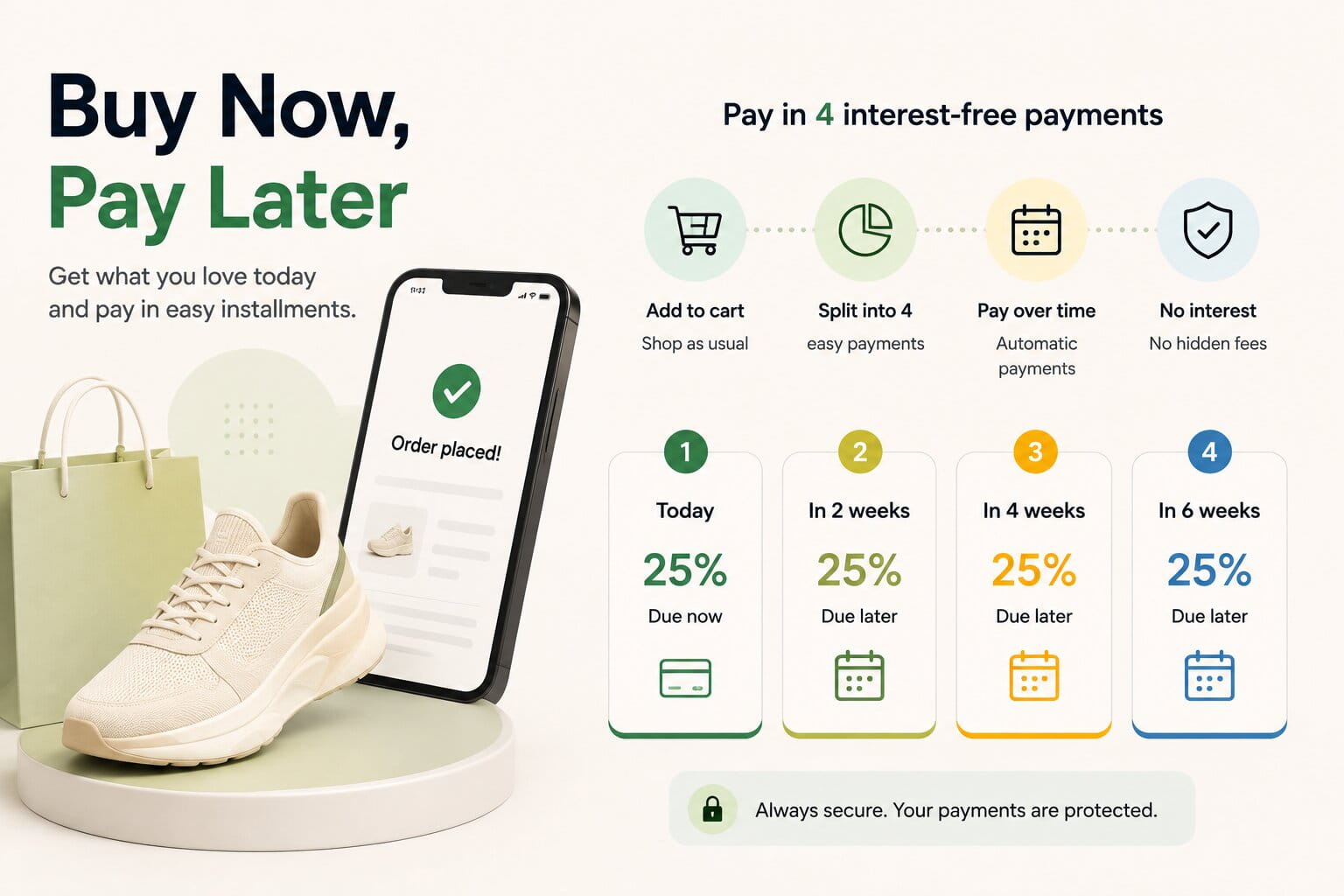
Instalment options have multiplied to the point where they now outnumber every other category at checkout. A US account sees four of them, a UK account sees five, and the sets barely overlap.
| Option | United States | United Kingdom | Condition AliExpress states |
|---|---|---|---|
| Klarna | Available | Available | US: US mobile number and US address, Hawaii excluded. UK: UK mobile number |
| Clearpay | Not shown | Available | UK account details |
| Cash App Afterpay | Available | Not shown | US account |
| PayPal Pay Later | Available | Available | $30 / £30 minimum order |
| Pay in installments | Not shown | Available | £30 minimum order |
| Pay after Delivery | Available | Available | $5 minimum in the US, £8 in the UK |
Several things in that table are worth pulling out. Klarna is not a European-only option on AliExpress, which is what most published guides still say. It works in the US, and the platform spells out the requirement in the checkout itself rather than burying it in terms: a US mobile number and a US billing address, with Hawaii excluded. The UK version simply wants a UK mobile number.
Cash App Afterpay appears for US buyers, which matters because nearly every guide in the search results states flatly that AliExpress has nothing to do with Cash App.
Pay after Delivery is the most interesting one for a dropshipper. The charge lands after the parcel arrives rather than at checkout, and the entry threshold is low enough that ordinary orders clear it.
Note that the minimums are set per market rather than converted from a single figure. Pay after Delivery asks $5 in the US and £8 in the UK, which is nearly double at the prevailing rate. Wire transfer is the odd exception: it is quoted as US $20.01 even on a checkout priced in pounds.
The mechanics across all of them are the standard ones: the provider pays the seller in full immediately, and you repay in instalments, usually three or four, interest-free if you pay on schedule.
For a dropshipper the appeal is cash flow timing. Your customer’s money often lands in your payment processor days before you can withdraw it, while your supplier needs paying now. An AliExpress split payment closes that gap without a credit line.
Treat it as a tool with a sharp edge. BNPL providers run soft credit checks, apply late fees, and in several markets now report missed payments to credit bureaus. It works if your sales are predictable. It becomes expensive fast if you use it to fund inventory for products that have not sold yet.
5. Wise, Revolut, and Multi-Currency Business Cards
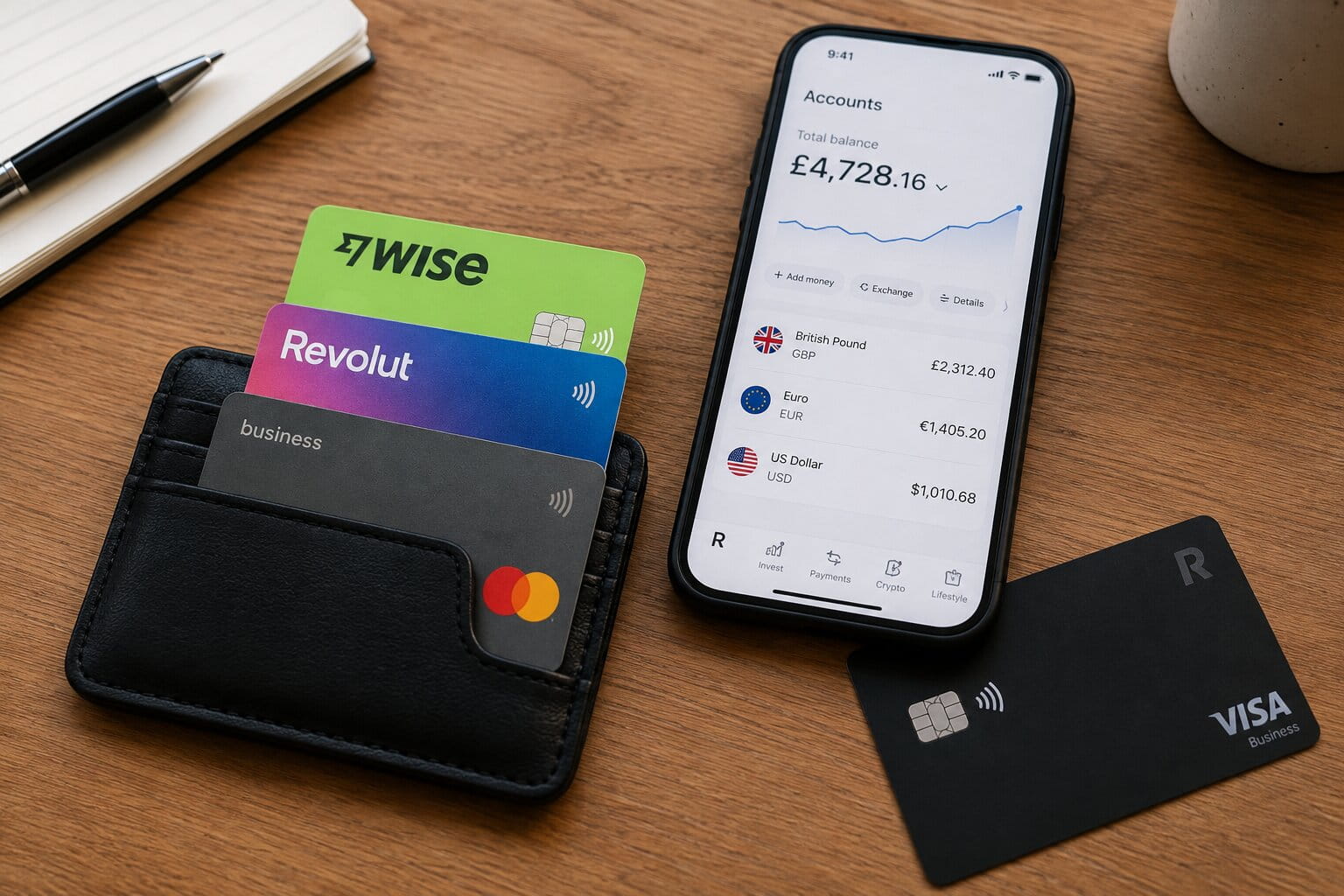
Neither Wise nor Revolut is a payment gateway on AliExpress, and that trips people up. Both issue Visa or Mastercard debit cards, so at checkout they process exactly like any other card, and what you are actually choosing is a cheaper conversion rate. The one exception is the UK, where Revolut turns up inside the Pay By Bank list as a bank you can pay from directly, which is a different route with different protections.
Pros
- Conversion at or near the mid-market rate instead of a bank’s marked-up one
- Free virtual cards you can create and destroy per supplier or per store
- Spending limits set per card
- Balances held in several currencies at once, with clean exports for bookkeeping
Cons
- Business account verification takes time and company documents
- Funds are safeguarded rather than deposit-insured in most jurisdictions
- Automated risk checks can lock an account after an unusual burst of merchant spend
- Free conversion is capped monthly on Revolut’s lower tiers
The maths is the argument here. Wise publishes its conversion fee per currency pair and it lands somewhere around half a percent on major routes. If your own bank marks up by two and a half, you keep roughly two points of margin on every order without touching anything else in the business.
Revolut works differently and the difference matters at volume. Conversions are free at the interbank rate only up to a monthly allowance set by your plan, which is modest on the free tier. Past that you pay a fair usage fee of about half a percent, and conversions made between Friday evening and Sunday evening carry roughly another percent while the currency markets are closed. Order on a Saturday on a free plan and the cost advantage largely disappears, so check your plan’s allowance against your monthly sourcing spend before you assume it is the cheap option.
What Revolut does better is card management. You can spin up a disposable virtual card for a supplier you are testing, cap it at $200, and delete it afterwards. Wise is stronger for holding real balances in USD, EUR, GBP, and others with local account details, which helps when marketplace payouts arrive in a currency you would rather not convert twice.
Both providers reserve the right to review accounts that look like they are processing payments for third parties, so keep your account documentation honest about what the business actually does.
6. Payoneer
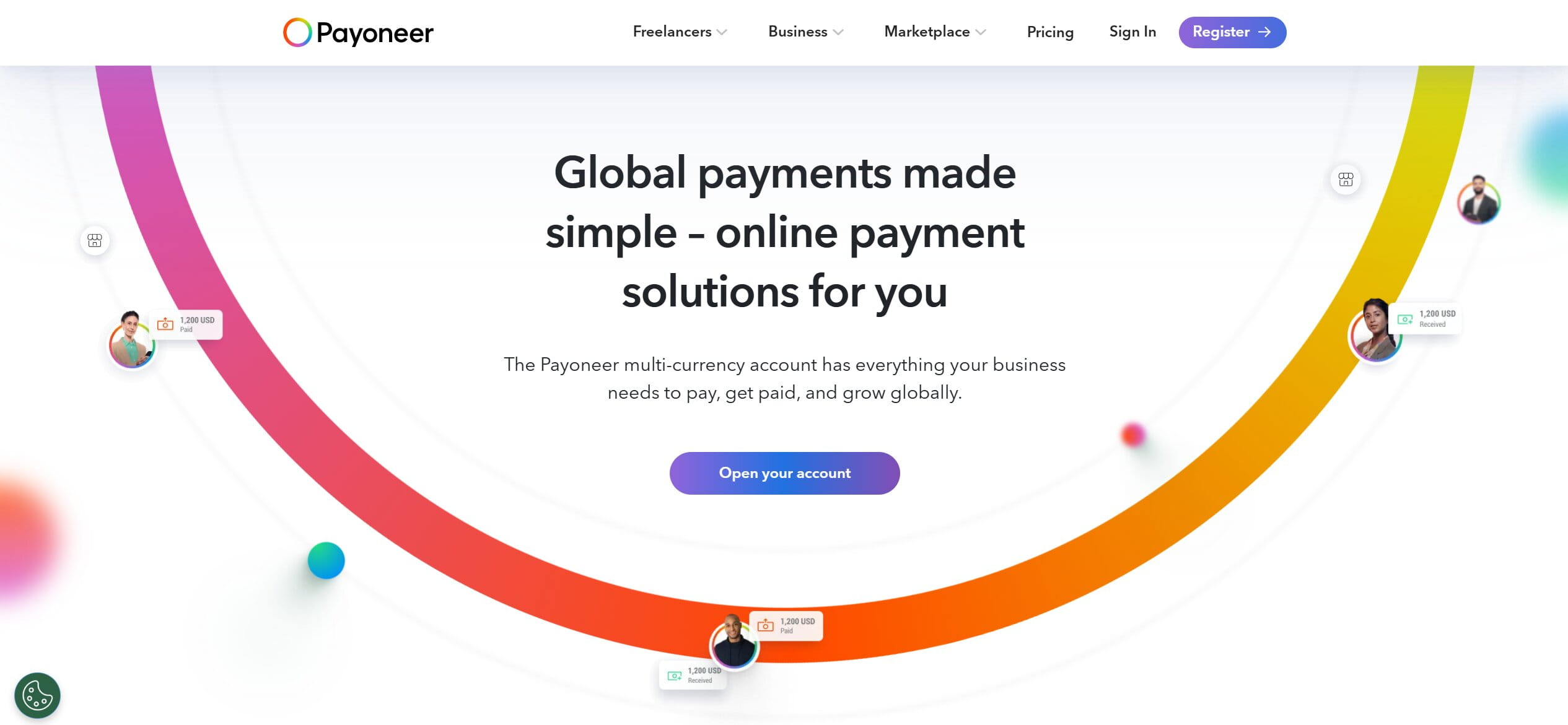
Payoneer, founded in 2005, gives you receiving accounts in several currencies plus a prepaid Mastercard you can use at AliExpress checkout.
Pros
- Local receiving accounts in several currencies
- No conversion cost when your balance and your spending share a currency
- Straightforward signup
Cons
- Verification can drag on for weeks
- A layered fee schedule that is easy to misread
- Expensive on cross-currency spending
Read the pricing before you commit, and be sceptical of any article that hands you a single number. Payoneer’s own FAQ declines to name one: it says an annual account fee may apply when activity falls below a specified threshold over twelve months, and that pricing varies by payment method, by the currencies involved, and by the countries of sender and recipient. The figures that circulate in comparison posts, most often a flat 1%, do not come from that page.
What the published schedule does show is the shape of the cost. Expect an annual account fee in the region of $30 when receiving volume is low, a conversion charge running to several percent when the card currency differs from the transaction currency, and near-zero cost when they match. Check your own account’s fee section before you route sourcing spend through it, because the terms attached to your registration country are the ones that will actually apply.
Where Payoneer earns its place is currency matching. If you are selling on Amazon, Etsy, or Walmart in USD and sourcing in USD, holding that balance and spending it straight from the card avoids two conversions. Route a cross-currency flow through it and the arithmetic reverses, which matters most if you work high-ticket niches where a single order carries real money.
7. Wire Transfer
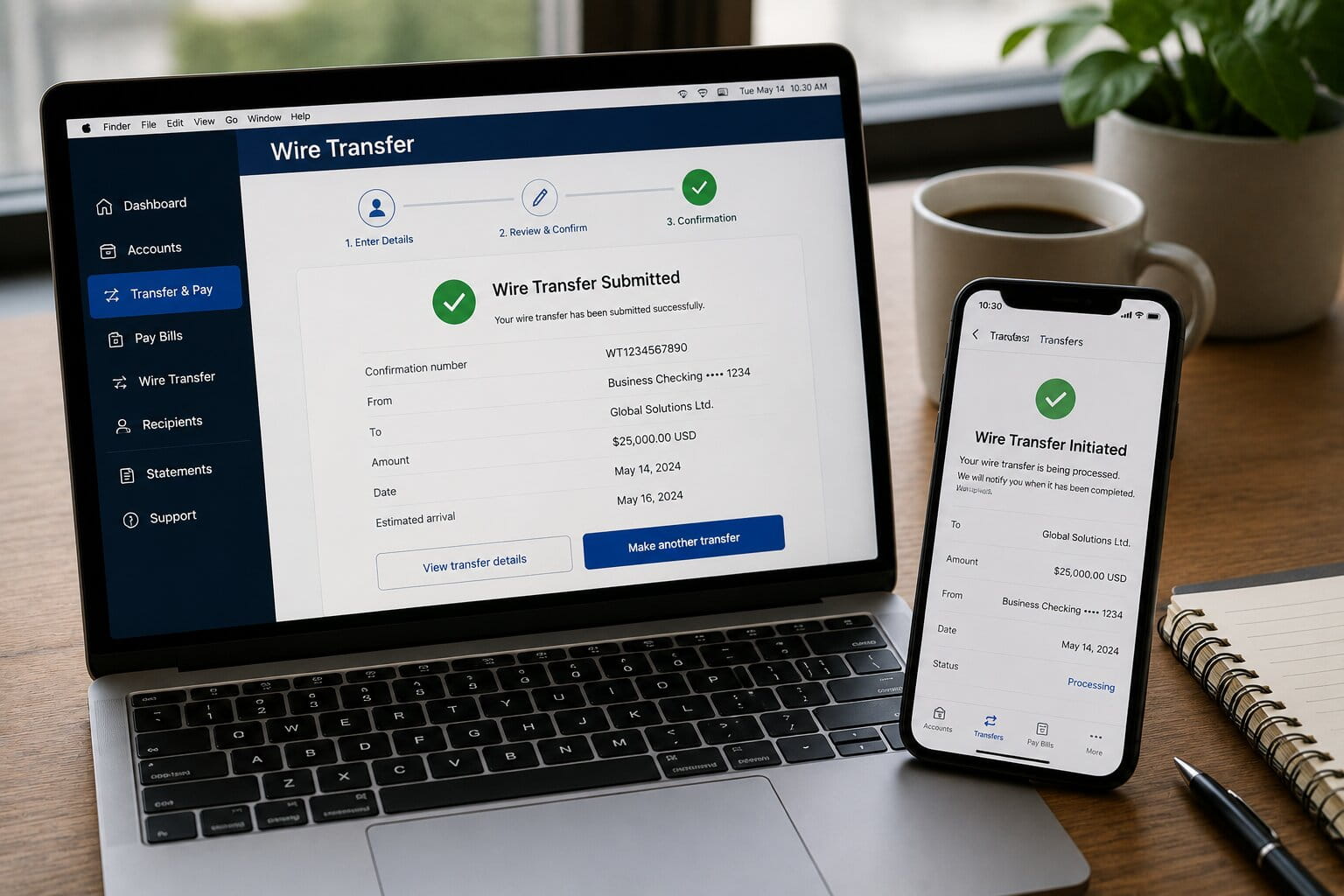
Direct transfers move money from your bank account through the banking network. Settlement takes one to four business days depending on the corridor, and AliExpress sets a minimum order value of $20.01 before the option becomes selectable.
Pros
- Low percentage cost on large amounts
- No card limits to run into
- A clean audit trail for accounting
Cons
- One to four business days to settle
- Sometimes requires extra documentation
- Useless for the rapid small-order rhythm dropshipping runs on
Use it for bulk restocking or when you are prepaying a supplier for a private-label run through AliExpress. Do not use it for daily order fulfilment.
8. Alipay
Launched in 2004 and now run by Ant Group, Alipay is AliExpress’s native wallet, and almost every guide in the search results ranks it first. That ranking does not survive contact with a US checkout, where Alipay is not among the options offered at all. Checked across different sellers, including both an independent store and a Choice listing shipped by AliExpress, and then again with the billing region switched to the UK, the list never included Alipay once. An American buyer gets cards, PayPal, Google Pay, four instalment providers, and wire transfer. A British buyer gets much the same plus two open banking options. Alipay appears in neither.
Pros
- No extra platform charge on top of the order
- Fast settlement, with fewer authorization failures than third-party gateways
- Promotional bonuses through the Alipay rewards programme
Cons
- Not offered in US checkout, whatever the rest of the internet says
- Not covered by deposit insurance schemes such as FDIC
- Account verification runs slowly in some regions
Using Alipay on AliExpress is straightforward where it does appear, and setup takes a few minutes. Create the account, link a bank account or a Visa, Mastercard, Maestro, JCB, or Amex card, and from then on you authorize payments without re-entering card details. Because AliExpress and Alipay sit inside the same group, refunds route back faster when a dispute goes your way. The wider mechanics of dropshipping from AliExpress are worth reading alongside this.
Two limitations are worth knowing before you build around it. Alipay is a wallet rather than a bank, so the balance is not protected the way a deposit account would be. And in some markets verification asks for documents that take several days to clear.
9. Carte Bleue and Cartes Bancaires (France)
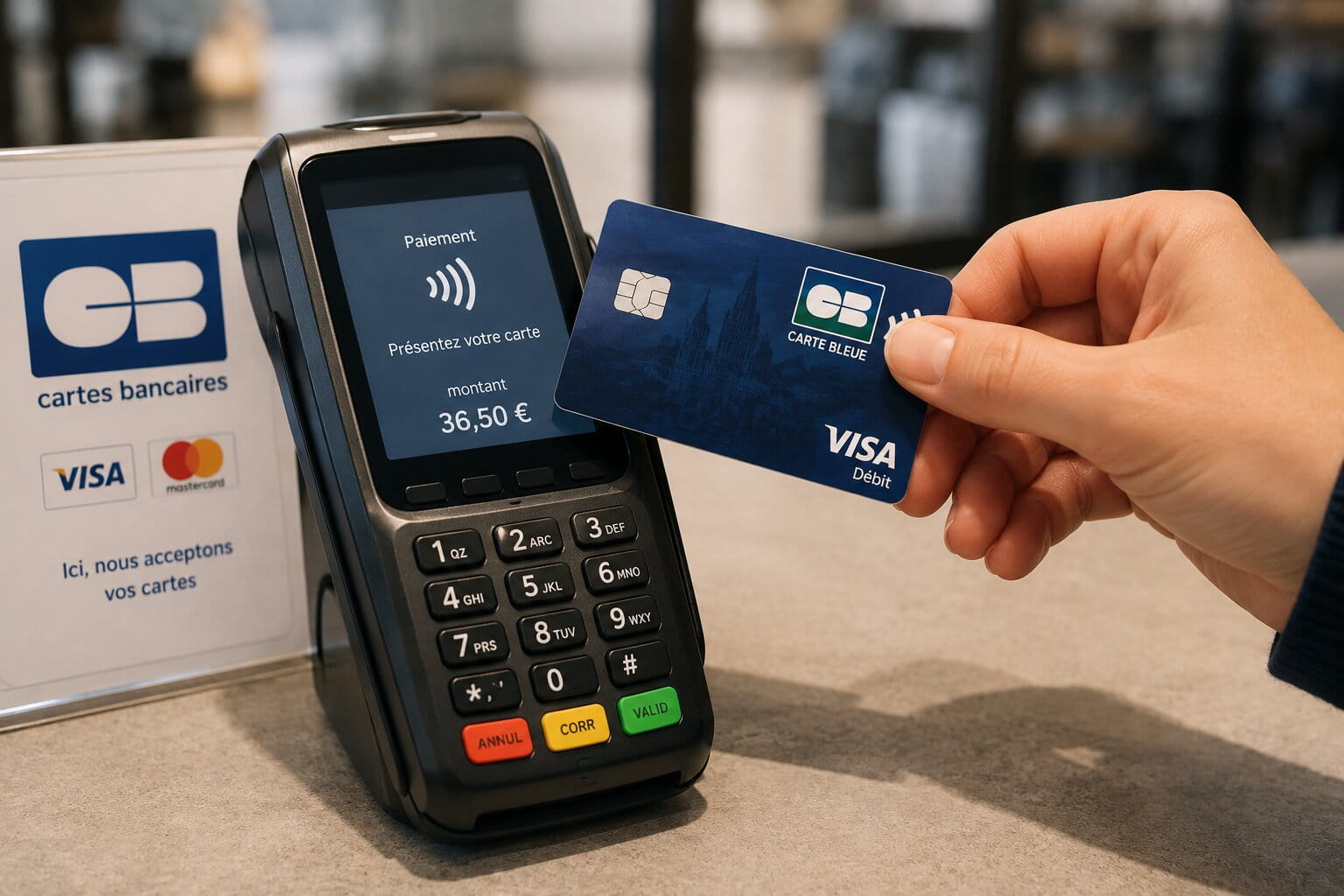
This one deserves a correction, because a lot of published guides get it badly wrong. Carte Bleue is a French bank card scheme, historically operated as CB and now folded into the Cartes Bancaires network. It is a payment product. It has nothing whatsoever to do with residency status, work authorization, or public transport in France. Those articles are confusing it with the carte de séjour, an entirely unrelated immigration document.
In practice, a French Carte Bleue is a co-badged card. It carries both the CB scheme and Visa or Mastercard, and on AliExpress it processes as a standard international card payment.
Pros
- Widely held in France
- Processes at AliExpress checkout like any Visa or Mastercard
- Backed by French consumer banking protections
Cons
- CB-only cards without an international co-badge will not process abroad
- Your bank may apply a non-eurozone transaction fee
If you are in France and your card is declined, check whether it carries the Visa or Mastercard logo alongside the CB mark. If it does not, ask your bank for an internationally enabled card.
10. Pay By Bank and European Local Rails
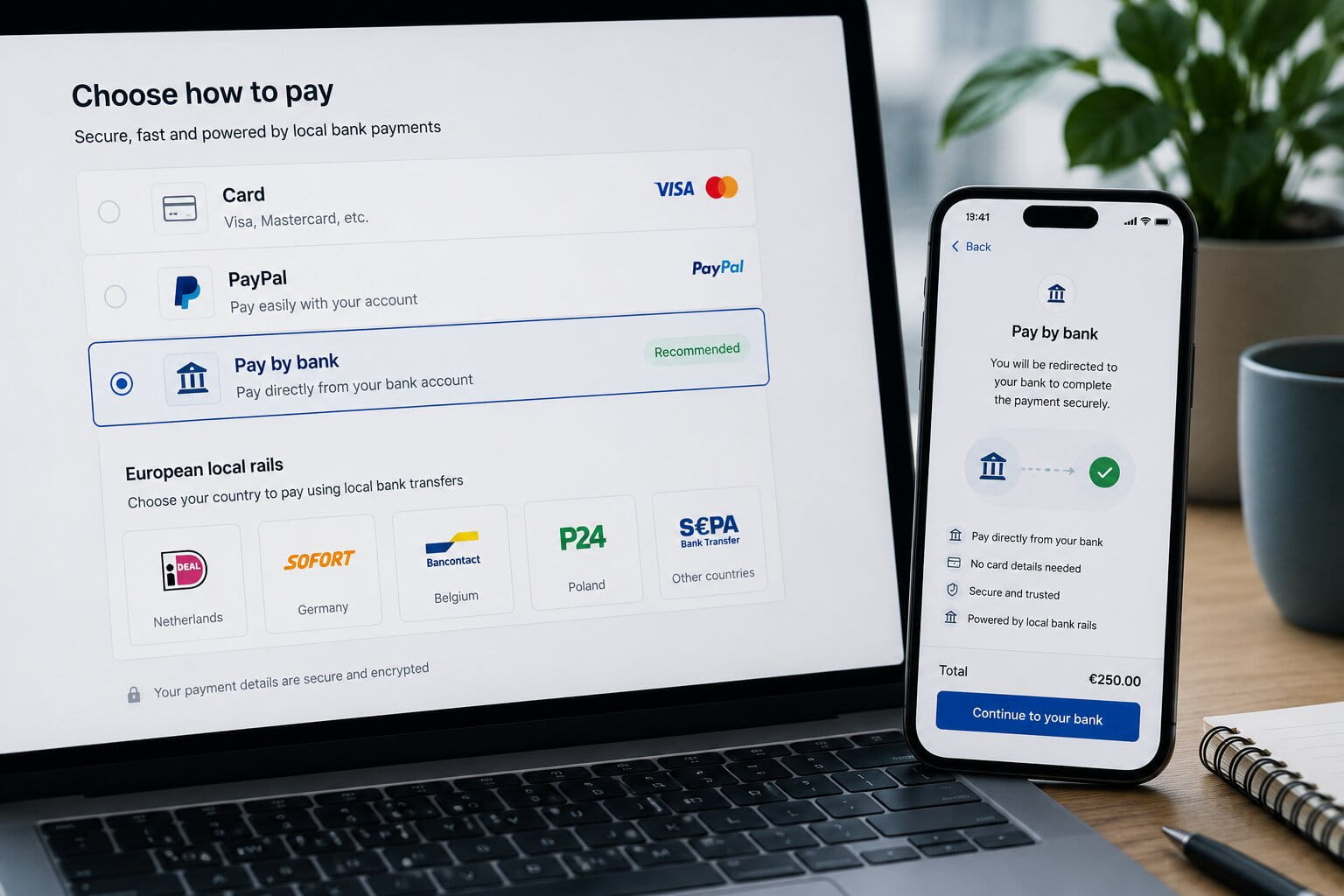
This is the category most guides miss entirely, and in the UK it is now impossible to miss at checkout.
A UK account is offered Pay By Bank, an open banking option that sends you into your own banking app to approve the payment. The bank list covers the mainstream retail names along with Monzo, Starling, and Revolut. Underneath it sits a second, separate entry, Trustly Pay by Bank, covering a shorter list of banks. Two open banking providers competing for the same click is unusual, and neither shows up in the comparison articles that currently rank for this topic.
Continental Europe has had its own versions for years. The Netherlands has iDEAL, which authorizes the payment inside your banking app in the same way. Poland has BLIK and Przelewy24, Belgium runs on Bancontact, and Germany still shows Sofort alongside Klarna.
Pros
- No card number involved anywhere in the flow
- Settles close to instantly, with little or no fee
- Avoids the currency markup a domestic card would apply
- Full escrow coverage, since it clears through AliExpress checkout
Cons
- Strictly domestic, so it stops working the month you move billing abroad
- Pull-based refunds can be slower than a card reversal
- No scheme chargeback rights of the kind Visa or Mastercard provide
That last point matters more than it looks. Paying by bank saves you a percentage point and removes the card network as a second line of defence, leaving AliExpress escrow to do all the work. For a £6 order that is a sensible trade. For a £300 sourcing run it probably is not.
A note on WebMoney and Qiwi, which still appear in older AliExpress payment guides aimed at Eastern Europe. Both have effectively fallen out of use on international AliExpress. Qiwi’s banking licence was revoked by the Russian central bank in 2024, and WebMoney options are no longer reliably available at checkout.
11. Cash on Delivery
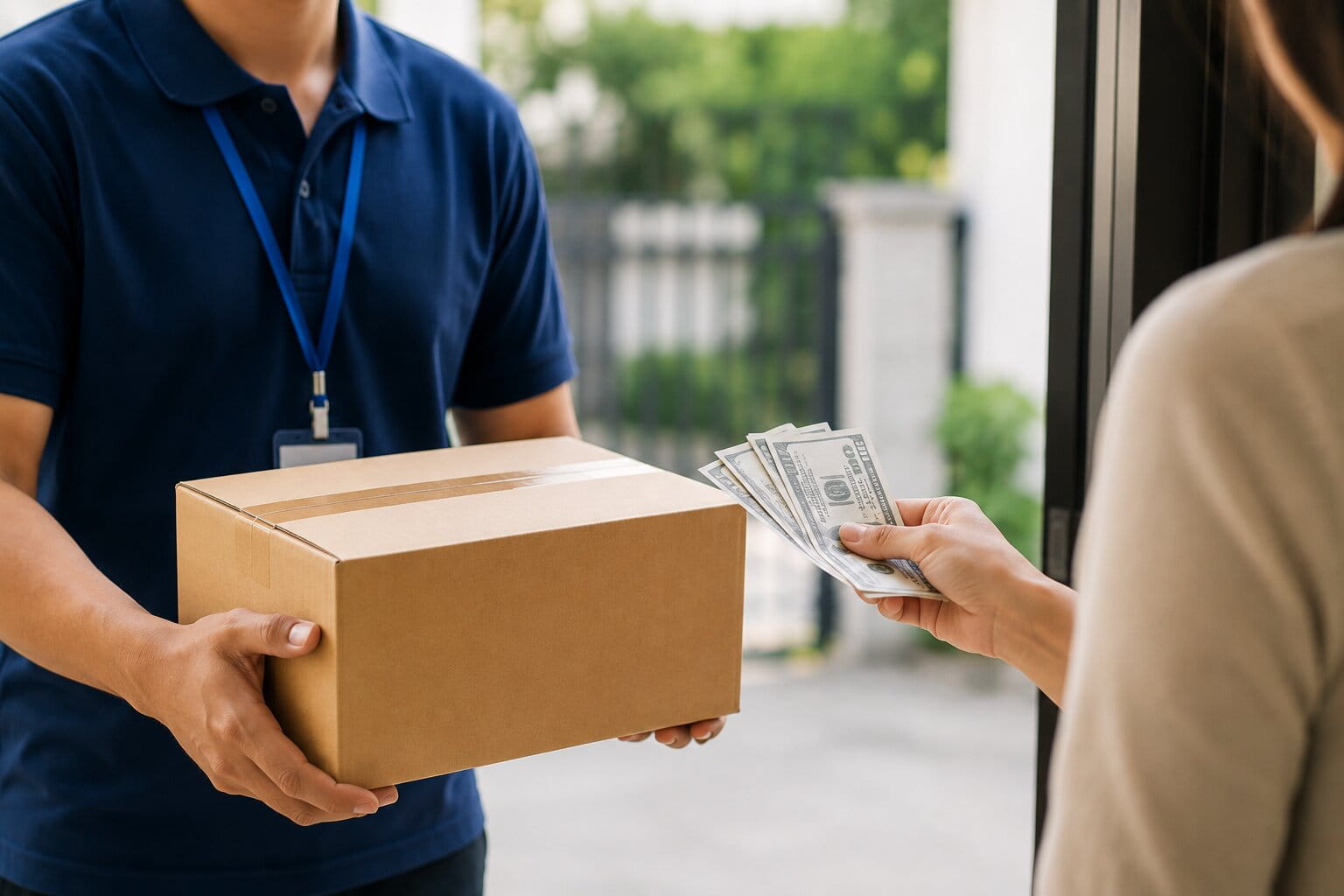
AliExpress COD is a Gulf-region feature more than a global one. It launched in Saudi Arabia through AliExpress Direct shipping and has been extended across GCC markets, and it only appears on listings that qualify for that logistics service. Order values sit inside a fixed window, and AliExpress adds a flat service charge per COD order on top of the item price.
Pros
- No card details shared with anyone
- You inspect the parcel before paying
- Workable in markets where card penetration is low
Cons
- A flat service charge on every COD order
- Eligible listings and order values are restricted
- Nothing completes until the courier collects the cash
For dropshipping specifically, cash on delivery is close to unusable. Your supplier ships to your end customer, and your end customer is not going to hand cash to a courier on your behalf. AliExpress COD is worth understanding mainly because your own customers may ask you for it in COD-heavy markets, which is a separate decision about your storefront rather than your sourcing.
12. Boleto, OXXO, and Cash Vouchers
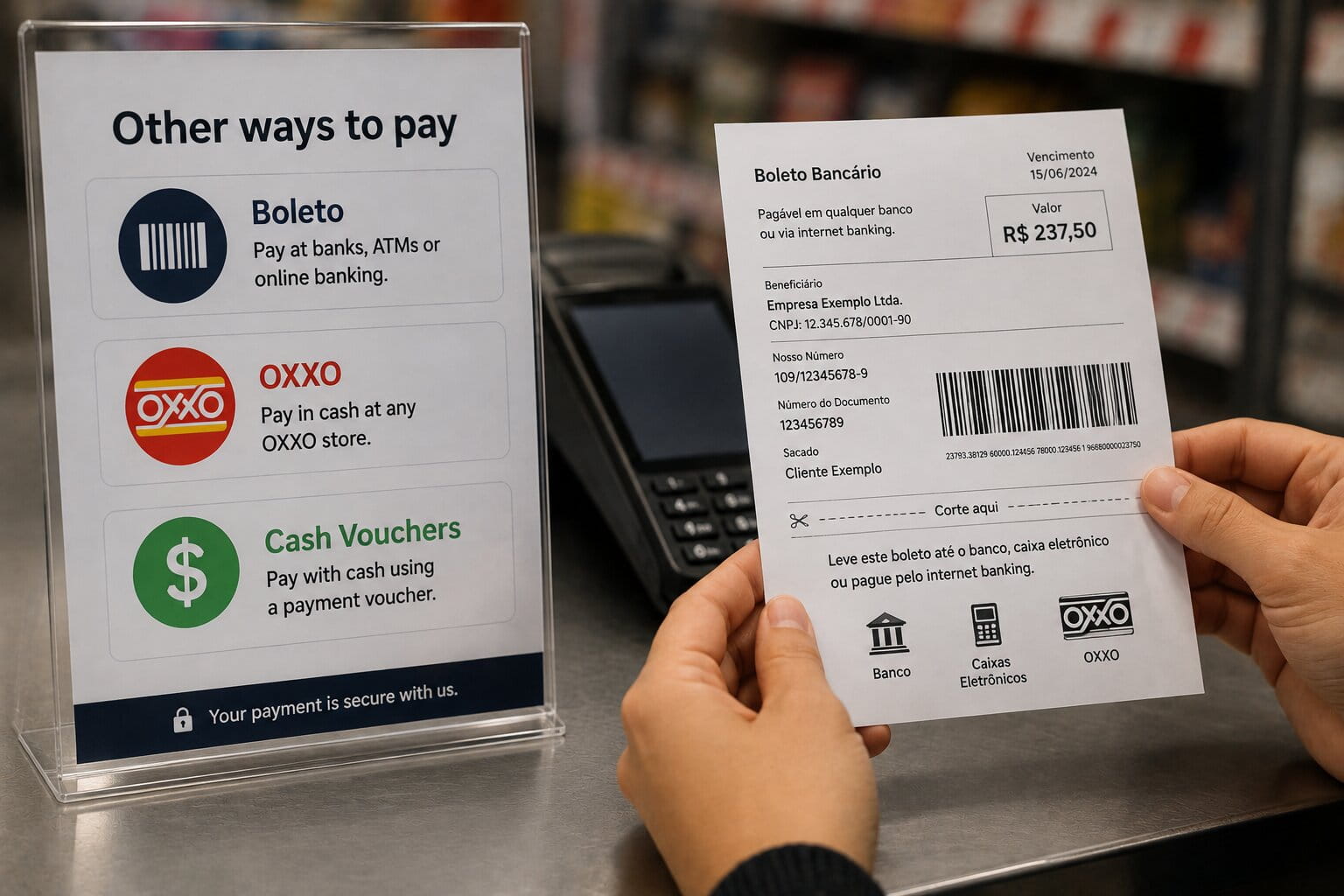
The voucher model is the last mechanism worth knowing, because it works nothing like the other eleven. Instead of charging an account, AliExpress issues you a payment slip with a reference number, and you settle it separately in cash or through your banking app.
Brazil has Boleto Bancário, payable at a bank, a lottery agent, or in-app. Mexico has OXXO, payable at any convenience store of that name. Mercado Pago and PayU cover a wider slice of Latin America with a mix of voucher and account-based flows.
Pros
- No card or credit check of any kind
- Trusted locally and familiar to buyers who avoid card payments
- Low fees
Cons
- The order does not confirm until the voucher is paid, usually a day or two
- Vouchers expire, and an expired one means placing the order again
- The manual step fits sampling far better than daily fulfilment
For a dropshipper this is a sourcing method of last resort. It is genuinely useful on the storefront side, though, if you sell into Brazil or Mexico, where a meaningful share of buyers will abandon a checkout that offers cards only.
Regional Wallets Beyond Europe
Two more groups are worth a mention even though they sit outside the main markets this guide is aimed at.
Southeast Asia has the deepest local coverage of anywhere. Search metode pembayaran aliexpress from Indonesia and you will find DANA, OVO, GoPay, and bank transfer through Virtual Account listed next to cards, with DOKU handling a share of the processing. Malaysia, Thailand, and the Philippines have their own wallet sets including GrabPay and Touch ‘n Go. Nigeria gained OPay after a stretch where USD card payments were genuinely difficult.
Western Union also survives on a shrinking number of listings. Where it is offered there is a minimum order value and only consumer-to-business payments are accepted. Treat it as a fallback for a market with limited card access rather than a working method.
What About the “AliExpress Obolo Payment Method Dropshipping Requirements”?
There is no AliExpress gateway called Obolo. Searches for “aliexpress obolo payment method dropshipping requirements” almost always trace back to a misspelling of OXXO, the Mexican cash-voucher method, or to a general question about Buy Now, Pay Later eligibility. Two things people are usually looking for when they run that search.
If you meant OXXO, the requirements are minimal. Select it at checkout in Mexico, receive a voucher with a reference number, and pay in cash at any OXXO store within the validity window. The order confirms once the payment posts, typically within a business day or two. There is no application and no credit check, though the delay makes it awkward for order volume.
If you meant BNPL eligibility, the requirements are set by the provider rather than by AliExpress, and AliExpress spells them out at checkout when an option is unavailable. For Klarna in the United States the conditions are a US mobile phone number and a US billing address, with Hawaii excluded. In the UK, Klarna asks only for a UK mobile number. PayPal Pay Later needs the basket to clear $30 in the US or £30 in the UK. Pay after Delivery needs $5 in the US and £8 in the UK. Wire transfer needs $20.01 regardless of the currency the checkout is priced in.
On top of that, providers apply their own rules: legal age in your country, a payment card or bank account registered in the same country, and a soft credit check. Some explicitly exclude purchases made for resale, which is worth reading before you build a fulfilment process on instalment credit.
How Do You Pay on AliExpress? Step by Step
The short version: add items to the cart, open the checkout page, expand the full payment list, choose your gateway, authorize, and the money sits in escrow until delivery is confirmed. Here is how to pay on AliExpress in practice, for anyone setting up a first account.
Start by completing your account profile with an accurate billing address, because a mismatch between your card’s registered address and your AliExpress profile is one of the most common causes of a declined payment. Add the products, then go to the checkout screen where the shipping address, delivery option, and total are shown.
The payment selector defaults to whatever you used last. Click through to the full list, because the panel shows only the first two or three options and the one you want is usually below the fold, along with any minimum order value attached to it. Choose your method, complete any 3-D Secure step your bank triggers, and wait for the confirmation screen rather than closing the tab early.
After that, AliExpress payments sit in escrow. The order status moves to awaiting shipment, then to shipped with tracking. Confirm receipt only after your end customer has the product in hand and is happy with it. Confirming early releases the money and shortens your dispute window for no benefit.
If you run volume through an automation tool, the flow is the same but the tool holds your credentials. Use a dedicated card there and check the tool’s charge log against your bank statement weekly.
Factors to Consider When Choosing an AliExpress Payment Method
Six things decide whether an AliExpress payment method suits a business rather than a shopper. Start with total cost rather than the headline fee. A gateway that charges nothing per transaction but converts at a poor rate can cost you more than one charging 1% at the interbank rate. Place a small test order and compare what actually left your account against what the checkout page said.
Settlement speed comes next, because every hour between your customer’s order and your supplier’s payment is an hour added to the delivery estimate your customer is watching. Cards, wallets, and PayPal clear fastest. Boleto, OXXO, and wire transfer are at the other end of that scale.
Then look at what happens when an order goes wrong. AliExpress escrow covers you inside the platform, PayPal adds a second and independent layer on top, and a credit card adds a third through scheme chargeback rules. Bank transfers and cash give you almost none of that.
Country availability decides more than most guides admit. Check your own checkout page rather than a comparison table written by someone in another market.
The factor people miss is behaviour under volume. A card that works fine for one order a week starts declining at forty a day, and a Revolut allowance that covers a hobby budget runs out in the first week of a real month. Ask about limits before you scale rather than during your first busy weekend.
Finally, consider how stable the provider is. Payment companies get sanctioned, lose licences, and exit markets. WebMoney and Qiwi are the cautionary examples. Keep a second method funded and verified at all times so a single suspension does not stop your fulfilment.
How to Pay Safely on AliExpress
The single rule that prevents most losses: if the payment does not go through the AliExpress checkout page, you have no escrow, no Buyer Protection, and no dispute process. Sellers who offer a discount for paying by wire, crypto, or a third-party link are asking you to give up every protection you have.
Beyond that, a short list that experienced buyers follow without thinking:
- Confirm the URL is the real AliExpress domain with HTTPS before entering anything.
- Use a card issued specifically for supplier payments, with a monthly cap.
- Turn on two-factor authentication on your AliExpress, Alipay, and PayPal accounts.
- Keep your browser, operating system, and antivirus current, especially on the machine running your automation tools.
- Use unique passwords through a password manager rather than reusing one across your stack.
- Treat unusually cheap listings from new sellers with no order history as what they usually are.
What Are the Available Currencies on AliExpress?
AliExpress displays prices in over 100 currencies but settles payments in a far shorter list. Display currency and settlement currency are two different things, and confusing them is a common source of unexpected charges. AliExpress will show you prices in Polish złoty, Indian rupee, Nigerian naira, Brazilian real, and dozens more so you can shop comfortably. That does not mean the charge hits your card in that currency.
How to Change the Currency on AliExpress
The default is USD. Change it from the settings dropdown at the top of the site, or under account settings in the mobile app. Shopping in your own currency makes margin calculation faster, but always check the final charge on your statement, since the conversion may happen at your bank rather than at AliExpress.
What Currencies Does AliExpress Accept Payments In?
The settlement list is short and centres on US dollars, euros, and pounds sterling, with additional currencies enabled for specific local rails. If your payment fails with a currency error, switching your display currency back to USD resolves it in most cases.
How to Resolve AliExpress Payment Issues and Failed Payment Codes
Most failures trace back to card limits, mistyped details, currency mismatches, or a security block on the bank’s side, and each one returns a CSC code that names the cause. Failed payments happen on every marketplace, including Amazon and eBay. What AliExpress does well is return a specific code instead of a vague error, so you can usually fix the problem in a couple of minutes.
| Error Code | Likely Cause | Fix |
|---|---|---|
| CSC_7200006 | Currency not supported | Switch the account currency, usually to USD |
| CSC_7200009 | Payment exceeds card or bank limit | Raise the limit or use another card |
| CSC_7200011 | Insufficient funds | Top up the card or account |
| CSC_7200012 | Expired card or wrong expiry date | Check the expiry, contact the bank, or use another card |
| CSC_7200015 | Payment rejected by the issuing bank | Call the bank or switch payment method |
| CSC_7200020 | Incorrect card information | Re-enter details carefully, including billing address |
| CSC_7200021 | Incorrect CVV | Re-check the three or four digit security code |
| CSC_7200026 | Verification required for security reasons | Submit a claim through Alipay and allow one to three days |
| CSC_7200022, CSC_7200051, CSC_7200001 | Card not supported or details wrong | Verify details or contact the issuer |
| CSC_7200034 | Incomplete order information | Check shipping details and Alipay account verification status |
| CSC_7200040 | Card restricted by the bank | Contact the bank or use an alternative card |
Sometimes the fault is on the platform side rather than yours. When the code makes no sense against your account, work through this list: try the mobile app if you were on desktop or the reverse, switch browsers or open an incognito window, disable ad blockers and privacy extensions for the checkout page, set the currency to USD, delete the saved card and re-add it, then wait twenty minutes and retry.
If a payment shows as taken but the order did not confirm, do not pay again immediately. Duplicate authorizations are common in that situation, and the second charge takes longer to reverse than the first one takes to clear.
How to Get and Use AliExpress Coins
AliExpress coins are loyalty points worth roughly one US cent each. The programme is small money, but it is free money on spend you were making anyway. You collect coins through daily check-ins, in-app games and tasks, reviews, and purchases. As a dropshipper you keep the coins even though your customer keeps the product.
How to Redeem AliExpress Coins
The standard rate is 100 coins to one dollar of discount. Redemption happens in the coins section of the app, and it works in two ways. The direct route applies coins against the price of items carrying a coin badge, with a cap on how many you can spend per order, typically several dozen on ordinary listings and rather more on flagged deals. The other route converts coins into platform coupons, commonly in $1, $3, and $8 denominations, which release in batches through the day and disappear fast during sale events.
A few rules worth remembering. Coins cannot be converted to cash or transferred to another account. Check-ins, games, and the full Coins and Coupons section live in the mobile app rather than the desktop site. And coins expire around six months after you earn them, on the last day of that month, so a balance you have been building quietly since spring will not survive the year.
Payment Methods For Dropshipping Beyond AliExpress Checkout
It is worth separating the two halves of the money flow, because new sellers often merge them in their heads. Your sourcing gateway and your storefront gateway are separate decisions, and you need a processor collecting from customers before you can pay any supplier on AliExpress. On the inbound side you need a processor that will accept a dropshipping merchant, hold funds for a reasonable settlement period, and handle chargebacks without freezing you. Stripe, PayPal, Shopify Payments, and regional acquirers all serve this market, with varying appetite for the model.
On the outbound side you have everything covered above. The gap between the two, the days between a customer’s card clearing and your supplier being paid, is your working capital problem. That gap is why BNPL and business cards with a grace period get used by sellers who are otherwise profitable.
One practical rule: keep the two sides on different providers. If your inbound processor and your supplier payment method are both PayPal accounts under the same profile, a single risk review can stop your entire operation at once.
Where Automation Fits Into the Payment Flow
Everything above assumes a human at the checkout page. That stops being realistic quickly: past roughly twenty orders a day the bottleneck is no longer your payment method, it is the person retyping addresses. Retyping a customer’s address into AliExpress forty times a day produces exactly the mistakes you would expect, and a mistyped address turns into a dispute you cannot win because the tracking shows delivered.
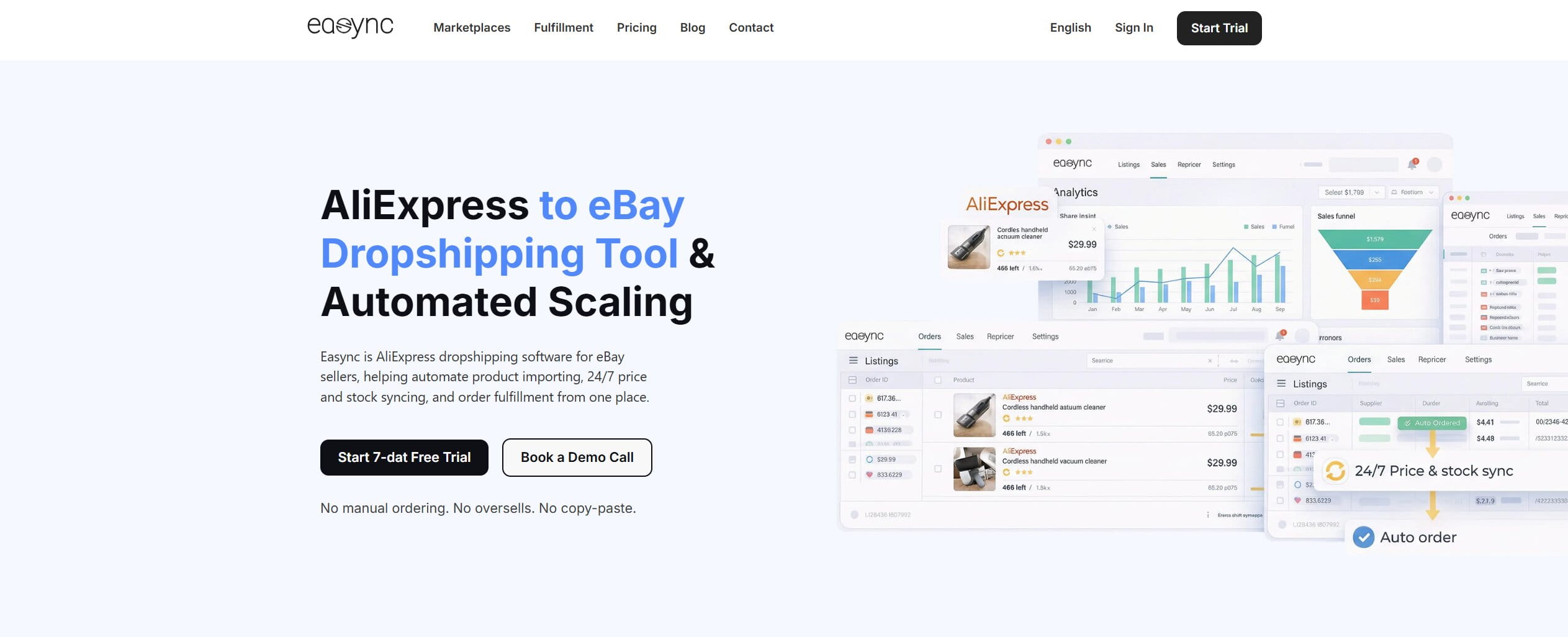
Easync handles that leg for AliExpress to eBay sellers. It bulk-imports products under your own pricing rules, monitors supplier price and stock around the clock so listings do not oversell, places the order on AliExpress when a sale comes in, and pushes the tracking number back to your store. Separate integrations cover Shopify, WooCommerce, Walmart, and Amazon if your storefront sits elsewhere.
Worth planning for at the same time: as volume climbs, your card limits and your eBay selling limits tend to bite in the same week.
Your payment method sits behind all of that, which is the practical argument for keeping a dedicated card on the account: one card, one statement line per order, and a spending cap that limits the damage if something misfires at three in the morning.
The trial runs seven days and does not ask for a card, so you can create an account and connect a single store before moving anything else across.
Frequently Asked Questions
Does AliExpress have a cash on delivery option?
In the Gulf states, yes, on listings that ship through AliExpress Direct, and with a flat service charge added per order. For dropshipping it is not usable, since your end customer would be the one handing cash to the courier.
Why won’t my card work on AliExpress?
Usually insufficient funds, a limit, mistyped details, a billing address mismatch, or your bank blocking a foreign transaction it considers suspicious. The error code table above will tell you which. If everything looks correct on your side, the block is almost always at the issuing bank, and a phone call fixes it faster than retrying.
Can AliExpress be trusted?
It is an Alibaba Group platform processing enormous volume with escrow on every order, so the platform itself is sound. Individual sellers vary widely. Check order counts, review history, and how long a store has operated before you send it your first order, and never let a supplier move the transaction off-platform.
What is the best AliExpress payment method for dropshipping?
In the US, UK, and Europe it is a card, and specifically a multi-currency card from Wise, Revolut, or a business bank, because conversion is where the money quietly goes. PayPal is worth keeping available for larger orders, since it adds a dispute route independent of AliExpress. Ignore the guides that tell you to use Alipay: American buyers are not offered it at checkout.
Does AliExpress accept PayPal?
Yes, in the US, UK, and much of Western Europe, and it sits at the top of the payment list rather than being buried. The gate is your billing country, not the seller: the same account shows PayPal on a small trader’s listing and on a Choice listing alike. If you do not see it, the cause is your account region rather than the store you are buying from.
Does AliExpress accept Cash App?
Partly, and this is where most published answers are out of date. Cash App Afterpay shows up as an instalment option in US checkout, so Cash App’s Afterpay arm is integrated. Paying directly from a Cash App balance is a different thing and is not offered, though a Cash App Visa debit card works anywhere a normal Visa does.
Can I split an AliExpress payment into instalments?
Yes, and in more ways than most people expect. A US checkout offers Klarna, PayPal Pay Later, Cash App Afterpay, and Pay after Delivery. A UK one swaps Cash App for Clearpay and adds a separate Pay in installments option. Each carries its own minimum order value, so small baskets will show them greyed out. The seller receives the full amount immediately either way, and the eligibility rules come from the provider rather than from AliExpress.
Is it safe to save my card on AliExpress?
Card details are tokenized and sellers never see them, so the platform-side risk is low. The larger risk is your own account being accessed. Enable two-factor authentication, and if you would rather not store anything, use a virtual card you can cancel in one click.
Wrapping Up
The right AliExpress payment method depends on where you are billed, what you sell, and how much volume you push, whether that is a single storefront or AliExpress dropshipping to Amazon. For most sellers in the US, UK, and Europe it comes down to a card with a sane conversion rate, PayPal held in reserve for high-value orders, and an instalment option when the timing between customer payment and supplier payment gets tight. If you are in continental Europe, check whether iDEAL, BLIK, or Bancontact is offered before defaulting to a card, since the local rail is usually cheaper.
Whatever you choose, keep every transaction inside AliExpress checkout so escrow and Buyer Protection stay intact, keep a verified backup method ready for the day your primary one declines, and check your effective cost per order every quarter. Payment terms change more often than most sellers notice, and the difference between a 1% and a 3% cost of funds is the difference between a healthy margin and a busy year with nothing left at the end of it. Once that side is settled the rest is execution, which is where Easync takes over.