Quick answer: To use AliExpress for dropshipping, you list a supplier’s product on your own sales channel, buy it from the AliExpress seller only after a customer has paid you, and enter the customer’s address so the parcel ships straight to them. The model still works in 2026, but two things have changed since most guides were written: the US ended duty-free entry for low-value parcels in 2025, and the EU introduced a flat €3 customs duty on parcels under €150 from July 2026. This guide covers how to dropship from AliExpress step by step, which channels allow it, and how the new duty rules change your margin math.
Key Takeaways
- AliExpress permits dropshipping and gives sellers a free Dropshipping Center for product research, so the platform side is rarely the obstacle. Marketplace rules on Amazon, eBay and TikTok Shop are what you need to read closely.
- Dropshipping on AliExpress means you pay the supplier only after your buyer has paid you, so the cash you need up front goes into your store setup and your ads rather than into stock.
- Parcels to US buyers are no longer duty-free at any value, and parcels to EU buyers under €150 carry a €3 duty per item. Price with those costs inside or show them at checkout.
- Supplier vetting and a sample order matter more than the product itself. Most refunds trace back to the seller you chose, not the item.
- Manual fulfillment works for a few orders a day. Beyond that, automating price and stock updates stops being optional.
How AliExpress Dropshipping Works
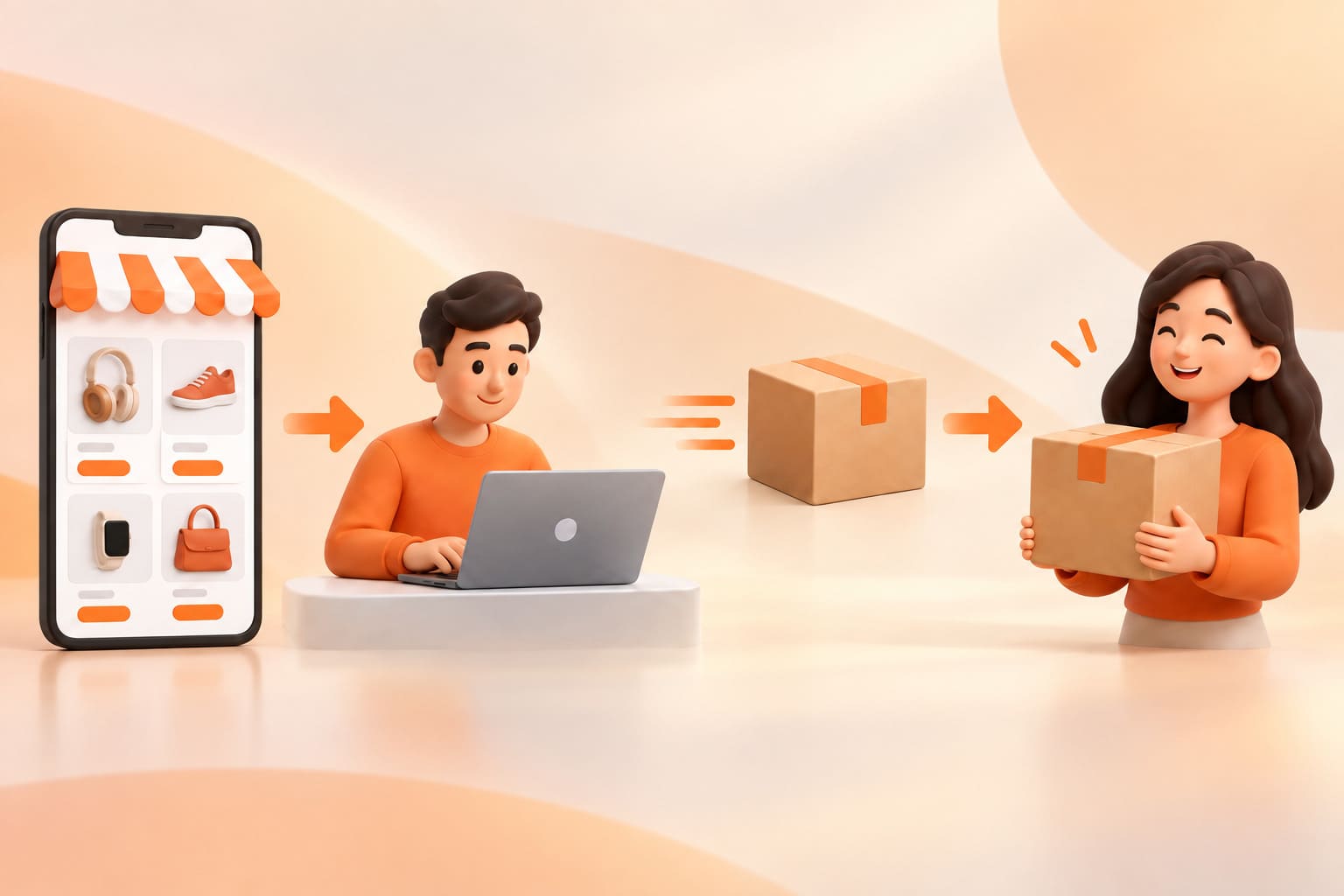
AliExpress dropshipping works on a simple gap: you sell a product you do not own, then buy it from a Chinese supplier at the moment of sale and have it shipped to the buyer under your name. A typical order in 2026 runs like this:
- You list a posture corrector on your Shopify store or eBay account at $24.99.
- A buyer pays you through your channel’s checkout.
- You open the same item on AliExpress, pay the supplier’s price (say $7 plus shipping) and enter the buyer’s address instead of your own.
- The supplier packs and ships the parcel, and the tracking number goes back to your buyer.
- The difference, after fees, ads and any duty, is your margin.
Processing on the supplier side usually takes a few days, and cross-border delivery adds anywhere from about a week to three weeks depending on the shipping method and destination. That gap between payment and delivery is where most support tickets come from, so an honest delivery estimate on the product page does more for your ratings than any discount.
Under roughly ten orders a day, doing this by hand is manageable. Above that, checking prices, watching stock and chasing tracking numbers eats the working day, and that is the point where software takes over (more on that near the end).
Pros and Cons of Dropshipping With AliExpress
Dropshipping with AliExpress trades capital risk for control. You keep almost nothing tied up in stock, and in exchange you give up most say over packaging and delivery speed. Knowing those trade-offs is what keeps a dropshipping business running past the first quarter.
Pros:
- You buy only what has already sold, so unsold inventory is never your problem.
- Tens of millions of listings across most consumer categories, with no minimum order quantity.
- Many sellers are manufacturers or wholesalers, which leaves room for a real margin after ad spend.
- Buyer protection covers you if a parcel never arrives or the item is not as described.
Cons:
- Delivery from China is slower than a domestic supplier, and a US or EU warehouse option is not always available for the item you want.
- Quality varies a lot between sellers using the same product photo.
- Duties, currency conversion and payment fees now take a visible slice of an already thin margin.
- Anyone can list the same item, so competition on trending products is intense.
Software can take over the clerical work, but the parcel still travels the same distance. Many sellers use AliExpress to test products cheaply, then move proven winners to a supplier with local stock, a CJ-style fulfilment agent, or an Alibaba manufacturer who will hold inventory for them. If delivery speed becomes the reason you lose sales, that is the moment to read through the AliExpress alternatives instead of discounting again.
Can You Dropship From AliExpress?
Yes. AliExpress does not require a subscription or an approval to buy on behalf of a customer, and it runs a free Dropshipping Center with product research and supplier data built for exactly this use. AliExpress allows it. The question is whether your sales channel does, and each one draws the line in a different place.
| Channel | Dropshipping allowed? | Cost to start | Best fit |
|---|---|---|---|
| Shopify | Yes, no platform restriction on where you source | Monthly subscription after a free trial | Building a brand you own and control |
| eBay | Yes, from a wholesale supplier you have an agreement with; buying from another retailer or marketplace after the sale is prohibited | No store subscription required to list; fees per listing and per sale | Sellers who want existing traffic without ad spend |
| Amazon | Yes, only if you are the seller of record on every packing slip and invoice | Individual per-item plan or Professional monthly plan | High-intent buyers and sellers with tight operations |
| TikTok Shop | Not prohibited as a model, but the Fulfillment Policy sets dispatch and delivery deadlines and a 95% valid-tracking requirement that a parcel shipped from China rarely meets for a US-based store | No subscription; fees are deducted per order | Video-friendly impulse products held in local stock |
Two policies are worth reading in full before you list anything. Amazon’s Drop Shipping Policy allows a third party to fulfil your orders only when you are clearly the seller of record: no supplier name, invoice or logo may appear on the packing slip or the box, and you handle returns yourself. eBay’s policy allows dropshipping from a wholesale supplier you have an agreement with, and prohibits listing an item and then buying it from another retailer or marketplace that ships to your buyer.
In practice, an AliExpress seller who acts as your wholesale source, ships without their own branding and meets the handling time in your listing keeps you inside both sets of rules. Grabbing random listings order by order does not. If eBay is your channel, the AliExpress to eBay guide walks through account and listing setup in detail. TikTok Shop is the odd one out: its Fulfillment Policy grades you on dispatch speed, delivery time and tracking validity rather than on where the stock sits, so it works for AliExpress products only once a winner is moved to a warehouse in the buyer’s country.
How to Use AliExpress to Dropship: Step by Step
The order of these steps matters more than beginners expect. Sellers who pick a channel first and a product second usually end up with listings that fit the platform but not the buyer. Whether you are learning how to use AliExpress for dropshipping on a Shopify store or on a marketplace, the sequence is the same.
1. Pick a Niche and Confirm Demand
A store built around one buyer, say people who groom their own dogs or people who work from a tiny desk, converts better than a general store because the copy and the product mix speak to the same person. Check Google Trends for steady or rising interest, browse the subreddits and TikTok hashtags where that buyer already talks, and look at Amazon Best Sellers in the category to see which price points move.
Categories That Keep Working for AliExpress Sellers
Trends rotate every season, but a handful of categories have stayed reliable for AliExpress sourcing over the past few years, and for reasons that have little to do with fashion.
- Desk and home-office organisation. Cable boxes, monitor risers, under-desk drawers. Light, unbreakable, and bought by people who have just looked at the mess on their own desk, so the ad only needs to show the before and after. Acrylic makeup organisers scratch the same itch in a different room.
- Pet enrichment. Slow feeders, lick mats, puzzle toys, LED collars for evening walks. Owners spend on their animals without the guilt they feel spending on themselves, and a dog on video sells the product better than any copy.
- Compact fitness and posture. Resistance bands, grip trainers, posture correctors. Small parcels, few returns, and a buyer who is motivated at the moment of purchase.
- Reusable and low-waste household items. Silicone food covers, produce bags, refillable dispensers. Cheap to source, easy to bundle, and the “replace the disposable version” pitch writes itself.
The list itself will date; the common thread will not. They are cheap to ship, they demo well in a ten-second clip, and they solve a problem the buyer already knows they have. A category that fails one of those three tests usually needs a bigger ad budget than a first store can afford.
Before committing, run a small ad test or post in a relevant community and see whether anyone asks where to buy. A product that solves a visible problem and can sell at roughly three times its landed cost leaves room for ads, fees and the occasional refund.
2. Find the Product and Vet the Supplier Together
Product and supplier are one decision on AliExpress, because the same item is listed by dozens of sellers and the seller is what determines whether it arrives. Filter listings by order count and rating, then read the most recent reviews with photos instead of trusting the overall score. A listing with a few hundred orders, a rating above 4.5 and photo reviews from the last few months tells you the supplier is currently shipping what the pictures show.
On the seller side, look at how long the store has been active, its positive feedback percentage and how quickly it answers a pre-sale message. Ask about processing time, whether they can ship without invoices or AliExpress branding, and which shipping options reach your target country. Then order one unit to your own address. A sample costs a few dollars and settles two things reviews cannot: real transit time and real build quality.
Two checks save the most trouble later. First, search your own marketplace for the supplier’s store name or product title: some AliExpress sellers also list directly on eBay, and you will not beat them on price for their own item. Second, note whether the listing carries the Choice badge. Choice orders ship through AliExpress’s own logistics with more consistent delivery times and simpler returns, which is worth a slightly higher unit price when your buyer is in the US or EU.
Skip anything that looks like a branded or licensed product unless you have authorisation. A reverse image search and a scan for “replica” style wording catch most of them. The Dropshipping Center’s product analysis view adds a sales trend and a logistics score for a specific listing, which helps when you are choosing between two similar sellers. Once you place several orders a week with the same store, ask for a small discount or a better shipping rate. Suppliers do negotiate with repeat buyers, and having a second vetted seller for every product that sells protects you when the first one runs out.
3. Set Up Your Sales Channel
Your channel decides how much operational work lands on you. Shopify gives you a branded store, control over pricing and customer data and a large app ecosystem, in exchange for a monthly fee and the job of finding your own traffic. Amazon and eBay hand you buyers on day one and, in return, hold you to handling times and the packaging rules described above.
Whichever you choose, publish the basics before the first listing goes live: contact details, a returns policy and a shipping policy with an honest delivery window. Buyers who know a parcel takes two weeks rarely open a dispute on day ten. Buyers who expected two days always do.
4. Import Products and Write Listings That Are Yours
Copying an AliExpress title and description into your store is the fastest way to signal “dropshipper” to a buyer and to end up with the same page as fifty other sellers. Import the product data with a tool such as Easync or a CSV, then rewrite. Lead the title with the benefit, write the description for the buyer you defined in step one, and add a size chart or spec table wherever it removes a question. Supplier photos are fine to start with, but a few shots of your own sample make the page look like a shop rather than a catalogue.
The listing is the one part of this business that competitors cannot copy from you as easily as you copied the product, so it deserves more time than the import did.
5. Fulfil the First Orders
Done by hand, an order goes like this: open the AliExpress listing, buy the exact variant, paste the buyer’s name and address in place of your own, and leave the seller a note asking for no invoices or promotional inserts. When the tracking number appears, copy it to your channel so the buyer sees movement. It takes a few minutes per order, which is fine at three orders a day and painful at thirty.
Send a confirmation email as soon as the order is placed and a second one when tracking goes live. Most “where is my order” messages are caused by silence, not by the delay itself.
6. Handle Support and Returns
Reply to support tickets within a day, even if the answer is only a tracking update. For a lost or damaged parcel, open a dispute with the supplier through AliExpress Buyer Protection within the window shown on the order, and refund or replace for your customer without waiting on the outcome. For low-value items, refunding without asking for a return is usually cheaper than paying return postage. Keep a simple log of refund reasons. After a month it shows you exactly which supplier or product to drop.
Duties, Taxes and Real Margins in 2026
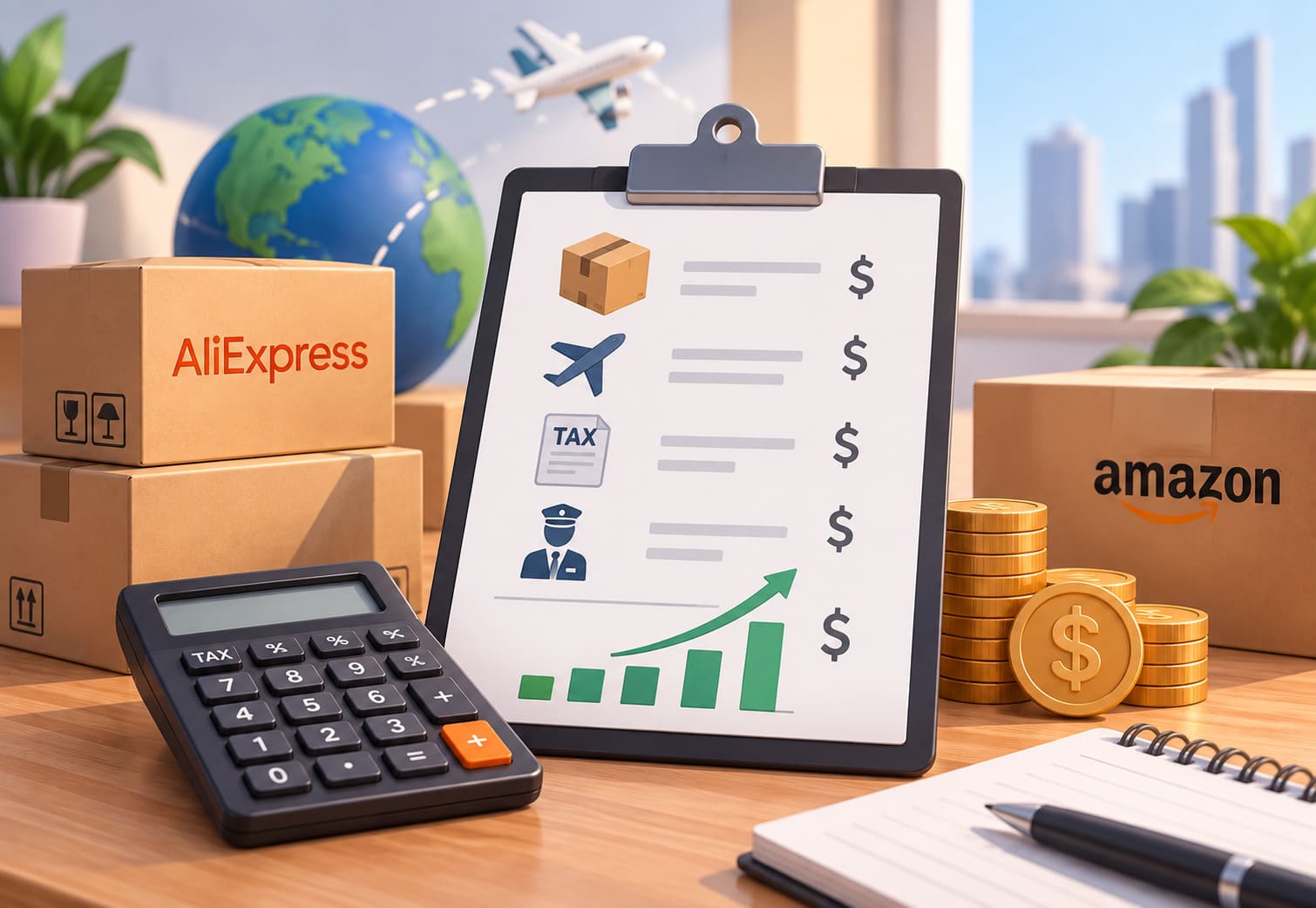
This is the part of the model that has changed the most, and it is where free-shipping pricing quietly stops working.
In the United States, the de minimis rule that let parcels valued under $800 enter duty-free is gone. The exemption ended for goods from China and Hong Kong on 2 May 2025 and for all other countries on 29 August 2025, and Customs and Border Protection made the suspension indefinite through a Federal Register rule published in June 2026. The same rule notes that Congress has repealed the exemption outright with effect from 1 July 2027, so this is not a temporary measure. For a dropshipper it means a $7 gadget shipped to a US buyer now carries duty based on its tariff classification, and someone has to pay it: either you, priced into the sale, or your customer at the door, and the second option is how disputes start.
The European Union followed with its own change. Since 1 July 2026, parcels worth up to €150 sold to EU consumers carry a flat customs duty of €3 per item, applied per tariff line rather than per parcel. The European Commission’s guidance confirms the flat fee runs until 1 July 2028, after which normal duty rates apply by product type. VAT was already due on every EU import regardless of value. AliExpress typically collects EU VAT at checkout, but check how the duty is handled for your destination before you set a price, because a carrier that collects it on delivery usually adds a handling fee on top.
The UK, Canada and Australia each apply their own thresholds and import taxes, and those rules move too, so check the current position for any country that makes up a meaningful share of your orders. Whatever the destination, state clearly on the product page whether the price includes duties, and never ask a supplier to under-declare a value. It saves a few dollars once and costs the account when the parcel is held.
Paying Suppliers Without Losing Money on Currency
Every AliExpress order is a small cross-border payment, and the conversion cost hides inside it. Pay with a business card or account that charges a low foreign-exchange markup, and keep your AliExpress account currency the same as the currency you get paid in wherever the platform offers it, so you are not converting twice on one order. Record supplier shipping as its own cost line instead of folding it into the product price; when a seller quietly changes a shipping option, that line is where you will notice it. The guide to AliExpress payment methods compares the options and their fees in detail.
A Worked Margin Example
The numbers below are illustrative assumptions for one $24.99 sale of a product bought for $7, not benchmarks. Swap in your own figures; the structure is what matters.
| Line item | Amount |
|---|---|
| Sale price | $24.99 |
| Product cost | $7.00 |
| Supplier shipping | $2.00 |
| Import duty absorbed by the seller (assumed; varies by country and tariff code) | $1.50 |
| Payment processing (assumed) | $1.05 |
| Ad cost per sale | $8.00 |
| Net before refunds | $5.44 |
This example sells at under two and a half times its landed cost, below the three-times guideline from step one, which is why the net is thin. Duty and processing together take more than the supplier’s shipping line, and a single full refund wipes out the margin on roughly five sales. Keep a cash buffer for refunds and replacements, especially through the Q4 peak and around AliExpress’s own 11.11 sale in November, when supplier warehouses are flooded with orders and dispatch slows. Track profit per product and per channel, and drop or renegotiate anything that stays below your floor for a month.
Marketing Your AliExpress Dropshipping Store
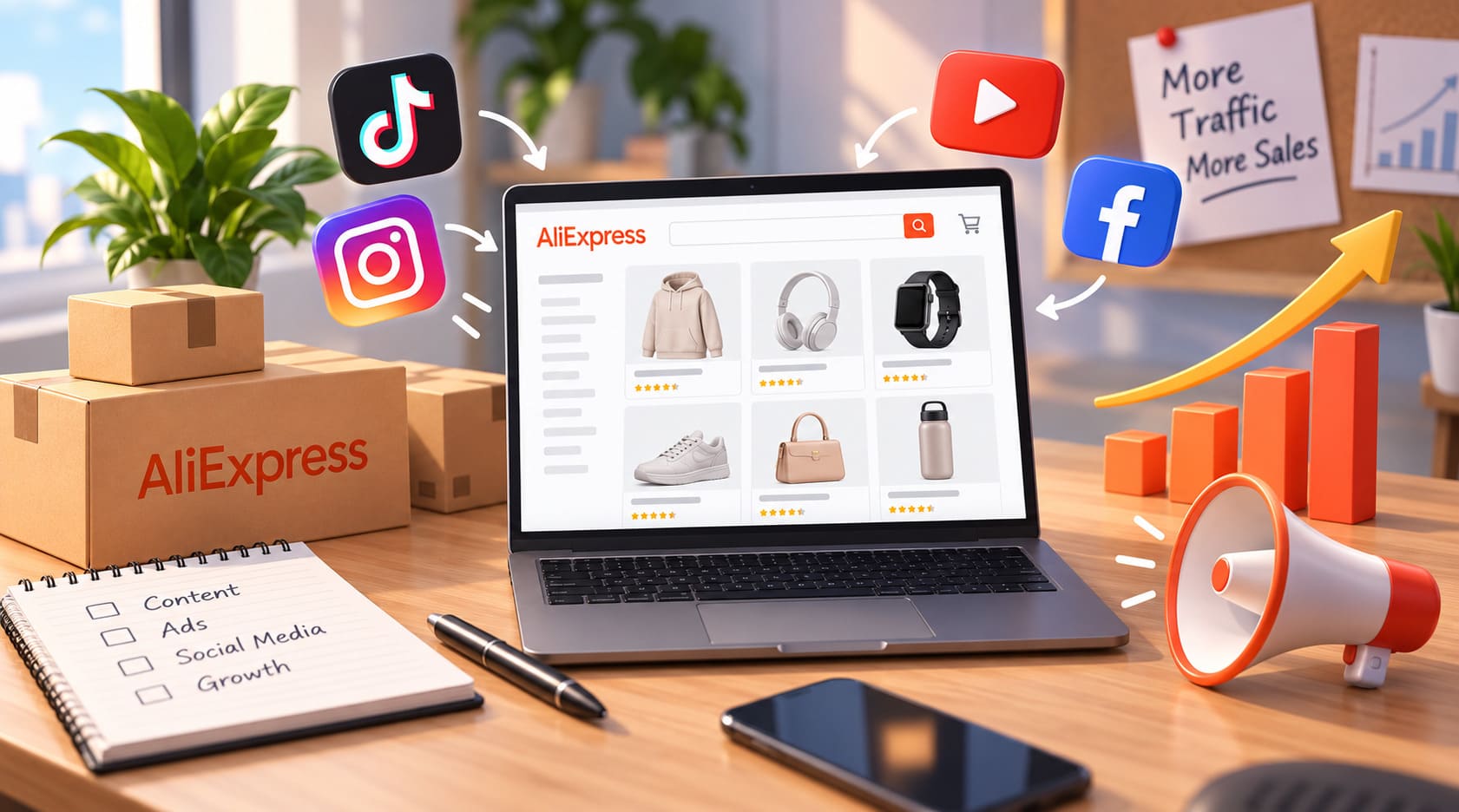
Sourcing is rarely what kills a store. Traffic is. Because the product itself is never exclusive, the seller who reaches the right buyer first, at a cost that fits the margin above, gets the sale.
Paid social is the fastest way to find out whether a product sells. Short videos showing the item in use outperform static images on TikTok, Instagram and Facebook, and the discipline is the same on all three. Run a few creatives on small daily budgets, stop the ones that do not convert within a few days, and put the money behind the ones that do. Track return on ad spend per product rather than per campaign, because a winning ad on a losing product is still a loss.
Micro-influencers in your niche are a cheaper second channel. A free sample or a modest flat fee in exchange for a video, plus a trackable discount code, tells you whether their audience buys, and the footage can be reused in your own ads and on the product page.
Organic channels compound slowly but reduce your dependence on ad prices later. Write product titles the way a buyer searches (“non-slip yoga mat for small apartments” rather than the supplier’s keyword soup), publish a few useful guides that feature your products naturally, collect emails with a first-order discount, and keep a social account posting real content about the niche. Marketplace sellers have a shorter version of this list: optimise titles and item specifics for on-platform search, and let the marketplace bring the traffic.
Mistakes That Cost Money
Most losses in this model come from a short list of avoidable decisions. These are the ones that show up again and again in refund logs.
| Mistake | What it costs you | What to do instead |
|---|---|---|
| Picking the cheapest supplier without reading recent feedback | Late parcels, wrong variants, refunds | Check feedback, response time and store age; order a sample first |
| Promising domestic delivery times on items shipped from China | Disputes opened before the parcel could possibly arrive | Show the real window from the supplier’s shipping option |
| Pricing as if parcels still enter duty-free | Margin disappears, or customers refuse delivery | Build duty into the price or show it at checkout |
| Relying on one supplier for a winning product | A stock-out stops your best listing overnight | Map a backup seller for every product that sells |
| Copying supplier listings word for word | An identical page to dozens of competitors and lower trust | Rewrite titles and descriptions for your buyer |
| Ignoring support messages while the parcel is in transit | Chargebacks and negative reviews caused by silence | Reply within a day and send tracking before they ask |
Automating AliExpress Dropshipping With Easync
Once you are shipping orders every day, supplier prices change under you, items go out of stock, and every tracking number has to be copied over by hand. Easync handles that layer for eBay sellers who source from more than one place. AliExpress is supported as a source market alongside Amazon’s regional sites, so a seller who wants to dropship AliExpress products to eBay buyers can import listings, set a markup rule and let the tool watch supplier price and stock around the clock and push tracking numbers back to the listing. The fulfillment workflow is the same one used for the other source markets, so nothing new has to be learned to add AliExpress listings.

There is a 7-day free trial with no card required, and the pricing page lists the plans. Sellers who already list Amazon-sourced items on eBay can add AliExpress products inside the same account.
Frequently Asked Questions
Is AliExpress dropshipping still profitable in 2026?
It can be, with thinner margins than the older tutorials suggest. Duties on US and EU parcels and rising ad costs mean a product needs a real gap between landed cost and selling price, and the seller needs to keep refunds low through supplier vetting. Stores that last tend to run a focused niche, rewrite their listings, and use automation such as Easync to catch supplier price changes before they turn into loss-making orders.
Can you dropship from AliExpress to Amazon or eBay?
Yes on both, with conditions. On Amazon nothing on the parcel or the paperwork may identify anyone but you, and returns are yours to handle. On eBay the supplier has to be a wholesale source you have an agreement with, not a retailer you buy from after the sale. Both accounts stay healthy as long as the delivery time you advertise is one your AliExpress seller can actually hit.
How long does AliExpress shipping take for dropshipping orders?
Anywhere from about a week to three weeks for most tracked options such as AliExpress Standard Shipping, with courier services available at a higher price and some sellers offering stock from US or EU warehouses. The estimate on the listing for your destination is the number to show your buyer, plus a couple of days for supplier processing.
Will my customers know I’m using AliExpress?
Usually not, provided you ask the seller to leave out invoices and promotional inserts and you set a realistic delivery window. The buyer sees your store and a plain parcel. Some brands are open about sourcing from China and lean on service instead. Either approach works as long as the delivery estimate is honest.
How do refunds and returns work with AliExpress dropshipping?
Your customer deals with you, and you deal with the supplier. Refund or replace on your side first, then open a dispute through AliExpress Buyer Protection within the window shown on the order to recover the cost. For cheap items, most sellers refund without requesting a return, because return postage costs more than the product.
How much does it cost to start dropshipping with AliExpress?
There is no fee to buy from AliExpress as a dropshipper. Your costs are the sales channel (a subscription for a Shopify store, or per-listing and per-sale fees on eBay and Amazon), a few samples, any automation tool, and the ad budget, which is usually the largest line. Because you pay suppliers only after a customer pays you, the products themselves need no upfront capital.
Do I need a business license to dropship from AliExpress?
AliExpress itself does not ask for one. Your own country and your sales channel might. In most jurisdictions you are the retailer of record for everything you sell, which means registering as a business once you trade regularly, keeping records of sales and supplier invoices, and collecting or remitting sales tax or VAT where your buyers are. Marketplaces also verify identity and may ask for business details when you upgrade to a professional selling plan. Check the rules for your country before the first sale, not after the first tax letter.

Noah Edis is a freelance writer and systems engineer with a wealth of experience in modern hardware and software. When he’s not working on his latest project, you can find him playing competitive dodgeball or pursuing his personal interest in programming. At Easync, Noah helps thousands of sellers optimize their eBay and Amazon businesses by providing automation tools and practical guidance on account health, pricing, and inventory management.

Eugene Stepnov – Author
Eugene is a senior e-commerce strategist with over 10+ years of experience in dropshipping, online arbitrage, and marketplace compliance. At Easync. Eugene has experience in developing multi-account management technologies, such as Gologin and secure browser solutions, providing Easync users with a head start in regulatory compliance and platform changes.