
- articles
Wholesale Dropshipping: Get 40% More Profit with Real Suppliers
Key Takeaways
- Wholesale dropshipping — also referred to as bulk dropshipping — lets you source products at bulk wholesale prices from distributors who ship directly to your customers, eliminating the need to hold inventory or make large upfront purchases.
- The model thrives in 2026 due to low startup costs (often under $500), rising fulfillment expenses, and the continued dominance of marketplaces like Amazon and eBay.
- Success hinges on partnering with reliable us based wholesale suppliers who can deliver in 2-5 days, using automation tools to manage orders, and selecting high quality products in profitable niches.
- Amazon and eBay remain top channels for this business model, but each platform carries distinct pros, cons, and compliance requirements that sellers must understand.
- For competitive, fast-moving niches like Wholesale dropshipping, automation software such as Easync dramatically reduces manual work through auto-imports, real-time monitoring, auto-ordering, repricing rules, and multi-account workflows.
What Is Wholesale Dropshipping in 2026?
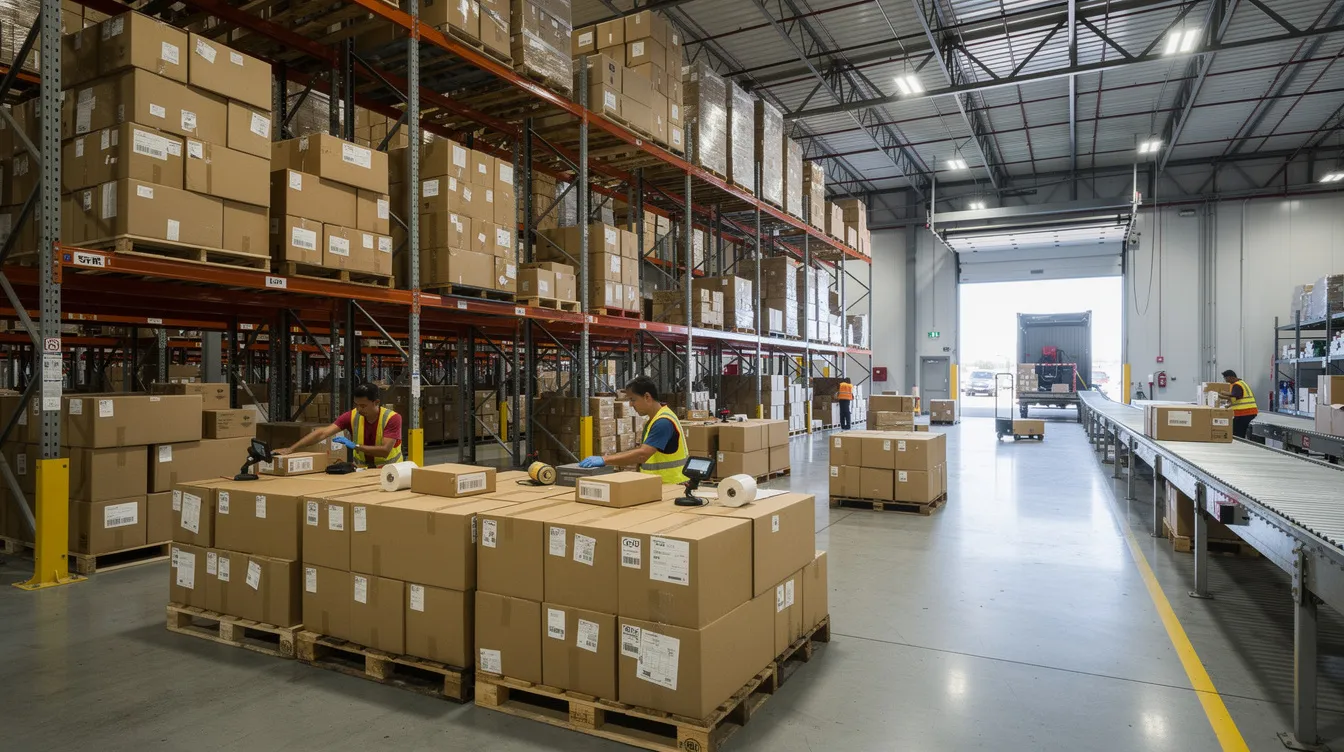
Wholesale dropshipping is a business model where you purchase products at wholesale prices from authorized bulk distributors – sometimes called bulk dropshipping when the focus is on volume-based pricing tiers, and those suppliers ship orders directly to your customers without you ever touching the inventory. Unlike traditional wholesale—where you buy thousands of units upfront and store them in a warehouse—this approach lets you sell products online with minimal financial risk.
The key difference is simple: traditional wholesale requires capital for inventory source and storage space, while wholesale dropshipping means you only pay for products after making sales.
In the 2026 e commerce landscape, this model has become increasingly attractive. Global logistics costs have climbed 15-20% year-over-year due to supply chain disruptions and fuel price volatility. Meanwhile, marketplaces like Amazon and eBay command over 40% of US online retail traffic. Wholesale dropshipping lets you tap into these massive customer bases without the burden of warehousing.
The operational flow works like this:
- A customer places an order on your ecommerce store
- You forward the order details and pay the wholesale price to your supplier
- The supplier ships from their warehouse (often US-based) directly to the customer
- Tracking updates sync back to your dropshipping platform automatically
This model is particularly valuable when you want to sell high quality products from established brands rather than generic items from overseas platforms. Many dropshipping wholesalers specialize in branded wholesale products that customers recognize and trust.
Retail vs. Wholesale Dropshipping: 2026 Comparison
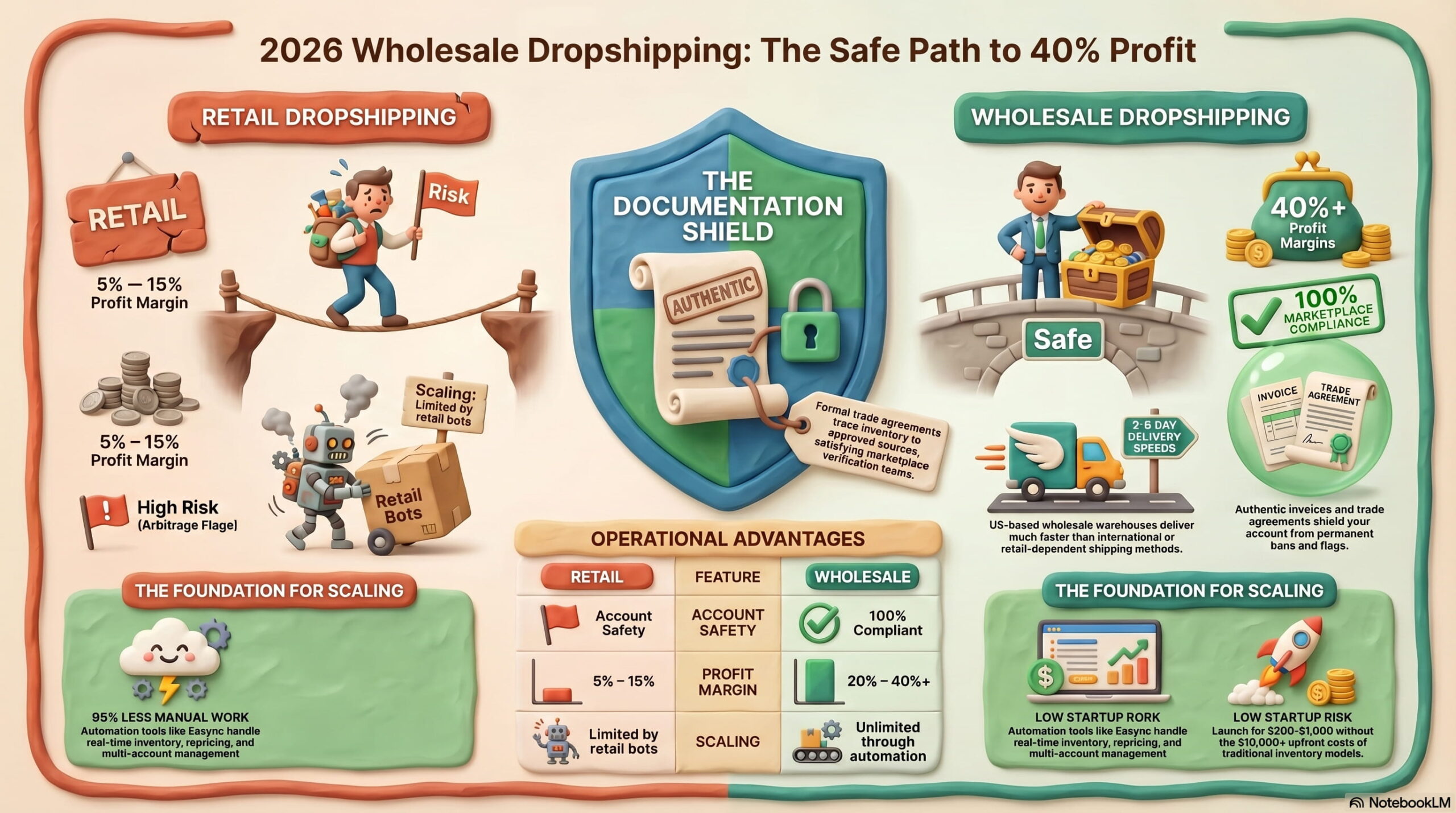
| Feature | Retail Dropshipping (Amazon/Walmart/Home Depot) | Wholesale Dropshipping (Verified Suppliers/Brands) |
| Account Safety | High risk of “Retail Arbitrage” flags on eBay/Amazon. | 100% Compliant. Backed by authentic invoices. |
| Profit Margins | Thin (typically 5% – 15%) due to retail markups. | High (20% – 40%+) thanks to bulk pricing. |
| Shipping Speed | Depends on the retailer’s current logistics. | Priority shipping often handled by dedicated B2B warehouses. |
| Inventory Control | High risk of out-of-stock items (unpredictable). | Stable. Suppliers provide dedicated stock feeds for partners. |
| Brand Protection | Items often arrive in third-party branded boxes. | Neutral packaging or custom branding options available. |
| Scalability | Limited by retail purchase limits and bot detection. | Unlimited. Designed for high-volume automated operations. |
Account Safety: Why Wholesale Is the Only Compliant Model
In 2026, account suspension remains the single biggest threat to any dropshipping business. Sellers running traditional retail arbitrage or unverified dropshipping models are getting flagged at scale eBay’s Verified Rights Owner program and Amazon’s increasingly aggressive IP complaint systems have made “grey zone” sourcing genuinely dangerous.
Wholesale dropshipping is different, and the difference is structural. When you source through established wholesale channels, you operate within the framework that both platforms were built around. Amazon and eBay don’t just tolerate wholesale sellers — they actively prefer them. Wholesale accounts are associated with consistent stock, accurate listings, and legitimate supply chains. That profile alone dramatically reduces your exposure to automated flags and manual reviews.
More importantly, wholesale gives you something no retail arbitrage or standard dropshipping model can: paper. Legitimate purchase orders, supplier agreements, and business documentation that proves your sourcing is real. If your account is ever reviewed — and in 2026, it’s when, not if you need documentation that holds up. Wholesale provides exactly that.
The bottom line: if you’re serious about building a long-term selling business on Amazon or eBay, wholesale isn’t just a better model. It’s the only model that lets you scale without constantly looking over your shoulder.
How to Start a Wholesale Dropshipping Business (Step-by-Step)
Starting a profitable dropshipping business requires a methodical approach. Here’s a chronological roadmap to get you from zero to your first orders.
Select a Niche With Real Demand
Before building anything, validate your product category using data. Google Trends reveals sustained interest—home decor shows 25% YoY search growth, pet supplies 22%, and consumer electronics peripherals maintain steady demand. Use marketplace research tools like Jungle Scout or Helium 10 to find in demand products with 1,000+ monthly searches and 20-50% margins after fees.
Look for trending products that aren’t oversaturated. The sweet spot is high demand products with moderate competition where you can differentiate through better customer support or faster shipping times.
Set Up Your Online Store
Choose an ecommerce platform that matches your technical comfort level:
- Shopify: $29/month, easiest setup, extensive app ecosystem
- WooCommerce: Free plugin, requires hosting (~$3/month on Hostinger)
- BigCommerce: Built-in features, good for scaling
Every shopify store or alternative needs essential pages: About (your brand story), Shipping/Returns (mirroring supplier policies), and Contact. Mobile-responsive themes can boost conversion rates significantly—some retailers report 3x improvements with proper mobile optimization.
Research and Vet Wholesale Suppliers
Don’t sign agreements with the first supplier directory you find. Use multiple sourcing methods:
- Contact manufacturers directly via LinkedIn
- Browse reputable directories like SaleHoo (8,000+ verified suppliers) or Wholesale Central
- Attend trade shows like ASD Market Week
- Reverse-engineer competitor suppliers through test orders
Prioritize dropshipping companies with clear wholesale pricing, realistic minimum order terms, and published shipping policies. The best dropshipping suppliers provide written agreements covering backorder handling, out-of-stock protocols, and return procedures.
Integrate Suppliers With Your Store
Automation makes or breaks operational efficiency. Platforms like Wholesale2B offer one-click integration with Shopify, WooCommerce, and other platforms—importing product data from their 1M+ catalog in minutes. Real-time inventory updates prevent overselling, and orders auto-forward to suppliers once customers pay.
Test Before Committing
Place 3-5 sample orders with each potential supplier. Evaluate:
- Shipping speed (aim for under 5 days)
- Packaging quality
- Communication responsiveness
- Accuracy of product feed information
This small upfront investment prevents costly mistakes when you start selling at scale.
Track Metrics From Day One
Monitor these KPIs weekly:
- Conversion rate (target 2-3%)
- Average order value ($50+)
- Net margin (20%+ after platform fees and ads)
- Return rate (keep under 5%)
These numbers guide every optimization decision as your store grows.
Finding and Vetting Reliable Wholesale Dropshipping Suppliers
Supplier quality determines 80% of customer satisfaction. Delays, damaged products, or poor communication will erode your reputation faster than any marketing can rebuild it.
Common Sourcing Methods
Direct manufacturer outreach can yield exclusive pricing but requires negotiation skills. Supplier directories like SaleHoo, Doba, and Worldwide Brands aggregate pre-vetted dropshipping suppliers with established dropshipping services. US trade shows provide face-to-face demos and relationship building. Competitor analysis through test orders reveals which reliable dropshippers your competition uses.
Core Vetting Criteria
Before partnering with any wholesale suppliers, verify:
- Clear wholesale prices with tiered volume discounts
- Low or no minimum order quantities (true dropship means MOQs of 1)
- Published shipping policies with specific SLAs
- Written dropshipping agreements covering liability and returns
Operational Requirements
Demand these capabilities from any potential supplier:
- Real-time or frequent inventory updates (every 15 minutes ideal)
- Tracking numbers provided within 48 hours of order
- Clear procedures for backorders and discontinued SKUs
- Advance notification (7+ days) when products are being removed
Quality Verification
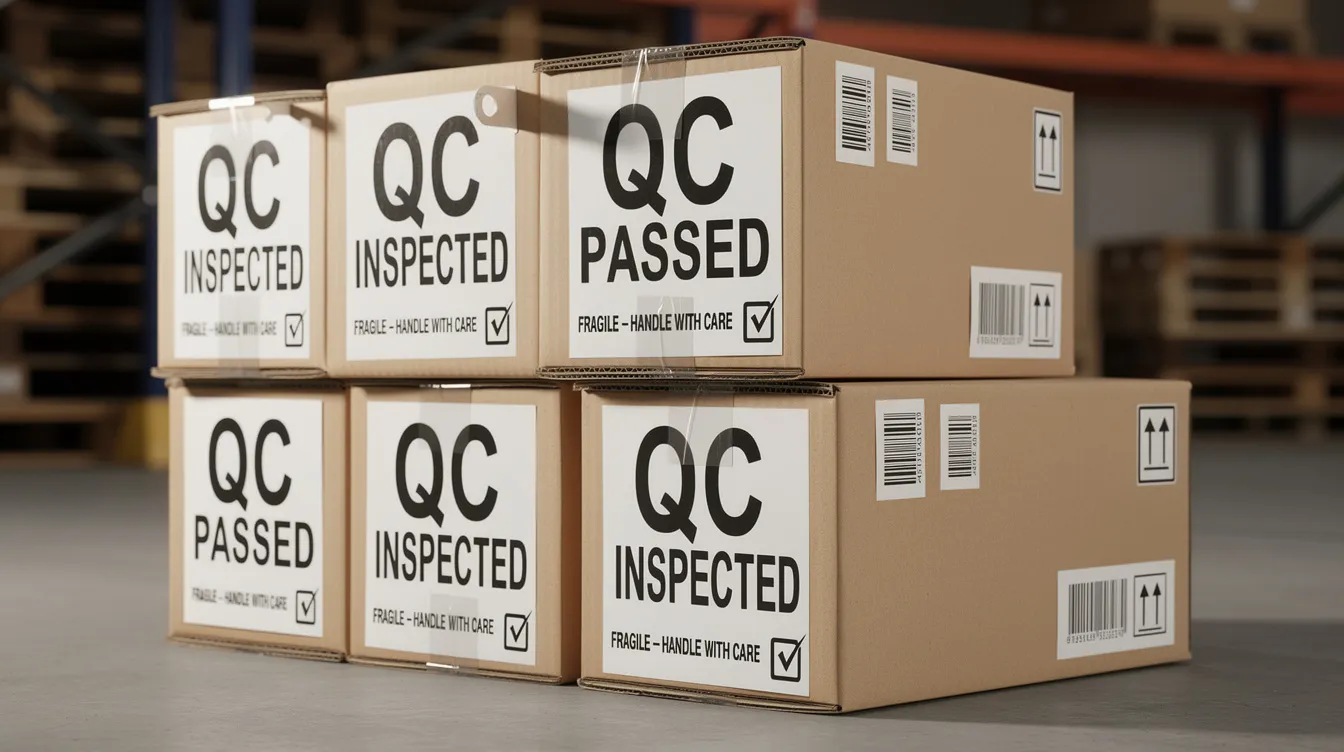
Request sample orders to evaluate product quality firsthand. Ask for product photos, certifications (MSDS for chemicals, safety certs for electronics), and references from other online retailers when possible.
What to Look for in a Reliable Wholesale Dropshipper
Not every supplier who offers dropshipping terms qualifies as a genuine wholesale dropshipper. The distinction matters: a real wholesale dropshipper operates from a B2B warehouse, provides formal invoices, and has established processes for handling volume orders — not just a retail store that reluctantly ships one item at a time. When vetting candidates, confirm they work with multiple online retailers, can supply proof of brand authorization, and have a documented process for handling high-order-volume periods like Q4.
Why US-Based Warehouses Matter
In 2026, 70% of consumers expect delivery in under 3 days. Us suppliers with domestic warehouses deliver in 2-5 days versus 10-20 days from international sources. Returns are simpler, customs complications disappear, and perceived value increases. On-time delivery rates for US-based fulfillment average 95% compared to 70% for international shipping.
Avoid unreliable suppliers by checking reviews, requesting proof of inventory source, and starting with small test batches before scaling.
Wholesale Dropshipping on Amazon vs eBay (Comparison Table)
Amazon and eBay remain two of the most powerful channels for wholesale dropshipping in the USA, but they serve different purposes and carry distinct requirements.
Amazon’s 200M+ Prime members expect fast shipping and seamless experiences. The platform enforces strict performance metrics—Order Defect Rate must stay below 1%, and Late Shipment Rate under 4%. Violations risk account suspension. However, the massive traffic (38% of US ecommerce) and high buyer trust make it worth the complexity for many dropshippers.
eBay offers easier entry with more flexible listing formats. You can run auctions, fixed-price listings, or both. The platform is more lenient with new sellers and allows broader product category experimentation. However, buyers tend to be more price-sensitive, and average order values run lower ($40 vs Amazon’s $60).
Both platforms work well with us suppliers who offer blind dropshipping (no retailer information on packages) and handle returns according to marketplace requirements.
Comparison Table: Wholesale Dropshipping Suppliers USA on Amazon vs eBay
| Platform | Pros for Wholesale Dropshipping (USA) | Cons / Risks |
|---|---|---|
| Amazon | Massive customer base (200M+ Prime); high buyer trust and search visibility; supports higher pricing (20-30% premiums); powerful Buy Box for 82% sales; US suppliers enable Prime-level 2-day shipping. | Strict metrics (ODR <1%, late shipments <4%); 15% referral fees + FBA-like expectations; high suspension risk for policy violations; intense competition and IP complaints. |
| eBay | Easier onboarding and listing flexibility (auctions/fixed); lower barriers (no invites); 12.8% fees; lenient categories for branded wholesale; quick sales velocity. | Price-sensitive buyers (lower AOV ~$40); higher dispute/fraud rates; lower perceived value/trust; feedback thresholds <98% trigger limits; auction price volatility. |
Many successful wholesale dropshippers run both platforms simultaneously, using Amazon for premium positioning and ebay for broader reach and clearance items. About 25% of top wholesale dropshippers operate across multiple channels to diversify revenue streams.
For returns, Amazon typically requires supplier-issued RMAs followed by marketplace refunds, while eBay gives sellers more control over return handling. Clear agreements with your dropshipping wholesalers about return procedures prevent costly surprises.
Authentic Invoices and Wholesale Trade Agreements: Your Shield Against Bans
Every experienced Amazon and eBay seller has seen the email: a policy warning, an ASIN suspension, or worse an account hold pending documentation review. What separates sellers who resolve these quickly from those who lose their accounts permanently is almost always the same thing: documentation.
Amazon’s standard response to an IP complaint or authenticity challenge is a documentation request. They want authentic invoices for Amazon/eBay listings that trace your inventory directly to an approved source. A screenshot from a retail website won’t pass. A PayPal receipt from an online store won’t pass. What passes is a formal invoice from a recognized wholesale supplier — one that shows your business name, the supplier’s business details, product identifiers, quantities, and pricing.
This is where wholesale trade agreements become your competitive advantage. When you operate under a formal agreement with a brand-authorized wholesaler or distributor, you have a legal document that establishes your right to sell those products. That agreement, combined with clean invoice records, creates a compliance paper trail that satisfies both platforms’ verification teams.
Sellers who treat documentation as an afterthought eventually hit a wall they can’t climb over. Wholesale sellers who maintain proper records from day one rarely face that wall at all. Build your supplier relationships on formal wholesale trade agreements, and you turn the platforms’ own compliance systems into a barrier your competitors can’t cross.
Manufacturer-Direct Sourcing and Bulk Pricing: The Economics of Safe Scaling
Compliance protects your account. Manufacturer-direct sourcing is what makes the model profitable enough to be worth protecting.
When you source directly from manufacturers or their authorized distributors, you access the supply chain at its most efficient point. Bulk pricing discounts — the price breaks that come with purchasing in volume — are only available at this level. Retail arbitrage sellers pay retail. Standard dropshippers pay supplier markup. Wholesale sellers pay wholesale, which means margins that actually support a real business: advertising spend, returns, platform fees, and still a meaningful profit.
The other dimension that separates serious wholesale operations is inventory risk management. Traditional dropshipping passes all inventory risk to the supplier, which sounds attractive until you realize it also passes all control. You have no visibility into stock levels, no ability to secure allocation on fast-moving products, and no leverage when a supplier decides to cut you off or raise prices without notice.
Wholesale gives you options. With established supplier relationships, you can negotiate reserved stock, lock in pricing through forward agreements, and plan your advertising spend around inventory you know is available. Proper inventory risk management means you’re making decisions based on data — your sell-through rates, your reorder points, your seasonal positioning — rather than reacting to whatever your supplier happens to have in stock.
That’s the economics of safe scaling: lower cost per unit, higher margin, and actual control over your supply chain. Combined with the compliance foundation that wholesale trade agreements provide, it’s the model built for sellers who are in this for the long term.
Automation & Tools for Wholesale Dropshipping
Manual wholesale dropshipping hits a ceiling around 10 orders per day. Beyond that, without automated tools, you’ll spend more time on admin tasks than growing your business.
Key Automation Categories
Effective automated dropshipping covers several operational areas:
- Product importing: One-click catalog imports from supplier databases
- Stock monitoring: Real-time inventory sync to prevent overselling
- Price monitoring: Automatic updates when supplier costs change
- Auto-ordering: Payment-triggered order fulfillment process to suppliers
- Tracking sync: Customer notifications sent automatically
- Repricing: Algorithmic margin protection against competitor pricing
- Multi-account management: Orchestrating several store accounts simultaneously
Dropshipping and Easync Automation
When it comes to wholesale dropshipping specifically, automation isn’t just desirable, it’s absolutely essential. Inventory sells out very quickly: during high-demand product launches, up to 50% of stock can be sold daily. Prices fluctuate by 15–25% depending on demand, and competition is extremely high. All of this makes wholesale one of the most challenging but potentially profitable areas of dropshipping.
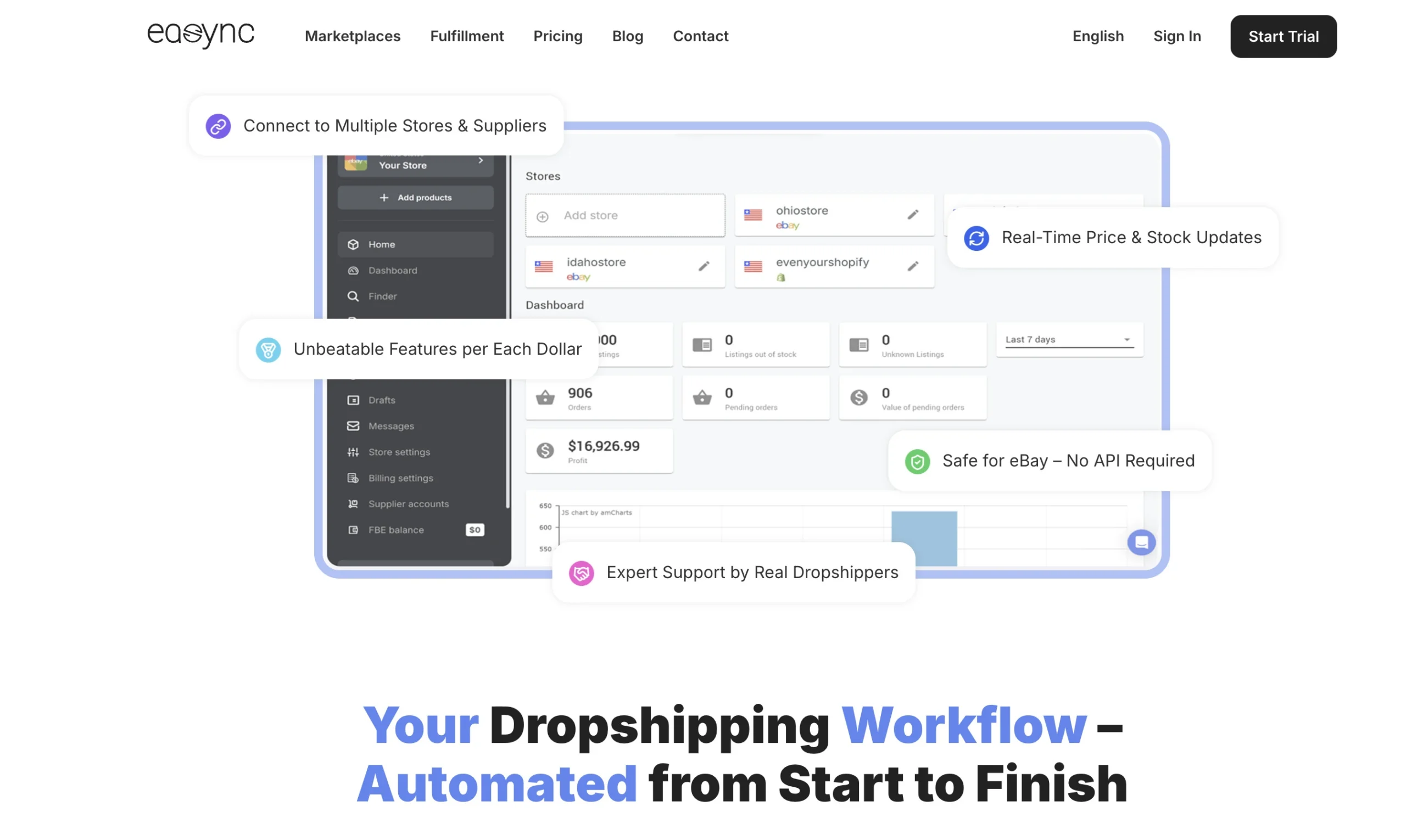
For this high-velocity niche, Easync automation proves particularly useful. The dropshipping software Easync supports automated product importing from wholesale sources, real-time stock and price monitoring across your listings, auto-ordering triggered when a customer pays, dynamic repricing rules to protect your margins, tracking synchronization back to marketplaces, and multi-account workflows for managing several Amazon and eBay stores simultaneously. These features slash manual work by up to 95%, letting you focus on finding new suppliers and marketing rather than repetitive data entry.
Choosing the Right Tools
When evaluating automation software, prioritize tools that integrate natively with ecommerce platforms like Shopify and WooCommerce, plus marketplaces like Amazon and eBay. Look for direct API connections with leading wholesale central directories and individual suppliers. Monthly fees vary widely, but the time savings typically justify costs of $20-100/month for serious sellers.
Building a Profitable Wholesale Dropshipping Strategy
Initial setup is just the beginning. Long-term profitability requires ongoing strategy refinement through 2026 and beyond.
Product Selection and Portfolio Management
Balance your catalog between stability and opportunity:
- 60% evergreen items: Kitchen tools, pet products, home organization—consistent market demand with 20-25% margins
- 40% trend-based products: Seasonal gadgets, fashion sneakers, trending dropshipping products—higher margins but shorter windows
This mix keeps customers happy while capturing spikes in demand products during peak seasons.
Pricing Strategy
Calculate your true landed cost before setting prices:
Wholesale price + shipping ($5-8) + marketplace fees (13-15%) + software costs (2%) = your floor
Target 25% net margin minimum. Arbitrary markups without cost analysis lead to either uncompetitive pricing or unsustainable margins.
Branding and Customer Experience
Even without holding inventory, you control the customer experience:
- Set clear shipping and returns policies matching supplier capabilities
- Use consistent post-purchase communication (order confirmation, shipping updates)
- Request blind dropship packaging from suppliers
- Build email lists to drive repeat purchases and increase lifetime value by 3x
Marketing Beyond Marketplaces
Diversify your traffic sources to build a trusted source of customers:
- SEO for your own store (long-tail keywords like “wholesale sneakers dropship”)
- Paid ads on Google, Meta, and TikTok (sneaker content drives 40% of traffic on TikTok)
- Email marketing for repeat customer engagement
- Influencer collaborations for product category awareness
Risk Management
Protect your business with these safeguards:
- Partner with 2-3 suppliers per winning products category
- Monitor policy changes on Amazon and other platforms that affect dropshipping operations
- Maintain cash reserves for payout delays (3-14 day marketplace cycles)
- Track product trends to exit declining niches before margins collapse
Review supplier performance, automation settings, and product line profitability quarterly. Terminate relationships with suppliers delivering below 95% on-time rates.
FAQ
This section addresses practical questions about wholesale dropshipping that weren’t fully covered above.
How much money do I need to start a wholesale dropshipping business?
Realistic 2026 budgets range from $200-1,000 to start dropshipping. This covers platform fees (Shopify at $29/month or WooCommerce hosting at ~$3/month), domain registration ($15/year), essential apps ($20/month), and sample orders ($50-100). Unlike traditional wholesale requiring $10,000+ in upfront costs for bulk inventory, you pay suppliers only after making sales. However, budget $100-200 as a cash buffer since marketplace payouts take 3-14 days while supplier payments may be due immediately.
How are returns handled in wholesale dropshipping?
Return flows typically work as: customer contacts you → you issue an RMA per supplier’s rules → customer returns item to supplier’s warehouse → supplier inspects and refunds you → you refund the customer. Written agreements must specify restocking fees (0-15% is common), defective item handling (usually free returns), and shipping liability. Without clear documentation, you risk absorbing costs that should fall on the supplier or customer.
Is wholesale dropshipping legal in the USA?
Yes, wholesale dropshipping is fully legal in the USA when you comply with tax laws, consumer protection regulations, and intellectual property rules. Obtain an EIN and any required state business licenses ($50-300 depending on state). Register for sales tax collection in states where you have economic nexus (post-Wayfair, 13+ states have thresholds). Keep supplier invoices proving product authenticity to protect against IP complaints. Never sell products without authorization from brand owners.
Can I mix wholesale dropshipping with holding my own inventory?
Many successful sellers use this hybrid model. Dropship 80% of your catalog from wholesale suppliers while stocking bestsellers in your own facility for 1-2 day shipping. This approach requires separate stock tracking—tools like Wholesale2B support dual workflows with different SKU management. The added complexity is worth it for top-performing products where faster fulfillment and better margins justify the inventory investment.
What niches work best for wholesale dropshipping in 2026?
Niches with consistent market demand and moderate competition perform well: home organization (30% demand growth), pet supplies (22%), hobby equipment (18%), and fashion segments like sneakers and athleisure (35% during releases). Validate any niche using Google Trends for sustained search interest, marketplace tools for competitor volume, and margin analysis (target 25%+ net). Avoid oversaturated generic categories where you’ll compete purely on price against established sellers with better supplier relationships.