
- articles
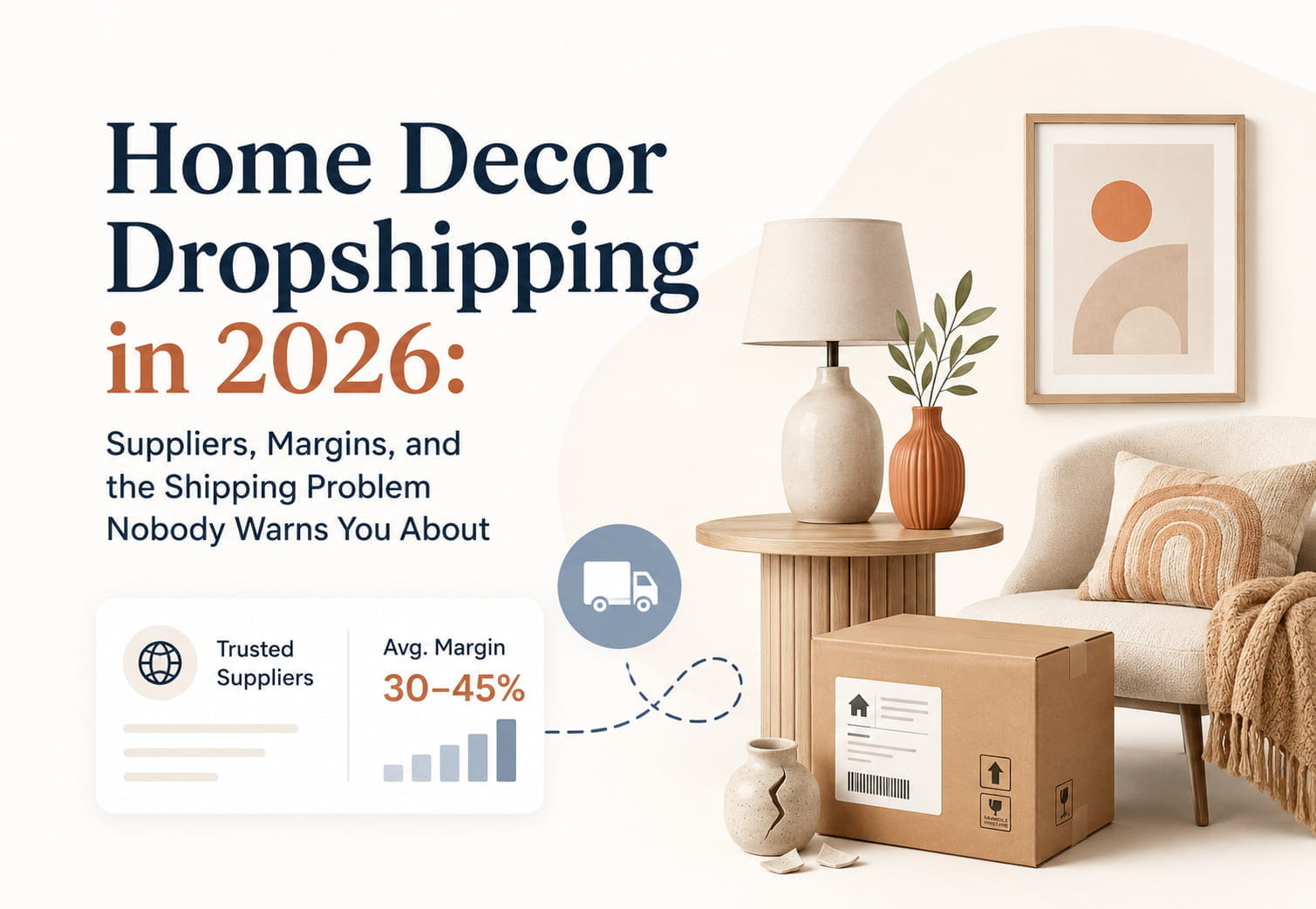
Home Decor Dropshipping Suppliers: Best Picks for 2026
Key takeaways
- The decisive shift in 2026 is the end of the US de minimis exemption — every parcel into the States now pays duty regardless of value, which makes a supplier’s warehouse location matter more than its catalog or its price.
- This is a high-value, low-conversion niche. The category averages roughly 1.4% conversion (Firework), but one furniture order can clear $1,000, so the business runs on order value, not volume.
- For fast US and UK delivery, source from locally-warehoused suppliers: Spocket, AppScenic, Zendrop and DropCommerce for North America, and BigBuy for 24–72-hour shipping across the EU and UK.
- Breakage is the silent margin-killer. Fragile lines can run 8% damaged when the packaging is thin — order samples, test how it’s boxed, and favour suppliers that replace damaged goods free (Zendrop is the strongest there).
- Don’t marry one platform. Most operators who last end up running two — a local supplier for speed and a broad one for catalog depth.
Mordor Intelligence values the global home decor market at $716.53 billion for 2026, heading toward $924.34 billion by 2031. The number that actually matters if you’re building a store, though, is the online slice. Coherent Market Insights puts online home decor at $134.52 billion in 2026 and has it compounding at 11.5% a year through 2033 — roughly double the pace of the category overall. North America does about 39% of that online spend, and the US market on its own ran near $145.5 billion last year (Renub).
So demand isn’t the problem. The problem is everything between the supplier’s shelf and the customer’s living room.
Home decor converts worse than almost anything else you can sell online. Firework’s 2026 benchmark data puts the category average around 1.4%, near the floor of all of e-commerce, because people can’t picture a $400 console table in their hallway from three product photos and they bounce. What saves the niche is order value — a single furniture sale can clear $1,000, which changes the entire calculus on how much you can spend acquiring a customer. You’re selling a high-AOV, low-conversion product that lives or dies on how it photographs, and you build the business around those facts or you don’t build it at all.
One more thing has to be said up front, because most supplier roundups still write as if it isn’t true. The US de minimis exemption is dead. The $800 duty-free threshold ended for China and Hong Kong on May 2, 2025, and worldwide on August 29, 2025. Every parcel into the US now needs a formal customs entry and a 10-digit HTS code, and pays duty regardless of value. The cheap-direct-from-China model half the courses still teach now eats full duties plus Section 301 tariffs on every order. If you take one thing from this guide: in 2026 the supplier’s warehouse location stopped being a convenience feature and became the whole game.
The economics, honestly
The mechanics are the same as any dropshipping — you list a supplier’s products, the customer pays your price, the supplier ships. What’s different about home goods is that two boring logistics facts decide whether you make money: how breakable the thing is, and how big it is for its weight.
Breakage is the one that ambushes new sellers. The first ceramics line I ran came through a China warehouse with nothing but a thin foam sleeve, and about one box in twelve arrived cracked. That’s an 8% replacement rate before you count the customers who skip the email and just charge back. Glass, mirrors, framed prints, anything fired or panelled carries this tax, and the only real fixes are forcing better packaging out of the supplier or sourcing locally so the parcel spends two days in transit instead of eighteen.
Dimensional weight is the quieter killer, and it’s where high-ticket furniture dropshipping bleeds margin. A flat-packed print ships for pocket change; a nightstand can cost more to move than it cost to buy. I’ve seen CJ shipping quotes on heavier items come back matching the product price outright. None of that surfaces in your margin spreadsheet until the orders actually start landing.
What decor has going for it is that nobody comparison-shops a mood. Taste-driven products don’t get price-matched the way a phone charger does, which is why the markups hold. DropCommerce contractually guarantees you at least 30% on everything in its catalog, and Spocket’s premium products sit 30–60% below retail. The real money in absolute terms is at the top of the range — a 25% margin on a $1,200 sofa funds a lot more advertising than a 55% margin on a $22 vase ever will. Plan conversion pessimistically while you’re at it. That 1.4% average is real; stores with genuinely good room-context photography and AR previews push past 2%, but I wouldn’t model the business on that until you’ve earned it.
What’s good about the niche
- Order value does the heavy lifting. One furniture sale can be worth thirty candle sales, and that’s what makes paid traffic viable.
- Margins are defensible because the products sell on taste, not specs.
- The online segment grows ~11.5% a year, faster than retail generally, and North America (the biggest market) is the easiest region to ship into fast.
- Seasonal and room-by-room buying gives you repeat customers if you merchandise for it.
What’s working against you
- Breakage, already covered — the number one silent margin-killer.
- Bulky items carry shipping that can erase the order’s profit.
- Returns are mostly theoretical. Nobody ships a broken $40 lamp back to Guangdong, so you eat the replacement.
- Conversion is brutal, so you spend more on photography and trust signals than other niches just to stand still.
- And since de minimis ended, anything imported into the US now drags duty and customs paperwork that didn’t exist eighteen months ago.
Automating the upkeep with Easync
Once you’re past a handful of SKUs, the manual upkeep quietly becomes the job — decor catalogs reprice and go out of stock constantly, and chasing that by hand is how people burn out before they turn a profit. For a home decor dropshipping store specifically, where you’re juggling dozens of fragile, frequently-restocked SKUs across more than one supplier, a tool like Easync is worth wiring in early. It covers the whole grind: automated product importing pulls listings into your store, real-time stock and price monitoring keeps them from going stale, auto-ordering pushes each sale through to the supplier without you touching it, repricing rules defend your margin when supplier costs shift, tracking synchronization sends shipping updates straight to the customer, and multi-account workflows let you run several stores or supplier accounts from one dashboard. None of that grows revenue on its own. What it does is hand back the hours fast-moving decor catalogs otherwise eat alive, so you can spend them on the things that actually move the needle, like photography and ad creative.
The suppliers
Eight platforms below, ordered loosely by how often they’re the right answer for a US- or UK-facing decor store, not by any score. One rule cuts through all of it: check the warehouse on the specific products you plan to advertise. Every “2-day shipping” claim on every one of these sites applies only to locally-stocked items, and a platform can advertise it honestly while 80% of the catalog still sits in Zhejiang.
| Supplier | Best for | US / UK shipping | Base pricing | Shopify / WooCommerce |
|---|---|---|---|---|
| Spocket | Local US/EU/UK suppliers + branded invoicing | 2–5 days (local stock) | Starter $39.99/mo; Pro $59.99/mo | ✅ / ✅ |
| CJdropshipping | Budget China sourcing via CJPacket | US warehouse 3–8 days; China 7–16 | Free (no subscription, no MOQ) | ✅ / ✅ |
| AppScenic | AI automation + fast delivery | 2–4 days (domestic stock) | From $39/mo (free trial) | ✅ / ✅ |
| Syncee | Verified global B2B suppliers | 2–7 days (local stock) | Free plan; paid tiers scale | ✅ / ✅ |
| DropCommerce | Eco North American decor | 2–7 days (US/Canada only) | Free; Basic ~$29; Pro ~$89–95 | ✅ / ❌ |
| Zendrop | Private label + branding | US 2–5 days; China 10–15 | Free; Pro $49; Plus $79 | ✅ / ✅ |
| BigBuy | Scaling across the UK/EU | EU 24–72h | ~€69–120/mo + ~€90 reg. fee | ✅ / ✅ |
| Shopify Collective | US Shopify-to-Shopify deals | Varies by brand (US local) | Free (needs Shopify plan) | ✅ Shopify only / ❌ |
1. Spocket
This is where I’d start most US and UK decor stores. It’s the one platform here built specifically around local suppliers — its network ships from inside the US, Britain and the EU rather than routing everything through China, and in 2026 that’s worth more than it was two years ago. Locally-stocked items land in two to five days, you get branded invoicing so your logo ends up on the packing slip instead of a stranger’s name, and the premium catalog runs 30–60% under retail.
The catch is buried in the tiers. Branded invoicing — arguably the main reason to pay for Spocket over a free directory — doesn’t show up until the Pro plan at $59.99/month. The Starter plan below it ($39.99) caps you at 25 products and strips the branding back out. Annual billing knocks 20–25% off if you’re committing. One more thing to watch: the fastest-shipping premium products tend to sit at the expensive end of that 30–60% band, so your best SKUs are also your tightest-margin ones. Spocket sits at 4.8 on Trustpilot across ten-thousand-odd reviews, which for this industry is unusually clean.
2. CJdropshipping
The opposite end from Spocket, and the most flexible thing on the list. No subscription, no minimum order, free storage for 90 days — you can open an account and start sourcing for nothing, which is why it’s the default budget pick. The catalog runs past 500,000 SKUs, CJ does its own QC pass before shipping, and it’ll white-label your packaging or source products that aren’t listed yet.
Shipping is where you have to pay attention. Their proprietary CJPacket line moves goods out of China in roughly 7–16 days, and items pre-stocked in a US warehouse arrive in three to eight. The second number is the only one that matters now, because — to keep hammering it — anything coming direct from China gets hit with full duties at the border. CJ plugs into Shopify, WooCommerce and eBay. Two warnings from experience: their prices in some categories run higher than buying the same item off AliExpress directly, and on heavy decor the shipping fee can become its own disaster. Pull a quote before you list a single bulky product.
3. AppScenic
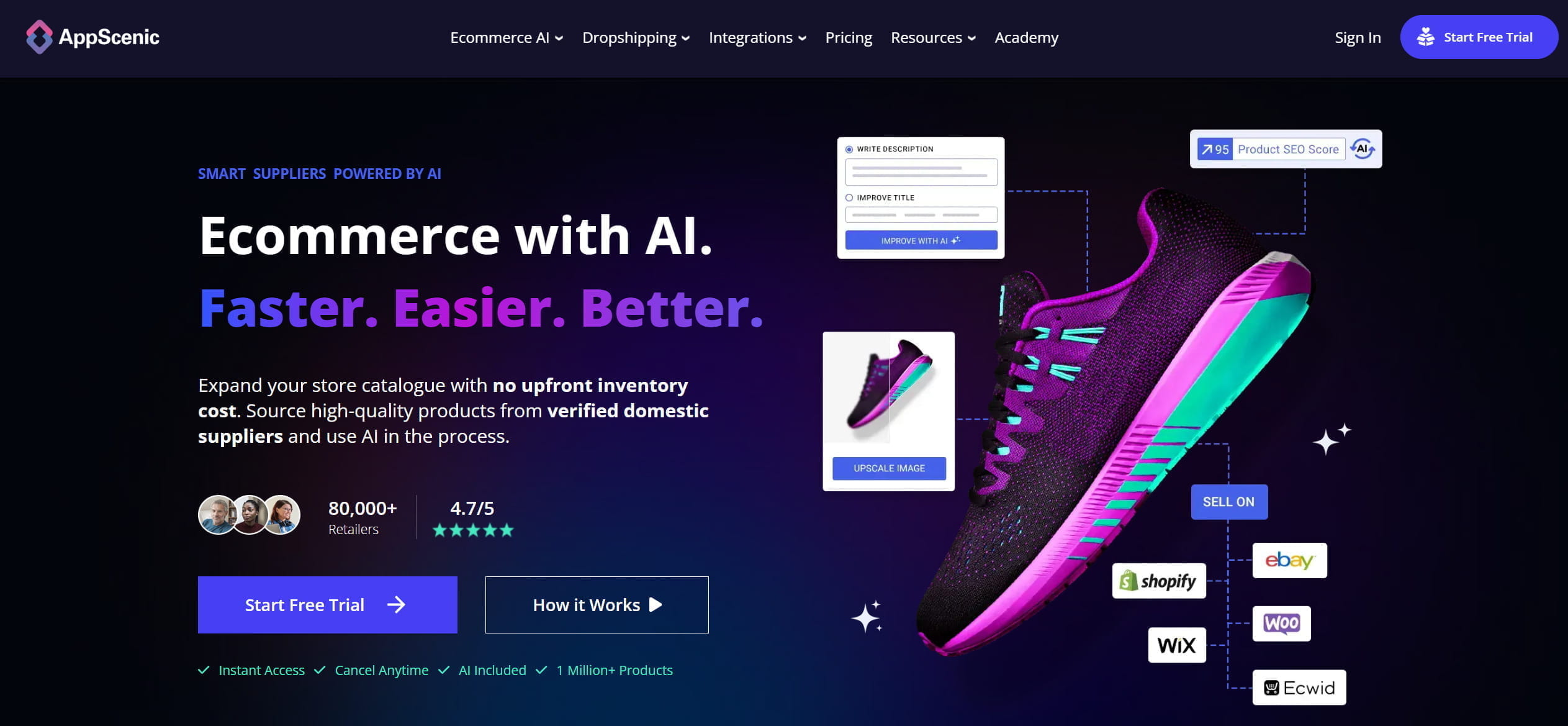
The pitch is speed and automation, and it mostly delivers on both. It pulls from a verified supplier network across America and Europe, Britain included, with over a million products, and the delivery window on that stock is two to four days — the fastest claim here. The automation is genuinely hands-off: prices and stock sync around the clock, orders route to suppliers on their own, tracking numbers import themselves. There’s a 15-minute support SLA on the upper tiers, and it connects to Shopify, WooCommerce and Walmart.
Paid plans open at $39/month with a free trial. You’ll pay more per product than you would sourcing out of China, which is the trade you make for fast domestic shipping and never touching fulfilment. It’s newer than most platforms here, so the occasional bug surfaces, but for a solo operator the time it saves is the whole reason to use it.
4. Syncee
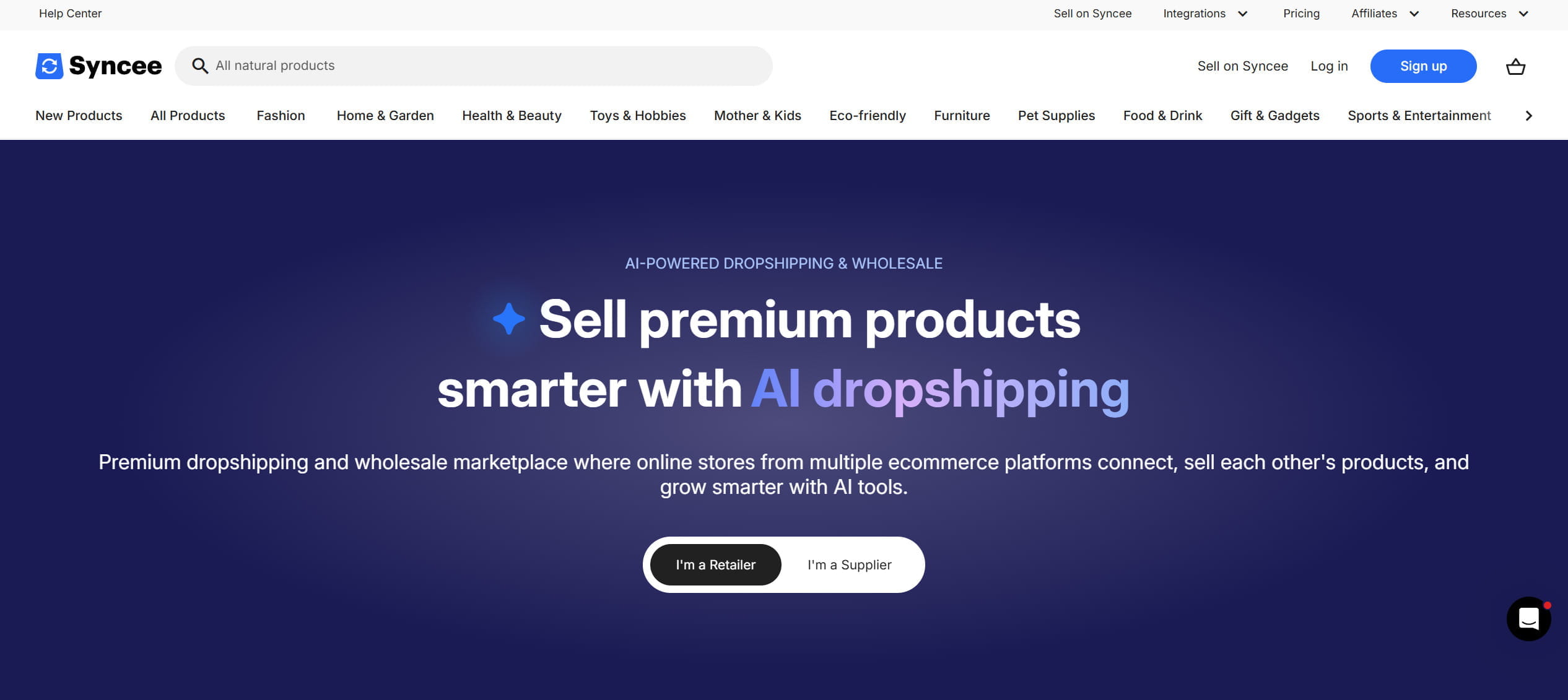
Syncee is a marketplace rather than a single supplier — somewhere around 12,000 vetted sellers and eight million products, spanning the US, Canada, the UK, the EU and Australia. Hungarian company, around since 2016. The 2026 addition worth knowing about is its AI Agent: you describe what you want to sell in plain language and it surfaces matching products and suppliers, which beats scrolling categories all afternoon. There’s also a DataFeed Manager that automates any supplier you already work with off a CSV or XML feed, handy if you’ve got a relationship you don’t want to abandon.
Free plan, a $1 Shopify trial, and it integrates with nearly everything — Shopify, Wix, WooCommerce, BigCommerce, Squarespace and more. Two caveats straight from the review pile. A supplier walking off the platform can break your live listings overnight, so keep backups for anything important. And you’ll want to check trademark compliance on sourced products yourself, because Syncee won’t do it for you. Shipping speed comes down entirely to which supplier you pick, so filter for the local ones.
5. DropCommerce
North America only — about 400 hand-picked US and Canadian suppliers, heavy on the eco-friendly, fair-trade, handmade and Made-in-USA end of the catalog. For a sustainability-led brand selling into the States it’s close to purpose-built, and it dodges the China tariff problem entirely by simply never touching China.
A handful of things set it apart. Everything ships in two to seven days because it’s all domestic. Every product guarantees you a 30% margin floor. There are no transaction fees stacked on top of the membership. And DropCommerce will refund you out of its own pocket if an order never arrives, which is rare. Plans start free, run about $29/month for Basic, and $89–95 for the Pro tier that unlocks automated fulfilment. The limitation is obvious: it’s useless if you’re selling into the UK, and there’s no WooCommerce integration — Shopify, BigCommerce, Wix and Shoplazza only.
6. Zendrop
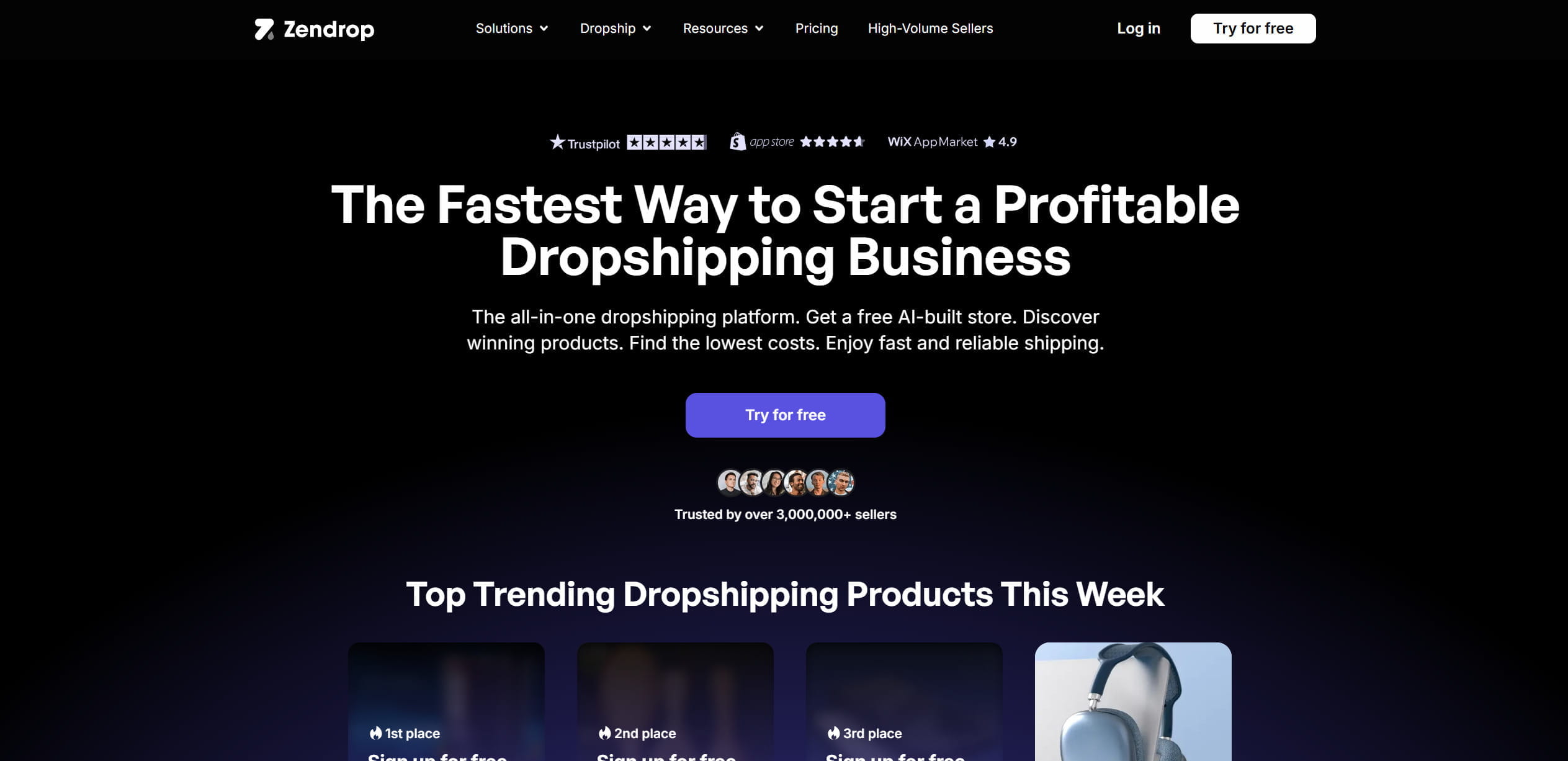
The branding play. US fulfilment gets locally-stocked products to customers in two to five days, and the whole platform is built around private labelling and custom packaging, down to printed thank-you cards in the box — the things that make a store feel like a brand instead of a reseller.
The part that’s genuinely good for fragile goods is the returns policy, and it’s why I’d point ceramics or glass sellers here specifically. If an item arrives damaged or goes missing, Zendrop replaces or refunds it free, and it’ll send a free replacement if a parcel runs more than five days past its estimated window. For a category with an 8% breakage problem, that isn’t a footnote. Pricing goes free / $29 Beginner / $49 Pro / $79 Plus, with Pro the realistic floor for anything serious — US products, unlimited orders and custom branding all live there. Two cautions: the private-labelling and custom-packaging options carry minimum order quantities that can wall out brand-new sellers, and a big chunk of the catalog still ships from China on a 10–15 day clock, longer through Q4. Shopify and WooCommerce.
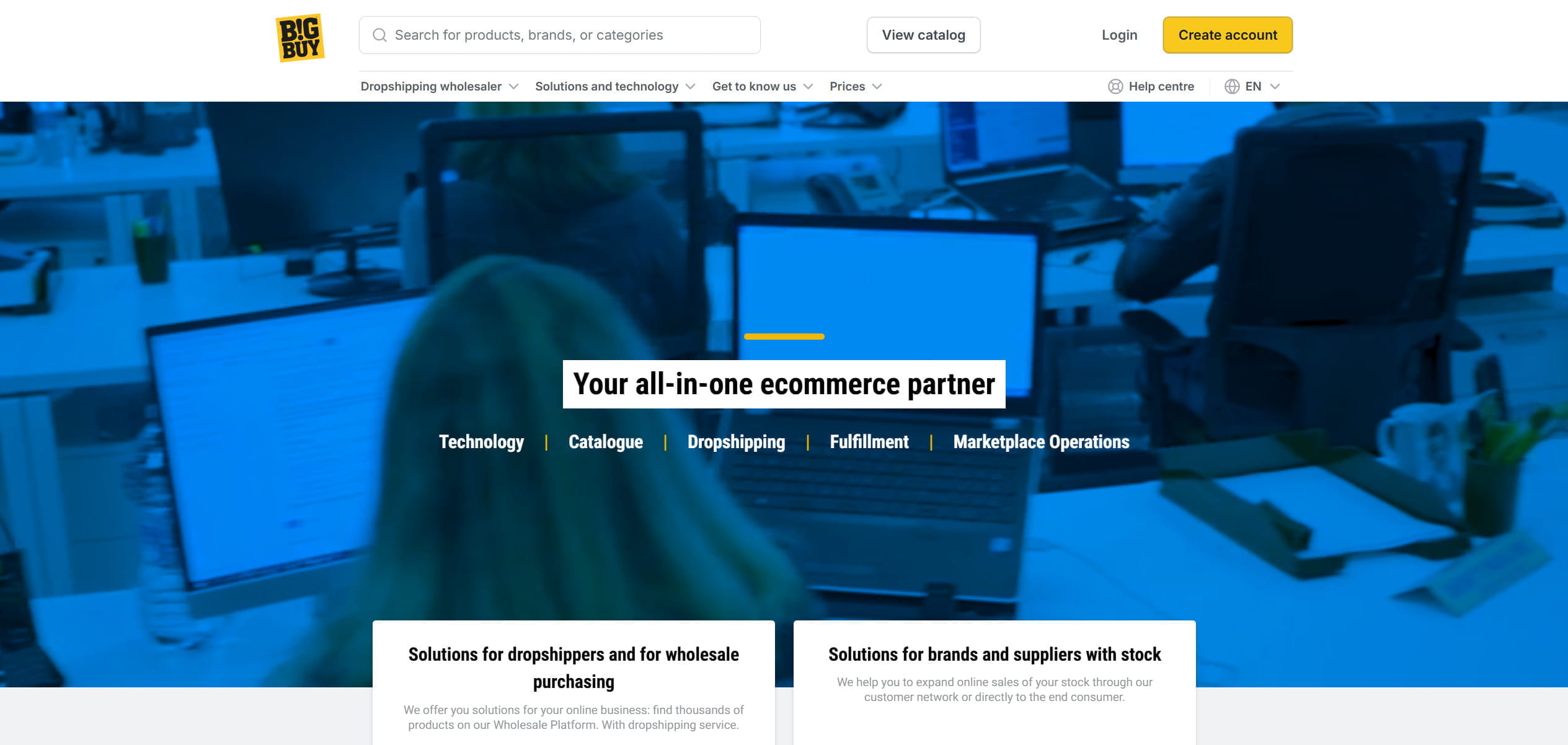
7. BigBuy
For a UK or EU store, this is the serious infrastructure option. It’s a Spanish operation running its own 30,000-square-metre warehouse stocked with more than 400,000 products, and the headline is delivery: 24 to 72 hours across most of Europe, from European stock, nothing China-routed in the mix. It also localises product content into 24 languages, which matters more than people expect once you’re selling the same lamp into Germany, France and Poland.
It isn’t cheap and it isn’t beginner-friendly, and that’s the trade. Entry runs somewhere around €69–120 a month plus a roughly €90 registration fee, margins typically land at 40–50% (BigBuy quotes up to 70% on some lines), and you connect through Shopify, WooCommerce, Amazon, eBay or a raw API/CSV feed if you’re technical. The thing I’d flag hardest: BigBuy sits at 4.1 on Trustpilot, and a recurring complaint in recent reviews is slow dispatch — not transit, dispatch, the gap before the parcel even leaves the building. On marketplace channels where handling time is scored that’s a genuine risk, so test your actual SKUs before you lean on it as your only supplier.
8. Shopify Collective
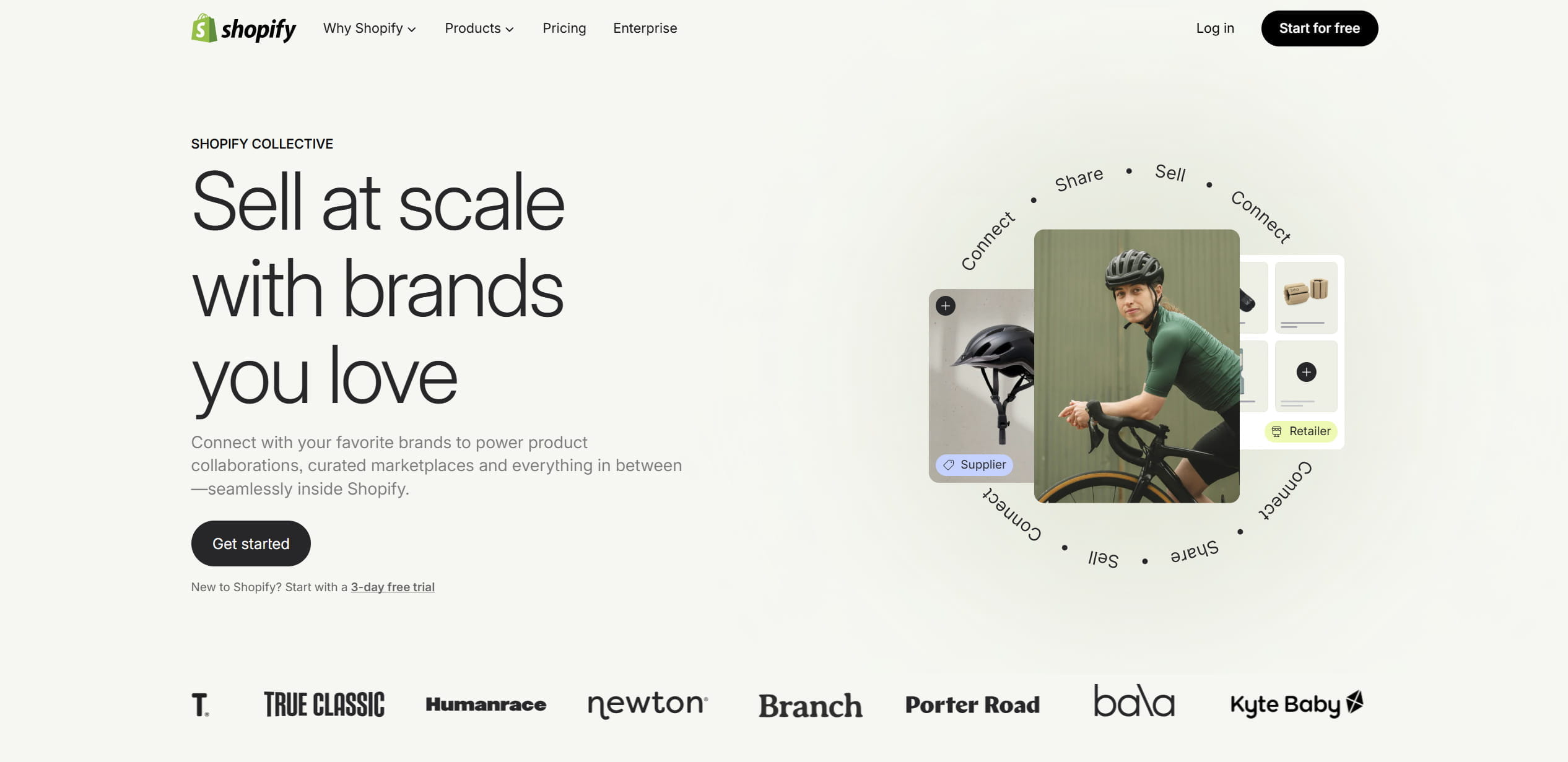
Last one, and it only applies if you’re on Shopify and based in the US. Collective is a free, native Shopify feature that lets your store sell another Shopify brand’s products, with inventory syncing live and payments splitting automatically — no third-party fulfiller in the middle, just two Shopify merchants. For stocking established American home brands directly, nothing’s cleaner.
The constraints are strict: a US store, USD, Shopify Payments switched on (Canadian stores can join too). Margins generally run 20–40%, depending on the brand’s wholesale price. And because it’s a direct partnership, a brand can disconnect from you with almost no notice and break your listings instantly — so anything you’d hate to lose, keep a second source for. No cost beyond your existing Shopify plan.
A few more worth knowing about
The eight above cover most situations, but a handful of others fill gaps those don’t, and one of them isn’t a conventional supplier at all.
1. vidaXL (DropshippingXL)
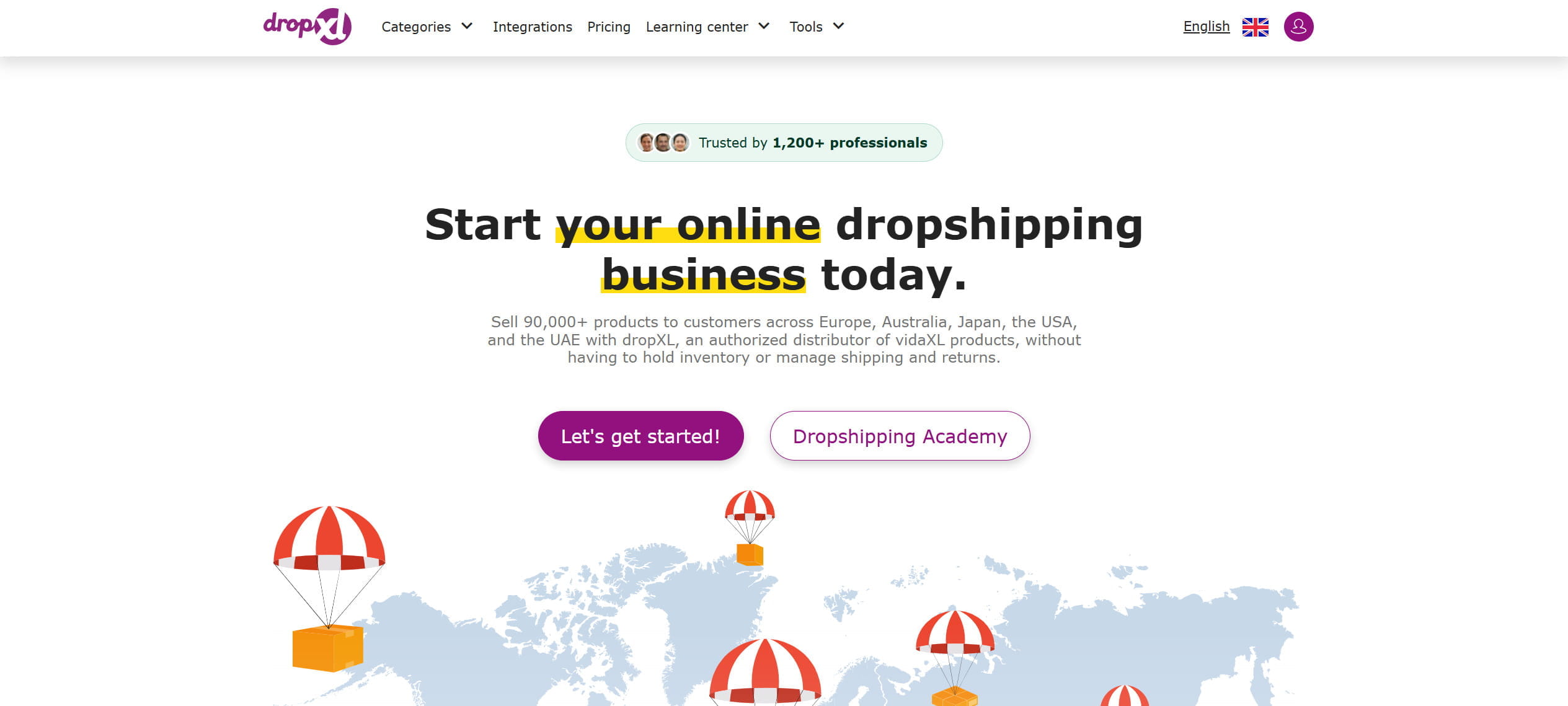
If furniture is the actual business rather than a category, this is the one I’d reach for. vidaXL is a Dutch home-and-garden retailer with a catalog north of 90,000 SKUs — sofas, beds, garden sets, storage, the heavy stuff — much of it own-manufactured and held in warehouses across six countries, the UK included. Its DropshippingXL programme charges no membership fee; you pay wholesale plus shipping per order, and European delivery runs two to five days. For high-ticket furniture dropshipping into the UK and EU, that mix of catalog depth, local stock and zero subscription is hard to beat. The honest caveat is that furniture is heavy and unforgiving — fragile finishes, six-week horror stories when a parcel goes astray — so the local-warehouse routing is carrying most of the weight here. Average order values on furniture stores running through it tend to settle around €140–150.
2. Eprolo
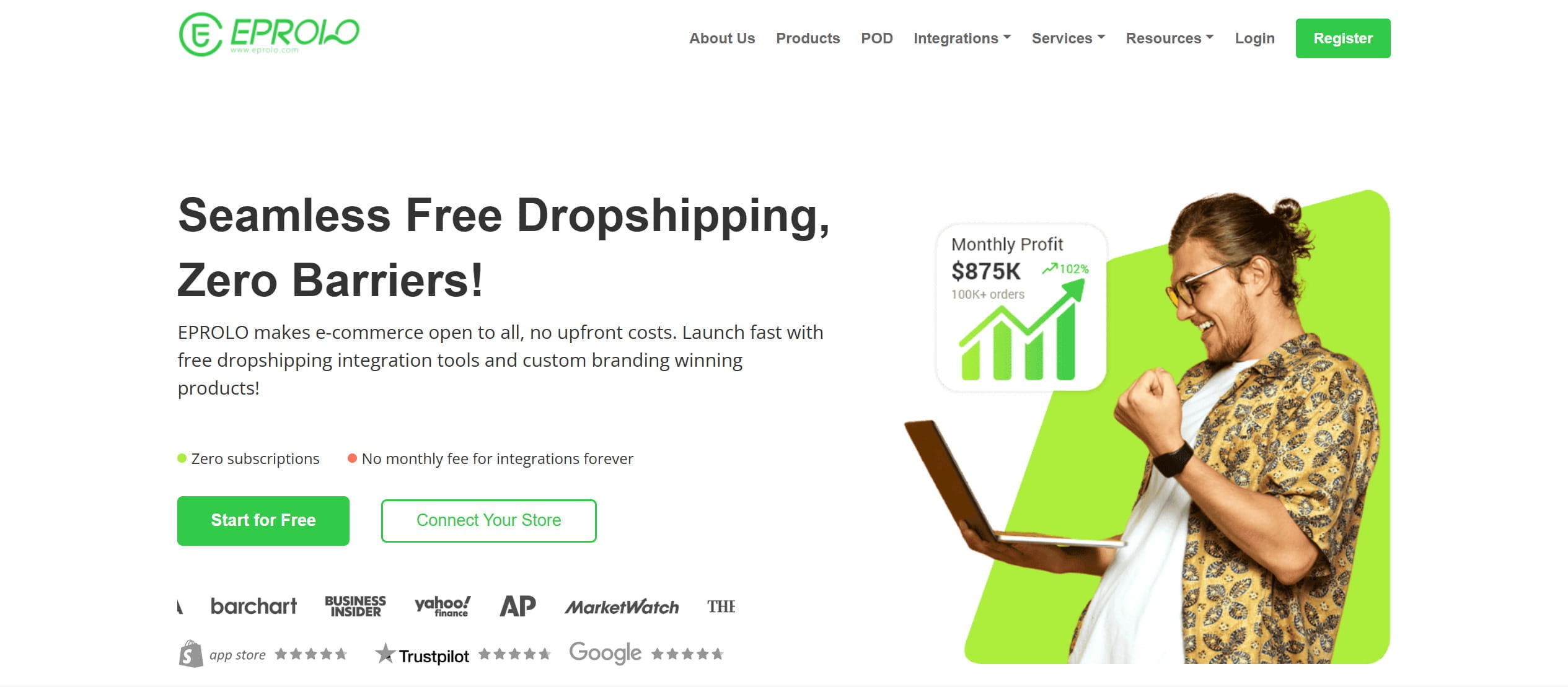
The free answer to Spocket and Zendrop on the branding front. Running since 2015, Eprolo stocks inventory in the US, UK, EU and China, runs a QC pass before dispatch, and does custom labels and packaging — hangtags, gift cards, the lot — with no minimum order. The core platform is genuinely free; the branding tier that usually costs extra elsewhere is $19.90 a year, or $99 for the fuller package. Delivery lands somewhere in the 5–15 day range depending on which warehouse the item ships from, and it holds a 4.8 across roughly 500 Shopify reviews. It leans fashion-heavy, but the general-merchandise and home side is perfectly usable, and the price makes it an easy thing to test against your existing supplier.
3. Gelato
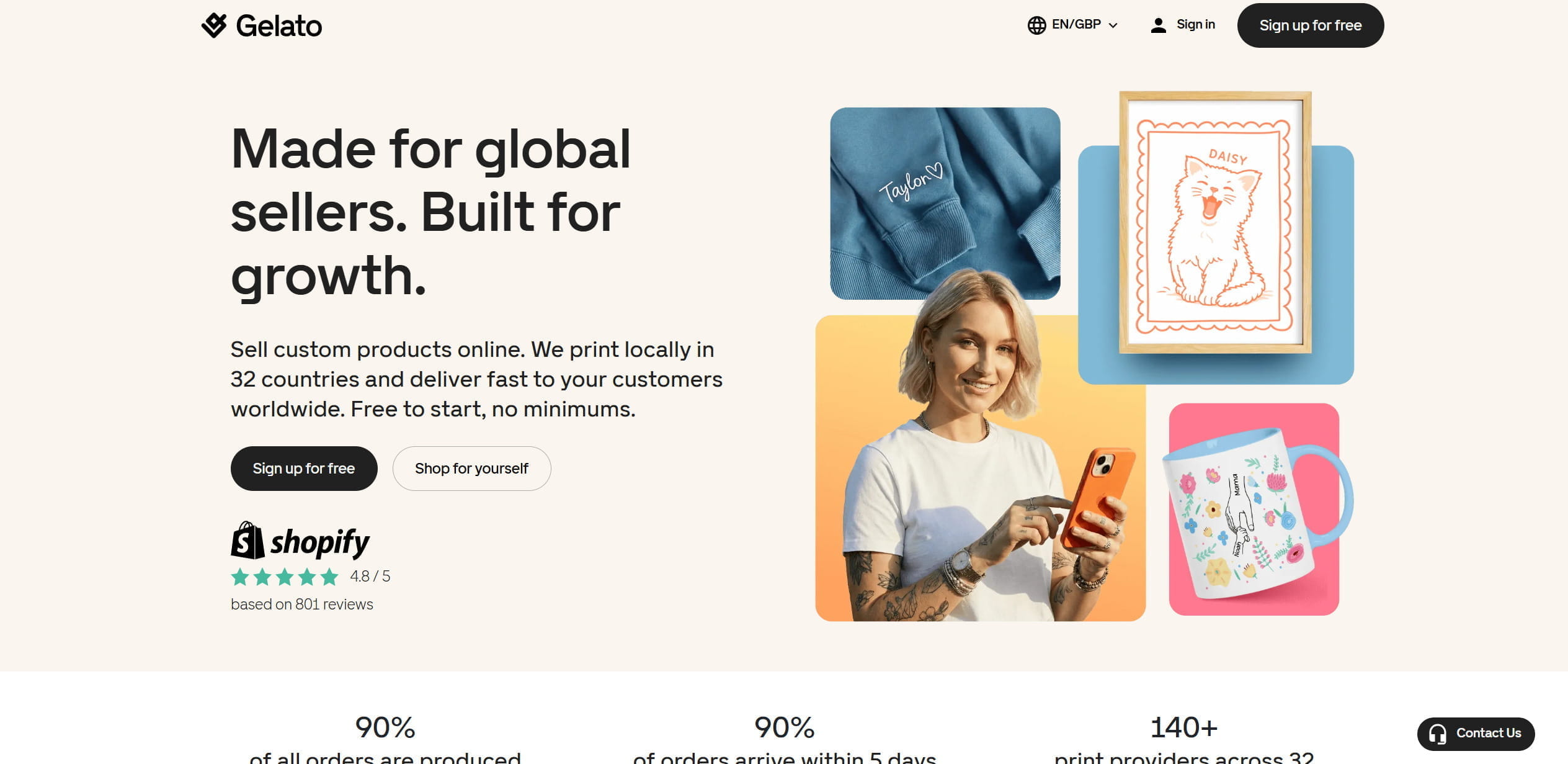
The curveball, and the one genuinely outside any normal supplier list. Gelato is print-on-demand, not a stock supplier, which for decor means wall art, framed posters, canvas and printed textiles made to order. The reason it earns a place in a 2026 guide specifically: it prints locally through 130-odd partners spread across more than 30 countries, so a US order is produced in the US and a UK order in the UK. That sidesteps the tariff problem completely — nothing crosses a border — and gets close to 90% of orders delivered inside five days. Free to start, you pay only when something sells, and the framed-poster quality is the part reviewers keep singling out. If you want a no-inventory, no-tariff decor line whose designs you actually own, this is the most interesting option on the page. The trade-off is obvious enough: you’re supplying the artwork, so it’s a design business as much as a retail one.
One more, if you’re UK-only: Costway UK runs a free dropshipping programme off UK-based stock with two-to-four-day mainland delivery. The catalog is narrower than vidaXL’s, but everything ships from inside the country, which is the whole point.
Vetting a supplier without getting burned
Home decor punishes lazy vetting harder than most niches, for the breakage and shipping-cost reasons above. The single most important habit is to never trust a platform-level shipping claim, only a SKU-level one. Check the products you actually intend to run, because the headline number tells you what’s possible, not what’ll ship to your customer.
Then order samples. Your three or four hero products, the exact variants — the real colours and finishes, not a stand-in — shipped to a residential address so you’re replicating the customer’s actual experience, transit time and all. For anything breakable, order two of each, because you’re testing whether the packaging is reliably good, not whether one box got lucky. Photograph the unboxing while you’re at it; you’ll want those shots for the product page regardless. And time the delivery against what the supplier promised, then write the real number into your cost model instead of the advertised one.
The questions worth asking before you import a catalog — the ones that matter, not the generic ones:
- What happens when something arrives broken: free replacement, refund, or do I have to fight for it with photo proof?
- Who pays return shipping on a damaged item, and do you even require the return? (For most decor the honest answer is “don’t bother,” which is fine — just get them to confirm it.)
- What’s your real dispatch time, separate from transit?
- Which of these specific SKUs ship from a US, UK or EU warehouse, and which come from China?
- How are shipping fees calculated on the heavy stuff — actual weight or dimensional?
- How often does stock and pricing sync to my store?
- For US orders, who’s the importer of record, and how are duties and HTS codes handled now that de minimis is gone?
If a supplier dodges the breakage question or the customs question, that’s your answer. The ones worth working with answer both in a couple of lines.
FAQ
Is home decor dropshipping profitable in 2026?
Yes, but the profit comes from order value, not volume. The online home decor market is worth $134.52 billion in 2026 and growing 11.5% a year (Coherent Market Insights), and a single furniture sale clearing $1,000 funds far more ad spend than a low-ticket niche ever could. The conditions aren’t optional, though: source from US, UK or EU warehouses so shipping is fast, build your numbers on a 1.4% conversion rate rather than a hopeful one, and price duties into anything you import into the States.
How do I find local home decor dropshipping suppliers in the US and UK?
Use a marketplace that lets you filter by warehouse country. Spocket is the strongest for local US/EU/UK suppliers shipping in two to five days; Syncee gives you 12,000+ vetted sellers across those regions plus Canada and Australia; AppScenic runs verified domestic suppliers at two to four days; DropCommerce covers North America only. Whichever you land on, order samples before importing anything — the filter tells you where the warehouse is, not how good the product is.
What are the biggest risks when dropshipping furniture and home goods?
Breakage is first and worst — fragile items arrive damaged often enough (think 8% on poorly-packed lines) to wreck your margin through replacements and chargebacks. After that come shipping costs on bulky furniture that can match or beat the product price, long transit times from China-stocked goods that trigger refunds, and the customs and duty burden that landed on every US import when de minimis ended in 2025. The common thread is that all of them shrink the closer your warehouse sits to your customer.
Which supplier ships fastest to the US and UK?
AppScenic claims the fastest at two to four days from domestic stock, with Spocket and Zendrop close behind at two to five for US and EU orders. For the UK and Europe specifically, BigBuy’s 24-to-72-hour delivery from its Spanish warehouse is the one to beat. The speed only holds for locally-warehoused SKUs, as ever.
So which one should I actually use?
There’s no single winner, which is why this guide runs through a dozen of them. Roughly: Spocket for fast local shipping with branding, AppScenic if automation is the priority, DropCommerce for an eco North-American brand, Zendrop for private label and the best damage policy, BigBuy for scaling across the UK and EU, Syncee for global B2B sourcing, Shopify Collective for US Shopify-to-Shopify deals, and CJ when you’re starting on a budget. Add vidaXL if you’re serious about furniture, Eprolo for free branded fulfilment, and Gelato if you’d rather sell print-on-demand wall art than hold someone else’s stock. Most people who stick with it end up running two anyway — a local supplier for speed and a broad one for catalog depth. Pick the local one first.