
- articles
Dropshipping Spocket: 5-Step Guide for 2026
Quick Answer: Spocket is a dropshipping marketplace that connects your online store with vetted suppliers, most of them in North America and Europe, who ship orders straight to your customers. Dropshipping with Spocket comes down to five steps: create an account, connect your store, choose products, import and price them, then pay the supplier when orders come in. Plans start at $39.99 per month on monthly billing, and every monthly plan begins with a 7-day free trial.
Key Takeaways
- Match the supplier’s location to your customers. US suppliers ship fastest to US buyers, EU suppliers to European ones.
- Budget for each store separately. Each connected store needs its own subscription, and Amazon or eBay selling starts on Empire.
- Put the trial end date in your calendar. Monthly plans renew automatically, and the subscription policy asks you to cancel at least 24 hours before renewal.
- Price with shipping in mind. Neither the listing price nor the suggested retail price in the app includes shipping.
If you want to start dropshipping with Spocket, this guide takes you from the first login to the first fulfilled order, with current prices and the billing details worth checking before the trial ends.
What Is Spocket and How Does Spocket Dropshipping Work?
Spocket is a Canadian dropshipping platform launched in 2017. It connects online stores with suppliers who hold their own inventory, most of them in North America and Europe, and handles order routing and supplier messaging between the two sides.
The company grew fast in its early years and was ranked the 14th fastest-growing Canadian company in 2021, reporting 3154% revenue growth over three years.
In practice, Spocket dropshipping works like this. You add a supplier’s product to your store at your own price. When a customer buys it, you pay the supplier the listing price plus shipping, and the supplier sends the parcel straight to the customer. Your profit is what remains after the supplier’s price and your own costs.
The table below sums up the numbers and rules covered in this guide.
| Parameter | Details |
|---|---|
| Pricing | Starter $39.99, Professional $59.99, Empire $99.99 and Unicorn $299.99 per month. Annual billing starts at $24/month (Professional). Starter is monthly only. |
| Free trial | 7 days on monthly plans, after which the plan renews automatically. Annual plans have no trial. |
| Supplier locations | Mostly vetted suppliers in North America and Europe, plus AliExpress products in the same catalog. Suppliers must offer at least 25% off their retail price and hold their own stock. |
| Shipping times | Set per product as processing time plus transit. Fastest when the supplier and the customer are in the same country. |
| Where you can sell | Shopify, WooCommerce, BigCommerce, Wix, Square, Squarespace and Ecwid. Amazon and eBay from the Empire plan up. |
| User reviews | Trustpilot 4.2 (10,663 reviews), Shopify App Store 3.6 (623 reviews). Recurring complaints concern billing and cancellations. |
Why Choose Spocket?
If you’ve combed around, you know Spocket isn’t the only dropshipping tool that connects sellers with suppliers and automates orders. Dropified, Easync, AutoDS and SaleHoo all cover parts of the same job, each from a different angle.
But Spocket stands out for its supplier model. Suppliers apply to join and ship from their own stock, so its US and EU listings usually reach local customers faster than parcels from Asia. It’s also friendly for people new to dropshipping, since the whole workflow sits in one simple dashboard.
Spocket US and EU Suppliers: What the Vetting Actually Requires
Spocket dropshipping with US and EU suppliers rests on a vetting process with fairly specific rules. Under the supplier requirements, a supplier must manufacture its products or keep them in its own warehouse, and resellers without inventory don’t qualify. Suppliers also have to offer retailers at least 25% off their regular retail price and charge you the same shipping fees they charge their own retail customers.
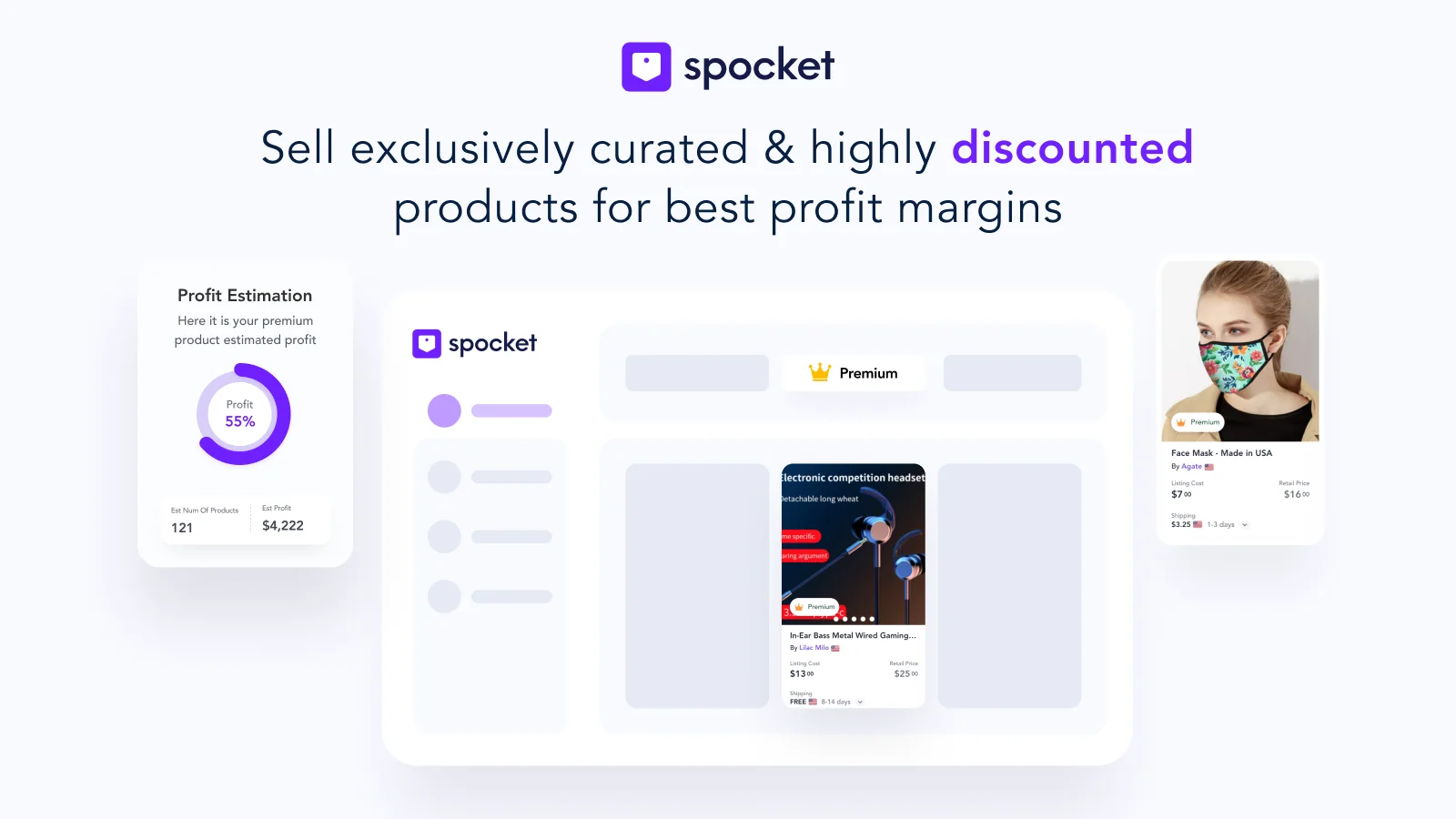
The vetting policy adds a ban on third-party warehouses and requires suppliers to meet the processing and shipping times they list. Nutraceuticals and items with unapproved health claims are excluded outright.
Search results aren’t limited to local suppliers, though. Alongside a catalog advertised at more than 100 million products, the platform surfaces AliExpress items that ship from Asia on much longer timelines. Check where a listing ships from before importing it.
Spocket Shipping Times: Processing Plus Transit
There’s no single delivery time for Spocket, because each supplier sets its own. Every listing combines processing time (packing the order) with shipping time (the carrier’s part), and the sum is the promise you can make at checkout.
Distance matters most. A US store buying from US suppliers skips cross-border transit and customs, and EU suppliers do the same for an EU store. Filtering by ship-from country before you browse saves time later.
Taxes vary too. According to the Help Center, most suppliers handle customs duties and taxes themselves, though sales tax may apply to domestic shipments depending on the supplier.
The Spocket Dropshipping Platform: Where You Can Sell
Unlike many tools that support only a few dropshipping platforms, Spocket connects to most popular store builders. Its sales-channel policy approves Shopify, BigCommerce, Wix, WooCommerce, Squarespace, Square and Ecwid, plus two marketplaces: Amazon and eBay.
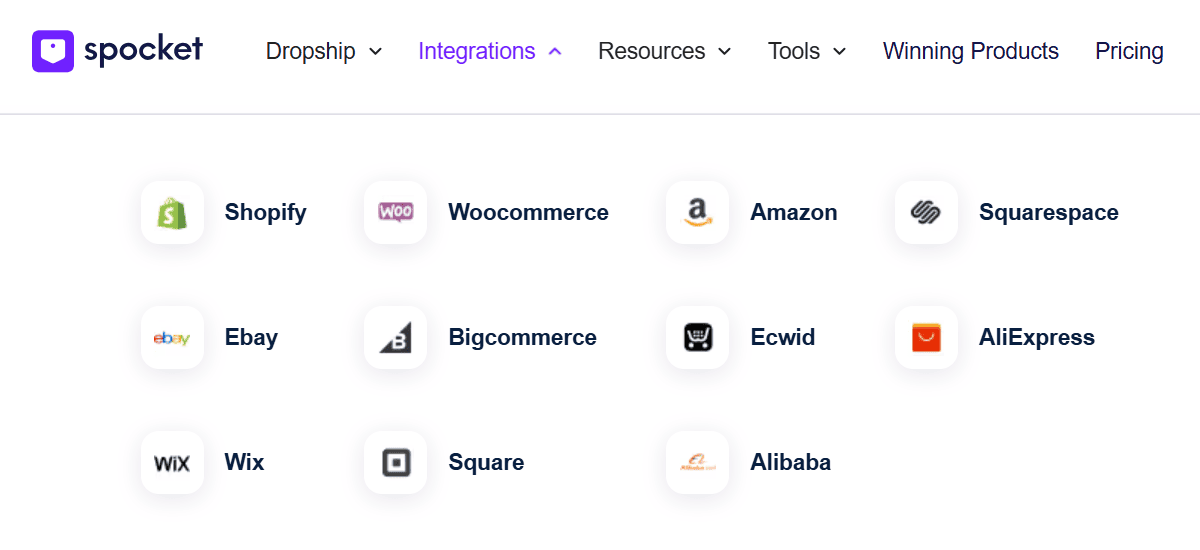
The marketplaces come with a plan requirement. Amazon and eBay dropshipping start on Empire, and the eBay integration guide limits eBay to Empire and Unicorn subscribers.
Third-party marketplaces such as Etsy, Wish, Groupon, Facebook Marketplace and Google Shopping are off-limits, and Spocket can close the account of a retailer who lists its products there. Ads on Facebook, Instagram, Pinterest or YouTube that send traffic to your own store are fine. AliExpress and Alibaba appear on the integrations list too, but as product sources rather than sales channels, with AliExpress items imported through Spocket’s AliScraper tool.
How to Start Dropshipping with Spocket in 5 Steps
Each step below builds on the one before it.
1. Sign Up and Choose a Spocket Plan
According to the Help Center, you can open an account by installing the Spocket app from your store platform’s marketplace or by signing up on the website with Google or Facebook. Onboarding then asks which categories you want to sell and where your customers are.
Every paid plan starts with a 7-day trial when you choose monthly billing. This is how the four tiers compare on the official pricing page:
| Plan | Monthly billing | Annual billing | Unique products | Premium products | Amazon and eBay |
|---|---|---|---|---|---|
| Starter | $39.99/month | Not offered | 25 | Not included | No |
| Professional | $59.99/month | $24/month, billed annually | 250 | 25 | No |
| Empire | $99.99/month | $57/month, billed annually | 10,000 | 10,000 | Yes |
| Unicorn | $299.99/month | $79/month, billed annually | 25,000 | 25,000 | Yes |
Branded invoices, supplier chat and VIP support start on Professional, and Starter comes with standard 24/7 chat and email support. Unlimited orders appear only from Empire up, bulk checkout is exclusive to Unicorn, and each connected store needs its own subscription.
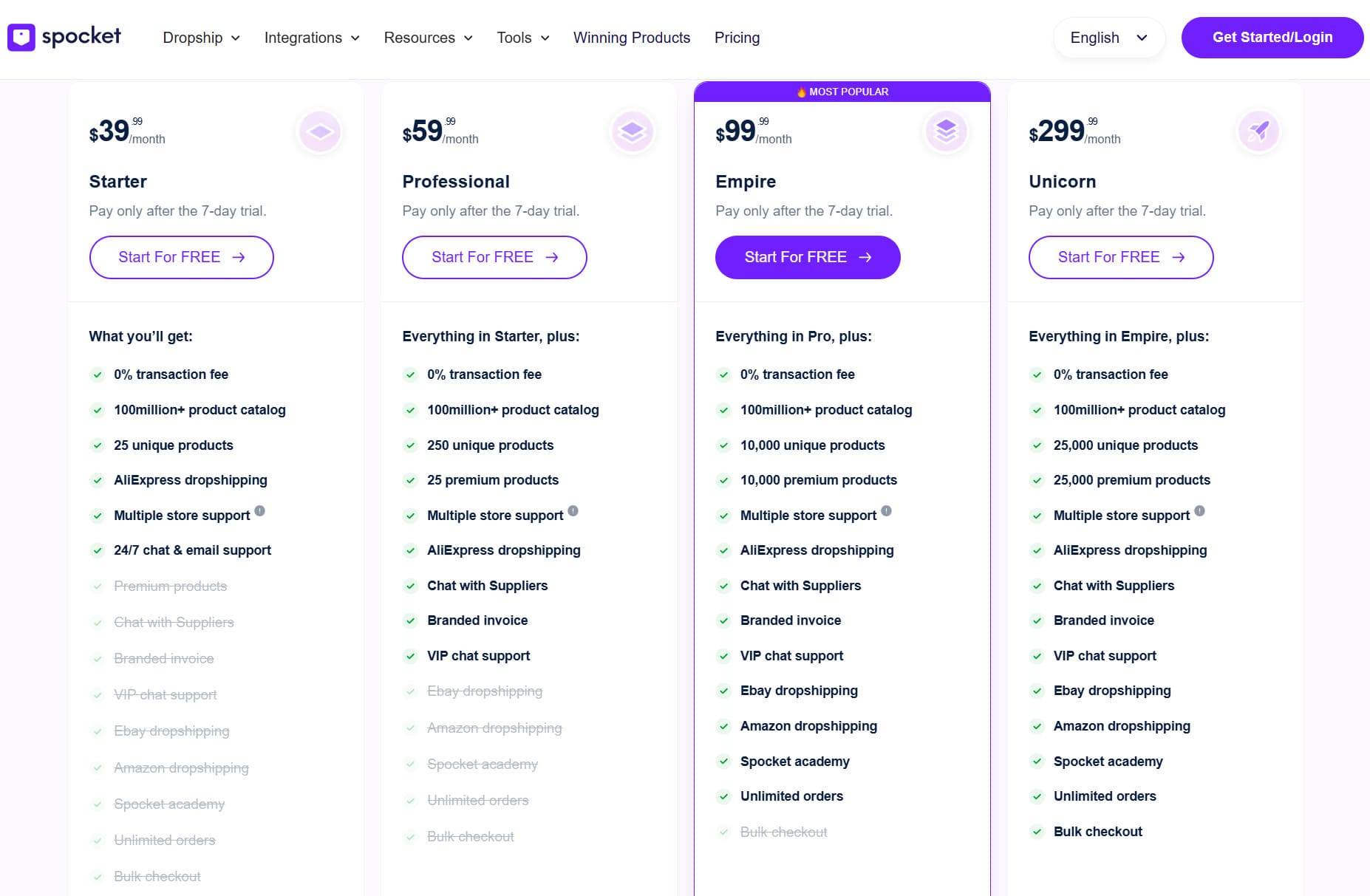
For most beginners, Professional is the sensible start as the cheapest tier with branded invoicing and premium products. Pick Empire if Amazon or eBay is part of the plan. Hold off on annual billing at first, because under the refund policy annual plans have no trial and can’t be refunded once paid.
2. Connect Your Store
Spocket works on top of an online store you already run. If you don’t have one, set it up on a supported platform first. Shopify is the most common choice, and beginners can also try Dropgenius, the AI store builder the company promotes on its site.
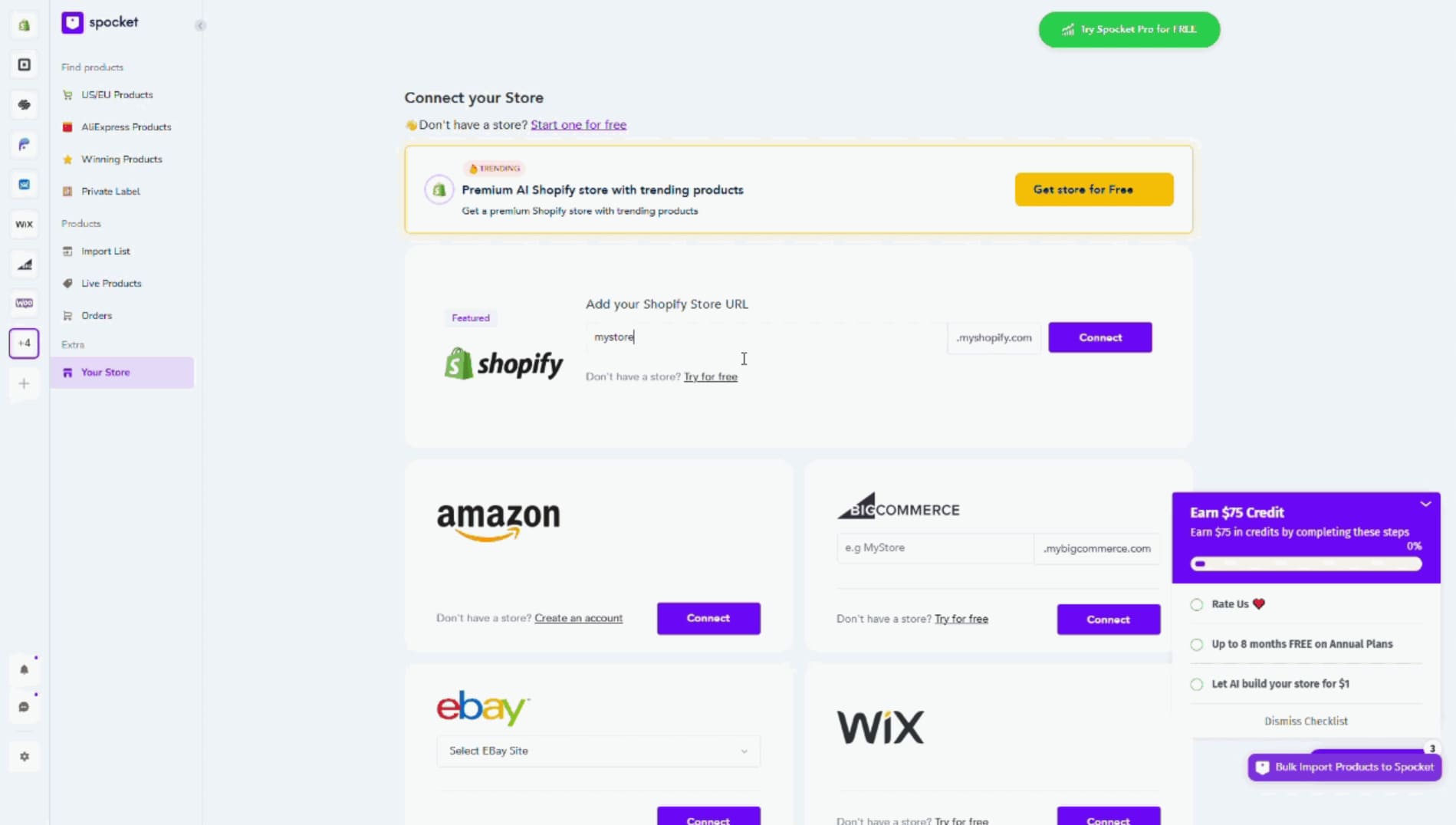
To connect Spocket with Shopify, install the app from the Shopify App Store, or log in to your dashboard, choose Shopify and enter your store URL. Other platforms follow a similar pattern, whether it’s a WooCommerce store, Wix or BigCommerce. Connect the store you actually plan to sell from, since each subscription belongs to one store.
3. Research Products and US/EU Suppliers
Product and supplier research decides most of your results. You’ve probably heard the claim that 90% of dropshipping businesses fail. Whatever the real figure is, the usual causes are selling the wrong product or using unreliable suppliers.
The platform solves much of the second problem, because finding the best dropshipping suppliers for a local audience is far quicker here than cold-emailing manufacturers. Choosing a product with real demand and enough margin after shipping is still up to you.
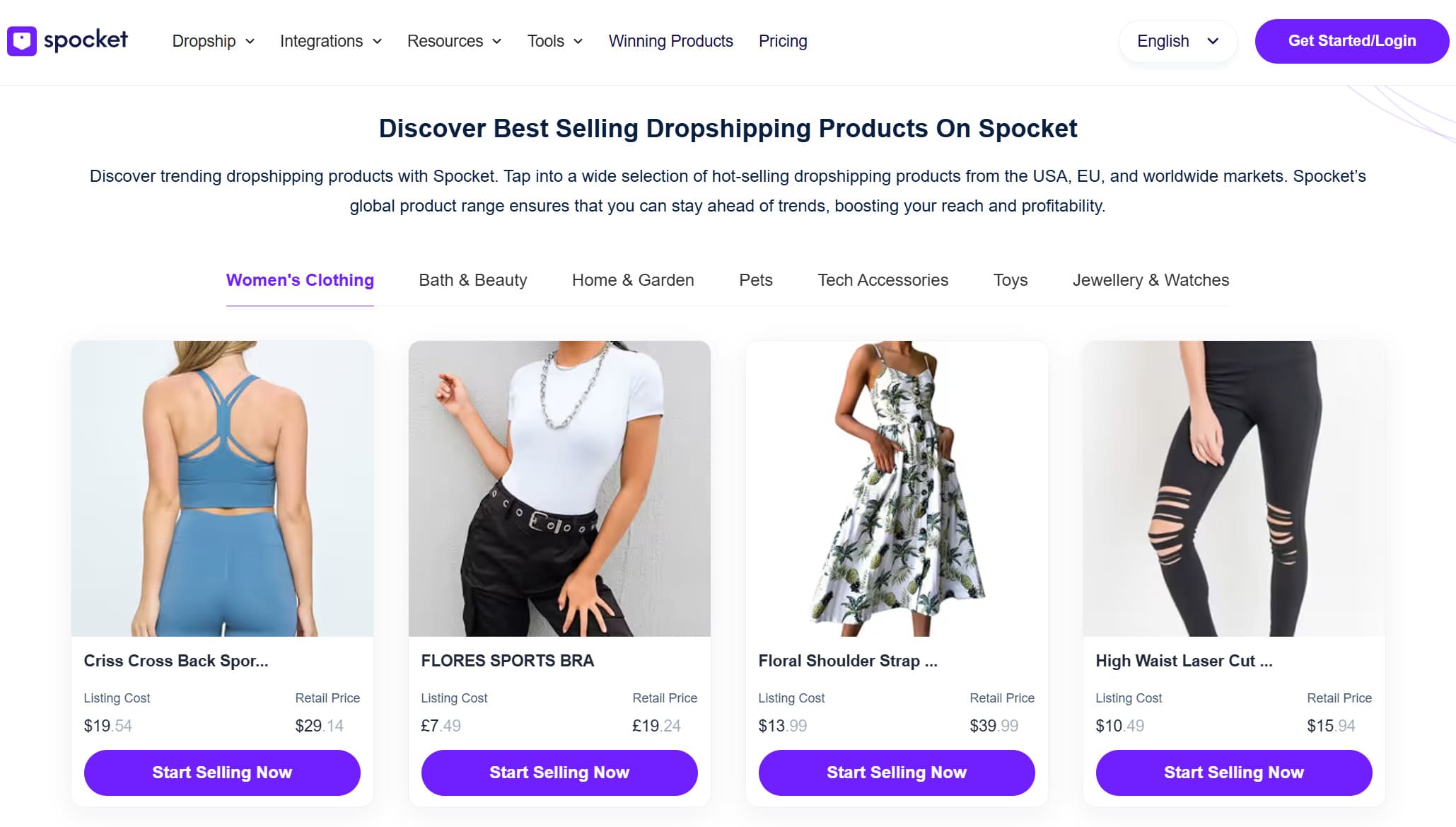
The Trending category is a reasonable place to start looking. Filter by ship-from country and destination, and pick suppliers in the same region as your buyers. Print-on-demand suppliers are also available if you’d rather sell your own designs.
4. Import and Price Your Products
Once you’ve chosen a product, click Add to Import List, then open the Import List from the left-hand menu and check every field before the product reaches your store:
- Title
- Description
- Category and subcategory
- Tags
- Images
- Inventory
- Listing price
- Retail price
- SKU
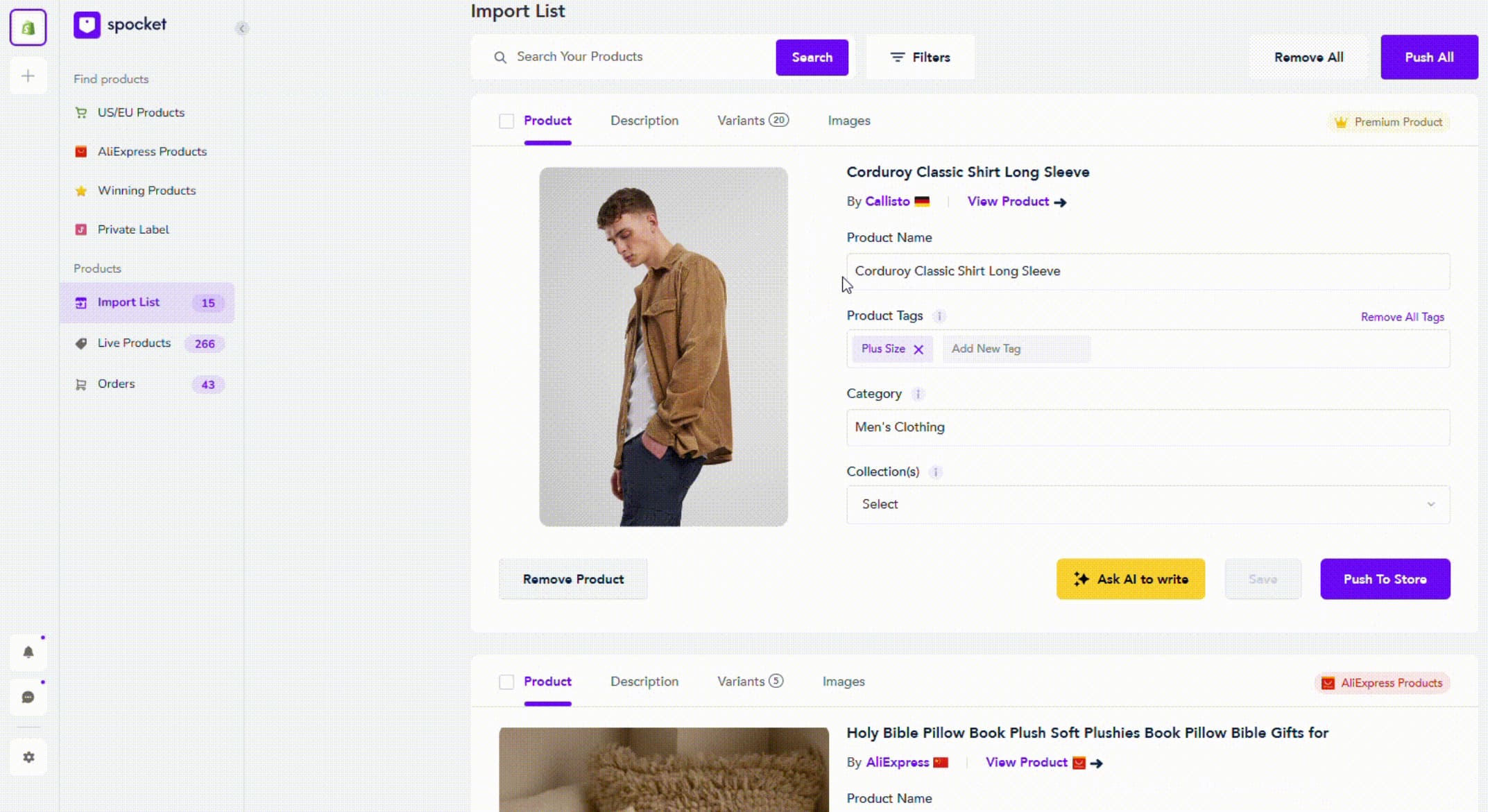
The listing price is what you pay the supplier, and the retail price is a suggestion for your store. Neither one includes shipping, so add the shipping cost before you settle on a margin. Global Pricing Rules can apply the same markup to every import as a fixed amount, a multiplier or a percentage.
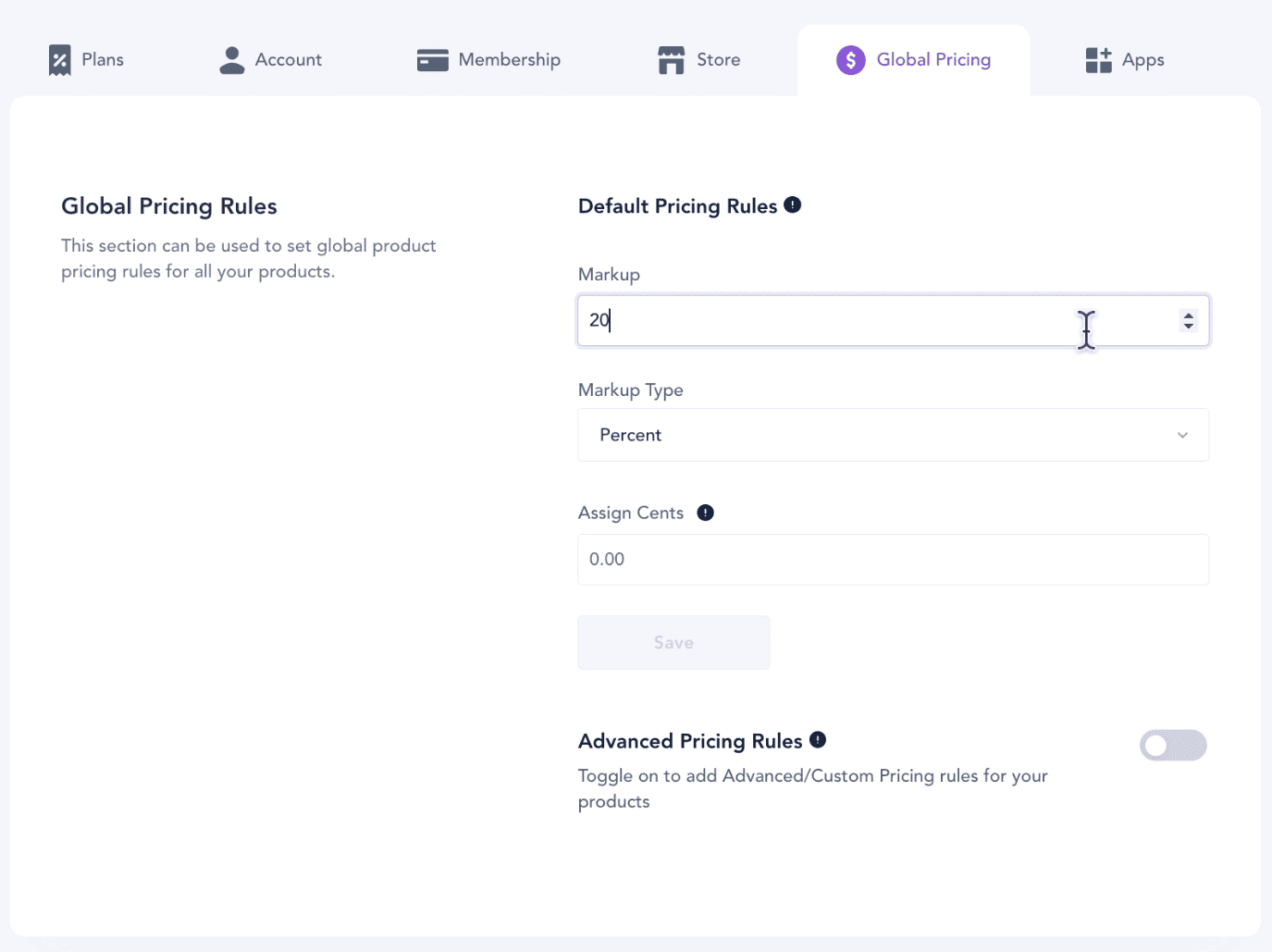
Take a made-up example. A supplier sells a candle for $40 on its own site. On Spocket its listing price must be at least 25% lower, so $30 at most, and shipping costs $6. Your cost is $36 before fees. A retail price of $39.99 leaves almost nothing, and $49.99 leaves about $14 before payment processing and ads.
Stock levels are monitored for you, but prices don’t update automatically when a supplier changes them. You get a dashboard notification, and adjusting the retail price is up to you.
Write your Shipping and Returns pages around your suppliers’ real terms. Each supplier sets its own processing times and return policy, and under the returns rules damaged or incorrect items must be reported with photos within 15 days of delivery. A store that promises 30-day returns while the supplier accepts none pays the difference itself.
Before you publish, send a sample to your own address as a test order. It shows the real delivery time, packaging, invoice and product quality your customers will get, and it gives you your own product photos.
When everything looks right, click Push to Store. If the button stops working, you’ve probably reached your plan’s product limit.
5. Fulfill Orders and Keep Customers Informed
When a customer buys a Spocket product, the order syncs to your dashboard, and you check it out by paying the supplier the listing price plus shipping, with an optional note. The supplier ships the parcel and adds the tracking number.
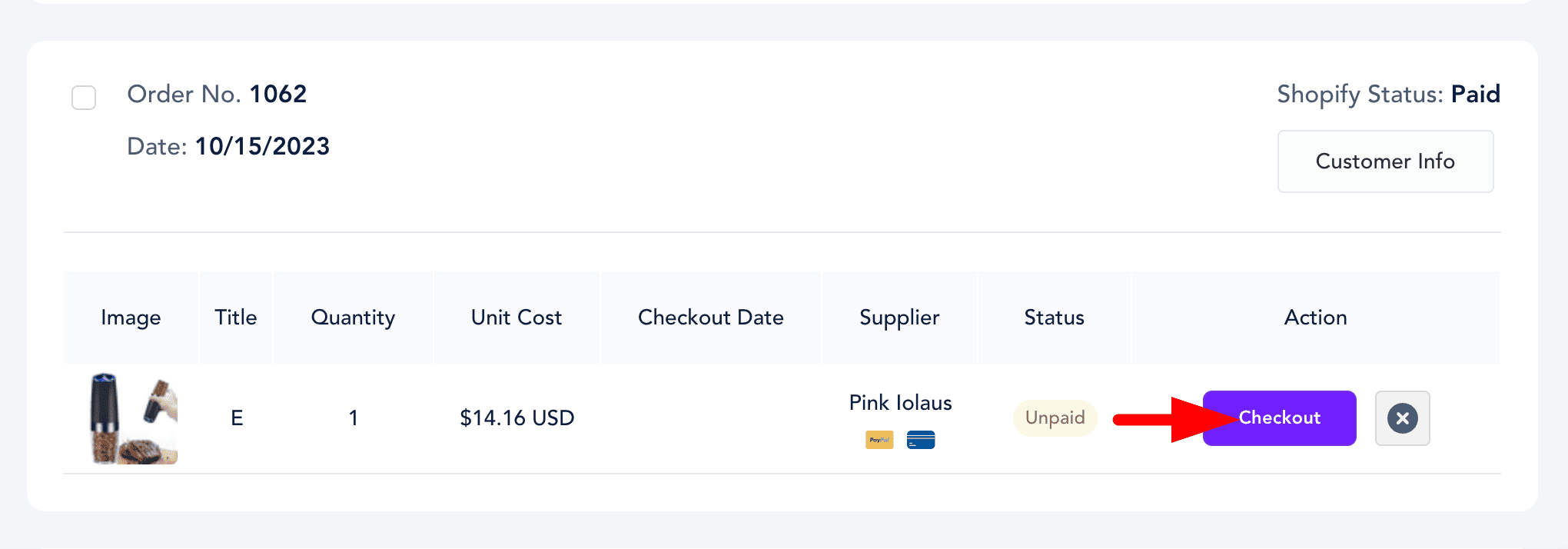
Orders are paid by credit card or PayPal, so keep a valid payment method on file before your first sale. Stripe adds 2.9% plus 30 cents to each successful order, because the advertised 0% transaction fee covers only the platform’s own cut. The same article also mentions an extra 5% fee for suppliers that keep warehouses in the US and China.
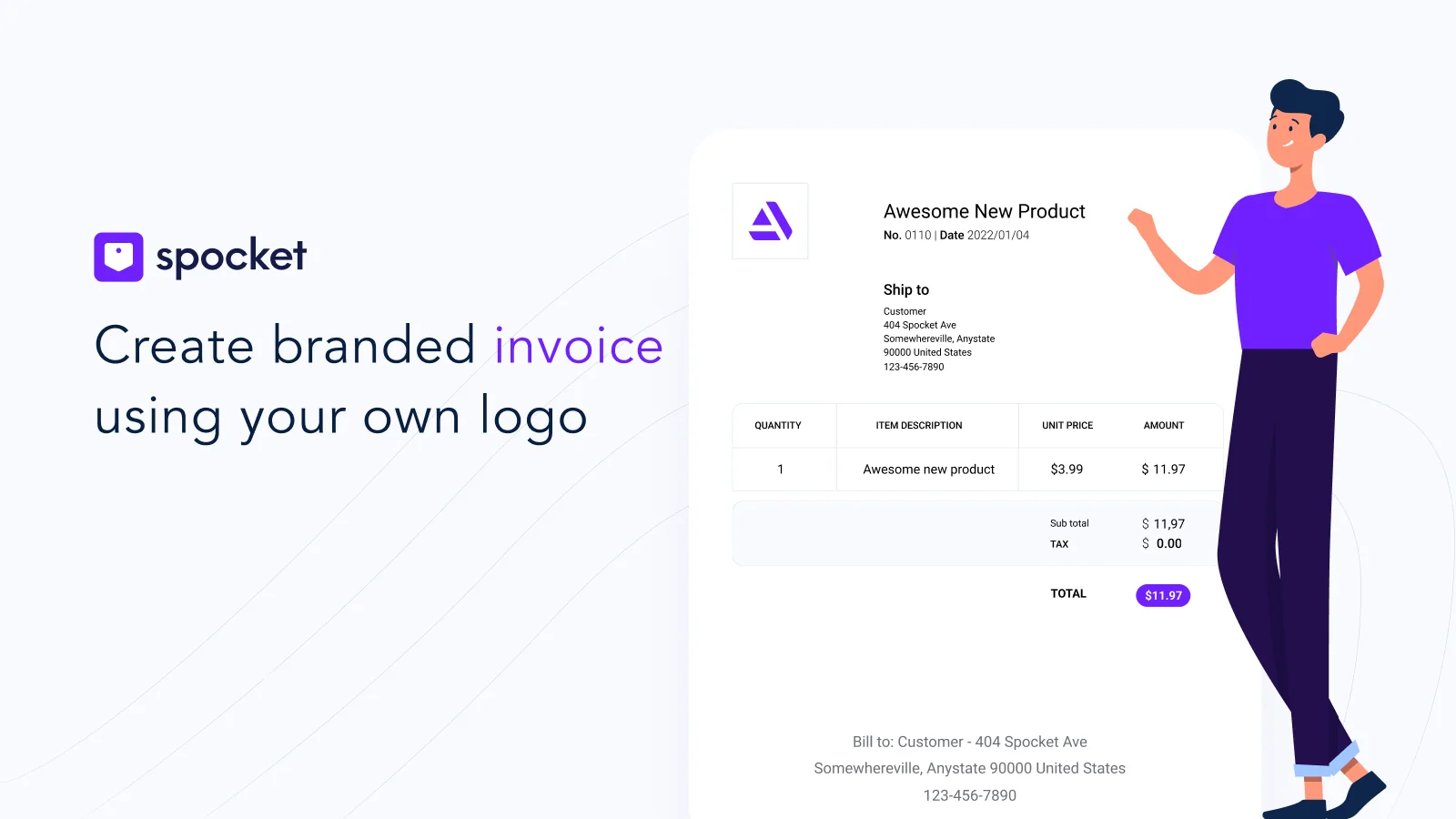
From Professional up, branded invoicing adds your logo and a short note to the invoice inside the parcel. The packaging itself stays neutral. The retailer terms bar suppliers from adding their own marketing materials, yet printing your brand on the box takes a 3PL service at extra cost.
Once the tracking number appears, make sure the customer gets it, for example in your store’s shipping confirmation email. If a parcel runs late, compare it with the supplier’s promised processing time before you reply, and on Professional or higher you can chase the supplier directly through supplier chat.
Spocket Dropshipping Store Examples
Store owners rarely disclose which supplier platform they use, so most published Spocket dropshipping store examples come from the case studies Spocket publishes itself. Read them as vendor stories that still show what kind of problem the platform tends to fix.
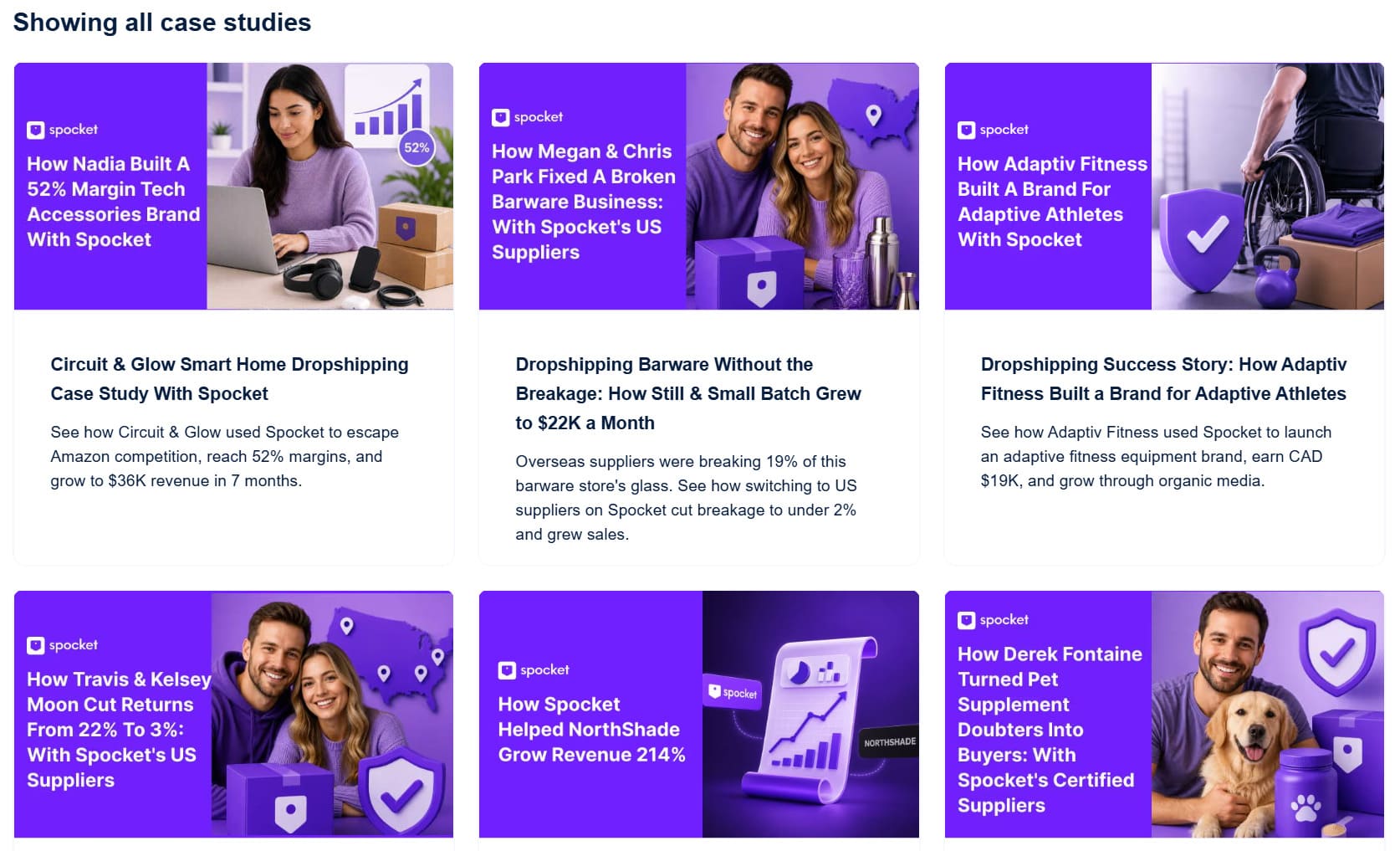
Still & Small Batch, a barware store, kept losing glassware to breakage with overseas suppliers. According to the case study, moving to US suppliers cut breakage from 19% to under 2%, and the store grew to about $22K in monthly sales.
In car accessories, fit and quality problems quickly turn into returns. OakDrive Auto reports bringing its return rate down from 22% to 3.1% after switching suppliers.
Croft & Canine started as a pet store with a 3-star rating, and the write-up credits premium US pet suppliers with lifting it to 4.9 stars.
For sellers outside the US, the most telling story is Omar Hassan’s pet store. He runs it from Dubai and sells to American customers through US suppliers with 3 to 5 day domestic delivery.
Spocket Dropshipping Reviews: What to Check Before You Pay
The platform’s reputation is mixed. On Trustpilot it holds a 4.2 rating from 10,663 reviews, but only 162 of them were posted in the last 12 months. Trustpilot’s AI summary of those recent reviews describes a good overall experience but also flags frequent complaints about unexpected charges after trials and trouble cancelling.
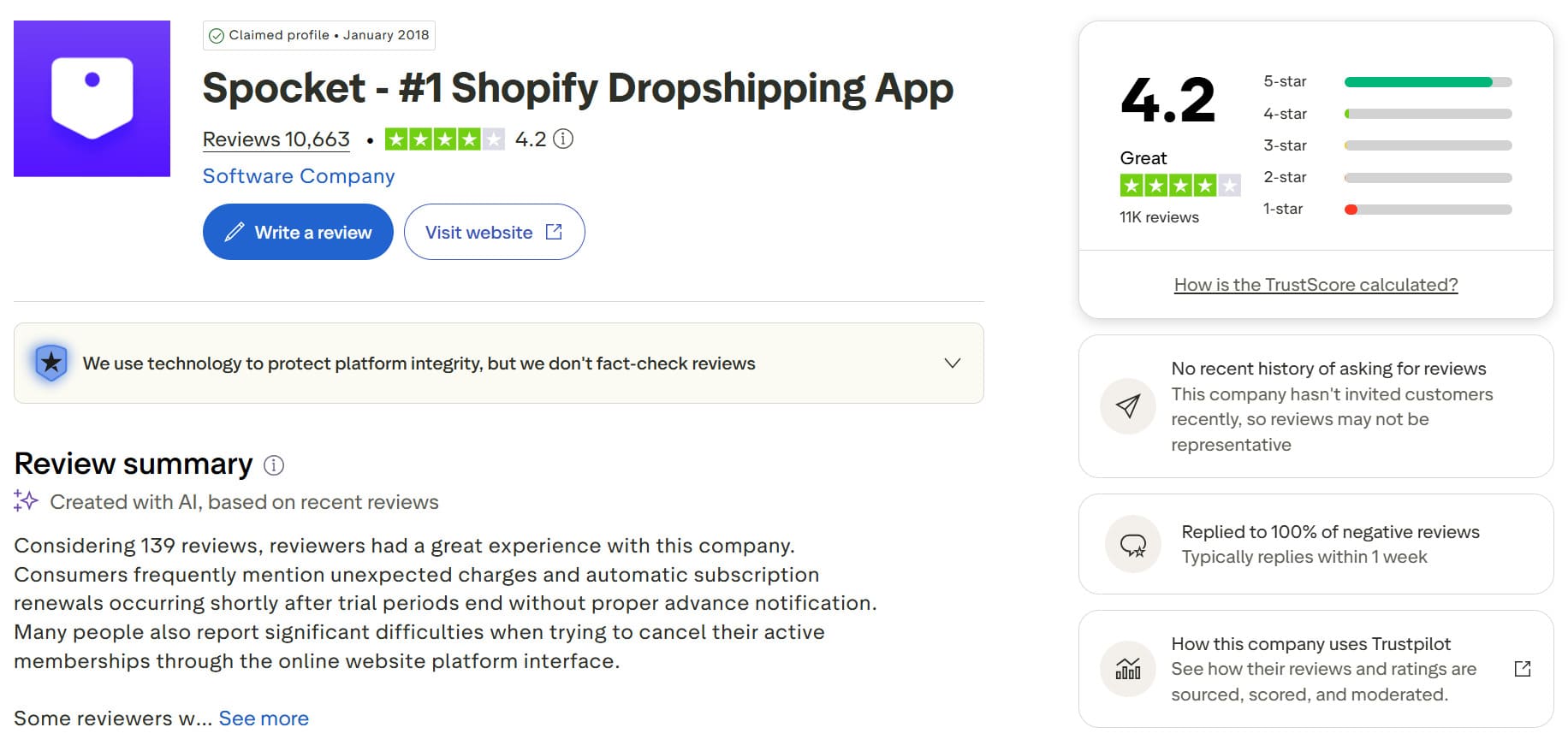
On the Shopify App Store the score drops to 3.6 across 623 reviews. The spread is unusual: most ratings are five stars, yet 14% are one star, with very little in between.
Positive reviewers mostly mention how easy it is to get products into a Shopify store. The negative reviews go into much more detail. In one September 2026 review, a UK store owner explained that every supplier price change meant reimporting the product and rewriting its title and description by hand. Others describe charges they didn’t expect and support tickets that stayed open for weeks.
None of this looks like a scam. Spocket has replied to every negative review on Trustpilot, and most of the problems people report come down to subscriptions and billing. Still, it pays to write down your renewal date and screenshot the cancellation confirmation. Ratings and plan terms are broken down further in our full Spocket review.
Pros and Cons of Dropshipping Spocket Products
Spocket is a great dropshipping tool for anyone who wants local suppliers, but there’s a catch or two.
| Pros | Cons |
|---|---|
| Suppliers must hold their own stock and offer at least 25% off retail | Short 7-day trial, and annual plans can’t be refunded |
| Faster delivery when the supplier and the customer share a country | Amazon and eBay require Empire or higher |
| Works with seven storefront platforms plus Amazon and eBay | Each store needs its own subscription |
| Samples can be ordered before you sell | Supplier price changes don’t update retail prices automatically |
| Branded invoicing from Professional up | No custom branded packaging |
| Order sync and stock monitoring | Frequent billing and cancellation complaints in recent reviews |
How to Scale Your Spocket Store
One of the challenges of dropshipping with Spocket, and of dropshipping in general, is competition. Popular products are available to every other subscriber, so your store has to win on more than the catalog.
Marketing does most of the work, and a small budget goes further when it’s focused on one channel you can run consistently.
A slightly lower price can help a new store compete, provided the numbers still work after shipping and advertising. Customer service is where a small store can beat a big one, and no message should fall through the cracks.
As volume grows, check whether your tier still fits. The product and order limits in the plan table above are the usual reasons to move up.
When Dropshipping Spocket Products Isn’t the Right Fit
Spocket suits sellers who will pay more per unit for fast local delivery. If your strategy depends on the lowest possible product cost, suppliers shipping from China through marketplaces such as AliExpress usually charge less, at the price of slower delivery. If custom products are your entire business, a dedicated print-on-demand platform may be a better base.
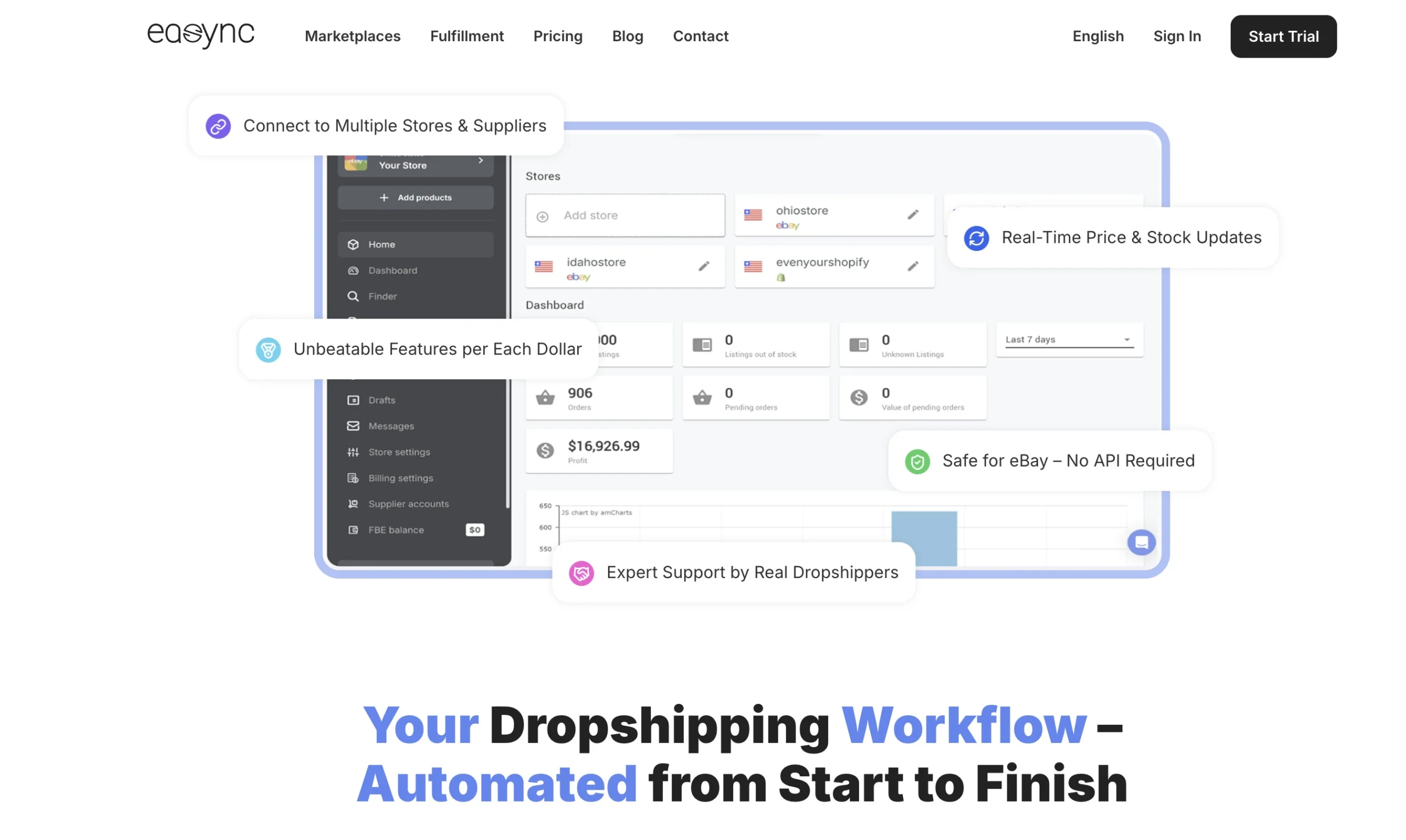
Sellers who want to add other routes, such as Amazon-to-eBay, AliExpress-to-eBay or Amazon-to-Shopify dropshipping, can look at Easync, an Amazon to eBay dropshipping tool. It keeps eBay listing prices and stock in sync with the source, places Amazon orders and uploads tracking to eBay. Plans and the 7-day free trial are listed on the pricing page.
Wrapping Up
Spocket is one of the best dropshipping tools for beginners who want local suppliers without negotiating with manufacturers one by one. Dropshipping with Spocket works best when you pick products that ship from your customers’ region, price them with shipping included and test the experience yourself. Start on monthly billing and switch to annual only once the numbers justify it.
FAQs
Is Spocket good for beginners?
Yes, for the most part. It removes the hardest early task, finding reliable suppliers who ship fast, and the interface is simple. The catch is that the subscription renews monthly whether or not you make sales.
Is Spocket legit?
It’s a real company that has operated since 2017, integrates with the major store builders and has more than 10,000 Trustpilot reviews. The complaints worth taking seriously concern billing after trials, and reading the renewal terms before the trial ends avoids most of them.
Does Spocket have a free trial?
Monthly plans include a 7-day free trial, and cancelling within those seven days means you won’t be charged. Annual plans have no trial. Once a paid monthly cycle has started, that charge can’t be refunded.
How do I cancel my Spocket subscription?
Log in to the Spocket app, open Settings, select the Membership tab, click Cancel and enter your password. The cancellation guide says a password must be set in the Account tab first, so create one if you signed up with Google or Facebook. Cancel at least 24 hours before renewal. Uninstalling the Shopify app isn’t enough, as the company has said in its App Store replies that removing the app doesn’t cancel the subscription. Access continues until the paid period ends, after which your imported products and settings are deleted. If you only need a break, pausing the plan keeps your products and settings, though a trial can’t be paused.
Is Spocket dropshipping profitable?
It can be, but the margin is thinner than the headline discount suggests. Suppliers price at least 25% below their own retail price, and from that gap you still pay shipping, Stripe’s 2.9% plus 30 cents per order, advertising and the subscription. Stores that build a brand and price for value keep more room than those selling at the suggested retail price on paid ads.
Where can I sell Spocket products?
Through your own store on Shopify, BigCommerce, Wix, WooCommerce, Squarespace, Square or Ecwid, and on Amazon and eBay if you’re on the Empire or Unicorn plan. Listing Spocket products on Etsy, Wish, Groupon, Facebook Marketplace or Google Shopping breaks the platform’s rules and can get your account closed.
Can you start dropshipping Spocket products from outside the US?
Yes. You don’t need to live in the US or Europe, only a store on a supported platform and a credit card or PayPal account to pay suppliers. What matters is where your customers are: choose suppliers in the same region, the way the Dubai-based pet store in the examples above sells to American buyers through US suppliers. Business registration and taxes in your own country are still your responsibility, so check the local rules before you launch.
Is Spocket better than Oberlo?
Oberlo no longer exists. Shopify closed the app in June 2022 and recommended DSers to the merchants who had used it for AliExpress imports. Spocket even built a migration tool for former Oberlo users, but the two were never quite the same product. Oberlo was built for AliExpress listings, and Spocket focuses on suppliers in the US and Europe. For a straight Oberlo replacement, DSers or AutoDS is the closer match.