
- articles
Dropshipping Shoes in 2026: Best Suppliers, Tips
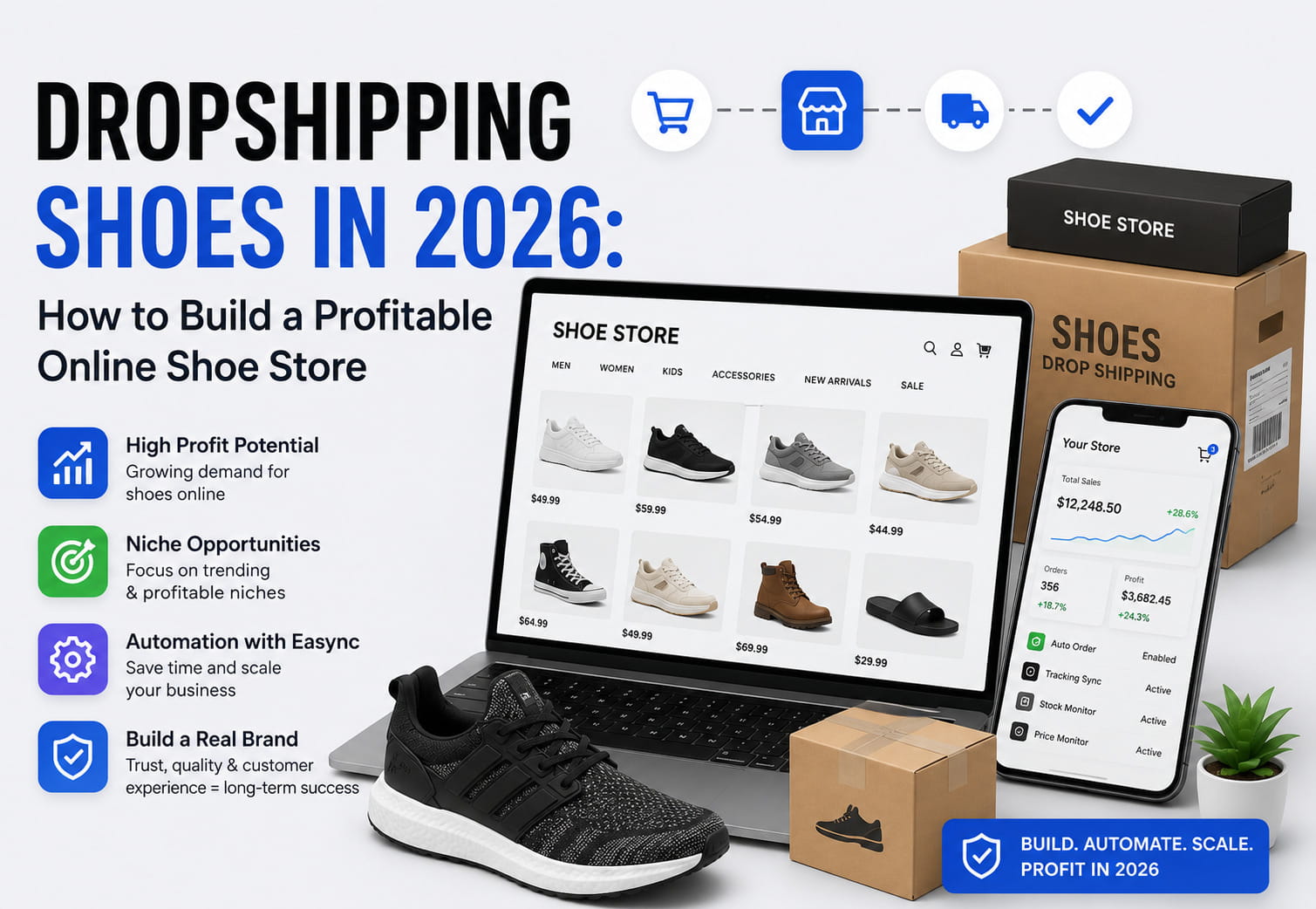
The global footwear market is projected to reach $529.2 billion by 2026, and shoe dropshipping remains one of the most accessible ways to claim a slice of this massive industry. Whether you want to sell trendy shoes to fashion-forward customers or comfort shoes to working professionals, this guide breaks down exactly how to launch and scale a profitable shoe dropshipping business without the burden of inventory management or high startup costs.
Key Takeaways
- Shoe dropshipping is a business model where a customer places an order on your online store, you forward that order to a supplier, and the supplier ships directly to the customer, you never touch the product but keep the profit margin. This low upfront investment approach lets beginners launch with minimal financial risk using platforms like Shopify.
- The most profitable shoe niches in 2026 include comfort shoes for older adults, dance shoes for performers, athletic sneakers, and seasonal footwear like sandals and boots. Niche stores focused on a specific audience commonly reach $40 to $120 per day within 60 to 90 days of consistent effort.
- Reliable suppliers, fast shipping options, and clear size charts are the three biggest success factors in any dropshipping business. Footwear has one of the highest return rates in e-commerce, often between 18% and 35%, primarily due to inconsistent sizing across different brands and regions, making detailed sizing information essential.
- Using automation tools like Easync for importing products, monitoring stock and prices, and auto-ordering is now essential to avoid shipping delays and order mistakes. These tools let you focus on marketing while the system handles repetitive fulfillment tasks.
- Beginners can realistically reach $100 to $300 per day in revenue within 60 to 90 days if they test products systematically, refine product listings based on data, and partner with top suppliers who deliver high quality products consistently.
What Is Shoe Dropshipping and Why It Still Works in 2026?
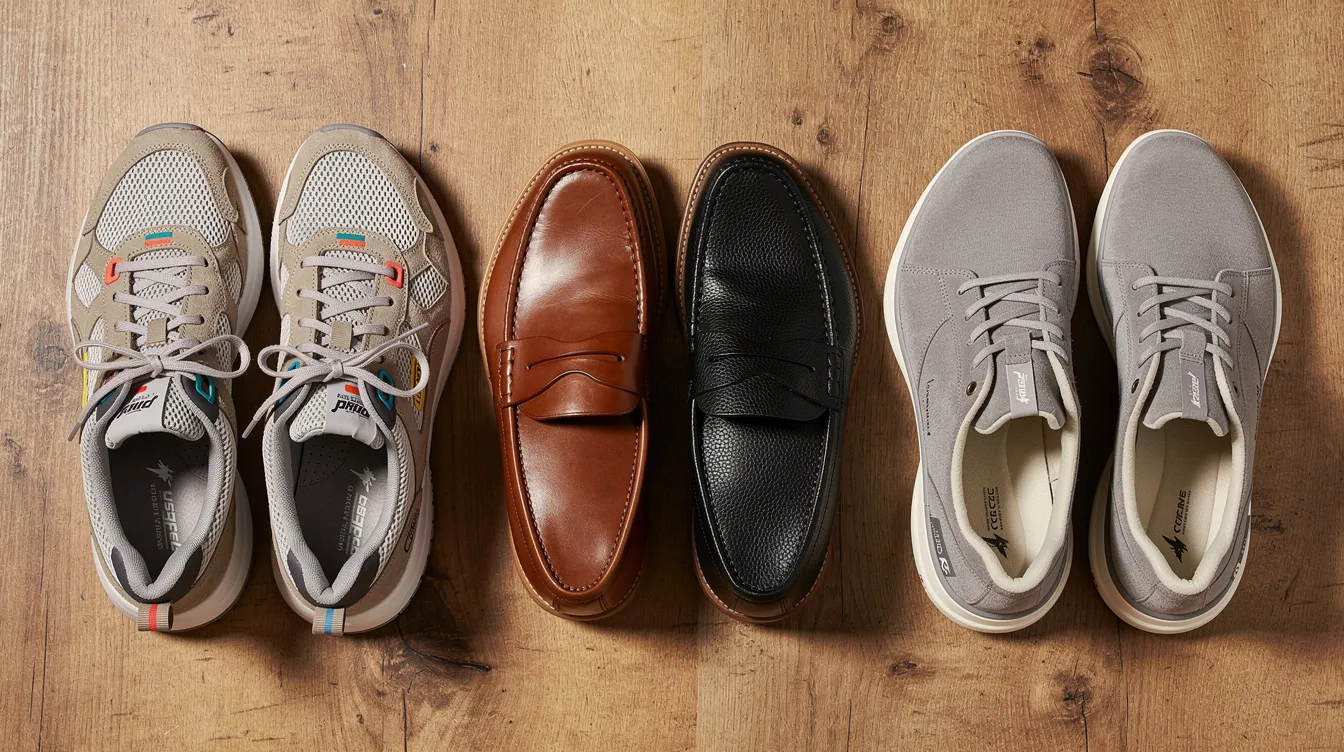
Shoe dropshipping works like this: a customer orders a pair of sneakers from your store, you forward that order to your supplier, the supplier ships directly to the customer, and you pocket the difference between your retail price and the wholesale prices you pay. You never purchase inventory upfront or handle the shoes yourself.
The terminology can be confusing, “drop shipping” and “dropshipping business” both refer to the same model in e-commerce slang. The key distinction is that dropshipping describes the fulfillment method while a dropshipping business encompasses your entire operation including marketing, customer service, and brand building.
The 2026 footwear market context makes this niche particularly attractive. The global footwear revenue is projected to reach 529.2 billion USD by 2026, with significant growth in both athletic and designer shoes. Footwear is a top-performing e-commerce category with consistent year-over-year growth, driven by the simple fact that shoes are a necessity, demand remains stable throughout the year regardless of economic conditions.
Seasonal patterns create predictable sales windows. Winter boots and waterproof hiking boots peak from November through February, while flip flops and summer sandals drive highest volumes from May through August. Smart sellers rotate their catalogs to match these cycles.
Shoes are attractive for beginners for several reasons. The wide selection of price points (from $15 sandals to $200 premium boots) lets you target various customer segments. Buyers purchase shoes for emotional reasons (style and fashion), functional reasons (comfort shoes and orthopedic support), and habitual reasons (replacing worn pairs). This mix of motivations creates consistent demand and high repeat purchase potential.
However, challenges exist upfront. Dropshipping shoes offers a low-risk entry into a high-demand market but presents operational challenges due to high return rates and complex sizing. Logistics challenges in dropshipping footwear include slow international shipping that can lead to customer dissatisfaction. Clear size charts in all product listings are non-negotiable for reducing returns and building trust with customers.
Retail Dropshipping Shoes vs. Traditional Shoe Retail
Retail dropshipping shoes follows the same customer-facing logic as a traditional shoe store: you still choose a niche, set retail prices, create product pages, manage customer support, and build trust around sizing, shipping, and returns. The difference is operational. Instead of buying footwear inventory upfront and storing it yourself, you work with suppliers that ship orders directly to customers after a sale. This makes dropshipping shoes easier to test than traditional retail, but it also means supplier reliability, accurate product data, and clear size information become critical to protecting margins and customer satisfaction.
Top Shoe Dropshipping Suppliers for 2026 (Comparison Table)
Choosing the right supplier can make or break your dropshipping journey. This section presents a practical overview of the best shoe dropshipping suppliers for 2026, focusing on fast shipping, niche strength, and platform compatibility for Shopify store owners and other e-commerce platforms.
The table below ranks top suppliers based on their reliability, shipping speed, and specialization. A detailed breakdown of each supplier follows immediately after.
| Rank | Supplier | Main Niche | Key Strength | Best For | Regions Served |
|---|---|---|---|---|---|
| 1 | Spocket | Casual wear, fashion sneakers | US/EU warehouses – 2-7 day delivery | Fast shipping to Western markets | US, EU, UK |
| 2 | CJ Dropshipping | Trendy shoes, athletic sneakers | Global warehouses – 5-10 day delivery | Beginners testing winning products | Worldwide |
| 3 | AliExpress | Unbranded sneakers, various styles | Massive catalog, no MOQ | Budget-conscious sellers | Worldwide |
| 4 | FootwearUS | Wide width shoes, comfort shoes | US warehouse – 2-5 day delivery | Specialized footwear for US market | US |
| 5 | Very Fine Shoes | Dance shoes, Latin and ballroom | Professional-grade customizable options | Dance niche specialists | US, International |
| 6 | BrandsGateway | Designer and luxury shoes | Authenticated products – 3-5 day shipping | High-ticket luxury stores | EU, US, UK |
| 7 | LED Shoe Source | Kids’ light-up sneakers | Novelty footwear – 3-7 day US shipping | Children’s footwear niche | US |
| 8 | SaleHoo | Directory of verified suppliers | Pre-vetted low-risk suppliers | Risk-averse beginners | Worldwide |
| 9 | Wholesale2B | Athletic and casual shoes | Automation integrations | Sellers prioritizing automated fulfillment | US, International |
| 10 | UWDress | Bridal and formal events shoes | Occasion-specific inventory | Wedding and event specialists | Worldwide |
Ranked Breakdown: Best Shoe Dropshipping Suppliers Explained
This numbered list expands on the ranking above with concrete pros, cons, and typical use cases. Each supplier has distinct strengths depending on your niche focus, target market, and shipping requirements.
- Spocket connects dropshippers with vetted suppliers primarily based in the United States and European Union. Shipping times of 2-7 days represent a substantial advantage over Asian-based alternatives, making it ideal for impulse-buy categories like casual sneakers. The vetting process filters out unreliable suppliers, though product selection is more limited and pricing slightly higher than AliExpress.
- CJ Dropshipping differentiates itself through global warehouses enabling faster shipping than typical Asian fulfillment. Estimated shipping times range from 5-10 days depending on destination. CJ integrates seamlessly with Shopify and specializes in identifying fast-moving trendy shoes and athletic sneakers, making it excellent for trend-driven stores.
- AliExpress remains the largest and most accessible option for unbranded casual sneakers, boots, and fashion footwear. No minimum order quantities make it ideal for testing products at small scale. Quality varies significantly between sellers, so look for products with at least 500 orders and 4.5+ ratings. Shipping times of 15-30 days can be problematic for customers expecting fast delivery.
- FootwearUS focuses specifically on wide width shoes and comfort shoes for customers with specific fit requirements. Based in the United States with 2-5 day domestic shipping, this supplier fills a gap where many general platforms offer limited size ranges. Ideal for stores targeting older demographics or office professionals.
- Very Fine Shoes serves the dance shoes niche with professional-grade and customizable gear. Shipping requires 3-7 days. Higher average order values and strong customer loyalty make this an excellent choice for sellers passionate about dance communities willing to build expertise.
- BrandsGateway specializes in high-ticket luxury designer shoes with authenticated products and 3-5 day shipping. This supplier serves a different market segment, affluent customers seeking genuine designer footwear rather than budget alternatives.
- LED Shoe Source specializes in kids’ light-up sneakers and novelty footwear with 3-7 day US shipping. Children’s footwear is a rapidly growing market segment with a compound annual growth rate (CAGR) of 8.2%, as parents prioritize high quality and supportive shoes for their kids.
- SaleHoo functions as a supplier directory rather than a direct supplier, centralizing connections to multiple verified shoe suppliers. The vetting process emphasizes low-risk suppliers, making it attractive for risk-averse beginners starting their dropshipping journey.
- Wholesale2B focuses on automation and integration capabilities, offering millions of products including athletic and casual footwear. The platform appeals to sellers prioritizing automated fulfillment and inventory management over manual supplier relationships.
- UWDress specializes in bridal shoes and formal events footwear. Shipping times of 10-20 days are acceptable because customers typically purchase months in advance of weddings and special occasions. The specialty positioning allows for higher margins.
Test 2-3 suppliers in parallel at small scale before fully committing your dropshipping business to a single partner. This diversification protects against sudden stock-outs or unexpected policy changes.
Using Easync Automation to Run a Scalable Shoe Dropshipping Business
For shoe dropshipping operations, using Easync automation can streamline your entire workflow from day one. Dropshipping software Easync supports automated product importing, real-time stock and price monitoring, auto-ordering, repricing rules, tracking synchronization, and multi-account workflows, all essential features for scaling without drowning in repetitive tasks. Automated product importing lets you quickly add large catalogs of sneakers, boots, and comfort shoes without manual data entry for each SKU. Real-time stock and price monitoring prevents the most damaging operational error: selling products to customers that have gone out of stock at the supplier or watching your margins evaporate from unexpected price increases. Auto-ordering functionality eliminates the manual step of copying customer information and placing orders with suppliers, reducing fulfillment time from hours to seconds. Repricing rules keep you competitive during sales seasons without constant manual adjustments. Tracking synchronization automatically updates customers about their shipping status, reducing support inquiries from anxious buyers wondering where their shoes are.
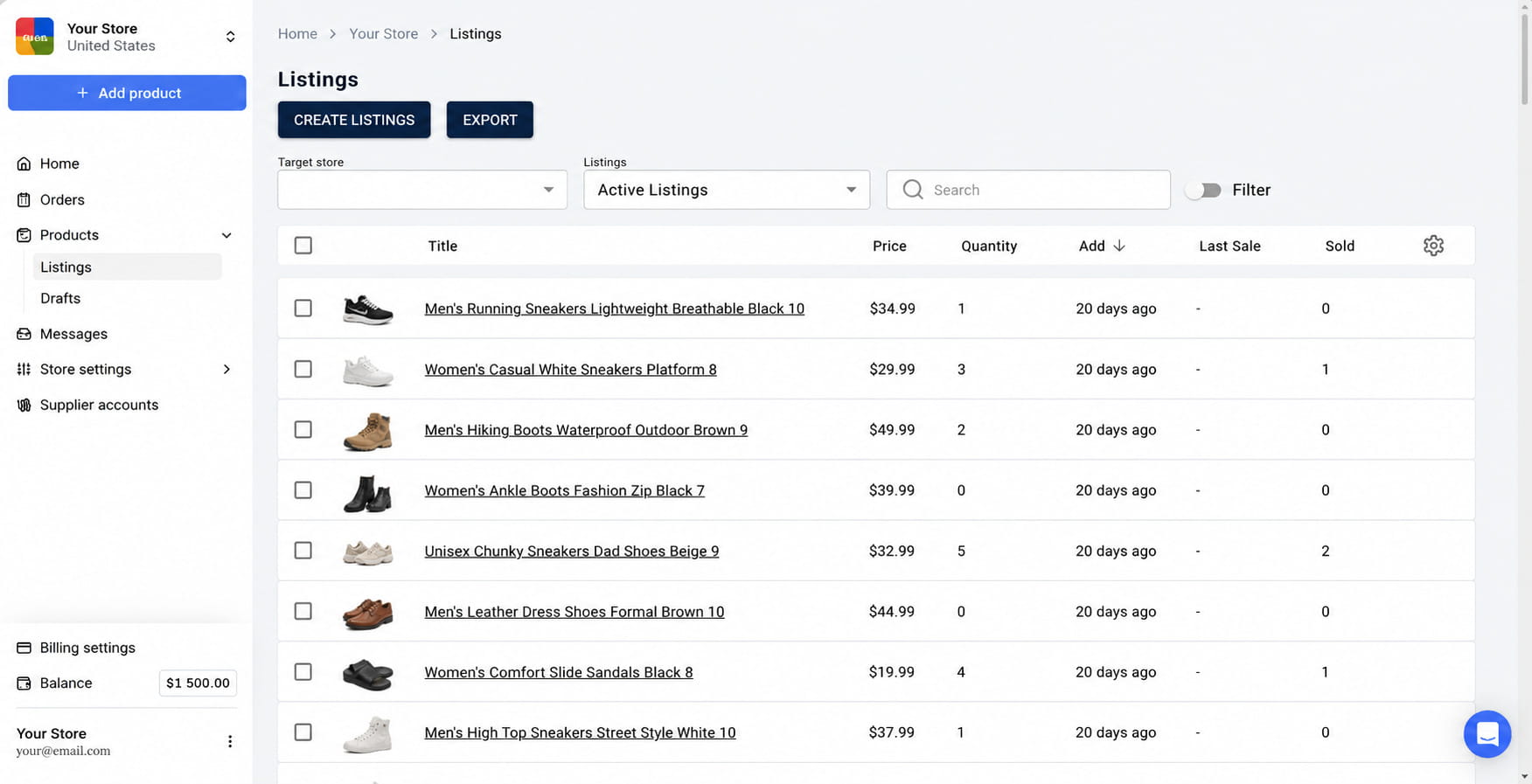
These automations help minimize common problems like overselling out-of-stock sizes, slow manual order placing, and lack of transparency when customers worry about shipping delays. Integrate Easync as soon as you verify your first winning products so you can scale efficiently.
Profitable Shoe Niches to Dropship in 2026
General shoe stores struggle to attract customers because they compete with massive retailers on every front. Focused niches convert better because you can tailor your messaging, sizing guides, and product selection to meet customer demands precisely. Most footwear items purchased from suppliers can retail at 2x to 3x the supplier price, allowing for healthy profit margins when you specialize.
Athletic sneakers remain the top-selling category in the footwear industry, driven by consumer demand for comfort and style. Unbranded versions mimicking popular Nike and Adidas aesthetics sell at $25-$70 and appeal to broad demographics seeking trendy shoes without brand premiums.
Slip on loafers bridge casual wear and professional settings, appealing to office workers seeking comfort without sacrificing appearance. Price ranges typically span $35-$80 with steady year-round demand.
Dance shoes represent a highly profitable specialized footwear niche where Very Fine Shoes and similar specialists dominate. Latin dance shoes, ballet shoes, and jazz footwear command higher average order values with strong customer loyalty. Customers often plan purchases in advance, tolerating longer shipping times.
Orthopedic and comfort shoes target the 50+ demographic, the fastest-growing online shopping segment globally. Orthopedic-style shoes retail for $45-$85 with excellent repeat purchase rates. Niche stores focused on comfort shoes for older adults commonly reach $40 to $120 per day within 60 to 90 days of consistent effort.
Hiking and work boots experience strong seasonal demand with price points of $60-$150 supporting healthy margins. These purchases are typically planned rather than impulsive, allowing for longer delivery windows.
Kids’ light-up sneakers drive high impulse-purchase rates, especially around holiday seasons. Parents frequently buy novelty footwear as gifts, creating emotional purchasing motivations that support higher prices.
Bridal and occasion shoes for weddings and formal events offer higher average order values with customers purchasing months in advance. Lower price sensitivity for special occasions supports premium positioning.
Vegan and eco-friendly footwear appeals to environmentally conscious younger demographics willing to pay premium prices. Supplier availability remains limited but growing.
Start with 1-2 primary niches (e.g., comfort shoes + casual sneakers) instead of trying to cover every shoe type. This focus improves your marketing efficiency and brand clarity.
How to Find Reliable Shoe Suppliers and Avoid Shipping Nightmares
Reliable suppliers are the backbone of a sustainable dropshipping journey, especially when selling size-sensitive products like shoes. When evaluating shoe dropshipping suppliers, look for those with a product rating of 4.5 stars or above, a minimum of 100 completed orders, and clear size charts covering EU, US, and UK formats.
Check actual shipping data before committing: estimated delivery times to your main target market, available shipping methods (economy versus fast shipping), and how frequently tracking numbers are updated. Logistics challenges in dropshipping footwear include slow international shipping that can lead to customer dissatisfaction, suppliers with US or EU warehouses dramatically reduce this friction.
Ask pre-sale questions about return policies, restocking schedules, and how suppliers handle damaged or mis-sized items. Their responsiveness indicates long-term partnership potential.
Diversifying between 2-3 reliable suppliers reduces risk from sudden stock-outs or unexpected policy changes. Pair supplier vetting with tools like Easync’s real-time stock and price monitoring to avoid selling items that silently went out of stock.
What Retail Dropshipping Shoes Sellers Should Check First
For retail dropshipping shoes, supplier checks should go beyond product price. Before adding a shoe model to your store, confirm size charts, warehouse location, return rules, restocking frequency, tracking quality, and whether product photos can be used legally. These details matter more in footwear than in many other categories because sizing issues and unclear delivery expectations quickly turn into refunds, chargebacks, and negative reviews.
Core Shoe Supplier Criteria
Detailed size charts with clear conversions (US, EU, UK, cm) and notes on fit characteristics are essential. Customers in different regions use different size systems (US, EU, UK, CM), and a mismatch leads to returns, making clear size charts essential for reducing sizing issues. Look for descriptions like “runs small, order one size up” or “designed for wide feet.”
Consistent quality across batches matters, same materials, same last shapes, minimal color variation. Suppliers using different production facilities between runs create quality inconsistencies that drive returns.
Suppliers with local or regional warehouses (US, UK, EU) enable fast delivery for impulse-purchase categories like fashion sneakers. Communication responsiveness within 24 hours and willingness to send extra photos signal reliable long-term partners.
Use test orders in different sizes to personally check quality, box condition, and actual delivery time before scaling paid traffic. This costs $30-100 per supplier but provides invaluable real-world data.
Managing Sizing Complaints Before They Kill Your Profit
Shoes have higher-than-average return rates because sizing must be precise, too small causes discomfort, too large feels unstable. Proactive sizing measures are non-negotiable for profitability.
The most effective way to handle sizing issues in shoe dropshipping is to include a detailed size conversion chart on every product page and to set fit expectations clearly in the description, noting whether a product runs true to size, narrow, or wide.
Build a universal size guide page accessible from all product listings, plus individual product-specific notes based on supplier data and customer feedback. Add text like “This style runs small, order one size up” where applicable.
Encourage customers to measure their foot length in cm and compare with your chart, especially for unbranded sneakers and boots from Asian suppliers with different sizing standards than Western brands.
Stores that display size guides prominently report 60 to 70 percent fewer sizing-related complaints than those that omit this step. Offer size exchanges instead of full refunds where legal, and clarify whether customers pay return shipping to protect your margins.
Step-by-Step: Launching Your Shoe Dropshipping Store
This section provides a practical roadmap from idea to first sales for a shoe-focused dropshipping business. The process breaks into clear stages: choosing a niche, validating demand, building a store, importing products, and launching traffic campaigns.
Examples assume a Shopify store, but principles apply to WooCommerce and other platforms. Document metrics (click-through rates, add-to-cart rates, return rates) from the very first week to make data-driven improvements.

Choose Your Niche and Target Customer
Define a clear audience before importing products. Examples include “women 30-55 looking for orthopedic comfort shoes” or “college students buying slip on loafers and casual sneakers for everyday wear.”
Validate demand using Google Trends, marketplace bestsellers on Amazon and eBay, and social media hashtags. Narrow to one main niche and one secondary niche at launch for focused product selection and branding.
Example positioning statement: “An online store specializing in wide-width comfort shoes for office professionals in the US.”
Consider local climate and seasonality, avoid heavy winter boots focus if your main traffic comes from California and Florida during summer months.
Find Products and Test Winners
Import an initial batch of roughly 20-40 shoe models, focusing on best-reviewed products (4.7+ rating, 50+ orders) from reliable suppliers. Mix core evergreen items (white sneakers, black slip on loafers, neutral comfort shoes) with trend-driven or seasonal models.
Use sales data from marketplaces and Easync’s automated product importing to quickly build and adjust your catalog as early winners appear. Shoe dropshipping is profitable in 2026 for sellers who choose the right sub-niche and manage sizing expectations clearly, with beginner stores generating consistent traffic earning between $20 and $60 per day.
Run small-budget tests via Meta or Google Shopping ads, or create TikTok organic content showing on-foot try-ons and unboxings. Turn off or replace underperforming products quickly to keep your store lean.
Build and Optimize Your Online Store
Store design must prioritize easy navigation, trust signals, and fast checkout over complex graphics. High startup costs can be minimized as beginners can launch a dropshipping store with minimal investment using platforms like Shopify.
Use a clean theme with clear shoe categories (sneakers, boots, sandals, dance shoes, comfort shoes), filters for size and color, and a visible size guide link. Include high-quality photos (lifestyle plus white background) and benefit-driven descriptions rather than generic supplier text.
Add trust elements: clear shipping policy pages, realistic delivery time estimates, visible customer reviews, and secure payment badges. Create SEO-friendly product listings with descriptive titles like “Men’s Slip On Loafers – Wide Fit – Brown Leather – US Sizes 8-13.”
Test your checkout flow on mobile, a large share of shoe purchases in 2026 come from smartphones.
Launch Traffic and Start Getting Sales
The first 30-60 days focus on promotion and data gathering for your new shoe store. Use 2-3 primary traffic channels: paid ads (Facebook/Instagram or Google Shopping), TikTok and Instagram Reels for organic reach, and basic SEO for category and product pages.
Short-form video content showing comfort tests, actual wear demonstrations, or styling ideas for various styles drives high-intent traffic. Athletic shoes remain the top-selling category, making sneaker content particularly shareable.
Set modest daily ad budgets ($10-$30 per ad set) while closely tracking CTR, cost-per-add-to-cart, and cost-per-purchase. Collect emails from day one with simple incentives (10% off first order) to build a list for future promotions. Iterate creatives and landing pages weekly based on performance data.
Legal, Branding, and Long-Term Growth Considerations
Selling footwear online involves legal obligations, ethical sourcing, and branding strategy for long-term business building. Minimal financial risk exists in dropshipping as you only pay for a product after a customer buys it, but you still must comply with consumer protection regulations.
Regulations differ by region (EU, UK, US) but common themes include product safety, accurate labeling, and fair consumer rights policies. Avoid counterfeit branded shoes (fake Nike or Adidas) and focus on unbranded or white-label products where selling rights are clear.
Successful shoe dropshippers often move toward partial or full branding over time: custom packaging, logos, or exclusive designs that build customer loyalty. Keep written agreements from suppliers about allowed uses of images and brand names in product listings.
Document standard operating procedures (SOPs) for returns, customer service, and order handling to support hired staff or virtual assistants as you scale.
Branded vs. Counterfeit Footwear
The difference between selling licensed branded shoes and illegal counterfeits determines your business longevity. Listing counterfeit sneakers or designer shoes can lead to payment processor bans, store shutdowns, and legal action from brand holders.
If working with legitimate branded suppliers through platforms like BrandsGateway, verify authenticity and reseller rights explicitly, especially in luxury and athletic categories where enforcement is aggressive.
Focus on high quality unbranded lifestyle sneakers, dress shoes, and comfort shoes that can be marketed under your store’s own brand story. Building trust through comfort, durability, and honest sizing outperforms chasing short-term gains from questionable branded products.
Product Info, Materials, and Return Policies
Transparent product details and fair policies significantly reduce disputes and chargebacks. Dropshipping allows for competitive pricing and significant profit margins due to low upfront investment and no physical inventory, but customer trust requires honesty.
Disclose materials for upper, lining, and sole when required (some EU rules mandate this) and mention vegan or non-leather options clearly. Include washing and care instructions where relevant to extend product life.
A reasonable return window of 14-30 days with conditions (unused, original box) protects your business. Emphasize hygiene checks on returns and explain standards clearly on your returns page. Consistent policies across all product listings reduce confusion and support positive reviews.
FAQ
This section answers common practical questions about shoe dropshipping not fully covered above. Answers are concise with specific numbers and timeframes where helpful.
How much money do I need to start dropshipping shoes?
A realistic starting budget for 2026 ranges from $300 to $1,000 to cover store platform fees, apps like Easync, small test ad campaigns, and a cushion for refunds. Because inventory is not purchased upfront, most budget goes to marketing and basic tools including automation software and a premium theme. Extremely low budgets under $100 are possible with organic traffic only, but scaling will be significantly slower.
Can I combine shoes with other products in the same online store?
Combining shoes with related apparel or accessories (socks, belts, dancewear) works well when branding and audience remain consistent. Avoid mixing completely unrelated niches like shoes and kitchen gadgets in the same store, this usually hurts conversion rates and building trust with customers. Start shoe-focused, then gradually add closely related items like accessories once consistent shoe sales are established.
How do I handle returns and exchanges for wrong sizes?
Create a simple process: customer contacts support, provides photos and size issue details, and receives clear instructions on returning, exchanging, or keeping the item with a partial refund. Policies vary by country, but aim for a clear, easy-to-find returns page with pre-written email templates for common scenarios. For low-cost items, offering a discount on a new pair instead of requiring a return can be cheaper than paying for two-way shipping.
What is a realistic timeline to see consistent profits from shoe dropshipping?
With focused effort and some ad budget, many stores see first sales within 2-4 weeks. Stable daily profit typically takes 60-90 days of testing and optimization. This time is needed to refine product selection, improve product listings, and resolve issues with suppliers and shipping. Track key metrics from the beginning so each week’s adjustments are data-driven rather than random.
Is dropshipping shoes still worth it in 2026 with all the competition?
It remains viable, but generic non-differentiated stores struggle. Success now requires niche focus, better sizing information, reliable suppliers, and automation tools. New opportunities continue appearing in micro-niches like vegan sneakers, specialty dance shoes, or orthopedic comfort shoes for specific demographics. For those willing to specialize and use tools like Easync to run operations efficiently, strong potential remains in the shoe dropshipping market. Start selling in a focused niche, find products that resonate with your target audience, and deliver great products with transparent sizing, that formula still works.