
- articles
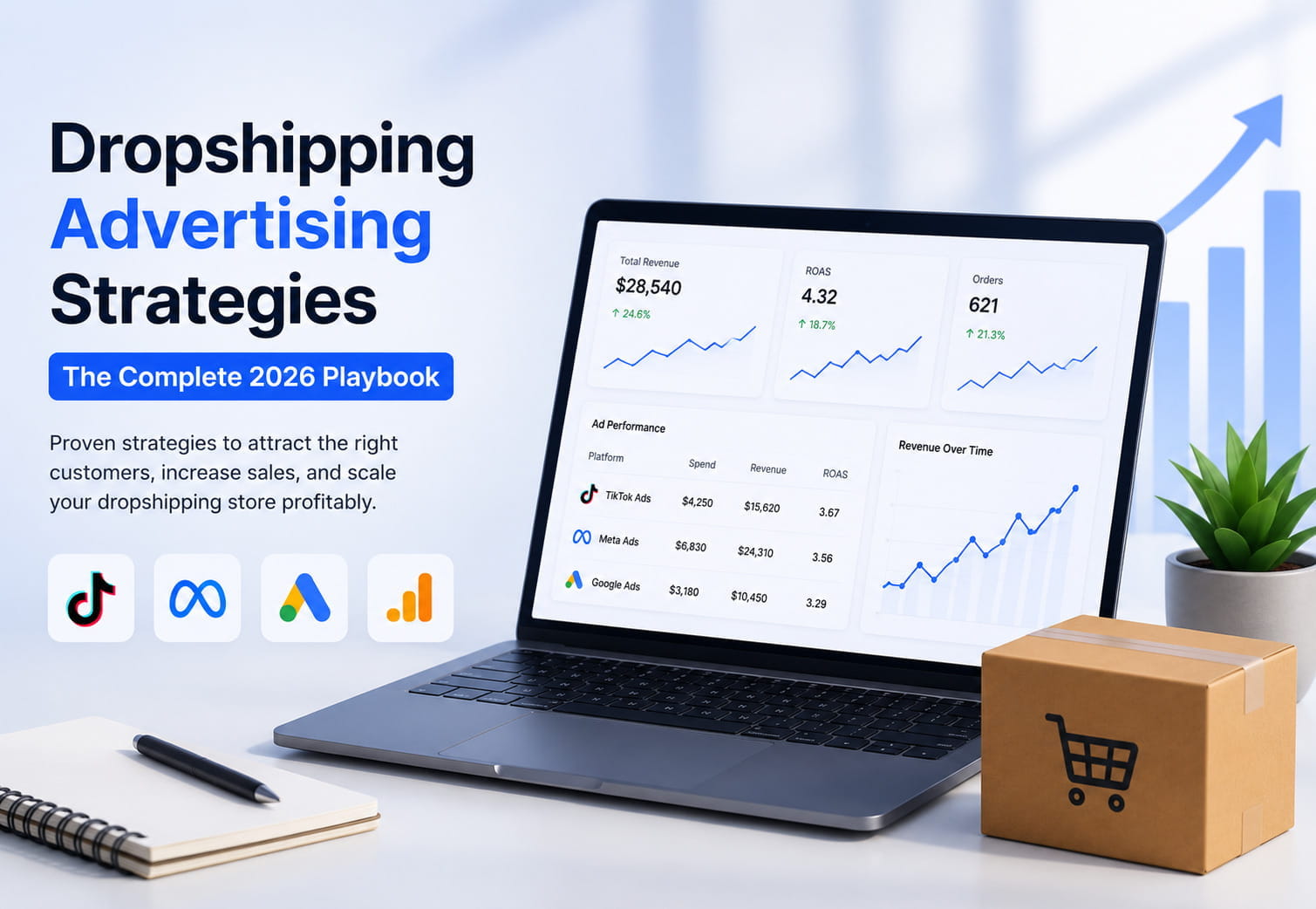
Dropshipping Advertising Strategies: 2026 Marketing Guide
Key Takeaways
- Winning in dropshipping in 2026 requires a balanced mix of paid ads, social media marketing, SEO, and email, not just one traffic source. Stores dependent on a single channel face existential risk from algorithm changes or account bans.
- The fastest wins come from paid social (Facebook, Instagram, TikTok) combined with retargeting and dynamic product ads aimed at cart abandoners, which deliver 2-3x higher conversion rates at 40-60% lower cost.
- Organic marketing methods like content marketing, SEO, UGC, and TikTok organic posting lower customer acquisition cost over time and protect you from ad platform volatility.
- Automation tools like Easync streamline operations, product importing, stock monitoring, auto-ordering, tracking sync, freeing time and budget for marketing strategies that drive growth.
- Avoiding common dropshipping marketing mistakes (relying only on paid ads, sending traffic to weak product pages, ignoring customer feedback) often saves more money than any single new tactic can earn.
Introduction: Why Advertising Makes or Breaks Your Dropshipping Store in 2026
Advertising costs on Facebook, Instagram, and TikTok have risen substantially from 2022 to 2026, making a strong dropshipping marketing strategy essential rather than optional. With CPMs climbing and competition intensifying, the spray-and-pray approach that worked five years ago now burns cash faster than it generates sales.
Here’s what separates successful dropshippers from those who quit: they understand that advertising for a dropshipping business is about building a system to acquire traffic, convert it profitably, and retain customers, not about finding “one winning ad.” The average customer now requires 6-8 touchpoints before purchasing, which means a single Facebook ad or TikTok video isn’t enough. Winners build ecosystems where paid ads, retargeting, email sequences, organic content, and social proof work in concert.
Dropshipping advertising strategies encompass the mix of paid advertising, organic marketing, and conversion tactics tailored to a low-margin, fast-moving ecommerce business model. Effective advertising for dropshipping relies heavily on highly visual platforms, rapid creative testing, and precise audience targeting. This playbook covers paid ads, organic traffic, social media marketing, content marketing, retargeting, and how to scale while avoiding common dropshipping marketing mistakes, all targeting 2026 trends like short-form video, AI-driven optimization, and multi-channel remarketing.
Together, these dropshipping marketing strategies help sellers build a repeatable system for traffic, conversions, and retention instead of relying on one ad platform or one viral product.
Top 15 Marketing Strategies for Dropshipping in 2026 (Overview Table)
The table below summarizes the most effective dropshipping marketing strategies for building a profitable store in 2026. Each strategy fits into the broader framework of traffic acquisition, conversion optimization, or customer retention, the three pillars every successful dropshipping marketing strategy must address.
| # | Marketing Strategy | Primary Channel Type | Main Goal in Dropshipping |
|---|---|---|---|
| 1 | Paid Social Advertising (Meta/TikTok) | Paid | Rapid traffic acquisition and product testing |
| 2 | TikTok Organic Short-Form Video | Organic | Zero-cost traffic and brand awareness |
| 3 | Google Shopping Ads | Paid | Capturing high-intent buyers |
| 4 | Influencer Collaborations | Hybrid | Credibility and qualified traffic |
| 5 | User-Generated Content (UGC) Campaigns | Organic | Social proof and ad creative sourcing |
| 6 | Dynamic Product Ads & Retargeting | Paid | Recovering abandoned carts and browsers |
| 7 | SEO and Content Marketing | Organic | Long-term organic traffic |
| 8 | Email & SMS Automation | Hybrid | Customer retention and repeat sales |
| 9 | Pinterest SEO | Organic | Top-of-funnel discovery |
| 10 | Conversion Rate Optimization (CRO) | Hybrid | Maximizing revenue per visitor |
| 11 | Social Proof and Reviews | Organic | Trust-building and conversion lift |
| 12 | Seasonal Campaigns | Hybrid | Capitalizing on buying intent spikes |
| 13 | Bundles & Upsells | Hybrid | Increasing average order value |
| 14 | Community-Building | Organic | Loyalty and word-of-mouth |
| 15 | AI-Powered Campaign Optimization | Paid | Efficient scaling and creative testing |
Detailed Breakdown: 15 Best Marketing Strategies for Dropshipping in 2026
The following numbered list expands on each strategy from the table, providing actionable guidance on platforms, creatives, and how each supports an effective marketing strategy.
- Paid Social Advertising (Meta/TikTok): Focus on Meta Ads for broad niches and TikTok Ads for visually engaging, impulse-friendly products. Paid advertising can quickly amplify your dropshipping store’s visibility and attract customers ready to purchase, making it a crucial strategy for immediate sales generation. Start with $20-50/day per ad set during testing. Kill ads with no conversions after 3-5 days; scale winners by 20-30%.
- TikTok Organic Short-Form Video: Short-form video marketing on platforms like TikTok and Instagram Reels is highly effective for dropshipping businesses, as it allows for quick exposure through engaging content that showcases products in real use. Post 1-3 videos daily during growth phases. Raw, native-feeling content outperforms polished production.
- Google Shopping Ads: Ideal for products with clear search demand and higher price points. Requires clean product feeds with accurate titles, descriptions, and high quality images. Conversion rates typically hit 5-10% due to high buyer intent.
- Influencer Collaborations: Collaborating with micro-influencers can be more effective than partnering with larger influencers, as they often have higher engagement rates and can build trust with their audiences. Track ROI via unique discount codes and campaign-specific landing pages.
- User-Generated Content (UGC) Campaigns: User-generated content is a powerful tool in social media marketing, as it tends to outperform polished brand videos in both click-through and conversion rates. Source UGC through post-purchase email flows and paid UGC creators.
- Dynamic Product Ads & Retargeting: Dynamic product ads can automatically generate ads featuring products that users have previously viewed, making retargeting more personalized and effective. Allocate 40% of retargeting budget to cart abandoners, 35% to product viewers, 25% to general site visitors.
- SEO and Content Marketing: SEO attracts organic traffic by answering what your target audience searches for. Focus on buyer-intent keywords like “best [product] for [use case] 2026.” Takes 3-6 months to rank but builds durable traffic.
- Email & SMS Automation: Email marketing can generate an average return of $68 for every $1 spent, with eCommerce stores averaging a return of 45:1. Set up welcome series, cart abandonment, and win-back flows. Automated email sequences can account for a significant portion of sales, with automated emails generating 37% of sales from just 2% of email volume.
- Pinterest SEO: Underutilized for lifestyle, home decor, beauty, and fashion verticals. CPMs run $1-4, lower than Meta or TikTok. Best for top-of-funnel discovery feeding email lists.
- Conversion Rate Optimization (CRO): A fast, trustworthy store lifts conversions and strengthens brand visibility across all channels. Product pages with videos see a 64% higher purchase rate than those without. Test hero images, CTAs, and pricing on your top 20% of products.
- Social Proof and Reviews: Display customer feedback prominently on product pages and in ads. Request reviews 7-14 days post-delivery with small incentives. Authentic social proof often outperforms polished ads.
- Seasonal Campaigns: Plan 2-3 months ahead for Q4, back-to-school, and holiday periods. Pre-create assets and maintain budget flexibility for unexpected viral moments.
- Bundles & Upsells: Increase average order value by offering complementary products at checkout. Test bundle pricing to find the sweet spot between perceived value and margin.
- Community-Building: Build Facebook groups, Discord servers, or subreddits around your niche. Community members become repeat buyers and brand advocates. Organic content is beneficial for building brand equity in dropshipping.
- AI-Powered Campaign Optimization: Leverage platform algorithms for bid management and audience selection. Focus human effort on creative direction and data interpretation rather than manual optimization.
The best dropshipping marketing strategies are not isolated tactics. Paid ads, organic content, email, retargeting, and CRO work best when they are connected to one clear framework: acquisition, conversion, and retention.

The 3 Core Pillars of a Profitable Dropshipping Marketing Strategy
Every dropshipping marketing effort, from social media marketing to email flows, should map to one of three pillars: Traffic Acquisition, Conversion Optimization, and Customer Retention. This framework prevents scattered tactics and helps prioritize marketing efforts that directly impact profit rather than vanity metrics.
Each pillar has distinct KPIs:
- Traffic Acquisition: Cost per click (CPC), click-through rate (CTR), reach, customer acquisition cost
- Conversion Optimization: Conversion rate, average order value, time-to-purchase
- Customer Retention: Email-attributed revenue, repeat purchase rate, customer lifetime value
Successful dropshippers allocate roughly 60% of effort to acquisition in months 1-3, then shift toward a mature mix of 40-40-20 once profitability stabilizes.
Traffic Acquisition: Paid Ads and Organic Channels Working Together
In 2026, acquisition for a dropshipping business typically leans on paid ads (Meta, TikTok, Google) plus organic marketing (SEO, TikTok organic, YouTube, Pinterest) building long-term visibility. Platforms like Facebook Ads, Google Ads, and TikTok Ads allow you to target specific audiences based on demographics, interests, and online behavior.
The smart play is combining paid social media marketing with organic posting so ads amplify content that already resonates. When a TikTok organic video performs well, turn it into a Spark Ad for efficient scaling. For a new online store, aim for 1,000-5,000 visitors per month within 60-90 days, dividing budget across 1-2 primary platforms.
Track acquisition costs religiously. The average breakeven customer acquisition cost for dropshipping, given typical margins, is roughly 25-35% of product price. For a $50 product, that’s $12.50-17.50 maximum. Don’t chase traffic that doesn’t convert or fit your target audience.
Conversion Optimization: Turning Clicks into Profitable Orders
Poor product pages and slow sites are common dropshipping marketing mistakes that waste ad spend. Optimizing your sales funnel by enhancing user experience and writing persuasive product pages can significantly increase conversion rates, ensuring every dollar spent on traffic pays off.
Implement these CRO tactics for your dropshipping store:
- Fast-loading themes (under 3 seconds)
- Benefit-focused product descriptions (no supplier boilerplate)
- Clear CTAs and trust badges
- Upfront shipping costs and delivery timelines
- Video content on key products (64% higher purchase rate)
Use of mobile-optimized platforms is essential as the majority of traffic comes from mobile devices. Run A/B tests on pricing, hero images, and add-to-cart button colors with at least a few hundred visitors per variant. Use customer feedback through heatmaps and session recordings to identify friction points.
Customer Retention: Email, SMS, and Loyalty Loops
Retention is crucial in a low-margin dropshipping business model because acquiring a new customer can cost five to 25 times more than retaining an existing one. Increasing customer lifetime value justifies higher initial ad spend and creates a sustainable business.
Key retention systems include:
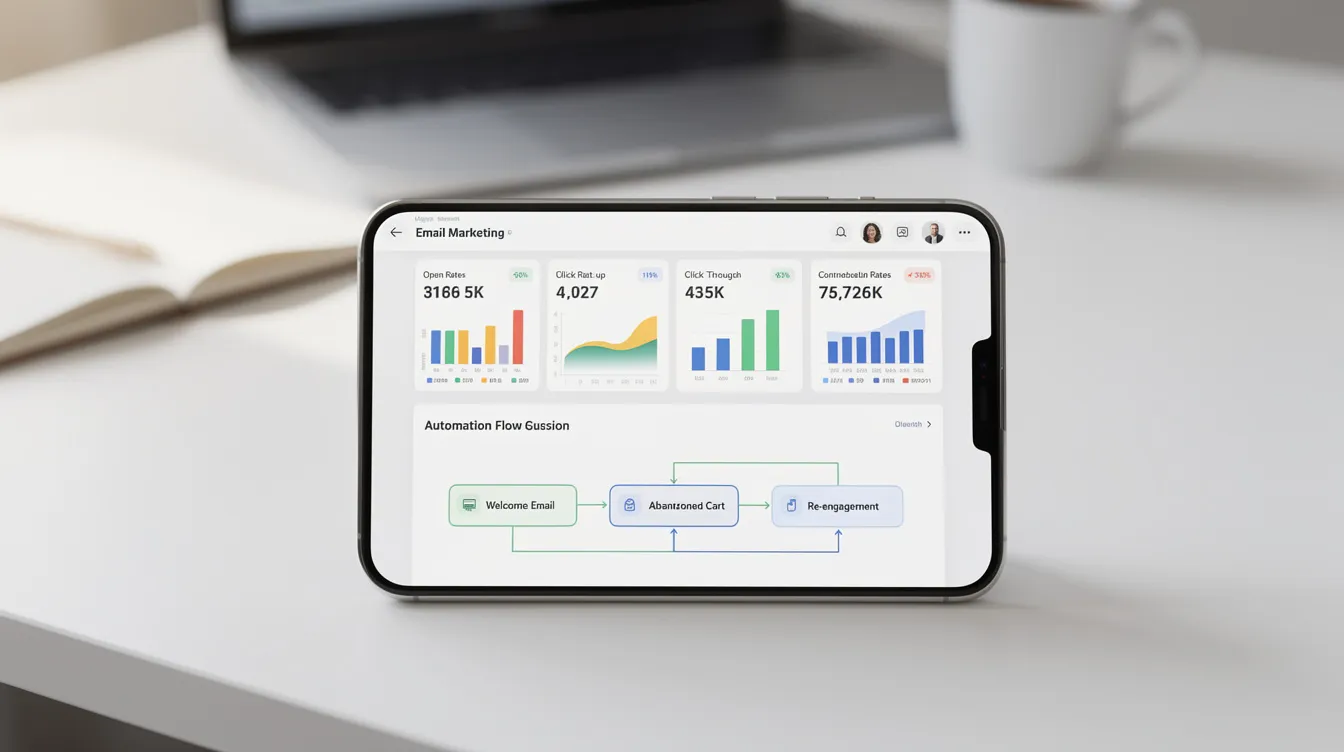
- Welcome series (3-5 emails post-signup)
- Post-purchase follow-up (shipping, delivery, review request)
- Cart abandonment sequences (1-2 emails)
- Win-back campaigns targeting inactive subscribers
- Loyalty programs offering early access and exclusive discounts
Personalized email campaigns can generate six times more transactions than generic emails. Segmenting your email list based on customer behavior and preferences allows for more targeted campaigns. Track repeat purchase rate and email-attributed revenue as core retention KPIs. Content marketing delivered via email, how-to guides, styling tips, usage ideas, builds relationships beyond discounts.
Leveraging Social Media Marketing for Dropshipping Growth
Social media platforms like TikTok and Instagram are essential for dropshipping marketing, as they allow brands to create engaging content that resonates with their target audience and drives traffic to their stores. Utilizing platforms like TikTok and Instagram for posting engaging content is recommended for dropshipping success.
Build a channel-specific posting plan mixing product showcases, educational content, and user generated content. Posting frequency guidelines for 2026:
- TikTok: 1-3 posts daily during growth phase
- Instagram: 3-5 posts/week plus daily Stories
- Pinterest: Fresh pins weekly
Social media marketing should support both paid ads (test hooks and creatives organically first) and organic marketing (community-building, trust). Use content batching workflows to repurpose one core video into Reels, Shorts, TikTok posts, and ad variations.
Platform-Specific Tactics for TikTok, Instagram, and YouTube
TikTok: Short, raw product demos showing problem-solution transformations work best. Short-form videos that depict relatable consumer pain points are effective in advertising. Use trending sounds and hashtags. Hook viewers in the first 1-3 seconds with surprising visuals or direct questions.
Instagram: Leverage Reels for discovery, carousels for education, and Story polls for engagement. Use Instagram Shopping tags to send users directly to product pages in your ecommerce store.
YouTube: Longer reviews, comparisons, and tutorials feed search engine optimization and create evergreen traffic assets. Particularly effective for higher-ticket products that require research before purchase.
Use social analytics to identify best-performing creatives, then turn them into paid ads across platforms. For example, a home fitness store might post workout clips on TikTok, detailed equipment comparisons on YouTube, and user testimonials on Instagram Reels.
User-Generated Content (UGC) and Influencer Collaborations
UGC in the dropshipping context includes real customer photos, short testimonials, and creator-made reviews that look organic rather than branded. Video content plays a central role in effective advertising strategies for dropshipping, and authentic UGC often outperforms polished productions.
Source UGC through:
- Incentives (discounts, giveaways) via post-purchase emails
- Paid UGC creators on TikTok and Instagram
- Branded hashtag campaigns encouraging customers to share
Integrate UGC into your advertising strategy: dynamic product ads, landing pages, and email campaigns. Influencer marketing can rapidly increase a dropshipping store’s visibility and credibility by partnering with creators who already speak to the target audience.
When vetting micro-influencers (10k-100k followers), check engagement rates, audience geography matching your market, and comment authenticity, avoid bot-inflated accounts. Track influencer ROI via unique links, discount codes, and campaign-specific landing pages.
Paid Ads Engine: Facebook, TikTok, and Google for Dropshipping
Paid ads remain the fastest path to initial dropshipping sales but must be managed carefully to stay profitable. Testing different ad creatives and targeting options is vital for optimizing paid advertising campaigns.
Compare the main paid channels in 2026:
- Meta Ads: The workhorse for many niches. CPMs around $3-8. Best for broad product appeal.
- TikTok Ads: Excellent for visually interesting, lower-to-mid-ticket impulse purchases ($15-75). CPMs $2-6.
- Google Ads: Ideal for researched, higher-ticket purchases with clear search demand.
Structure campaigns in phases: testing (small budgets, multiple creatives), scaling (increasing budget on winners), and consolidation (combining successful elements). Use UTM parameters and pixel tracking for accurate attribution of marketing efforts.
Facebook and Instagram Ads: Still the Workhorse for Many Niches
A typical Meta campaign structure for dropshipping: one testing campaign with several ad sets (different audiences) and 3-5 creatives per ad set. In 2026, broad targeting with strong creative now outperforms narrow interest-based targeting because Meta’s algorithms can identify buyers better than manual selections.
Effective ad types for your ecommerce business:
- Carousel product showcases (3-5 variations)
- UGC-style testimonial videos
- Before/after problem-solution videos
Dynamic product ads automatically show items a user viewed or added to cart, boosting ROAS significantly. Benchmark KPIs: CTR 1-3% cold audiences, 3-8% retargeting; breakeven ROAS 2-3x; scaling threshold 3-5x.
TikTok Ads: Short-Form Performance for Impulse Buys
TikTok Ads are especially effective for visually interesting products where the transformation or benefit shows quickly. Ad formats include in-feed video, Spark Ads (boosting organic posts), and collection ads linking to product galleries.
Creative best practices:
- Hook in first 1-2 seconds
- Quick cuts and native text overlays
- Clear, spoken CTAs (“tap to shop”)
- Raw, native-feeling production
Optimize TikTok pixel for complete payment events, not just add-to-cart. Winning TikTok creatives become templates for future content and assets on Meta Ads and YouTube Shorts. This platform drives traffic to your online business fast when creatives resonate.
Google Search and Shopping Ads: Capturing High-Intent Buyers
Google is ideal for products with clear search demand, writing descriptive, keyword-rich product titles and descriptions is important for organic search visibility and Shopping ad performance. Higher-ticket items and researched purchases convert exceptionally well.
Set up Google Shopping campaigns with clean product feeds: accurate prices, compelling titles, and high quality images. Combine Shopping with Search campaigns targeting branded keywords and category phrases like “eco-friendly pet beds.” Google traffic often converts at 5-10% because users are already searching with purchase intent.
Use Google data to identify profitable keywords for long-term content marketing and keyword research, creating synergy between paid and organic efforts.
Organic Marketing: SEO, Content, and Long-Term Traffic Assets
Organic marketing contrasts with short-term paid ads by building durable traffic assets that reduce customer acquisition cost over 6-12 months. Creating high-value content that answers customer questions and addresses their pain points improves search rankings and positions your store as an authority.
For evergreen niches (beauty, pets, home, fitness), implement a simple content plan:
- 2-4 blog posts per month
- 1-2 YouTube videos per month
- Supporting social content repurposed from each piece
Internal linking from content pages to product and category pages funnels organic visitors into buying journeys. Organic marketing also supports generative search and AI summary visibility by providing detailed, authoritative content.
SEO Fundamentals for Dropshipping Stores
Cover these on-page basics for your dropshipping store:
- Unique product descriptions (never use supplier copy)
- Optimized title tags and meta descriptions
- Descriptive, keyword-rich URLs
- Fast site speed and mobile usability
Optimizing content for specific product-related keywords increases the chances of your store appearing in search engine results, driving targeted traffic and boosting dropshipping sales. Focus on buyer-intent queries: “best [product] for [use case] 2026” and “[product] review.”
Building a brand rather than selling generic products is crucial for dropshipping success. Building links from relevant blogs, niche communities, and UGC platforms strengthens domain authority over time. Search engine optimization provides a steady flow of free, high-quality visitors once established.
Content Marketing That Drives Sales, Not Just Traffic
Effective content formats for drive traffic and generate sales:
- Comparison posts (“Product A vs. B for [use case]”)
- Gift guides by season or recipient
- “How to use” tutorials
- Case studies featuring customer stories
Weave product mentions naturally into educational content so readers see clear next steps. Use content as ad landing pages for colder audiences who need more education before buying. Include strong CTAs (email signup, discount codes, featured products) on each article to capture potential customers.
Content marketing fuels email newsletters and social media posts, maximizing each piece’s ROI across marketing channels.
Automation and Tools: Scaling Your Marketing with Easync
As advertising complexity increases in 2026, automating operations frees budget and time for better marketing strategy execution. Dropshipping software Easync supports automated product importing, real-time stock and price monitoring, auto-ordering, repricing rules, tracking synchronization, and multi-account workflows. This ensures your dropshipping business depends less on manual intervention and more on scalable systems.
Specifically, Easync automation supports dropshipping marketing by:
- Automated product importing: Keep catalog fresh for testing multiple products across ads
- Real-time stock and price monitoring: Prevent running paid ads to out-of-stock or mispriced items
- Auto-ordering: Reduce fulfillment delays that cause complaints and hurt customer satisfaction
- Repricing rules: Adapt quickly to competition without manual editing
- Tracking synchronization: Improve customer experience and reduce support tickets
- Multi-account workflows: Test different niches or brands in parallel
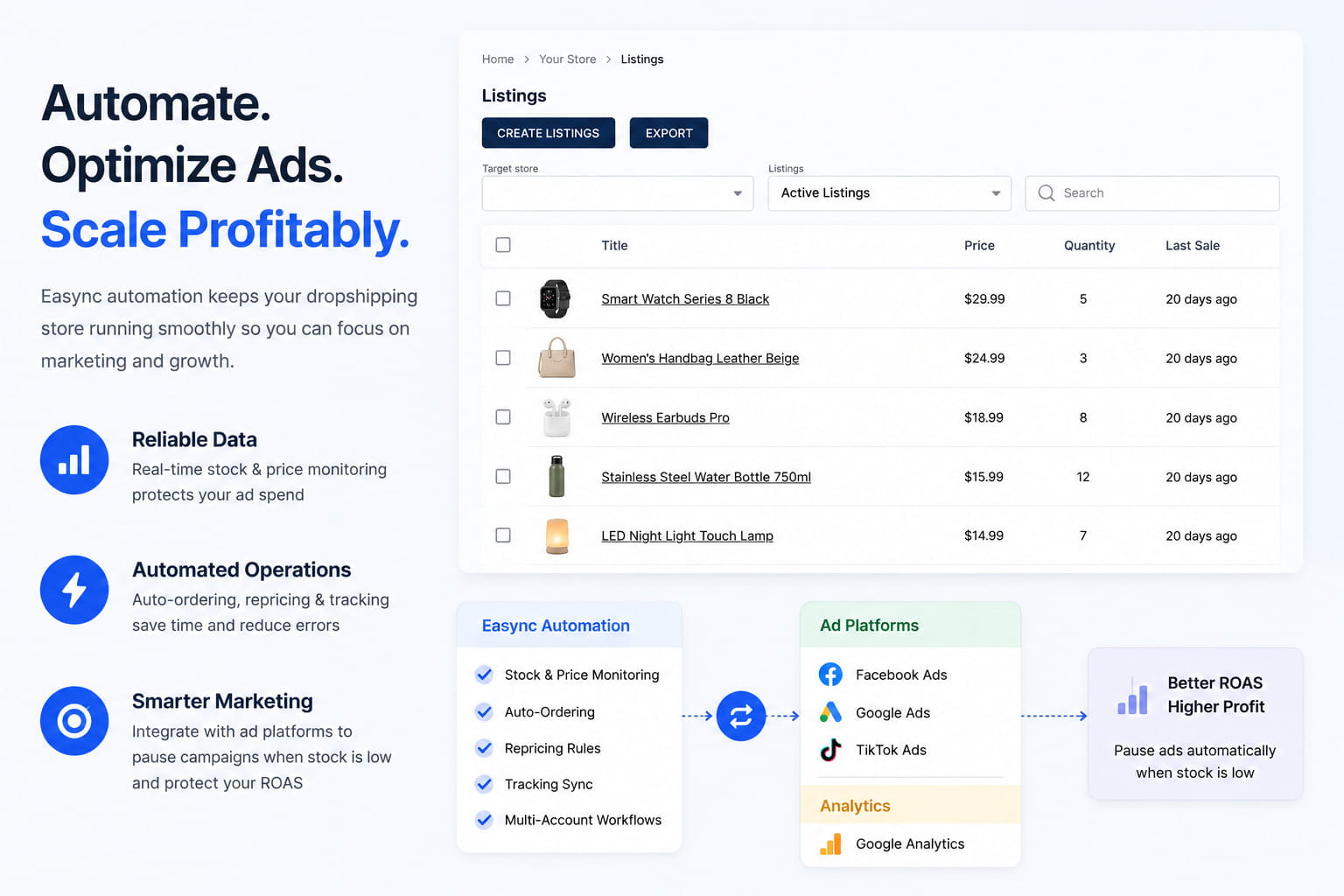
Stable operations via Easync reduce common dropshipping marketing mistakes like promoting unavailable items or inconsistent pricing. Integrate Easync data with ad platforms and Google Analytics so you can pause campaigns automatically when stock runs low from your dropshipping supplier, protecting ROAS and maintaining product quality expectations.
Common Dropshipping Marketing Mistakes to Avoid
Avoiding these mistakes often saves more money than any single new tactic can earn. Audit your current dropshipping marketing strategy quarterly and remove tactics that no longer work.
Common errors that destroy profitability:
- Overrelying on paid ads without backup traffic sources
- Ignoring email list building from day one
- Sending traffic to slow or untrustworthy product pages
- Using generic supplier descriptions that fail to differentiate
- Not tracking key metrics properly with analytics
- Neglecting customer feedback and social proof
For each mistake, implement quick fixes: set up basic email flows, rewrite your top 20% of product pages, install analytics and heatmaps, and run simple A/B tests.
Overreliance on Paid Ads Without a Backup Plan
Algorithm changes or account bans on Meta/TikTok can instantly cut off traffic for stores relying 90% on paid ads. One policy shift or suspicious activity flag can eliminate your entire traffic source overnight.
Build parallel organic marketing systems from the earliest stages:
- SEO and blog content
- TikTok organic posting
- Email list growth
- Pinterest presence
Allocate at least 10-20% of monthly marketing time to content and retention, even when paid ads perform well. Document all campaigns and creatives so they can be relaunched quickly from backup accounts if needed. A store with 500+ email subscribers and organic search rankings survives account loss; one without them doesn’t.
Ignoring Customer Feedback and Social Proof
Neglecting reviews, DMs, and comments is a major dropshipping marketing mistake that weakens trust. A strong and memorable brand identity is critical for differentiating your dropshipping store from thousands of competitors. Customer feedback is essential for improving retention; actively soliciting input through surveys and reviews helps businesses refine their offerings.
To encourage customers to share feedback:
- Set up post-purchase email flows requesting reviews 7-14 days after delivery
- Offer small incentives (discount on next purchase)
- Display reviews prominently on product pages and in ads
Creating a trustworthy brand identity involves using clear visuals and consistent messaging so customers immediately understand who you are. Branding that resonates emotionally with your target audience not only attracts new customers but also builds long-term loyalty and encourages word-of-mouth marketing. Authentic social proof often outperforms polished ads in 2026’s skeptical consumer environment.
Building a trustworthy brand identity through clear visuals and consistent messaging helps customers immediately understand who you are, which is crucial for attracting traffic and establishing credibility with existing customers.
Putting It All Together: Building Your 90-Day Dropshipping Marketing Plan
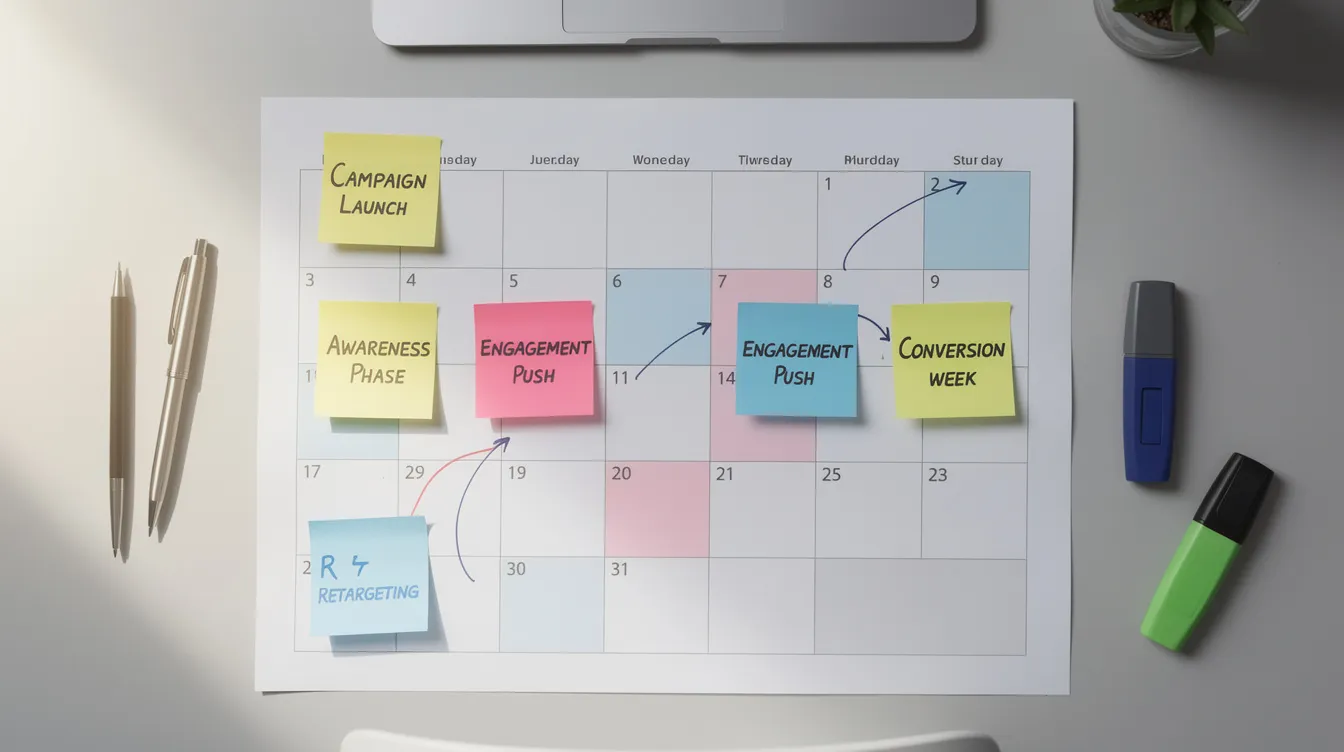
Phase in these proven marketing strategies over 90 days instead of trying everything at once. This approach transforms scattered tactics into a sustainable dropshipping marketing strategy.
Days 1-30 (Foundation Phase):
- Optimize store for conversions (site speed, clear product pages, trust signals)
- Set up analytics (Google Analytics, Facebook Pixel, email platform)
- Create 10-15 initial product ads in 3-5 variations
- Launch small testing campaigns ($10-20/day) on Meta or TikTok
- Establish email capture mechanisms
- Milestone: First sale, 30-50 visitors per day
Days 31-60 (Validation Phase):
- Analyze data to identify winning products, audiences, and creatives
- Increase budgets on top-performing ad sets
- Launch retargeting campaigns for cart abandoners
- Begin email sequences and organic content creation
- Collect first 10-20 customer reviews
- Milestone: 50th sale, break-even ROAS, 100-200 email subscribers
Days 61-90 (Scaling Phase):
- Increase profitable campaign budgets by 20-30%
- Expand retargeting audience size
- Add secondary paid channel
- Publish more organic content (1-2 blog posts/week, 3-5 TikToks/week)
- Optimize email flows based on engagement data
- Begin leverage influencer marketing outreach
- Milestone: 100th+ sale, profitable ROAS established, month-over-month growth
Set specific numeric goals, traffic targets, conversion rate, email subscribers, ROAS, rather than vague aspirations. Consistent testing, tracking, and improvement turn tactics into a durable strategy for dropshipping success.
FAQ
The following questions address common reader concerns not fully covered in the main sections, with concise, practical answers.
How much should I budget for dropshipping ads when starting in 2026?
Plan for $600-$1,500 in the first month, split across 1-2 main platforms like TikTok and Meta Ads. Early ad spend is about data and validation, not immediate profit, strict daily limits ($20-50 per ad set) prevent overspending. Pause underperforming ad sets after 3-5 days with no conversions and reinvest in creatives achieving target ROAS. Reserve some marketing budget for basic tools (email platform, Easync automation, analytics) alongside advertising costs. Scale only after at least one campaign shows stable, profitable results over 7-14 days.
Which platform is best for my first dropshipping paid ads: Facebook, TikTok, or Google?
Choice depends on product type. Impulse-friendly, visually engaging items typically perform best on TikTok and Instagram; higher-ticket, researched purchases favor Google Search and Shopping. Most beginners should test Meta Ads or TikTok Ads first due to simpler creative formats and strong algorithmic optimization. Add Google Ads once you see clear search demand or have branded search volume. Test at least two platforms over time to avoid dependence on a single traffic source, and judge results based on conversion and ROAS rather than just clicks.
How long does it take for a dropshipping marketing strategy to become profitable?
Most stores need 60-120 days of consistent testing and optimization before seeing reliable, profitable campaigns. Variables include niche competition, product appeal, pricing, and how quickly you improve creatives and landing pages. Email marketing and SEO typically start contributing meaningful revenue after 2-6 months of regular effort. Track break-even points and increase budgets only when data shows sustainable profitability. Expecting overnight success often leads to quitting before the optimization phase pays off, the right marketing strategies require patience.
What types of products work best with social media marketing and short-form video ads?
Visually demonstrable products with clear “before/after” or problem-solution transformations perform best in short-form video. Examples include beauty gadgets, home organization tools, pet accessories, fitness gear, and novelty kitchen items that show results quickly. Avoid generic, commoditized products without unique angles, they’re difficult to differentiate in a feed. Test hooks highlighting emotional benefits (time saved, comfort, confidence) rather than just technical features. Products under $20-60 typically convert better from impulse-driven TikTok and Instagram traffic, making them ideal for a traditional retail model alternative like dropshipping.
Do I need a big team to run all these dropshipping marketing strategies?
Many solo founders or small teams successfully handle marketing by leveraging automation tools and batching content. Software like Easync covers operational complexity (product importing, price updates, auto-ordering), allowing more time for marketing. Provide exceptional customer service with reliable suppliers and you’ll maintain customer expectations while focusing on growth. Outsource creative tasks (UGC videos, ad editing, blog writing) gradually as revenue grows. Focus on 2-3 core marketing channels at a time rather than executing every possible tactic. Consistent, focused execution beats having a large team with scattered priorities, that’s the competitive edge successful dropshippers maintain.