
- articles
How to Get Sales Dropshipping Without Investment & Paid Ads
If your first instinct in dropshipping is to open a Meta Ads or TikTok Ads account, 2026 is going to punish your budget. The good news: paid traffic is no longer the only path to consistent sales. This guide breaks down the exact organic playbook—channel by channel, workflow by workflow that lets you build a profitable store on sweat equity instead of ad spend.
Introduction: The Shift from Dropshipping Ads to Organic Traffic
For years, the standard dropshipping formula was simple: find a product, run dropshipping ads on Facebook or TikTok, and scale whatever converted. That formula is breaking down. Ad auctions have become brutally competitive, customer acquisition costs have climbed year after year, and iOS privacy changes have made targeting far less precise than it was in the early days. Beginners now routinely burn $300–$500 in testing budget before they ever see a single profitable campaign—and many never do.
Organic dropshipping flips the model. Instead of buying attention, you earn it through content, search visibility, and marketplace exposure. You create short-form videos, optimized product pages, and helpful articles that pull in buyers for free, then fulfill orders through a supplier without holding inventory.
Why is this the ultimate low-risk model for modern e-commerce?
- Near-zero upfront cost. You can validate a product before spending money on inventory or ads.
- No auction to lose. Your content doesn’t get “outbid” the way a paid campaign does.
- Compounding returns. A viral video or a ranking blog post keeps sending traffic for months. An ad stops the second you stop paying.
- Skills that transfer. The content and SEO muscles you build are assets no algorithm change can delete overnight.
The trade-off is real, and we’ll be honest about it throughout this guide: organic takes time and consistency instead of money. But for anyone trying to figure out how to get sales dropshipping without investment and paid ads, it’s the most durable foundation you can build.
Can You Really Start Dropshipping with Zero Ad Budget?
Yes, you can genuinely start dropshipping with no money for ads by trading financial capital for time and effort. The catch is that “free” traffic costs sweat equity: consistent content creation, listing optimization, and outreach done manually until sales fund automation.
Let’s set realistic expectations, because the biggest reason people quit is a broken mental model.
When you start dropshipping with no money, you are not getting something for nothing. You are substituting one currency for another. Paid advertisers rent attention by the click; you’re going to produce attention through effort. That means:
- Filming and posting short videos on a schedule you can actually sustain.
- Writing product descriptions and articles that answer real buyer questions.
- Reaching out, one message at a time, to creators and communities.
The core mechanism is worth internalizing: you earn attention through content and plug into existing buyer loops (like marketplaces) instead of purchasing traffic. A TikTok that hooks viewers in two seconds is doing the same job an ad does—generating demand—except the platform serves it for free because it keeps users watching. A product listed on eBay is placed directly in front of shoppers who are already searching to buy.
So the honest answer is that zero ad budget is completely viable, but zero effort is not. Sales come from the volume and quality of the free assets you put into the world.
Top Free Traffic Channels for Free Dropshipping Sales
There is no single “best” free traffic for dropshipping. The winners stack two or three channels that reinforce each other. Below are the four highest-leverage channels, with the exact workflow for each.
| Traffic Channel | Speed to First Sale | Effort Required | Best For |
|---|---|---|---|
| TikTok Shop / Organic | Fast (1-7 days) | High (1-3 videos/day) | Viral, visual “wow-factor” products |
| Marketplaces (eBay/Amazon) | Fast (2-5 days) | Medium (Needs Automation) | High-demand direct search items |
| SEO (Shopify Blog) | Slow (1-3 months) | High (Deep research) | Long-tail & comparison keywords |
1. Short-Form Video Content (TikTok Organic, Instagram Reels, YouTube Shorts)
Short-form video is the fastest organic channel because platforms distribute good content to strangers for free, giving an unknown store the same reach potential as a big brand. One video can drive hundreds of orders without a cent of ad spend.
Step-by-step workflow:
- Choose your footage source. You have two options:
- Order a sample. Buy the product yourself, film authentic demos, unboxings, and “before/after” clips. This is the highest-converting content because it looks real and native.
- Use creative supplier videos. Many suppliers (especially on AliExpress and CJ) provide raw clips. Re-edit them—add your own captions, trending audio, and cuts—so they don’t look like recycled ads. Never post supplier footage untouched.
- Post at volume. Aim for 1–3 videos per day, per platform. Organic reach is a numbers game; most videos flop, and one in twenty carries the account.
- Repurpose everywhere. One vertical video can be posted to TikTok, Reels, and Shorts. Never film once and post once.
The 3-part video hook formula that stops the scroll and drives the sale:
- Part 1 — Scroll-stopping hook (0–2 seconds). Open with visual motion or a bold claim: “This is why your [problem] keeps happening.” If the first two seconds don’t earn a pause, nothing else matters.
- Part 2 — Problem/solution demo (2–15 seconds). Show the pain, then show the product solving it in real time. Demonstration beats description every time.
- Part 3 — Clear call to action (final seconds). Tell viewers exactly what to do: “Link in bio,” or “Comment ‘WANT’ and I’ll send it.” Ambiguity kills conversion.
3 Viral Organic Video Frameworks to Copy in 2026
The hook formula tells you how to structure a video; these three frameworks tell you what to actually film. Each one is a proven, repeatable format you can shoot on a phone in under fifteen minutes.
1. The “TikTok Made Me Buy It” Unboxing. This format weaponizes curiosity and payoff. Open with the product already in action at its most impressive moment—the flame diffuser glowing, the lamp casting its color, the gadget doing its trick—so the viewer sees the visual payoff in the first second before they know what it is. Then hard-cut backward in time: show the plain shipping box arriving on the doorstep, the label, and a satisfying unboxing with tight close-ups and crisp ASMR-style audio. Reassembling the story as “here’s the magic → here’s how you get it” mirrors the buyer’s own journey and makes the purchase feel inevitable. Caption it with the near-mandatory phrase “TikTok made me buy it” to tap into an existing high-intent search behavior.
2. The “Stop Doing X the Hard Way” Problem-Solver. Position the video as a public-service alert, not an ad. Open on the viewer’s daily frustration: “Stop scrubbing your blinds by hand—you’re wasting an hour every week.” Spend the middle three to seven seconds agitating that specific pain, then reveal your product as the effortless life hack that erases it, demonstrated in real time. Because the framing is educational, the algorithm treats it as valuable content and the viewer feels helped rather than sold to. End on a soft CTA: “I’ll link the one I use.”
3. The Customer Service Green-Screen Reply. Use TikTok’s green-screen “reply to comment” feature to answer a real or staged skeptical comment—“Does this actually work?” or “Is this a scam?”—with your face beside the enlarged comment. Then demonstrate the product live, on camera, unedited. Publicly addressing doubt manufactures instant transparency and trust, converts skeptics into buyers, and doubles as social proof because it implies the product is popular enough to generate questions.
2. Marketplace Dropshipping (eBay, Amazon, & Facebook Marketplace)
Marketplaces are the single best channel for beginners because they come pre-loaded with millions of high-intent buyers who are already searching to purchase—so you never have to generate demand or pay for traffic.
On your own Shopify store, you must bring the shopper. On eBay, Amazon, and Facebook Marketplace, the shopper is already there, credit card in hand, typing exactly what they want to buy. Your job is simply to have the right listing in front of them. This is why marketplace dropshipping (also called retail arbitrage or product arbitrage) is a goldmine: the traffic is built in, the intent is high, and the ad spend is zero.
Mastering Marketplace SEO: eBay vs Amazon Organic Search
Getting placed in front of those buyers is a game of on-page optimization—and unlike Google, marketplace SEO rewards completeness far more than backlinks. Each platform ranks listings with its own internal search engine, so you optimize them differently.
eBay Title Building & Item Specifics. eBay’s search engine, Cassini, ranks listings on relevance, completeness, and sales velocity. Your title is the single biggest lever, and eBay gives you a full 80 characters—use every one. Build titles in this proven order: Brand + Style/Model + Primary Keyword + Secondary Keywords + Material + Color/Size. For example: “Ergonomic Memory Foam Seat Cushion Office Chair Car Back Pain Relief Pad Black” front-loads the highest-volume long-tail phrases a buyer would actually type. Avoid filler words like “look,” “wow,” or “L@@K”—they waste characters Cassini could be indexing. Then fill out 100% of the Item Specifics fields (brand, type, material, features, MPN, department). Cassini uses these structured fields to match your listing to filtered searches; a listing with every specific completed can rank for dozens of narrow queries a half-finished listing never appears in. Completeness alone can move a listing from page 5 to page 1 with zero ad spend.
Amazon Product Detail Page Optimization. Amazon’s A9/A10 algorithm ranks on keyword relevance and conversion history. Your five bullet points are prime real estate: lead each with a benefit, then weave in semantic and long-tail keywords naturally (Amazon indexes bullet text, so “breathable memory foam relieves lower back pain during long commutes” captures multiple search phrases at once). Fill the backend search terms field with synonyms and misspellings shoppers use. Just as critical are high-resolution lifestyle images: a clean main image on white background plus lifestyle shots showing the product in use lift click-through and conversion rate, which A10 reads as a quality signal and rewards with higher organic placement. Done well, this pushes you up the results page without spending a dollar on Sponsored Products ads.
The catch with both platforms is the same: this level of optimization multiplied across hundreds of listings is enormous manual work.
The challenge appears the moment you try to grow. Winning on marketplaces means listing hundreds or thousands of products to catch enough search queries—and every one of those listings needs its price and stock synced to a supplier that changes both without warning. Do this manually and you will inevitably oversell an out-of-stock item, ship late, or list at a loss. On platforms like eBay and Amazon, those mistakes trigger account defects and, eventually, store suspensions.
This is where automation becomes non-negotiable. Easync is an AI-powered dropshipping automation software for eBay, Amazon, and Shopify built to remove exactly this manual bottleneck. Instead of copy-pasting listings and babysitting prices, Easync lets you:
- Source and list winning products to eBay, Amazon, and Shopify in a few clicks, using built-in AI product finding.
- Sync prices and stock automatically so your listings always match the supplier in real time.
- Scale across multiple channels without manually rebuilding the same catalog three times.
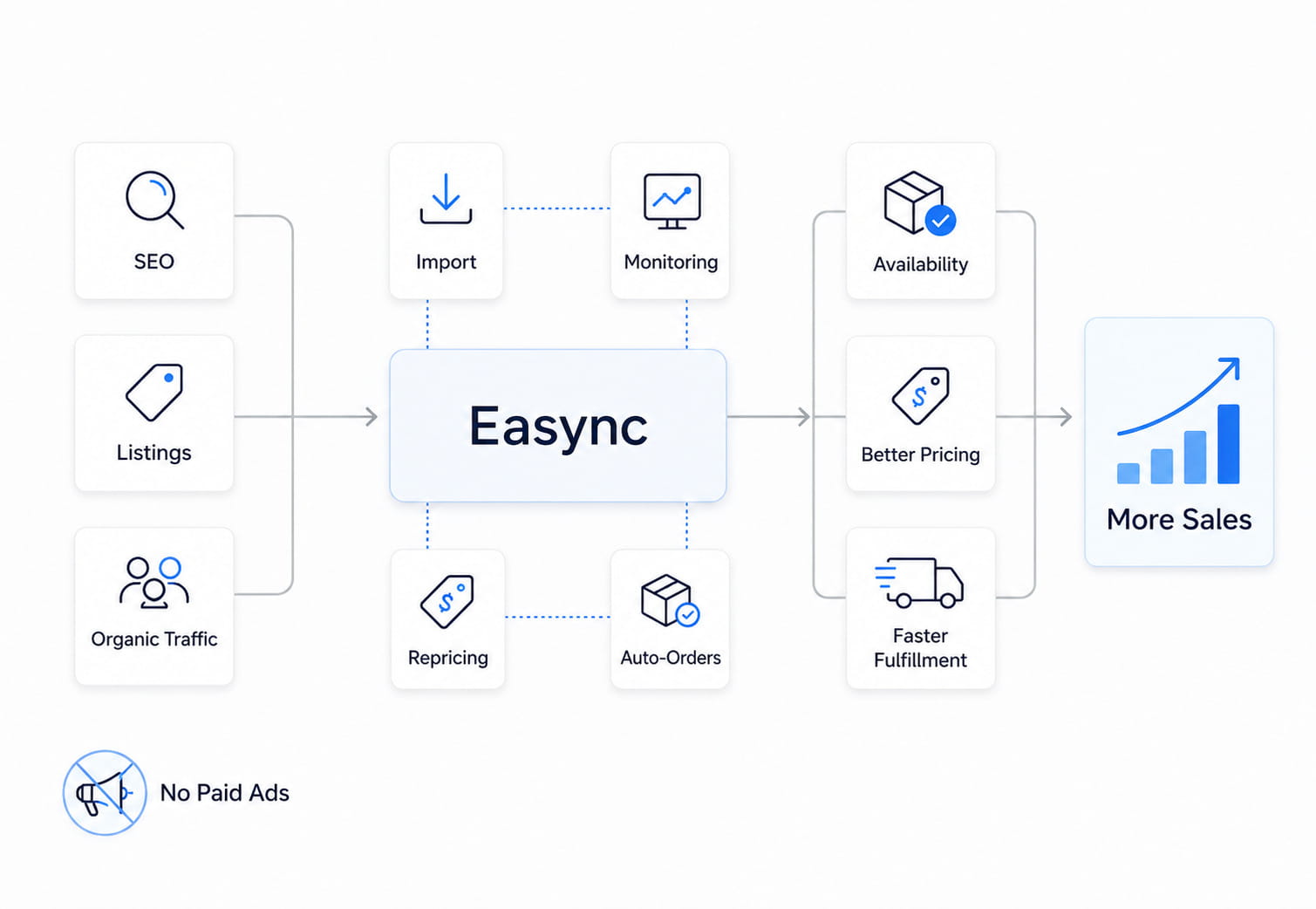
Because organic marketplace selling only works at scale, trying to do it by hand caps you fast. Easync removes that cap. And there’s a risk-free free trial period, so you can list, sync, and see the workflow in action before committing anything.
3. Search Engine Optimization (SEO) for Shopify Stores
SEO drives free, compounding buyer traffic to a Shopify store by ranking content for the exact questions people type before purchasing—especially transactional, buying-intent keywords rather than broad informational ones.
Skip the vanity keywords. As a new store, you can’t outrank Amazon for “best water bottle.” Instead, go after low-hanging, high-intent fruit that big sites ignore:
- Comparison articles (“Product X vs Product Y”). Someone searching “Owala vs Stanley tumbler” is seconds from buying. Write an honest comparison, then link to the product you sell.
- Problem-solving articles (“Does [product] work for [problem]?”). “Does a posture corrector actually fix hunching?” attracts a reader with a specific pain your product solves.
- Long-tail buying queries. “Best cooling blanket for hot sleepers under $50” has low competition and buyers at the bottom of the funnel.
Here’s the workflow that actually moves the needle. Pick one keyword per article and don’t water it down across ten different topics. Put it where it counts: the title, your opening line, and at least one subheading. Then answer the question properly, the way someone who’s actually used the product would talk about it, and link straight to the page that sells it. SEO is a slow burn, so brace for a few quiet weeks where nothing happens. Then one article starts ranking, and it quietly sends you buyers every month without you lifting a finger again. That’s the real payoff of free traffic for dropshipping.
4. Micro-Influencer Seeding (Free Gifting)
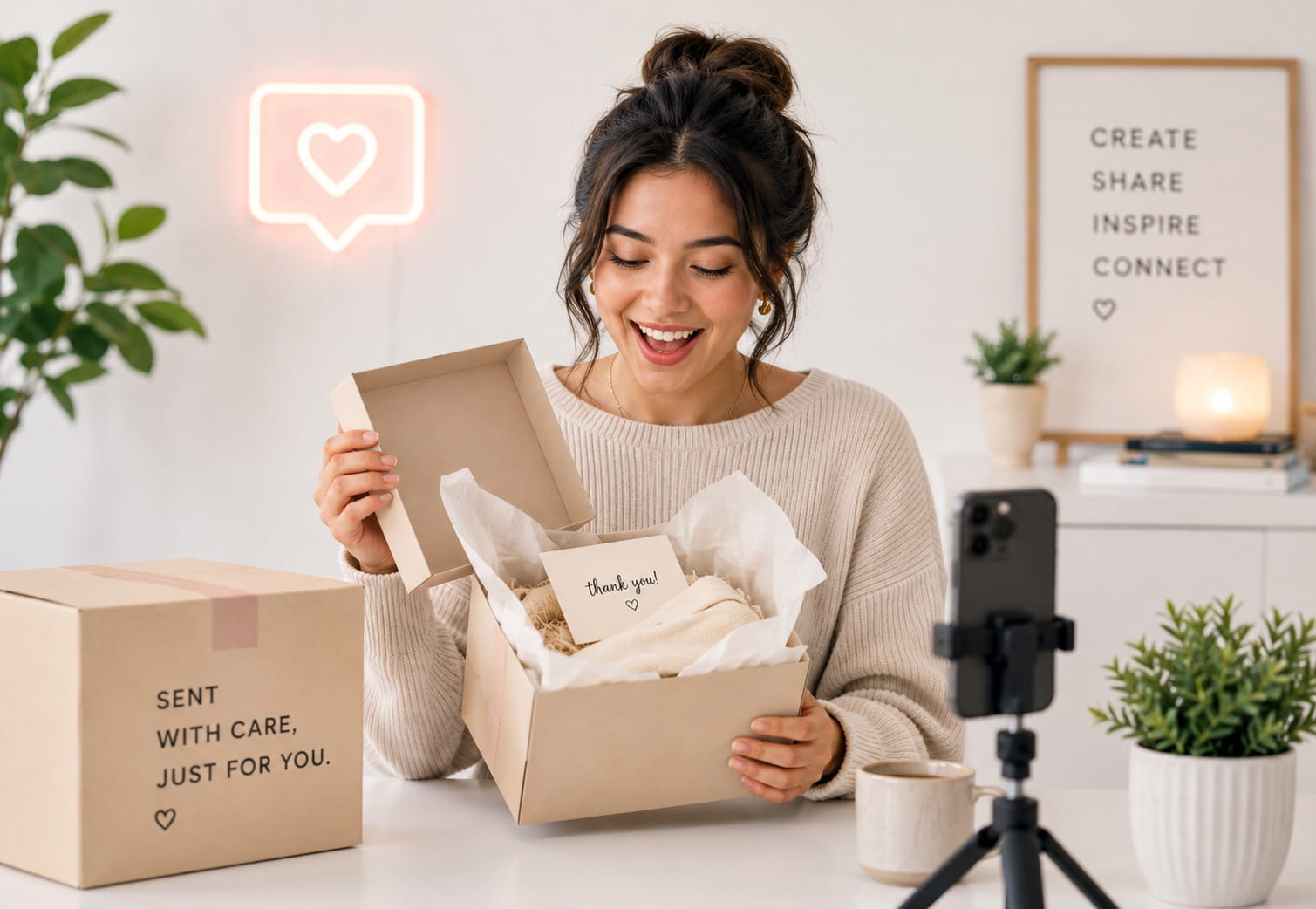
Micro-influencer seeding gets you authentic User-Generated Content (UGC) and social proof by gifting free product samples to small creators in exchange for a post, with no cash fee required.
Small creators are the sweet spot here. Someone with a couple thousand followers usually has an audience that genuinely trusts them, and most are happy to be sent a free product because the bigger brands aren’t fighting over them yet. Here’s how to run it:
- Build a list. Search hashtags and niche keywords in your product category. Collect 30–50 creators with under 5,000 followers and real engagement (comments, not just likes).
- Send a short, warm DM. Keep it human: “Hey [name], love your content on [niche]. We just launched [product] and would love to send you one, free, no strings attached. If you like it and want to share, that’d make our day.”
- Gift, don’t demand. Offering with “no strings” dramatically increases reply and posting rates versus a rigid contract.
- Repurpose the UGC. With permission, reuse their videos as your own organic content—closing the loop back to Channel 1.
Expect a fraction to respond and a fraction of those to post. At scale, it’s a nearly free UGC engine.
5. Vetted Free Dropshipping Suppliers with No Upfront Fees
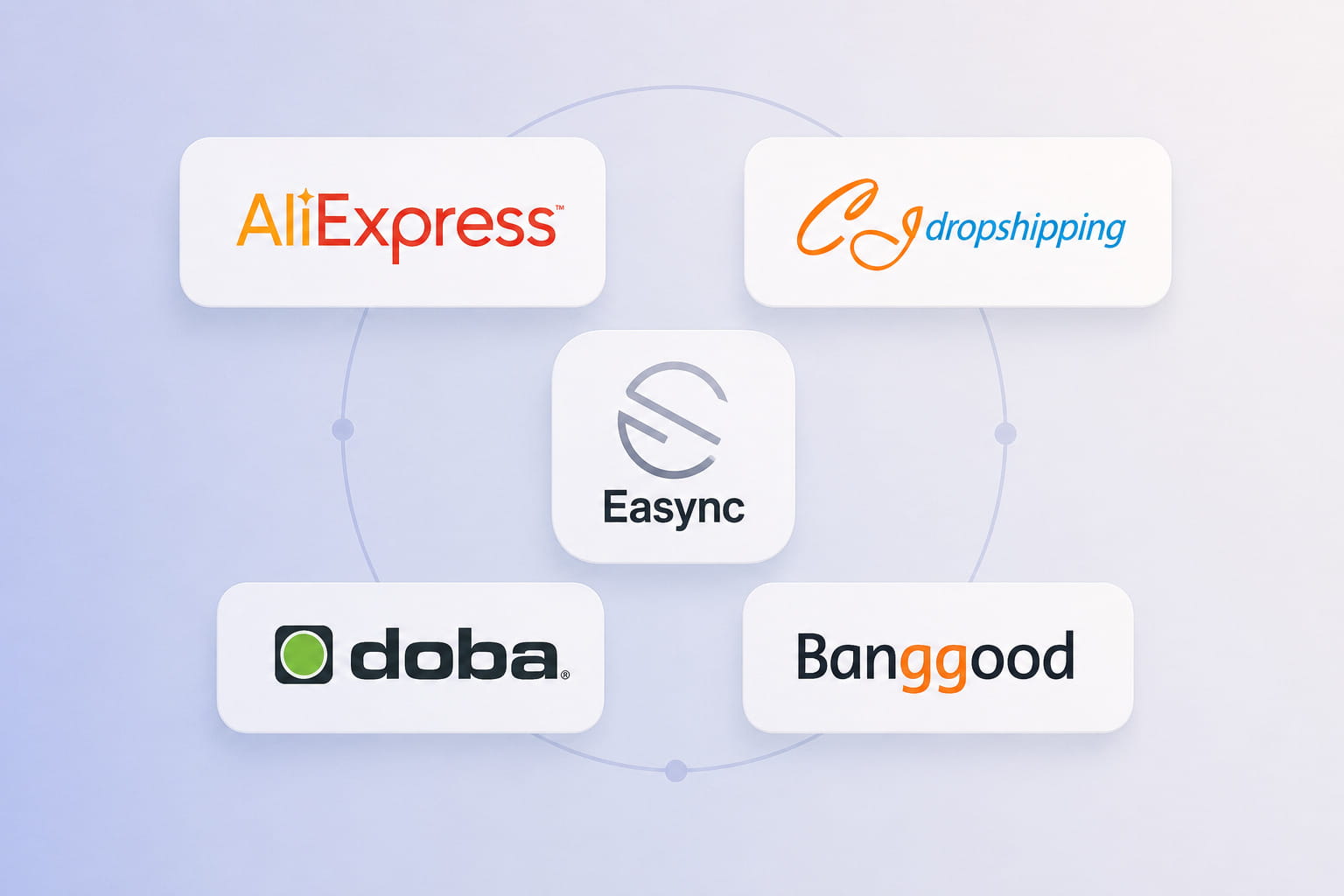
The best free dropshipping suppliers charge zero subscription fees and let you list products before paying anything—you only buy inventory after a customer orders. For organic sellers watching every dollar, three suppliers consistently deliver the best balance of cost, quality, and shipping speed to the US and UK.
1. AliExpress (Choice Program). AliExpress remains the default starting point because there is no subscription cost whatsoever—you pay only when you fulfill an order. The key to using it well is aggressive filtering. Sort by the AliExpress Choice and Standard Shipping options and filter delivery estimates down to the 7–12 day range for US/UK addresses; ignore any supplier quoting 20+ days, because slow shipping is the number-one driver of refunds and negative feedback. Only work with suppliers holding a 95%+ positive rating and a high order volume, which signals reliability. Pros: endless catalog, genuinely free, huge selection of wow-factor products. Cons: shipping still lags domestic options; quality varies, so always order a sample before promoting a product organically.
2. CJ Dropshipping. CJ is the natural graduation step from AliExpress and is also free to join. Its standout feature for organic sellers is the free sourcing request: submit any product link and CJ’s team hunts down a cheaper or faster-shipping supplier for you at no charge. CJ also operates localized warehouses in the US, UK, and EU, so best-selling products can ship domestically in 2–5 days. Critically for content-driven brands, CJ offers custom packaging and branding, letting you turn a generic product into a branded unboxing experience—perfect for the “TikTok Made Me Buy It” video framework. Pros: faster localized shipping, free sourcing, branding options. Cons: interface has a learning curve; domestic stock can sell out.
3. Doba (Free Tier). Doba’s zero-cost starter plan is built for sellers who prioritize speed over selection. Its value is a curated network of domestic US and UK suppliers, meaning blazing-fast 2–4 day delivery that rivals Amazon Prime and slashes your refund rate. Pros: fast domestic fulfillment, vetted suppliers, clean catalog. Cons: the free tier limits product exports and margins can be thinner than AliExpress since you’re paying for domestic speed.
Whichever supplier you choose, the operational challenge is identical: their prices and stock levels change constantly, and tracking that by hand across a growing catalog is impossible. This is exactly why Easync integrates directly with suppliers like these, automatically monitoring inventory and price changes so your listings never fall out of sync.
How to Find “Organic-Friendly” Winning Products
An organic-friendly winning product is one that sells through content and search alone because it’s visually striking, solves an obvious problem, and carries enough perceived value to leave a healthy margin. Not every product survives without ads—these three criteria separate the ones that do.
- High visual appeal / “wow-factor.” The product must stop the scroll within two seconds on video. If it doesn’t look surprising, satisfying, or transformative on camera, organic video won’t carry it. Think color-changing, oddly-satisfying, or dramatic before/after products.
- Clear pain-to-solution angle. You should be able to state the problem it solves in one sentence a stranger instantly understands. “Stops your glasses from fogging.” Vague benefits don’t spread; obvious solutions do.
- High perceived value for healthy margins. Organic isn’t instant, so each sale must be worth the effort. Pick products where the perceived value comfortably exceeds cost, letting you price for a strong margin. A $4 item you sell for $29.99 leaves room to profit and reinvest; a $4 item you sell for $7.99 does not.
3 Real-World Examples of Organic-Friendly Products
Criteria are abstract until you see them applied. These three product concepts each nail one of the pillars and illustrate exactly what a scroll-stopping organic winner looks like.
1. Flame Air Diffuser / Humidifier (High Visual Appeal). This diffuser projects a flickering optical-illusion “flame” made of mist and LED light. On TikTok and Reels, that dancing flame stops the scroll in under a second because the brain can’t immediately parse what it’s seeing—the definition of a wow-factor product. It films beautifully in a dark room, pairs naturally with cozy “aesthetic desk setup” and “night routine” content, and needs no explanation: the video is the sales pitch. Source it for a few dollars, sell it in the $25–$35 range.
2. Ergonomic Memory Foam Seat Cushion (Clear Pain-to-Solution). The explosion of remote and hybrid work created millions of people sitting on hard chairs for eight hours a day with aching lower backs. This cushion solves an instantly relatable pain, and the demo is effortless: show someone wincing in a hard chair, cut to them sitting comfortably on the cushion, and state the benefit—“stops lower back pain during long work-from-home days.” It’s the perfect fit for the “Stop Doing X the Hard Way” video framework and a strong SEO play for queries like “best seat cushion for back pain working from home.”
3. Sunset Projection Lamp (High Perceived Value). This lamp casts a warm, photogenic sunset gradient across a wall or ceiling. It costs only a few dollars to source, yet the atmosphere it creates on video looks premium enough to command $20–$30—a massive margin. It went viral precisely because bedrooms bathed in that glow are irresistibly shareable, and buyers happily pay a premium for the “vibe” rather than the components. It proves the rule: on organic channels, you’re selling the transformation the camera captures, not the bill of materials.
Score every candidate against all three. A product that misses even one—say, it’s useful but boring on camera—will struggle to sell without paid distribution.
Moving from Manual Grind to Scaling with AI Automation
The organic model has a predictable tipping point. In the beginning, doing everything by hand is fine, even useful—you’re learning what converts. But once your first consistent sales arrive, the same manual work that got you here starts holding you back. Every hour spent copy-pasting a tracking number is an hour not spent making the content that actually grows the business.
When you see steady daily orders across a channel, that’s your signal: stop scaling your effort and start scaling your systems.
Why Manual Dropshipping Breaks at Scale (and How Easync.io Fixes It)
Manual fulfillment feels manageable with 5 orders a day. At 50, it becomes a liability. Here’s what quietly goes wrong:
- Manual ordering errors. Typing the wrong address, quantity, or variant leads to refunds, negative reviews, and lost money.
- Copy-pasting tracking numbers. Late or missing tracking uploads tank your seller metrics and trigger customer complaints.
- Unmonitored stock and price changes. Suppliers change prices and go out of stock constantly. Miss one update and you either sell at a loss or oversell an item you can’t deliver—the fastest route to account suspension on eBay and Amazon.
These aren’t rare edge cases; they’re the default outcome of manual processes under volume. One suspended account can erase months of organic momentum overnight.
Easync is the AI-based dropshipping automation software for eBay, Amazon, and Shopify built to be your scaling partner exactly at this stage. It replaces the fragile manual workflow with reliable automation:
- 24/7 price and stock monitoring. Easync watches your suppliers around the clock and automatically adjusts your listings, so you never oversell or sell at a loss.
- Automated order fulfillment. Orders are processed and tracking is synced without you touching a spreadsheet—protecting your seller metrics.
- AI product finding. Surface proven, in-demand products to expand your catalog faster.
- Multi-channel sync. Manage eBay, Amazon, and Shopify listings from one place instead of three.
The result: you reclaim the hours manual work was stealing and reinvest them into the organic content and outreach that actually compounds. Automation is what turns a fragile side hustle into a resilient store—and the risk-free free trial means you can prove it out on your own listings before you pay a thing.
🚀 Your organic sales deserve a system that won’t get you suspended. Start Trial free and automate monitoring, ordering, and fulfillment today.
Common Pitfalls to Avoid in Non-Paid Dropshipping
Most organic failures aren’t strategy problems—they’re discipline and tracking problems. Avoid these:
- Quitting too early. Organic almost always takes 2–4 weeks of consistent posting before the algorithm rewards you. Most people quit at day 10, right before it works. Commit to a full cycle before judging results.
- Ignoring video analytics. Vanity metrics like follower count don’t matter. Watch retention rate (are people finishing your videos?) and click-through rate (CTR) (are they tapping to buy?). Low retention means fix your hook; low CTR means fix your call to action.
- Poor supplier inventory tracking. Selling items you can’t fulfill destroys accounts. Manual tracking fails at scale—automate stock and price monitoring before it becomes the mistake that suspends you.
- Posting once and hoping. Volume beats perfection. One polished video a week loses to three good videos a day.
- Choosing “ad-only” products. A boring product that needs a paid targeting to find its buyer will never spread organically. Screen for wow-factor first.
Frequently Asked Questions (FAQ)
How long does it take to get dropshipping sales without ads?
Most sellers see their first organic sales within 2–4 weeks of consistent daily content and optimized listings, with meaningful momentum typically building over 1–3 months. Marketplace channels like eBay can produce sales fastest because buyer intent is already there.
Is organic dropshipping better than using dropshipping ads?
Organic dropshipping is better for low-budget beginners because it removes financial risk and builds compounding, long-term traffic, while paid ads are better for speed and rapid scaling once you have budget and a proven product. The strongest stores eventually use both.
Can I dropship on eBay and Amazon for free?
Yes—you can list products on eBay and Amazon and only pay fees when an item actually sells, meaning no upfront ad spend is required. Both marketplaces supply free, high-intent buyer traffic, and automation software like Easync.io helps you list and sync at scale without manual work.
What is the best free platform to start dropshipping?
eBay is widely considered the best free platform for beginners because it has built-in buyer traffic, low listing barriers, and no ad spend requirement. TikTok organic is the best free platform for building demand and going viral, making the two a powerful combination.