
The cheapest products to resell at a real profit are small, light and un-sized: phone accessories, hair accessories, pet supplies, kitchen gadgets and beauty tools. Buy them in bulk for $1 to $10 a unit and most will carry a retail price several times higher. Domestic closeout distributors, B2B marketplaces such as Faire and Alibaba, and clearance or liquidation channels are where the stock comes from.
Key takeaways
- Margin is calculated on landed cost, meaning the unit price plus freight, duty and packaging. A quote of $3.40 that lands at $4.10 has already eaten a fifth of your planned profit.
- The working rule most sellers price against is three times landed cost. Below that there is little room left for ads once fees and returns are paid.
- Small, light, unbreakable and un-sized beats high margin on paper. Sizing and fragility are what turn a good gross margin into a bad net one.
- Markup and margin are not the same number. An item landing at $8 and selling at $40 carries a 400% markup and an 80% margin, and suppliers will always quote you the larger one.
- One category, several suppliers. Two verified sources for the same SKU keeps a single factory from holding your listings hostage.
- Test with a case, not a pallet. Cheap inventory is only cheap while you can sell through it.
What counts as cheap wholesale products for resale
Cheap here describes the purchase price per unit, not the build quality. Cheap wholesale products for resale are low-cost goods bought in bulk from a distributor or manufacturer and sold on at a markup. A silicone spatula that costs $1.80 in a case of 144 and retails at $9 fits the definition. A poorly moulded spatula that arrives with flash on the seams does not; it is just a bad product, and it will come back to you as a refund. The distinction matters because the whole model depends on customers keeping what they ordered.
Most sellers who buy cheap products for resale work in the $1 to $20 band at volume. That band is wide enough to cover a $1.20 charging cable and a $14 boxed candle, and both can work. What they have in common is that the retail price is set by what the item is worth to the buyer rather than by what it cost to make, which is the only reliable way to hold a margin online.
This also explains why the best wholesale items to sell from home look the way they do. Without a warehouse, your constraint is not capital, it is the spare room. Small, flat, stackable goods let you hold a hundred units in a corner; anything bulky forces a storage decision before you have proven the product sells.
The market backdrop is steady rather than dramatic. E-commerce reached 17.1% of total US retail sales in the second quarter of 2026, up from 16.3% a year earlier, according to the Census Bureau. Growth like that does not create winners on its own, but it does mean the shelf you are competing for keeps getting bigger.
Before you commit money to a category, four questions do most of the filtering:
- Does the product solve something specific, or is it decoration with no argument behind it?
- Does it provoke any reaction at all? Plenty of cheap goods get bought on impulse because they are funny, pretty or oddly satisfying to watch, and that reaction does work your ad budget would otherwise have to do.
- Can it be photographed or demonstrated in fifteen seconds? Products that show well on video need far less ad spend.
- How fast does a unit turn? Margin per sale means little if the case takes eight months to clear, because your money is sitting in a box instead of buying the next case.
- How many sellers already list it, and are they all showing the same supplier photo?
- What happens if it arrives damaged? Fragile and sized goods carry a hidden second shipping cost.
How wholesale buying actually works
Buying at wholesale is a different transaction to buying one of something, and the terms are where new sellers get caught out. When you buy in bulk and resell, four things shape what you actually pay.
The minimum order quantity is the smallest number of units a supplier will sell you. Factory MOQs commonly start in the hundreds, domestic distributors often sell by the case, and B2B marketplaces aimed at small retailers set theirs low deliberately to get you started.
Case packs matter almost as much. A supplier quoting $1.60 a unit in a case of 288 has effectively set your minimum spend at $460 for one SKU, and you will be living with those units for a while. Ask for the case quantity in the same breath as the price, because a good unit price on a case you cannot clear in a quarter is not a good deal.
Price breaks are the reason to plan two orders ahead. Most suppliers publish tiers at 100, 500 and 1,000 units, and the drop between the bottom tier and the top one is usually substantial enough to change which products are worth stocking at all. Ask for all three when you first make contact, even if you intend to start at the bottom tier, so you know what scaling actually buys you.
Payment terms are the last piece. New accounts pay upfront almost everywhere. Once you have a history, net 30 or net 60 becomes negotiable, and that changes the business completely, since you can sell the stock before you have paid for it. Our guide to wholesale sourcing covers how to open those accounts and what suppliers want to see.
One more thing worth knowing before you buy cheap products to sell in volume: US wholesalers will usually ask for a resale certificate before they open an account for you, which also exempts your inventory purchases from sales tax.
20 cheap items to resell in 2026
The table below is a planning tool, not a price list. These are the cheap products to resell that hold up once the maths is done, ranked roughly from the most forgiving categories to the ones where fragility, seasonality or a thin ticket make life harder. The cost and resale bands are the ranges you should expect to work inside when you request quotes, and every one of them moves with your supplier, your order size and your freight route. Replace each figure with a real landed cost before you order anything.
| Category | Bulk unit cost band | Typical resale band | Target gross margin | Return risk | Best sourcing route |
|---|---|---|---|---|---|
| Phone and charging accessories | $1–$5 | $12–$30 | 55–80% | Very low | Overseas factory |
| Hair accessories | $2–$6 | $15–$35 | 60–80% | Very low | Overseas factory |
| Pet grooming and feeding supplies | $3–$12 | $18–$50 | 50–75% | Low | Domestic wholesaler |
| Kitchen gadgets and silicone tools | $2–$8 | $12–$32 | 50–75% | Low | Closeout distributor |
| Cleaning supplies and microfibre cloths | $0.80–$4 | $8–$22 | 50–70% | Very low | Domestic wholesaler |
| Home organisation bins and dividers | $3–$12 | $15–$45 | 45–70% | Low | Domestic wholesaler |
| Beauty and skincare tools | $3–$10 | $20–$55 | 60–85% | Low | Overseas factory, private label |
| Fashion jewellery | $2–$8 | $15–$45 | 60–85% | Low, fraud risk higher | B2B marketplace |
| Fitness and recovery accessories | $3–$10 | $16–$38 | 55–75% | Low | Overseas factory |
| Insulated drinkware and bottle accessories | $2–$12 | $14–$42 | 45–70% | Low, shipping weight high | Domestic wholesaler |
| Car interior accessories | $3–$12 | $15–$45 | 50–70% | Medium, fitment issues | Overseas factory |
| Sunglasses and reading glasses | $2–$7 | $14–$40 | 55–80% | Low | Overseas factory |
| Sensory and fidget toys | $0.60–$4 | $7–$22 | 55–80% | Low, trend risk high | Closeout distributor |
| Baby and toddler feeding basics | $2–$9 | $14–$36 | 50–75% | Low, compliance burden | Certified factory or wholesaler |
| Stationery, stickers and planner supplies | $0.40–$5 | $6–$24 | 55–80% | Very low | Overseas factory |
| Craft and hobby kits | $3–$10 | $18–$45 | 50–70% | Low, missing-part claims | Domestic wholesaler |
| Sporting goods, used and clearance | $5–$25 | $25–$120 | 50–75% | Low | Thrift, clearance, liquidation |
| Candles, wax melts and home fragrance | $3–$9 | $18–$40 | 55–75% | Medium, glass and heat | B2B marketplace, private label |
| Party, holiday and seasonal decor | $1–$6 | $10–$28 | 50–75% | Low, timing risk high | Closeout distributor |
| Vintage electronics and audio gear | $5–$40 | $30–$250 | Varies widely | Medium, untested units | Thrift, estate sales, auctions |
The margin targets above are set against the two benchmarks that do have hard sources behind them: average gross margin across all retail sits near 33% per NYU Stern’s industry margin data, and the return-risk column reflects the 19.3% online return rate the NRF estimated for 2025. The cost and resale bands themselves are editorial planning estimates drawn from typical wholesale list pricing against marketplace retail, so treat them as a starting point for your own quotes rather than as measured figures.
1. Phone and charging accessories
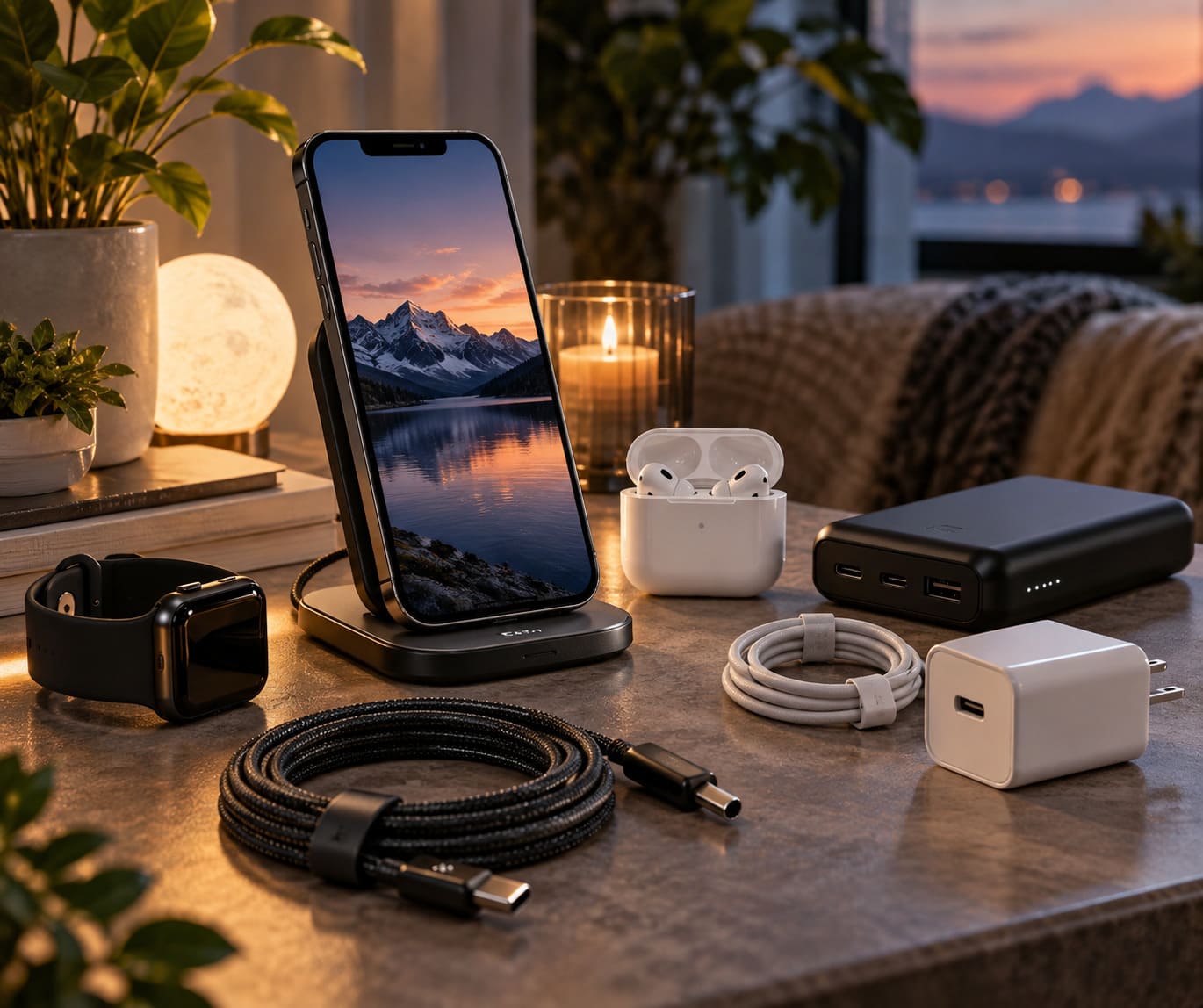
Phone accessories are the cheapest reliable entry into reselling: cases, cables, MagSafe stands, lens protectors and car mounts land at $1 to $5 in bulk and retail from $12. Nothing else on this list is as forgiving: the parcels are flat, the products survive being dropped, and every handset launch resets demand from zero. That forgiveness is also why the category is crowded. Competing on the word “case” against ten thousand identical listings goes nowhere, so the sellers who make money here pick an angle, usually a niche fit like rugged cases for trades or a bundle that pairs a case with a lens protector and a cable.
One practical warning. An 80% margin on a $19 sale is still only about $15 gross, so this category needs volume or bundles before it pays a bill. Order samples from three suppliers at the same list price and drop-test them, because the quality spread at identical pricing is much wider than the listings suggest.
2. Hair accessories

Hair accessories combine the lowest shipping risk in this guide with margins above 60%. Claw clips, satin scrunchies, heatless curling ribbons, bonnets and headbands all travel as fabric in a polybag, which is about as low-risk as shipping gets, and the products demonstrate beautifully in short video, which keeps acquisition costs sane.
The claim to verify before you print anything is silk. Most inexpensive “silk” scrunchies are polyester satin. Selling satin is fine, labelling satin as silk is how you end up with a case opened against your account, so ask the supplier for fibre certification and momme weight and then write your listing around what you actually received.
3. Pet grooming and feeding supplies

Deshedding gloves, slicker brushes, lick mats, slow feeders and seat covers. Pet spending holds up through downturns better than almost any other discretionary category, which is the main reason it sits this high despite unspectacular headline margins. The American Pet Products Association tracks the category if you want to see the trend rather than take a blog’s word for it.
Grooming items are soft goods and silicone, so breakage is close to zero and reorder behaviour is real. Harnesses and collars are the exception because they are sized, so either publish a printable measuring guide or accept the exchanges. For anything a pet chews or eats from, get food-grade material documentation in writing. The word “silicone” on a listing is not documentation.
4. Kitchen gadgets and silicone tools
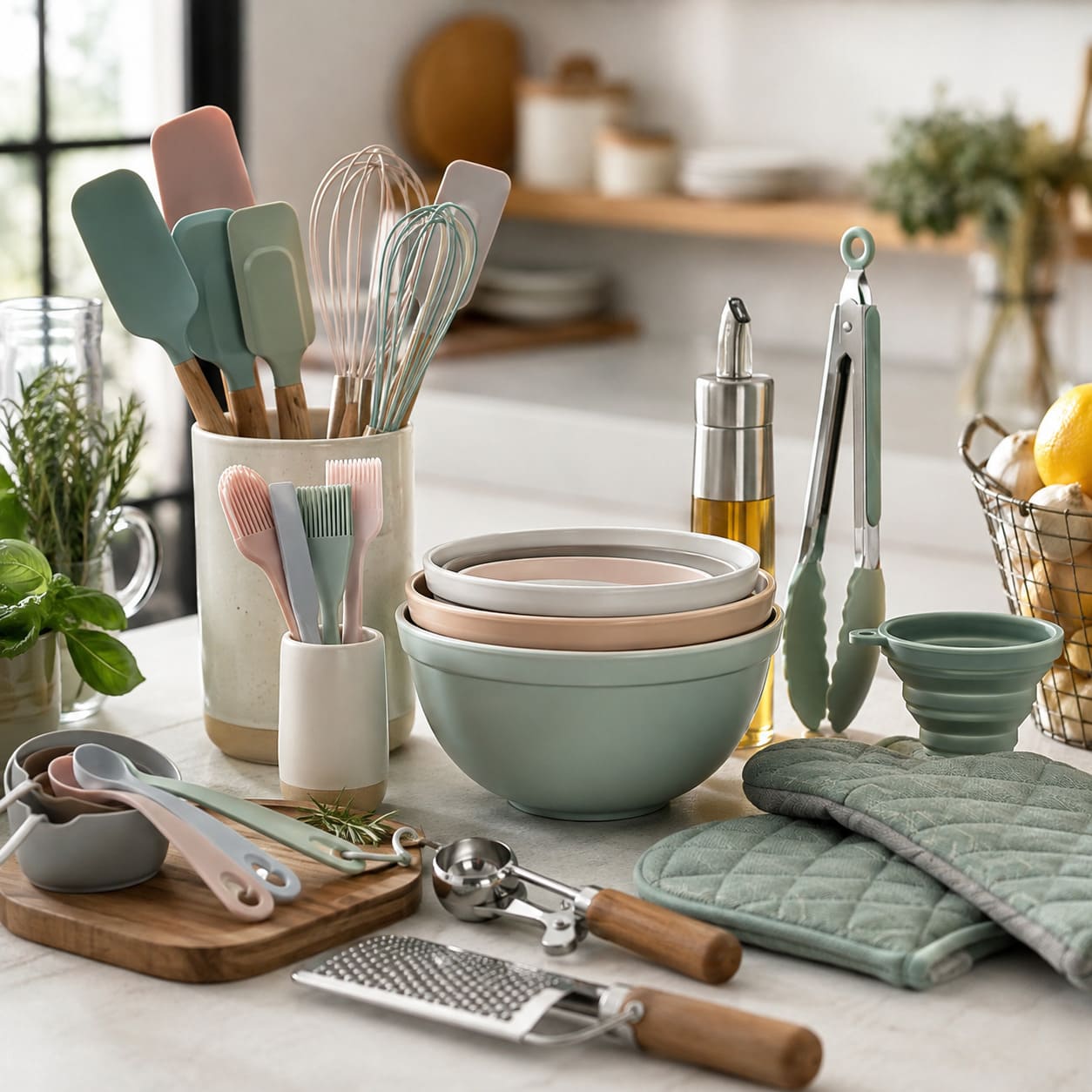
Kitchen gadgets sell on demonstration rather than description, which makes them unusually cheap to market. Jar openers, herb strippers, silicone lids, adjustable measuring spoons and peelers with catch containers are problem-solution products, and problem-solution products sell themselves in a fifteen-second clip without a script.
They also make excellent second items in a cart, which is where the real money sits. A $2 landed gadget added to an existing $28 order costs you almost nothing extra in shipping and lifts the whole basket. Anything that touches food falls under the FDA’s food-contact rules, so ask your supplier for documentation covering the exact SKU before you list, not for the factory in general.
5. Cleaning supplies and microfibre cloths

Microfibre cloth multipacks, scrub sponges, spray bottles, drain snakes, squeegees, lint rollers. This is the least glamorous entry here and one of the most dependable, because the products get used up and replaced on a schedule nobody has to be persuaded into.
Case-pack economics are excellent. Cloths and sponges arrive dozens to a carton at pennies a unit, ship flat, and cannot really be damaged in transit. Sell them in sets rather than singles, since a twelve-pack at $18 works where one cloth at $2 never covers postage. If you branch into liquids, check whether your carrier restricts anything in the formulation before you commit to a pallet.
6. Home organisation bins and dividers
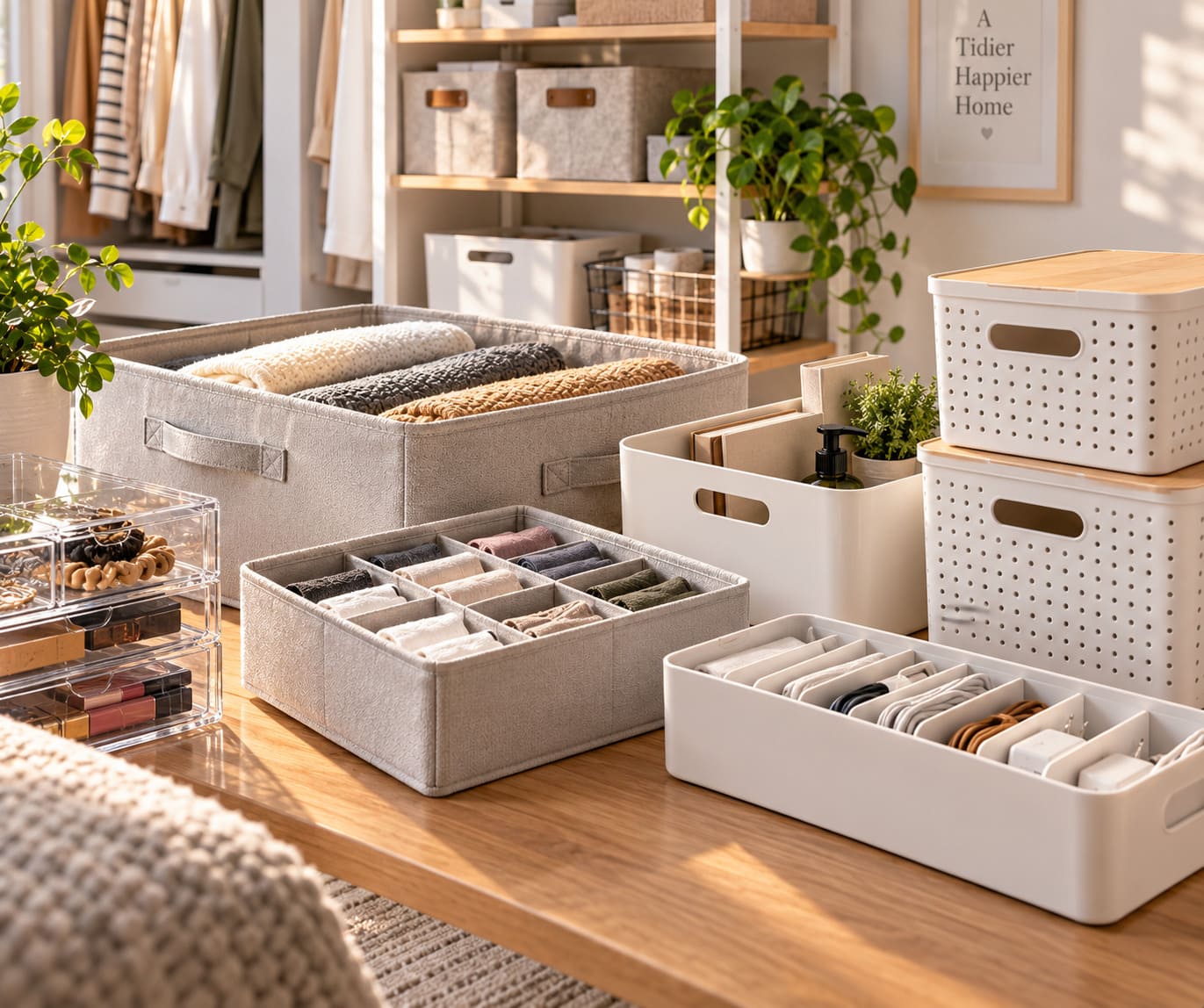
Storage products sell every week of the year and get bought in matched sets rather than singles, which lifts order values well above the unit prices. Drawer dividers, pantry bins, vacuum storage bags, cable organisers and under-bed boxes are the core range, and the demand behind them is unremarkable and completely dependable, which is exactly what you want while you are learning operations. The one thing to watch is dimensional weight: a set of pantry bins can cost more to ship than to buy, since carriers bill bulky light goods on volume rather than mass. Confirm packed dimensions in writing and measure a sample yourself.
7. Beauty and skincare tools

Beauty tools carry the highest gross margins of any physical category here, commonly 60% to 85%. Gua sha stones, jade rollers, scalp massagers, cleansing brushes and LED masks all land under $10 and retail from $20. Pricing in beauty runs on perceived value and gifting rather than materials, so a $6 roller in a linen pouch with a printed insert reads as a $40 product. Refund rates are low because opened personal-care items cannot be restocked.
The category is won on video, so if you will not make content, pick something else. Stone tools also chip in transit, which means bubble sleeves from the supplier and a sample you have actually unwrapped.
Nail care deserves a mention inside this category rather than a slot of its own. Polishes, gel colours, curing lamps and the consumables around them have the shortest replacement cycle in beauty, which makes the reorder economics better than anything else here. Lamps are an electrical product and carry the corresponding certification requirements, so treat them as a step up in effort from selling polish alone. Our roundup of beauty products goes deeper on the subcategories worth testing first.
8. Fashion jewellery

Fashion jewellery has almost no anchor price in a buyer’s head, so presentation sets the price rather than materials. Stacking rings, huggie earrings, layered necklaces, anklets and men’s chains all source at $2 to $8, and the same piece reads as $12 or $48 depending on your photography and packaging. Gold-plated stainless steel currently sits in the sweet spot because it does not tarnish the way plated brass does.
Two things to handle before launch. Ask for plating thickness in microns, because thin plating produces green fingers and one-star reviews. And do not print “hypoallergenic” without nickel-content documentation behind it. Chargeback and fraud rates also run higher here than in most cheap categories, so tighten your payment settings early. The jewelry dropshipping guide lists the subcategories that convert best.
9. Fitness and recovery accessories

Resistance band sets, jump ropes, massage balls, yoga straps, grip strengtheners. January lifts the whole category and the rest of the year holds a steady base. The differentiator is programming rather than product: include a printed four-week plan or a QR code linking to video routines and you stop competing with every factory-direct listing selling the same rubber. One safety note that matters more than the margin, though. Cheap bands snap under load, so stretch-test samples before you commit, because an injured customer costs more than any order was worth.
10. Insulated drinkware and bottle accessories
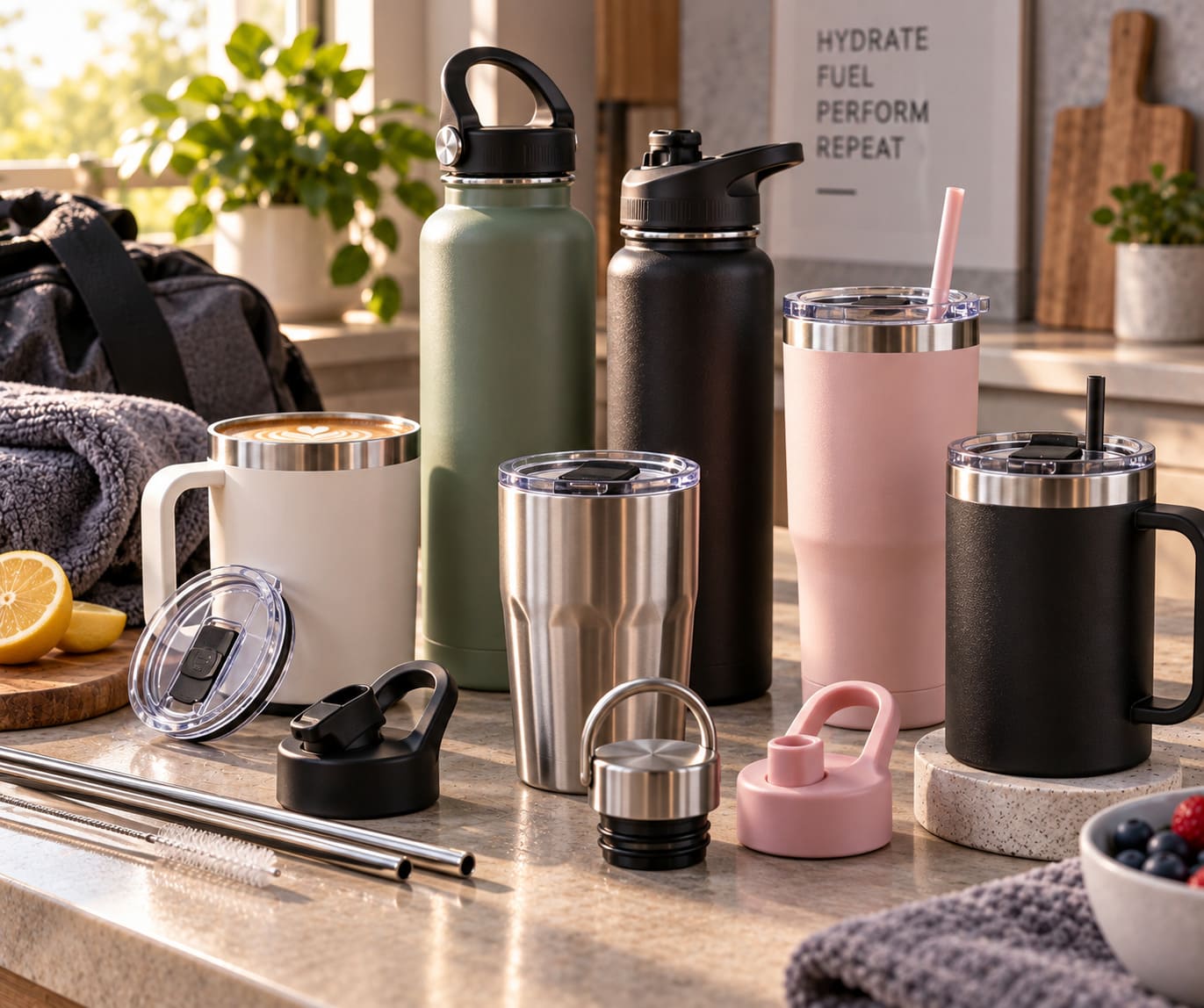
Double-wall tumblers, kids’ bottles, and the accessory layer around them: straw multipacks, silicone boots, cleaning brushes, carry sleeves. Tumblers themselves are heavy for their price, so run the shipping maths per unit before you get excited about the margin column.
The accessories are the quieter opportunity. A straw pack landing at $2 retails at $12 to owners of a bottle brand you never had to build, and it ships in an envelope. Avoid lookalikes of well-known bottle shapes and logos, since trademarked designs attract takedowns quickly. Ask for 18/8 stainless certification and a leak-test video of your exact SKU rather than the factory’s showroom sample.
11. Car interior accessories

Car accessories are impulse purchases under $30 that demonstrate well in short video. Seat gap fillers, trunk organisers, magnetic mounts, cleaning gel and heated cup holders make up the reliable core, and demand for them holds steady all year. The trap is the phrase “universal fit”, which is almost never universal: a mount that will not clip into a specific dashboard comes straight back to you. Either list explicit vehicle compatibility or price the returns into your model from the start.
12. Sunglasses and reading glasses

Tiny parcels, healthy margins, strong summer spikes and a second quieter market in low-cost readers that runs all year. Readers in particular get bought in threes because people lose them, which does more for repeat purchase rates than any email campaign.
Claims are the risk. UV400 protection needs documentation, and polarisation gets tested by customers holding the lens against a phone screen within a minute of opening the parcel. Say only what the supplier can evidence.
13. Sensory and fidget toys

Fidget and sensory toys have the lowest unit costs in this guide, often under a dollar, and they are effectively indestructible in transit. Squishy animals, squeeze cubes, pop tubes and mystery-bag novelties move through gift shops, party bags and school-holiday demand without needing a brand behind them.
What makes them tricky is speed. Individual formats spike and fade on a timescale measured in months, so buy in quantities you can clear inside one season and keep a base of evergreen shapes underneath the trend piece. Toy safety rules apply here in full. In the US that means the Consumer Product Safety Improvement Act, which requires third-party lab testing and a Children’s Product Certificate for anything aimed at children twelve and under, with CE or UKCA marking as the European equivalent. Ask for current certificates covering the exact SKU.
14. Baby and toddler feeding basics
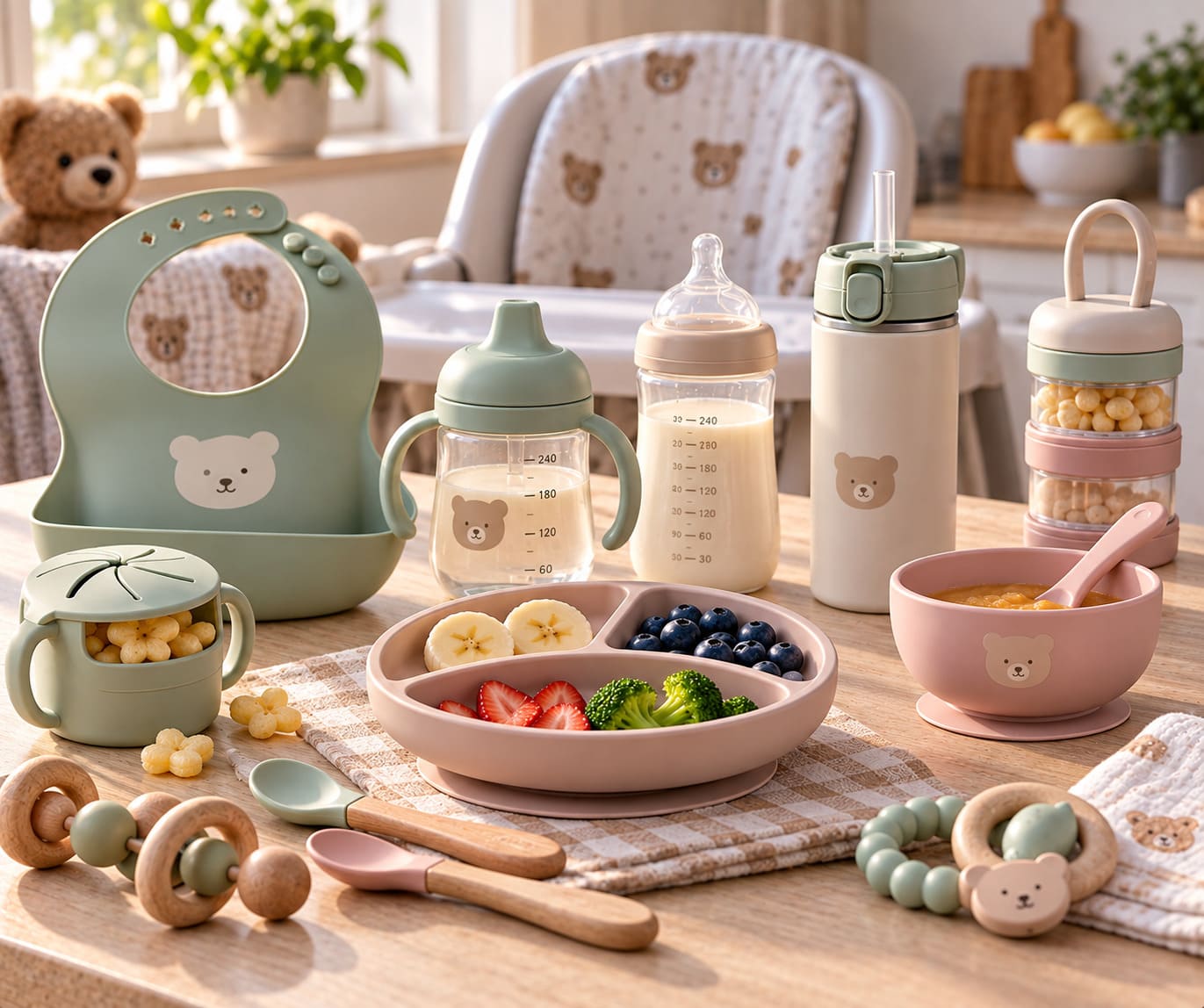
Silicone bibs, suction bowls, snack cups, teethers, weaning spoon sets. Parents replace these constantly because children destroy them, and gifting demand runs all year through baby showers, which gives the category a reorder rhythm most accessories never get. Our guide to dropshipping baby products covers the subcategories that convert without a brand behind them.
The compliance burden is the real filter, and it is the reason this sits at fourteen rather than higher. Anything a child puts in their mouth needs food-grade documentation and current safety testing on the specific SKU. Stay away from cribs, car seats and sleep products entirely as a beginner, because the certification and liability there belong to a different kind of business.
15. Stationery, stickers and planner supplies

Stationery has almost no return risk, because nothing has to fit or work. Sticker sheets, washi tape, gel pen sets, notebooks and planner inserts land from 40 cents, which makes this the cheapest physical category in the guide to test.
The catch is the ticket size. A $4 sticker sheet does not cover its own shipping unless it travels with something else, so build the range around bundles and sets from day one rather than adding them later. Designs are also easy to copy in both directions, which means selling licensed characters is a fast route to a suspended account and selling your own artwork is the only durable version of this category.
16. Craft and hobby kits

Diamond painting sets, punch needle kits, candle-making starters, resin moulds. Hobbyists buy supplies again and again, which turns a single sale into a customer in a way that most cheap categories never manage. The support cost is the thing to plan for: a kit with forty small components generates “missing piece” tickets, so agree a completeness check with your supplier and keep a small bag of spares to send out without argument.
17. Sporting goods, used and clearance
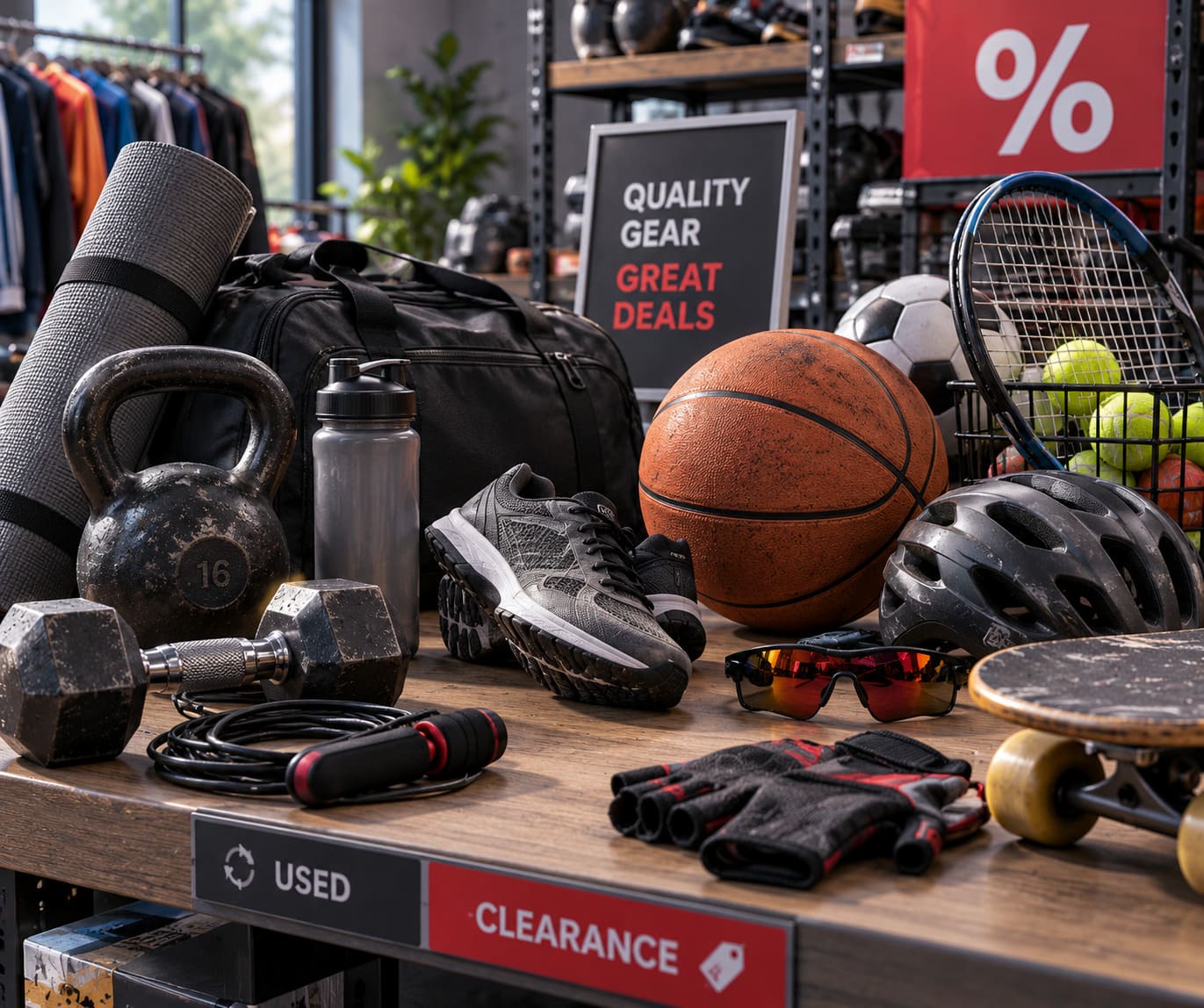
Sports equipment is the most consistently under-priced category in thrift stores, because staff price it as generic junk and buyers price it by brand. Pickleball paddles, golf clubs, tennis rackets, baseball gear and snowboards regularly sit on a rack at $10 while the same model sells for five times that online.
Two things make this work. Serious players upgrade constantly and offload perfectly good gear, and casual buyers actively prefer used equipment because new is expensive enough to feel like a commitment. Both sides of the market want the same transaction.
Check sold listings before you buy anything, since the gap between a current model and a discontinued one is invisible on the shelf and enormous in price. Ship the small stuff, sell the bulky stuff locally, and leave anything safety-critical like helmets and climbing gear alone.
18. Candles, wax melts and home fragrance

Boxed candles, reed diffusers, room sprays, wax melts. Fragrance is bought on mood and gifting, packaging does half the selling, and a customer who likes your scent buys it repeatedly without comparing prices. On margin alone this category would rank far higher than eighteenth.
Logistics is what holds it back. Glass breaks, and wax melts in a hot trailer, which means a summer delivery can arrive as a pool of scented liquid in a cracked jar. Require moulded inserts, ship a test parcel to yourself in July, and price shipping honestly instead of absorbing it. Wax melts and sprays are the lower-risk way into the same buyer.
19. Party, holiday and seasonal decor

Party and holiday goods sell to buyers with a date in the diary, who rarely comparison-shop. Balloon garlands, banners, table settings, themed tableware and small ornaments start around a dollar a unit, among the lowest on the list.
Everything depends on timing. Buy school supplies in March rather than August, and take Halloween stock in the spring closeout rather than in September at full price. Stock that misses its date is not cheap inventory, it is dead inventory sitting in a spare room until next year.
20. Vintage electronics and audio gear

Old electronics are the one place where “electronics” stops being a warning and becomes an opportunity. Record players, cassette decks, film cameras, receivers and vintage speakers hold steady buyer interest precisely because nobody manufactures them any more, so supply only ever shrinks.
This is the opposite of the cheap new electronics further up the do-not-sell list. There the risk is defect rates on units you bought a hundred at a time. Here you buy one unit, test it yourself, and describe exactly what you found. Buyers of vintage gear expect wear and will forgive it, provided your listing is honest about what works.
It sits last because it demands the most from you. You need to know which models matter, you need to power up and test every unit before listing, and you need to pack heavy fragile things properly. Start with cameras and small audio, which ship easily, before touching floor-standing speakers or anything with a vacuum tube.
What not to sell as a beginner
Some categories look excellent in a margin table and behave like landmines in practice. The economics are real, the problem is everything around them. Leave these until you have a year of operational reps behind you.
- Cheap new consumer electronics bought in bulk. Defect rates, warranty questions and support tickets swallow the margin, and a batch of faulty chargers can cost you a marketplace account rather than just an order. Buying single vintage units you have tested yourself is a different proposition, and it is covered at number twenty above.
- Anything with lithium batteries. Carriers restrict them, surcharges apply, and some fulfilment centres will not take them at all.
- Supplements and anything ingestible. Labelling rules, permitted-claim limits and marketplace gating make this a compliance project before it is a product.
- Branded goods from unofficial channels. Counterfeit claims end seller accounts permanently, and “the supplier said it was authentic” has never worked as a defence.
- Vapes and e-cigarettes. Age verification, shifting regulation and blanket advertising bans on the major platforms make these unworkable for a small seller regardless of the margin.
- Fitted clothing at any scale. Returns arrive before profits do, and every one costs two shipping legs.
- Nursery equipment. Cribs, car seats and sleep products sit under serious certification and liability requirements. Feeding accessories are a reasonable entry point into the same audience, the hardware is not.
- Fragile glassware without proven packaging. One hot summer of broken jars has taught plenty of candle sellers this the expensive way.
Cheap things to sell online without holding stock
Buying a case is not the only way in. If your capital is tight or you are still deciding on a niche, the sensible move is to test demand before you own anything. The cheap things to sell in this mode are the same categories as above, minus anything fragile or sized, because you never touch the parcel and cannot inspect it before it goes out.
Dropshipping is the usual route: you list the item, collect payment, then place the order with your supplier. Some domestic wholesalers offer a dropship programme alongside their case pricing, which lets you validate a SKU before committing to the carton.
The catch is that your margin comes out noticeably thinner than it would at wholesale, because you are paying someone else to carry the inventory risk. That is a reasonable price for finding out which cheap things to sell online actually move in your niche before you spend serious money on a pallet. Once a product proves itself, move it to a case order and take the margin back.
Where to sell what you have bought
Sourcing well and then listing in the wrong place is a common way to lose a good margin. Each platform takes a different cut and rewards a different kind of product.
eBay suits discontinued, replacement and hard-to-find goods, because its buyers arrive knowing the model number they want. Fees are predictable: eBay charges 13.6% of the total sale in most categories, plus $0.30 on orders up to $10 and $0.40 above that, with payment processing already folded in.
Amazon rewards utilitarian, review-driven products and punishes anything with sizing returns or gated compliance. Its referral fees sit mostly between 8% and 15% depending on category, on top of either $0.99 per item on the Individual plan or $39.99 a month on the Professional one, before any fulfilment costs.
Etsy is the cheapest of the three per sale and the narrowest in scope, since it only makes sense for handmade, personalised and vintage goods. Etsy charges a 20¢ listing fee per item plus a 6.5% transaction fee on the order total including shipping.
Your own store on Shopify or WooCommerce charges no commission and gives you the customer relationship, which is where repeat-purchase margin actually lives. The trade is that you supply all the traffic yourself, so it works best once a product has already proven it sells somewhere else. Facebook Marketplace and local classifieds round this out for anything heavy or bulky, where shipping would eat the whole margin.
Most sellers start on one marketplace to find out whether the product moves, then add their own store once there is something worth building a brand around.
Where to buy cheap items for resale
Four supply channels cover almost everything a small seller needs. Most people end up using two or three at once, because no single channel is good at both low unit cost and fast restocking.
US wholesalers and closeout distributors
Domestic general-merchandise houses sell by the case and ship in days rather than weeks. Kole Imports, a long-established Carson-based direct importer serving discount retailers, is a typical example of the format: broad catalogue, case-level minimums, no relationship-building required to place a first order. Wholesale Central works as a directory layer on top of this world and charges its suppliers no commission, which keeps quoted prices closer to true wholesale.
You pay more per unit than you would buying direct from a factory. What you get back is speed, a phone number that answers, and the ability to reorder forty units instead of four hundred when something sells out.
B2B marketplaces and overseas factories
This is where the lowest unit costs live. Alibaba connects you to manufacturers at MOQ-driven pricing, and AliExpress lets you buy the same goods in single units for sampling. For branded and boutique-style inventory, Faire runs on terms designed to lower first-order risk: it offers free returns on your first order with any brand inside a 60-day window, plus net-60 payment terms for verified retailers.
Order samples from at least two suppliers before committing, and request landed cost at three quantities rather than one. A quote that looks good at 500 units often looks very different at 100, and the gap between the quoted unit price and the real landed price is where first-time buyers lose their margin.
Clearance racks, outlets and retail arbitrage
Big-box clearance is a legitimate source of cheap stock, and it needs no supplier account. End-of-season aisles at Walmart, outlet stores and discount chains all produce items you can list profitably, particularly when a model is discontinued and replacement demand keeps running.
It does not scale, and it should not be your only channel. It is very good for two things: learning what actually sells in your category on a small budget, and filling gaps between wholesale reorders.
Liquidation pallets and secondhand supply
Returned and shelf-pull merchandise sells by the pallet at a steep discount, and thrift stores, estate sales and house clearances supply the flip categories. The single distinction that decides whether a lot is worth bidding on is manifested against unmanifested. A manifested pallet comes with an itemised list of what is inside and sells at a premium because you can price it before you buy. An unmanifested one is cheaper per unit and is genuinely a lottery.
Price a lot the same way each time. Take the total cost including freight, divide by the unit count on the manifest, then assume a share of those units arrive broken, incomplete or unsellable. For customer-return pallets a working assumption of a quarter unsellable keeps you honest; if the lot still profits at that rate, it is worth bidding on. Liquidation stock also arrives without retail packaging more often than sellers expect, so budget for polybags and labels.
The reason this channel keeps getting more interesting is supply-side pressure. ThredUp’s 2026 Resale Report puts the global secondhand market at $393 billion, roughly a tenth of all apparel spend, with the US market projected at $78.8 billion by 2030, and notes that demand is currently outrunning the stock sellers can find. A reliable local sourcing route is worth more than it used to be.
How to work out the products you can buy cheap and sell high

Almost every failure in this business traces back to one arithmetic mistake: treating the supplier’s quoted unit price as the cost. It is not. Landed cost is the unit price plus inbound freight, duty, and any repackaging you have to do before the item is sellable. A spatula quoted at $1.80 that lands at $2.35 has just moved your break-even price by 30%.
The second mistake is quieter and costs just as much: confusing markup with margin. Markup is measured against what you paid, margin against what you charge. A product landing at $8 and selling at $40 carries a 400% markup and an 80% margin. Suppliers quote you markup because it sounds larger, accountants work in margin because it tells you what is left. Convert before you plan anything, or you will build a forecast on a number roughly five times too optimistic.
Work backwards from there. Take your landed cost, multiply by three, and see whether the result is a price a real buyer would pay for that item. If it is not, the product is not one of the things to buy cheap and sell high, whatever the margin table says. That multiplier is not a law of nature, it is a working rule that exists because everything between the sale and your bank account takes a cut: outbound shipping and packaging, marketplace and payment fees, ad spend per order, and a returns allowance.
Against the retail-wide 33% gross margin benchmark cited above, a seller buying cheap wholesale products should be aiming well beyond it. Roughly 50% gross before advertising is the target most sellers work to, on the way to landing somewhere in the 10 to 20% net range afterwards. Both figures are planning targets rather than published averages, so treat them as the shape of a healthy model rather than a promise.
Returns deserve their own line in the model rather than a vague buffer. That 19.3% online return rate is the single clearest argument for avoiding sized and fragile goods while you are starting out. For durable accessories a small allowance of a couple of per cent is usually enough. Apparel is a different business.
Before you order, check that the demand is steady rather than spiking. Google Trends will show you a twelve-month shape in about a minute, and a category that is falling off a peak is a category where your inventory will arrive after the buyers left. If you want the wider picture on whether the model still works at all in the current fee environment, we covered that in our analysis of whether reselling remains profitable.
Mistakes that quietly erase your margin
None of the following will show up in your product research. All of them show up in your bank balance.
- Buying a pallet before selling a case. A brilliant unit price on a thousand units you cannot move is capital you no longer have.
- Skipping the sample. Lead times slip, materials get substituted, and the only way to find out is to hold the item.
- Letting one supplier own a SKU. When their stock runs out, your best listing goes dark. Have a second quote before you need it.
- Pricing off the supplier’s quote instead of landed cost. Covered above, and still the most common single error.
- Ignoring dimensional weight on bulky light goods. Bins, cushions and organisers get billed on volume.
- Buying seasonal stock in season. The margin was available three months earlier.
- Planning as though freight always arrives. Containers get delayed, customs holds shipments for paperwork, and a carrier strike does not care about your launch date. Order seasonal stock with weeks of slack, and keep a domestic supplier for the SKUs you cannot afford to run out of.
- Selling lookalikes of trademarked designs. Takedowns are fast and account suspensions are not always reversible.
- Treating ads as the only demand channel. Organic content converts cheaper in visual categories, and our piece on using Instagram as an e-commerce engine covers how to build that side up.
Automating the listing and ordering side
Once you are running more than a few dozen listings, repricing and order placement stop being a background task and start being the job. Automation platforms handle that layer: they watch the source listing, adjust your price when the source price moves, place the order when a sale comes in, and push tracking back to the marketplace.
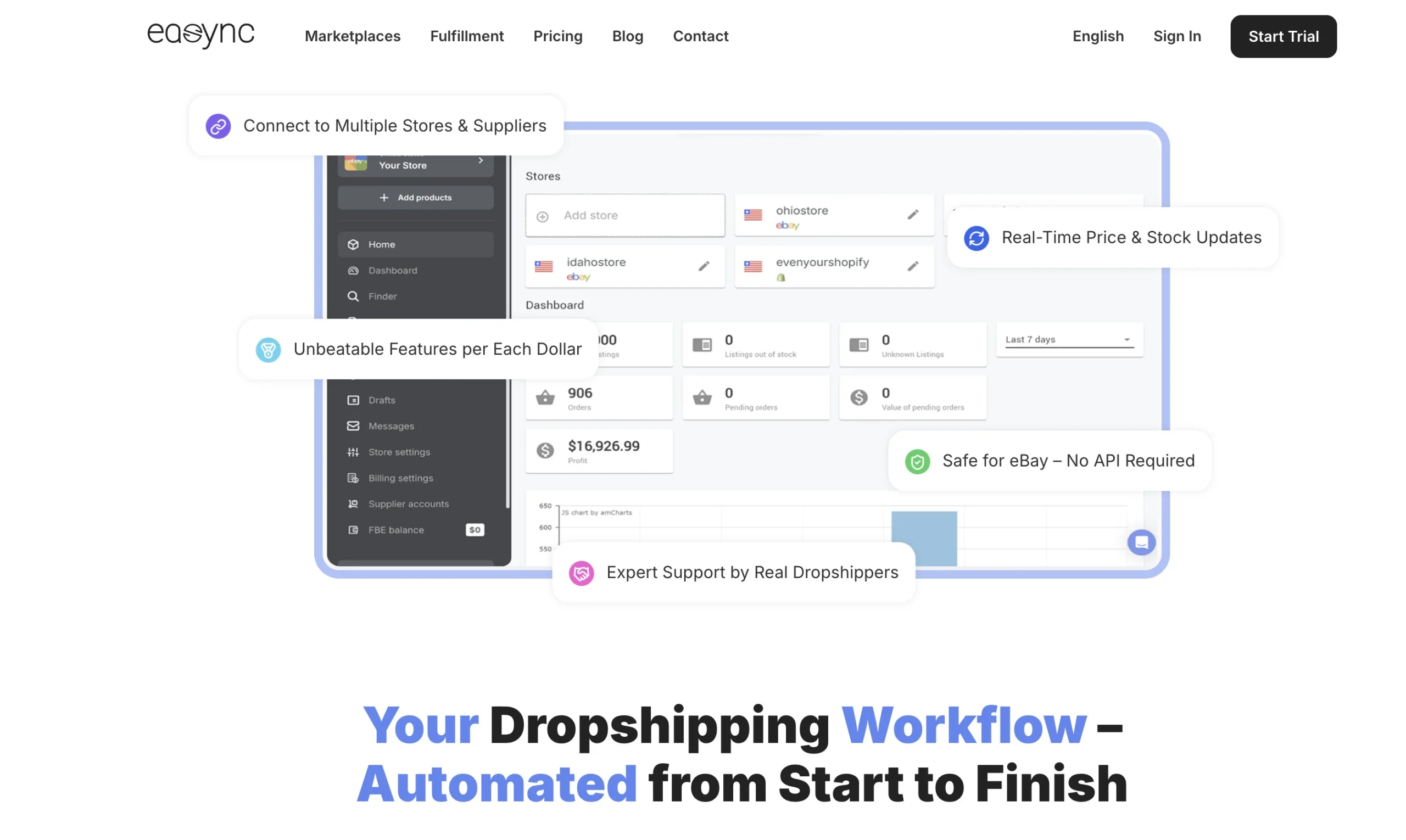
Easync works on this layer for sellers listing on eBay US, eBay CA, eBay UK and Shopify, with Amazon, Walmart, AliExpress and other supported stores as source markets. It covers repricing, Auto Ordering, item monitoring, tracking upload with Aquiline conversion, and a Finder tool for sourcing. The Amazon to eBay route is the most common setup among its users. Plans start at $49.99 a month, with current pricing scaling by listing and order volume, and Easync runs a 7-day free trial if you want to test the workflow before paying for it.
Whichever platform you pick, compare it against the alternatives on the criteria that actually bite: which source markets it supports, how quickly tracking reaches the buyer, and what happens to a listing when the source goes out of stock. We compared the main options in our roundup of dropshipping automation tools.
Frequently asked questions
What can I buy cheap and sell high?
Small accessories with no anchor price in the buyer’s mind. Phone accessories, hair accessories, fashion jewellery and beauty tools all land under $8 a unit at volume and support retail prices several times higher, because customers price them on how they look and what they promise rather than on materials. Anything with a well-known retail price, such as branded electronics, does the opposite.
Where can I buy cheap products to sell?
Domestic closeout distributors such as Kole Imports for fast case-level restocking, Alibaba for the lowest per-unit factory pricing, Faire for branded and boutique inventory with low first-order risk, and clearance aisles at Walmart or your nearest outlet chain when you are testing on a small budget. Most sellers combine a domestic source for speed with an overseas one for cost.
What are the best things to buy cheap and sell high on eBay?
Discontinued and hard-to-find items outperform new commodity goods on eBay specifically, because the platform’s buyers arrive with a model number in mind. Replacement parts for products that are no longer made, out-of-production accessories and vintage kitchenware all sell well there. Check completed and sold listings rather than active ones, since active listings only tell you what sellers hoped to get.
What are the best items to buy in bulk and resell?
Anything that ships flat, survives being dropped and does not come in sizes. Phone accessories, hair accessories, cleaning cloths, kitchen gadgets and stationery all meet that test and all reach useful price breaks at a few hundred units, which is within reach of a first order. Avoid bulk-buying anything seasonal until you have sold through a full cycle at small scale, because a case that misses its window costs you a year.
Do I need a licence to buy wholesale products for resale?
In the US, most wholesalers will ask for a resale certificate or seller’s permit before opening an account, which is issued at state level and also lets you buy without paying sales tax on inventory you intend to resell. Requirements differ by state and by country, and casual selling on consumer marketplaces often falls outside them. Check your own state’s revenue department rather than relying on a general guide.
How much money do I need to start reselling?
Enough for one case of one product plus samples, which for most accessory categories means a few hundred dollars. Spending more at the start rarely helps, because your first order is really an experiment in whether your listing converts. A large opening budget mostly buys you a more expensive version of the same lesson.
Is buying cheap wholesale products still profitable in 2026?
Yes, with tighter margins than five years ago. Marketplace fees, freight and advertising have all risen, so the model now depends on disciplined landed-cost maths in a way it did not when traffic was cheap. Sellers who bundle, negotiate at reorder volume and keep returns low still do well. Those who list a single item at a thin markup and hope for organic traffic mostly do not.
Should I buy from overseas or domestic suppliers?
Overseas for cost, domestic for speed. A factory in Asia will beat a US distributor on unit price by a wide margin at real volume, though lead times run in weeks and a quality problem takes another shipping cycle to fix. Domestic wholesalers cost more per unit and let you restock a bestseller in three days. Running one of each, and moving volume to the cheaper source only once a product has proven itself, is the arrangement most established sellers end up with.

Noah Edis is a freelance writer and systems engineer with a wealth of experience in modern hardware and software. When he’s not working on his latest project, you can find him playing competitive dodgeball or pursuing his personal interest in programming. At Easync, Noah helps thousands of sellers optimize their eBay and Amazon businesses by providing automation tools and practical guidance on account health, pricing, and inventory management.

Eugene Stepnov – Author
Eugene is a senior e-commerce strategist with over 10+ years of experience in dropshipping, online arbitrage, and marketplace compliance. At Easync. Eugene has experience in developing multi-account management technologies, such as Gologin and secure browser solutions, providing Easync users with a head start in regulatory compliance and platform changes.