
- articles
10 Best eBay Analytics & Research Tools in 2026
eBay analytics and research tools help sellers identify hot selling products, analyze demand, track competitors, and position their own listings to increase visibility and sales. Ecommerce is a highly data-driven market and these eBay analytics and research tools help sellers make sense of huge amounts of data by producing product trends, net sales, net profit, and other marketing and accounting insights.
On a platform like eBay, listing a collectible for $700 doesn’t mean it’s worth this much. It could fail to sell, or turn twofold profit so eBay product research is different from traditional ecom numbers. In this blog, I’ve reviewed ten eBay analytics and research tools and rated them based on how good they are at what they do, how helpful their insights are, and whether they are value for money.
What eBay Analytics and Research Tools Matter
eBay analytics tools help sellers answer some key questions for product research, listing, and positioning like:
- What is the sales trend in a specific category?
- What are competitors charging for the same products?
- Which products are outperforming the rest? What are they doing better?
- Average bidding period for a product before it is generally sold?
- What is my actual profit considering every expense?
- How much profit are competitors making on average?
eBay research tools help answer these questions through data-driven insights. Most of the third party tools I reviewed have spent years collecting seller data to provide proprietary insights. This is why eBay analytics tools matter.
When sellers are managing multiple products and storefronts, they need a quick overview of the performance. How did ads perform? How many organic clicks came from search? How effective is our keyword optimization? What is the click through rate for our ads? Which SKU is the most profitable out of all? Analytics tools take your account data, and calculate your real profits and costs by accounting for returns, extra costs, ad spend, and so on.
The Metrics I Would Require From an eBay Analytics Stack
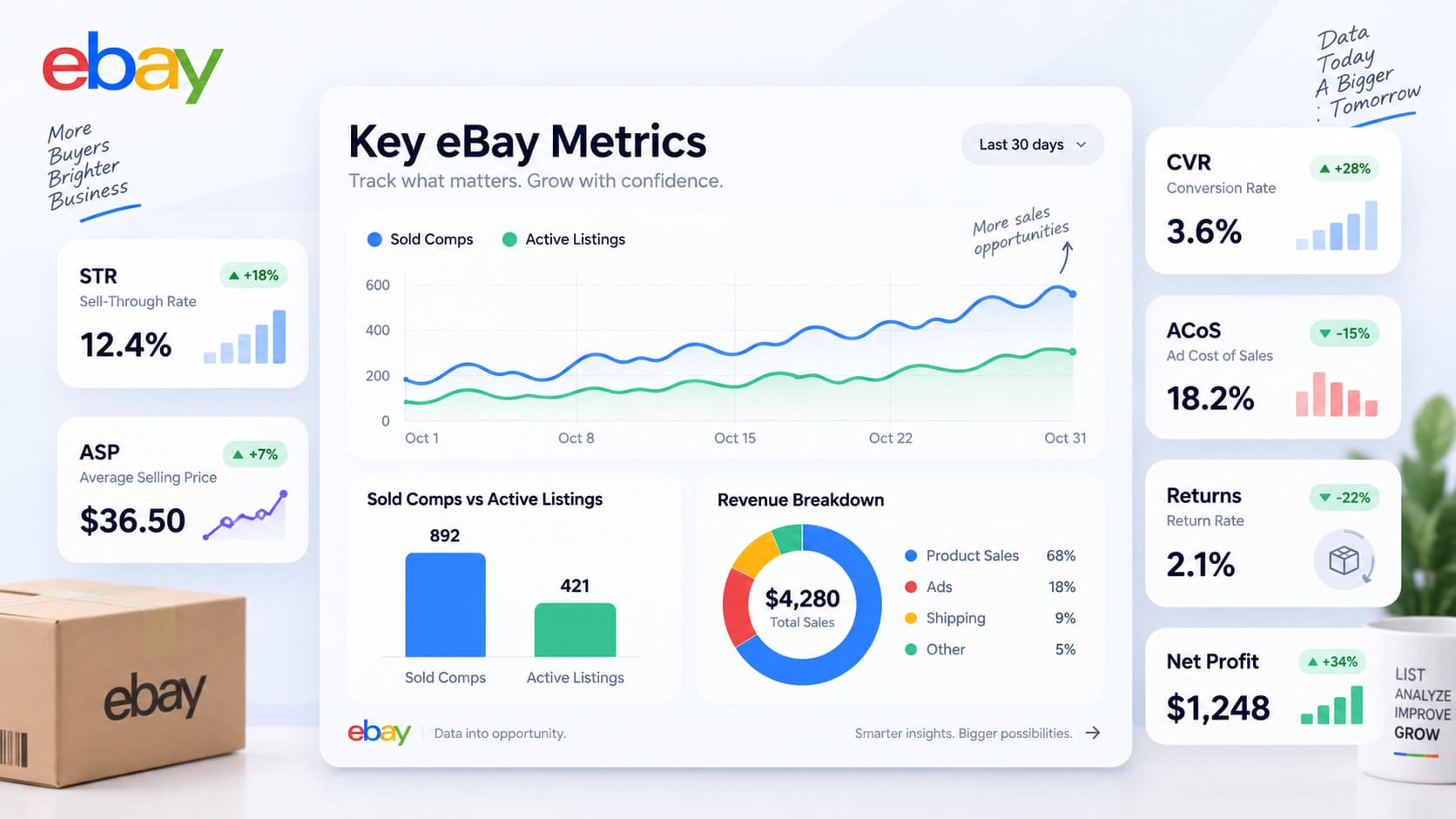
A third-party eBay seller analytics tool is only useful if the insights lead to better sourcing, pricing, and decision-making. After reading through countless reddit forums, and talking to eBay sellers, here are some key metrics I would check in any analytics or research tool I subscribe to.
Sell-Through Rate (STR)
Sell-through rate (STR) is the quickest way to measure a listing’s popularity. If hundreds of sellers are competing to sell similar products, and there are actual sales in recent times, it helps identify the sell through rate and calculate demand. Don’t just look at keywords and search volumes, check whether the visitors are buying anything or not.
STR is the quickest way to distill products and narrow down your research list. eBay’s own product research tool can give you the sell through rate by combining completed transaction data like listing price, average sold price, and seller competition, etc.
Average Selling Price (ASP)
The average selling price (ASP) decides the real value of the product and helps sellers figure out how much people are willing to pay for it and price their listings accordingly. On eBay, it doesn’t matter how much a seller lists for. What matters is how much the product actually sells for.
However, at the same time, a $100 average selling price can be misleading if we have different variants of the same product averaging 75$ or $60. Products with multiple variants have very misleading average prices so I prefer an eBay research tool that lets you narrow down results based on variants and other product identifiers.
Sold Comps vs. Active Listing Prices
Active listings metric helps me understand supply and competitors. eBay sold comps help understand the actual value, ASP and market demand of the product. These two metrics are core of eBay product research.
Active listing price of $200 tells you what sellers want, and a comparable price of $140 tells me what the buyer is actually willing to pay. This analysis helps me reprice my product to somewhere like $170 so I have a better chance of making the same $140 sale since my initial listing price seems more promising.
Impression-to-Click Ratio and Listing Conversion Rate
Targeting keywords is a great skill to organically reach more visitors. However, the impression-to-click ratio reveals how many visitors actually end up viewing the product. This stat provides insight about how compelling your price, title, and product images are. A great impression-to-click ratio means your listing is great. A lower number means there is room for improvement.
The next stage after click is conversion. Listing conversion rate (CVR) shows how many people actually bought after clicking. A lower CVR means your product page is not convincing enough. These two stats are much more actionable than looking at sales volume alone.
Advertising Attribution: ACoS and TACoS
ACoS and TACoS are extremely important metrics to analyze the true impact of ad spend on your profits. ACoS tells me how much a product costs me to sell through ads. TACoS tells me how heavily my entire business depends on paid promotion. TACoS also helps compare whether organic profits have grown down ever since we’ve started running ads, which means that ads are eating from organic sales. Instead of buying organically, users end up clicking the promoted ad listing and cost us money for no good reason.
- ACoS = attributable ad cost ÷ advertising-attributed revenue
- TACoS = total ad cost ÷ total store revenue
Return, Cancellation, and Refund Rate
A product can have excellent STR but still be a bad product due to high return rates and cancellations. Categories like clothing and electronics have higher return rates. High return rates can also expose listing problems such as inaccurate descriptions, missing compatibility information, misleading images, poor supplier quality, incorrect sizing data, or weak packaging.
If Product A sells 200 units at a 20% gross margin but generates a 14% return rate, the true profit margins are thin. Meanwhile, Product B sells only 130 units at the same margin with a 2% return rate so Product B might actually be more attractive.
True Net Profit and SKU-Level Gross Margin
Even the most sophisticated dashboards fail to report the true net profit. Revenue is not profit and true profit is not as simple as removing ad spend, shipping, and other obvious costs from revenue.
I want a dashboard to track everything from product margins, ad spends, and shipping costs to returns, cancellations, platform fees, other subscriptions, packaging costs, and any other small costs business incur. This gives me a much more realistic picture than gross sales.
Review: 10 Best eBay Analytics & Research Tools
1. eBay Product Research & Sourcing Insights
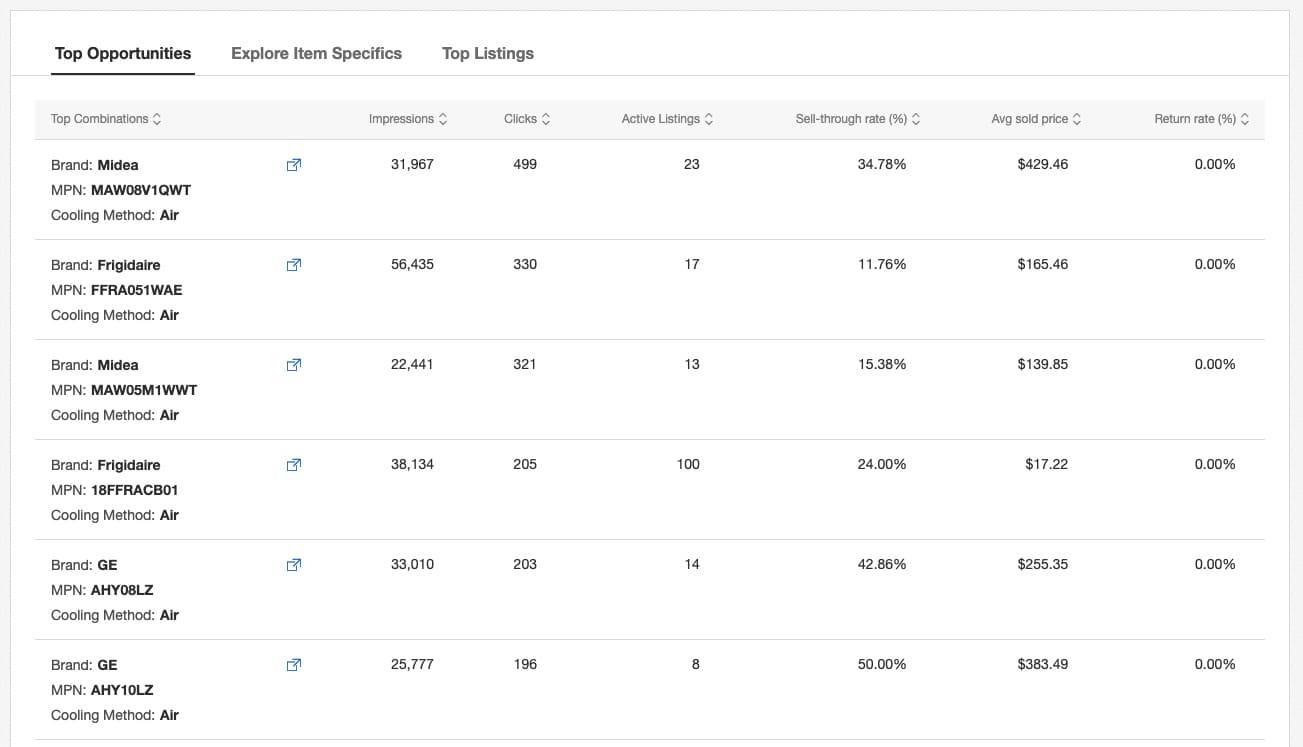
eBay Product Research tool is a native first-party tool integrated in Seller Hub to research keywords, demand, volume, ASP, sold-price ranges, and selling formats and STR.
eBay Product Research (formerly known as Terapeak) was a third-party software later acquired by eBay and integrated. This free tool is an excellent starting point for small businesses if they don’t want to pay another monthly subscription.
Product Research tool offers up to three years of marketplace sales accurate data. You can search a product or keyword, narrow by marketplace, condition, buyer/seller location and product identifiers, then inspect sales trends and ASP. Sourcing Insights goes a step further by identifying categories showing high demand and low inventory. However, this feature is only available for qualifying business sellers with a basic store or above.
2. ZIK Analytics: Best eBay Product Research and Competitor Scanner
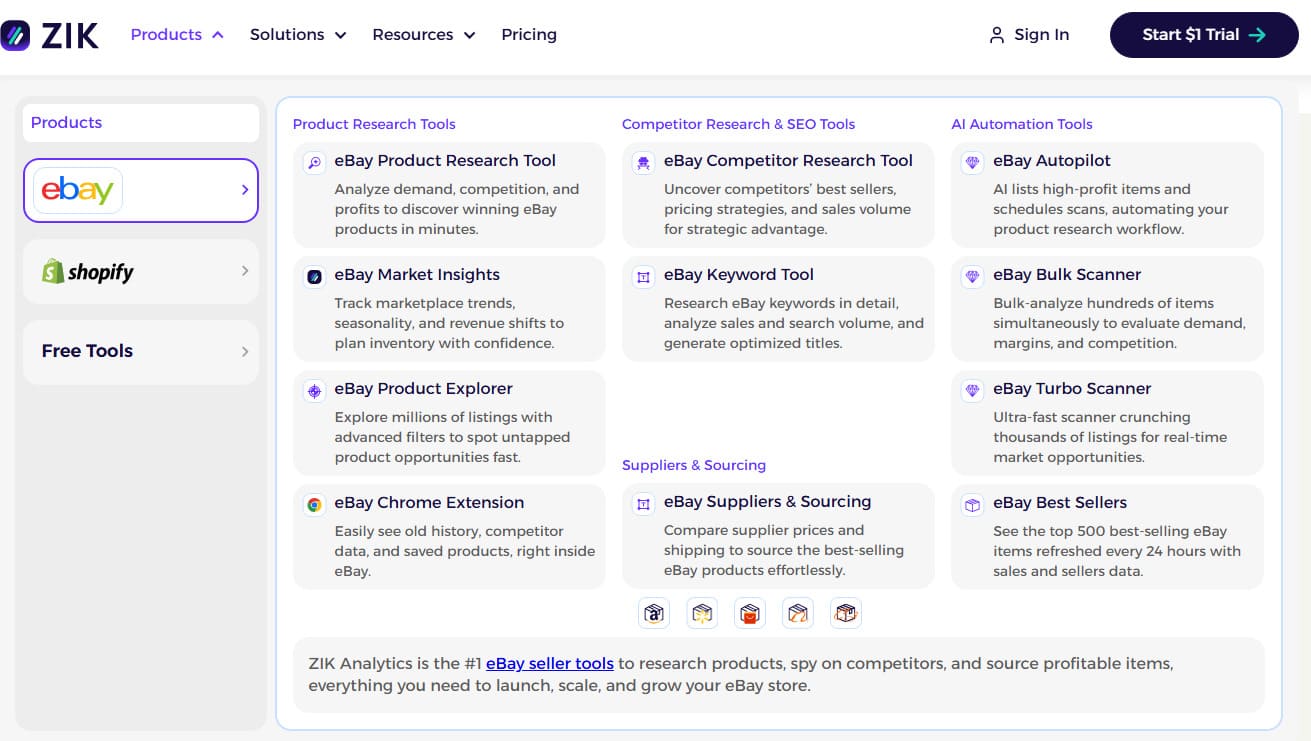
ZIK Analytics is an excellent competitor research tool for dropshippers and arbitrage sellers who need detailed insights on what competitors are doing, how much they are selling, and how they are doing it. ZIK Analytics offers both eBay and Shopify integrations but their eBay feature set is broader and more helpful.
ZIK’s whole eBay dashboard is designed around product and competitor research. It shows buyer search data, long-tail keyword ideas, title ideas, and volume, STR, market share, and active vs inactive listings. I can filter down a competitor, analyze his top selling SKUs, and get data on keywords and sales for specific SKUs to make better listing decisions for my shop.
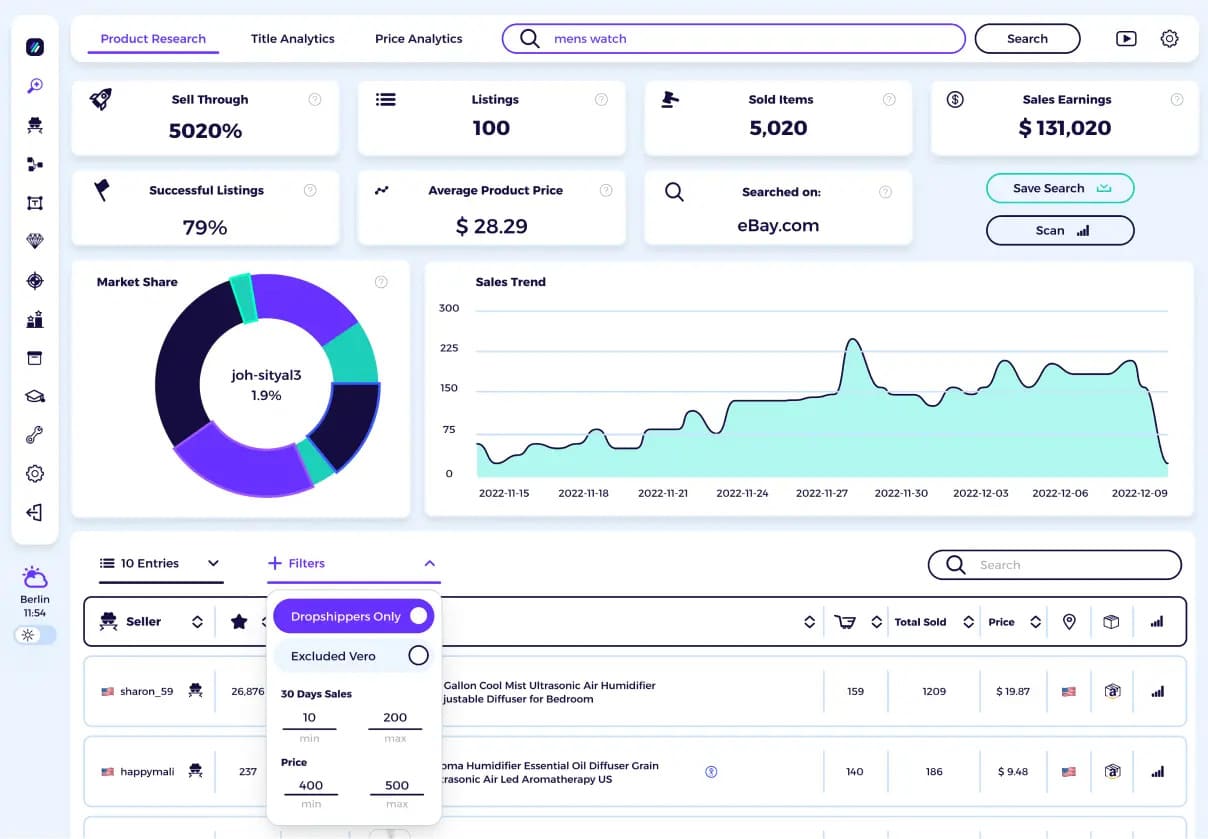
ZIK’s core offering is not its tool, it’s the years of data it has collected and built other tools on top of. With a Turbo Scanner, ZIK scans thousands of listings on eBay marketplace to give you product opportunities. It then combines this data and suggests suppliers and sourcing from third-party platforms like AliExpress and Amazon.
Currently, ZIK’s pricing page shows a 50% discount (which could just be a marketing label) so I would treat their discounted price as the source. After $1 free trial, you pay $19.99 for Pro plan which gives you basic competitor and product research tools. Their Pro+ plan is priced at $29.9 and includes scanner and autopilot automations.
ZIK Analytics is an affordable eBay research tool so many people use it side-by-side with eBay’s own research and insight tools.
3. Easync.io: Best for Multi-Channel Automations and Auto-Fulfillment
Easync is an auto-fulfillment tool to help source eBay products, manage inventory analytics, profit margins, and auto-fulfill orders. I view Easync as a dropshipping automation software for eBay sellers who want sourcing from Amazon, Walmart, AliExpress, etc.
If you want to dropship Amazon or AliExpress products on eBay, Easync is the best tool to help you automate that. You connect an eBay account to Easync and the platform takes care of the rest. You paste the product links you want to dropship and Easync fetches their titles, descriptions, images, and pricing and automatically lists it on eBay for a small profit.
You can configure profit percentage for each product so Easync reprices it accordingly. The best part about Easync is that if a product price changes on Amazon or AliExpress, Easync instantly reprices your listing and protects profit margins. If a product goes out of stock, Easync unpublished it from your eBay store.
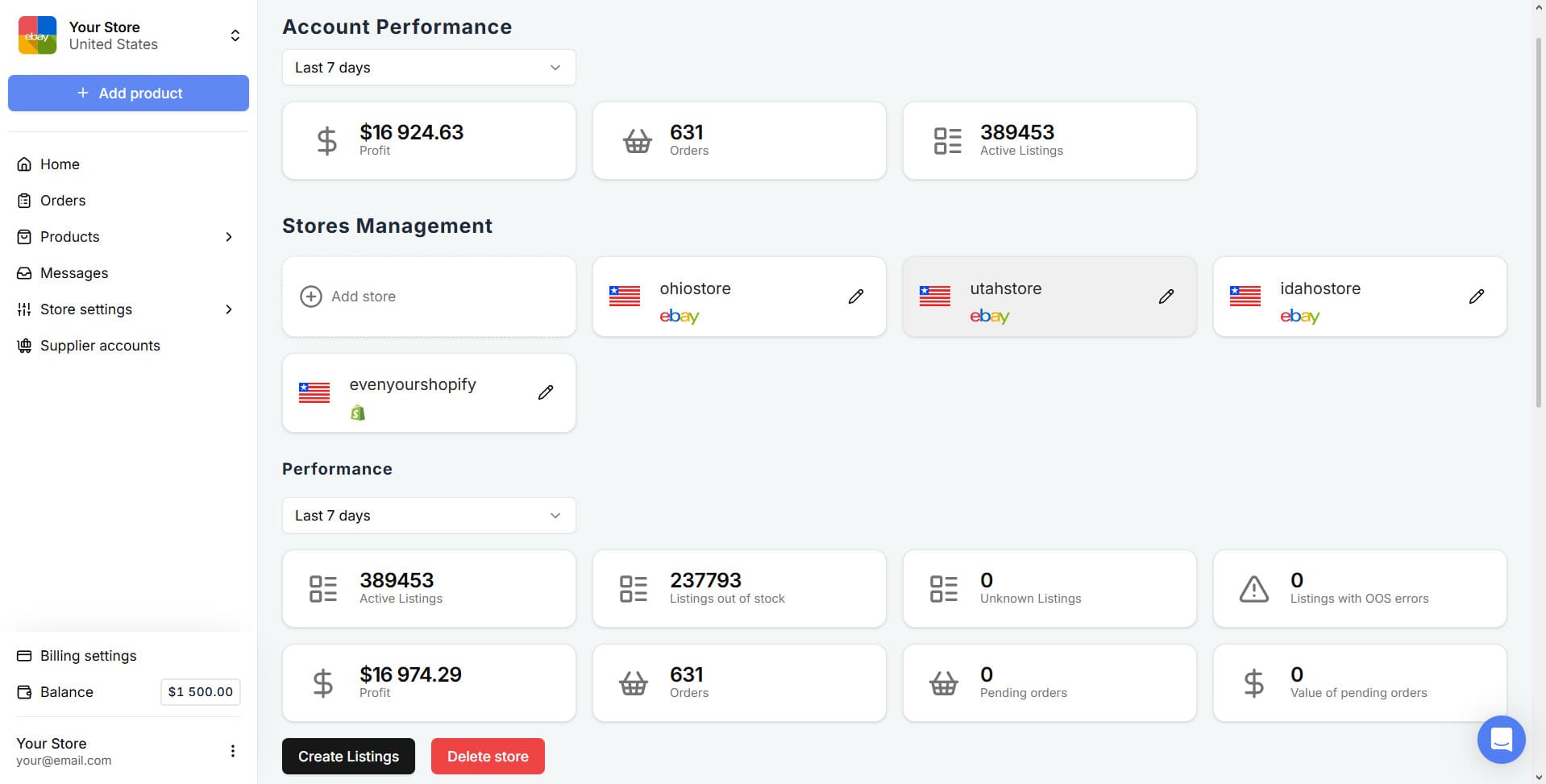
Easync offers FBE (fulfillment by Easync) which automatically fulfills the order on your behalf without needing manual approval. When you’re managing hundreds of orders, approving and paying for every order can consume hours. Easync automatically places the order for you and instantly syncs the tracking ID and other information back to the user. This auto-fulfillment feature saves hours of manual time.
Apart from being operational copilot, Easync provides profit, sales, and growth analytics for products sold through the platform. Pricing currently starts at $49.99/mo after a 7-day free trial. There is no limit on products and you get 2000 repricing listings (how many times Easync will automatically adjust your product’s price) and 200 automatic orders. Higher limits are available on bigger plans.
4. WatchCount: Best for eBay Sold Comps and Buyer-Interest Research
WatchCount is an interesting pick for me because it approaches product research from a different perspective unlike heavyweight tools like ZIK Analytics. It answers basic questions like which listings are attractive and what products are being sold the fastest?
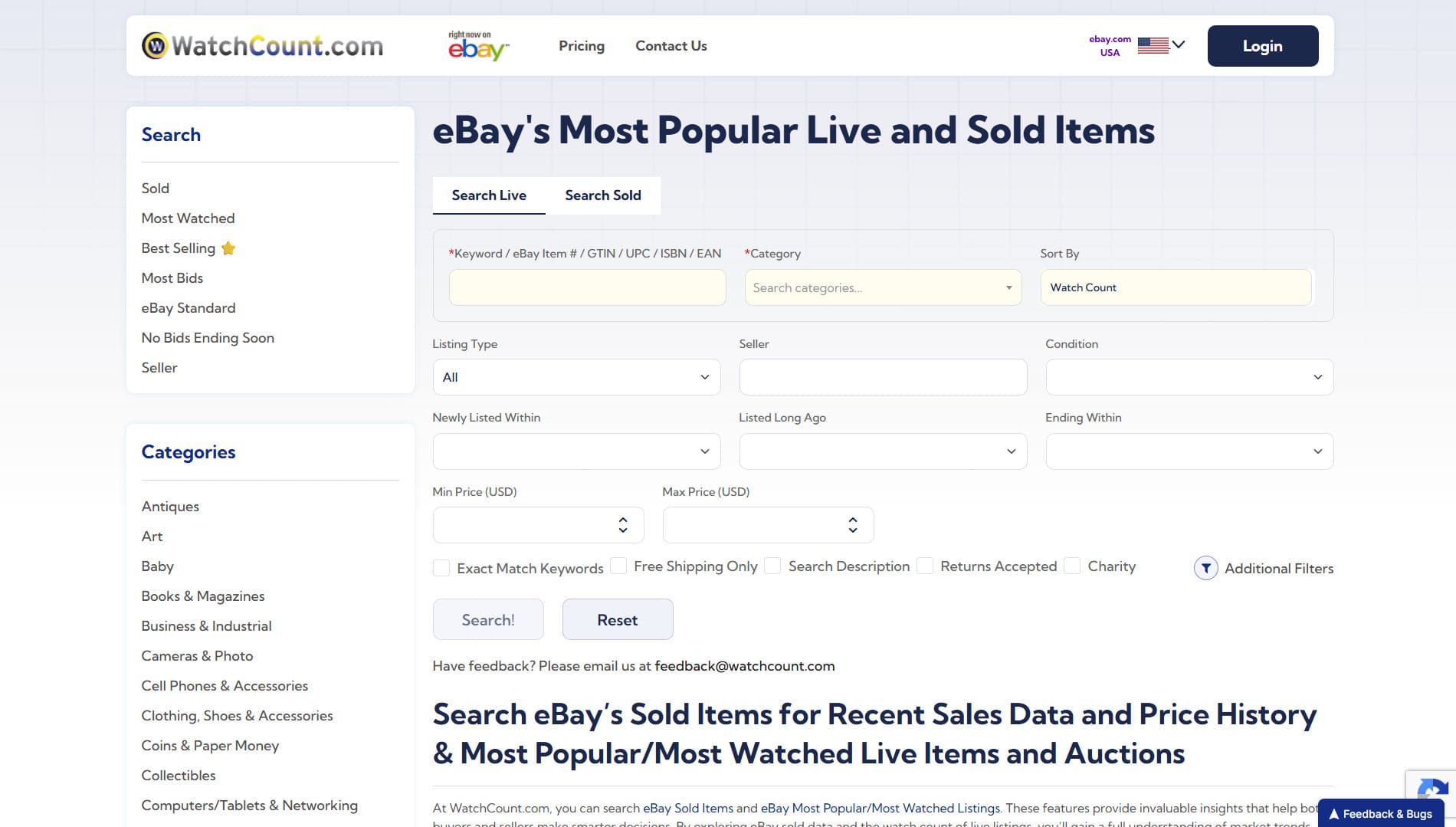
I can enter a keyword or eBay item number and see live and sold listings, filter by category and condition, compare prices, bids, listing age, and other variables. I like being able to analyze a specific competitor’s performance. WatchCount’s core feature is its Most Watched search which ranks active eBay listings by watcher count and provides a demand signal. WatchCount provides other analytics like estimated sales velocity, sales duration, and other important metrics to form a complete picture of what’s happening in the market.
WatchCount’s beta Best Selling Search feature allows you to sell listings by total units sold along with seller research, category filtering and data export for LLMs. However, WatchCount is a research tool, not an analytics dashboard.
WatchCount’s free plan is generous enough with 50 searches a day, and 3 months of historical data. The Starter plan at $19.99 provides 15 months of historical data and 100 product searches a day. All the features are available in free and paid plans with higher limits as you pay more.
5. Algopix: eBay Product Research Tool
Algopix was primarily an Amazon research tool but now offers a complete suite of tools for eBay and Walmart under the same pricing plan. Algopix’s website is still heavily focused on Amazon but I got recommended by an eBay seller so I looked into it. Algopix provides all the basic eBay product research tools like product sales history, keyword research, competitor analysis, store analysis, and true net profit monitoring.
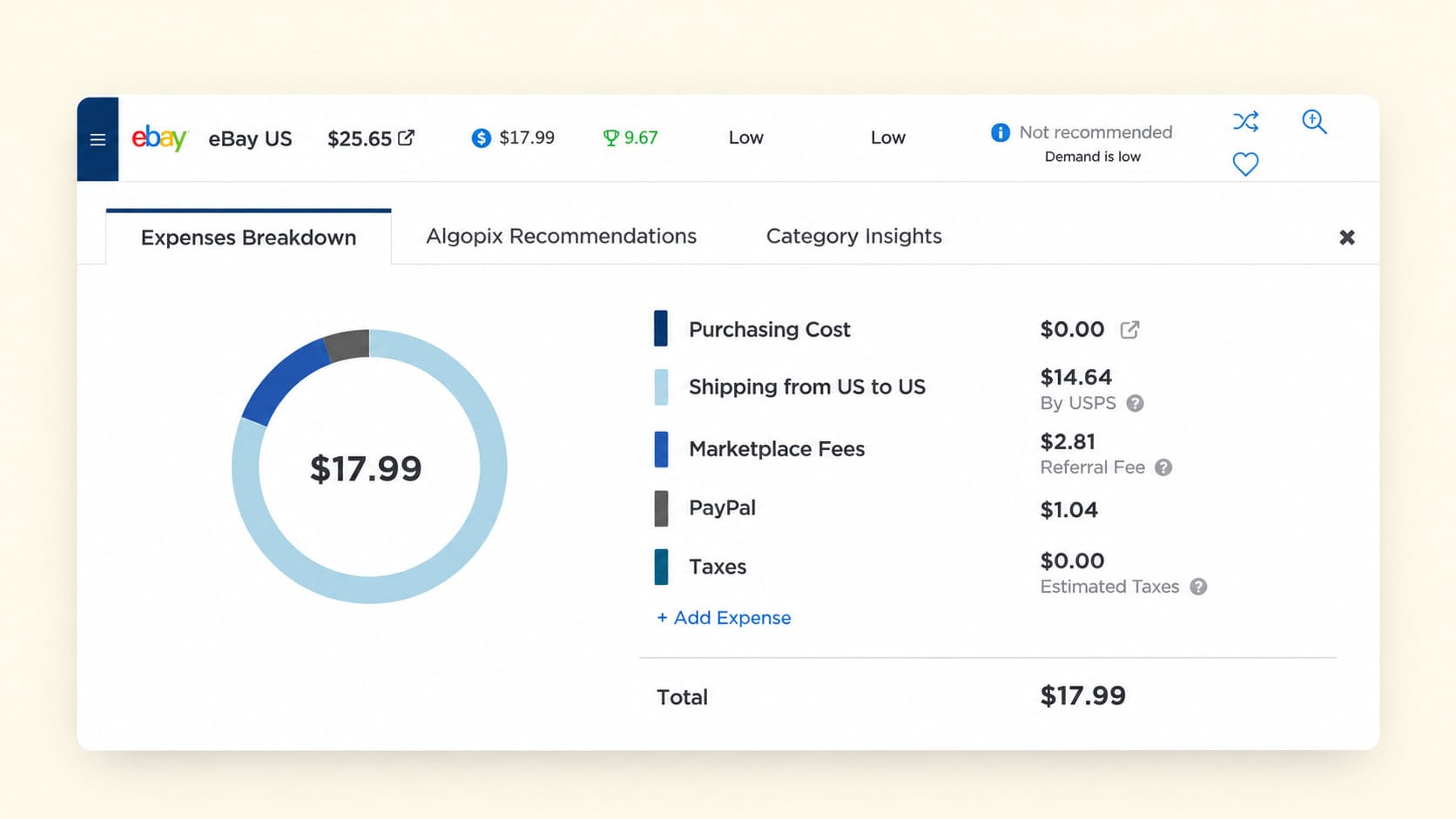
Algopix’s profit monitoring feature tracks several eBay fees like final value fees (FVF), subscriptions, taxes, PayPal costs, and ad spend taxes and costs to give you a more accurate picture of your profits. What I liked about Algopix is that you have access to multiple platforms and can research which product would sell better on which platform. You might find a good product on Amazon that has a great market on eBay. You can use Easync.io to list the product on your eBay store, and make profits.
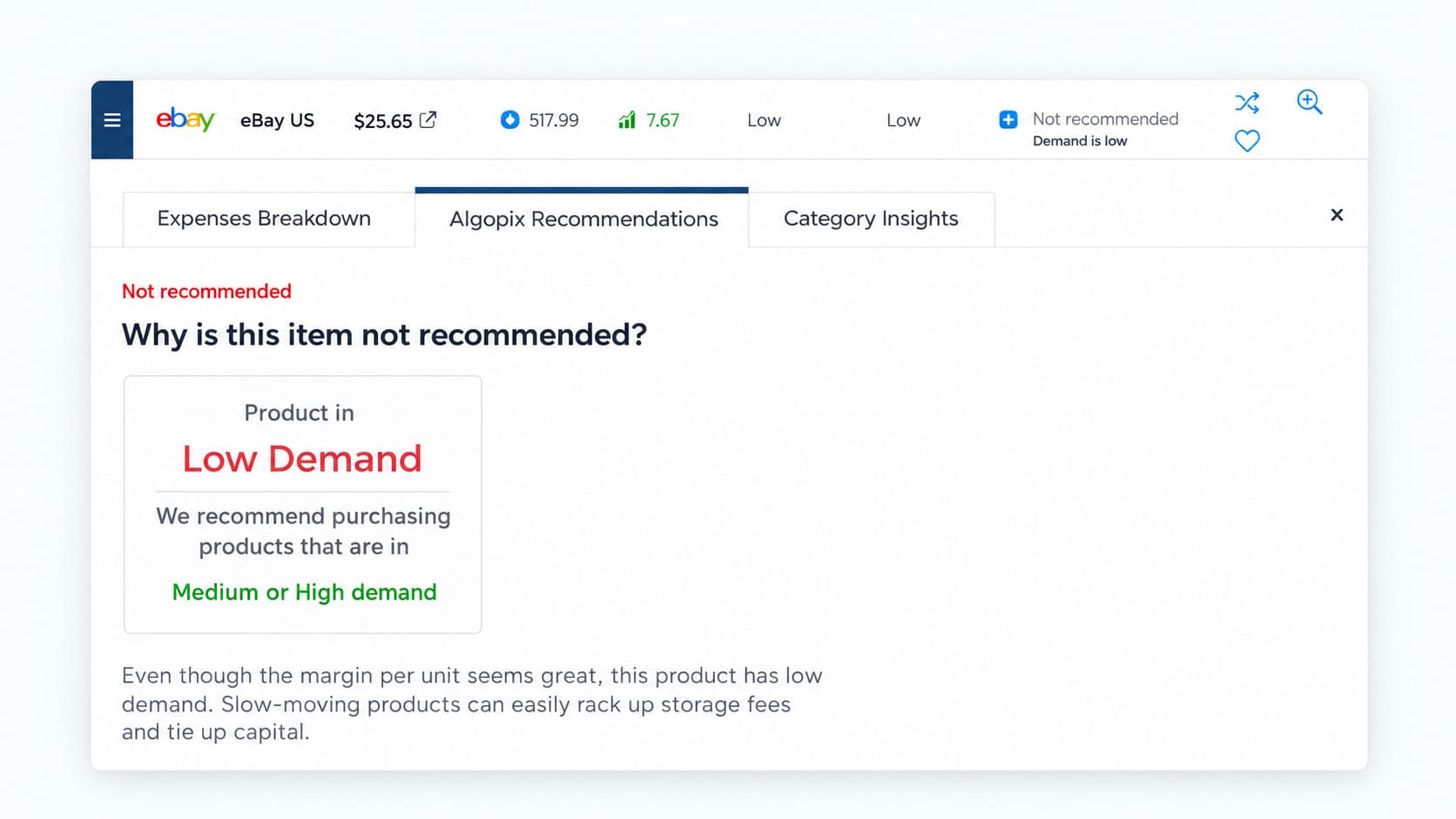
Algopix is not the ideal choice for eBay-only sellers. I liked and included it because it helps a seller research data from multiple platforms but has a niche audience. For specific eBay related research, ZIK analytics is a better option given that Algopix’s Beginner plan starts at $29/mo and does not include even 50% of the interesting features.
6. 3Dsellers: Best for eBay Store Management
3Dsellers feels less like a research tool and more like a dashboard for managing listings, editing bulk products, keeping tabs on inventory, and creating custom order workflows and reporting. 3Dsellers dashboard lets you monitor orders, inventory, bulk-edit, and manage your workflows with Zapier, Make etc. 3Dsellers is designed to improve store management, not find winning products or compare competitors.
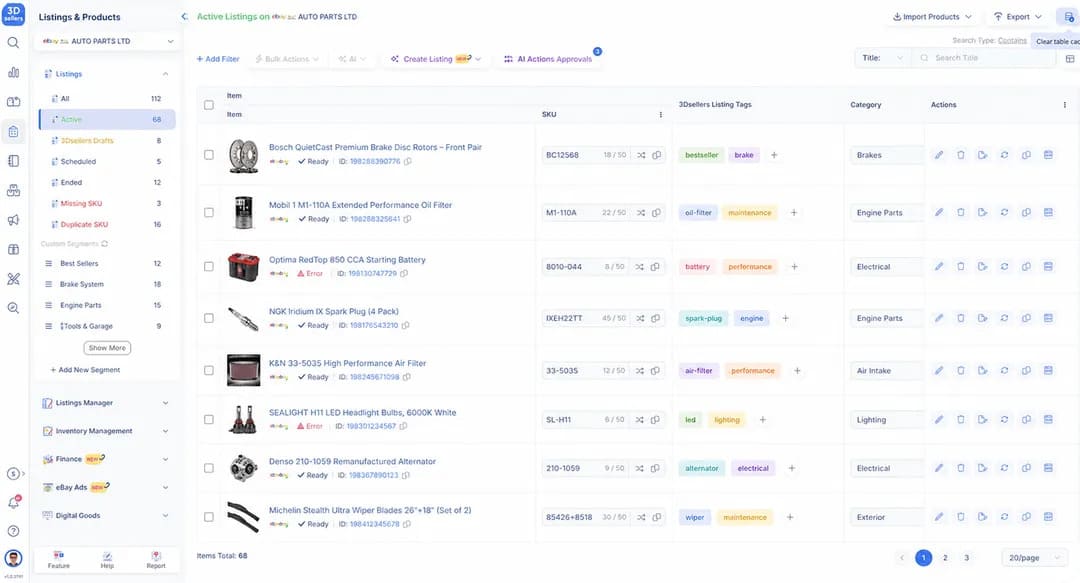
3Dsellers now has several integrations like Amazon, Shopify, Walmart, etc. You can sync your eBay products to other platforms and manage everything from one dashboard. However, in my experience, people don’t buy products from eBay to Amazon, its the other way around. Nonetheless, the pricing is competitive at $19/mo for 100 listings, and 1 eBay account and $39.99/mo for 2 eBay accounts and 500 product listings.
7. AutoDS: Dropshipping Product Discovery & Automation
AutoDS is a famous dropshipping tool for eBay, Amazon, and Shopify. It is a similar tool to Easync in this list but the core difference is product sourcing. In AutoDS, you source from AutoDS product catalog, list the product on eBay, and let AutoDS manage inventory, shipping, and tracking.
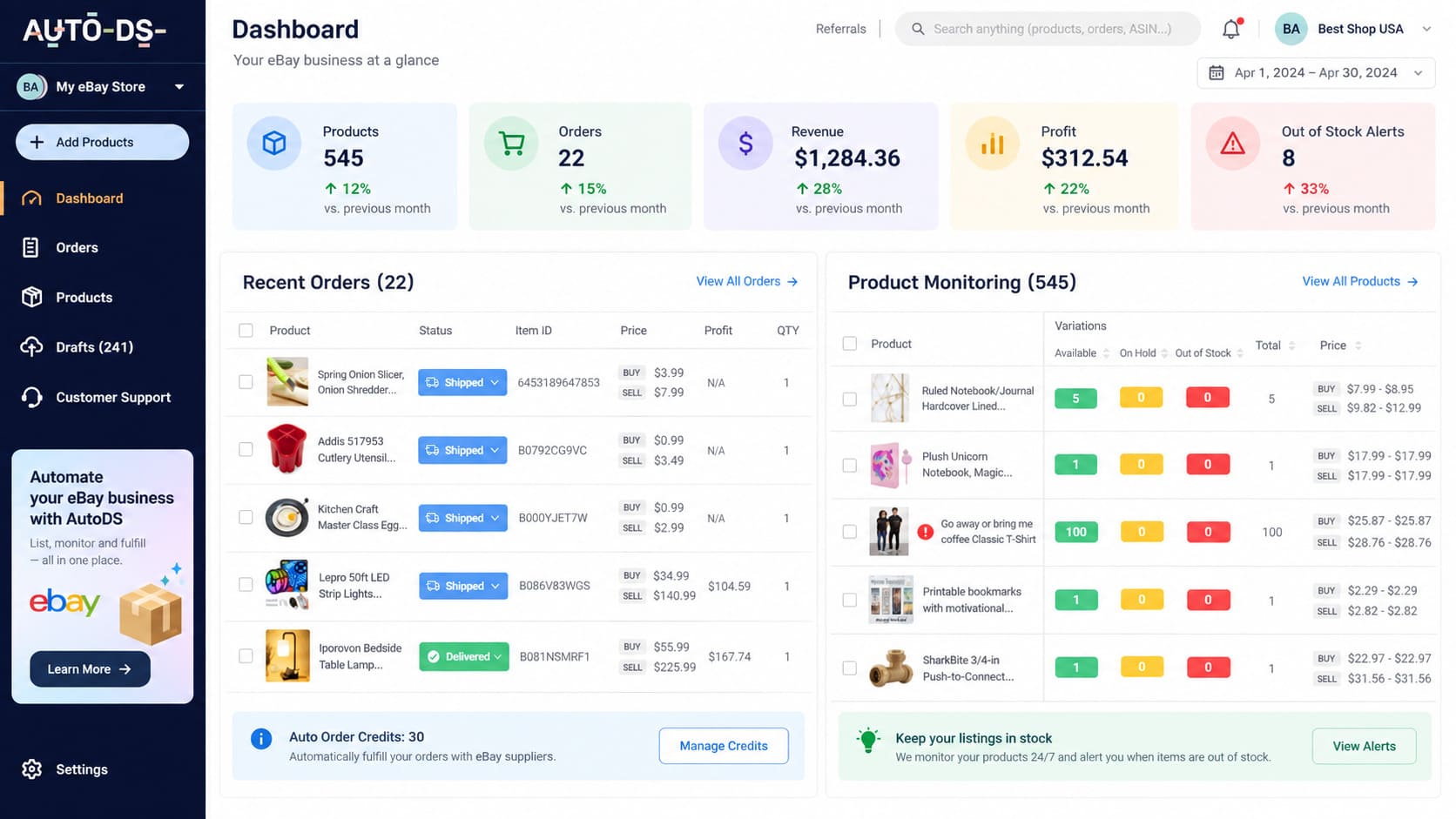
AutoDS and Easync overlap on their automation features. Both platforms auto-fulfill orders, help with 1-click product listing, automatic product update if the stock or price changes, etc. AutoDS has millions of products in its catalog while Easync lets you source from Amazon and AliExpress which result in faster shipping based on your location. Both are great platforms and your decision depends on whether you want to source from Amazon, Walmart or AiExpress, or use AutoDS’s own catalog. Returns, and quality claims are handled directly by AutoDS and users sometimes complain about subpar product quality or delivery.
Import 200 plan starts at $26.9/mo for 200 products but lacks some automation features, while Starter 400 starts at $49.9/mo and includes those missing features and 400 products.
8. WorthPoint: Best for Historical Sold Comps, Vintage & Collectibles
WorthPoint is not a traditional analytics dashboard, but an important research tool for vintage products that most tools have nothing on. When you’re selling something unusual like an antique, or a collectible, it is hard to figure out the right price people will pay for it. Most research tools are designed to profile your competitors and categories. WorthPoint is created to explore deep into archives of historical data, and see whether something similar was sold on eBay and for how much.
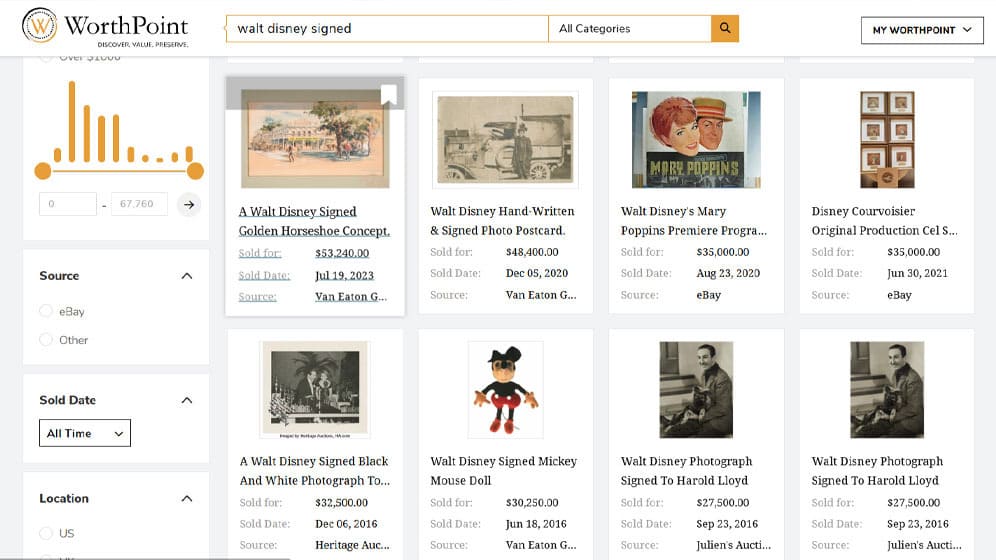
The interface is built more like a searchable research database than a modern seller-operations platform. I can search for an item, review historical sale records, compare similar products, and use that information to estimate value more confidently before listing. That makes WorthPoint especially helpful for sellers dealing in categories where condition, rarity, and historical demand matter more than fast-moving SKU analytics.
However, the cheapest plan starts at $28.99/mo so if you flip antiques and collectibles for a hobby, having a WorthPoint subscription can be worth it.
9. Nifty.ai: Best for Multi-Marketplace Reseller Cross Listing and Profit Tracking
Not everyone is selling a huge inventory of the same thing. Some people are flipping single items on eBay and Poshmark. They find a good deal, negotiate, relist on multiple platforms, and quickly remove the listing once a sale comes in from any source. This whole process is time consuming and sellers have to deal with multiple orders coming in when they only have one product to sell. To avoid this, and automate these operations, Nifty AI is a great tool.
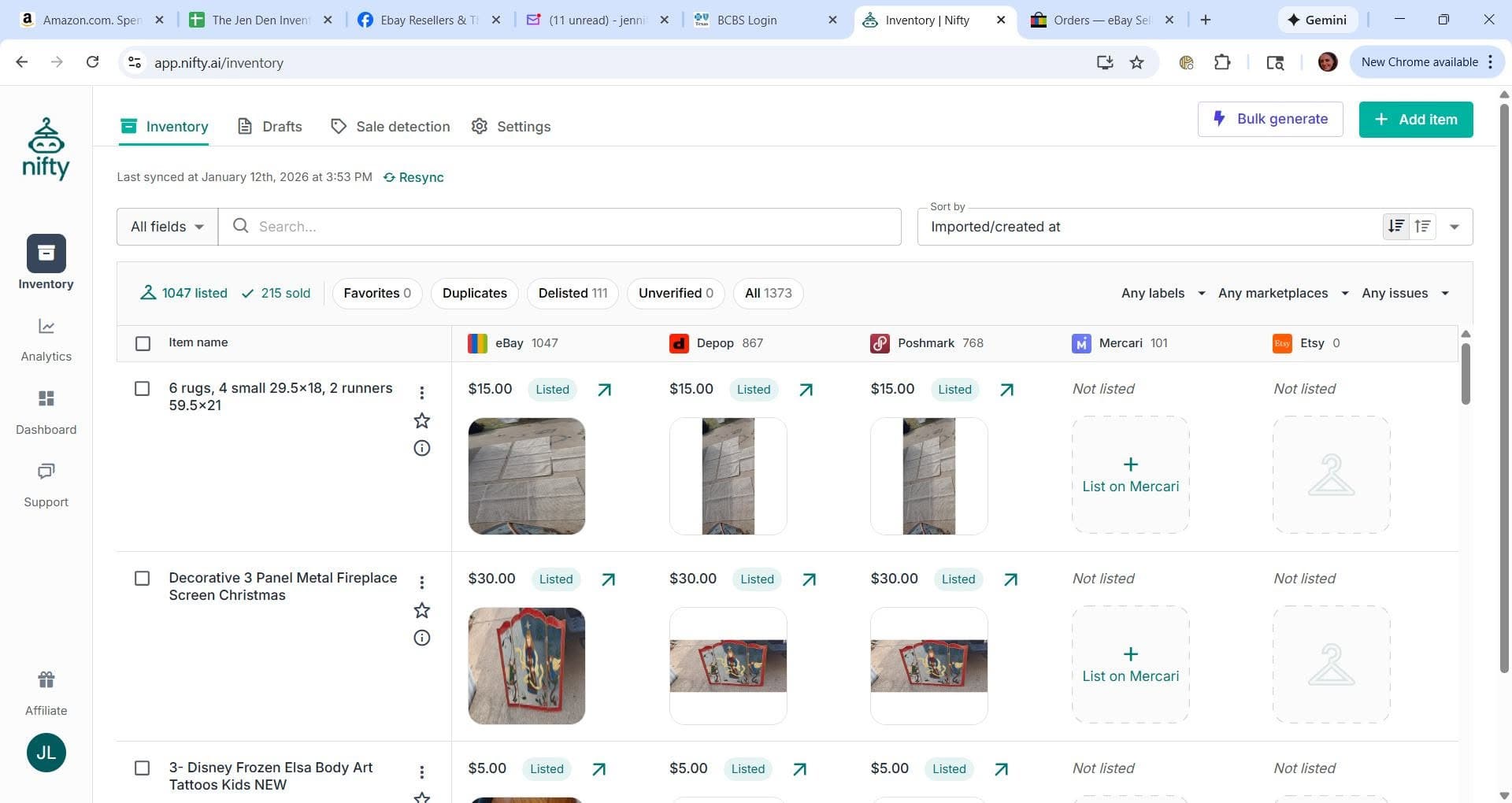
The current product provides an inventory manager, AI listing generator, cross listing, automatic delisting after a sale and analytics. Nifty tracks sales, expenses, and profits. It connects multiple platforms including eBay, crosslist products everywhere, and delist from everywhere as soon as a sale arrives.
You can create custom automations that get triggered when a sale is made, or when an offer arrives on eBay etc. You can also export your sales reports that include detailed financial data and tax compliant records. At $39.99/mo, you get automation features for all supported marketplaces (or $25 for eBay only). Cross Listing features come in at $69.99/mo plan which makes Nifty one of the most expensive tools in the list.
10. Synder: Best for eBay Accounting and Financial Analytics
Synder is a true accountancy tool for eBay. Although eBay’s Seller Hub tells you how much you earned, those stats are not exactly true profit. eBay does not include small fees it charges you, or other expenses like ad spend. You can take eBay’s report and calculate real numbers but that will take some of your time and manual understanding. Otherwise, Synder is the right tool to integrate.
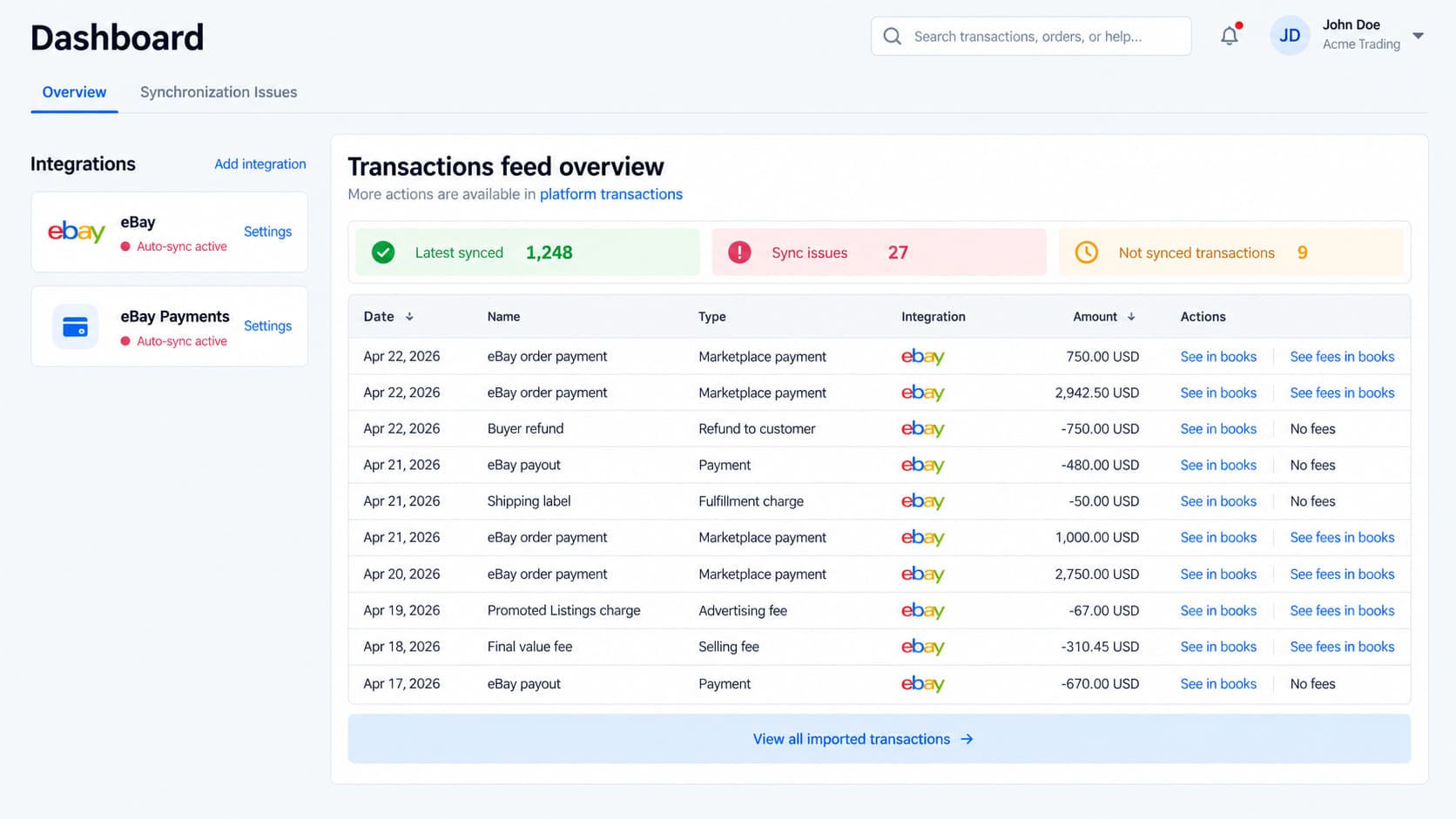
For eBay, Synder can synchronize orders, refunds and deposits into accounting systems and break payouts into underlying sales, fees, shipping and marketplace-tax activity. Its reconciliation workflow uses clearing accounts so gross activity and deductions can be recorded before the eventual net payout is matched to the bank. This is exactly the level of detail I want once payout reconciliation becomes a monthly close problem. Since Synder provides multiple integrations other than eBay, if you sell cross-platform, you can integrate everything into Synder.
Synder’s Basic is $65/month with all the accounting features and analytics you need. Pro plan can cost up to $299/mo and includes multiple seats, product mapping, and managers to help with workflow customization, onboarding, etc.
Comparison Table of Best eBay Analytics & Research Tools
| Tool Name | Primary Specialty | Key Research & Analytics Features | Automation Capabilities | Free Plan / Trial Availability |
|---|---|---|---|---|
| Terapeak (eBay) | Free native market research | 3-year sold comps, STR, Sourcing Insights | Basic Seller Central reports | 100% Free (Inside eBay Seller Hub) |
| ZIK Analytics | Product research & competitor scanning | Competitor store scanner, Title builder | Basic bulk listing exports | 7-day trial available |
| Easync.io | Operations, Analytics & Auto-Fulfillment | 24/7 Stock/Price Monitoring, Margin Tracking | Automated Repricing & Auto-Fulfillment | Start Trial available (7-day free trial) |
| WatchCount | Live & Sold Listing Research | Top 500 live listings, Supply/demand reports | Limited; primarily research and alerts rather than store automation | Free account available; higher usage limits require paid access |
| Algopix | Multi-channel market intelligence | Cross-channel demand score, Expense breakdown | Multi-product bulk analysis | Free trial available |
| 3Dsellers | eBay store analytics & customer CRM | Sales analytics, Feedback metrics, CRM | Auto-messages & buyer offers | Free trial available |
| AutoDS | Dropshipping research & inventory sync | Product finder, Trend analytics | Auto-ordering & stock sync | Paid plans with trial options |
| WorthPoint | Historical Price Research & Collectibles Valuation | Deep historical sold-price database, rare-item comps | None; focused on research and valuation | Paid subscription; no meaningful free analytics tier |
| Nifty.ai | Reseller crosslisting & profit tracking | Multi-channel profit reports, Fee breakdowns | AI crosslisting & auto-delisting | Free trial / Paid plans |
| Synder | Financial analytics & accounting | FVF fee extraction, Payout reconciliation | Automated QuickBooks/Xero sync | Free trial available |
Conclusion
Considering I am a profitable eBay seller, I would use multiple specialized tools for different purposes. I would start with eBay Product Research tool for basic analytics and early signals, and then use ZIK Analytics to explore further. For dropshipping and automations, Easync would be my go-to choice and I would love a true P&L tool to help with accounting analytics.
The right stack also depends heavily on the business model. Nifty makes more sense for one-off thrift, fashion, and resale inventory where crosslisting and auto-delisting matter while 3Dsellers would be better suited for eBay stores that need broader order, listing, CRM, and support workflows. The simplest rule is to start with Product Research to validate demand, ZIK to discover opportunities and then Easync to act on live supplier changes.
Frequently Asked Questions
What is the best free eBay analytics tool?
For most sellers, eBay Product Research tool is the best free tool to get information on demand, volume, sales, average selling price, STR, and shipping data. I would recommend getting a grip of this tool before moving to anything else.
Why are active listing prices misleading for eBay product research?
Active listings show what sellers are asking, not the actual worth of the product. The real value is the price the product is sold at. I would use sold comps to estimate real market value of a product and position mine accordingly.
How does Easync differ from standard eBay research tools?
Easync is an order automation tool for eBay, not a research tool. While tools like ZIK Analytics help identify demand, Easync helps source products from AliExpress, Amazon and Walmart to eBay, resell for a profit, manage orders, and other operational tasks.
Which metrics matter most when comparing eBay seller analysis tools?
I would prioritize sell-through rate, average selling price, sold comps, SKU-level margin, and conversion rate. For larger businesses, I would also track ad attribution, return rates, stockouts, supplier price changes, and payout reconciliation.
What is a good sell-through rate on eBay?
There is no universal benchmark because sell-through varies heavily by category, price point, seasonality, and time period.. A rising STR combined with stable or falling competition is usually a stronger sourcing signal than STR alone. I prefer comparing STR against similar products within the same niche and dataset rather than using one fixed percentage
Do I need more than one eBay analytics tool?
Usually, yes. You need a tool for product research, competitors analysis, your own P&L tracking, accounting, inventory management, order fulfillment, product listing and delisting etc. Most tools focus on one specific task so you need more than one tool like eBay Product Research, ZIK Analytics, Easync and Synder.