
- articles
Tea Dropshipping in 2026: Suppliers, Costs & Profit
Quick answer: Tea dropshipping means listing tea from a supplier who packs and ships every order straight to your buyer, so you never hold stock yourself. It suits beginners because tea is light, shelf-stable and repeat-purchased, and it fails most often on three things: suppliers who are not really no-stock, food labelling rules that apply to you anyway, and import duty that no longer disappears on small parcels.
Key takeaways
- Tea is one of the cheapest categories to ship and one of the easiest to bundle, which is why so many new tea dropshippers start here.
- Plenty of suppliers marketed as “private label tea dropshipping” ask you to buy branded stock up front. Read the minimums before you build a brand around one.
- The $800 US de minimis exemption is gone. Cheap overseas parcels now carry duty and a customs entry, and that changes which suppliers make sense.
- US demand is wide and slow-moving. Tea sits in more than 80% of US households, with around 160 million Americans drinking it on any given day, so the opportunity is in positioning, not in discovering an untapped market.
- Food labelling is where beginners get caught. Ingredient lists, allergen declarations and health claims all apply to you, whoever did the packing.
- Profit comes from the second and third order. A single tin rarely covers the cost of the ad that sold it.
Is tea dropshipping worth it in 2026?
Tea is a genuinely large, genuinely boring market, and that combination is good news for a small seller. World production reached 6.7 million tonnes in 2022 after a decade of growth averaging 3.2% a year, according to the FAO’s intergovernmental tea report, which also puts the United States third among importing countries behind Pakistan and the Russian Federation. Nothing about that is a trend that might evaporate next quarter.
Domestic numbers say the same thing. The Tea Association of the USA Fact Sheet, whose 2024 edition is the most recent published, reports tea in over 80% of American households, roughly 160 million people drinking it daily, and close to 86 billion servings consumed in a year, of which about 86% was black tea. The US Census Bureau quotes the same association data in its own hot tea briefing. Longer-term wholesale tea sales in the United States have climbed steadily, with no sudden spike.
Read those figures carefully before you build a business plan on them. Black tea dominating consumption means most volume sits in commodity products that supermarkets already sell at a price you cannot match. A supermarket handles single-origin leaf badly, and functional blends, ceremonial matcha and gift sets no better. Those slices are where a small online seller makes money. Go and read what makes a product worth dropshipping at all if you are still choosing between categories.
The margin problem nobody mentions
A 50 gram pouch of tea might cost you three dollars and sell for twelve. That looks excellent until shipping enters the calculation. Sending one small parcel across a country frequently costs more than the tea inside it, and the customer who happily pays twelve dollars for tea will abandon the cart over a seven dollar delivery fee.
Every successful tea store solves this the same way, by raising the size of the order. Sampler packs, three-for-two bundles, tea plus an infuser, subscription boxes. If your average order is one pouch, the business will not survive paid traffic, whatever the percentage margin says. People who have run the numbers on what dropshipping actually pays tend to arrive at the same conclusion from a different direction.
Where to source: seven tea dropshipping suppliers compared
Supplier lists in this niche mix two very different things. Some partners will ship one unit at a time with no commitment. Others call their service dropshipping but require you to pay for a production run first, after which they warehouse and dispatch it for you. Both are legitimate. Only the first lets you test a product without spending money, and confusing them is the most expensive mistake new tea dropshippers make.
| Supplier | Model | Minimum to start | Ships from | Best for |
|---|---|---|---|---|
| AliExpress | True no-stock dropshipping | None | Mostly China | Testing demand before you commit |
| CJdropshipping | No-stock, with custom packaging service | From a single unit on custom packs | China plus overseas warehouses | Branded packaging at low volume |
| Spocket | Subscription marketplace, no-stock | $39.99 per month on Starter | US and EU suppliers | Shorter delivery times at home |
| Bondi Beach Tea Co | Private label, stock paid for up front | 42 pouches per loose-leaf blend | Sydney, plus agreed fulfilment sites | Launching an organic own-brand range |
| Art of Tea | Wholesale and private label | $175 per wholesale order | Los Angeles | Premium US positioning |
| Empire Tea Services | Private label blending and packing | 16 tins per flavour, 96 in total | Indiana | Launching several flavours at once |
| Jenier World of Teas | Wholesale plus unbranded retail packs | None if you label and pack yourself | Glasgow | Building a brand for UK and EU buyers |
AliExpress
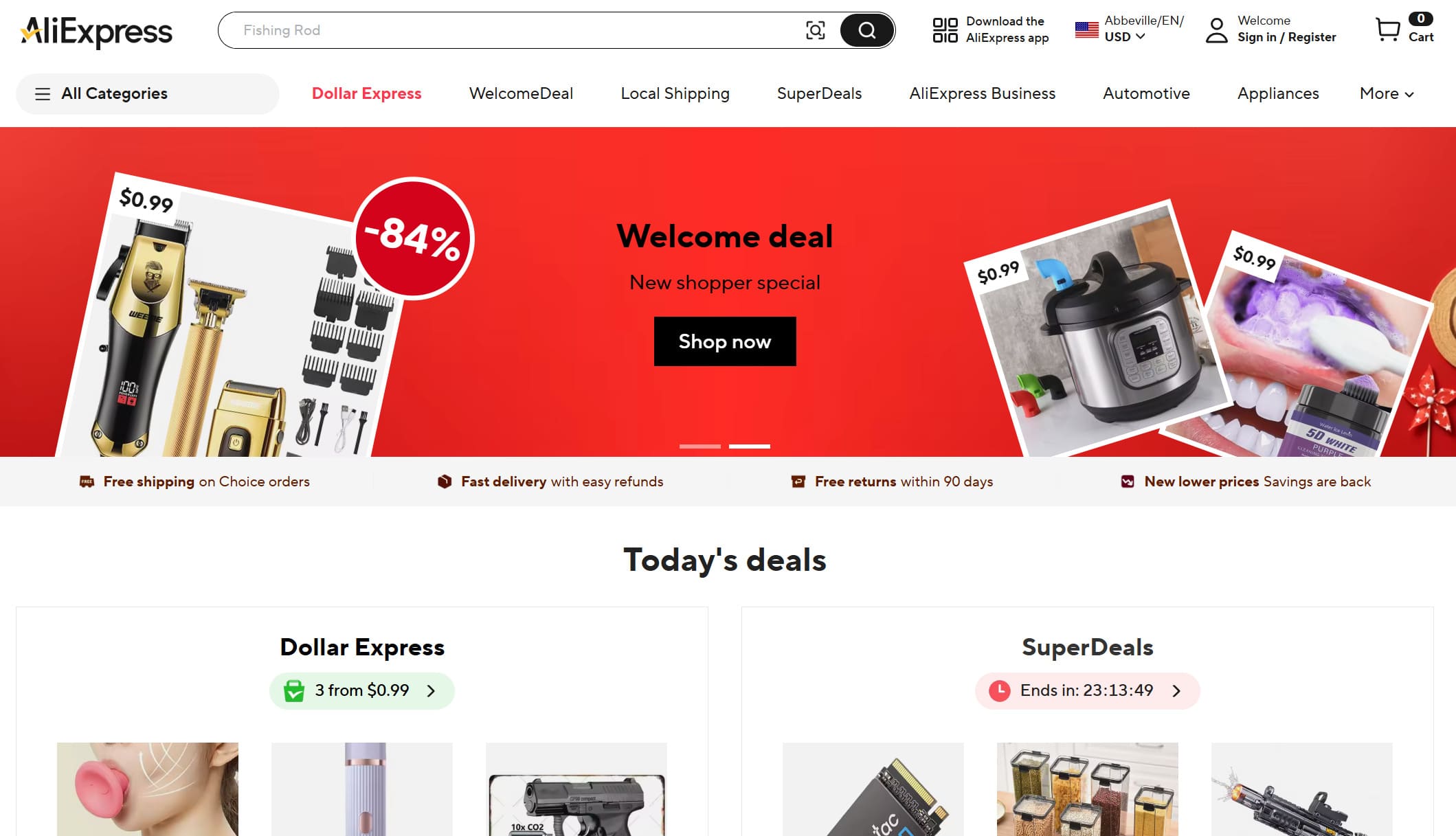
AliExpress is still the fastest way to find out whether anyone wants what you plan to sell, and no longer the cheap option it was a few years ago. Sort results by orders rather than by relevance, because the listings with thousands of completed sales are the ones whose sellers have survived contact with real buyers. Message three candidates with the same question about packaging and lead time, then buy a sample from whoever answers properly.
Two things have changed and both hurt. Shipping options have consolidated: tracked services such as ePacket have largely given way to AliExpress Standard Shipping and private logistics lines, so do not plan around a method that may not appear at checkout. More importantly, duty now applies to parcels that used to arrive free, which changes the landed cost of everything on the platform. The customs sections below have the detail. Our guide to vetting suppliers covers the rest of what to ask before a first order.
CJdropshipping
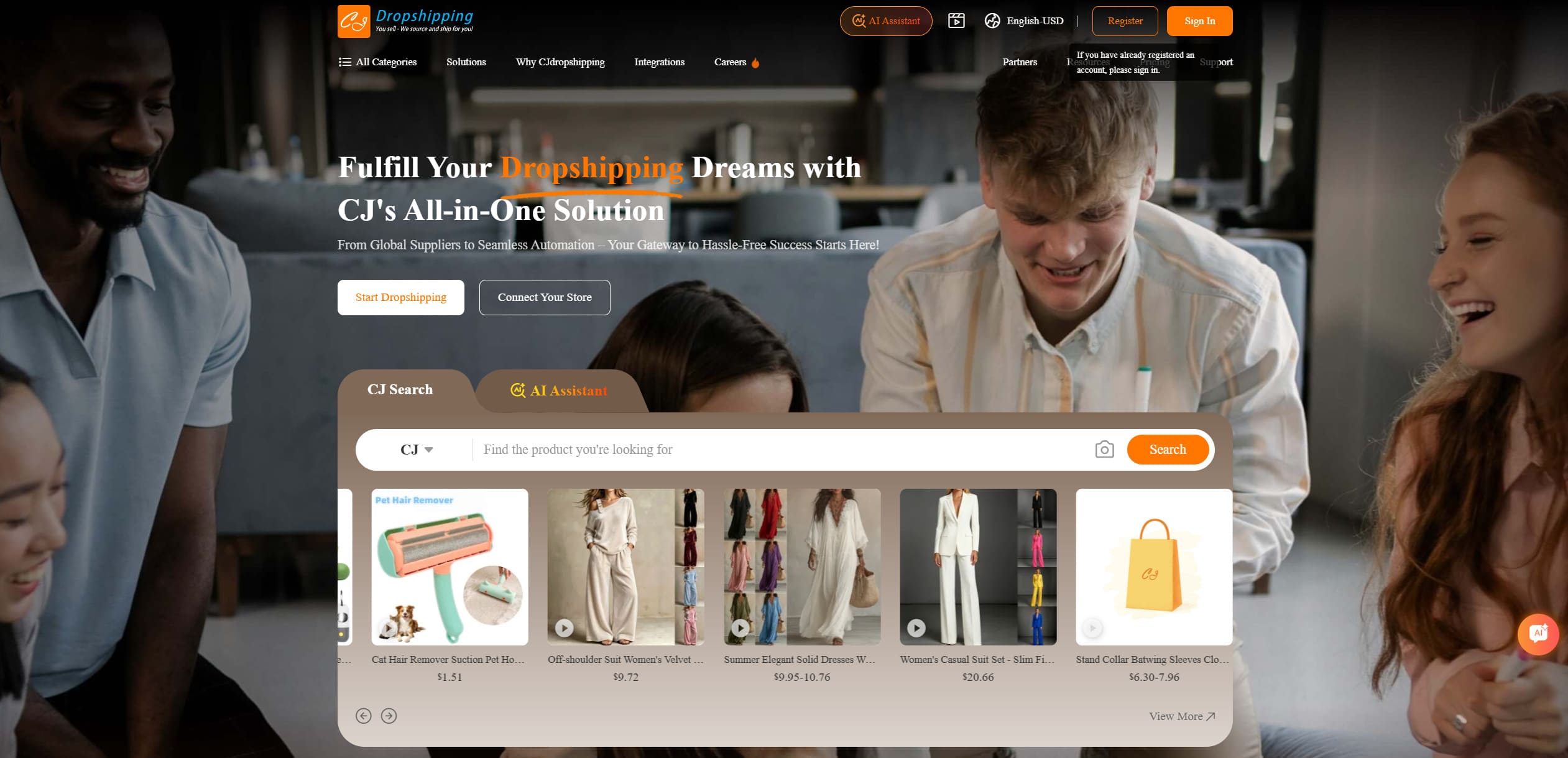
CJdropshipping works as a sourcing agent layered over Chinese manufacturing, with warehouses in several countries and a custom packaging service that states a minimum as low as a single unit across more than 500 packaging formats. For tea that matters more than it sounds. A generic foil pouch with a supplier’s logo undermines a brand instantly, and CJ will put your design on the pack without asking for a thousand units.
Set expectations on the catalogue, though. CJ sells general merchandise and does not specialise in tea, so the selection of leaf is thin next to its packaging capability, and food shipped from China brings the import requirements covered further down. Check which warehouse holds any product you plan to list. An item sitting in a US warehouse and the same item shipping from Guangzhou are now two different products commercially, not just two different delivery estimates, because only one of them crosses a border on every order.
Spocket
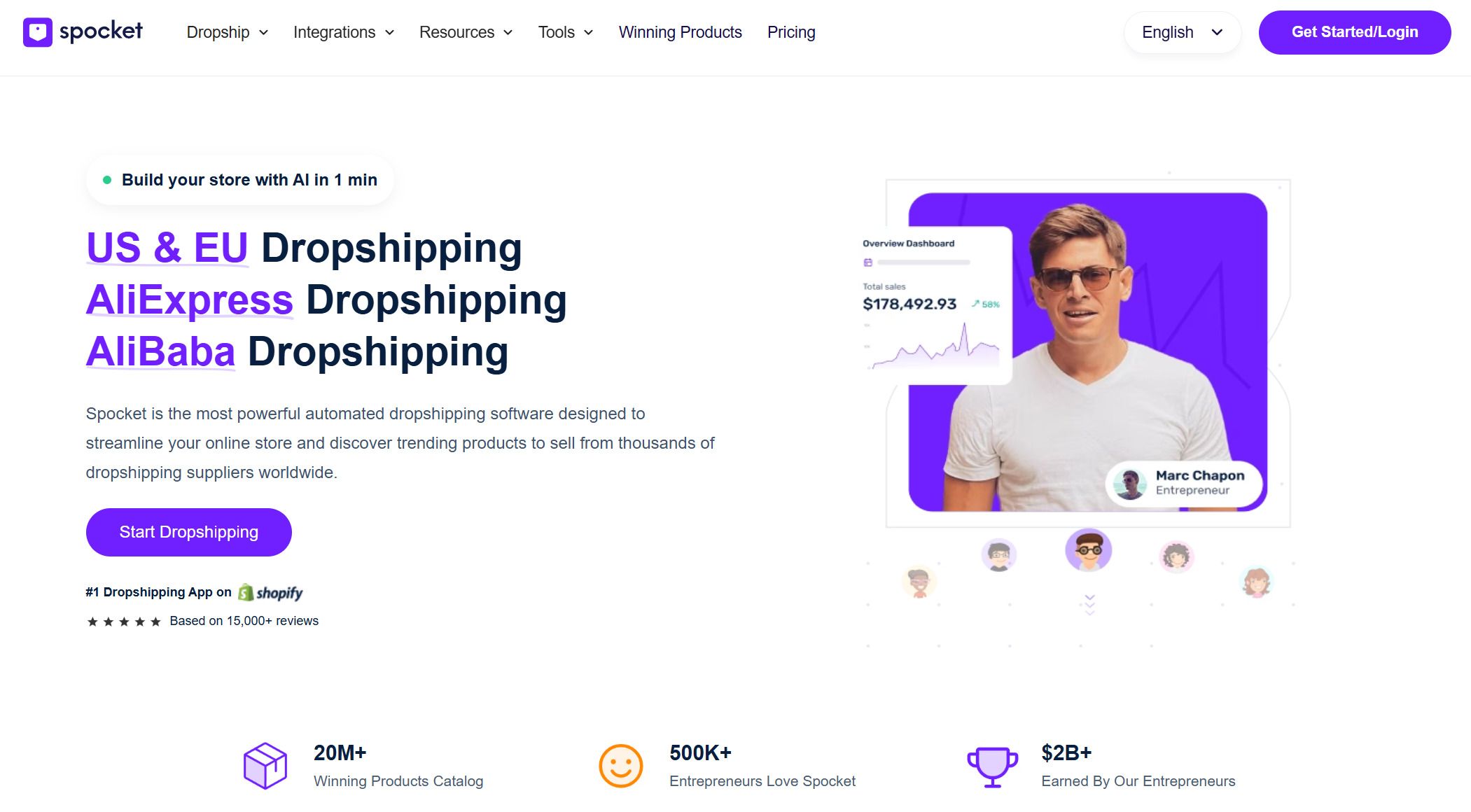
Spocket curates suppliers based in the US and Europe, which shortens delivery to a few days for domestic buyers and keeps most orders inside one customs territory. Its catalogue of tea and herbal products is smaller than AliExpress, and that is largely the point.
Access is a subscription. On the published pricing, Starter is $39.99 per month and is monthly only, Professional is $59.99 per month, Empire $99.99 and Unicorn $299.99. Paying annually brings Professional down to $24 per month, Empire to $57 and Unicorn to $79, billed for the year in advance. Budget the subscription as a fixed cost from day one, since it runs whether or not you sell anything.
Bondi Beach Tea Co
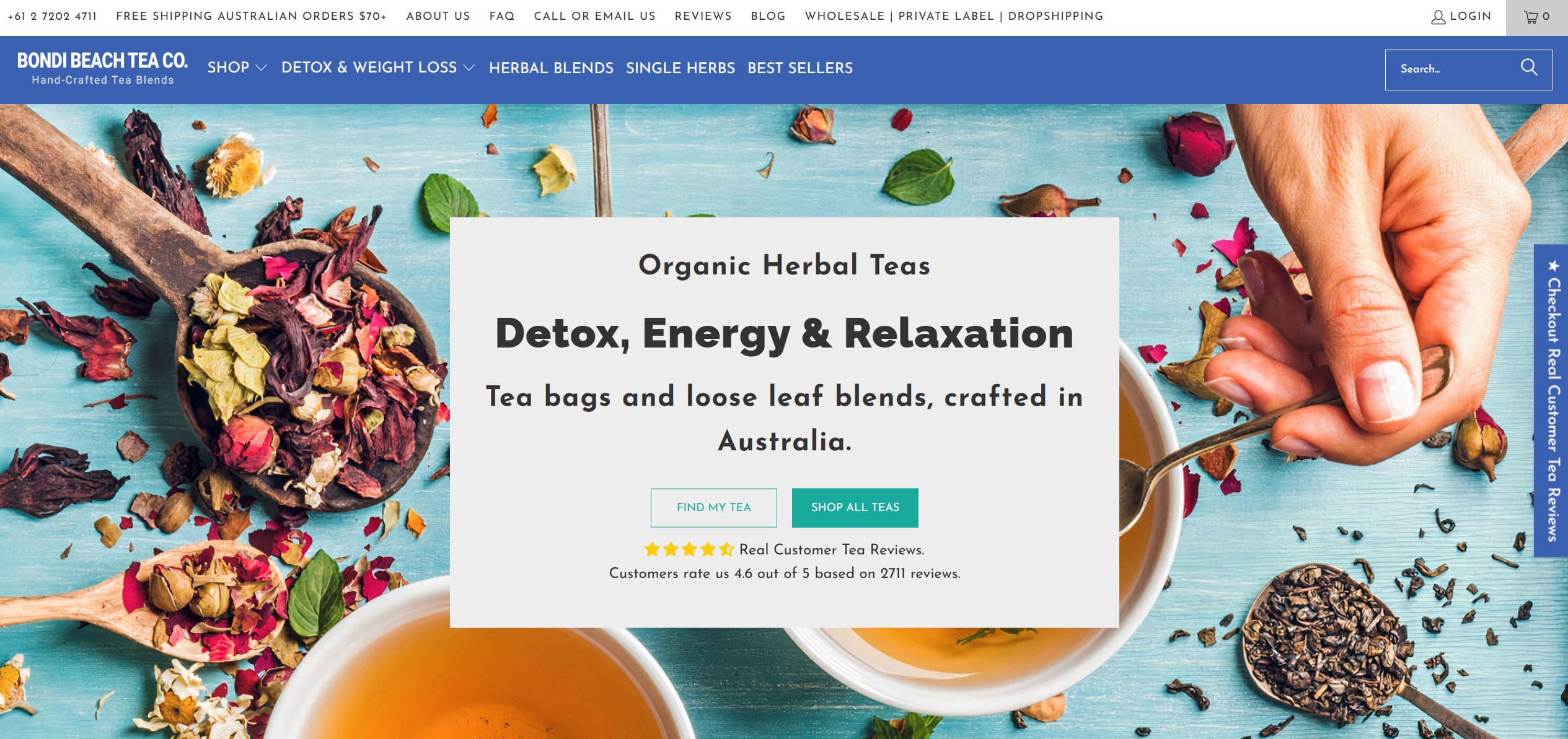
A Sydney blender that is unusually honest about how its programme works. The company states plainly that its model is stock-based rather than no-stock: you buy the finished branded tea first, and for suitable projects it can then be held at an agreed fulfilment location and dispatched to your customers directly.
Their published wholesale and private label terms list a minimum of 42 finished loose-leaf pouches per blend, 100 packs per blend for pyramid tea bags, and 2 kg per blend on selected bulk lines. Label design starts at AUD $36 per label with printing at AUD $0.34 each, and standard production runs 15 days once artwork and payment are approved. Warehouse options exist in Australia, the US, Canada and the UK.
Art of Tea
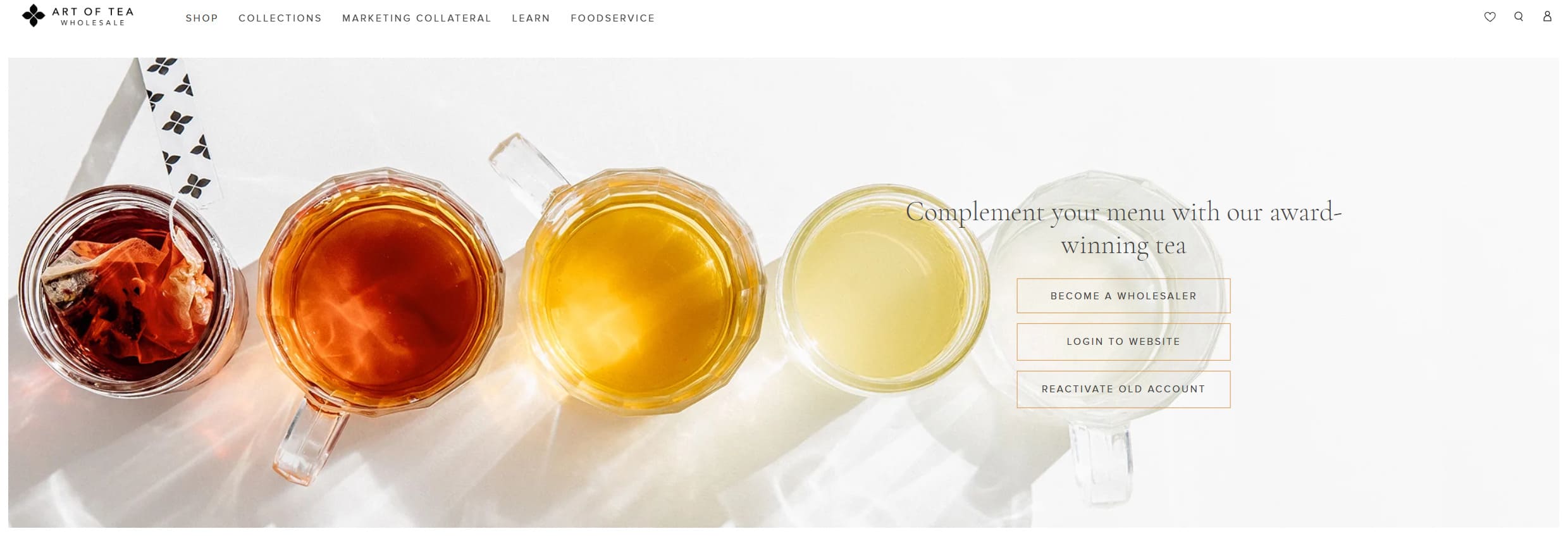
Los Angeles importer and blender, founded in 1996, with a large organic range and a private label programme used by tea brands internationally. This is a wholesale relationship, so expect to place real orders and hold what you buy. Their wholesale terms list a $175 minimum per order, worth confirming when you apply for an account, and approved customers can request samples before committing to a range.
This route pays off if your positioning depends on quality a customer can taste. It is a poor fit if you are still guessing which blends will sell.
Empire Tea Services
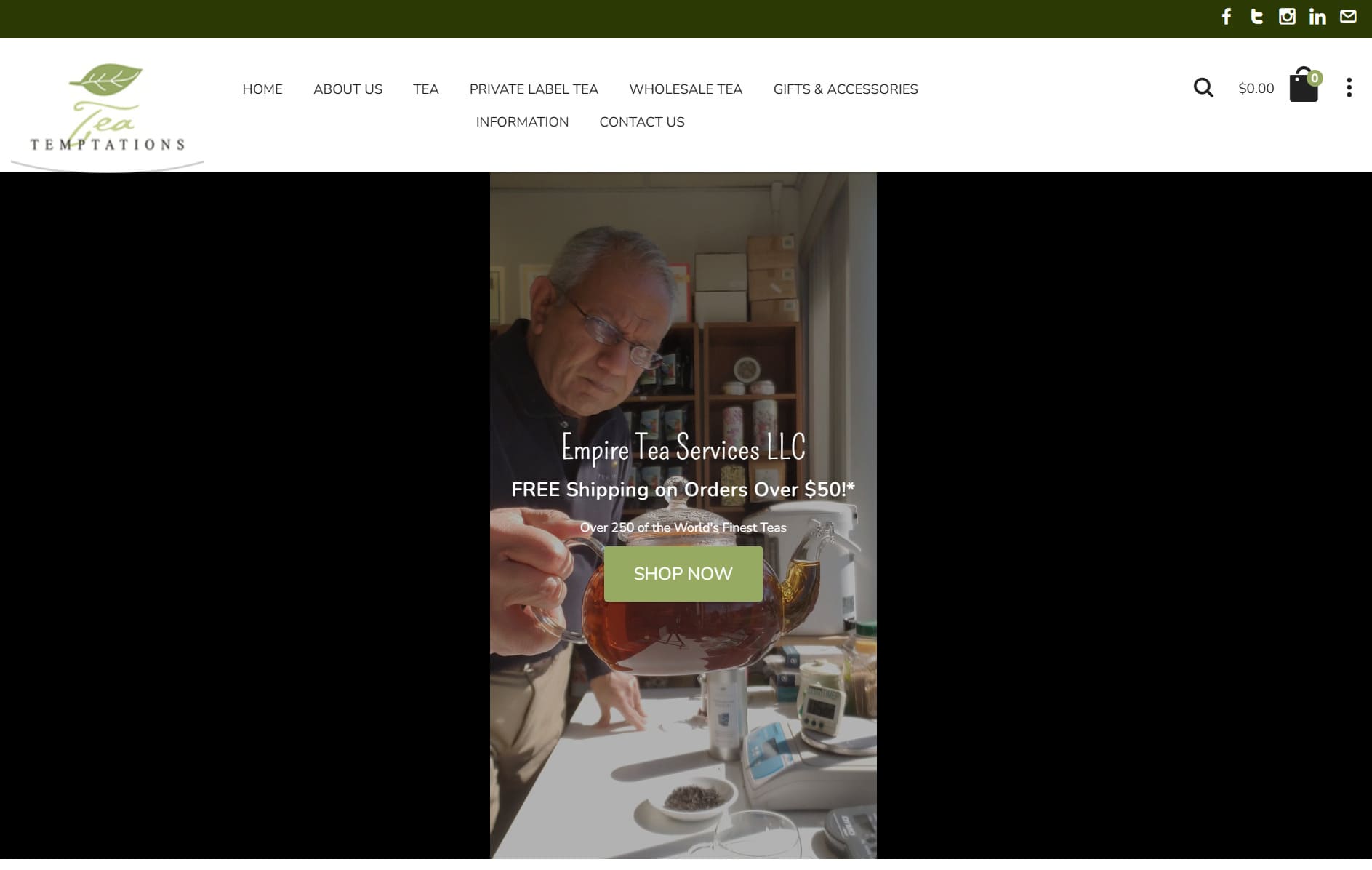
An Indiana blender whose private label programme is built around small multi-flavour launches. The minimum is 16 tins or stand-up pouches per flavour with a total of 96 units, so you can put six blends on a shelf instead of betting everything on one. They accept your artwork or supply a template, and will print UPC and QR codes where you need them.
Jenier World of Teas
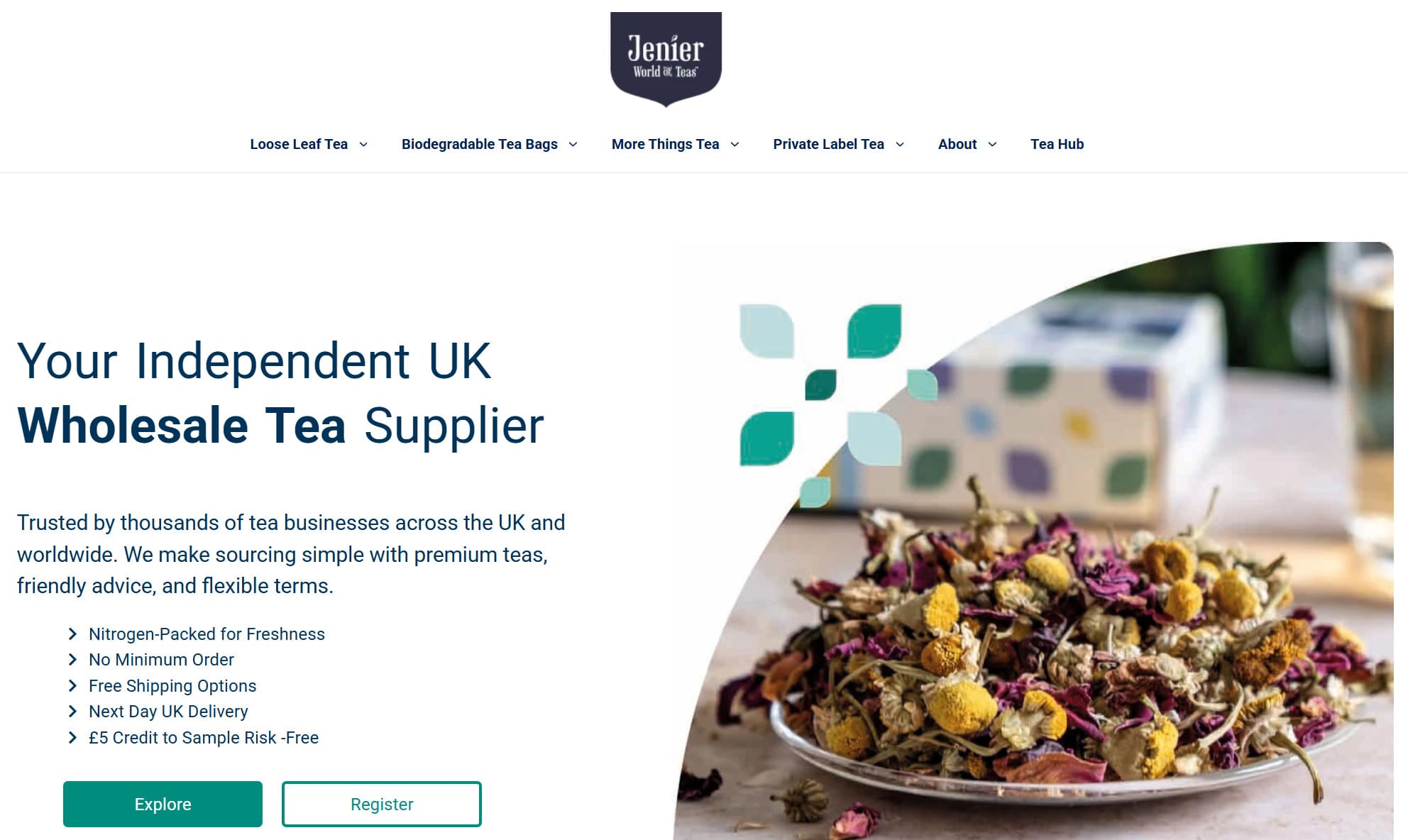
The only supplier on this list based in Europe, which matters more than it used to now that a parcel from Asia meets duty at the UK and EU borders. Jenier is a Glasgow wholesaler with several hundred loose teas and pyramid bags, next-day dispatch inside the UK and, on its white label terms, no minimum order at all if you buy the tea and pack it yourself. Their full pack-down service, where they do the packing, is offered only on bulk bags of 6 kg to 16 kg.
For a beginner, one detail matters more than the pricing. Jenier supplies ingredient specifications, allergen statements and brewing instructions with the tea, which is exactly the paperwork the labelling section below says you are responsible for. Getting that from the supplier in writing turns a compliance problem into a copy-paste job.
Where else to look for suppliers
Seven names will not cover every niche, and the blender who suits a Taiwanese oolong shop is not the one who suits a herbal wellness brand. If you plan to dropship tea in a narrow style, the right partner is often someone with no online supplier listing at all. Four routes turn up candidates that never appear in supplier roundups.
- B2B marketplaces. Alibaba and Global Sources list co-packers by certification and region. Treat every listing as unverified until you have tasted a sample and seen a packaging mock-up.
- Manufacturer directories. ThomasNet indexes US and Canadian food co-packers, and most European countries publish an exporter registry. Slower than a marketplace, better for finding someone who can blend to a specification.
- Trade events and associations. World Tea Expo and the larger food fairs put you in a room with blenders who never bother with online listings, and industry bodies such as the Tea Association of the USA or the Speciality Tea Association can point you at members.
- Adjacent local businesses. Coffee roasters and herbal supplement co-packers frequently handle tea as a side line and will quote small runs that a dedicated tea factory would refuse.
What tea products actually sell
Five groups carry most of the revenue for anyone dropshipping tea online, and they attract completely different buyers.
Loose leaf and single origin
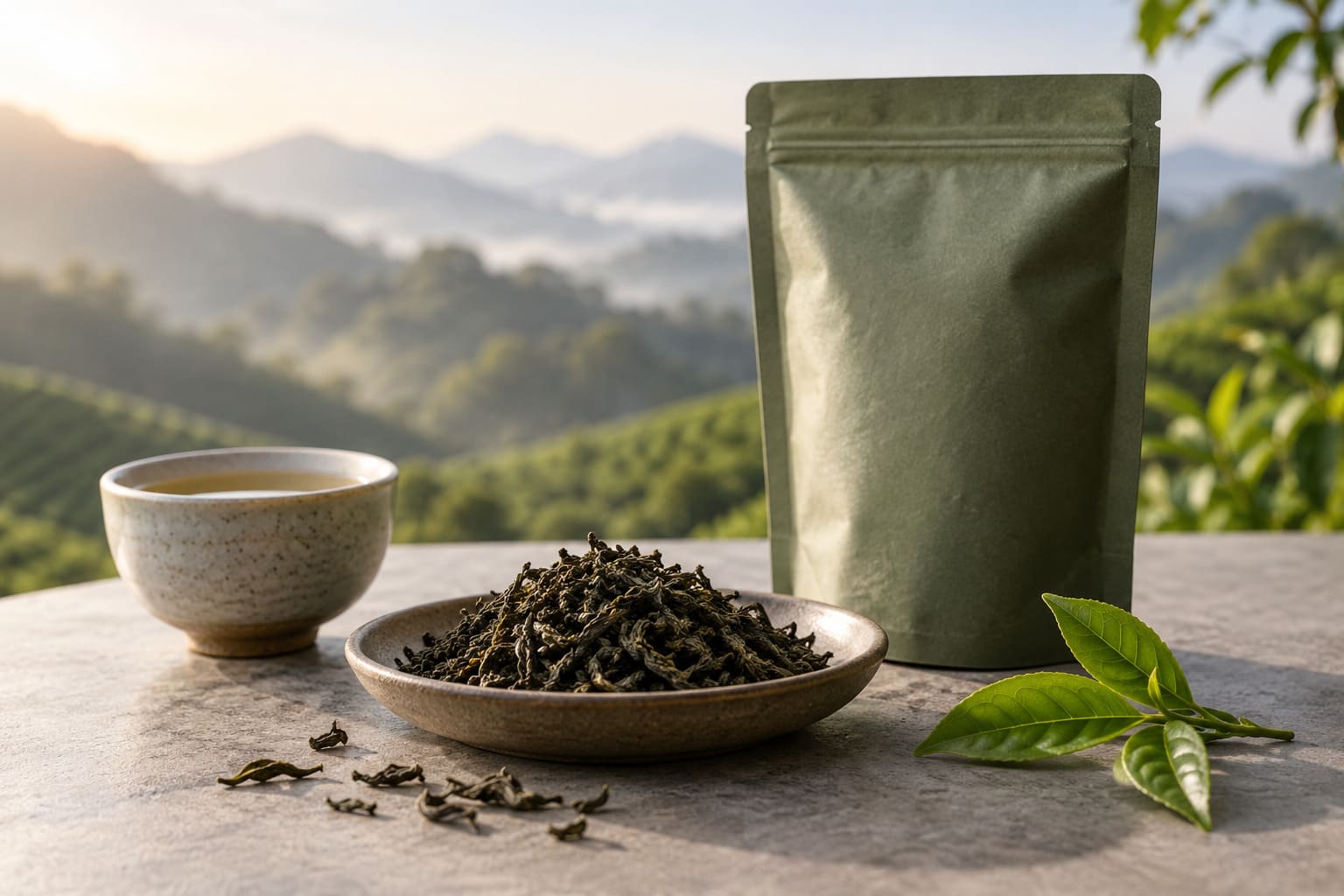
Assam, Darjeeling first flush, Taiwanese oolong, Yunnan black, and white teas such as Silver Needle at the top of the price list. These buyers read the origin, the harvest and the grade, and they will notice if your product description is a paraphrase of the supplier’s. Write real tasting notes, give brewing temperature and steeping time, and the category rewards you with customers who reorder without being prompted.
Functional and herbal blends
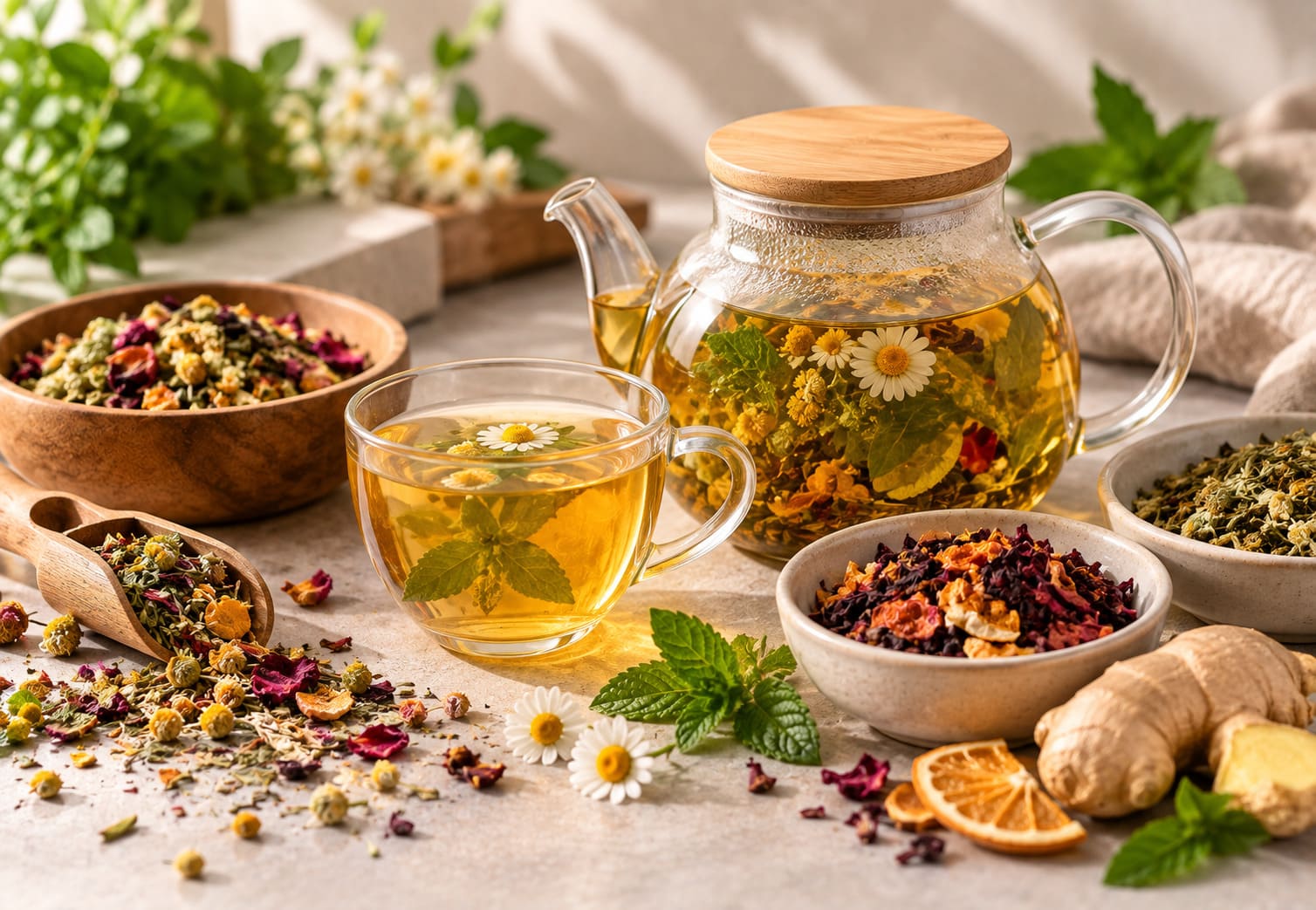
Chamomile and lavender for sleep, ginger and turmeric for digestion, hibiscus and rooibos for a caffeine-free option. Detox and slimming blends still move volume despite everything written below about how they are marketed, and rooibos quietly serves the customer who wants an evening cup without caffeine and without a promise attached. Demand is strong and the products are easy to photograph. This is also the corner of the market where marketing can get you into legal trouble, which the labelling section below deals with properly.
Matcha, and why it is the hardest product on this list
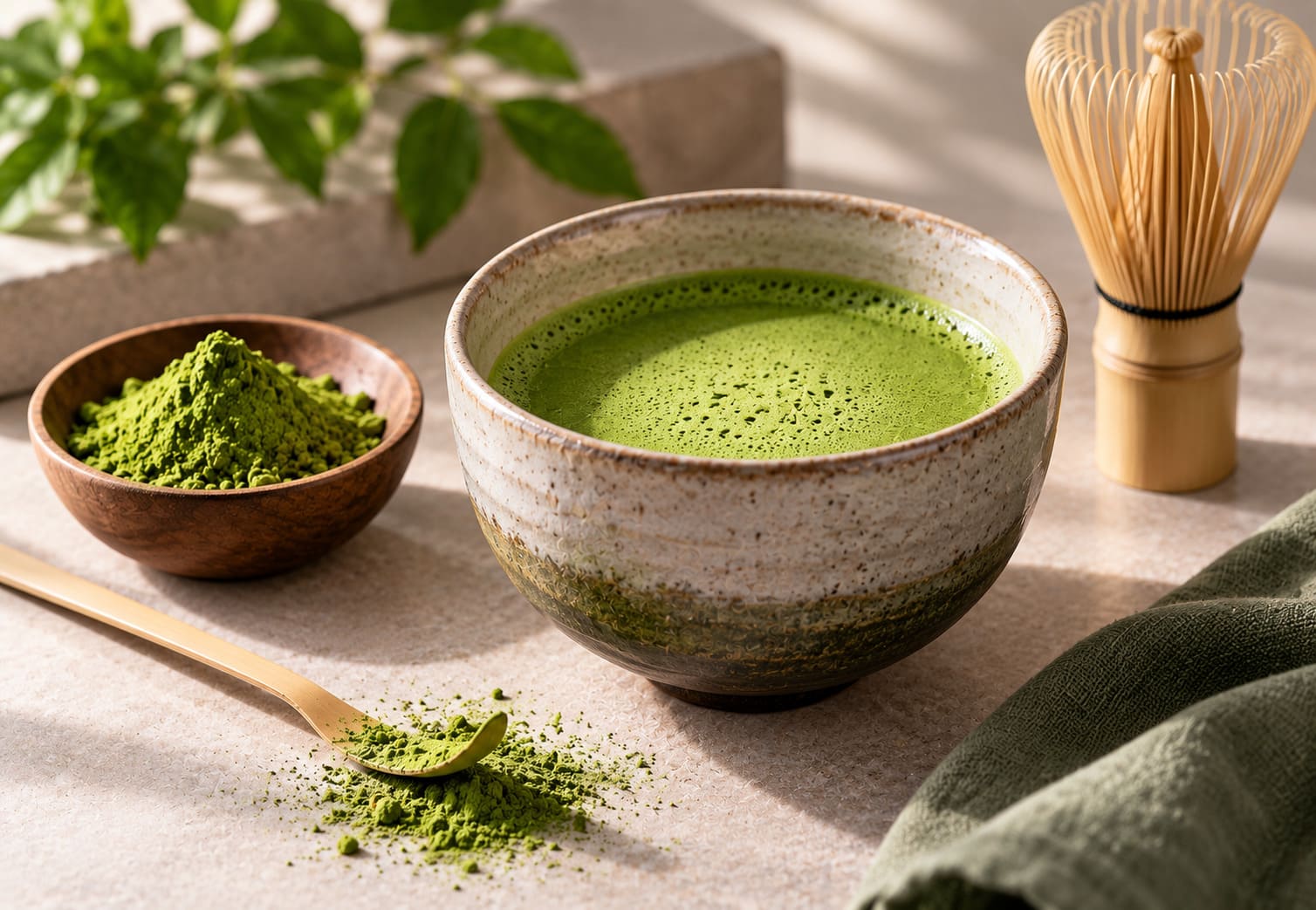
Matcha has been in short supply since late 2024, and 2026 has not fixed it. The bottleneck is tencha, the shaded leaf that ceremonial matcha is ground from, and new tea fields need roughly five years to reach full production. Prices reflect that. At the Uji auction in April 2026 the average climbed 22% to ¥20,879 per kilogram, while Kagoshima’s opening day ran about 60% above the previous year, according to figures compiled from Asahi Shimbun and Nikkei reporting.
For a dropshipper this cuts both ways. Cheap “ceremonial Uji matcha” is now abundant online and a great deal of it is culinary-grade powder, sometimes not Japanese at all, relabelled to catch the demand. Selling it will cost you the customers who know the product.
If you sell matcha, ask the supplier for the prefecture, the cultivar and the harvest date, not just the word Japan, and put those details on the product page. Sell small tins, because matcha oxidises within weeks of being opened and a dull, bitter cup generates more refund requests than anything else in the category. Handled properly, the shortage is a positioning advantage: a store that can prove origin stands out precisely because so many cannot.
Blooming teas and chai kits
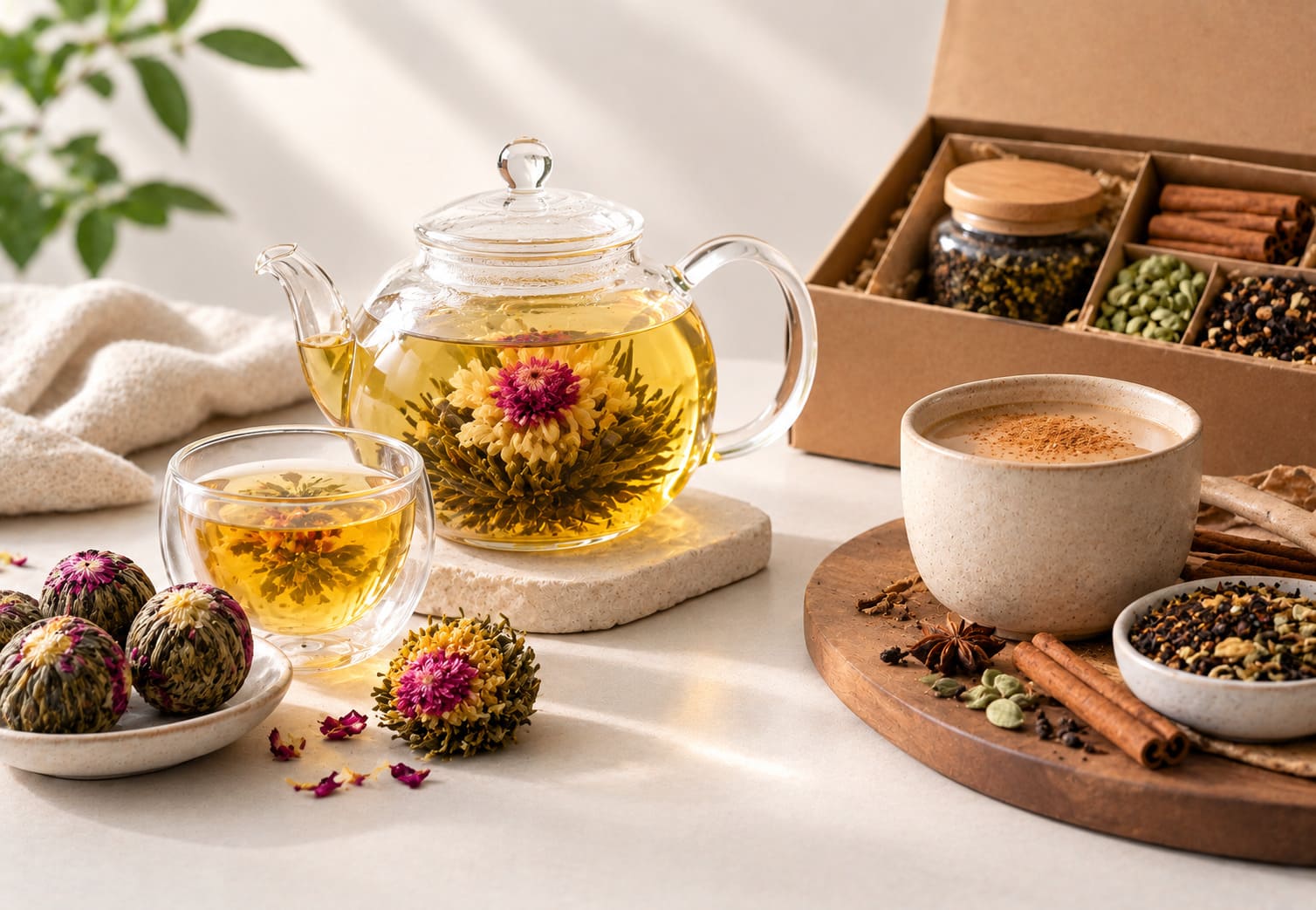
Blooming tea, the hand-tied bundle that opens into a flower in hot water, sells on spectacle. It photographs and films better than any other product in the category, which makes it unusually cheap to market on visual platforms, and it pairs naturally with a glass teapot as a two-item order.
Chai kits work on a different instinct. Loose black tea, whole spices and a card explaining how to simmer it turn a commodity into an afternoon project, and the perceived value of the kit is far above the cost of its parts. Both suit buyers who would never describe themselves as tea drinkers.
Teaware
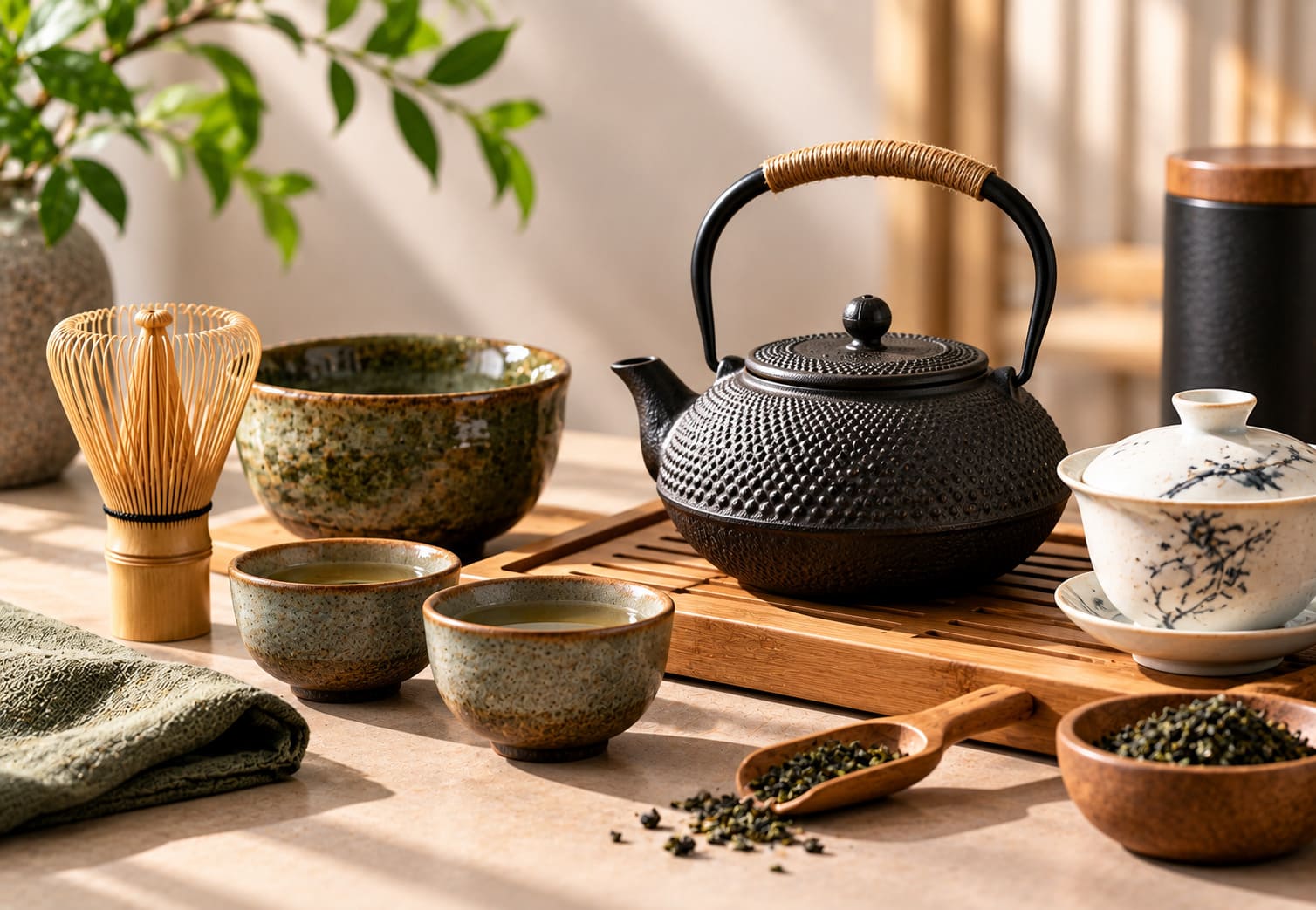
Infusers, glass pots, gaiwans, cast iron kettles, wooden boxes. These carry the average order value that loose tea cannot, they have no shelf life, and they are what people buy in November and December. Many stores that dropship tea make the bulk of their annual profit from bundled sets in the final quarter.
Setting up the store, step by step
1. Narrow the niche before you pick products
“Tea shop” is not a position. “Japanese green tea for people who already own a kyusu” is. A narrow angle decides your product list, your photography, your ad targeting and your keywords in one go, and it is far easier to widen later than to narrow after you have built an audience of bargain hunters.
2. Order samples from three suppliers
Buy from three, taste all three, and pay attention to how the parcel arrived as much as to what was inside it. Crushed leaf, a pouch that does not reseal, or a package that smells of the warehouse will all come back to you as refund requests. Time how long each order took from click to doorstep and note who answered messages within a day.
3. Build the store on a platform you can actually run
Shopify remains the shortest route from nothing to a working checkout, and there is a good case for starting there if you have never built a store before. Selling on an existing marketplace such as eBay or Amazon is the alternative, trading some control for traffic you do not have to buy. If you already run a Shopify store and are adding tea to it, importing listings from another source saves a great deal of manual work. Self-hosting on WordPress is possible too, though it puts hosting, security and updates on your plate.
4. Register the business and sort out tax
Requirements vary by country and by state, so check locally rather than copying what a guide written for somewhere else recommends. In the United States you will generally need a business entity, an EIN and a resale certificate, and several suppliers will refuse to open a wholesale account without the certificate number.
5. Launch with one offer and one channel
Resist the urge to open on five platforms at once. Pick the single product bundle you believe in most, put it in front of one audience, and give it long enough to produce a real answer before you add anything else. If the effort of running a store is what worries you at this stage, weigh it against the affiliate route before you have paid for any inventory.
Marketing an online tea shop
Tea dropshipping has an advantage most categories lack: the product runs out. That single fact should shape everything you do with a marketing budget, because it means the first sale is only an introduction.
Email carries more of the load here than any other channel. Capture the address at checkout, work out roughly how long each pack lasts, and write just before they need more, with something better than a discount code. Brewing guides, a note on the new harvest, a blend built for the season. Stores that treat email as a reorder engine see the difference within a quarter.
Search rewards the same instinct. Queries around brewing temperature, caffeine content, which tea helps with sleep and how to store loose leaf all bring in people who will eventually buy, and answering them properly on your own blog is cheaper than bidding for them. Product pages with original descriptions rank, supplier boilerplate does not.
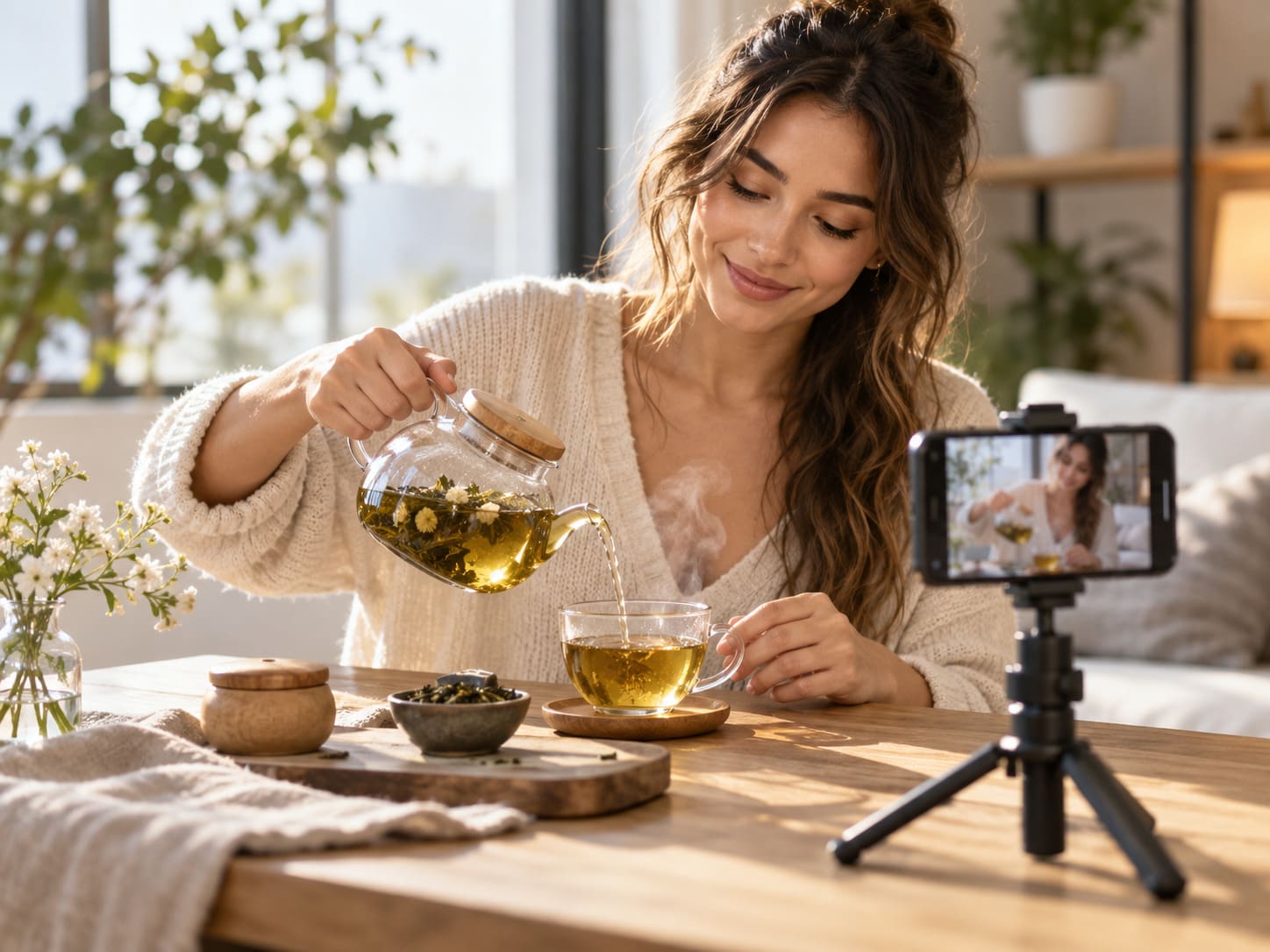
On social and influencer work, tea does well on visual platforms and the production cost is low, since a steeping shot is easy to make look good. One legal point belongs here, because it is a marketing decision: any paid endorsement needs a disclosure a reader can see without tapping to expand a caption, and you are responsible for what the person you paid writes. Paid ads work last, once you know your average order value and your repeat rate, not before.
Labelling and legal rules for selling tea online
Tea is food. Being a dropshipper does not move that responsibility onto the supplier.
Packaged tea sold in the US needs a statement of identity, net quantity, an ingredient list in descending order, allergen declarations and the name and address of the responsible firm. Chai with milk powder declares milk. A blend containing sesame declares sesame. Plain tea often escapes the Nutrition Facts panel because its nutrient amounts are insignificant, but the moment you add sweetener or a latte mix, the exemption disappears.
There is also a route out for small sellers. The FDA’s small business nutrition labeling exemption covers low-volume products from firms with fewer than 100 full-time equivalent employees, with a second exemption for small retailers; the qualifying figures and the annual notice requirement are set out on the FDA page. One catch before you rely on it: a product carrying a nutrition claim does not qualify.
One regulatory change runs in the seller’s favour. In December 2024 the FDA finalised new criteria for the “healthy” nutrient content claim, the first update since the 1990s, with a compliance date of 25 February 2028. The claim is voluntary and the criteria turn on added sugars, sodium and saturated fat, which puts plain unsweetened tea in a comfortable position and sweetened iced tea in an awkward one. Check the criteria against your specific product before putting the word on a label.
The expensive mistakes in this category are all about claims. In 2020 the FTC settled with tea marketer Teami over claims that its detox pack caused weight loss and that other blends fought cancer, cleared arteries, reduced migraines and prevented colds. The judgment was $15.2 million, suspended on payment of $1 million, and the agency sent warning letters to ten influencers whose paid posts hid the disclosure behind Instagram’s “more” link. Health claims need real scientific substantiation, and wellness blends are the part of this category regulators keep an eye on.
Shipping, shelf life and packaging
Tea absorbs whatever is around it. Store it next to scented candles or soap in the same warehouse and it will arrive tasting of them, which is a complaint you cannot answer once the parcel has gone out. Ask any supplier how tea is stored and whether it shares space with fragranced goods.
Shelf life sits somewhere between one and two years for most sealed black and herbal teas, and noticeably shorter for green tea. Sell the date honestly on the product page. Customers who receive tea with four months left feel cheated even when it is perfectly good.
On packaging, resealable foil-lined pouches survive transit better than tins, which dent, and far better than cardboard boxes, which crush. A crushed tin is a refund. Two extra cents of packaging is cheaper than that.
Import duty: what changed and what it costs you
For a decade the economics of dropshipping from Asia rested on one rule: parcels valued under $800 entered the United States duty-free. That rule is gone, and any guide still written as though it exists will lose you money.
It went in stages, starting with China and Hong Kong in May 2025. Since 29 August 2025 the suspension has covered every country, as US Customs and Border Protection sets out in its guidance on de minimis and international mail, and in June 2026 CBP moved it from executive order into formal regulation. Plan around it as permanent.
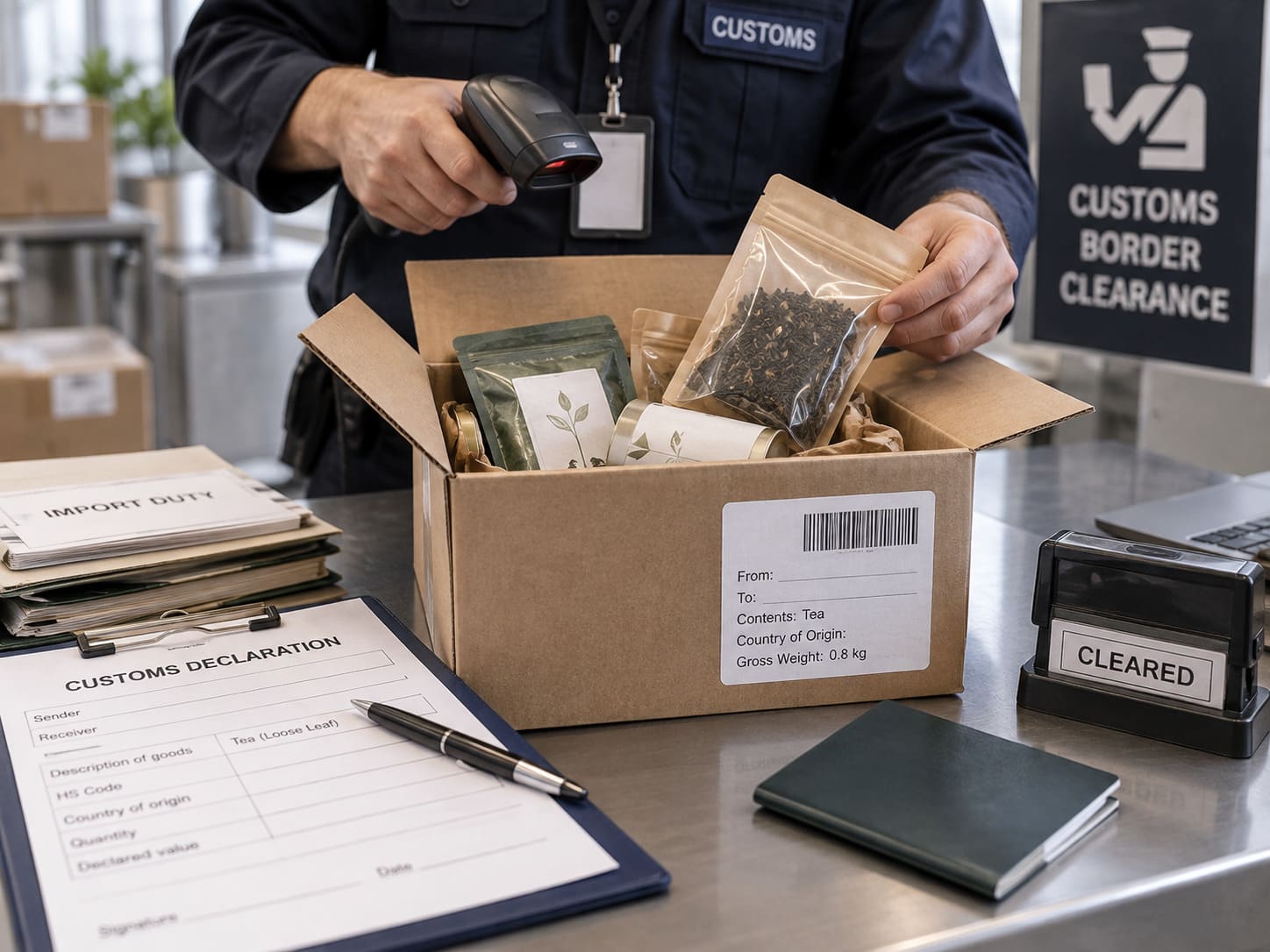
What this means in practice for a store dropshipping tea. Every imported parcel needs a customs entry and carries duty at the rate for its origin, so the landed cost of a cheap pouch from an overseas supplier is no longer the price on the listing. Someone has to pay that duty, and the question worth settling before you take a single order is who. Under DDP terms the supplier or carrier prepays it and the customer receives the parcel with nothing to settle. Under DAP the customer gets a bill from the carrier and a very bad impression of your shop.
The practical consequence is that domestic fulfilment has stopped being a premium option and become the default for anyone selling to the US. A supplier with a US warehouse, or a private label run held domestically, avoids the border on every single order. That shift also narrows the gap between marketplaces such as Spocket and the cheap Chinese route, because the cheap route is no longer as cheap as it looks.
Selling into the UK, the EU and Australia
Other markets have tightened up on low-value parcels too, each on its own timetable and not always in the same order. Two of the three below moved on VAT first and left customs duty for later. Get the mechanics wrong in any of them and your buyer meets a courier invoice instead of a parcel.
United Kingdom. The old £15 relief is long gone. For a consignment worth £135 or less sold directly to a UK consumer, VAT is charged at the point of sale rather than at the border, which means an overseas seller has to register with HMRC and add VAT at checkout, as set out in HMRC’s guidance on overseas goods sold to UK customers. Sell through a marketplace and the marketplace usually takes on that job instead. Above £135 the old route applies and import VAT plus duty are collected on arrival. Customs duty relief on low-value imports is also being removed, with the change due by March 2029.
European Union. Two separate things, often confused. VAT: the €22 exemption disappeared in 2021, and consignments up to €150 are usually handled through the Import One-Stop Shop, which lets you charge VAT at checkout and file in one member state. Customs duty: since 1 July 2026 the €150 duty exemption is gone too, replaced by a temporary flat charge of €3 per tariff line on low-value B2C parcels, running until July 2028 under the European Commission’s guidance. A three euro charge on a fifteen euro pouch of tea is the sort of number that decides whether a product is viable.
Australia. Goods with a customs value of A$1,000 or less are not taxed at the border. Instead an overseas seller charges 10% GST at checkout once sales connected with Australia reach the A$75,000 registration threshold, which the ATO sets out for low value imported goods. Above A$1,000 the border collects GST and duty as usual. Keep that in mind if you work with an Australian blender, since supplying inside Australia and supplying into it are different problems.
The pattern is the same everywhere: the tax moved from the border to the checkout, and the paperwork moved from the customer to the seller. Whichever market you target, decide who is the importer of record and what the buyer sees at checkout before you write a shipping policy page.
What a tea order really earns
Run this calculation with your own numbers before you list anything. The example below is a US order: a $24 two-pouch bundle, a $6 supplier price, $5 delivery, duty of $2 on an imported parcel, a 10% marketplace commission and card processing of 2.9% plus 30 cents. Substitute your real figures, because the shape of the result matters more than the specific total.
| Line | Example | What moves it |
|---|---|---|
| Retail price | $24.00 | Bundle size and positioning |
| Supplier cost | $6.00 | Volume tiers, private label runs |
| Delivery to customer | $5.00 | Origin warehouse, parcel weight |
| Import duty | $2.00 | Country of origin, or zero if fulfilled domestically |
| Marketplace or platform fee | $2.40 | Channel you sell on |
| Payment processing | $1.00 | Provider and country |
| Left before advertising | $7.60 | Everything above |
Seven dollars sixty sounds survivable until you price a click. If acquiring a customer costs eight dollars, the first order loses money outright, and the business only exists if that person comes back. Fulfil domestically and the duty line disappears, which in this example is the difference between a first order that loses money and one that roughly breaks even.
Where tea dropshippers lose money
- Silent stock-outs. A supplier runs dry, your listing stays live, and you find out from an angry buyer a week later. Automated stock sync exists for exactly this.
- Undated inventory. Tea that has been sitting in a warehouse for a year arrives tasting flat, and the review that follows costs more than the order was worth.
- Duty landing on the customer. A carrier invoice arriving after the parcel is the fastest way to turn a new buyer into a chargeback.
- Competing on price with grocery brands. A supermarket own-label box will always be cheaper. Selling on origin, freshness and service is the only defensible position.
- Copied product descriptions. Identical supplier text across dozens of stores gives search engines no reason to rank yours.
- Wellness claims written by a copywriter. See the Teami case above. This category is actively policed.
Most of those are visibility problems, and the right automation tooling removes several of them at once.
Adding channels once the first store works
A tea store that has found its buyers usually grows in one of two directions: more products for the same audience, or the same products in front of a new audience. The second route means listing on another marketplace, and at that point manual order entry stops being viable.
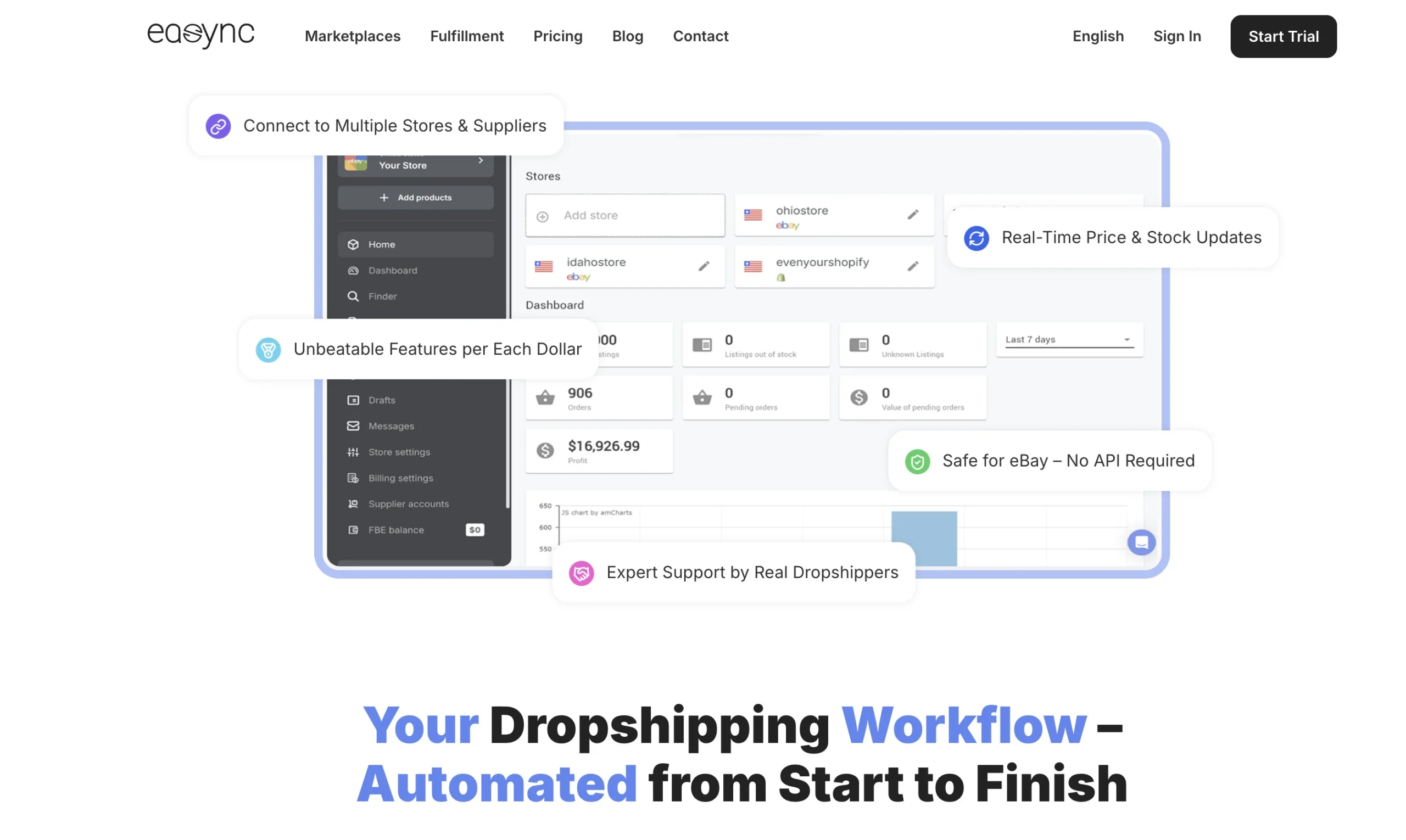
Easync is one option for sellers running more than one source. It supports Amazon to eBay, AliExpress to eBay and Amazon to Shopify, and handles repricing and stock synchronisation for eBay listings. Current plans are on the Easync pricing page.
FAQ
Is dropshipping tea profitable?
Yes, on repeat orders. A single low-value order rarely covers acquisition cost once shipping, duty and fees are paid, so the stores that make money are the ones selling bundles, subscriptions and teaware alongside the leaf, and emailing customers before the pouch runs out.
Do you need a licence to sell tea online?
Rules depend on where you are and on what you do to the product. Reselling sealed packaged tea that someone else blended and labelled is treated differently from blending or repacking it yourself, which can bring facility registration and food-handling requirements into play. Business registration and a resale certificate are the usual baseline in the US, and local food authorities are the right place to confirm the rest.
Do I have to pay import duty on dropshipped tea?
On goods entering the United States, yes. Value no longer keeps a parcel out of the duty system, and the liability sits with the importer of record, which on a dropshipped order is usually the seller. Check which incoterms your supplier works on before you publish a delivered price.
How do I find tea dropshippers I can trust?
Sample first, always. Beyond that, look for a supplier who publishes minimums and lead times rather than hiding them behind a contact form, answers technical questions about storage without deflecting, and has reviews somewhere you can read them. Anyone who cannot tell you where the tea has been stored is not worth building a brand on.
Can you dropship tea on Amazon and eBay?
Both allow it within their own policies, and both treat food as a category with extra requirements around expiry dates, sealed packaging and, on Amazon, category approval for some grocery listings. Read the current policy of the marketplace you intend to use, since these rules change more often than platform fees do.
What is the difference between tea drop shipping and private label tea?
With tea drop shipping you sell someone else’s branded product and the supplier ships it as ordered, with nothing paid up front. Private label means the tea is packed under your name, which almost always requires buying a production run first. Several suppliers advertise both under one heading, so check the minimum order before assuming a programme is no-stock.
How long does tea last?
Sealed black and herbal teas generally hold up for a year or two, and green tea fades faster. Ask suppliers for production dates rather than only best-before dates, because a two-year shelf life means little if the tea was packed eighteen months ago.
Before you start
Tea dropshipping is a workable business on ordinary terms. The market is real and stable, the products are cheap to ship, and the barriers are low enough that competition is fierce. What separates the stores that last is unglamorous. They hold a narrow position, they have tasted the tea they sell, their labels comply, their landed cost already includes duty, and they give the customer a reason to come back next month.
Start with one clear niche and three sampled suppliers. Everything else can be fixed later. If you are still weighing the model itself, the case for dropshipping against affiliate marketing is a sensible next read.