
- articles
eBay Arbitrage in 2026: How to Start & Make Profit

Quick answer: eBay arbitrage is the practice of buying a product where it is relatively cheap and reselling it on eBay at a higher price. The model is legal, but eBay’s sourcing rules matter: if you buy from another retailer, you should take possession of the product before sending it to your buyer instead of asking that retailer to fulfil the eBay order directly.
Key Takeaways
- eBay allows ordinary resale of products you already own. Buying from another retailer only after an eBay order arrives and having that retailer ship directly to the customer is a different matter and falls outside eBay’s permitted sourcing model.
- eBay fees, postage, returns and tied-up inventory can turn an attractive price gap into a weak deal, so margin has to be calculated before purchasing stock.
- amazon to ebay arbitrage remains one of the easiest routes to research because Amazon has a huge catalogue and frequent price changes.
- ebay to ebay arbitrage can work when poorly titled, badly photographed or otherwise overlooked listings sell below their normal market value.
- Good research and reliable stock control matter more than listing a large number of random products.
An item is sitting on one marketplace for $25. Similar units regularly sell elsewhere for considerably more. That difference is the basic opportunity behind arbitrage.
On eBay, the idea is simple enough: find a product that is undervalued at the source, buy it, then resell it at a price that leaves a worthwhile margin after eBay fees and fulfilment costs. The difficult part is not understanding the model. It is finding price gaps that remain profitable after the numbers are checked properly.
That is why eBay arbitrage is still attractive to new sellers. You can test products without committing to a warehouse or a large private-label order, and every purchase gives you useful information about demand, pricing and fulfilment.
The wider ecommerce market remains enormous. Statista currently projects global ecommerce revenue of about US$3.86 trillion in 2026. eBay itself reported nearly $80 billion in gross merchandise volume for 2025, while its investor materials report around 136 million active buyers and roughly 2.6 billion live listings. A longer historical view of the marketplace is available from Business of Apps.
A market of that size creates plenty of pricing inconsistencies, especially when products are sold across several retailers, countries and listing formats.
This guide looks at how arbitrage on eBay works in practice, what eBay allows, the costs sellers sometimes overlook, the software available in 2026, and twelve sourcing methods worth understanding.
What Is eBay Arbitrage?
Arbitrage is simply the use of a price difference between two buying opportunities.
For an eBay seller, that may mean finding a discounted item at Walmart, buying it and listing it on eBay. It could mean spotting a badly presented auction on eBay itself. It might also involve buying from Amazon, a local estate sale or an overseas marketplace.
The source changes. The logic does not.
A profitable flip needs enough room between the acquisition cost and the realistic resale price to cover selling fees, postage, packaging, possible returns and the time your money remains tied up in the product.
For that reason, a product being cheap is not enough. You need evidence that buyers are actually paying the higher price.
How Does eBay Arbitrage Work?
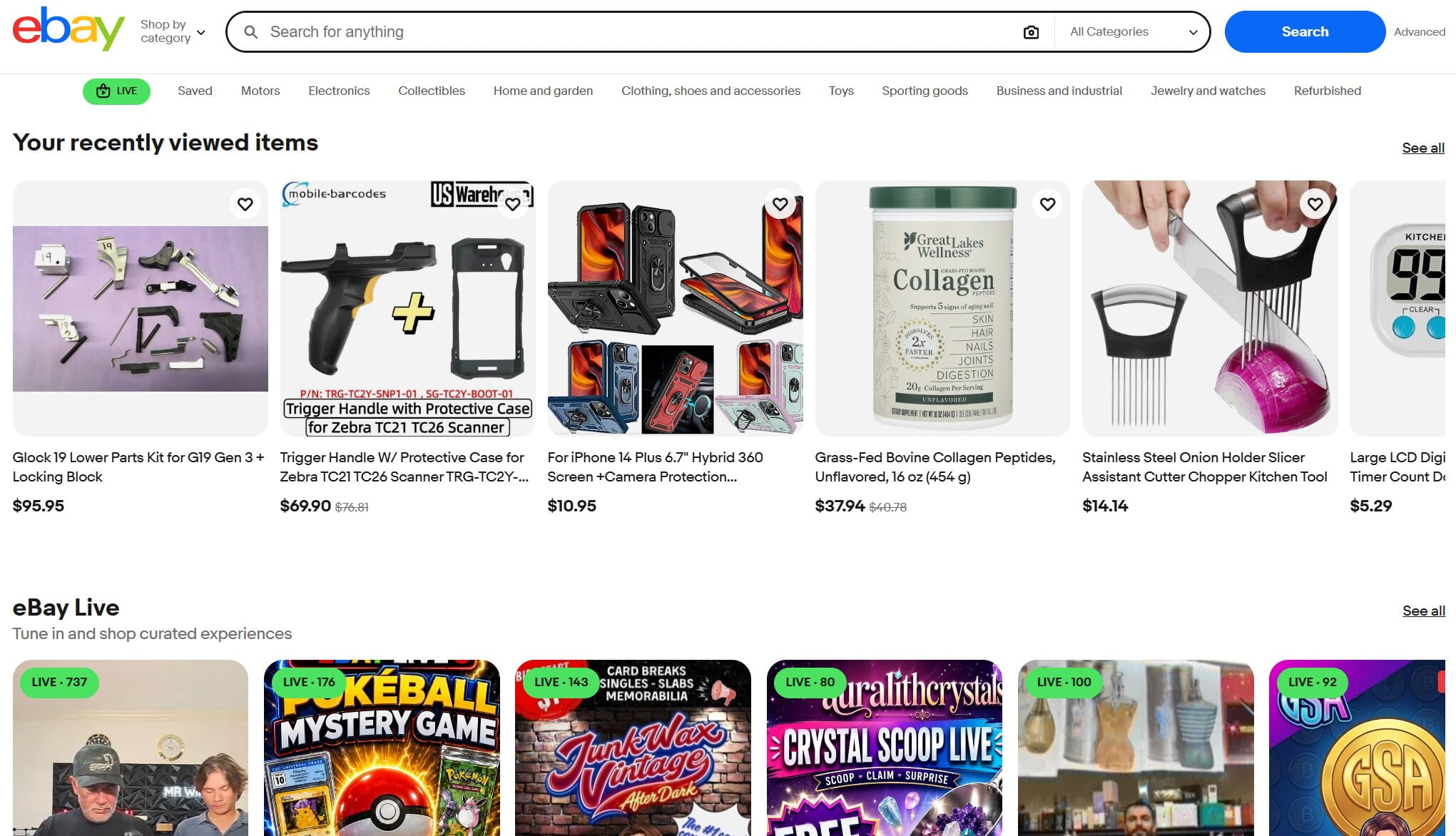
A typical deal starts with demand research rather than shopping.
Search eBay for the exact item or a close equivalent and look at completed sales. Current asking prices can be misleading because they show what sellers hope to receive. Sold listings show what buyers have actually paid.
Once you have a usable resale range, compare it with potential sources. Amazon sales, retailer clearance pages, local shops and other marketplaces can all produce gaps.
Suppose the product normally sells on eBay around $45. Finding it for $22 may look promising, but the $23 spread is not your profit. You still have eBay’s fee, postage, packing materials and any other transaction costs to account for.
After buying the item, receive it, inspect it and prepare your own shipment to the eBay customer.
That last step is particularly important for Amazon to eBay arbitrage. eBay permits dropshipping from a wholesale supplier, but its policy does not permit listing an item and then buying it from another retailer or marketplace that sends the order directly to the eBay buyer.
Research can also become time-consuming once you have more than a small catalogue. This is where ebay arbitrage software becomes useful. Product research, stock monitoring, repricing and order handling can all be partly automated instead of being managed through dozens of tabs.
Tools such as Easync can cover several of those repetitive tasks.
Is eBay Arbitrage Legal?
Yes. Buying genuine products and later reselling them is generally legal.
The more immediate concern for a seller is eBay policy.
eBay’s product sourcing policy allows dropshipping when fulfilment comes from a wholesale supplier. What eBay specifically prohibits is listing an item, waiting for a sale, then purchasing it from another retailer or marketplace and instructing that retailer to send it directly to your buyer.
That distinction affects several common arbitrage models.
| Sourcing and fulfilment method | eBay status | Practical reason |
|---|---|---|
| Buy stock first, receive it and ship it yourself | Allowed | You own and control the inventory |
| Use a wholesale supplier for fulfilment | Allowed | This is the form of dropshipping eBay permits |
| Resell clearance, vintage or other inventory you own | Allowed | It is standard resale activity |
| Store your own inventory with a fulfilment provider | Generally allowed | The stock belongs to you |
| List an item and then order it from Amazon or another retailer directly to the buyer | Not allowed | eBay prohibits retailer-to-customer sourcing after the sale |
| Sell counterfeit or infringing merchandise | Not allowed | Separate intellectual-property rules apply |
This matters when discussing ebay and amazon arbitrage because product research and fulfilment are two separate questions.
You can research an Amazon product, determine that it sells for more on eBay and buy it as inventory. What creates the policy problem is using Amazon itself as the direct fulfiller after your eBay buyer has already placed the order.
Keep invoices and other proof of purchase for the inventory you resell. They can be useful if a listing or account is reviewed.
Also pay attention to shipping performance. Late dispatches and cancellations caused by unavailable stock can hurt the seller account even when the underlying product is perfectly legitimate.
Branded products deserve another check before purchase. An attractive margin is not very useful if the listing later runs into an intellectual-property complaint or the item cannot be sold in the way you expected.
eBay maintains a broader set of selling policies covering listing practices, restricted products and other seller requirements.
What Does eBay Arbitrage Cost in 2026?
Price gaps can look much larger before fees are included.
For a standard US eBay account, most categories currently carry a 13.6% final value fee on the total amount of the sale up to $7,500, plus the applicable per-order charge. eBay also includes amounts such as collected shipping and sales tax when calculating the total sale value.
The current structure can be checked on eBay’s official selling fees page.
| Cost | When it applies | Standard US amount |
|---|---|---|
| Final value fee | Completed sale in most categories | 13.6% up to $7,500, then 2.35% on the portion above |
| Per-order fee | Each completed order | $0.30 for orders of $10 or less; $0.40 above $10 |
| Insertion fee | After the monthly zero-insertion-fee allowance | First 250 listings are free, then $0.35 in most cases |
| International fee | Certain international transactions | Depends on seller location and transaction |
| Performance-related fees | Accounts that do not meet certain standards | May add extra selling costs |
| Disputes and other charges | Specific cases | Depends on the transaction |
A simple example makes the difference easier to see.
You buy an item for $22 and sell it for $45 while charging $6 for shipping. The buyer’s total is $51. At 13.6% plus the $0.40 order fee, the basic eBay charge is about $7.34. If postage costs $5.80, the remaining amount after the product cost, eBay fee and postage is $15.86.
Packaging and returns would reduce it further.
Small gaps are especially vulnerable because postage and fixed charges do not fall in proportion to the product price. A deal can look profitable when the source and listing prices are compared side by side, yet produce very little once every cost is entered.
Inventory speed matters as well. Money spent on a product that sits unsold for weeks cannot be used for the next deal. Sell-through rate therefore tells you something about cash flow, not just popularity.
For quick calculations, an eBay fee calculator is useful before committing money to stock.
How to Start eBay Arbitrage
1. Learn the Model Before Buying Inventory

Start with the basic equation: realistic sale price minus product cost, marketplace fees, fulfilment and expected selling expenses.
Then read eBay’s sourcing and selling rules before experimenting with fulfilment methods. It is easier to build the workflow correctly at the beginning than to change it after dozens of listings are live.
2. Set Up Your eBay Seller Account
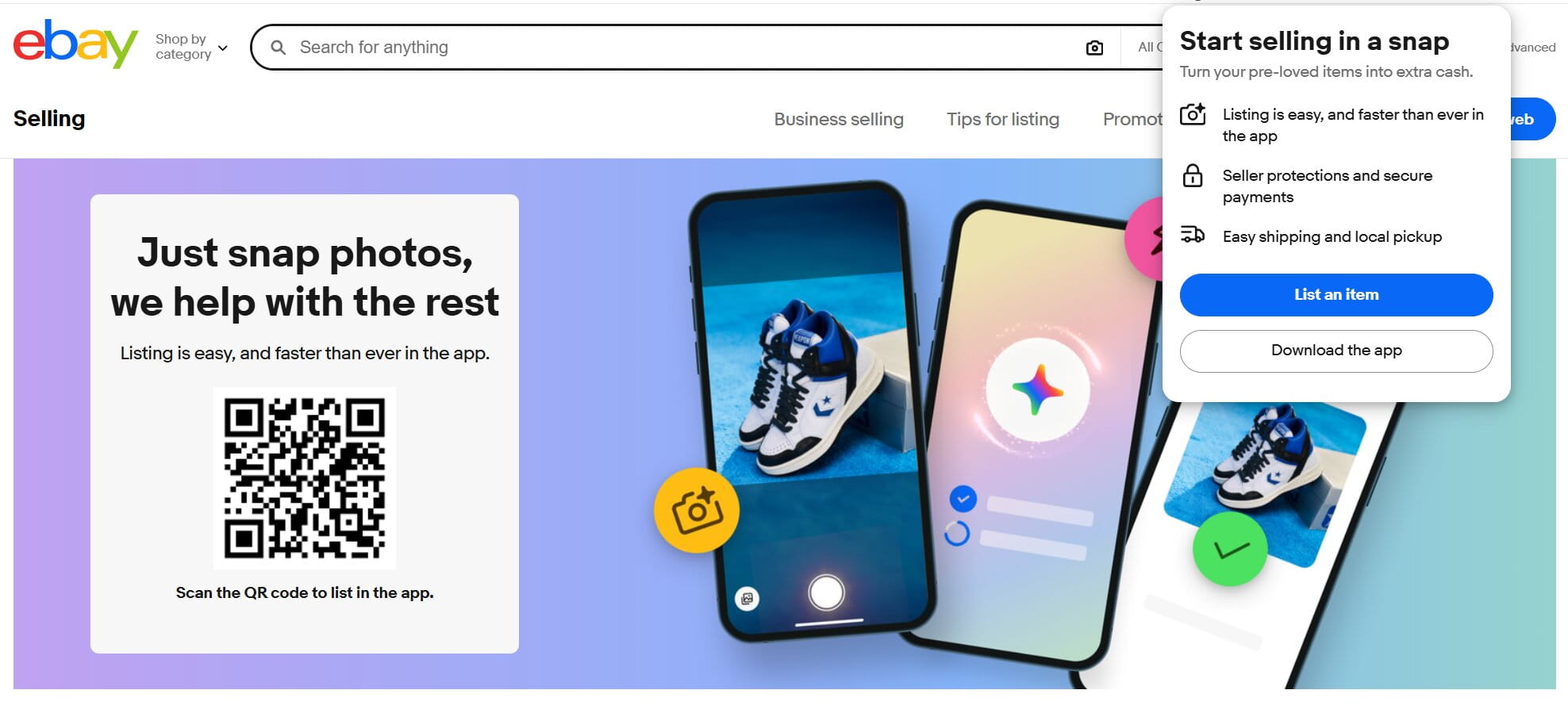
Create the account, complete identity verification and connect the required payout information.
Finish the seller profile before listing products. A complete account does not guarantee sales, but an unfinished seller profile adds needless friction for buyers looking at a new store.
Check your current selling limit as well. eBay determines limits by account rather than publishing one universal allowance for every new seller. You can see yours inside Seller Hub.
Do that before buying a large batch of inventory. There is little value in owning 200 products when the account cannot list them yet.
eBay explains how the limits work on its selling limits help page.
3. Find Products With Evidence of Demand

Start with completed transactions.
The Sold Items filter is useful because it separates market demand from seller optimism. Look for repeated sales, comparable condition and a reasonably stable selling range.
Then search for a cheaper source.
Amazon promotions, retailer clearance sections, local shops and overlooked listings can all work. A smaller discount on a product that sells several times a week is often more useful than a spectacular discount on something that hardly moves.
Product finders can speed up this stage. Easync can help surface sourcing opportunities and reduce the amount of manual searching involved in amazon to ebay arbitrage.
4. Build Listings Buyers Can Understand Quickly
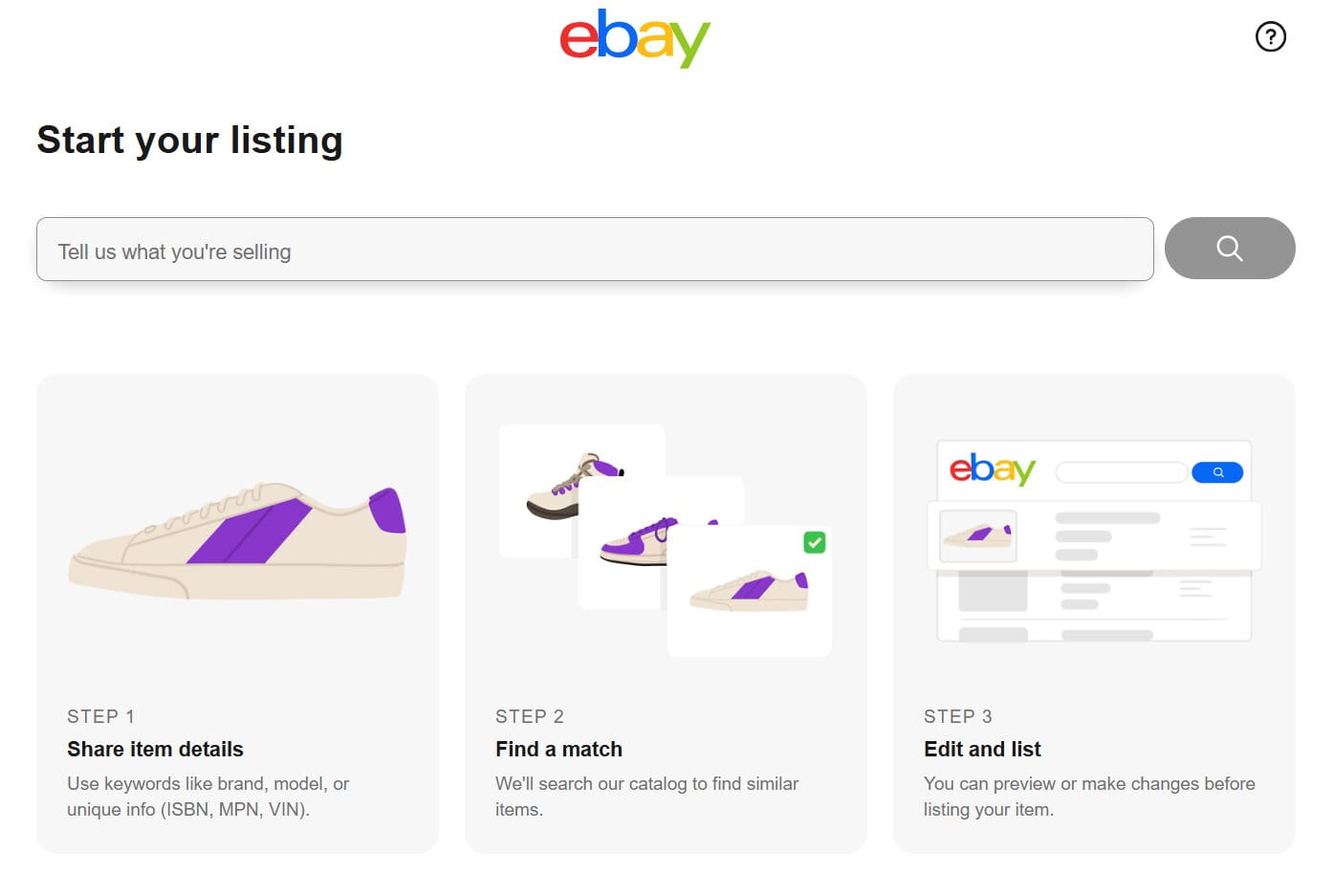
Study successful sold listings for the same type of product. Pay attention to the title, photographs, item specifics, condition details and shipping promise.
Templates can reduce repetitive work, especially once the catalogue grows. Easync also provides tools for sellers working with Amazon-sourced products.
Use accurate images that you have permission to publish. Complete the relevant item-specific fields rather than hiding important information inside a long description.
Images matter because buyers cannot physically inspect the product. Search Engine Journal reported research in which 62% of shoppers said customer photos influence purchase decisions.
Pricing should come from completed sales and current competition. The cheapest active seller is not automatically the correct benchmark if that seller has been sitting on the product for three months.
5. Automate Work That Is Actually Repetitive
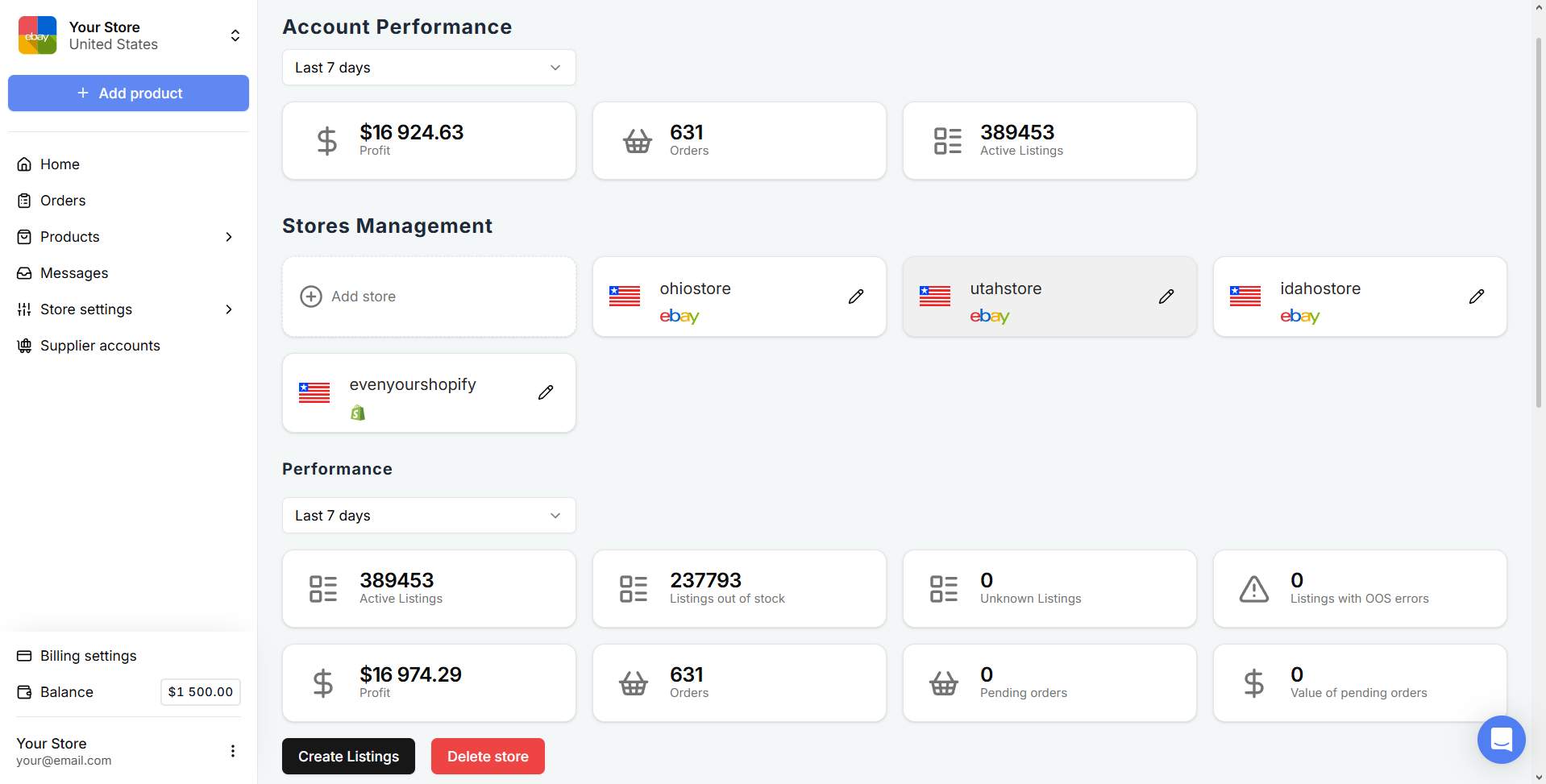
Automation becomes more useful as the catalogue gets larger.
Price monitoring is an obvious example. If your source cost changes frequently, checking every product manually becomes impractical.
Easync can monitor source prices and adjust eBay pricing according to configured margins. Its pricing page also shows the current listing and order limits for each plan.
Stock monitoring serves the same purpose. A listing should not remain available after the source product disappears.
For sellers specifically researching amazon to ebay arbitrage software, that distinction is useful: some products are primarily research tools, while others are built to manage listings and operations after a product has already been selected.
6. Review What Sold and What Did Not
Do not keep weak listings alive simply because you spent time creating them.
Look at sales, margin, sell-through time, returns and customer questions. Those records tell you which categories deserve more capital.
When one product type performs consistently, expand carefully. Adding hundreds of unrelated listings can make it harder to see what is actually driving profit.
Best eBay Arbitrage Software in 2026
There is no single tool that does every part of arbitrage equally well.
Some software focuses on finding products. Other platforms are designed around listing management, inventory, repricing or fulfilment. The best ebay arbitrage tool for a particular seller depends on where the manual workload is accumulating.
| Software | Main use | Regular monthly pricing | Annual pricing | Strongest use case |
|---|---|---|---|---|
| Easync | eBay automation and sourcing workflows | $49.99 to $219.99 across four main tiers | Monthly plans | Repricing, stock monitoring and order workflows |
| ZIK Analytics | eBay product and competitor research | PRO and PRO+ plans | Lower effective monthly pricing available | eBay-native market research |
| AutoDS | Multi-channel dropshipping automation | Varies by channel and capacity | Annual discounts available | Sellers managing several channels |
| Tactical Arbitrage via Seller 365 | Amazon-side product sourcing | $69/month for Seller 365 Standard | $65/month equivalent billed annually | Large-scale retail scanning for Amazon sellers |
Easync
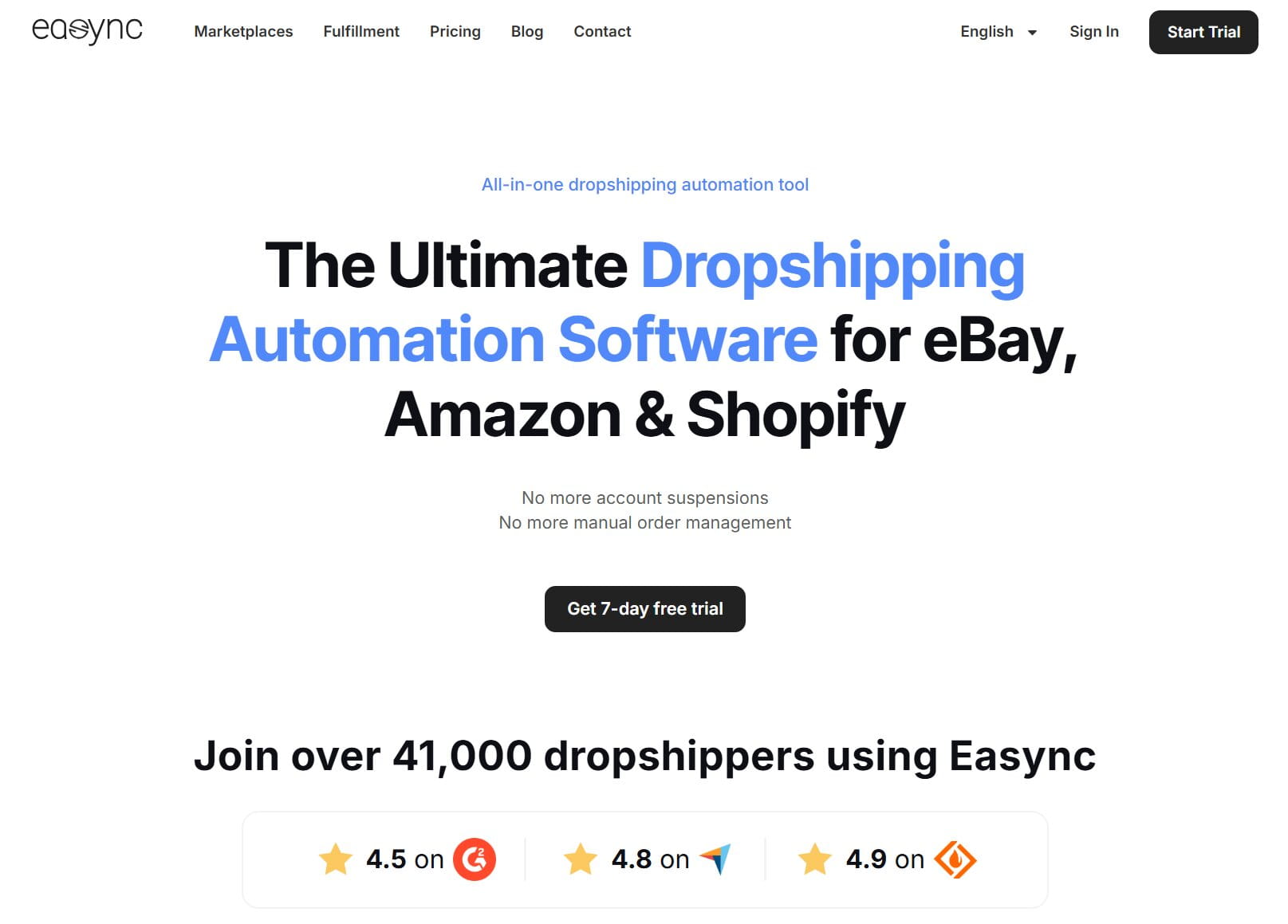
Easync covers much of the operational side of an eBay catalogue.
Its regular monthly pricing starts at $49.99 for Basic and $65.99 for Progressive. Advanced is listed at $89.99, while Expert has a regular list price of $219.99.
Basic includes capacity for 2,000 repriced listings and 200 automatic orders. Progressive raises those limits to 3,000 and 300, while Advanced supports 4,000 and 400. Expert is intended for substantially larger catalogues.
The appeal here is not that the software finds a magical product nobody else can see. It is that repetitive catalogue work can be handled without checking source prices and stock manually all day.
ZIK Analytics
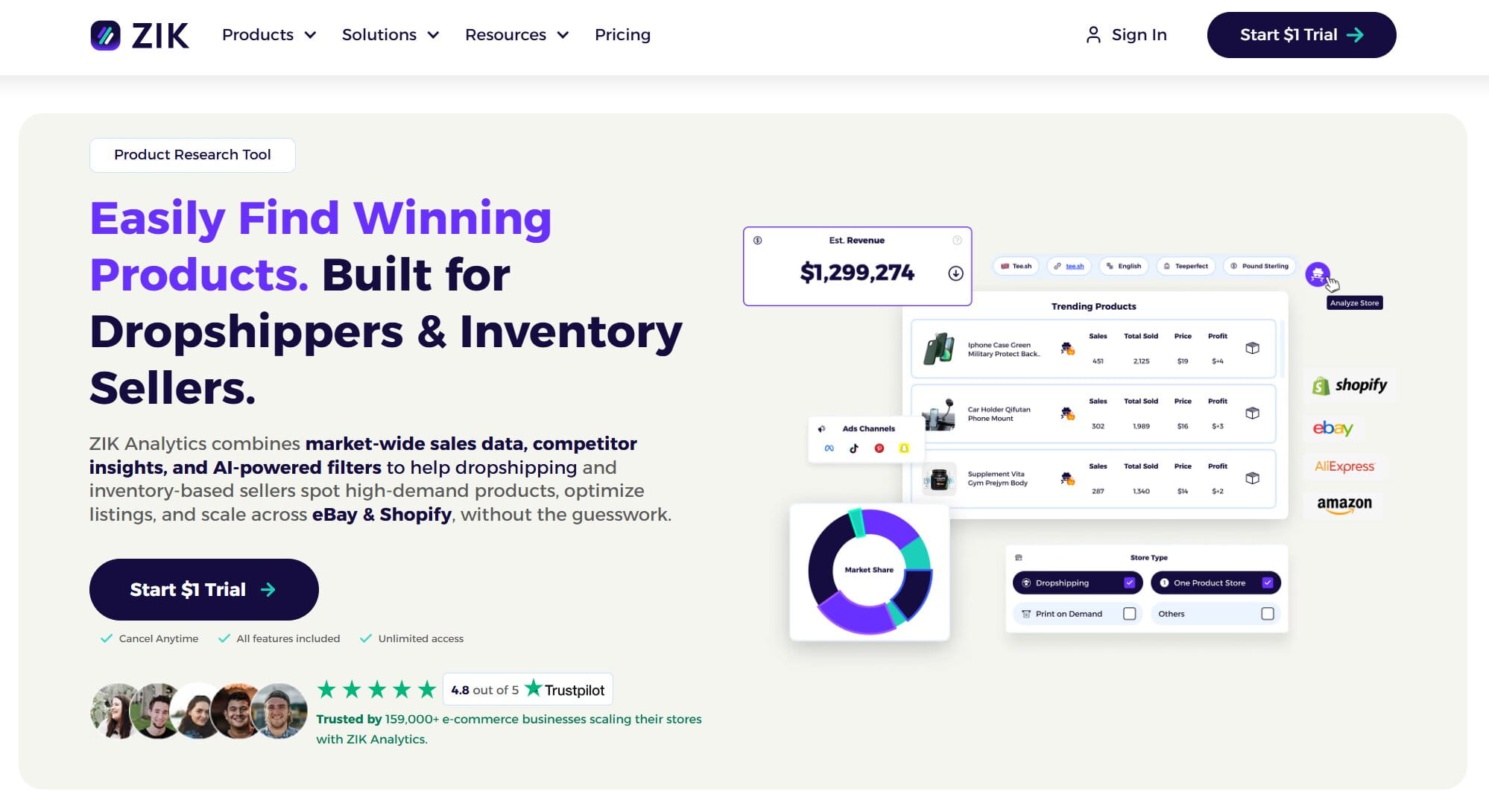
ZIK Analytics is much more research-oriented.
It is built around eBay data, including product research, competitor analysis and listing research. A seller could use ZIK to decide what is worth buying, then use a separate automation platform to manage those items afterward.
That makes the pairing logical for sellers whose bottleneck is both discovery and operations.
AutoDS

AutoDS takes a broader multi-channel approach.
Pricing depends on the marketplace and the number of products being managed, which is important when comparing it with a flat eBay-focused subscription. A seller using several channels may value that structure differently from someone who only needs an eBay storefront.
Before choosing it, price the exact combination of channels you intend to use rather than comparing only the cheapest advertised entry plan.
Tactical Arbitrage and Seller 365
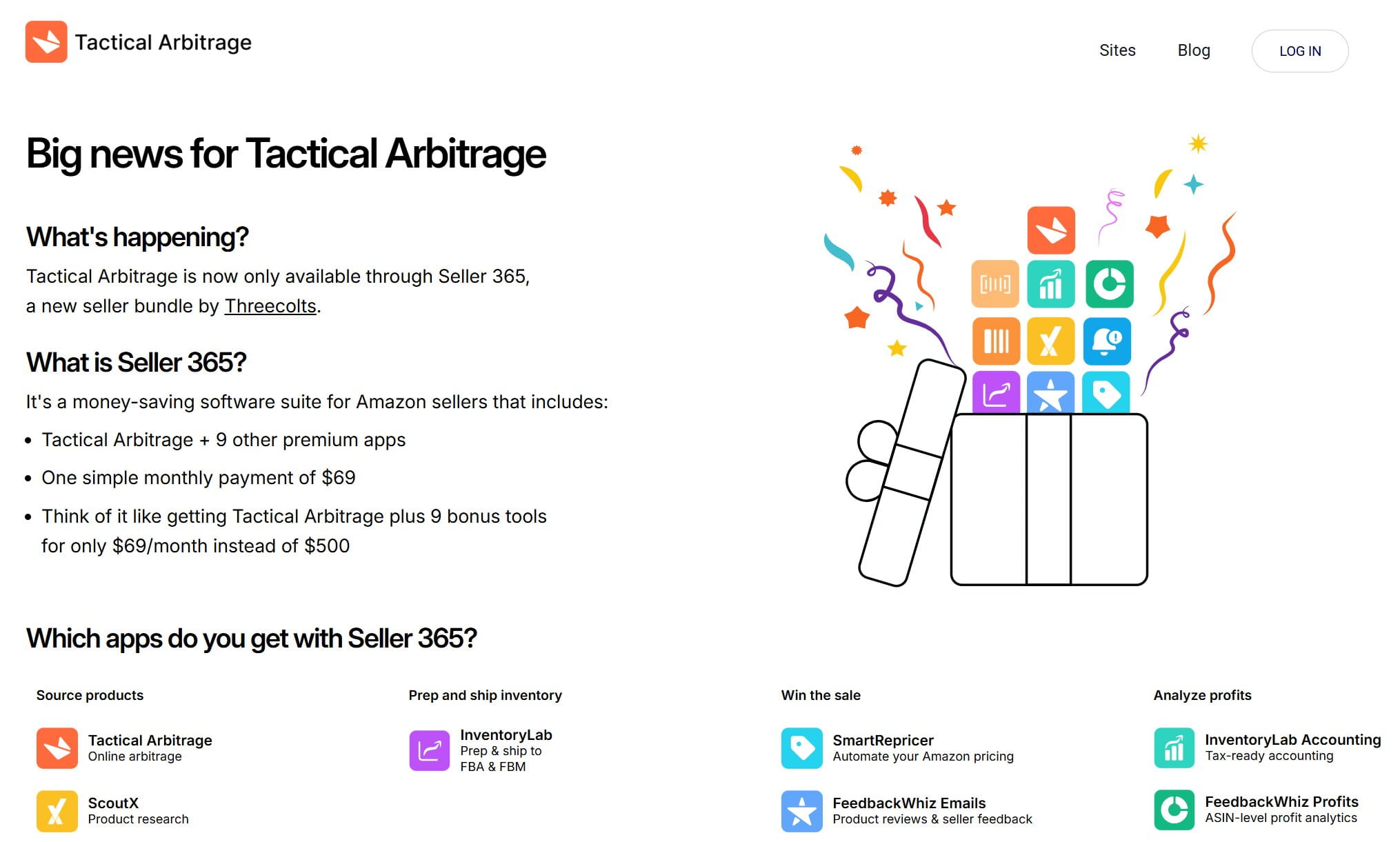
Tactical Arbitrage is now sold as part of Threecolts’ Seller 365 rather than as the old standalone subscription.
Seller 365 Standard is listed at $69 per month, or the equivalent of $65 per month with annual billing. Tactical Arbitrage is one of the tools included in the bundle.
Its main job is sourcing for Amazon. It scans a large number of retail sites and helps compare potential purchases against Amazon data.
For that reason, it should not be confused with dedicated amazon to ebay arbitrage software. It is more useful to sellers who use Amazon as a selling destination or who run several resale models at once.
Pay for the level of software you actually need. Extra capacity has no value while half of it sits unused.
eBay Arbitrage Tips That Matter in Practice
Research the Category, Not Just One Product
Two products with the same apparent margin can behave very differently.
A small home accessory may ship cheaply and produce few returns. Clothing introduces sizing issues. Used electronics may require testing. Auto parts can involve compatibility questions that create costly returns if the listing is vague.
Look at the category’s completed sales, shipping profile, return risk and competition before committing a significant amount of inventory.
When comparing categories, tools such as Easync’s eBay fee calculator can help you check whether a seemingly attractive price survives the actual marketplace costs.
Compare Against Sold Prices
An Amazon product priced at $25 and an eBay listing priced at $70 do not automatically create a $45 opportunity.
The $70 listing may never have sold.
Check actual completed transactions, then subtract the full cost of getting the item to the buyer. That simple habit eliminates a large number of bad purchases.
Use Retail Clearance Selectively
Physical clearance still works because markdowns are local and inconsistent.
Store apps can help you check availability before making the trip. Once there, compare the barcode or exact model against eBay sold results rather than buying because the discount sticker looks impressive.
Managers and staff may also know when departments are being cleared or when seasonal stock is due for another markdown.
Improve Search Visibility Without Stuffing Listings
eBay search depends heavily on relevance.
Use the terms buyers genuinely use for the product, fill out item specifics and make the title readable. Do not sacrifice clarity to squeeze in every possible synonym.
Easync has a separate guide to optimizing eBay listings for SEO, while eBay itself provides research tools for checking demand and marketplace performance.
Photographs should make condition obvious, particularly for used goods. If buyers repeatedly ask the same question, the listing is probably missing something.
Testing title wording and the main image can be useful when you have enough comparable listings to learn from the result.
Expand Only After You Understand the First Category
Diversification can protect a store from seasonal demand and individual product failures, but expanding too early usually creates noise.
Track which products sell, how long they take to move and how much money remains after all costs. Shift capital toward categories that keep producing good results.
Trends are worth watching, but a sudden spike in attention should not replace the normal demand and margin checks.
Use Pricing That Fits the Product
Fixed-price listings make sense for many repeatable products. Auctions can suit items where demand is strong but the fair market value is harder to pin down.
Bundles can also work when several low-value related products are expensive to ship separately.
Whatever format you use, compare the final economics rather than focusing only on the headline selling price.
Treat Customer Service as Part of the Margin
Returns, disputes and poor feedback all cost money.
Respond to buyers while the issue is still small. Describe condition accurately. Make the return policy easy to understand.
A slightly higher-margin product that generates constant complaints may be worse inventory than a less exciting item that sells cleanly every week.
Online Arbitrage Business Ideas: UK Ecommerce Reselling Strategies

Anyone searching for online arbitrage business ideas UK ecommerce reselling strategies will quickly notice that much of the available advice is written for US sellers.
The basic arbitrage model travels well. Tax, customs, sourcing and postage do not.
The UK resale market is particularly active. eBay’s UK research found that 46% of UK consumers buy pre-loved goods at least once a month and that 92% intend to maintain or increase their spending on second-hand products.
Globally, eBay’s 2025 Recommerce Report found similarly strong interest in pre-owned buying.
Refurbished technology is one example. Phones, tablets, headphones and older electronics can command solid resale prices when condition is graded accurately.
Cross-border sourcing is another option. An item listed cheaply on eBay.de may attract a stronger price on eBay.co.uk, or the reverse. Currency conversion, shipping and import charges need to be included before treating the difference as margin.
Offline sourcing remains relevant too. Charity shops, car boot sales and local auctions produce inventory that automated online scanners never see.
High-street and supermarket clearance can work for the same reason. Many sellers scan Amazon constantly. Far fewer monitor the clearance shelves of individual UK chains with the same intensity.
Tax deserves particular care.
If you buy products with the intention of reselling them for profit, HMRC is likely to regard the activity as trading. The UK’s trading allowance covers up to £1,000 of gross trading income in a tax year.
Platform reporting is a separate issue. GOV.UK explains the reporting rules for online sellers, including the thresholds used by digital platforms when supplying seller information to HMRC.
Crossing the platform-reporting threshold does not itself create a new tax. It means the platform supplies information to HMRC.
Sellers operating both amazon and ebay arbitrage should also remember that turnover does not reset because sales happen on different marketplaces.
12 Ways to Make Money With eBay Arbitrage
The following methods all use the same basic principle, but they differ sharply in sourcing effort, inventory risk and the knowledge required.
| Method | Main source | Suitable starting scale | Main difficulty |
|---|---|---|---|
| Retail arbitrage | Physical retailers | Small test inventory | Time spent visiting stores |
| Amazon to eBay arbitrage | Amazon | Small to medium | Source prices change frequently |
| Collectibles and vintage | Collectors, fairs, local sales | Niche-dependent | Authentication and condition |
| Niche electronics | Classifieds and specialist sellers | Moderate | Testing and model knowledge |
| eBay to eBay arbitrage | eBay itself | Small | Finding overlooked listings before others do |
| Seasonal products | Post-season clearance | Moderate | Storage and timing |
| Local auctions and estate sales | Auctions and estates | Small to moderate | Buyer’s premiums and condition |
| Geographic arbitrage | International marketplaces | Moderate | Customs, currencies and shipping |
| Software-assisted research | Online data sources | Subscription plus inventory | Stale or misleading data |
| eBay to Amazon arbitrage | eBay | Moderate | Amazon restrictions and condition standards |
| Liquidation lots | Liquidators and B-stock suppliers | Higher risk | Unsellable units |
| Non-Amazon online retail | Major and specialist retailers | Small to moderate | Retailer-specific limits and stock changes |
1. Retail Arbitrage

Retail arbitrage starts in a physical store.
You find a product on clearance or promotion, confirm that the same item has a stronger selling price on eBay, buy it and resell it.
Imagine a pair of shoes normally sold around $70 but marked down to $35. The discount creates room, but you still need to check recent eBay sales, size demand, fees and postage before buying.
A large retailer such as Walmart is a common source. Easync has a separate guide covering selling and sourcing around Walmart.
Store inventory apps make these trips more efficient because they let you look for clearance stock before driving across town.
In the aisle, scan the exact model or barcode. Similar products can have very different resale values.
2. Amazon to eBay Arbitrage
Online arbitrage is the online version of retail arbitrage.
This is the classic amazon ebay arbitrage model.
Instead of walking through physical stores, you compare Amazon listings with eBay sales from your computer. Amazon’s scale and frequent price changes create a steady stream of possible gaps.
Start with products that already sell on eBay. Then check Amazon pricing history if available so you can see whether the source price is genuinely low or simply moving inside its normal range.
Other online sources can complement Amazon. Clearance retailers and sites such as Overstock may occasionally produce pricing gaps that are less heavily scanned.
Alerts are useful because some discounts disappear quickly.
Do not forget fulfilment. For amazon to ebay arbitrage, buy the stock and receive it before shipping it to your eBay customer. Having Amazon fulfil the eBay order directly is not the compliant version of this model.
3. Collectibles and Vintage Items
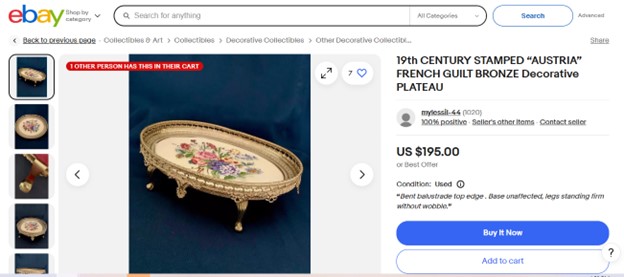
Knowledge is often worth more than software in collectibles.
Vintage toys, trading cards, coins, memorabilia, glassware and specialist hobby products can be difficult for general sellers to price accurately. Someone who knows the niche can recognise an unusual edition or overlooked condition detail immediately.
Follow the communities where collectors actually talk. Forums, specialist groups, conventions and local clubs often reveal changes in demand earlier than broad product-research platforms.
Relationships are useful here too. Some collectors have valuable inventory but no interest in photographing, listing and shipping items online.
Buying directly from those sellers can create a source that competitors cannot simply reproduce with a scanner.
4. Niche and Discontinued Electronics
Older electronics can remain desirable long after manufacturers stop selling them.
Previous-generation game hardware, specialist audio equipment, discontinued accessories and unusual components sometimes have a loyal audience with few remaining retail sources.
Research the exact model number. Small hardware revisions can change the value significantly.
Local marketplaces can be good hunting grounds because casual sellers often price old electronics by age rather than by current collector demand.
Testing matters. A profitable-looking device becomes expensive inventory very quickly if it arrives with a fault you failed to notice.
5. eBay to eBay Arbitrage
ebay to ebay arbitrage uses price differences inside the same marketplace.
Why would the same item be cheap and expensive on eBay at the same time? Presentation is one reason.
A seller may misspell the product name, leave the model number out of the title, upload dark photographs or choose the wrong category. The item receives less exposure, attracts fewer bidders and may close below its normal value.
Misspellings are the obvious tactic, although many sellers already search for them.
Poor photography and incomplete titles can be more interesting. Search inside descriptions as well as titles when looking for specific products. Save searches for recurring opportunities so you see new listings quickly.
After buying, improve the presentation, photograph the item properly and relist it at a price supported by completed sales.
6. Seasonal Products
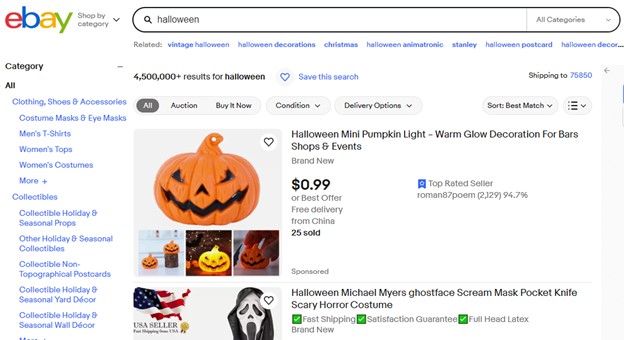
Seasonal arbitrage depends on buying when demand is quiet.
Halloween decorations are usually easier to source after Halloween than during October. The same logic applies to Christmas goods, summer equipment and back-to-school products.
Capital may remain locked in inventory for months, and storage starts to matter when several seasonal buys overlap.
Plan the selling window before purchasing. Listing before peak demand can be better than waiting until everyone else puts identical stock on eBay at the same time.
7. Local Auctions and Estate Sales
Local auctions expose inventory to a much smaller buying audience than eBay does.
That gap can create value.
Collections, tools, household goods, vintage items and specialist equipment may be sold because the owner wants the property cleared quickly rather than because someone has researched the highest possible online price.
Check the auction catalogue before attending and look up realistic eBay comparables.
Include the buyer’s premium in your maximum bid. It is easy to win an auction and discover afterward that the fees removed most of the margin.
Inspect condition whenever the sale allows it. Photos rarely show every defect.
8. Geographic Arbitrage
The same item can carry different prices in different countries.
Collectors may be common in one region and scarce in another. A particular model may have been distributed heavily in Europe but not the US. Exchange-rate movement can widen the gap further.
That creates geographic arbitrage.
For US sellers, the economics of low-value imports have changed considerably. The earlier version of this article referenced the US de minimis changes through the Federal Register.
Shipping and customs are much more important here than in domestic sourcing. Calculate the landed cost before purchasing, not after the parcel reaches customs.
Currency conversion also deserves attention. The headline exchange rate on a finance website is not necessarily the rate your card issuer, marketplace or payment provider will use.
Geographic price differences can be substantial, but every additional border adds another cost or delay that needs to be priced into the deal.
9. Software-Assisted Product Research
Modern research tools can scan far more products than one seller could check manually.
That is useful, but the output should be treated as a shortlist.
Set your buying criteria before opening the results. Decide what margin, competition and sales activity you are willing to accept. Otherwise a large scan simply produces thousands of possible products with no clear reason to buy any of them.
Check the live source page before purchasing. Price and stock data can change between a scan and your decision.
Competitor listings also need context. A high asking price is only interesting if similar products are actually selling.
For someone comparing ebay arbitrage software, the useful question is not how many products a program claims to scan. It is whether the data helps you reject weak deals quickly.
More product research and ecommerce sourcing material is available on the Easync blog.
10. Reverse Flips: eBay to Amazon Arbitrage
ebay to amazon arbitrage sends the product in the opposite direction.
You find an underpriced item on eBay and resell it through Amazon when Amazon buyers are paying more.
This can happen with poorly presented eBay listings, auctions or products whose Amazon catalogue already has strong demand.
Amazon introduces its own complications. Brands and categories may be restricted for your seller account, so check listing eligibility before purchasing inventory.
Condition standards can also be stricter than on eBay.
Amazon’s drop shipping policy also requires the seller to remain clearly identified as the seller of record.
The phrase ebay amazon arbitrage is sometimes used for sellers who switch directions depending on the product. The practical idea is sensible: source where the item is undervalued and sell where verified demand supports the better net return.
Sellers working across ebay and amazon arbitrage therefore need to understand the rules of both marketplaces rather than assuming the same listing and fulfilment practices apply everywhere.
11. Liquidation Lots and Customer Returns
Liquidation produces low acquisition costs, but the individual units are less predictable.
A pallet may contain new products, damaged packaging, returns, missing accessories and units that are not worth listing at all.
Evaluate the lot as a whole.
If enough of the inventory can be sold profitably, the unusable remainder may be acceptable. If the deal only works on the assumption that every unit is perfect, it is probably too fragile.
Start with a quantity you can inspect, photograph and store without turning the experiment into a logistics problem.
The hidden cost here is labour. Sorting 100 mixed products can take much longer than sourcing 100 identical new units.
12. Cross-Platform Retail Sourcing Beyond Amazon
Amazon gets most of the attention, which is exactly why other retailers can be interesting.
Walmart, Target, Costco, Best Buy and specialist online stores all run promotions and clearance events. Fewer arbitrage sellers monitor every one of those sites continuously.
The workflow is similar to amazon and ebay arbitrage: confirm demand on the selling marketplace, calculate the full cost, buy the inventory and manage price changes after listing.
Each source has its own quirks. Purchase limits, cancellation behaviour, return policies and inventory accuracy can differ considerably.
A mature sourcing system does not need twenty retailers. A small group of dependable sources is easier to monitor and gives you alternatives when one store stops producing worthwhile deals.
Searches such as arbitrage ebay amazon often lead sellers to focus entirely on the two largest marketplaces. That can be a useful starting point, but it should not prevent you from checking smaller sources where competition may be lighter.
eBay Arbitrage FAQs
Is eBay arbitrage legal?
Yes. Buying genuine goods and reselling them for a profit is legal in ordinary circumstances. Sellers still have to follow eBay’s selling policies, intellectual-property rules and applicable tax laws.
Is Amazon to eBay arbitrage allowed?
It can be done in a policy-compliant way when you buy the product as inventory, receive it and then fulfil the eBay order yourself.
Listing an item first and having Amazon or another retailer send it directly to the eBay customer is prohibited by eBay’s product sourcing policy.
How much money do I need to start eBay arbitrage?
A large inventory budget is not necessary for a first test. Starting with a few products and enough cash to cover purchase, shipping and possible returns gives you a chance to learn the workflow without tying up a large amount of capital.
The useful starting amount depends heavily on the category. A seller testing used books needs far less cash than someone sourcing electronics.
What is eBay to eBay arbitrage?
It means buying an underpriced item on eBay and later reselling it on eBay.
Poor titles, weak photographs, incorrect categories and auctions ending at inconvenient times can all reduce competition for the original listing.
Which eBay arbitrage software is best for beginners?
Choose the software around the work you want to remove.
ZIK Analytics is focused on eBay research. Easync combines sourcing-related functionality with repricing, stock monitoring and order automation. Tactical Arbitrage is aimed more heavily at Amazon-side sourcing.
A beginner who has not yet learned to identify a profitable product usually gains more from research than from automating a large catalogue.
How much does eBay take from a sale?
For most categories on a standard US account, eBay currently charges a 13.6% final value fee on the total amount of the sale up to $7,500, plus a $0.30 or $0.40 per-order fee.
Different categories and Store subscriptions can have different fee structures, so check the current eBay selling fee page for the category you intend to sell.
Can eBay ban an account for arbitrage?
Arbitrage itself is not the violation.
Problems usually come from the way an order is sourced or fulfilled, repeated cancellations, shipping failures, counterfeit products or other policy issues.
A seller who owns the inventory and fulfils orders correctly avoids the main sourcing-policy problem associated with retail dropshipping.
Do UK eBay arbitrage sellers have to pay tax?
Buying goods specifically to resell for profit is generally treated as trading.
The UK trading allowance covers up to £1,000 of gross trading income per tax year. Platform reporting rules are separate from the tax calculation; GOV.UK provides additional information for online sellers.
Keep purchase and sales records from the beginning rather than trying to reconstruct them later.
Final Thoughts
eBay arbitrage still offers a practical route into online resale in 2026, particularly for sellers who want to learn product research before committing to larger inventory programmes.
The opportunity is not simply the difference between two prices. Fees, shipping, account rules, competition and inventory speed decide whether that difference becomes profit.
Start with one sourcing method and enough products to see a pattern in the results. Learn which items sell quickly, which attract returns and which only looked attractive because the source price was low.
Software becomes valuable once the repetitive work starts taking time away from sourcing. Easync can handle repricing, stock monitoring and other operational tasks, while dedicated research tools can help narrow down products before you buy them.
The strongest approach to amazon to ebay arbitrage is fairly ordinary: buy inventory only after the numbers make sense, keep control of fulfilment, and use automation where it saves real work rather than where it merely adds another dashboard.
If you want to test the workflow, you can request an Easync trial.