
- articles
Zendrop Dropshipping Review 2026: Is It Worth It?
Zendrop is one of the most popular dropshipping platforms in the USA. Zendrop was launched in 2019 and has gained 3 million customers since. It has positive ratings on public platforms like TrustPilot and offers curated suppliers, warehouses, private label, fast shipping, custom packaging and print-on-demand services.
In this blog, I’ve tested Zendrop in detail and compared it against other platforms I’ve tried like Doba, CJDropshipping, Dsers, and Easync. For the past week, I’ve been testing Zendrop’s products, order sync, automations, etc across my own Shopify store to see whether it is useful to build a serious business or just a gimmick platform. Along with my opinions, I will discuss the challenges dropshippers face in 2026, how Zendrop handles them or falls short on, and how dropshippers can make the right decision.
What is Zendrop and How Does It Work?
Zendrop is a dropshipping platform that provides you with curated suppliers from China and USA, warehouses for storage and faster delivery, custom packaging options, print-on-demand services and personal agents to help you source cheaper products or negotiate prices.
Zendrop handles most of the dropshipping workflows and requirements one can have. It gives you a supplier network to choose from, a clean dashboard to browse products and manage orders, and POD and custom packaging options for products in their own warehouses. If we compare Zendrop with other dropshipping platforms, it is closest to CJDropshipping in terms of features but caters to a slightly different customer base.
My Review of Zendrop Dropshipping
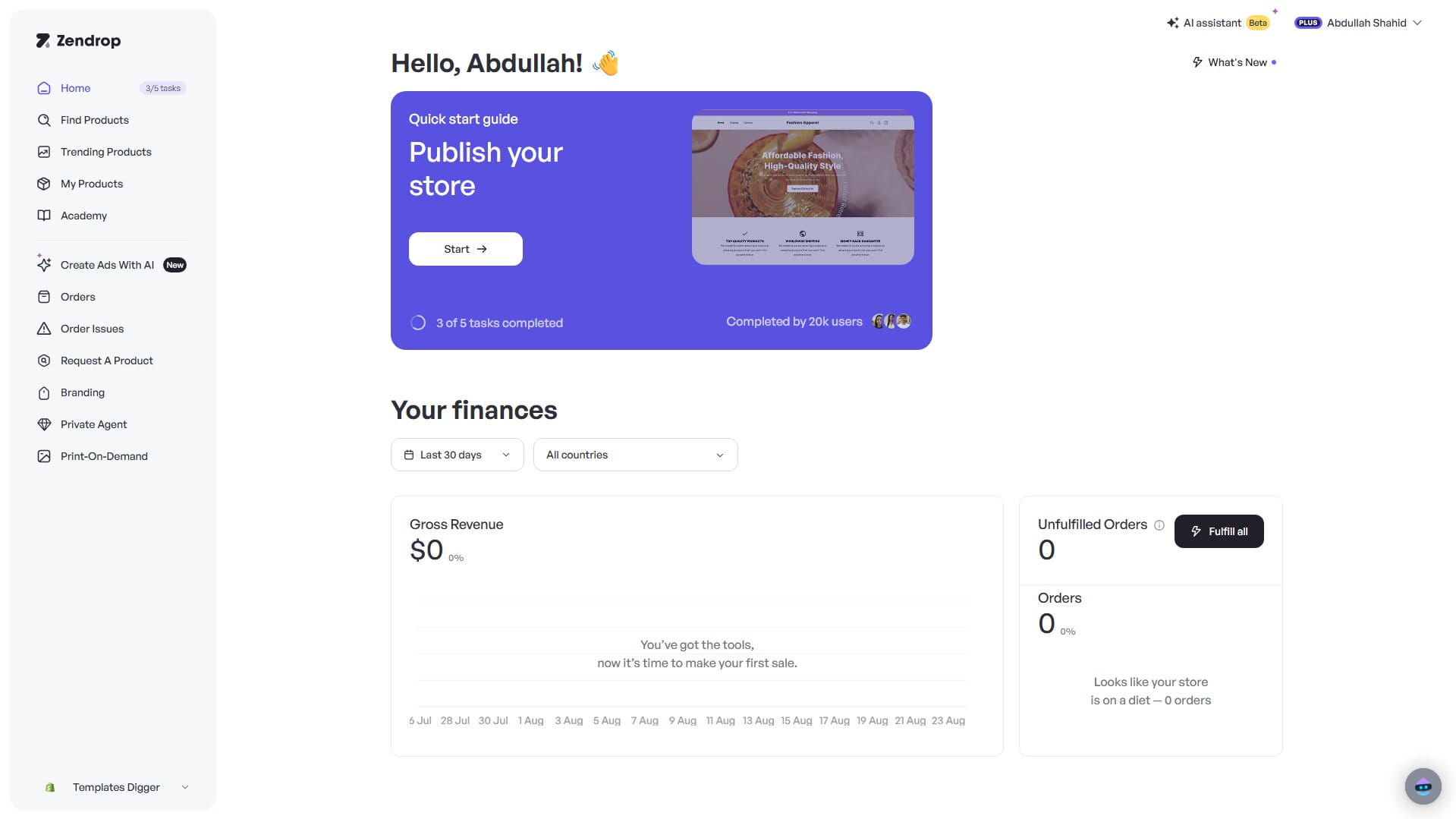
On first look, I think Zenrop is pretty, easy to use and clean. I am tired of seeing densely populated dashboards with timers, countdowns, and offers flying in, trying to upsell me subscriptions and products. Zendrop is clean, and easy to navigate. I don’t feel like I am on Alibaba or Amazon where they use every pixel of screen to show me something to buy.
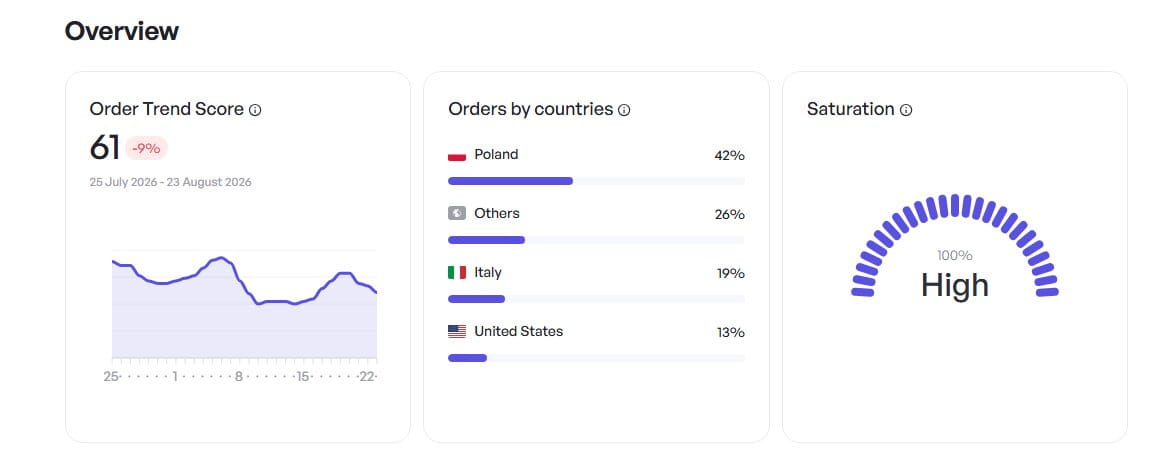
Zendrop’s product pages feel clean, responsive and modern. For each product, you can see its delivery time for each country, product score, trend and which country it is most popular in. Based on these stats, you can analyze what and where to sell. I love the fact that only necessary information is available on the product page, not unrelated offers. However, there isn’t a data dashboard in Zendrop to search and compare product trends which could have been more useful than the minimal info you get for each product separately.
Order Fulfillment and Product Sync Automation
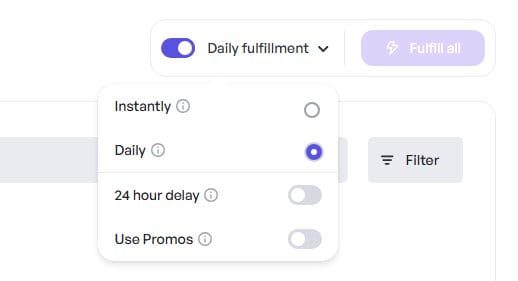
Zendrop is the only platform other than Easync that truly auto-fulfils orders on its own. If you don’t want to manually confirm and approve each order, auto-fulfill lets you pay for all orders at once, and let Zendrop dispatch them. You can set fulfillment rules like instant fulfillment, daily fulfillment, etc. Other platforms like DSers and CJDropshipping ask you to manually approve the order before it gets fulfilled by the platform.
The product sync feature is quick and easy to use. Just select the product, and sync to your store integration. I connected Zendrop with my Shopify account and all products were instantly synced to my store. When syncing products, you can change description, and price for each product. Zendrop lists a product at 10x their wholesale price on your store which is a lot in my opinion so you should edit each price before uploading. You can’t set a specific multiplier value like 2x or 3x and need to manually set each price yourself.
Branding and Print on Demand Services
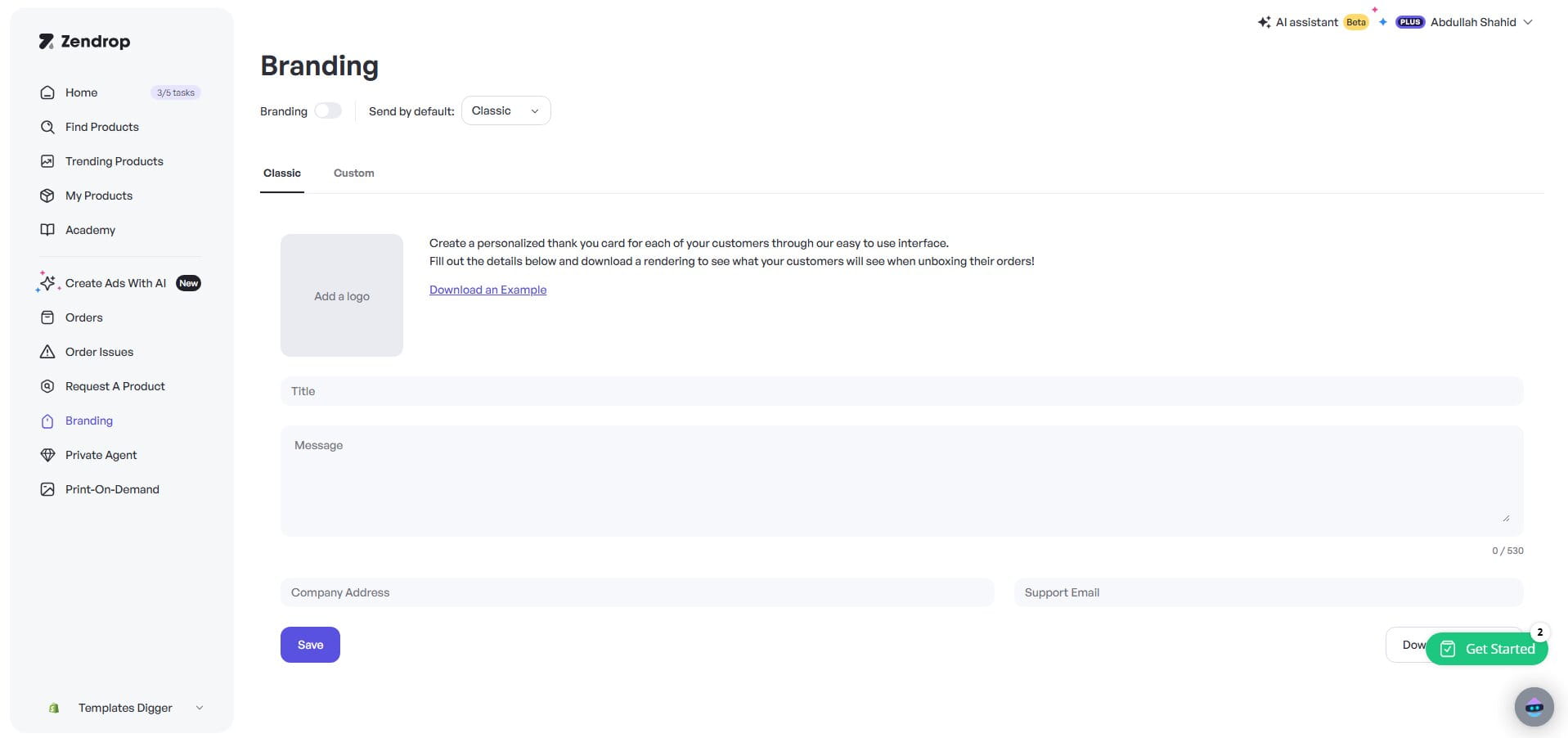
There is no custom packaging option in Zendrop. You can only add a custom branding card along with the order when it’s shipped from the warehouse. There is no option to print your own branded packaging like CJDropshipping lets you.
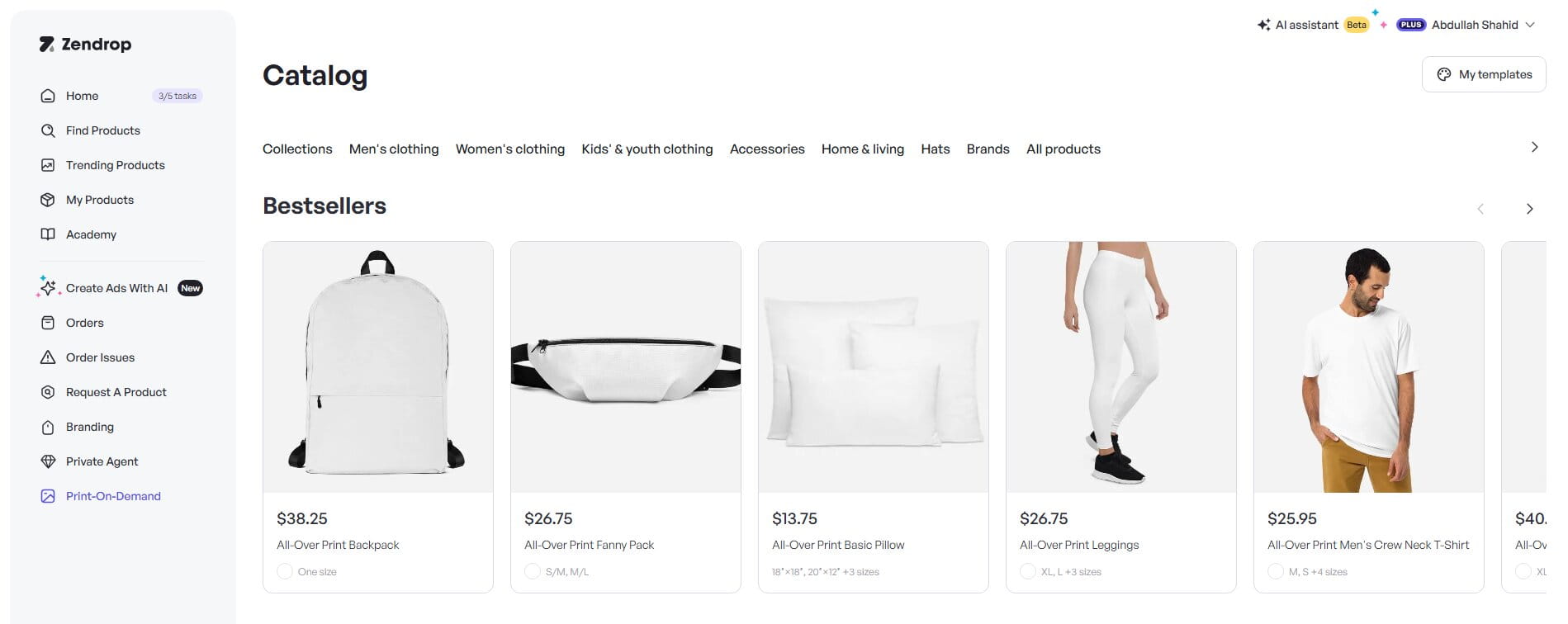
Zendrop’s print on demand services are extensive. They offer a huge catalog of products for printing but I find their prices a bit too high to squeeze solid profits from. You get bags, clothing items, pillows, mugs, keychains and anything you can think of printing.
Private Agent for Sourcing, and Warehousing
Private agent sourcing and warehousing support are key features of many successful dropshipping platforms. In Zendrop, if you get 20+ orders per month, you can hire a private agent to source products, negotiate better prices, help you manage warehousing, storage and shipping for faster shipping and maximum profits, and more. You can also use Zendrop’s warehouses as 3PL vendors for your own private label brand.
Zendrop Pricing Plans: The Hidden Cost of “Free”
Zendrop is not free to start with even if it advertises a free plan. The free tier only lets you browse the product catalog. There is no way to download product information or add it to your store. You have to manually copy-paste everything to add to your store but what’s the point if you can’t place an order on Zendrop with a free plan. So, you start with a $49/mo plan.
The $49/mo plan is just the starter. You can choose from 1M curated products, list on your store, place unlimited orders, and automate fulfillment. For Zendrop AI, print on demand, private agent services, coaching on dropshipping, weekly calls with experts, etc. are all included in the $79/mo plan.
If you want to get into Dropshipping, Zendrop isn’t free. For instance, if you use Shopify as your storefront, you’re paying $39/mo for Shopify and $49/mo for Zendrop in subscriptions every month.
What “Wholesale” Pricing Actually Means on Zendrop
Many sellers assume that they will get AliExpress style pricing on Zendrop. Super cheap products sold in the west with high markup. However, Zendrop adds their own markup on top of each product. Their curated supplier network with 1M products means that they control the price of every one of them. All the dropshippers using Zendrop get more or less similar pricing and are all competing on how to sell the cheapest.
Zendrop is not only making subscriptions, it is making delivery fees, warehouses, custom branding, print on demand orders, and everything that falls between you and the customer. Since Zendrop owns the ecosystem, it controls the prices.
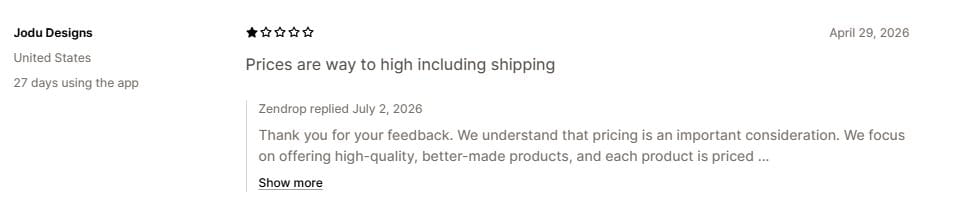
In fact, one Shopify review noted that Zendrop’s prices were “too high to turn a profit” on a $545 annual plan. CJDropshipping has the exact same model but has far cheaper subscriptions because they profit more from the markup than subscriptions. Zendrop is still a solid dropshipping platform but in 2026, you can’t expect high profit margins like we had back in the post Covid-19 ecommerce rush.
Zendrop Reviews: What Do Real Sellers Say?
Zendrop has over 20k reviews on Trustpilot with a solid 4.6 star rating. 76% of the reviews are 5 stars and praise how easy it is to use the platform and how helpful customer support is. I second that because the platform is indeed much better than DSers, Doba and CJDropshipping. Everything is easy to use and many customers have a positive experience with customer support.
However, on the negative side, almost everyone is complaining about high prices. Some sellers mentioned that their prices are close to retail rates from Amazon and Walmart and putting shipping costs and Zendrop’s subscription on top of that means you’re selling for a higher price than what’s on Amazon.
Moreover, their advertised shipping times are also wrong as per some reviews. Shipping from China is advertised as 7-12 days but takes 15 days. Even the US shipping times are 5-8 days and sellers can’t compete with Amazon at this rate.
Top Zendrop Alternatives for US/UK Sellers
Unlike CJ and Doba, Zendrop is an American company with most of its suppliers, delivery partners and warehouses based in the region. It was a great platform for US/UK sellers but decreasing profit margins and lack of automations mean that we need to look for suppliers. Based on my reviews and experience, I’ve listed a few names below with why I like or dislike them. I divide dropshipping platforms in two categories:
1. Closed Supplier Directories & Agent Platforms
Zendrop is also a closed supplier directory platform since it only offers a curated list of products. Similar competitors include Spocket, and CJDropshipping. I suggest Spocket for US/UK sellers because it’s Canadian (faster shipping times for US and CA audience) and because it has a really great market reputation. Spocket’s $59/mo plan is far more generous than Zendrop. It has 100 million products and includes AliExpress dropshipping as well. In higher tiers, you can also dropship Amazon and eBay products from your stores.
The second option is CJDropshipping but since it is a Chinese company, you have to bear longer delivery times. The obvious upside is higher profit margins, cheaper entry point and sourcing, and bigger supplier network. However, if your customers don’t like waiting 15-20 days for a delivery, don’t use this platform.
Platforms with closed supplier directories are great to start because they minimize the product hunt and re-uploading workflows. However, you are limited to their curated suppliers, and their own markups. Eventually, as the store grows, sellers usually go out looking for their own suppliers or source products from open marketplaces like Amazon, AliExpress, Walmart, etc. This is where the second type of dropshipping platform comes in.
2. Open-Marketplace Automation
The second type of dropshipping platforms are open-marketplace automation softwares. In these platforms, you won’t find top rated products, or curated directory, you would find automation tools that truly automate everything from order placement, to fulfilment, to order tracking, sync, and placements, all in one place. But where do the products come from? Open marketplace like Amazon, Walmart, eBay, AliExpress, etc.
The idea of open-marketplace dropshipping platforms like Easync is to source your own unique products that are not saturated, drop their links in Easync and let the tool handle store listing, pricing, profit margins, orders, shipping tracking, etc.
I love this option because if I am sourcing from Amazon and selling on Shopify, Amazon will handle express shipping, returns and order tracking. I get to make an easy 15%-20% profit by choosing the right product and marketing it correctly. My customers get faster shipping, and great quality because it was sourced from an open marketplace that keeps their checks in place.
Why Easync.io Beats Zendrop for Scaling E-Commerce Stores
Zendrop is still profitable for many sellers even in 2026. However, when they hit a growth ceiling, they start expanding to other platforms and product directories. Open source marketplaces like Amazon, Walmart, and AliExpress are great ways to expand your store’s product lineup. Easync provides the easiest entry into open marketplaces.
When a store scales, verifying and approving orders, updating tracking IDs for each order, checking product prices regularly and updating your Shopify prices to keep up, etc. become a hassle.
One customer on Shopify wrote that a product price changed suddenly and their profit margins diminished. It took a while for them to notice the change in price. Price fluctuations eat profits, and can even cost more than what the customer pays you on their storefront. Easync avoids it by automatically checking prices every 15 mins and repricing your product if the price changes. You can set repricing logic to defend a certain percentage of profit margins.
Easync also offers an automatic fulfillment feature called FBE (fulfillment by Easync). Instead of waiting for manual approval, Easync fulfills the order as it comes in so your customer can have their product dispatched the same day without you needing to spend hours manually placing orders. You get a truly automated dropshipping experience with Easync.
Zendrop vs Easync: Head-to-Head Comparison
| Feature / Metric | Zendrop | Easync.io |
|---|---|---|
| Sourcing Model | Closed supplier network with its own US/China warehouses | Direct sourcing from Amazon, Walmart, and AliExpress |
| Entry Cost / Plan | Free to browse only. Must pay at least $49/mo to sell | $49.99/mo (Basic plan, incl. 2,000 repriced SKUs + 200 auto-orders) |
| US Shipping Speed | 3–5 days (from Zendrop’s US warehouse), 10–15 days (from China) | 1–3 days (via Amazon Prime/Walmart + direct shipping) |
| Price & Stock Sync | Periodic sync on Zendrop’s side; no auto-repricing | Continuous 15-minute checks (live price & availability updates) |
| Order Fulfillment | Fully automated but lacks tracking info sync features | Fully automated (Fulfillment by Easync, auto-order placement/tracking) |
| Marketplace Support | Shopify, TikTok Shop, Wix (no native eBay/WooCommerce app) | eBay, Amazon, Shopify, WooCommerce, Wix (multi-store support) |
| Custom Branding / POD | Branded thank you card only | None |
FAQ: Zendrop Dropshipping
Is Zendrop actually free?
Zendrop has a free plan that only lets you browse products. To sell, you must have a paid plan. Zendrop’s free plan marketing is a little misleading as you can’t add products to your store, or place orders. You can only visit their catalog and browse products.
How does Zendrop compare to AliExpress?
Zendrop’s USP is faster shipping in US/UK/EU regions since its warehouses are based in US and Canada. In the US, Zendrop can ship in 5-7 days depending on the product and warehouse availability. AliExpress is guaranteed to take 15-20 days to reach the EU or US. AliExpress has cheaper products but frustratingly high shipping times. If you want to dropship in Asia or can make your customers wait 15 days, AliExpress dropshipping via Easync might be a great option for you.
What about Zendrop to eBay/WooCommerce?
Zendrop is built around Shopify, TikTok Shop and Wix stores. It has no eBay or WooCommerce integration. WooCommerce is the second biggest ecommerce platform after Shopify but isn’t supported by Zendrop. You must manually list these products on those stores, or choose another option like Spocket, CJDropshipping, Doba or Easync that support your platform.
Can you automate Zendrop orders?
Yes, you can set orders to auto-fulfill and automatically get charged to your account. This option was previously missing from Zendrop but has been added now to facilitate dropshippers with hundreds of orders everyday. However, automatically syncing tracking ID, informing users, and updating status in Shopify is something that is yet to be tested.
Conclusion: Should You Use Zendrop or Easync in 2026?
If you want 3PL services, warehousing, and a curated directory of suppliers, Zendrop is great. Moreover, if you’re a beginner dropshipper, Zendrop is the easiest platform to figure out. It is legit, has great reviews, a helpful customer support and huge learning content on YouTube and Google.
However, if you want to protect your profit margins, offer even faster shipping, need automatic order fulfillment workflows, and a dashboard to manage multiple storefronts, Easync is a better choice. Easync is the natural evolution for dropshippers frustrated by Zendrop, Doba or DSers’ high prices and shipping delays.