
- articles
Q4 Dropshipping 2026: Best Products, Strategy, Profit Guide
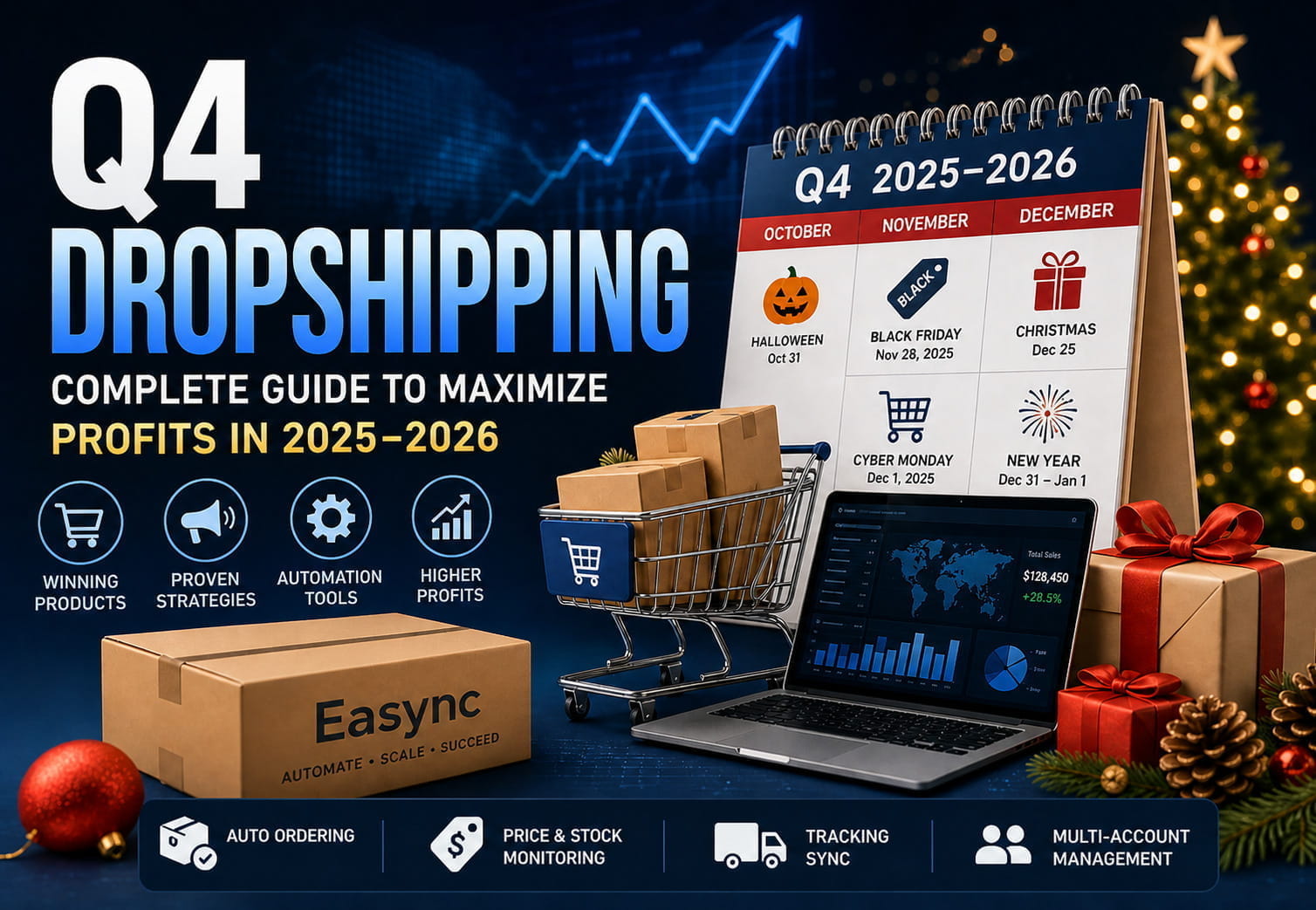
The fourth quarter represents the single most important revenue window for online sellers. From October through December, consumer spending surges around Halloween, Black Friday, Cyber Monday, Christmas, and New Year’s creating a prime opportunity for dropshipping businesses to capture significant growth. However, Q4 2025–2026 brings intensified competition, rising ad costs, and evolving consumer behavior that demand smarter preparation than ever before.
This guide provides a complete blueprint for navigating Q4 dropshipping successfully, covering event-specific strategies, winning products, automation tools, and financial planning to help your store thrive during peak season.
Key Takeaways
- Q4 (October 1–December 31) drives nearly 40% of annual revenue for dropshipping businesses, with major shopping events like Halloween, Black Friday Cyber Monday, Christmas, and New Year’s creating massive demand spikes.
- Digital marketing costs typically increase during Q4, with platforms like Facebook raising their CPM by around 37%, making it crucial to plan ahead starting in August–September and use data-driven product selection.
- Automation with tools like Easync (supporting automated product importing, real-time stock and price monitoring, auto-ordering, repricing rules, tracking synchronization, and multi-account workflows) is essential to handle volume and avoid stock or price errors.
- A balanced product portfolio combining seasonal items (toys, jewelry, winter gadgets) with evergreen niches (pet products, beauty, home, fitness) maximizes revenue across all Q4 events.
- Success comes from operational excellence and customer experience including fast delivery time, clear communication, and responsive support—just as much as from product and marketing choices.
What Is Q4 Dropshipping & Why It Matters in 2025–2026
Q4 dropshipping refers to ecommerce activity concentrated from October 1 to December 31, when holiday-driven demand spikes create the year’s largest revenue opportunity. During Q4 2025, online sales in the U.S. are projected to reach $288 billion, with significant contributions from AI-powered recommendations and agent-assisted shopping.
Many dropshipping stores generate 35–50% of their annual profits during this quarter, particularly around late November and mid-December. During Q4, e-commerce sales typically rise by 15-25%, making it crucial for dropshippers to prepare their stores in advance to capture this increased demand.
What makes Q4 2025–2026 different from previous years? Consumer behavior has shifted dramatically. Shoppers now start planning their holiday purchases earlier, rely heavily on mobile devices, and expect social proof before buying online. AI-assisted shopping tools and social commerce on platforms like TikTok continue reshaping how customers discover and purchase products.
Compared with other quarters, Q4 brings higher conversion rates but also higher CPMs, CPCs, and fulfillment risks including shipping delays, stockouts, and increased returns. Global shipping times extend significantly in Q4, with direct shipping from China taking 10–20 days during peaks.
Beginners can still start profitably in Q4 if they pick tight niches, focus on 3–10 proven dropshipping products, and rely on dropshipping automation rather than manual workflows.

Major Q4 2025–2026 Events You Must Build Around
Every successful Q4 campaign aligns product selection and promotions with specific events that match consumer intent. Q4 is characterized by major shopping events such as Halloween, Thanksgiving, Black Friday, Cyber Monday, Christmas, and New Year’s, which collectively drive significant increases in consumer spending and e commerce sales.
Preparation should begin at least 4–8 weeks before each key date, including product research, creative development, landing page optimization, and supplier coordination. Rushing this process leads to stockouts, poor ad performance, and overwhelmed customer service.
Halloween (31 October 2025 & 2026)
Halloween marks the unofficial start of Q4 buying and serves as an excellent testing ground for store performance before November peaks. This event helps you validate suppliers, test creatives, and identify any operational bottlenecks early.
Strong niches include costumes, masks, makeup, party decor (LED pumpkins, string lights), candy molds, and pet costumes. Launch Halloween campaigns in late September with product bundles (costume plus accessories) to increase average order value.
Shipping cutoffs matter critically here. Late-October orders need local or fast suppliers to arrive on time. Set clear expectations on your product pages and checkout to prevent disappointed customers.
Singles’ Day, Thanksgiving & Early Holiday Shopping (Nov 11–27)
Singles’ Day on November 11 originated in China but has grown into a massive cross-border promotion opportunity. For dropshippers with suppliers in Asian markets, this event can boost sales significantly.
Thanksgiving week in the US (late November 2025 and 2026) functions as a warm-up phase when many stores quietly test offers and audiences before Black Friday. Strong product angles include home and kitchen gear, table decor, cozy home items like blankets and candles, serveware, and early gift bundles.
Use softer promotions like “Early Holiday Sale” or “Pre-Black Friday Deals” to segment engaged buyers and capture new customers before the competitive weekend begins.
Black Friday & Cyber Monday (Nov 28–Dec 1, 2025; Nov 27–30, 2026)
Black Friday and Cyber Monday form the highest-intent shopping window of the entire year for online store owners. In the U.S., consumers spent $10.8 billion online on Black Friday 2024, marking a 10.2% increase from the previous year’s $9.8 billion, while Cyber Monday saw sales totaling $13.3 billion, up $0.9 billion from 2023.
The difference between these days matters for positioning. Black Friday tends to push bigger-ticket items like electronics, home appliances, and premium fashion. Cyber Monday is more tech-focused and online-deal oriented, appealing to shoppers who prefer buying online exclusively.
Ad costs on Facebook, TikTok, and Google peak during this period, but conversion rates and average order values also spike significantly. Despite the rise in marketing costs, ads during Q4 often receive 25% more clicks, leading to a better return on investment due to higher consumer readiness to buy.
Effective tactics include:
- Tiered discounts based on cart value
- Doorbuster deals with limited quantities
- Bonus gifts for higher cart values
- Creating a sense of urgency with limited-time offers, which can encourage quick decision-making among consumers
Check operational capacity beforehand: supplier stock availability, payment processing limits, customer service staffing, and automated ordering systems.
Christmas, Boxing Day & Post-Christmas Sales (Dec 1–30)
Early December represents the gift-buying peak, while mid-to-late December shifts toward digital products, last-minute purchases, and self-gifting. Holiday shoppers during this window prioritize shipping guarantees above almost everything else.
Core categories include toys, jewelry, beauty sets, personalized gifts, winter clothing, decor, and pet gifts. Products that are expected to perform well during Q4 include electric milk frothers, heated blankets, LED fairy lights, and customizable name necklaces, which cater to holiday gifting trends.
Emphasize shipping deadlines prominently. Promote messages like “Order by December 10–15 for Christmas Delivery” depending on supplier region and shipping method. This transparency builds customer trust and reduces support inquiries.
Post-Christmas and Boxing Day sales (December 26–30) offer a chance to clear seasonal inventory and promote self-care and home upgrade items at discounted prices.
New Year’s Eve & New Year Resolutions (Dec 31–Jan 15)
New Year’s Eve creates a party-products spike with high demand for outfits, lighting, party kits, and drinkware. This quickly transitions to “New Year, New Me” themes as resolution season begins.
Classic resolution categories include:
- Fitness gear (resistance bands, yoga mats)
- Home organization products
- Planners and productivity tools
- Kitchen appliances for healthy cooking
Upsell from December orders into January with email marketing flows promoting resolution-aligned products. This period is ideal for remarketing to all Q4 visitors and buyers while ad spend competition briefly cools down after Christmas.
Q4 2025–2026 Market & Consumer Behavior Shifts
Consumer behavior has evolved significantly since 2023. Shoppers now research purchases earlier, shop mobile-first, and rely heavily on content and reviews before making decisions.
67% of holiday shoppers now start their research in September, a full month earlier than previous years, indicating a shift towards early holiday shopping. Mobile commerce now represents 72% of all Q4 transactions, highlighting the increasing importance of mobile-optimized stores during the holiday season.
Nearly 60% of Gen Z and Millennial shoppers have purchased items after seeing them on TikTok, making social proof and user generated content critical for influencing purchase decisions. Consumers are experiencing “deal fatigue” during Q4, leading them to seek experiences, personalization, and social proof rather than just discounts.
Other key trends shaping Q4 2025–2026:
- 43% of shoppers are using “buy now, pay later” services for holiday purchases
- 58% of purchasing decisions are influenced by sustainability concerns
- Higher engagement with video content over static product images
Rising Ad Costs vs. Higher Conversion Potential
CPM and CPC on Facebook, Instagram, TikTok, and Google historically rise sharply from mid-October through Cyber Monday. During Q4, customer acquisition costs can rise by 41%, making it crucial for dropshipping businesses to optimize their targeting strategies from the outset.
However, Q4 brings more ready-to-buy traffic and higher average order values, making ROAS manageable for optimized campaigns. The key is preparation.
Recommended strategies:
- Warm audiences before peak season through email capture and content
- Focus budget on proven creatives rather than constant testing
- Rotate ad angles rather than products during peak days
- Track daily profits and make quick decisions on killing underperforming ad sets within 24–48 hours
Daily profit tracking is essential for dropshipping businesses, with a recommended profit margin of at least 20% to cover high customer acquisition costs.
Customer Expectations: Speed, Visibility & Support
During Q4, buyers expect clear delivery deadlines, proactive tracking updates, and fast responses to pre- and post-purchase questions. Effective customer service during Q4 can differentiate a business from its competitors, as holiday shoppers expect clear, friendly, and solution-oriented communication.
Position your store for success with:
- Transparent shipping information on product pages
- Branded tracking pages
- FAQ sections tailored to holiday concerns (gift wrapping, delivery guarantees, returns)
- Live chat or chatbots for common questions
Strong service in Q4 can convert first-time gift buyers into repeat customers in Q1 2026, extending the value of your marketing costs investment.
Best Q4 Niches & Product Types to Focus On
Top trending product categories for Q4 2025 include smart home security devices, personalized gift sets, sustainable lifestyle products, health and wellness tech, and luxury pet accessories. The best approach combines “gifty” categories with problem-solving items that remain relevant beyond the holiday season.
Focus on products priced roughly in the $25–$120 range with at least 2.5–3x markup potential to survive Q4 ad costs. During Q4, offering product bundles can significantly increase average order value, as consumers are drawn to sets that feel like better deals than purchasing seasonal items separately.

Clothing & Fashion Accessories
Fashion remains a Q4 evergreen due to gifting, holiday parties, and colder months essentials starting from October in the Northern Hemisphere.
Strong products include:
- Winter jackets and knit sweaters
- Thermal leggings and Christmas pajamas
- Party dresses for holiday events
- Scarves, beanies, and gloves
Complement apparel with small accessories like belts, handbags, and jewelry for easy upsells. Exercise caution on sizing and returns by providing detailed size charts and clear policies to minimize disputes and protect profit margins.
Toys & Kids’ Products
Christmas and late November represent critical toy-selling windows, with parents and relatives actively searching for educational and entertaining gifts for loved ones.
Examples of trending products:
- STEM kits and building sets
- Creative art kits
- Interactive plush toys
- Busy boards for toddlers
- Pretend-play sets
Focus on safety certifications, age labels, and clear photo/video demos suitable for ad creatives. Toy trends shift quickly—use both supplier bestseller lists and social media trend tracking to identify winning products.
Jewelry & Personalized Gifts
Jewelry carries strong emotional appeal in Q4 for couples, family gifts, and friendship presents around Christmas and New Year. Personalized gifts have an 8.7% conversion rate, driven by AI-generated designs and customization options.
Popular items include:
- Engraved necklaces and name bracelets
- Birthstone rings
- Minimalist earrings
- Travel jewelry cases
Offer gift-ready packaging and clear delivery estimates for personalized or engraved items. Small, lightweight products keep shipping costs low and margins high in international markets, creating strong perceived value for customers.
Beauty, Personal Care & Wellness
Q4 combines party-prep beauty demand with New Year self-care and wellness resolutions, making this category perform strongly throughout the quarter.
Examples:
- Skincare sets and facial tools (rollers, gua sha)
- Portable hair stylers and nail kits
- Massage guns and aromatherapy diffusers
Use responsible marketing for products touching skin or health—avoid medical claims and choose reputable suppliers. Bundle offers like “Holiday Glow Kit” and content showing routines and transformations drive higher engagement and conversions.
Pet Products
Many households treat pets as family, leading to strong demand for pet gifts and functional accessories during holiday shopping season.
Strong sellers include:
- Holiday-themed toys
- Cozy pet beds
- Interactive feeders
- Grooming tools
- Personalized collars and tags
Use playful ad angles (“Don’t forget your dog’s stocking”) and UGC-style videos showing pets enjoying products. This niche offers recurring revenue potential—Q4 customers can become loyal repeat buyers with subscriptions and refills.
Home, Kitchen & Winter Comfort
Colder weather, more time at home, and holiday hosting drive increasing demand for cozy and functional home items.
High-performing products:
- Heated blankets and insulating curtains
- LED fairy lights
- Smart thermostats
- Insulated cups and air fryers
- Portable projectors
Cross-sell decor with functional items (lights plus projector, blanket plus diffuser) to grow average order value. Focus on compact, easy-to-ship versions to avoid high dimensional-weight costs that erode margins.
Fitness, Sports & Organization (Resolution Season)
The last two weeks of December and early January bring a wave of health and productivity resolutions, creating high demand for self-improvement products.
Key categories:
- Resistance bands and adjustable dumbbells
- Yoga mats and smart scales
- Organizers and planners
- Cable management kits
- Home office accessories
Start seeding resolution-focused paid ads in mid-December to capture early planners. Use before/after or routine-style creatives instead of pure product shots to drive impulse purchases.
Finding Winning Q4 Products (Without Guessing)
Successful Q4 dropshipping sales require a systematic approach to product research rather than randomly chasing viral items. Using AI tools to analyze social media trends can help predict demand spikes for products before they appear on Google Trends.
Combine multiple data sources for validation:
- Supplier bestseller lists
- Marketplace trend pages
- Social media trend analysis
- Competitor store tracking
Products should be tested earlier (August–October) so that winning items are ready to scale during November–December. This approach prevents you from losing money on unproven products when marketing costs peak.
Supplier & Marketplace Data
Use bestseller and trending sections from large marketplaces (Amazon, AliExpress, Walmart, eBay) filtered by category and season. Watch historical Q4 bestsellers in niches like toys and home, then find updated or improved versions for 2025–2026.
Look at review volume trends and recent review dates to avoid outdated, declining products. Cross-check margin potential by comparing supplier price against realistic selling price in target markets. A product with strong demand but thin margins won’t survive Q4 ad costs.
Social Media & Competitor Intelligence
Scan TikTok, Instagram Reels, and YouTube Shorts for recurring product types from Q4 2024 and early 2025 that show organic traction. Analyze competitors using ad libraries (Meta Ad Library, TikTok Creative Center) to identify products running in multiple creatives over weeks.
Reverse-search product names or images from viral content to find suppliers and check if the niche is already saturated. Even if the core product is similar to other stores, differentiate through angle, bundle, or branding to capture your share of total sales.
Easync Automation for Q4 Dropshipping Operations
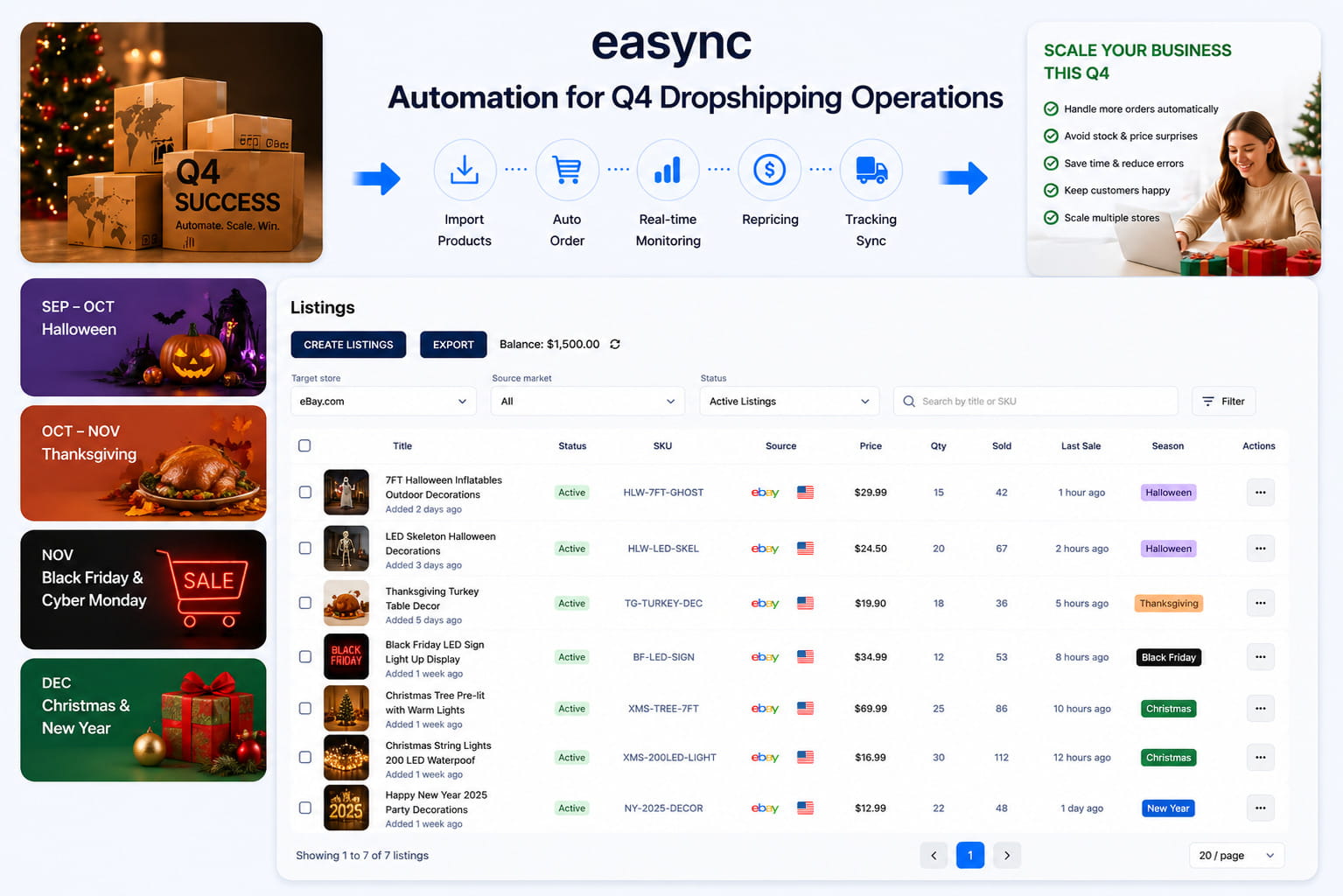
For Q4 dropshipping success, automation tools become essential for managing the surge in order volume and operational complexity. Dropshipping software Easync supports automated product importing from multiple marketplaces, allowing sellers to quickly spin up and test new Q4 offers—such as Halloween decor in September, toys in October, and winter gadgets in November. Real-time stock and price monitoring prevents overselling and surprise margin losses when suppliers change stock availability or raise prices suddenly during late November and December.
Auto-ordering and customizable repricing rules save many hours daily when order volume spikes during Black Friday–Cyber Monday and pre-Christmas rush, significantly reducing human error. Tracking synchronization ensures customers receive accurate delivery updates, while multi-account workflows centralize operations across several stores or marketplaces, enabling sellers to manage inventory efficiently and scale multiple brands simultaneously through Q4.
Automation, Fulfillment & Customer Service in Q4
Without streamlined operations, even strong products and successful paid ads can fail due to delays, cancellations, or poor communication. The main operational risks in Q4 include slow order processing, supplier stockouts, shipping bottlenecks, and overwhelmed customer support teams.
During Q4, stock shortages can occur as demand often outstrips supply, making it crucial for dropshippers to work with multiple suppliers to ensure product availability. Real-time inventory syncing is essential for dropshippers during Q4 to prevent overselling and maintain customer trust, especially during peak shopping times.
Key operational strategies:
- Automate repetitive tasks (ordering, tracking, repricing)
- Standardize workflows for refunds, exchanges, and pre-sale questions
- Work with multiple regional suppliers for core products
- Use proactive communication: order cut-off banners, automatic emails/SMS updates
- Create clear return policies tailored to holiday timelines
Handling Long Delivery Times & Stock Shortages
Carriers and customs slow down during late November and December due to global volume surges. Working with multiple suppliers can help dropshippers manage stock availability and shipping times during the busy Q4 season, ensuring they can meet holiday demand without running out of products.
Effective inventory management during Q4 involves monitoring supplier stock levels continuously to avoid selling out-of-stock items, which can lead to customer dissatisfaction and damaged store ratings.
Recommendations:
- Work with several suppliers per winning product, including at least one local or regional warehouse for key markets (US, EU, UK)
- Set clear shipping expectations on product pages
- Use countdowns for “guaranteed by Christmas” deadlines
- Leverage real-time stock syncing and automatic listing updates
Successful dropshipping stores in 2026 use a hybrid fulfillment model that involves global testing and local warehousing for fast shipping.
Scaling Customer Support for Holiday Volume
During Q4, customer service needs increase significantly due to the surge in online shopping, leading to a higher volume of inquiries about order status, delivery times, and returns. You’ll receive more customers asking about sizes, delivery time, order changes, and refund policies.
To manage increased customer inquiries during Q4, businesses should implement automation tools such as AI chatbots, which can handle a significant portion of common questions and free up human agents for more complex issues.
Best practices:
- Prepare macros/templates for common questions
- Train support staff on Q4-specific scenarios
- Use helpdesk tools or chatbots for first-line support
- Reserve complex cases for human agents
Fast, empathetic responses often matter more than strict policies when resolving issues after peak weekends. This approach reduces bounce rates on your store and builds loyalty for future purchases.
Marketing Strategies for Q4: From Awareness to Conversion
A practical marketing funnel for Q4 moves customers from early awareness through high-intent conversion campaigns. Start warming audiences in September–October via content, giveaways, and lead magnets to reduce customer acquisition costs later.
Use an omnichannel mix:
- Paid social (Facebook ad campaigns, Instagram, TikTok)
- Search ads for gift-related keywords
- Email and SMS marketing
- Basic SEO for key gift and holiday queries
Q4 creatives should be seasonal and emotionally driven, focusing on gifting for loved ones, family moments, self-care, and scarcity/urgency. Creating visually appealing seasonal designs for your store can enhance customer engagement and increase the likelihood of purchases during the Q4 shopping season.
Optimizing your store’s loading speed is essential during Q4, as even a one-second delay can significantly impact conversion rates, especially with increased traffic from holiday shoppers.
Email & SMS: High-ROI Channels for Q4
Email marketing is a cost-effective strategy for dropshippers during Q4, allowing them to reach customers directly with targeted offers and reminders, which can significantly boost sales. Email marketing can drive 31% of Q4 revenue for top-performing dropshippers, especially when combined with SMS and push notifications in coordinated campaigns.
Key flows to implement:
- Welcome series with gift guides
- Abandoned cart recovery
- Browse abandonment sequences
- Pre-Black Friday VIP list
- Last-chance shipping reminders
Use SMS for time-sensitive messages: flash sales, shipping deadline warnings, and delivery notifications. Build your list aggressively from August onward with discounts, early-access promises, and giveaways to capture cold traffic before costs spike.
Bundles, Discounts & Pricing Psychology
Smart discounting protects margins while still appealing to deal-driven holiday shoppers. Rather than deep cuts on single items, create bundles that solve a complete need.
Effective tactics:
- “Winter Comfort Set” with blanket, mug, and lights
- Tiered discounts: “Spend $75, get 20% off + free shipping”
- Free-shipping thresholds to increase average order
- Short promotional windows with countdown timers
Avoid permanent huge discounts. Instead, use limited quantities and time constraints to create urgency and encourage impulse purchases without destroying your profit margins.
Q4 Dropshipping Strategy by Key Period (2025–2026)
To make Q4 planning easier, the table below summarizes what to focus on during each key period, including product angles, actions, and automation priorities.
| Q4 Period | Best Product Angles | Recommended Actions | Automation Priority |
|---|---|---|---|
| September Prep | Early gift ideas, testing products | Research products, order samples, test suppliers | Product importing, price monitoring |
| Halloween | Costumes, decor, makeup, pet costumes | Launch campaigns in late September | Stock monitoring, fast order routing |
| Early November | Home, kitchen, cozy gifts, early deals | Run pre-BFCM offers and warm audiences | Repricing, tracking sync |
| Black Friday | Electronics, fashion, bundles, premium deals | Push strongest offers and tiered discounts | Auto-ordering, inventory sync |
| Cyber Monday | Tech gadgets, online-only deals, digital-first products | Focus on urgency and retargeting | Auto-ordering, price monitoring |
| Early December | Gifts, toys, jewelry, beauty sets | Promote Christmas delivery cutoffs | Tracking sync, supplier routing |
| Late December | Self-gifting, home upgrades, clearance | Clear seasonal products and upsell buyers | Order tracking, returns workflow |
| New Year | Fitness, wellness, organization, productivity | Shift messaging to “New Year, New Me” | Catalog updates, repricing |
Financial Planning & Profit Management for Q4
Protecting margins and cash flow while scaling aggressively requires disciplined financial management. Many businesses fail in Q4 not because of weak sales, but because they lose money through uncontrolled spending.
Key financial practices:
- Set clear daily and weekly budgets for testing and scaling campaigns
- Establish ROI thresholds for pausing or increasing ad spend
- Track profit (after product costs, ad spend, fees, refunds) rather than only revenue
- Prepare for payment processor holds by maintaining buffers and using multiple processors
Return rates for e-commerce businesses can spike by 20–30% in January due to post-holiday returns, so factor this into your profit projections.
Plan for Q1 2026 by reserving some Q4 profits to survive the typical January dropshipping sales slowdown. The significant growth achieved in Q4 should fund your runway for slower months ahead.
FAQ
When should I start preparing my store for Q4 2025–2026?
Serious preparation starts in August–September. Complete product research and supplier selection during this period, with test campaigns running by late September and October. This timeline ensures your winning products are validated and ready to scale for Black Friday, Cyber Monday, and Christmas. Waiting until November means competing against prepared sellers with higher ad costs and untested products.
How much budget do I need to profitably run Q4 dropshipping?
While some sellers start with a few hundred dollars, realistic plans for paid ads in Q4 often require at least $1,000–$3,000 test budget, plus product and tool costs. More budget helps you iterate creatives quickly and survive higher CPMs. Remember that during Q4, customer acquisition costs can rise by 41%, so underfunded campaigns often fail before finding winning combinations.
Is Q4 a good time for beginners to start dropshipping?
Q4 can be profitable for beginners if they keep scope narrow (few products, clear niche), rely on proven offers rather than untested ideas, and automate operations from the start. However, high competition and elevated ad costs can overwhelm newcomers who try to compete broadly. Focus on one niche, master your supply chain, and prioritize customer experience over catalog size.
How do I avoid angry customers over late deliveries in December?
Set conservative cut-off dates based on your reliable supplier capabilities. Use regional suppliers when possible for key markets. Clearly state delivery estimates on product pages and at checkout. Proactively update customers via email/SMS with tracking links. If delays happen, offer contingency options like partial refunds or coupons rather than waiting for complaints.
What should I do with leftover seasonal products after Q4?
Run clearance sales in late December and early January to recover costs. Bundle seasonal items with evergreen products to maintain perceived value. Most importantly, store your learning data—winning creatives, audience insights, and supplier performance records—to reuse or adapt for Q4 2026 rather than abandoning the niche entirely. The research you’ve done has lasting value.