
- articles
24 Best China Dropshipping Suppliers in 2026
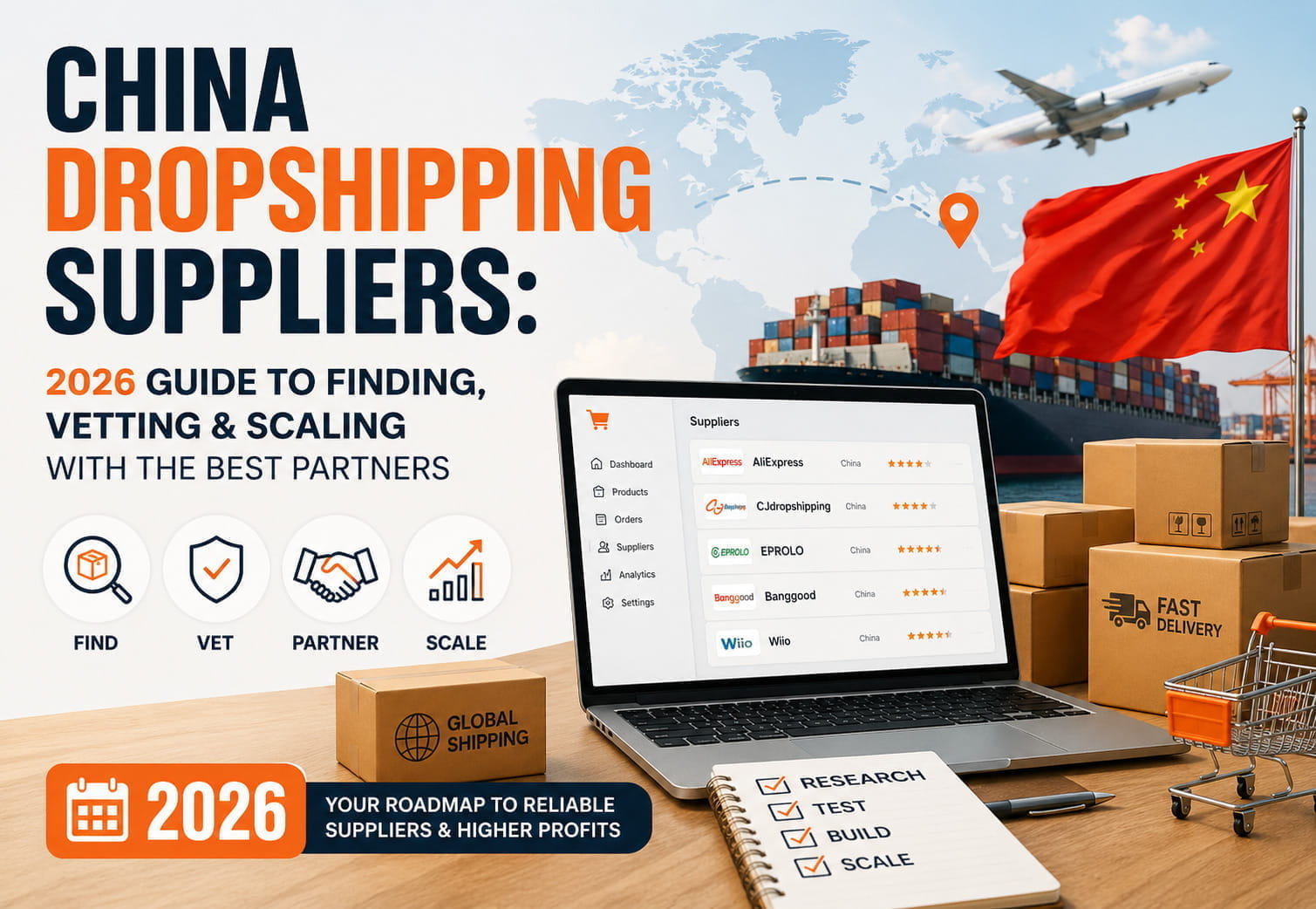
Quick answer: China is still the strongest sourcing base for dropshipping in 2026, thanks to deep catalog coverage, competitive factory pricing, and shipping lines that have gotten measurably faster since 2021. The one real shift is customs: after the 2025 de minimis rule change, picking china dropshipping suppliers that offer DDP shipping or overseas warehousing matters more than chasing the lowest per-unit price. Below are 24 verified dropshipping suppliers china sellers actually use in 2026, grouped by type so you can match one to your stage.
Key Takeaways
- This guide covers 24 verified china dropshipping suppliers across marketplaces, fulfillment agents, B2B/factory platforms, and niche specialists.
- Suppliers offering DDP (Delivered Duty Paid) lines or overseas warehousing now have a real edge over suppliers that only ship direct from China, since customers can no longer count on duty-free small parcels.
- If AliExpress is one of your sourcing channels, automation tools like Easync can handle repricing, auto-ordering, and tracking sync between AliExpress and your eBay or Shopify store once daily orders climb past a handful.
- The costliest mistakes are still picking suppliers purely on price, skipping sample orders, and scaling before quality and shipping performance have actually been tested.
Top China Dropshipping Suppliers in 2026 (Quick Overview Table)
This table groups all 24 suppliers by category so you can scan for your stage before reading the full profiles below. Categories run in the same order as the detailed list further down the page.
| Supplier | Category | Best For | Pros | Cons |
|---|---|---|---|---|
| AliExpress | Marketplace | Testing new products | No MOQ, huge catalog, DSers integration | Uneven quality between sellers |
| DHgate | Marketplace | Budget bulk sourcing | Lower pricing at volume, supplier ratings | MOQs on some listings, higher counterfeit-listing risk |
| Banggood | Marketplace | Electronics and gadgets | Overseas warehouses, dedicated dropship program | Thin catalog outside core niches |
| LightInTheBox | Marketplace | Apparel, wedding, formal wear | Publicly listed (NYSE: LITB), wide fashion catalog | Retail pricing, no native dropshipping program |
| Temu | Marketplace (sourcing only) | Spotting trending products | Massive, fast-moving catalog for research | No blind shipping; not built for direct dropshipping |
| CJdropshipping | Fulfillment agent | Scaling past AliExpress | Multi-country warehouses, branding, sourcing team | Interface has a learning curve |
| EPROLO | Fulfillment agent | Early private label | No upfront branding fees, custom packaging | Smaller catalog than the big marketplaces |
| Wiio | Fulfillment agent | Hard-to-find or custom items | Human buying agent, personal sourcing | Works best once you have order volume |
| Yakkyofy | Fulfillment agent | All-in-one automation | Sourcing plus order automation in one dashboard | Steeper onboarding for advanced features |
| HyperSKU | Fulfillment agent | Scaling winning products fast | Priority shipping lines, dedicated support | Needs fairly stable order volume |
| Zendrop | Fulfillment agent | Shopify beginners | US-warehouse options, simple interface | Paid plans for full features |
| Fulfillman | Fulfillment agent | Replacing slow AliExpress shipping | Sourcing plus private-line shipping in one service | Smaller brand recognition than CJ or FFOrder |
| FFOrder | Fulfillment agent | Brand-building sellers | Own warehouses, OEM/ODM support, dedicated managers | Overkill for pure low-cost testing |
| SourcinBox | Fulfillment agent | Custom sourcing requests | Flexible product sourcing plus QC | Less name recognition than larger agents |
| 1688.com | B2B / factory-direct | Advanced sourcing at scale | Domestic factory pricing, deepest catalog | Chinese-only interface, needs a sourcing agent |
| Alibaba | B2B / factory-direct | Private label and custom molds | Trade Assurance, English-language support | Higher MOQs than marketplaces |
| Made-in-China.com | B2B / factory-direct | Broad manufacturer directory | Verified/audited supplier badges, escrow payments | Quality still varies by individual vendor |
| Global Sources | B2B / factory-direct | Certified factory relationships | Trade-show network, vetted manufacturers | Not built for single-unit dropshipping |
| Jingsourcing | B2B / factory-direct | Custom sourcing and OEM/ODM | Hands-on factory vetting and pre-shipment inspection | Project-based fees, slower than off-the-shelf sourcing |
| FondMart | Niche specialist (fashion) | Women’s apparel dropshipping | No MOQ for private label tags, active Shopify app | Customer support response times vary |
| Chinavasion | Niche specialist (electronics) | Gadgets and consumer electronics | Long operating history, mid-range pricing tier is reliable | Review scores are mixed; vet each SKU before listing |
| Sunsky | Niche specialist (mobile/electronics) | Phone accessories, repair parts | Deep catalog, dropshipping API | Support quality reported as inconsistent |
| TVC-Mall | Niche specialist (mobile accessories) | Cases, screen protectors, repair parts | No-MOQ catalog, multi-language storefront | Slower support on damage/warranty claims |
| SaleHoo | Directory | Researching vetted suppliers | Curated database, one-time or annual fee | No fulfillment of its own |
Finding reliable dropshipping suppliers in China still comes down to the same basics: pick a platform that fits your current stage, audit how a supplier actually communicates, and order a sample before listing anything at volume.
Are Chinese Dropshipping Suppliers Still Worth It in 2026?
China’s manufacturing base still covers more categories than any single alternative, which is why so many dropshippers keep coming back to chinese dropshipping suppliers even after a rough year of tariff headlines. Electronics, fashion, home and kitchen, beauty, pet products, and outdoor gear are all represented at landed costs that are difficult to match sourcing domestically.
- Large-scale manufacturing and lower labor costs let Chinese suppliers hold prices down; most stores land profit margins somewhere in the 10-30% range, with well-run stores pushing past that on selected products.
- Shipping has genuinely improved since 2021: dedicated priority lines to the US and EU, more overseas warehouse capacity, and faster processing at origin have all trimmed transit time compared with the pandemic years.
- Catalog depth means you can test far more product ideas without carrying stock, which matters more than ever with ad costs where they are.
- The global dropshipping market was valued at roughly $583.5 billion in 2026, growing at close to 20% a year, so the category as a whole is still expanding even as individual suppliers rise and fall.
Compared with US or EU suppliers, china dropshipping suppliers still win on price and SKU depth. What changed is the shipping and customs layer sitting on top of that advantage, which is worth walking through before you pick a partner.
Tariffs, De Minimis, and DDP: What Actually Changed for China Dropshipping Suppliers
If you last read up on this topic before 2025, the ground has shifted. The US suspended the duty-free “de minimis” exemption for low-value shipments, first for China and Hong Kong in May 2025 and then for every other country that August, through an executive order formally implemented by US Customs and Border Protection. Packages under $800 that used to clear customs duty-free now get charged like any other commercial import. That single change is the reason “cheapest possible parcel from China” stopped being a safe default strategy.
Two shipping arrangements now matter more than they used to when you’re comparing dropshipping suppliers china platforms offer:
- DDP (Delivered Duty Paid). The supplier or agent prepays duties on your behalf, so the customer’s package clears customs without a surprise bill at the door. Several fulfillment agents in the list below (CJdropshipping, HyperSKU, FFOrder) offer DDP lines specifically because of this rule change.
- Overseas or hybrid warehousing. Bulk-shipping your bestsellers into a US or EU warehouse ahead of time turns customs into a one-time bulk event instead of a per-parcel headache, and it also shortens delivery to something closer to domestic speed.
Ask any dropshipping china supplier you’re evaluating two direct questions: whether shipments are DDU or DDP by default, and whether they can quote a landed cost that already includes duties for your target market. A supplier that can’t answer either question clearly is going to leave that cost surprise sitting with your customer, which shows up fast as chargebacks and one-star reviews.
There’s a related shift worth knowing about: “blind shipping,” meaning packages that arrive without Chinese invoices, sender flyers, or branding that gives away the sourcing. Most established agents on this list support it by default. Marketplaces like AliExpress and DHgate generally don’t, since the seller’s information travels with the parcel unless you specifically request otherwise.
Pros and Cons of E-Commerce vs Dropshipping
Before comparing individual platforms, it’s worth confirming the model still fits your situation. The table below lines up traditional inventory-based e-commerce against dropshipping across the factors that usually decide the question.
| Aspect | Traditional E-commerce (Inventory) | Dropshipping (incl. China Dropshipping Suppliers) |
|---|---|---|
| Startup capital | High — inventory investment, often $5,000-$50,000+ | Low — mainly website and marketing, often $500-$2,000 |
| Inventory risk | Significant; unsold stock ties up capital | Minimal; the supplier carries stock risk |
| Cash flow | Capital goes out before revenue comes in | You pay suppliers after the customer pays you |
| Branding control | Full control over packaging and experience | Limited on marketplaces; better through agents like CJdropshipping or EPROLO |
| Shipping speed control | Full control with local fulfillment | Depends on the supplier and shipping lane chosen |
| Product range flexibility | Limited by what you’ve already bought | Test hundreds of SKUs with no upfront commitment |
| Operational workload | Higher — warehousing, picking, packing, returns | Lower at first; grows with supplier management at scale |
| Profit margins | Higher once established, often 30-50%+ | Lower per order, but no carrying costs on unsold stock |
Dropshipping from China stays attractive largely because of that first row: low production costs translate into workable margins without tying up cash in inventory. Most beginners use it as a testing ground, then shift some bestsellers into a stocked, hybrid model once demand is proven.
The 24 Best China Dropshipping Suppliers (Detailed List)
Each profile below covers what the platform actually does well, who it fits, what it costs, and what to watch for. They’re grouped by category to match the overview table above.
Marketplaces: The Dropshipping Suppliers China Beginners Start With
1. AliExpress
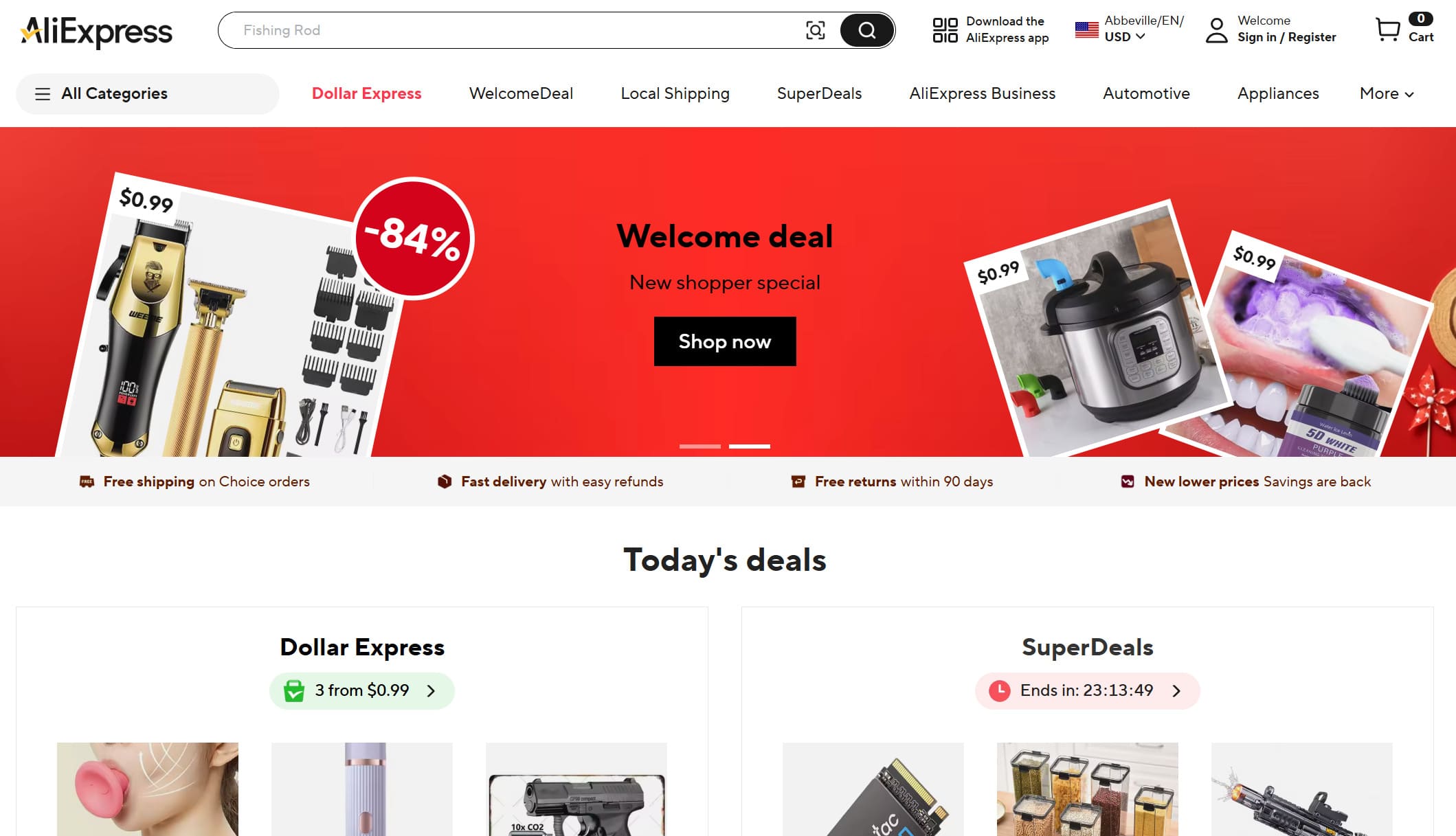
AliExpress remains the default entry point for anyone testing products for the first time. With no minimum order quantity and native DSers integration, it’s the fastest way to get a listing live and see if an idea sells before committing further.
Pros
- No MOQ, so listing a product carries zero upfront inventory commitment
- Native DSers integration automates most of the ordering and tracking work
- Built-in buyer protection reduces payment risk on both sides
- Catalog depth (100M+ listings) beats every other marketplace on this list
Cons
- Quality and reliability vary widely between sellers listing the same product
- Standard shipping still runs 2-6 weeks during busy periods
- Heavy seller-side competition on winning products drives price wars fast
This fits sellers testing products and niches before committing to dropshipping suppliers for Shopify or another platform.
Nothing to pay upfront: AliExpress charges no separate dropshipping fee, just the product price, shipping, and standard payment processing.
2. DHgate
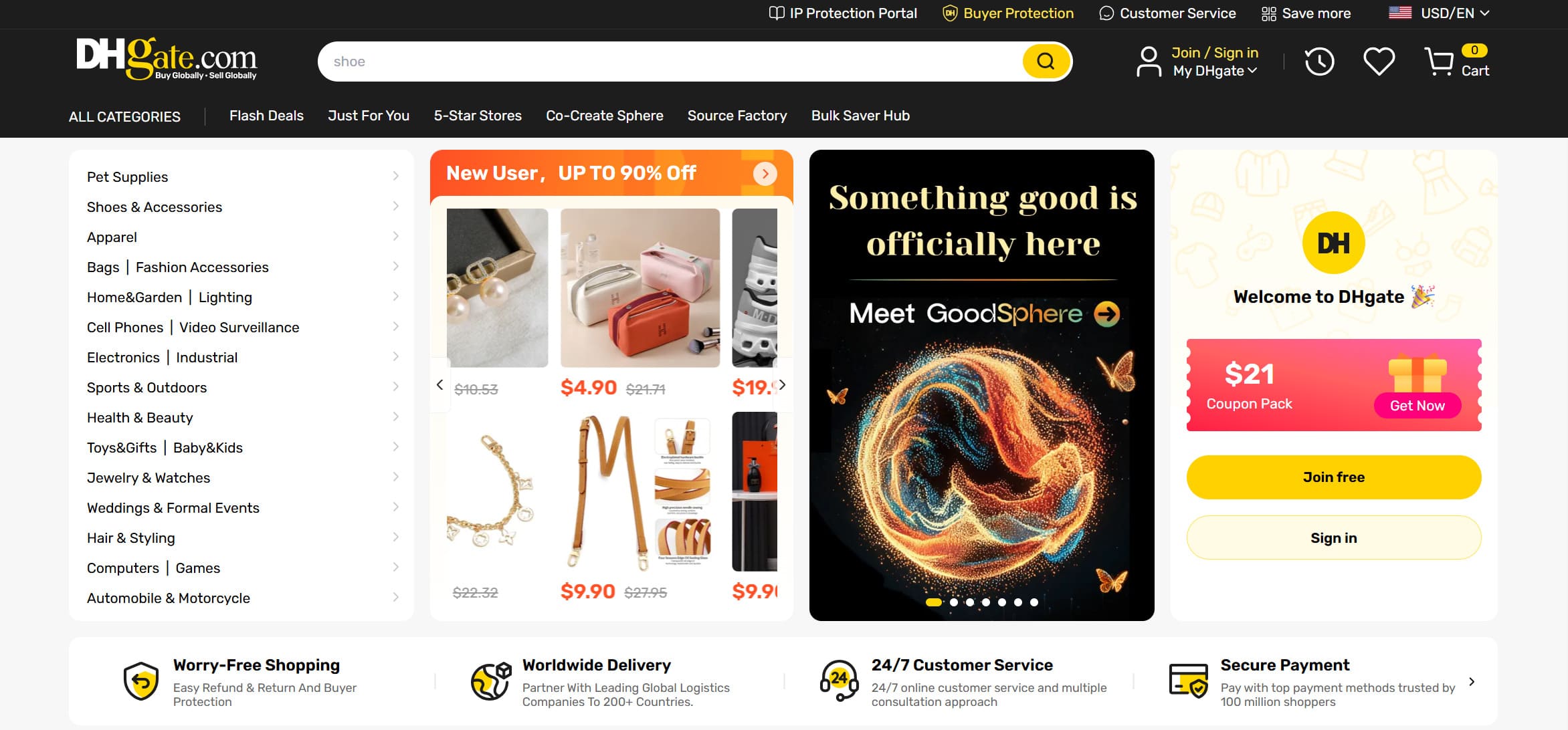
DHgate leans more wholesale than AliExpress, with pricing that improves noticeably once you’re ordering in small bulk rather than single units.
Pros
- Wholesale pricing tiers reward buying in small bulk rather than single units
- Supplier ratings and tiered discounts make it easier to spot established sellers
- Room to negotiate pricing directly with sellers on larger orders
Cons
- MOQs apply on some listings, limiting single-unit dropshipping
- DHgate has appeared on the US Trade Representative’s Notorious Markets List for counterfeit goods in multiple consecutive annual reviews, so brand-name-adjacent listings need extra scrutiny before you resell them
Sellers past their first round of product validation tend to get the most out of DHgate’s bulk pricing.
Browsing and buying cost nothing extra; what you pay varies by individual supplier and payment method rather than a flat platform charge.
3. Banggood
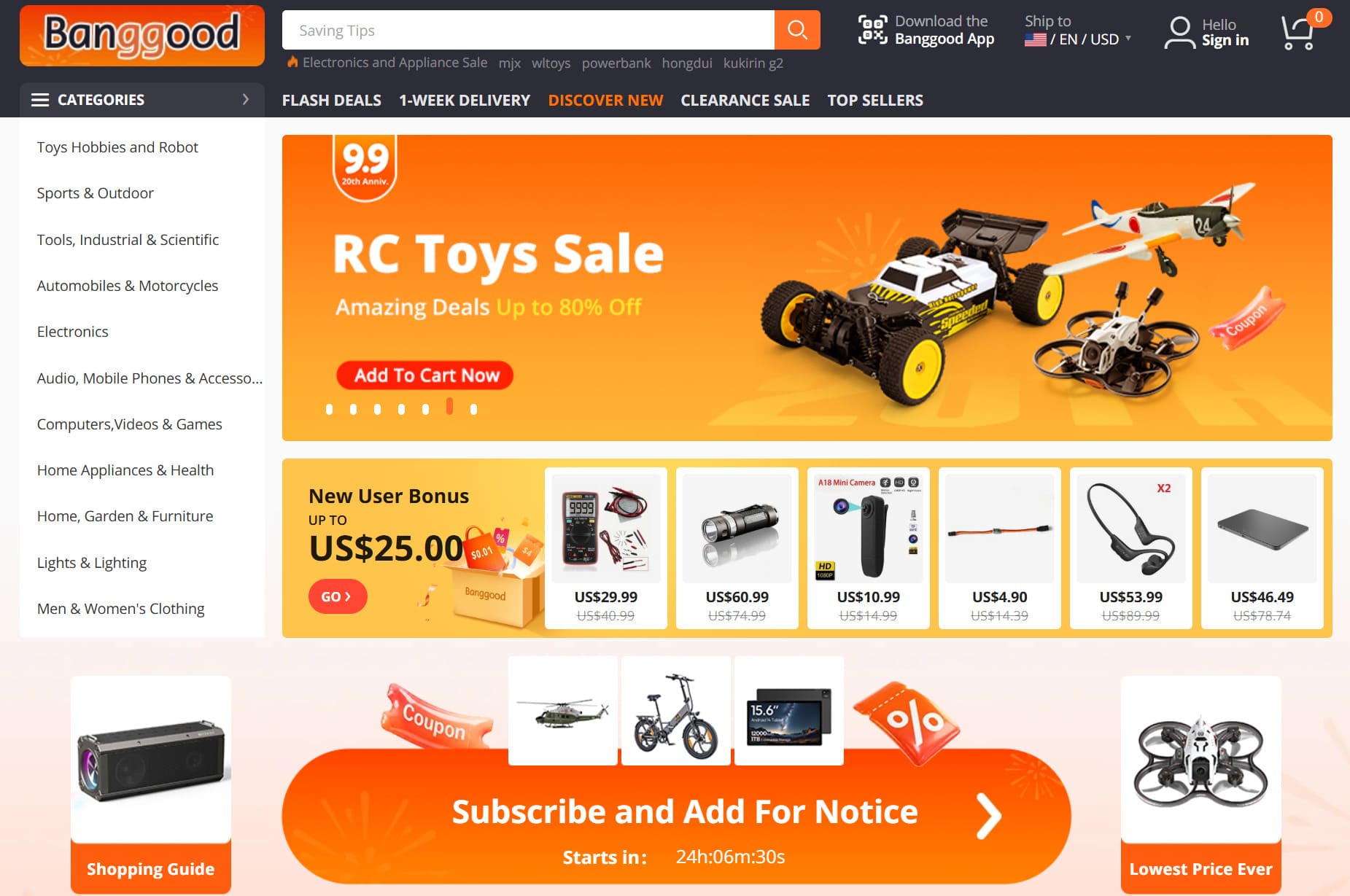
Banggood carved out a strong lane in electronics and outdoor gear, backed by warehouses across China, the US, Europe, and Australia that speed up delivery on select SKUs.
Pros
- Official dropship program with a signed agreement, not just informal reselling
- Overseas warehouses cut delivery time on popular electronics and gadgets
- Founded in 2006, with a longer operating history than most niche competitors
Cons
- Catalog thins out quickly outside electronics, tools, and outdoor gear
- Restricted or brand-name product lines require separate authorization
- Order automation and system integration lag behind CJdropshipping or FFOrder
Electronics-focused stores that need steady, predictable quality tend to do well here.
Joining the dropship program costs nothing. Margins run roughly 5-12% off retail price depending on category and order volume, and there’s no separate service fee.
4. LightInTheBox
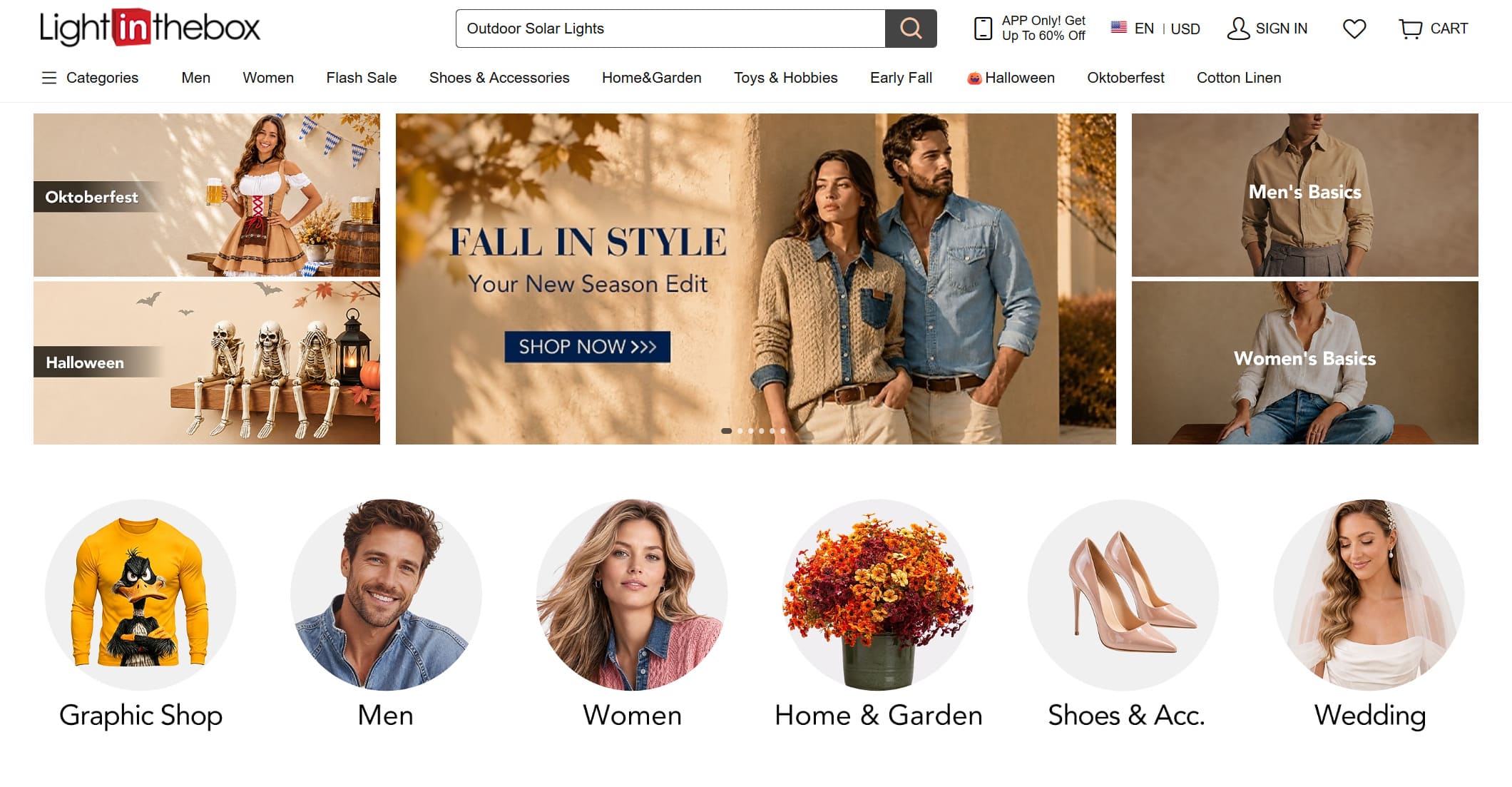
LightInTheBox sources its catalog from Chinese manufacturers and traces its roots to Beijing, though the parent company is now incorporated in Singapore and publicly traded (NYSE: LITB).
Pros
- Publicly traded with audited financials, unusual transparency for a China-linked platform
- Deep catalog in apparel, wedding, and formal wear
- Generates $400M+ in annual revenue, so it’s financially established rather than a fly-by-night storefront
Cons
- The company’s own investor materials describe it as having evolved from an online drop-shipping retailer into a consumer lifestyle company, so it no longer runs a dedicated dropshipping program
- Sizing follows Asian standards more than Western ones, which raises returns
- Limited private-label or custom-packaging options compared with dedicated dropship agents
Works best for sellers in apparel or event merchandise niches who can absorb retail-level product costs.
There’s no wholesale or dropship discount tier. You buy at the same retail price shown to end consumers, so margin depends entirely on your own markup.
5. Temu
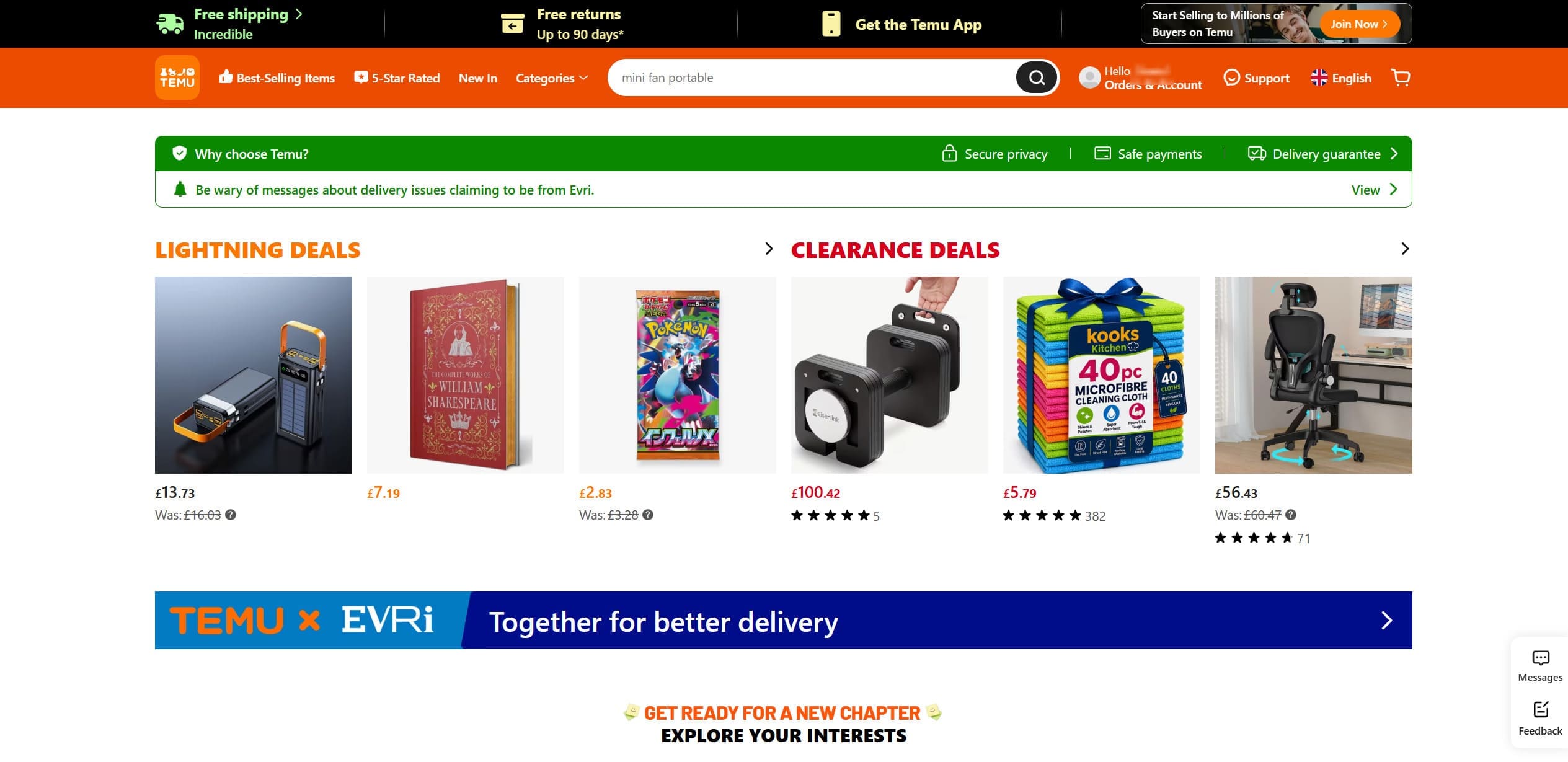
Temu belongs on this list for a narrower reason than the others: it’s an enormous catalog for spotting what’s trending, not a platform built for classic dropshipping fulfillment.
Pros
- Enormous, constantly refreshed catalog for spotting what’s trending before anyone else lists it
- Aggressive pricing gives a fast benchmark for what a product “should” cost
Cons
- No blind-shipping option; packaging typically carries Temu branding
- Its US operator was fined $2 million by the FTC in 2025 for not giving shoppers enough tools to flag counterfeit or unsafe listings
- The European Commission has separately charged Temu with breaching the EU’s Digital Services Act over unsafe products reaching consumers
Treat it as a trend-spotting stop before sourcing the same item through an agent, 1688, or a niche specialist.
A dropshipping fee structure doesn’t really apply here. Temu sells at consumer retail pricing rather than running a reseller or wholesale program.
Fulfillment and Dropshipping Agents
6. CJdropshipping
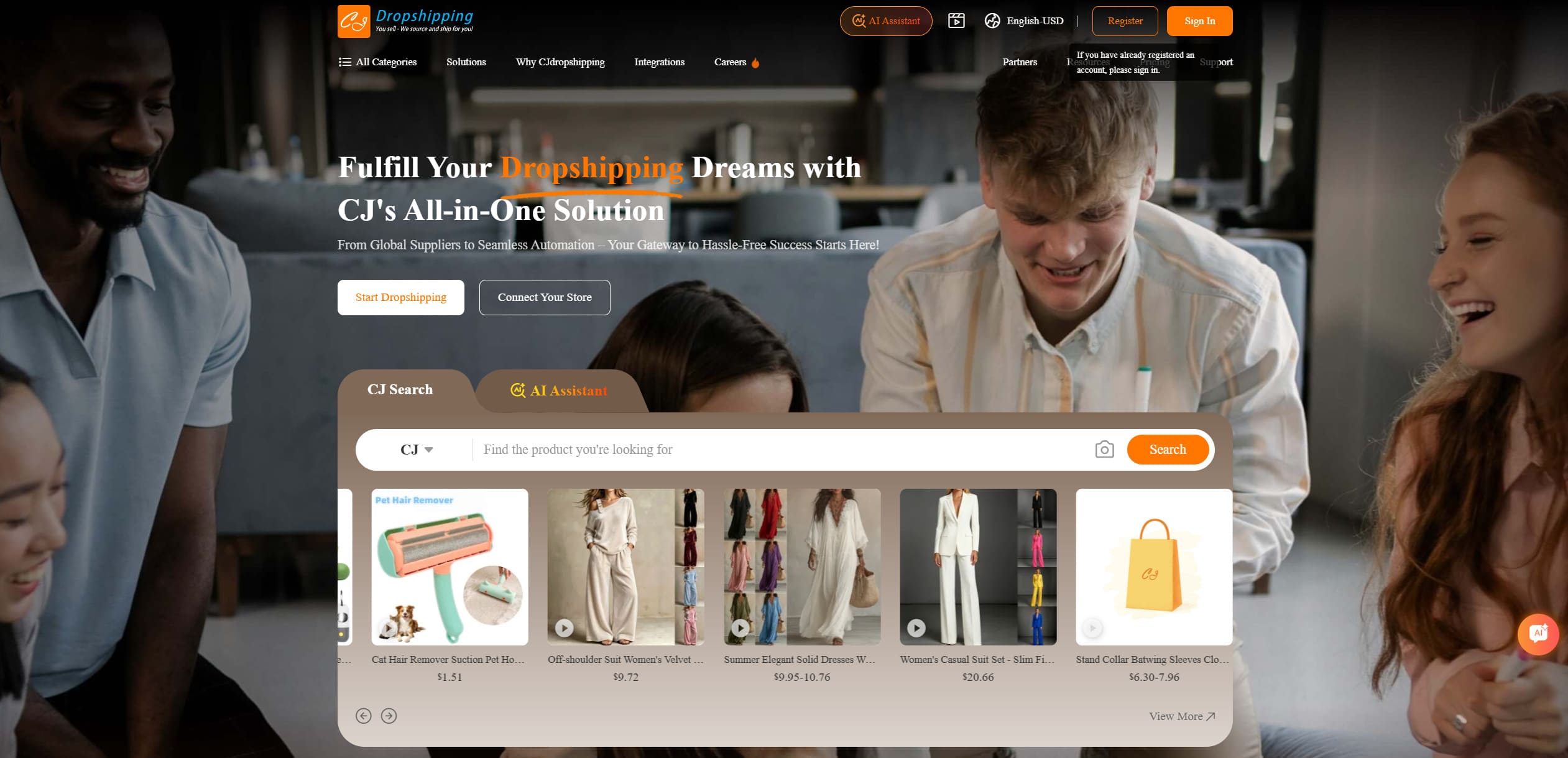
CJdropshipping operates as a full-service sourcing and fulfillment partner with warehouses spread across several countries, which is why it’s usually the first agent sellers move to once AliExpress stops being enough.
Pros
- Multi-country warehouses (China, US, Germany, Thailand, and more) shorten delivery on popular SKUs
- Dedicated sourcing agents handle branding and custom requests
- Operating since 2015 with a large, established user base
Cons
- Interface has a real learning curve for first-time agent users
- Review scores vary sharply by platform, so test their shipping performance yourself before relying on it
Growth-stage stores ready to scale past a single marketplace fit well here.
The account itself is free, with basic sourcing tools included. Paid membership tiers add faster support and extra automation on top of standard product and shipping costs.
7. EPROLO
EPROLO focuses squarely on making private label approachable, without charging upfront for branding services the way some competitors do.
Pros
- No subscription fees at any tier, which keeps testing cheap
- Custom packaging and logo branding are included, not an upsell
- Consistently strong ratings across both Trustpilot and the Shopify App Store
Cons
- Catalog is smaller than the big marketplaces
- Shipping times are reported as inconsistent depending on category and destination
Works well for sellers moving from generic listings into a branded store.
Nothing to pay for the platform itself, ever. EPROLO earns its margin on product cost and shipping instead of charging a subscription.
8. Wiio
Wiio works more like a personal buying agent than a platform. You hand over a link or a spec, and their team goes and finds it, negotiates, and checks quality before it ships.
Pros
- A dedicated human agent sources and negotiates on your behalf, closer to a personal buyer than a self-serve catalog
- Free storage for up to 90 days reduces holding-cost pressure
- Claims 600,000+ customers globally, with a strong Shopify App Store rating
Cons
- Best value shows up once you have consistent order volume, less so for very early testing
- Support quality is reported as agent-dependent, so ask about your specific assigned agent
- A minority of reviews describe real operational problems once volume scales up, so treat it as a stage-appropriate choice rather than a permanent home
A good match for unusual sourcing needs or for sellers thinking about a long-term supplier relationship.
A free tier is available. Paid plans layer in discounted product access and trending-product lists on top of standard order costs.
9. Yakkyofy
Yakkyofy bundles sourcing, order automation, and fulfillment into a single dashboard, which appeals to sellers who’d rather not stitch three separate tools together.
Pros
- Sourcing, order automation, and fulfillment live in one dashboard instead of three separate tools
- Advertises express lines to the US and most of the EU faster than standard AliExpress shipping, though as with any platform claim, confirm actual transit time with a test order
Cons
- Advanced features take real time to learn
- Only connects to Shopify and WooCommerce natively, narrower platform support than some competitors
- Reviews are mixed: some users praise the ease of use, others are less impressed with recent interface changes
Suits sellers who’d rather run one workflow than juggle several disconnected tools.
There’s a free tier to start. Paid plans run $79-$299 a month depending on features, on top of product and shipping costs.
10. HyperSKU
HyperSKU is designed for scaling stores needing faster shipping and stable fulfillment, competing on logistics stability rather than rock-bottom pricing.
Pros
- Priority shipping lines land in roughly 7-12 days from China to the US/EU, faster than most raw marketplace shipping
- Print-on-demand and private-label branding are built in, not a separate service
- Backed by institutional funding (Granite Asia, IDG Capital), which adds a layer of financial stability
Cons
- Needs fairly stable order volume to justify the dedicated-agent model
- Products still originate in China even with US/EU warehouse options, which matters if you market on “local” sourcing
Makes the most sense once you’re scaling a product that’s already validated.
Joining costs nothing. HyperSKU earns its margin on the products it sources rather than charging a flat membership fee.
11. Zendrop
Zendrop was built with Shopify beginners in mind, with US warehouse options that shorten delivery on select items compared with shipping straight from China.
Pros
- US warehouse options shorten delivery on select items compared with shipping straight from China
- Branding tools (custom invoices, thank-you cards) come standard on paid plans
- Trustpilot rating sits at 4.6 stars from more than 20,000 reviews
Cons
- The free plan is research-only; you can’t fulfill an order without upgrading
- Product costs run higher than sourcing the same item directly on AliExpress, which compresses margin
- Documented BBB complaints describe unauthorized charges and post-purchase plan changes
A solid fit for beginners who’d rather have an easy setup than deep customization.
The research plan is free. Fulfillment itself requires a paid plan, starting at roughly $49 a month.
12. Fulfillman
Fulfillman is a fulfillment and sourcing agent based in Yiwu, Zhejiang, one of China’s largest wholesale hubs. It handles product sourcing, private-line shipping, and warehousing for sellers who want faster, more predictable delivery than a straight AliExpress order without moving up to a full-scale agent like CJdropshipping.
Pros
- Private-line shipping from Yiwu typically lands faster than raw AliExpress shipping
- Free storage and product photography come bundled in, not billed separately
- Holds a strong 4.4-star Trustpilot rating across hundreds of reviews
Cons
- Less brand recognition than CJdropshipping or FFOrder, so there are fewer public reviews to compare against
- Smaller catalog than the largest marketplaces
Good for sellers ready to replace slow AliExpress shipping with a mid-size agent.
There’s no signup cost. Fulfillman earns its margin on sourced product cost and shipping rather than a subscription.
13. FFOrder
FFOrder runs its own warehouses in Yiwu, Dongguan, and Zhengzhou and pairs that with OEM/ODM support, which puts it in the same brand-building tier as CJdropshipping and FondMart rather than the low-cost testing tier.
Pros
- Owns its own warehouses in Yiwu, Dongguan, and Zhengzhou rather than only brokering third-party space
- OEM/ODM production support suits sellers who want a genuinely custom product, not just a logo sticker
- Already serves a large share of Brazil’s dropshipping market alongside the US, EU, and Asia, so it’s proven outside just one region
Cons
- More infrastructure than a seller doing pure low-cost testing actually needs
- Brand recognition is still growing compared with AliExpress or CJdropshipping
Suits sellers building a brand who need consistent packaging and QC.
No platform usage or fixed service fees apply. You cover actual order costs (product, shipping, taxes), with mold or sample fees only on custom OEM projects.
14. SourcinBox
SourcinBox positions itself as a flexible sourcing agent for sellers whose products don’t fit neatly into a standard marketplace catalog.
Pros
- Completely free platform with no setup fees, similar to EPROLO’s model
- A dedicated 1-on-1 customer manager comes standard, not a paid add-on
- Two fulfillment centers process 20,000+ packages daily for a claimed 70,000+ sellers
Cons
- Smaller and less established than the larger agents on this list
- Catalog leans toward a curated selection rather than the breadth of a full marketplace
A reasonable pick when you need flexible, one-off sourcing help.
The platform runs 100% free, with no usage fees; you pay only for the product and shipping.
B2B and Factory-Direct Platforms
15. 1688.com
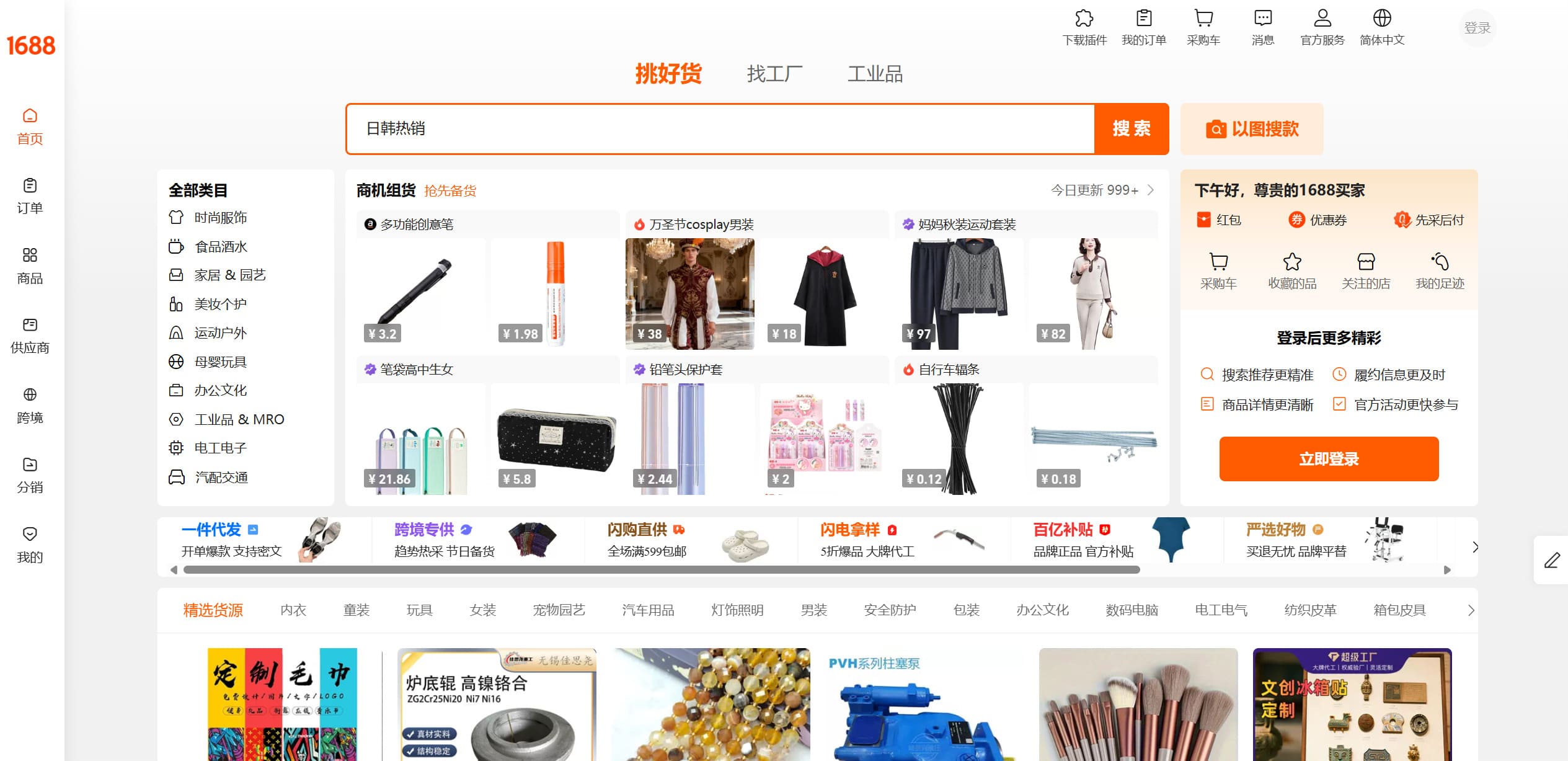
1688 is Alibaba’s domestic marketplace, built for buyers inside China rather than international dropshippers. That’s exactly why the pricing beats almost everything else on this list, provided you have an agent who can navigate the interface and place the order for you.
Pros
- Direct factory pricing beats almost everything else on this list once you can navigate it
- The deepest catalog on this list, since it serves the entire Chinese domestic wholesale market
- Prices often run 30% or more below Alibaba for the same goods, since there’s no export markup
Cons
- Chinese-language-only interface effectively requires a sourcing agent for international buyers
- No native English support or export-focused buyer protections like Alibaba’s Trade Assurance
Makes the most sense for advanced sellers optimizing margin once volume justifies bringing in an agent.
Buyers pay nothing to browse or order. Supplier-side platform fees don’t show up in your product cost beyond the listed price.
16. Alibaba
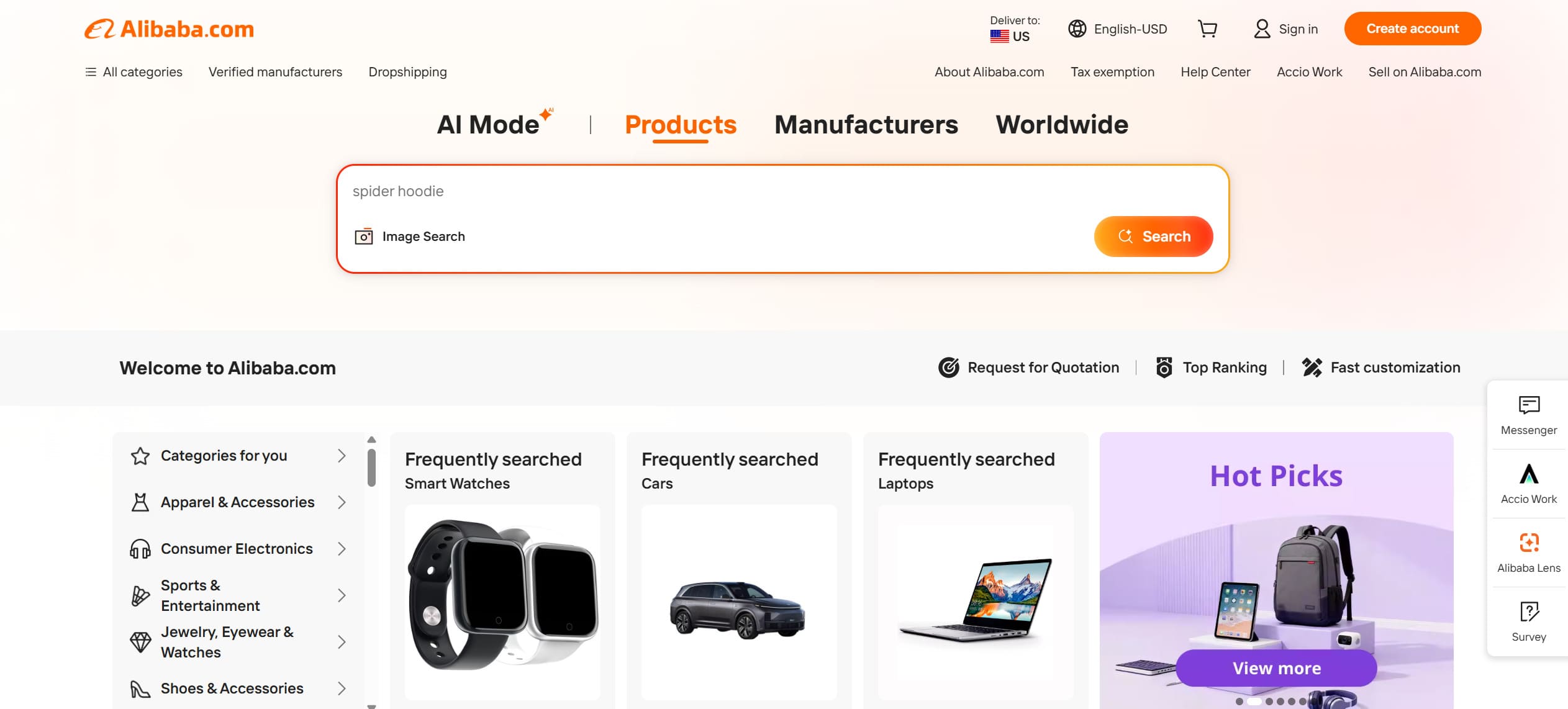
Alibaba is the international, English-language counterpart to 1688 and remains the default starting point for anyone who wants a custom mold, a logo printed directly on a product, or a long-term factory relationship. Founded in 1999 and listed on the NYSE, it carries more institutional trust than most sourcing platforms.
Pros
- Trade Assurance protects payments until you confirm the order matches spec
- English-language negotiation and Gold Supplier verification badges reduce vetting time
- Founded in 1999 and listed on the NYSE, giving it more institutional track record than most sourcing platforms
Cons
- MOQs run higher than on consumer marketplaces, better suited to volume sellers than single-unit testing
- Supplier quality still needs individual vetting even with verification badges in place
- Some buyers report slow escalation when a dispute needs to go beyond first-line support
Suits sellers moving into private label and custom production.
Browsing and messaging suppliers is free. Trade Assurance and payment processing costs are typically built into the quoted product price rather than billed separately.
17. Made-in-China.com
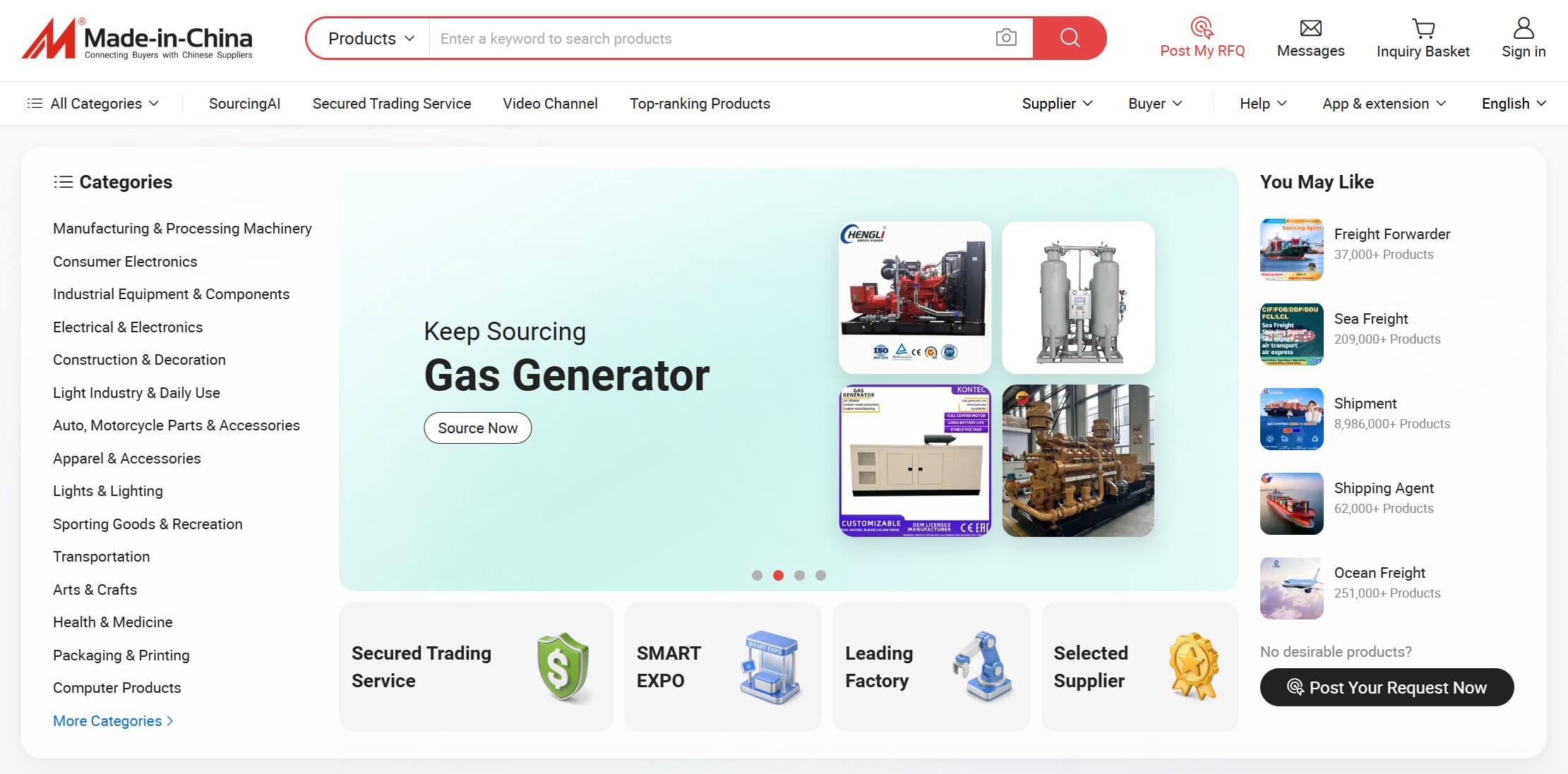
Made-in-China.com is Alibaba’s closest competitor as a general B2B directory, operating since 1998 under the publicly listed Focus Technology Co. It leans slightly more industrial than Alibaba, though its catalog still covers consumer goods well.
Pros
- Audited-supplier badges (SGS, Bureau Veritas, TÜV) add a second layer of factory verification alongside Alibaba
- Escrow-based secured trading protects payment until goods are confirmed
- Operated by Focus Technology, a company listed on the Shenzhen Stock Exchange
Cons
- The platform itself is legitimate, but individual sellers still vary in reliability
- Smaller buyer community than Alibaba means fewer public reviews per supplier
Useful for buyers who want a second directory to cross-check factory options against Alibaba.
Searching and messaging suppliers costs nothing. Escrow-based trade guarantee services are optional and typically factored into the negotiated price.
18. Global Sources
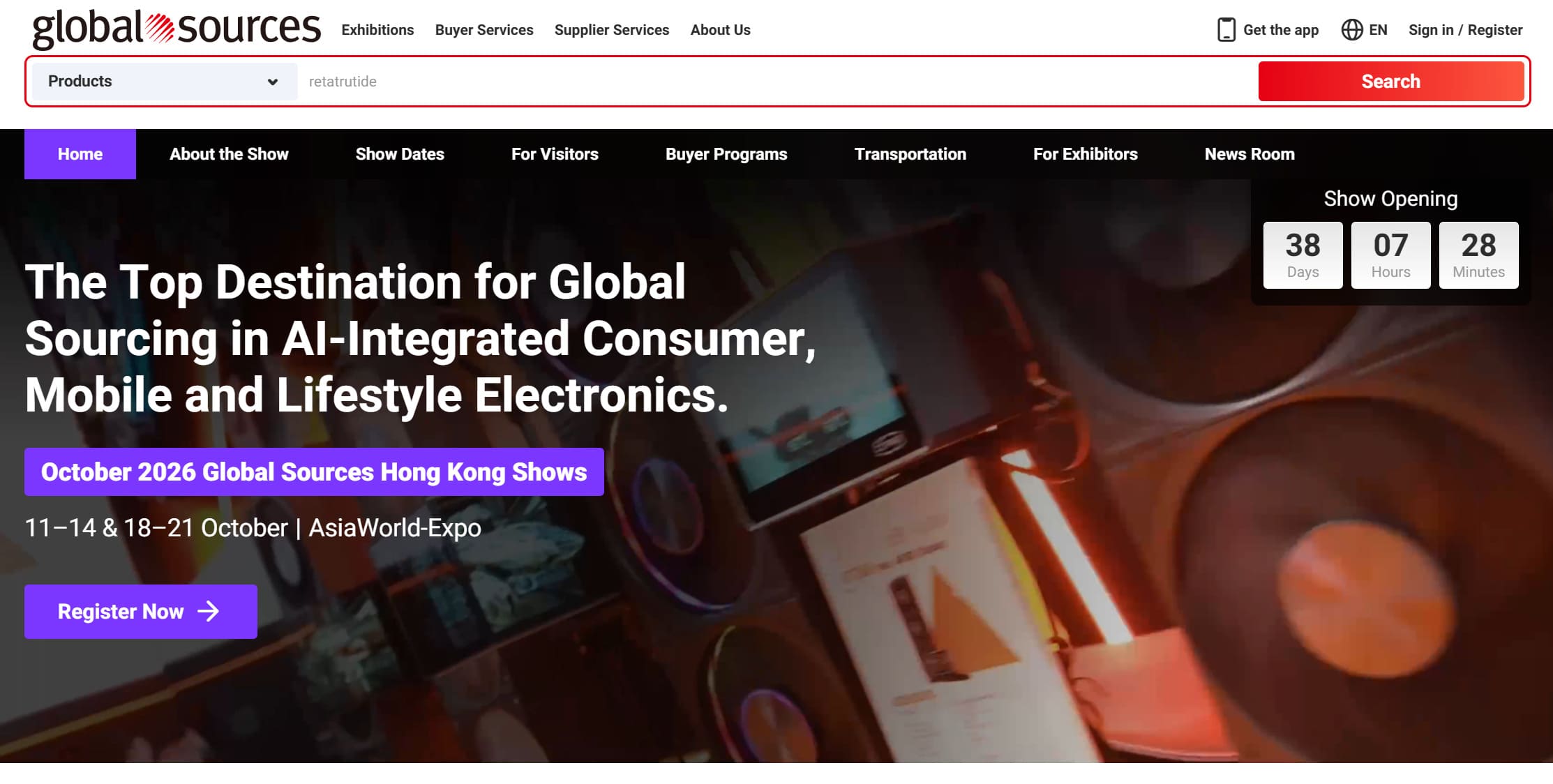
Global Sources isn’t a supplier itself; it’s a sourcing directory and trade-show organizer (Hong Kong Shows among others) that connects buyers with vetted, certified factories. That makes it more useful for finding a long-term manufacturing partner than for placing a single dropshipping order.
Pros
- Certified factory network with an emphasis on mid-to-high-end, differentiated products
- Trade-show access lets you assess a factory’s production capacity in person
- Now runs sourcing shows in Indonesia, Vietnam, and Saudi Arabia too, not just Hong Kong, widening factory access beyond a single event
Cons
- No built-in fulfillment; not designed for per-order dropshipping
- Skews toward bulk buyers and brand owners rather than single-unit testers
A better fit for brand owners planning long-term, bulk supplier relationships than for dropshippers.
Browsing the catalog and messaging suppliers is free; attending an in-person trade show typically requires event registration.
19. Jingsourcing
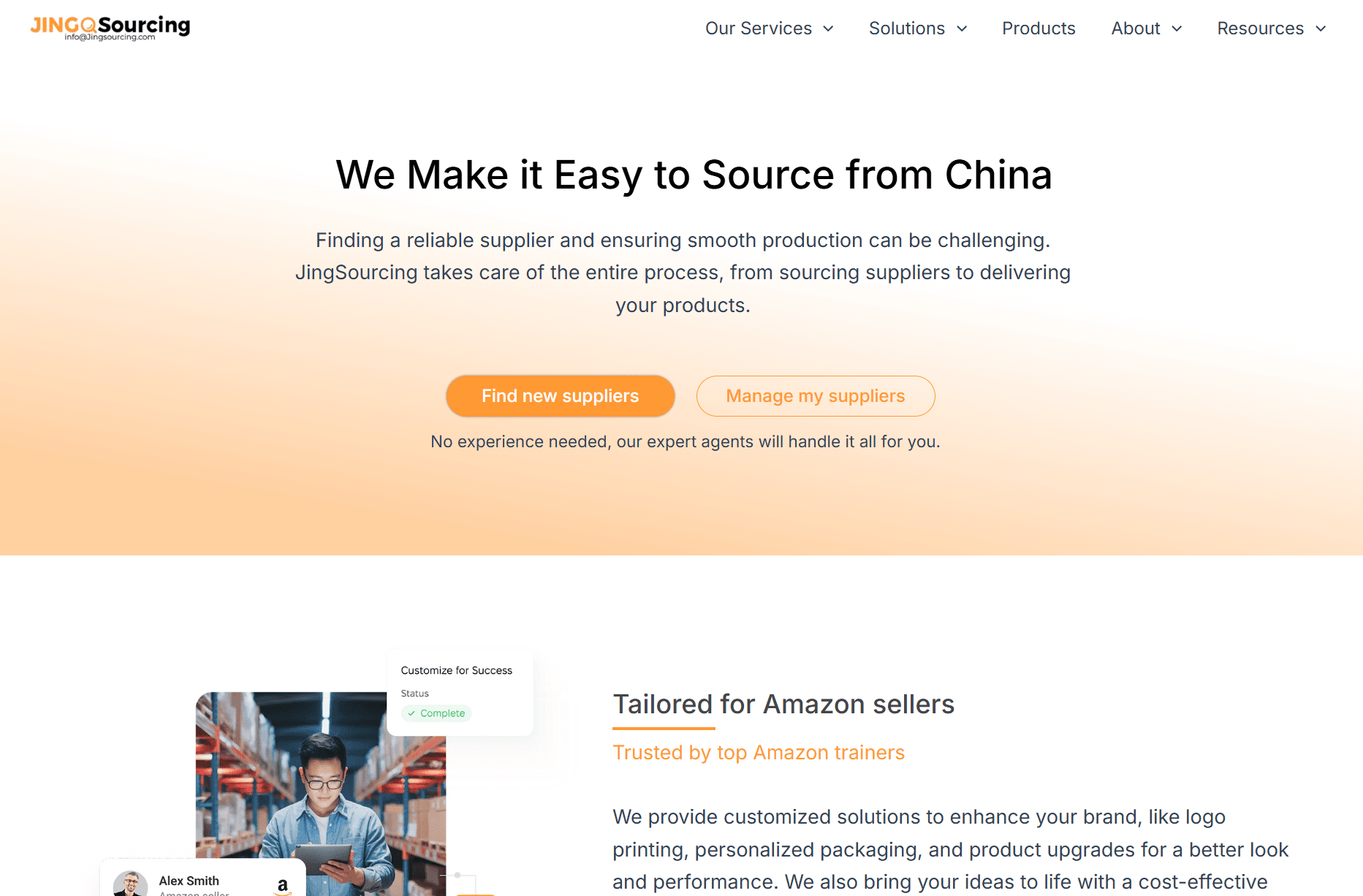
Jingsourcing is a China-based sourcing company rather than a self-serve platform: their team negotiates with factories, runs quality checks, and coordinates logistics on your behalf for a service fee rather than a flat subscription.
Pros
- Hands-on factory vetting and pre-shipment inspection reduce the risk of a bad production run
- The team manages the full loop from sampling to door-to-door logistics, not just introductions
- Over 200 in-house sourcing specialists have supported thousands of businesses since 2015
Cons
- Project-based pricing and lead times tied to factory schedules make timelines less predictable than an off-the-shelf agent
- Best suited to mid-to-high-end orders rather than quick single-unit tests
- At least one documented case involved a client having to destroy stock after an IP-infringement claim, a reminder that sourcing agents reduce but don’t eliminate that risk
Suits mid-to-high-end sellers who value quality and customization over speed.
There’s no flat subscription here; project-based sourcing fees depend on how complex the request is.
Niche Specialists
20. FondMart
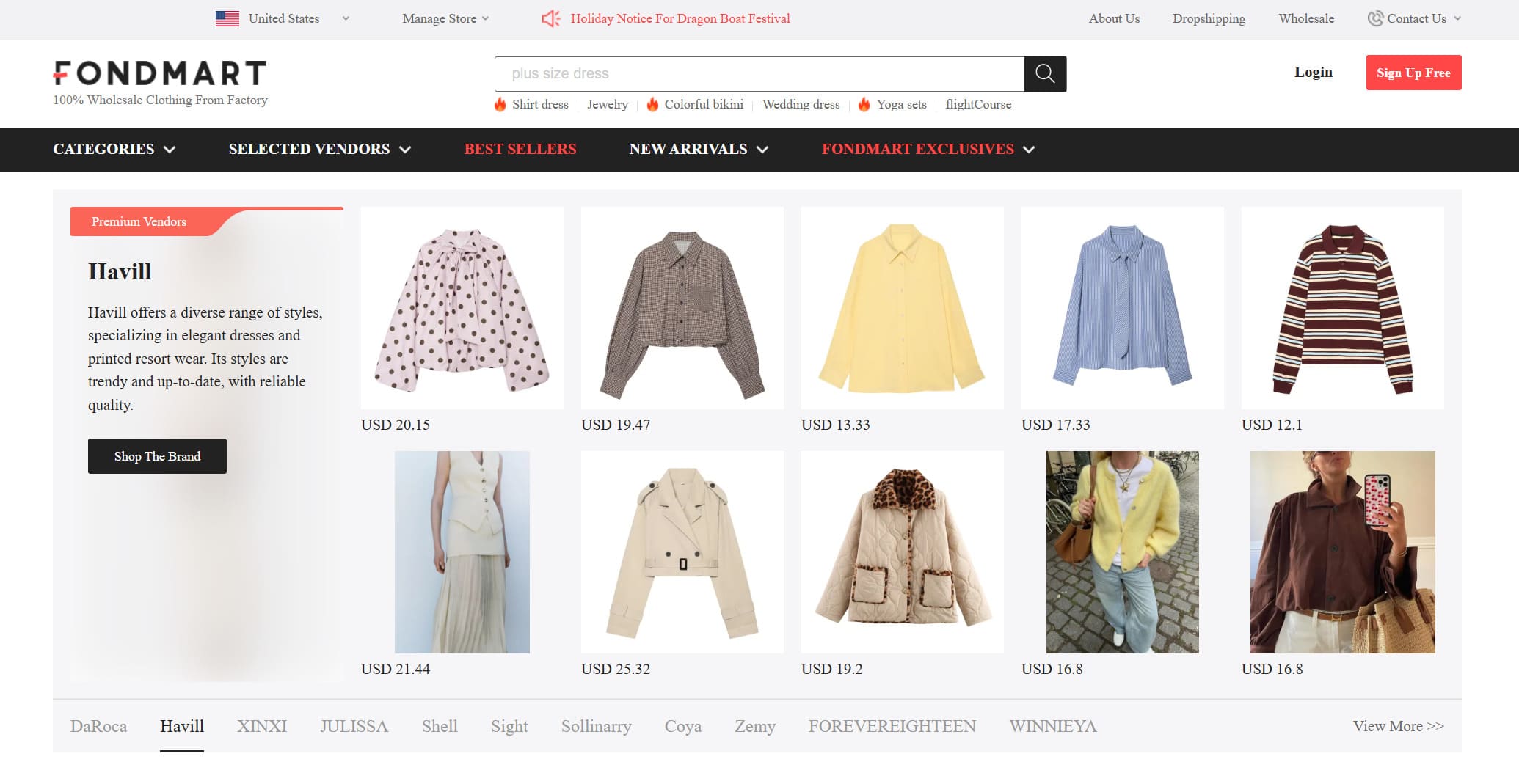
FondMart specializes in women’s apparel and has been connecting dropshippers with clothing wholesalers since 2012 out of Hangzhou. Its standout feature is no-MOQ private labeling, meaning you can sew your own tags into garments without ordering thousands of units first.
Pros
- No MOQ for private-label tags, a real differentiator in apparel dropshipping
- Active, well-integrated Shopify app with a large existing user base
- Processes thousands of parcels daily across roughly 190 countries, so the logistics side is well-tested
Cons
- Support response times vary from one interaction to the next
- Catalog is apparel-only, so it won’t cover a multi-category store
A strong option for sellers building a fashion-focused store who want private branding early.
There’s no membership cost. You pay standard product and shipping costs, with no platform subscription for the core dropshipping service.
21. Chinavasion
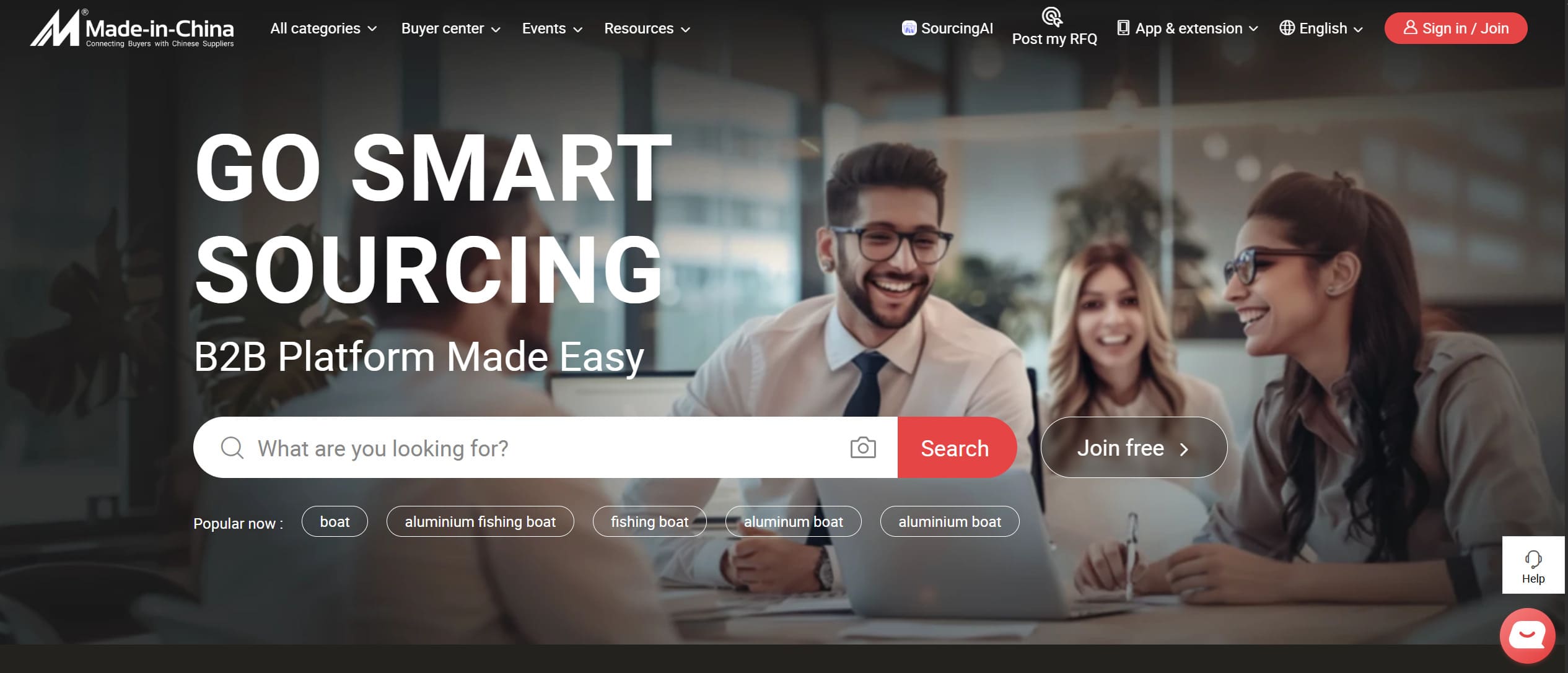
Chinavasion has been selling Shenzhen-sourced electronics for close to two decades, and reviews reflect that long history in both directions: some buyers report a decade of reliable orders, while others describe stock inaccuracies and slow replies on damaged items.
Pros
- Close to two decades in business, with some buyers reporting a decade of reliable orders
- The mid-price tier tends to perform more consistently than the cheapest listings
Cons
- Review scores are mixed; other buyers describe stock inaccuracies and slow replies on damaged items
- No dedicated dropshipping program comparable to a fulfillment agent’s SLAs
- Some recent social media feedback describes the storefront itself as feeling dated, pricing included
Works for electronics sellers willing to test SKUs individually before scaling.
Standard wholesale pricing with volume discounts applies, and there’s no separate dropshipping subscription fee.
22. Sunsky
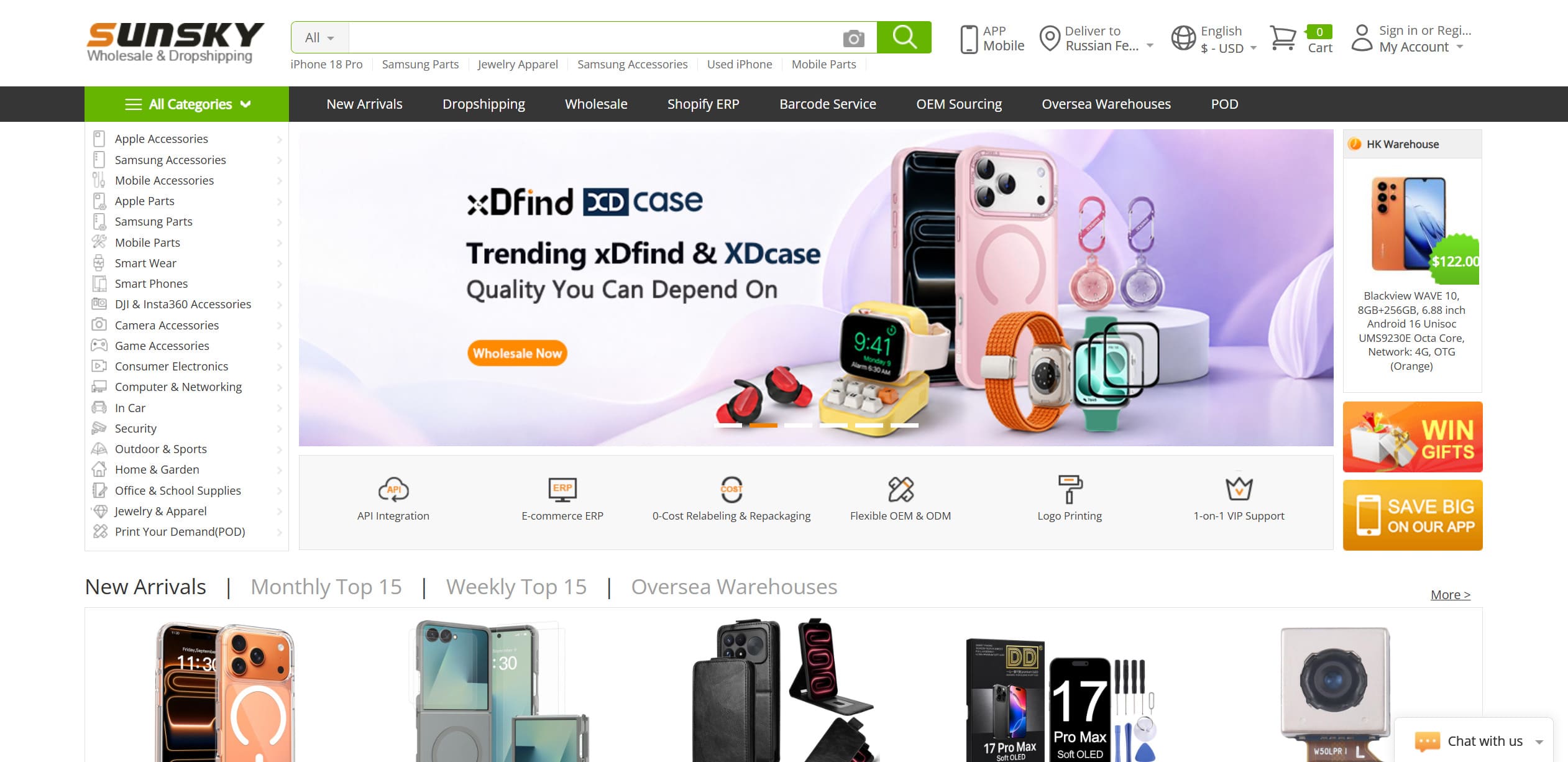
Sunsky is a Shenzhen-based wholesaler built around mobile phone accessories, computer peripherals, and repair parts, with a dropshipping API that plugs into third-party automation tools.
Pros
- Deep catalog specifically in phone accessories, repair parts, and computer peripherals
- Dropshipping API plugs into third-party automation tools for order sync
- Warehouses in China, Hong Kong, the US, UK, and UAE keep delivery quick once stock sits locally
Cons
- Customer service responsiveness varies by order and by rep
- Niche focus means it won’t cover categories outside mobile and computer accessories
A good fit for sellers focused specifically on phone accessories or repair parts.
Joining is free. Sunsky runs a 7-tier wholesale pricing structure where discounts increase with order volume, and there’s no separate subscription fee.
23. TVC-Mall
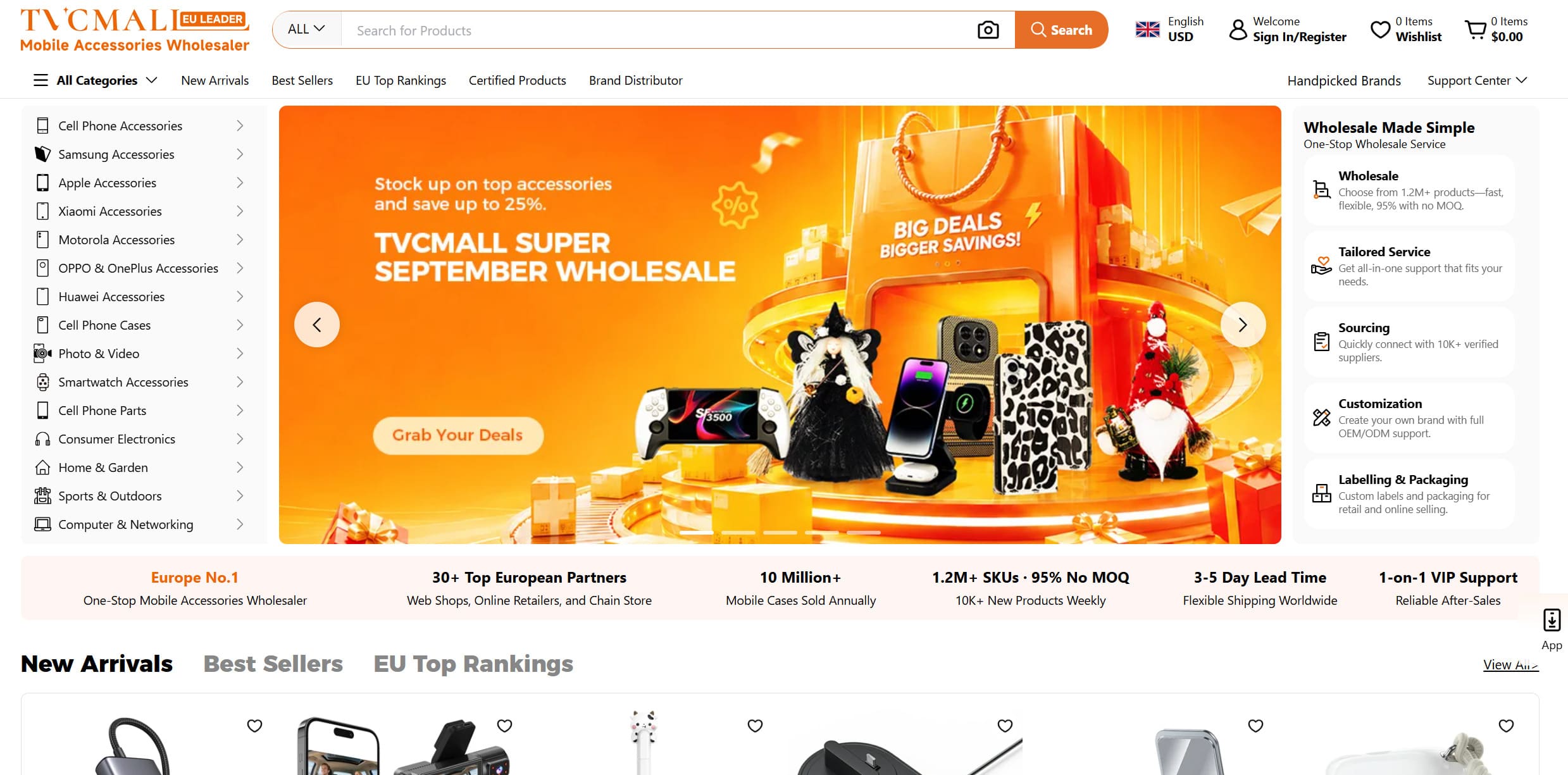
TVC-Mall, operated by Shenzhen TVC-Tech since 2008, occupies the same niche as Sunsky: phone cases, screen protectors, and accessories, sold with no MOQ through a multi-language storefront.
Pros
- No-MOQ catalog makes single-unit testing straightforward
- Multi-currency, multi-language storefront simplifies international selling
- Regular presence at industry events like Mobile World Congress backs up the company registration details with something harder to fake
Cons
- Warranty and damage claims can take longer to resolve than order placement suggests
- Occupies the same narrow niche as Sunsky, so it works best as a second source rather than a sole supplier
Works well for sellers specializing in mobile accessories who want a second supplier alongside Sunsky.
There’s no membership cost, and standard wholesale pricing applies with no separate subscription or dropshipping fee.
Directories
24. SaleHoo
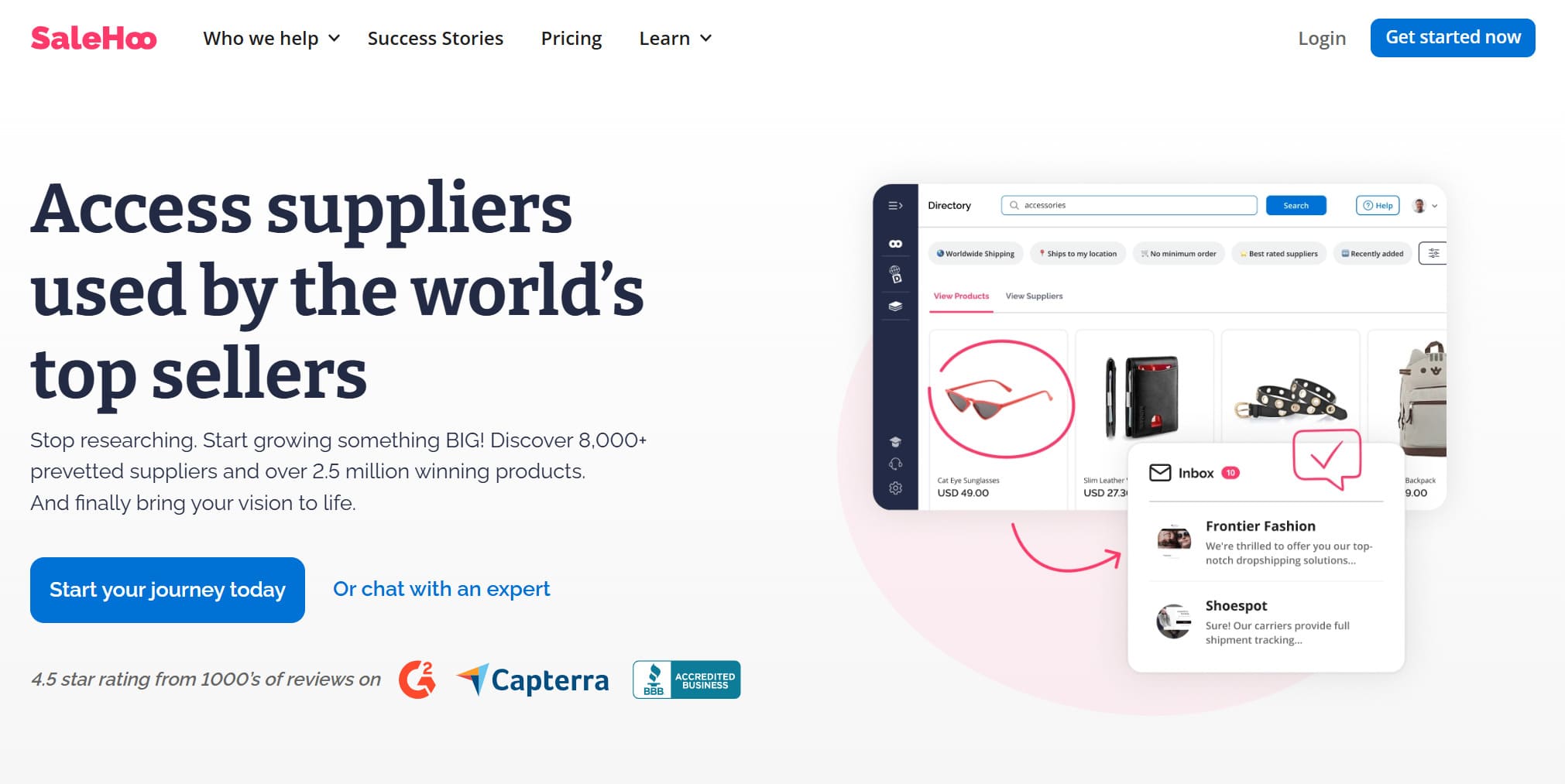
SaleHoo doesn’t ship or stock anything itself. Think of it more as a shortcut past the research phase: someone else has already checked out each listed supplier, including chinese dropshipping suppliers, so you’re not starting from zero.
Pros
- Every supplier is manually vetted before being added to the directory, cutting research time significantly
- Covers multiple niches and countries, not just China, so it doubles as broader supplier research
- Operating since 2005 with an A+ Better Business Bureau rating
Cons
- Doesn’t handle fulfillment itself; it’s a research tool, not a supplier
- Requires a paid membership to access the full directory
Useful if you want a shortlist of pre-checked suppliers before doing your own outreach.
Membership starts at $9 a month billed annually, or $299 one-time for lifetime access on the Starter tier; the Pro tier runs $49 a month annually. SaleHoo doesn’t take a cut of your sales.
How to Choose the Right China Dropshipping Suppliers
Picking from 24 options gets easier once you evaluate against a few consistent dimensions rather than reacting to whichever site shows up first in search. A simple starting rule: if a price or shipping promise looks too good to be true, it usually is.
Match Supplier Type to Your Business Stage
New stores usually start on marketplaces like AliExpress paired with DSers, since that combination lets you validate ideas without any real commitment. This is where finding reliable dropshipping suppliers china-wide starts for almost everyone. Once sales settle into a steady pattern, it’s usually worth shifting toward agents that offer clearer SLAs, overseas warehouses, and better tracking; CJdropshipping, Banggood, and HyperSKU all fit that growth stage well. By the time you’re ready for private label, agents or factories that support custom packaging and logo printing become the priority, whether that’s EPROLO, FFOrder, FondMart, or a 1688 or Alibaba factory contacted directly.
Product Quality, QC, and Counterfeit Risk
Consistency is the real challenge with long-distance sourcing, not baseline quality. China dropshipping suppliers can absolutely deliver excellent products, but the same catalog also hides sellers using identical product photos across wildly different price points, sometimes for counterfeit or IP-infringing items. Payment processors and ad platforms have both gotten faster at flagging obvious IP violations, and getting caught tends to mean a frozen account rather than a warning.
- Order samples before listing anything, especially apparel sizing, electronics reliability, and anything fragile
- Define a QC checklist covering packaging standards, defect thresholds, and accessory completeness
- Confirm products carry proper licensing rather than resembling a branded item too closely
- Track defect rate and negative reviews per supplier, not just per product
Shipping Speed, Reliability, and Tracking
Standard delivery from China still runs 2-6 weeks on the slowest lines, longer during peak season, though priority and DDP lines from established agents typically land in 7-15 days.
- Distinguish between processing time and transit time; both affect the customer’s actual wait
- Test at least two service levels for your key markets before choosing a default
- Favor suppliers who share historical performance data rather than optimistic estimates
- Ask whether the agent can generate a destination-country tracking number before the parcel actually leaves China — this “pre-registration” step removes the multi-day tracking blackout that drives most delivery-related support tickets
- Set conservative delivery windows on product pages, then tighten them once real data comes in
Automation, Integrations, and Tech Stack
Automation stops being optional once daily orders climb past 20-30, particularly across multiple suppliers. Look for solid integrations with Shopify, WooCommerce, BigCommerce, Amazon, eBay, or TikTok Shop, and verify inventory sync, price updates, and tracking sync before you rely on any of it at scale.
Communication, Support, and Time Zone Fit
Clear communication heads off most disputes before they start. WeChat remains the default business tool for daily updates and real-time photos in China, and a bit of cultural awareness (respecting “face,” building guanxi over time) tends to translate into better pricing and priority handling once a relationship is established.
- Test responsiveness with pre-sales and post-sales questions before committing volume
- Use structured message templates: order ID, SKU, variant, issue description, photos
- Ask for a dedicated account manager once your order volume justifies it
Price Transparency and True Landed Cost
True cost is product cost plus shipping, packaging, payment fees, and duties. With de minimis no longer covering low-value parcels, leave duties out of that math at your own risk.
- Avoid suppliers with vague or shifting fee structures
- Request full landed-cost breakdowns for your top destination markets
- Use Trade Assurance on Alibaba or equivalent buyer protection wherever it’s offered
- Keep a running spreadsheet confirming each SKU still clears a healthy margin after the new duty math
Where Else to Find China Dropshipping Suppliers Beyond This List
The 24 platforms above cover most needs, but a niche product sometimes calls for a supplier that isn’t on anyone’s standard list yet. A few channels consistently turn up options worth vetting.
- Shopify App Store. Searching “dropshipping” or “supplier” surfaces apps ranked by real merchant reviews, which is a faster quality signal than a cold Google search.
- Forums and communities. Reddit threads, Facebook groups, and LinkedIn posts often mention specific factories or agents that never bothered building a marketing site, along with unfiltered complaints about the ones that did.
- Direct Google search. Pairing a product name with “manufacturer” or “distributor” instead of “dropshipping supplier” turns up smaller factory sites that may not run a dropshipping program yet but will set one up for a serious buyer.
- Trade shows. Events like the Canton Fair or the Hong Kong Electronics Fair put you face to face with a factory’s actual production floor and QC process, something no product listing can fake.
Using Automation Tools Like Easync With China Dropshipping Suppliers
If AliExpress is part of your sourcing mix, keeping stock levels, prices, and tracking numbers in sync by hand gets tedious once order volume grows. Easync covers that specific link between AliExpress and an eBay or Shopify store: it pulls in listings, watches stock and pricing so you don’t oversell, places the AliExpress order once a sale comes in, and pushes the tracking number back once it ships.
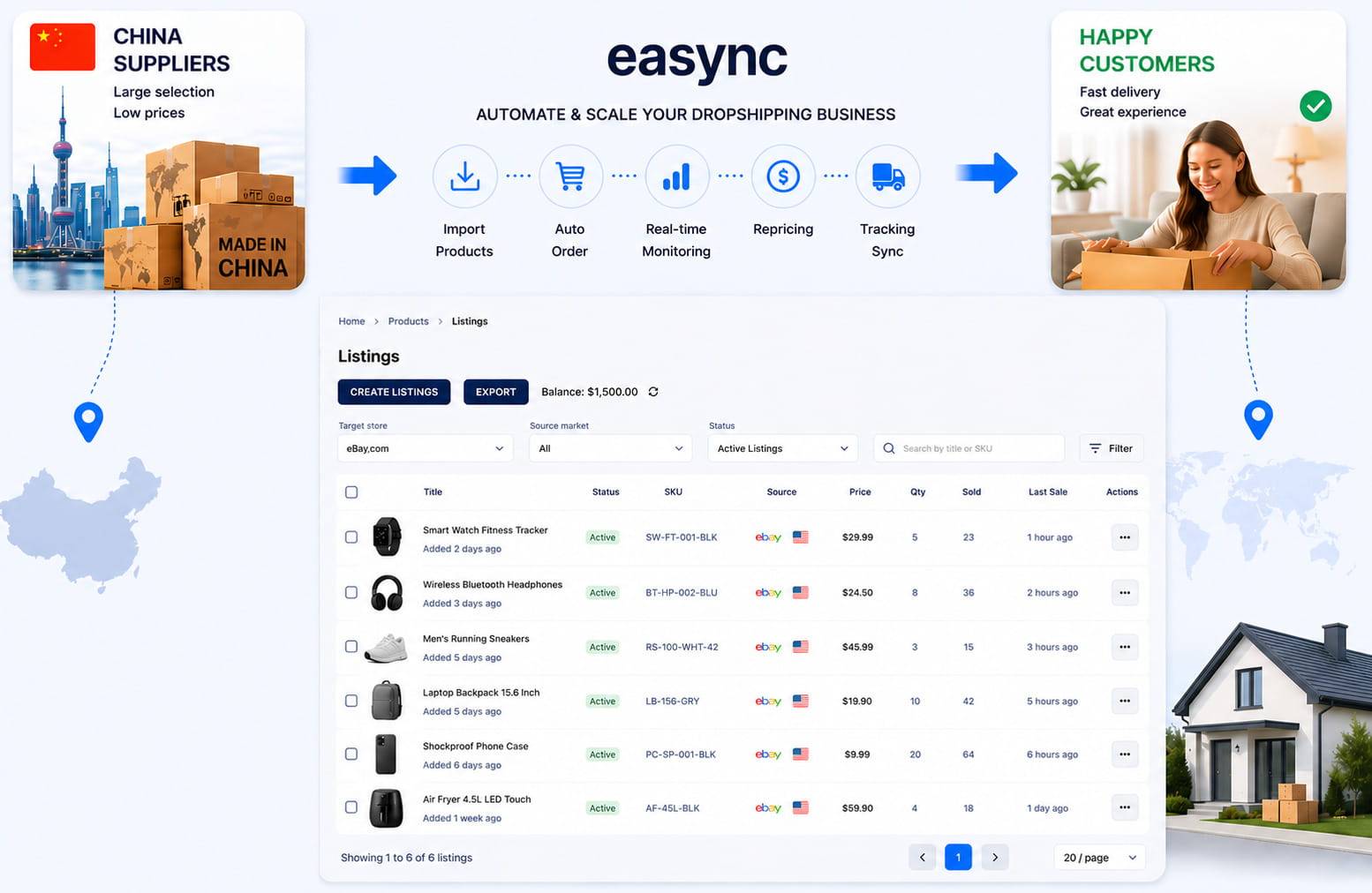
This kind of dropshipping software lets sellers scale AliExpress-sourced order volume without a proportional jump in manual work. Integrate Easync or a similar AliExpress-focused tool once you’re past a handful of daily orders, especially if you’re running more than one sales channel at once.
Common Mistakes to Avoid When Working With China Dropshipping Suppliers
Vetting partners carefully, testing samples, and keeping communication documented cover most of what separates a smooth supplier relationship from a stressful one.
Choosing Suppliers Only by Lowest Price
Extremely low pricing often hides poor quality, missing accessories, or weak packaging. Weigh defect rate and on-time dispatch alongside price instead of chasing the number alone, and A/B test two or three suppliers on the same product before defaulting to the cheapest one.
Not Ordering Samples or Test Batches
Skipping samples tends to show up later as refunds, particularly with apparel sizing and anything fragile or electronic. Order 1-3 units first, then run a small live batch of 20-50 orders before pushing hundreds through a new supplier daily.
Ignoring Processing Times and Warehouse Stock
Many sellers watch transit time closely and ignore processing time, which is often the bigger source of delay. Ask for processing SLAs and confirm them with real test orders rather than taking a platform’s claim at face value.
Weak Communication and Documentation
Most disputes trace back to something nobody wrote down — a price, a packaging spec, a lead time discussed over chat and never confirmed in writing. Keep written records, use shared documents or ticketing at scale, and avoid off-platform payments without a contract behind them.
Automating Before Fixing Quality and Logistics
Plugging an unstable supplier into automation just scales the errors faster. Run test orders and confirm QC by hand before you automate anything, and only ramp up volume once the numbers show the supplier can actually handle it.
Tips for Scaling Your Store With China Dropshipping Suppliers
Finding a supplier is the easy part compared to what comes next: keeping the ones you’ve already vetted performing reliably as order volume climbs.
Use Multiple Suppliers for Risk Management
Map each bestseller to at least two suppliers, or one primary plus a backup, so a stockout or a price spike doesn’t take the listing down entirely. If AliExpress is one of them, a tool like Easync can automate that side of the routing so orders shift the moment your primary supplier falls behind.
Upgrade Shipping for Proven Winners
Start new products on standard shipping, then move proven SKUs to priority or DDP lines once they’re generating consistent sales. Faster delivery tends to show up directly in reviews and repeat purchase rate.
Invest in Branding and Customer Experience
Once demand is stable, small touches like custom packaging, printed inserts, and a logo pay for themselves fast. Several agents on this list, including CJdropshipping, EPROLO, FFOrder, and 1688 factories, offer private label once MOQs are met. A branded thank-you card and consistent packaging go a long way before you need anything more elaborate.
Build a Scalable QC and KPI System
Track a short list of numbers per supplier: late dispatch rate, delivery time distribution, defect and complaint rate, reship/refund rate, and support response time. Review them monthly, fix or replace underperformers, and keep rewarding suppliers who consistently hit their numbers with more volume.
FAQ
How do I verify if a China dropshipping supplier is legit?
Years in business, platform reputation, and order volume are the first things worth checking, and it helps to cross-reference reviews across more than one site since a single platform can paint an incomplete picture. A small sample order tells you more than any review does, so start there before committing real volume, and stay away from any supplier pushing off-platform payment without a contract. If the factory came through Alibaba or 1688, checking business registration through official Chinese enterprise credit databases adds one more layer of confidence.
Is dropshipping China dead now that de minimis is gone?
No, but the “cheapest possible direct parcel” version of the model is. Suppliers offering DDP shipping or overseas warehousing absorb the customs complexity instead of passing a surprise bill to your customer, which keeps the economics workable even with duties now applied to low-value shipments.
What is a realistic shipping time from China to the US or EU in 2026?
Priority or DDP lines from established agents typically land in 7-15 days. Cheaper standard lines run 10-25+ days, and the only way to see 3-7 days is when stock already sits in a local warehouse. Confirm the real number per SKU with a test order rather than trusting a platform’s advertised range, and keep the window you show customers conservative.
Can I use multiple China dropshipping suppliers in the same store?
Yes, and it’s generally the safer approach once you have more than a handful of SKUs. Automation tools route orders correctly, keep inventory synced, and manage tracking across sources, while documenting which SKUs sit with which supplier keeps things testable when something goes wrong.
Should I build customs duties into my retail price or charge them at checkout?
Baking the estimated duty into your retail price gives a cleaner checkout experience and avoids the abandoned-cart spike that a surprise fee at checkout usually causes. Some cart platforms can now calculate and collect duty at checkout automatically, which works too, but only if the number shown matches what actually gets charged at the border. When in doubt, ask your supplier for a landed-cost quote per unit and price from that number rather than guessing.
Is dropshipping from China still profitable with rising ad costs?
It can be, though the margin now comes from smart product selection and operational discipline rather than pure arbitrage on price. Sellers who are still winning tend to share a habit: they drop a losing offer within days instead of weeks, and they use the resulting volume to negotiate better rates once a supplier depends on their orders.