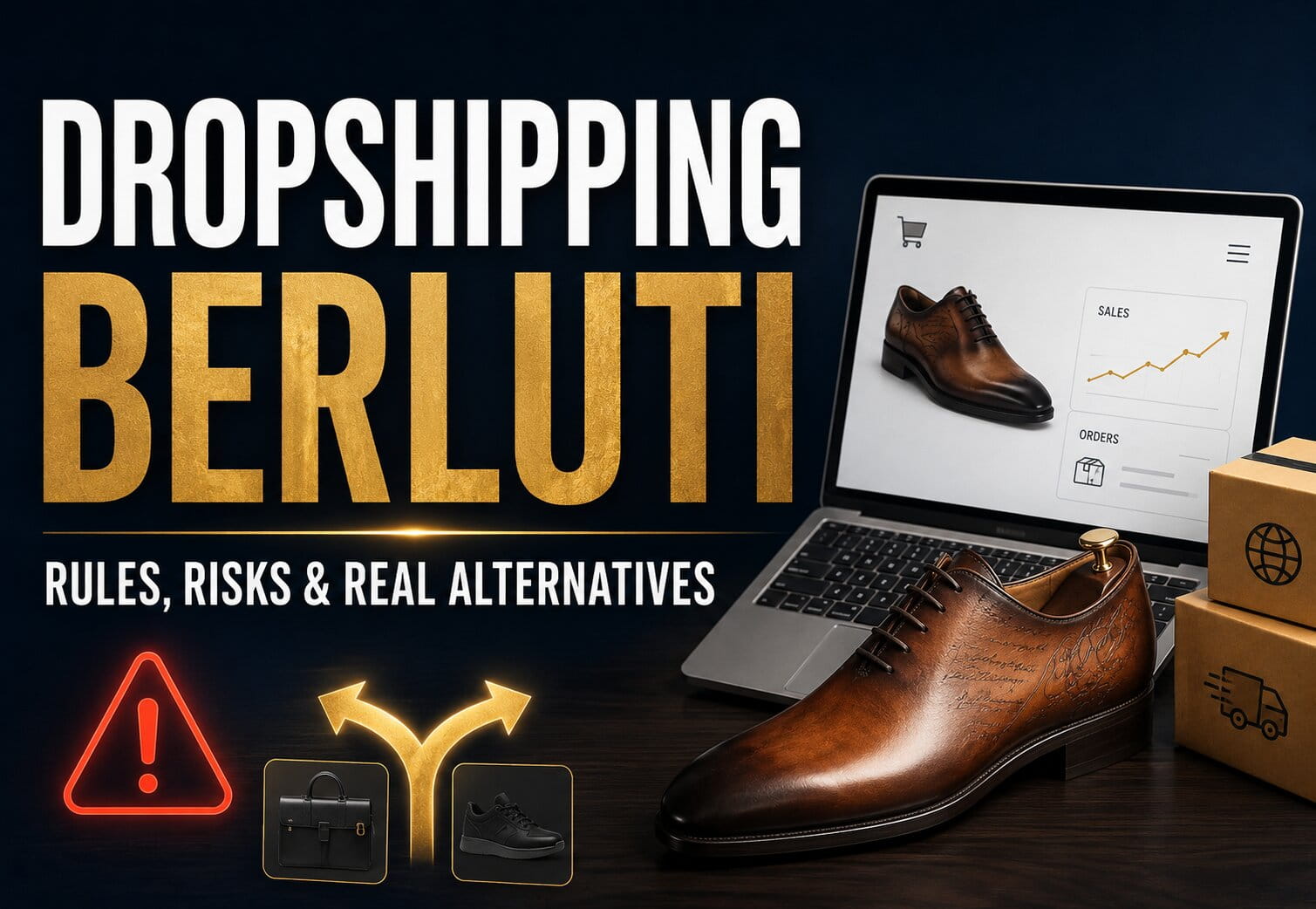
Quick answer: Berluti does not run a dropshipping or reseller program, so a store built around placing individual retail orders after each sale is unauthorized and usually unprofitable once fees and returns are counted. Anything sold as Berluti but sourced from AliExpress or an unverified supplier is very likely a counterfeit rather than a genuine dropshipping product, and selling it carries real legal exposure.
Key Takeaways
- Berluti sells through its own boutiques, its website, and a small number of approved multi-brand retailers, with direct-purchase shipping limited to a specific list of countries.
- Manual retail-arbitrage dropshipping Berluti, buying at full retail price after a customer orders, leaves little to no margin once payment fees, returns, and marketing costs are counted.
- A berluti replica or AliExpress-sourced listing is almost always a counterfeit product wearing the brand’s name, not a genuine dropshipping item.
- Sellers who want a similar high-ticket leather goods niche have workable options: authorized luxury distribution platforms, or an original private-label line.
What Is Drop Shipping Berluti, and Why Does It Trend in Searches?
Berluti is a French leather goods house founded in Paris in 1895 by Alessandro Berluti, known for handmade shoes built with hand-applied patina finishes on Venezia leather. LVMH acquired the brand in 1993, and it has since expanded from bespoke footwear into ready-to-wear, bags, wallets, and accessories.
Pricing sits firmly in luxury territory. On Berluti’s own US site, the Alessandro Demesure Leather Oxford lists at $2,500 and the Alessandro Alto Leather Oxford at $2,750, both excluding tax. That price point is exactly why the niche attracts dropshipping interest: high average order values mean a seller theoretically needs far fewer sales to hit a revenue target than with low-ticket products.
Search interest around dropshipping berluti generally comes from three angles: whether the brand can be dropshipped at all, whether berluti shoes listed on marketplaces are genuine, and whether a cheaper “berluti replica” route is a viable shortcut. Each deserves a direct answer rather than a single blanket yes or no.
Does Berluti Offer a Dropshipping Program, and What Would Berluti Drop Shipping Cost?
No. Berluti’s own Terms and Conditions of Sale restrict direct-purchase shipping to a specific list of countries — France, Monaco, Italy, Spain, the United Kingdom, Belgium, Switzerland, Germany, and the United States — through its boutiques and its own e-commerce site. There is no public wholesale portal, dropshipping API, or reseller program described anywhere in that documentation.
Berluti’s site terms also state plainly that visitors are not granted any right or license to use Berluti trademarks, logos, or graphics. That single line matters for anyone planning a store: even a genuine product doesn’t come with permission to copy the brand’s photography, descriptions, or logo, and a small number of Berluti’s own retail locations are run by independent distributors under separate agreements rather than by the brand directly.
For anyone who wants to check the underlying math rather than take that conclusion at face value: order profit works out to customer payment minus product cost, shipping, payment and platform fees, taxes, customer acquisition cost, and expected returns. Since there’s no Berluti dropshipping supplier offering wholesale pricing, the “product cost” line is a full retail purchase, which leaves little room for anything else in that formula once a customer can check Berluti’s own listed price in seconds.
Berluti Dropshipping Alternatives Worth Considering First
Given the lack of an official program, most people researching this niche are really asking one practical question: where can a similar high-ticket leather goods business actually be built. A handful of platforms offer genuine wholesale or dropshipping agreements with other luxury and premium brands, and comparing them side by side is more useful than debating whether to attempt Berluti dropshipping in the first place.
| Platform | Brand Catalog Focus | Dropshipping Integration | Best Suited For |
|---|---|---|---|
| Brands Gateway | Designer fashion including Gucci, Prada, Dior-adjacent labels | Shopify, WooCommerce, Wix API sync | Sellers wanting a wide luxury catalog with automated order routing |
| Brands Distribution | Italian and international designer wholesale | Shopify, PrestaShop, WooCommerce, Wix | Sellers who want volume pricing and an established European supply chain |
| Griffati | 300+ fashion brands, largely Italian-made | Simplified Shopify integration | Sellers prioritizing Italian leather craftsmanship close in spirit to Berluti |
| Tuscany Leather | European leather bags and accessories, unbranded | Direct dropshipping account with account manager | Sellers who want customizable leather goods without brand-authorization risk |
The same four options, in the same order, break down like this.
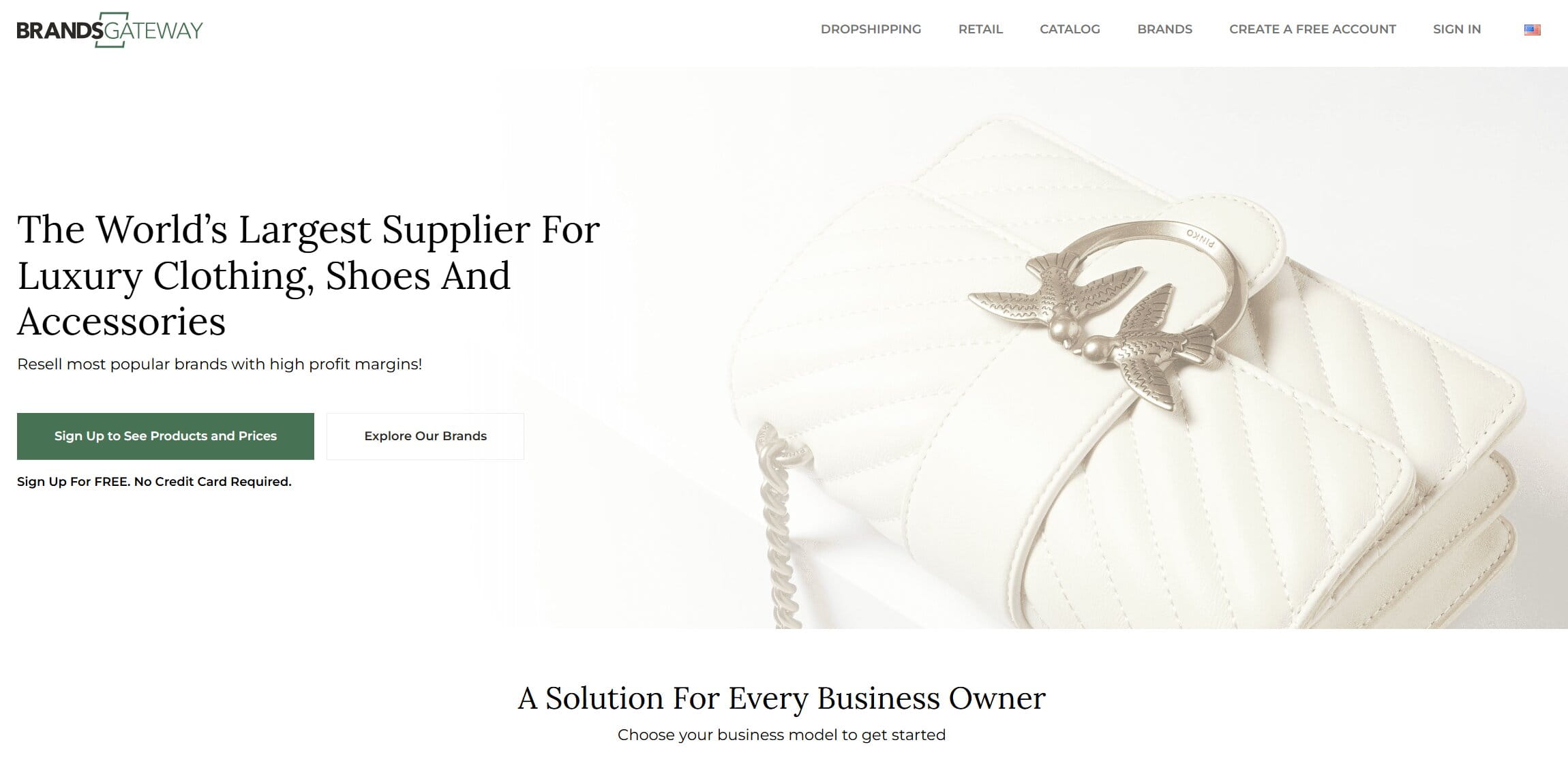
Brands Gateway
Brands Gateway operates as a business-to-business luxury marketplace with genuine wholesale agreements covering a broad roster of designer names, automatic inventory updates, and worldwide shipping handled by the platform itself rather than the individual seller.
Pros:
- Genuine, brand-recognized inventory across 100-plus designer names
- Automatic inventory sync and worldwide shipping handled by the platform
- API integration with Shopify, WooCommerce, and Wix
Cons:
- Paid membership tier required, plus an authenticity review for new accounts
- Catalog availability shifts over time and isn’t guaranteed to stay static
- Higher barrier to entry than an unbranded supplier
Who it’s for: Sellers who want an established luxury catalog with brand recognition built in, and who are comfortable paying for that recognition rather than building it from scratch.
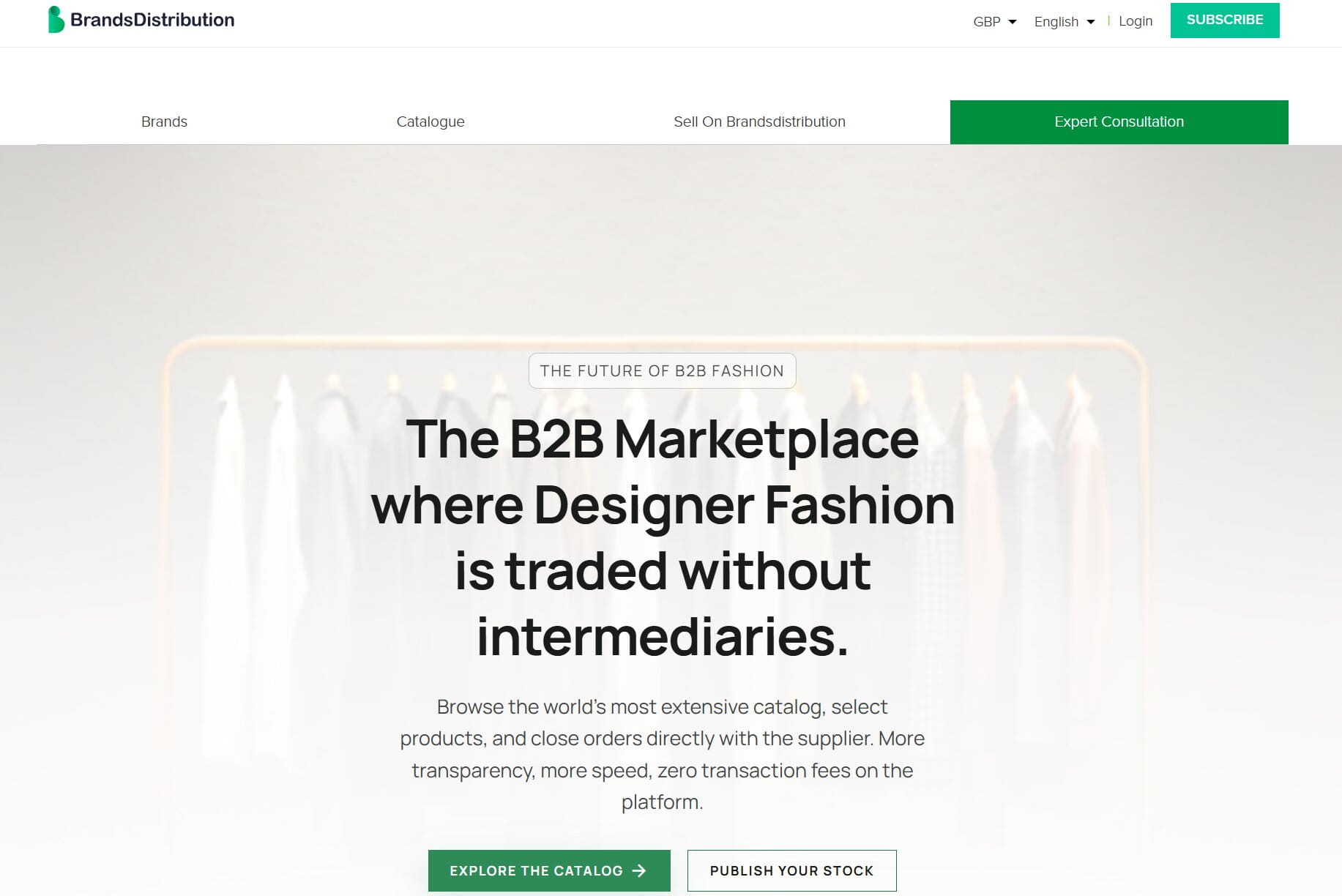
Brands Distribution
Brands Distribution carries one of the largest designer wholesale catalogs in Europe and integrates with several major storefront platforms.
- Pros:
One of the largest European designer catalogs available to dropshippers - Broad platform integration, including Shopify, PrestaShop, and WooCommerce
- Suited to building a full premium menswear collection, not just one product line
Cons:
- Better pricing tends to require committing to some order volume
- A large catalog can make it harder to keep a store’s niche focused
- Less useful for a seller testing a single narrow product idea
Who it’s for: Sellers planning a broader luxury-adjacent store rather than a single-brand niche, and who can commit to enough volume to unlock favorable pricing.
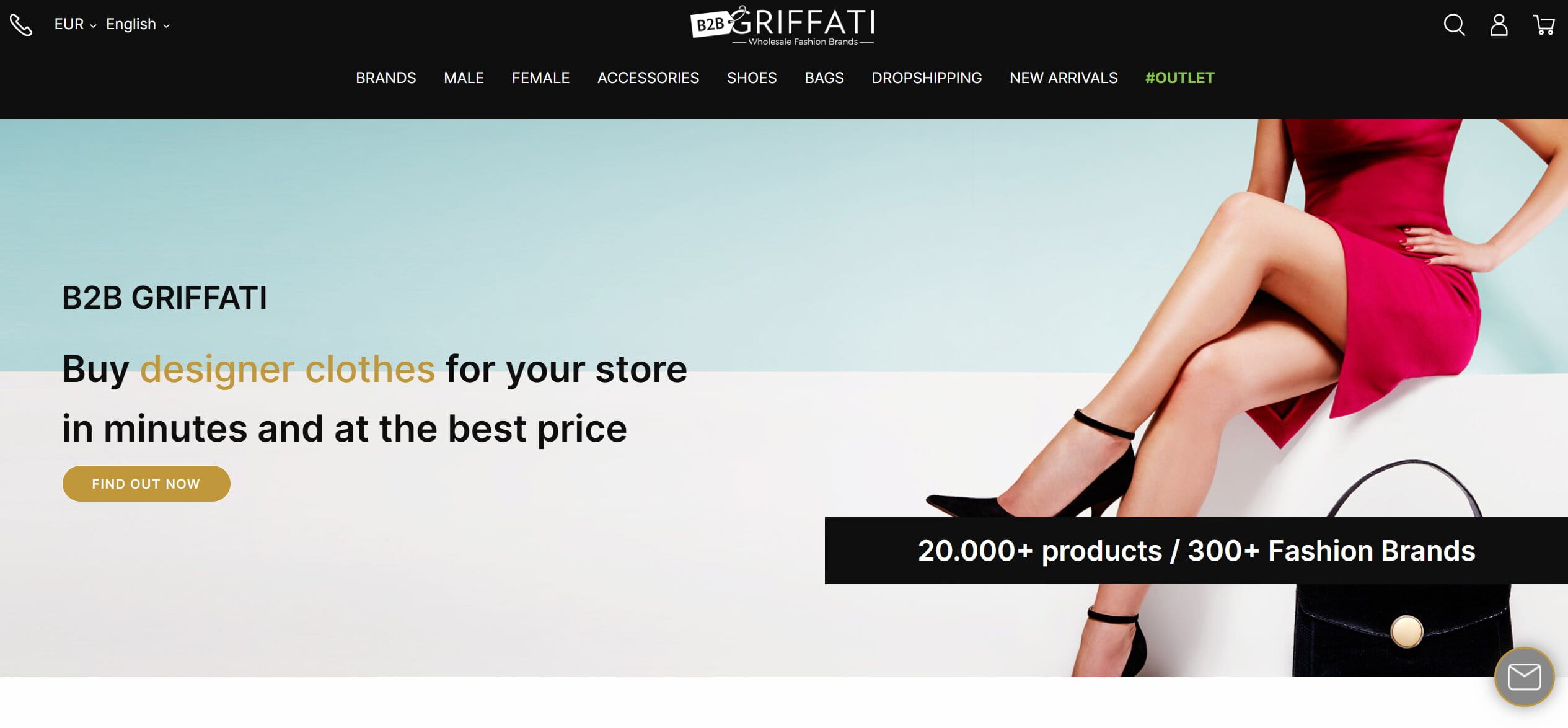
Griffati
Griffati leans heavily Italian-made, which suits sellers specifically drawn to Berluti’s Italian-French leather heritage.
Pros:
- Strong Italian-made focus, close in spirit to Berluti’s craftsmanship
- Simplified Shopify integration
- No minimum order requirement on its free tier
Cons:
- Catalog skews toward women’s fashion, requiring careful filtering for menswear
- Customer support is primarily Italian-language
- Fewer men’s leather-specific options than a dedicated menswear supplier
Who it’s for: Sellers who want an Italian-craftsmanship angle for marketing and are willing to filter a mixed catalog to find the right men’s products.
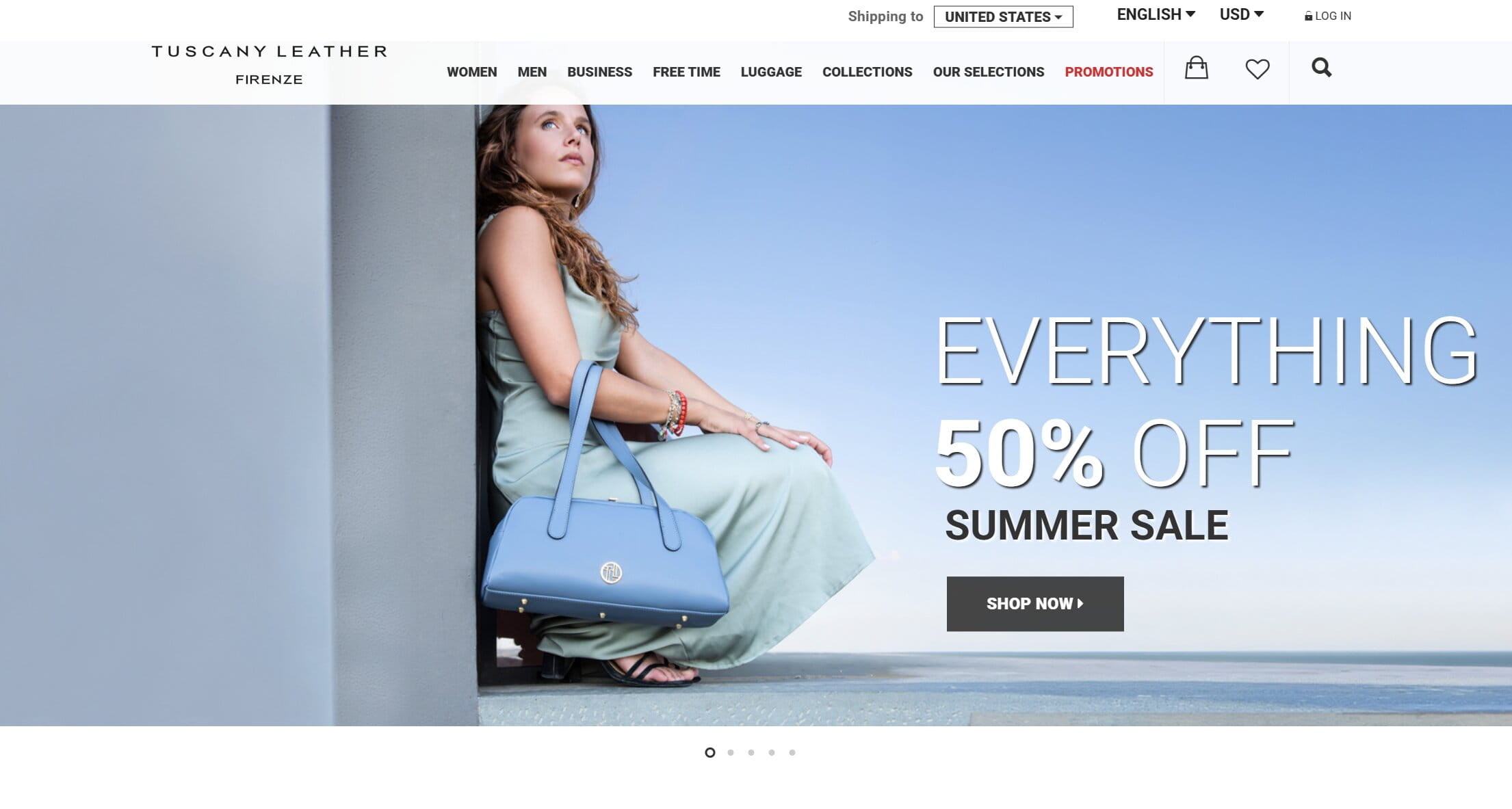
Tuscany Leather
Tuscany Leather sits outside the branded-goods category entirely: it manufactures its own unbranded leather bags and accessories with a customization service, including engraving.
Pros:
- Zero trademark or counterfeit risk, since the goods are unbranded and made by the supplier itself
- Dedicated account manager and a dropshipping account that handles returns directly
- Customization options, like engraving, that support genuine brand differentiation
Cons:
- No existing brand recognition to lean on with customers
- Narrower product range than a multi-brand wholesale platform
- Built around bags and accessories rather than footwear
Who it’s for: Sellers who’d rather build their own leather-goods brand from the ground up than borrow recognition from an existing name, and who want to avoid authorization questions entirely.
A Fifth Path: Building an Original Private-Label Line
This option doesn’t fit the comparison table above because it isn’t a supplier to sign up with, it’s a different business model. It means sourcing raw materials or finished goods from a manufacturer, then developing distinct branding, packaging, and product photography from scratch instead of trying to source or imitate any existing name. It takes longer to build recognition than borrowing an established brand, but it sidesteps every authorization and counterfeit question raised in this article.
Genuine, Unauthorized, and Counterfeit Berluti Sourcing
Anyone still drawn specifically to the Berluti name needs to separate three sourcing situations before deciding anything, since lumping them together as “luxury dropshipping” hides the decision that actually matters.
- Authorized supply. Genuine products plus a current agreement covering a specific company, market, and channel. This is the only route with a documented, defensible right to list the brand, and it doesn’t currently exist for Berluti at the dropshipping level.
- Genuine but unauthorized. A real item bought at retail price with no reseller status or brand affiliation. Technically possible, legally murkier around resale and return obligations, and financially thin once retail-level costs are counted.
- Counterfeit or replica. The item was never made or licensed by Berluti at all. This is the AliExpress-style route, and it’s a different category of problem entirely, not a cheaper version of the same business.
Why a Berluti Replica Listing Is a Legal Risk, Not a Shortcut
Products marketed as Berluti but priced far below the brand’s retail range are a strong signal that they were never made by the brand. Marketing them as genuine misleads customers directly, and marketing them with a disclaimer like “replica” or “inspired by” doesn’t resolve the issue either, since a product that copies a brand’s distinctive design can still raise trademark, trade-dress, or unfair-competition questions independent of the label attached to it.
eBay’s counterfeit policy allows a seller to list an item only when they’re certain it’s genuine, and it treats terms like “dupe” paired with a brand name as language that itself suggests a counterfeit. It also spells out that a counterfeit good stays unlawful even when a seller openly labels it as fake or discloses that it isn’t authentic, so a “replica” or “inspired by” tag in a listing doesn’t create any legal cover. Violations can lead to listing removal, account warnings, restricted selling activity, or suspension, and other major marketplaces enforce similar rules.
Whichever route a seller actually pursues, one of the authorized alternatives above, a private-label line, or a genuine-but-unauthorized retail purchase despite the economics, a few checks matter more than enthusiasm about the niche:
- Confirm supplier authorization in writing rather than relying on a successful checkout or a friendly customer-service reply.
- Check the target platform’s own dropshipping and trademark rules. Shopify’s dropshipping guidance, for example, treats the seller as responsible for product safety, product liability, and recall obligations in every jurisdiction sold into, even though a third-party supplier ships the item, and it requires a public, accurate refund policy and clear shipping-timeframe disclosures before checkout.
- Keep supplier documentation on file, including invoices and proof of purchase, in case a platform or payment processor requests evidence.
- Avoid copying brand photography or implying an affiliation the store doesn’t actually have.
- Check current VAT, customs, and import-duty rules for every country sold into, since these change periodically and add a real cost on top of the product price for cross-border orders.
None of this is legal advice. Trademark, resale, consumer-protection, and import rules vary by country, so anyone building a store around a specific brand should get advice relevant to where they buy and sell.
Automating a Legitimate Berluti-Style Store
Once a sourcing route is genuinely authorized, running the store day to day, syncing inventory, updating prices, routing orders across channels, is still real work. Automation platforms exist for that reason, and Easync is one example, built around repricing and order routing across marketplaces like eBay, Amazon, Walmart, and Shopify.
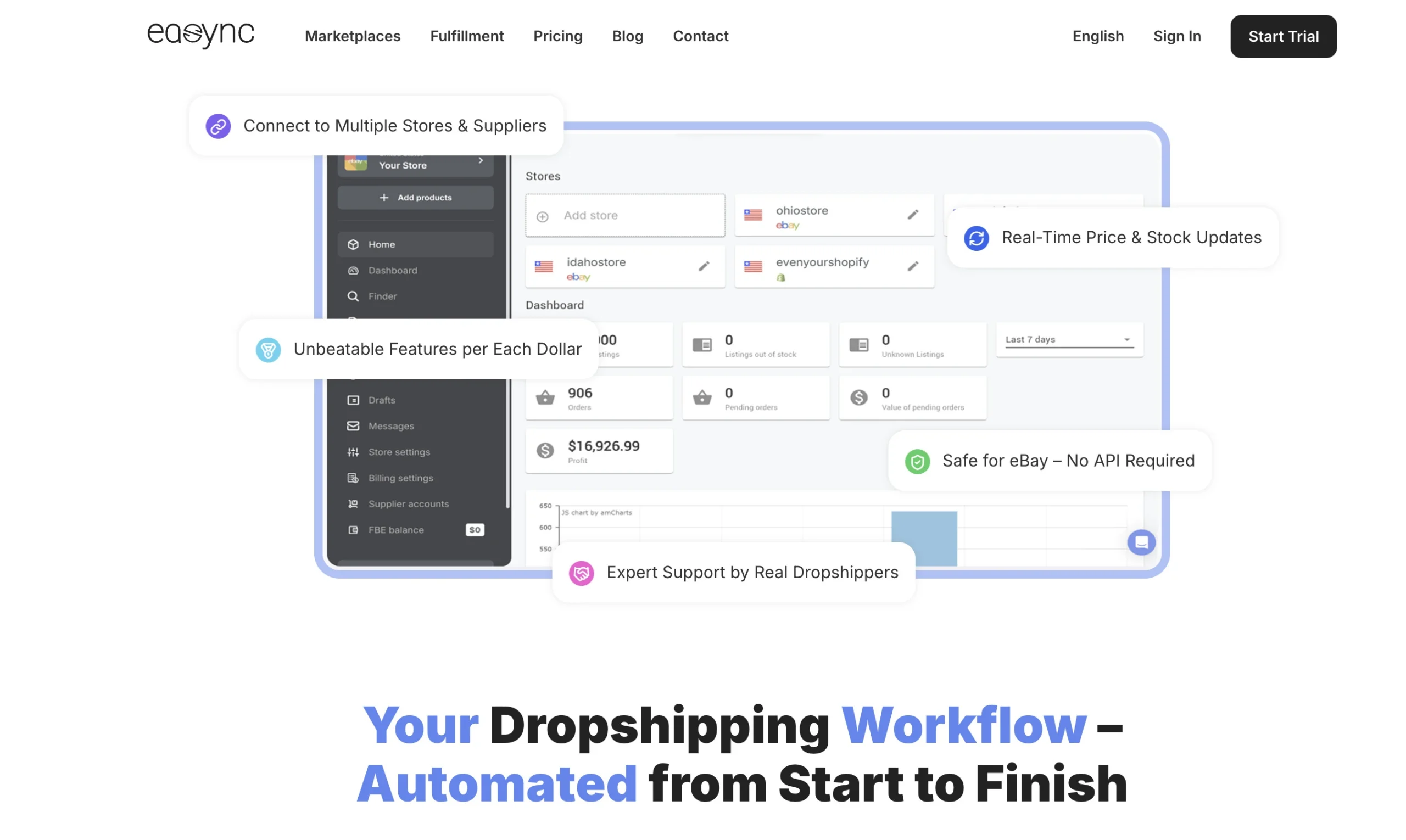
It’s worth keeping the two things separate: software like this can make an already-legitimate supply chain easier to manage, but it doesn’t grant brand authorization and doesn’t fix a counterfeit-sourcing problem. Confirming supplier authorization and product authenticity comes first, and stays a manual step regardless of which automation tool a store ends up using.
Frequently Asked Questions
Is dropshipping Berluti legal?
It depends on the sourcing route. Buying a genuine item at retail price and shipping it to a customer isn’t inherently illegal in most places, though it isn’t authorized by the brand and comes with no wholesale pricing or dropshipping support. Sourcing anything sold under the Berluti name from an unverified supplier is a different situation, since those products are typically counterfeit, which carries real legal risk regardless of how the sourcing is described.
Can I dropship Berluti shoes from AliExpress?
This isn’t recommended. Berluti shoes listed at a fraction of the brand’s retail price on marketplaces like AliExpress are not authentic, and marketing them as genuine exposes a store to trademark and marketplace-policy violations. A steep price gap from Berluti’s own listed prices is itself a signal that a product isn’t what it claims to be.
How much profit can berluti drop shipping realistically generate?
Very little in the standard retail-arbitrage version of the model. Since there’s no wholesale price available and no dropshipping integration offered by the brand, a seller pays close to full retail for each item before payment fees, shipping, and marketing costs are added. High-ticket dropshipping can be genuinely profitable in categories with a real wholesale relationship; this brand simply isn’t one of them.
Is selling a berluti replica illegal?
Selling counterfeit goods carries real legal exposure, including trademark infringement claims, and most marketplaces will remove listings and can suspend accounts once a replica is identified. Labeling something as “replica” or “not original” doesn’t resolve the underlying issue, since the product can still copy protected designs or branding.
Does Berluti sell through any legitimate third-party retailers?
Yes, a small number of authorized multi-brand luxury retailers carry Berluti products under formal distribution agreements, and some of Berluti’s own branded stores are run by independent distributors rather than the company directly. That’s a different arrangement from dropshipping, since those retailers typically hold inventory or operate under a documented wholesale relationship instead of placing single retail orders after each customer sale.
What countries can order directly from Berluti’s own website?
According to Berluti’s published Terms and Conditions of Sale, direct online orders currently ship to France, Monaco, Italy, Spain, the United Kingdom, Belgium, Switzerland, Germany, and the United States. Customers or resellers outside that list would need to work through a physical boutique or an authorized retailer instead.
Final Thought
The most useful way to approach dropshipping Berluti is to separate the brand-name appeal from the actual business mechanics. Berluti doesn’t run a program that supports it, the manual alternative rarely produces workable margins, and replica sourcing introduces legal risk that outweighs any short-term price advantage. Sellers who want the high-ticket leather goods niche without those problems are generally better served by an authorized distribution platform, an unbranded leather supplier, or an original product line built around genuine supplier documentation from the start.

Noah Edis is a freelance writer and systems engineer with a wealth of experience in modern hardware and software. When he’s not working on his latest project, you can find him playing competitive dodgeball or pursuing his personal interest in programming. At Easync, Noah helps thousands of sellers optimize their eBay and Amazon businesses by providing automation tools and practical guidance on account health, pricing, and inventory management.

Eugene Stepnov – Author
Eugene is a senior e-commerce strategist with over 9 years of experience in dropshipping, online arbitrage, and marketplace compliance. At Easync. Eugene has experience in developing multi-account management technologies, such as GoLogin and secure browser solutions, providing Easync users with a head start in regulatory compliance and platform changes.