
- articles
20 Best AI Tools for Ecommerce in 2026, Free & Paid
The store doing better than you is not run by people who are smarter than you. You are selling the same product as they are, but the difference is that their product’s price has moved four times since the last time you opened your laptop.
These people aren’t moving their prices by hand. They are running software in the background that never rests.
The fun stuff is creating your storefront. Logos, banners, and content in general. The fun stuff is not paying your supplier invoices, though. And that’s where the best AI tools for e-commerce are going to help you on the back-end side of business.
This one covers all of it. The front-end experience and the back-end tasks that move money. We will discuss 20 tools in five categories and give honest opinions on all.
What Are AI Tools for Ecommerce and Why Do They Matter in 2026?
AI tools for e-commerce are software applications that make good use of machine learning, natural language processing (NLP), and computer vision to automate store operations. AI tools in e-commerce are used for things like finding products, writing copy, repricing products, and autonomous inventory fulfillment.
AI tools for e-commerce in the past were not as impressive as they are today. A year or two ago, you had to type in a prompt, and the AI sent you a paragraph. You then manually had to paste it into the product page.
As impressive as it was at the time, that way of doing things is done. AI in 2026 runs in the background, and you honestly don’t even really need to lift a finger. It can take your listings down, reply to other customers, and change prices of your products while you are sleeping.
In 2026, an AI software is something that works for you, and it matters more than ever. The reason being it only takes one seller to undercut your price, and you lose sales. Those competitors are changing their prices daily.
It’s not possible to win by hand. Computers are simply more efficient than humans are.
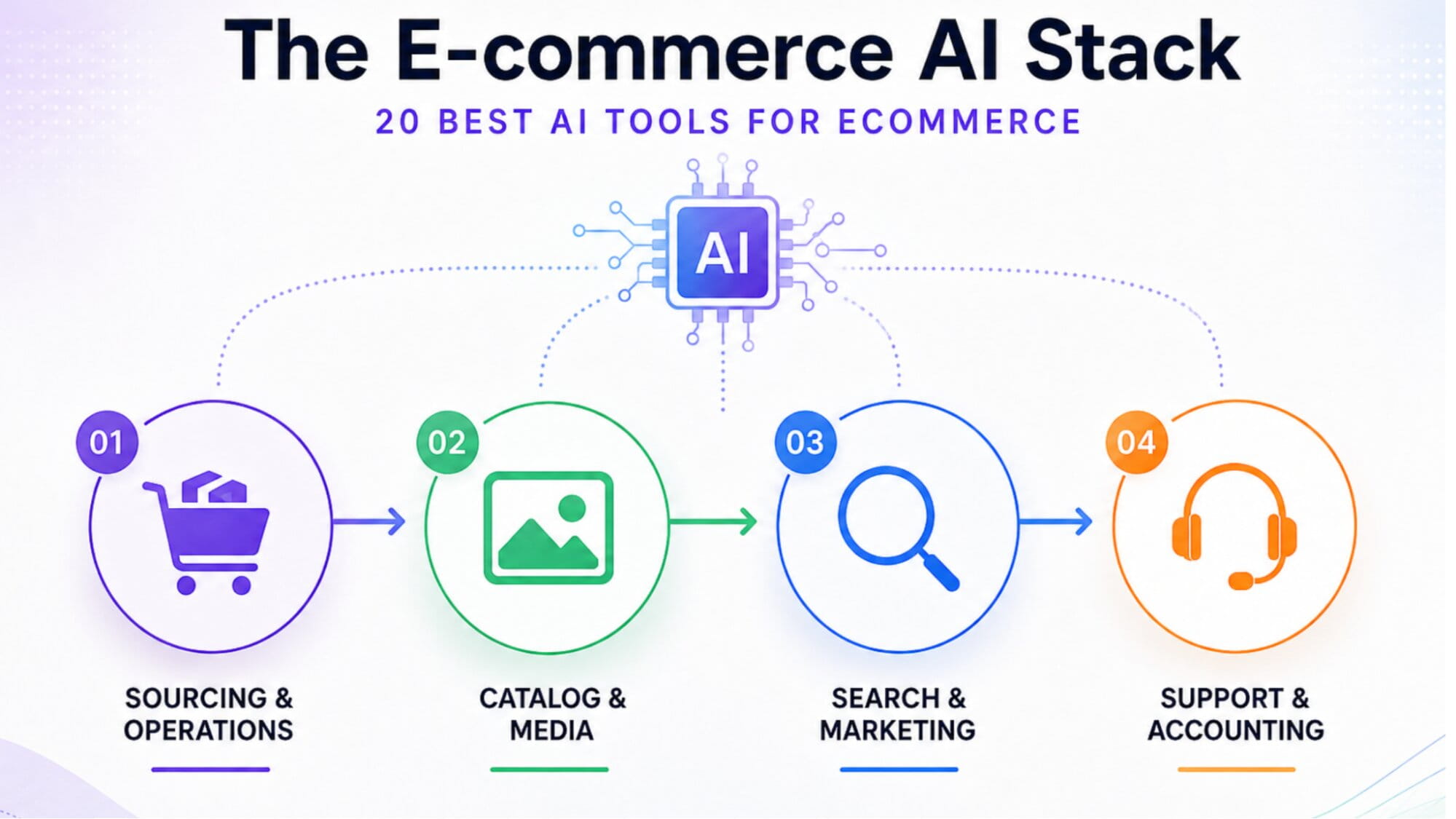
The 20 Best AI Tools for Ecommerce in 2026
There are 20 names that stand out as the strongest ecommerce AI tools in 2026. These tools, however, are split into five categories based on the jobs they are best at. These categories are sourcing and fulfillment, catalog and copy, search and support, visual and media, and personalization.
Not every tool on this ecommerce tools list does the same job. Most of them are able to find you opportunities and help you analyze them. Some of them actually work for you and run a sale from first purchase to shipping without you.
Where you sell narrows it down too. AI tools for ecommerce Shopify stores mostly install straight out of the app store. AI tools for ecommerce Amazon sellers plug into Seller Central instead. AI tools for ecommerce eBay sellers get the thinnest choice of the three, which is exactly why the multi-channel ones on this list earn their spot.
Category 1: Operations, Sourcing & Auto-Fulfillment
This is the back office. These four handle the work that happens after a customer clicks buy. These are the kinds of tools that give you your time back to grow your business.
1. Shopify Sidekick / Amazon Rufus — Best for Native Store Analytics & Merchant Guidance
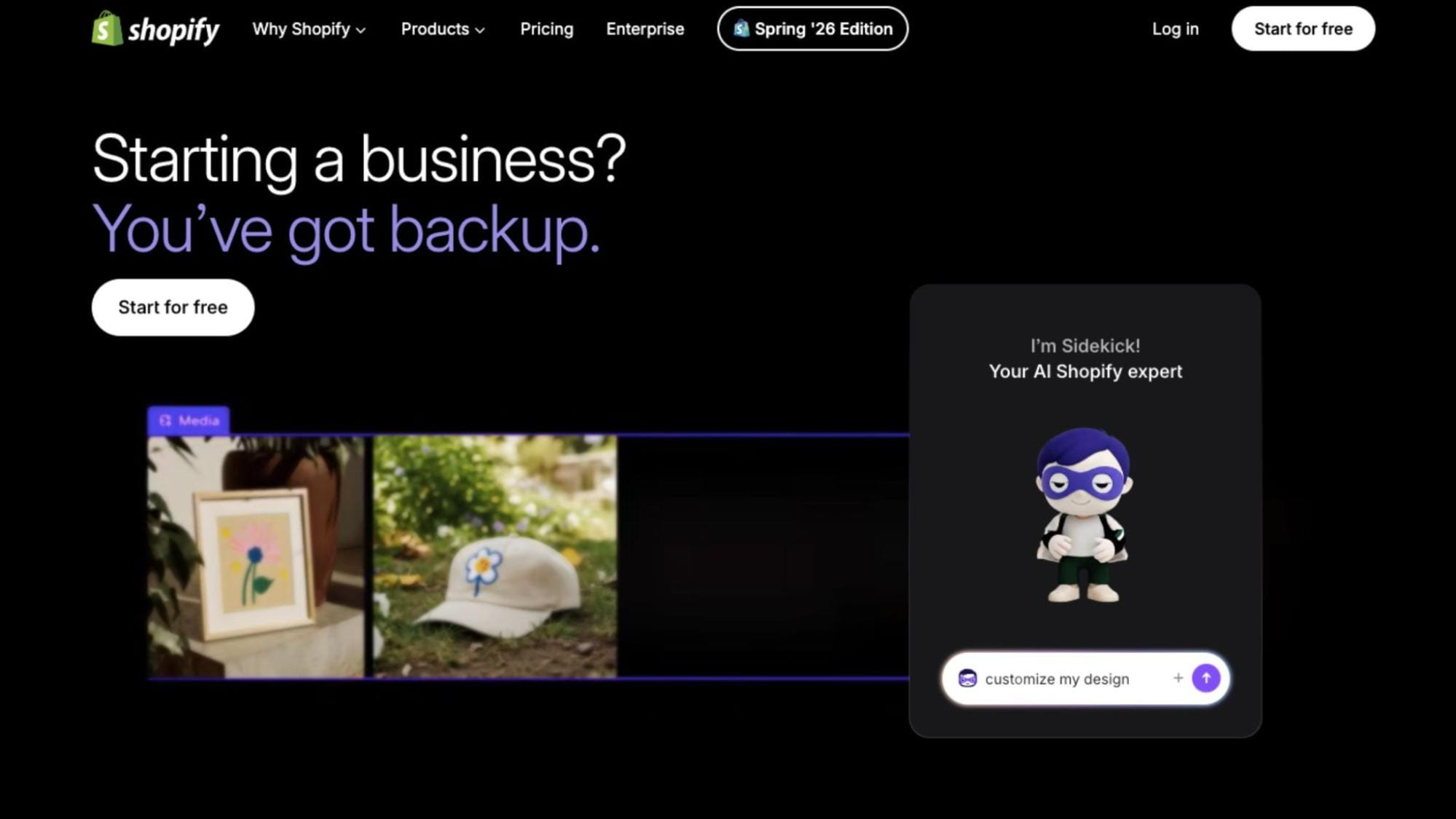
Both platforms built an assistant into the dashboard you already log into. Sidekick answers questions about your own store in plain English. Ask which products slowed down last month. It goes and looks.
Rufus does the buyer-facing version on Amazon, which matters to you because it changes how shoppers find things. Listings written for a human question now beat listings stuffed with keywords.
Best for: people who just want conversational insights.
Pricing: Included in your existing Shopify or Amazon Seller account.
Downfall: It doesn’t actually fix the problems it tells you about.
2. Easync.io — Best for Dropshipping Automation, AI Repricing & Auto-Fulfillment
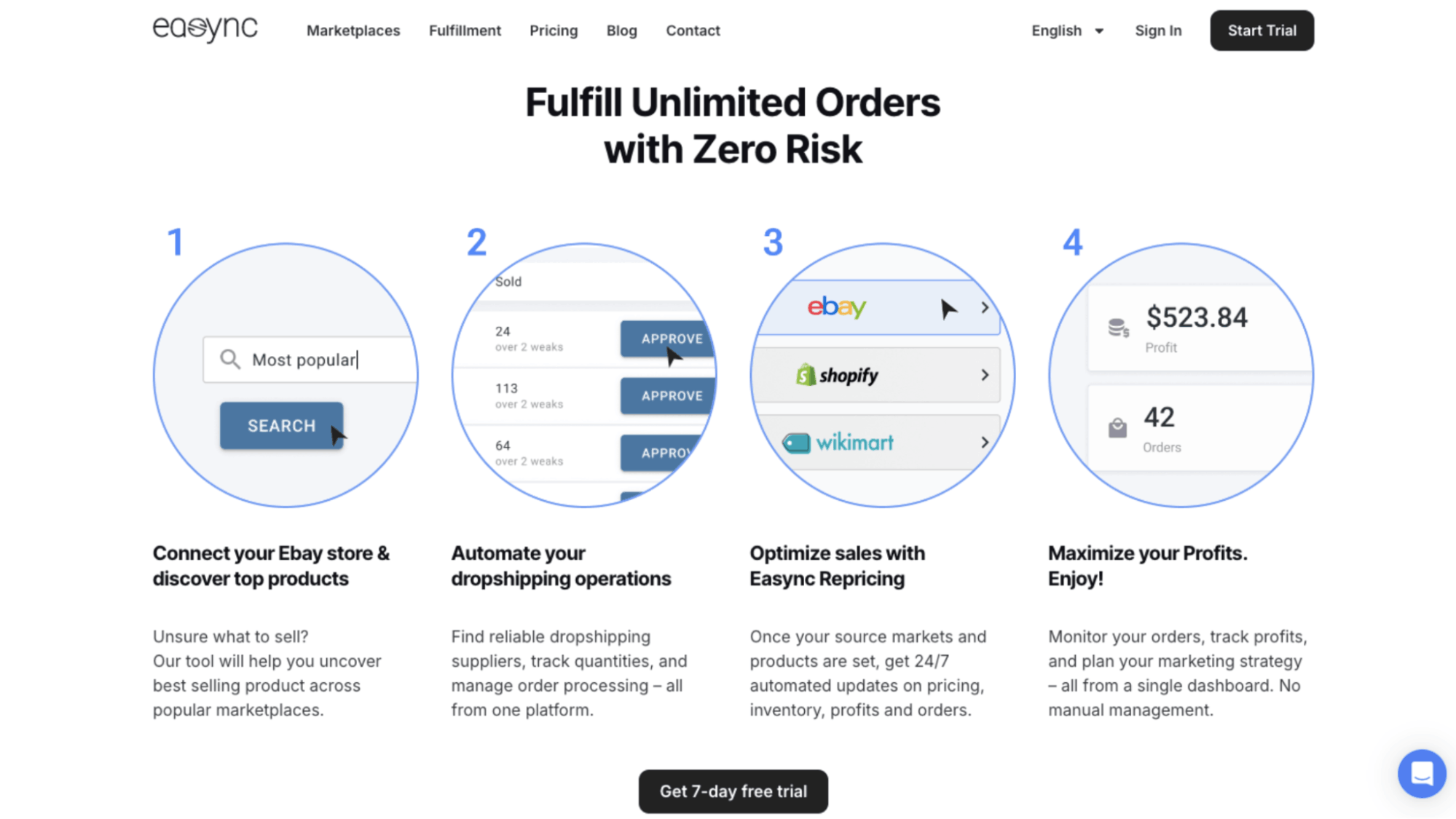
Most of the tools in this category give you information on things. Easync actually does and fixes those things for you.
It’s automated dropshipping software for eBay, Amazon, and Shopify. It exists for the seller who’s hit the ceiling where the work starts taking over your day, and there is no time for growth. Copying addresses. Refreshing supplier tabs. Pasting tracking numbers into a form at midnight.
Here are the things it takes off your desk:
- 24/7 dynamic repricing. You set rules once across thousands of listings. It will hold whatever margin floor you decided on.
- Automated inventory monitoring. When supplier stock runs dry. Easync takes down your listing before somebody buys an order you can’t fill.
- 1-click bulk ASIN and product importing. A catalog that took a weekend now fills out over an afternoon.
- Cloud-based auto-ordering. A sale lands, and the order gets placed with your source market in the background. No copy-paste.
- Multi-channel order sync. Tracking numbers are pulled from the supplier and pushed back to the right marketplace on the right account without you doing anything.
Think about why this makes a difference. Manual processing can take anywhere between 8 and 15 minutes per order. Do that for over 50 orders, and you’re already more than 7 hours of your time gone. And the best-case scenario, 300 orders a month becomes a full-time job that you didn’t really sign up for.
Best for: Easync is most efficient for multi-channel sellers, dropshippers, and arbitrage sellers.
Pricing: The tiers scale depending on how many listings you reprice and how many orders get placed. There is a 7-day free trial. The best part is that you don’t even need a credit card to get your free trial.
Where it stops short: It’s execution and not a strategy advisor. You still need to make a decision on what to sell. But that’s why you got into this in the first place anyway.
3. Finaloop — Best for AI-Native E-commerce Bookkeeping & COGS Accounting
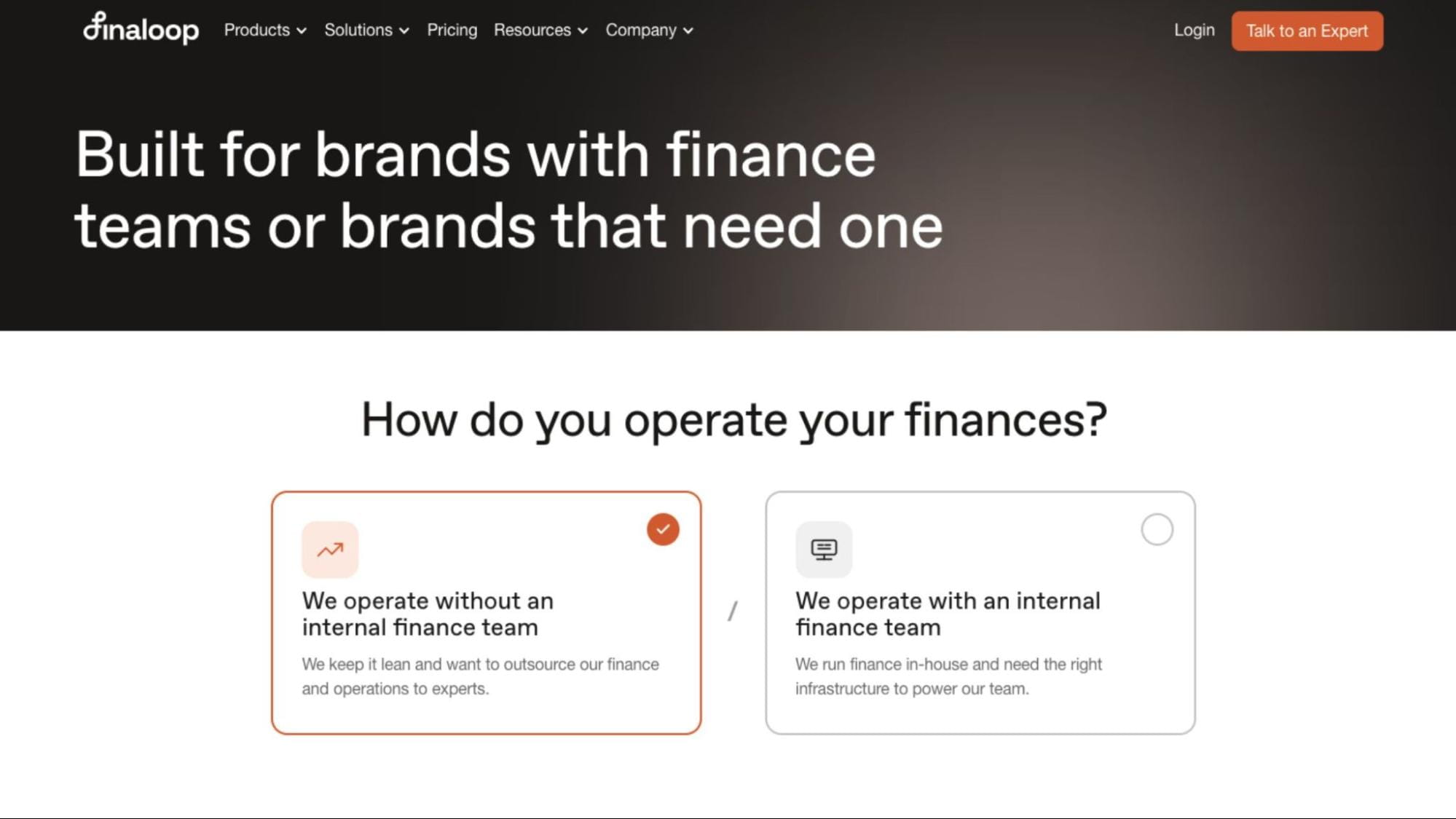
Most sellers find out their real margin months late, usually from an accountant, and more than likely after they’ve reordered the losing product. Finaloop reconciles payouts across your chosen e-commerce website in real time. COGS tracks against actual inventory, so it’s not just a guess.
Best for: DTC and multichannel brands that need to know their profits daily.
Pricing: The core plan starts at $245 per month, and there is a free trial.
Downfall: Not for beginners. You need to have real revenue coming in. Anything under a few thousand a month is just overkill.
4. Signifyd — Best for AI Fraud Protection & Order Decisioning
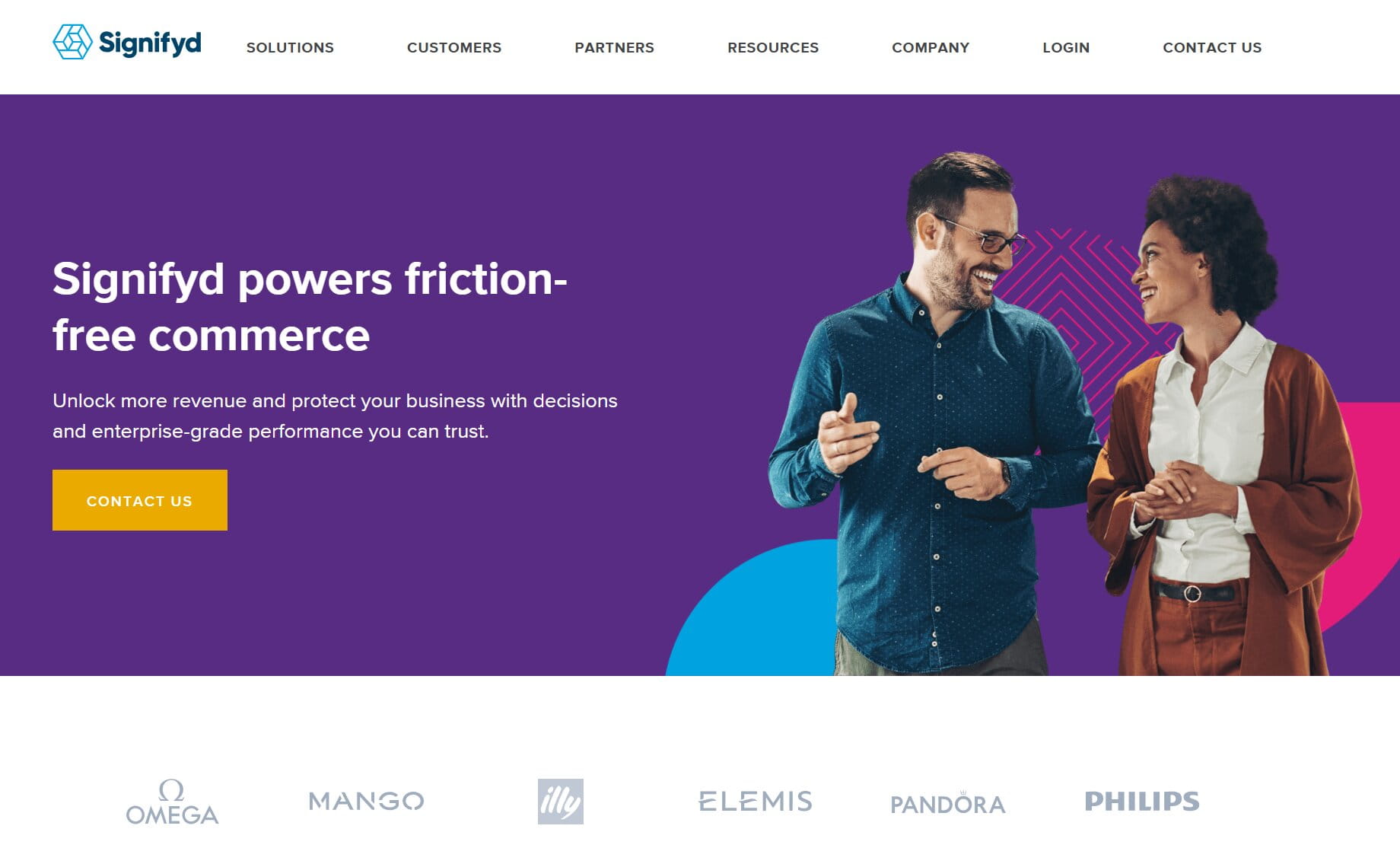
Most fraud tools will normally make you choose. If you block too much, you could cancel good orders, and if you block too little, you get eaten by chargebacks. Signifyd actually decides each order automatically and takes financial liability on the ones it approves.
The last sentence above is basically their whole pitch. So it’s not just advice, it’s actually a guarantee.
Best for: high-volume stores where chargebacks have become a line item.
Price: depends on your order volume
Shortfall: Smaller stores won’t hit the numbers that make it a useful tool.
Category 2: Generative Copywriting, PIM & Catalog Management
These four handle the words and the data behind your listings. All the boring work with big volumes.
5. Jasper AI / Copy.ai — Best for Bulk E-commerce Product Descriptions
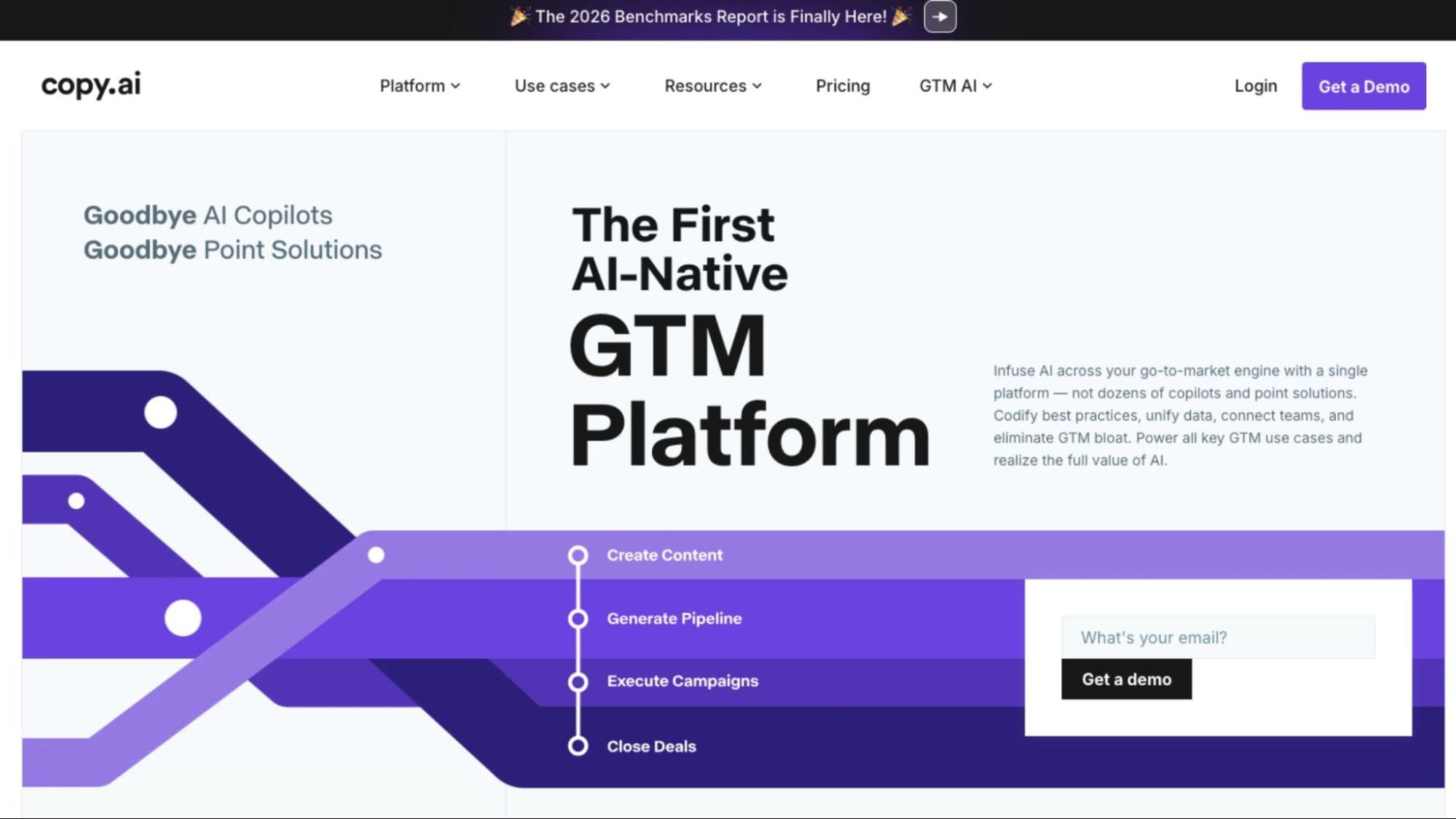
Writing 400 product descriptions by hand is a full-time job on its own. Jasper and Copy.ai generate them against a brand voice that you train them to use. Generative product descriptions and SEO meta generation in one stop shop.
You can give it a spec sheet to give you copy that’s aligned to your brand and not generic.
Best for: Marketing teams and content managers shipping SKUs at volume
Pricing: There are free trials available on both. You can get paid tiers by scale and word volume.
Where it stops short: it writes confidently about specs it can’t verify. Somebody still has to check.
6. Feedonomics — Best for AI Feed Optimization Across Marketplace Channels
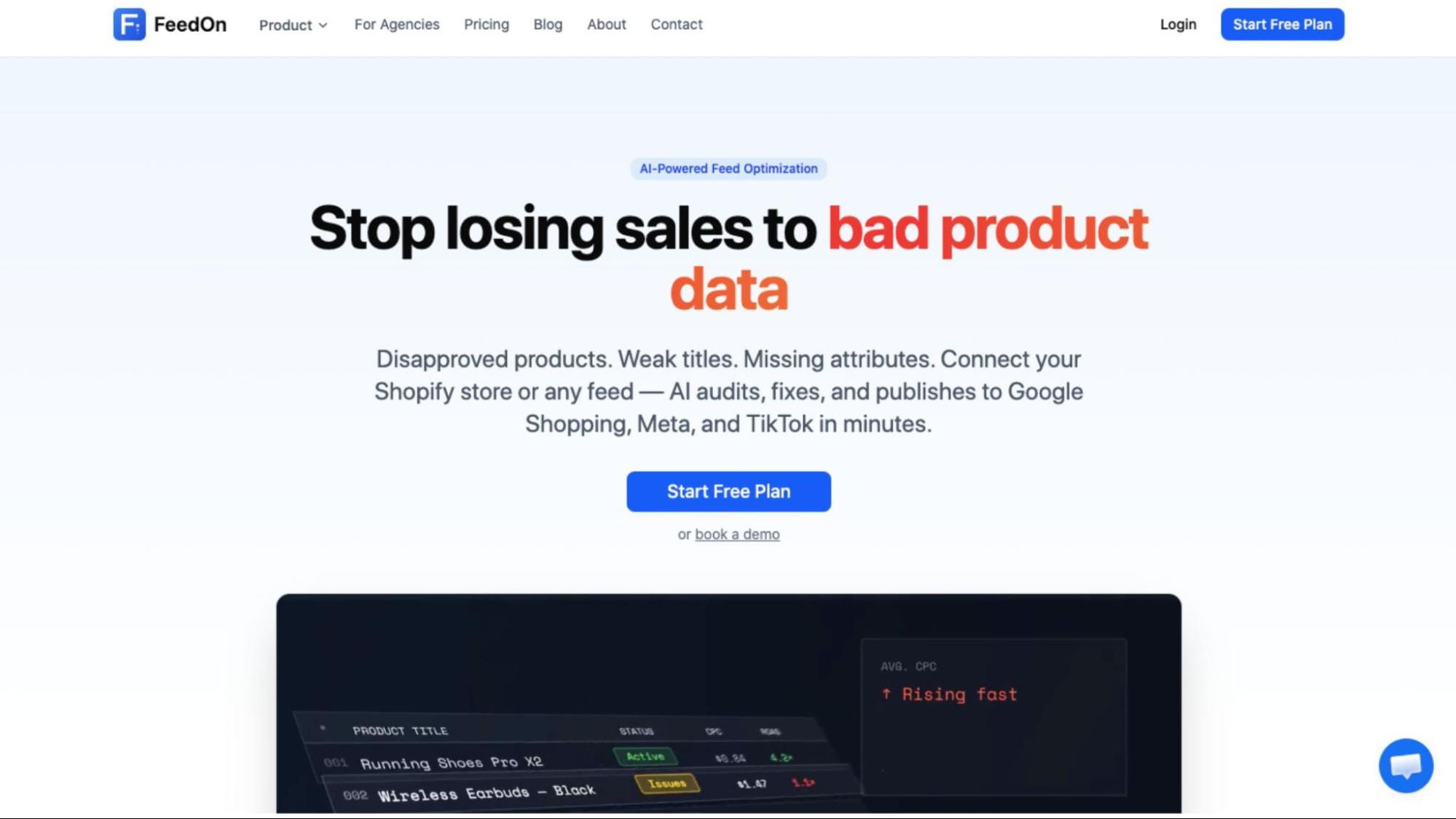
Google, TikTok Shop, and Meta all want your data in a different way. Feedonomics reformats your single feed for each channel automatically, then flags the rejected listings and why. Anyone who has fixed a disapproved feed at 1 am knows what this saves.
Best for: Seller pushing the same products across more than four channels
Pricing: custom pricing for each enterprise
Pitfall: moves data beautifully, but can’t pull the trigger for you
7. Akeneo AI / Constructor PIM — Best for Automated Product Attribute Enrichment
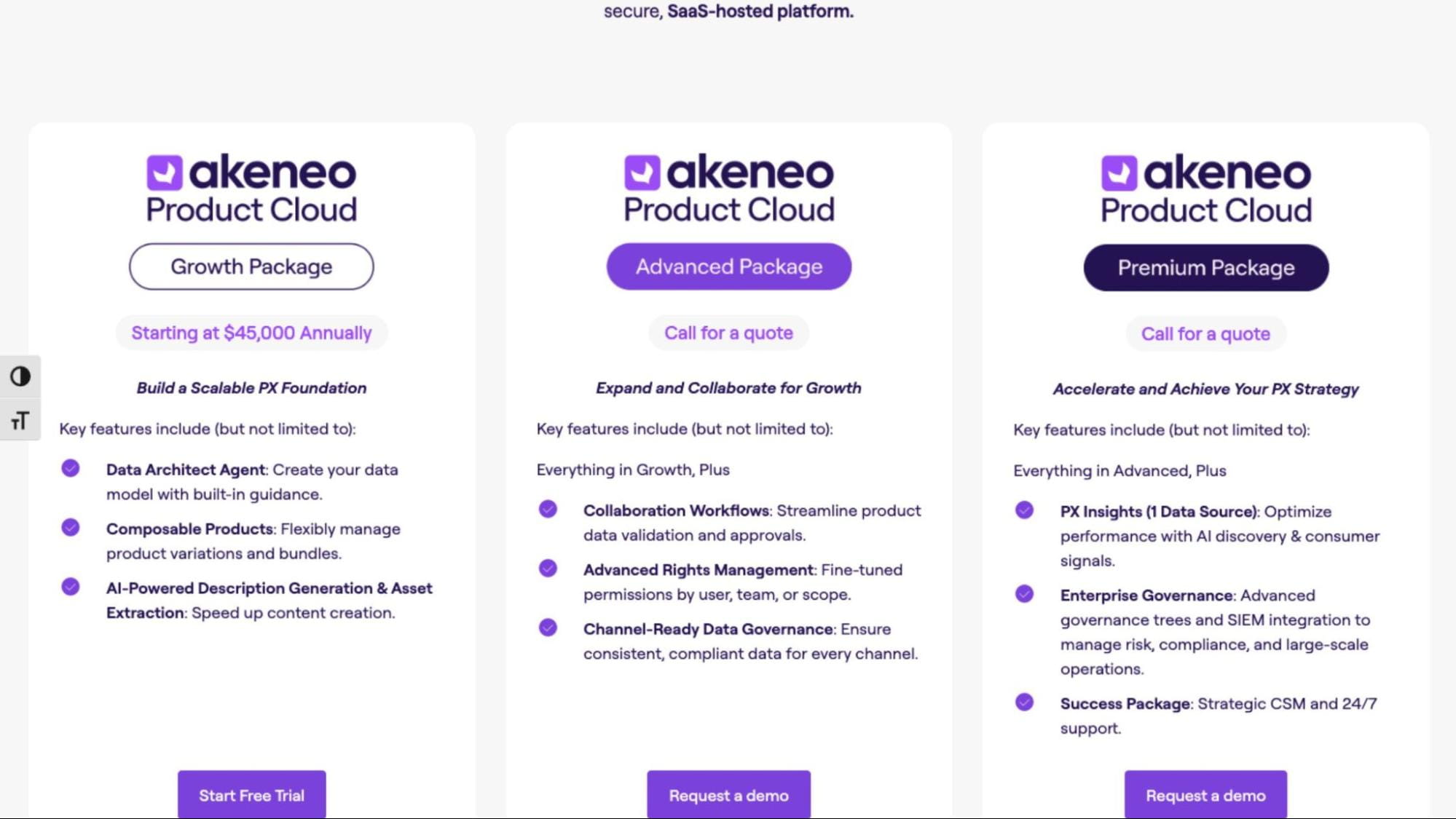
It’s not uncommon for supplier spec sheets to arrive as a mess. PIM AI integration reads that and populates structured fields on its own.
Automated catalog enrichment sounds abstract until you’ve had 2,000 SKUs with no material field. That’s why they never showed up in the filtered search. Bulk SKU translation does the same job across languages.
Best for: Retailers with very large catalogs and need loads of data.
Pricing: Custom
Downfall: the setup is a project, and can’t be done in an afternoon.
8. Descript / CapCut AI — Best for AI E-commerce Video Marketing Scripts & Editing
Shooting content properly has become very expensive. Short-form videos sell products the best now, and they have to be better than the competition. CapCut can turn a product page into a script and a rough cut for you. Descript then lets you edit the video by editing the transcript. Sounds like a gimmick, but just try it once, and you will know.
UGC video AI generates the talking head ads that outperform polished studio work on TikTok
Best for: TikTok and Instagram sellers producing ads weekly.
Pricing: Free tiers on non-paid plans for the better export options, which you will need when you grow.
Where it stops short: it’s a great editor, but you are the creative director.
Category 3: Conversational Search, Chatbots & Customer Support
This category is based around your catalog and find products. It also helps you with customers and answers questions that you just don’t have time to get to individually.
9. Gorgias AI — Best for E-commerce Helpdesk & Customer Support Triage
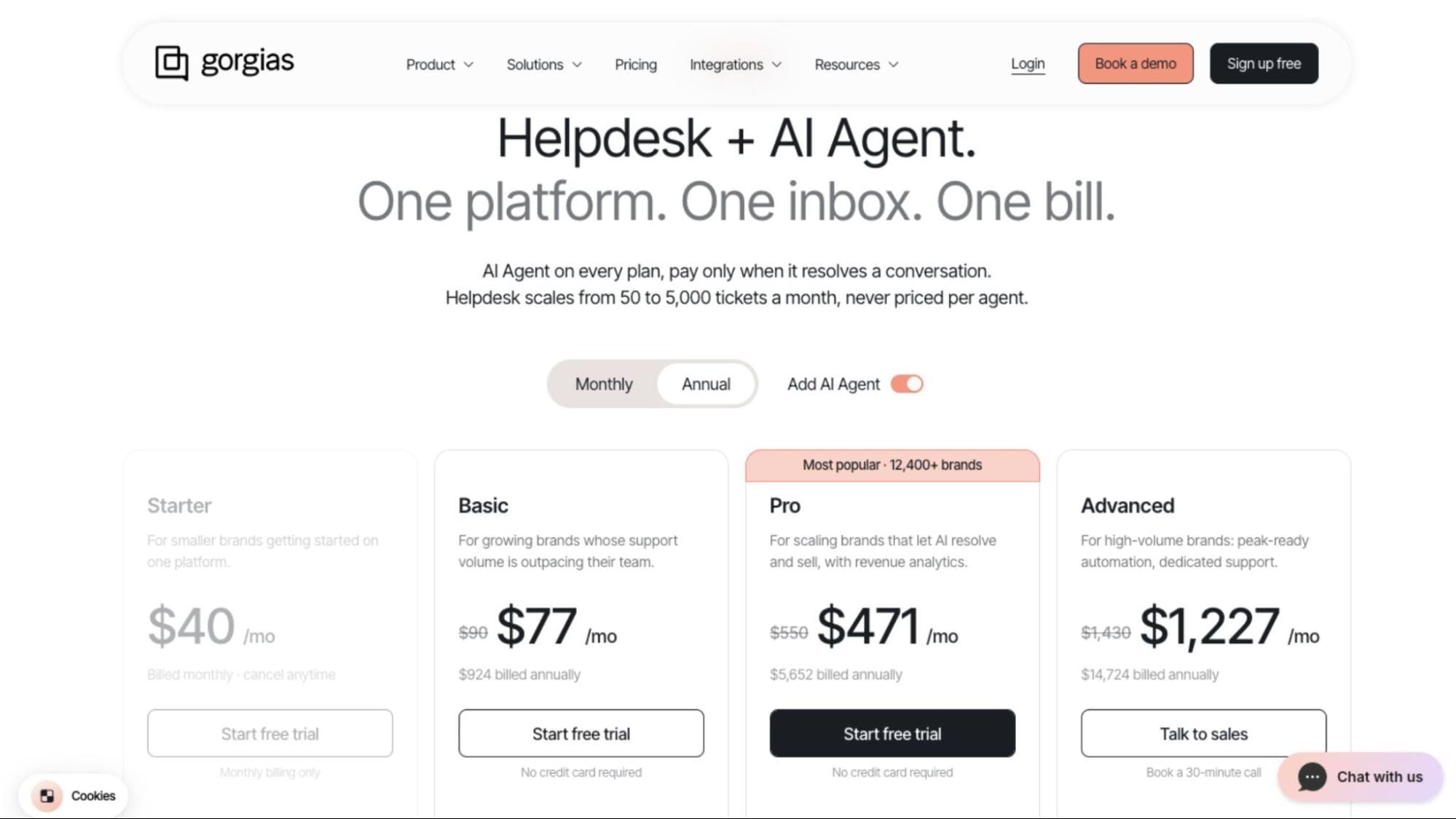
Somewhere between half and three-quarters of your tickets are the same question. People get impatient and are most likely going to ask you questions about where their goods are. Gorgias has a zero-shot support triage across all customer communications forms. It replies to all tickets and resolves those tickets by using actual data. If there are more complex tickets, the message will get passed on to you.
Best for: people who are buried in repetitive questions.
Pricing: free trial, then tiered by ticket volume.
Where it stops short: it’s only as good as the order data you connect to it.
10. Constructor.io — Best for AI Semantic Product Discovery
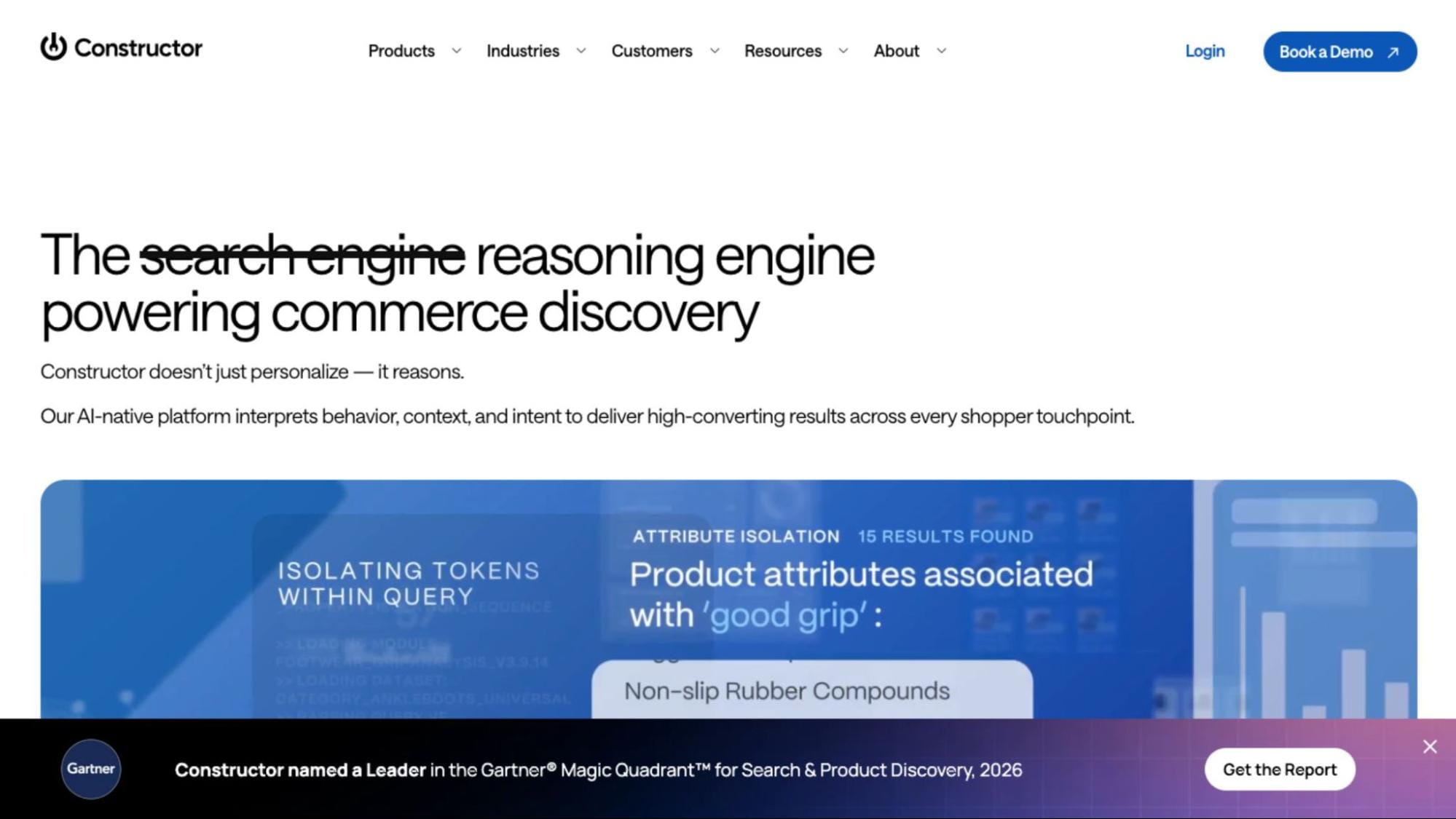
Keyword search bars fail in one specific way. A customer types something reasonable, they don’t see what they are looking for, and they leave. Vector search fixes that by matching meaning instead of characters. So a natural language query like “warm jacket for a toddler” returns the right products even when none of those words appear in your titles.
Semantic product discovery and intent-based filtering both live here. It learns from what people actually click.
Best for: websites that have enough products that people will be searching for things
Pricing: Custom based on enterprise pricing
Where it stops short: Not reasonable for a store with 60 products, most customers would just browse instead of searching.
11. Octane AI — Best for Conversational Product Recommendation Quizzes
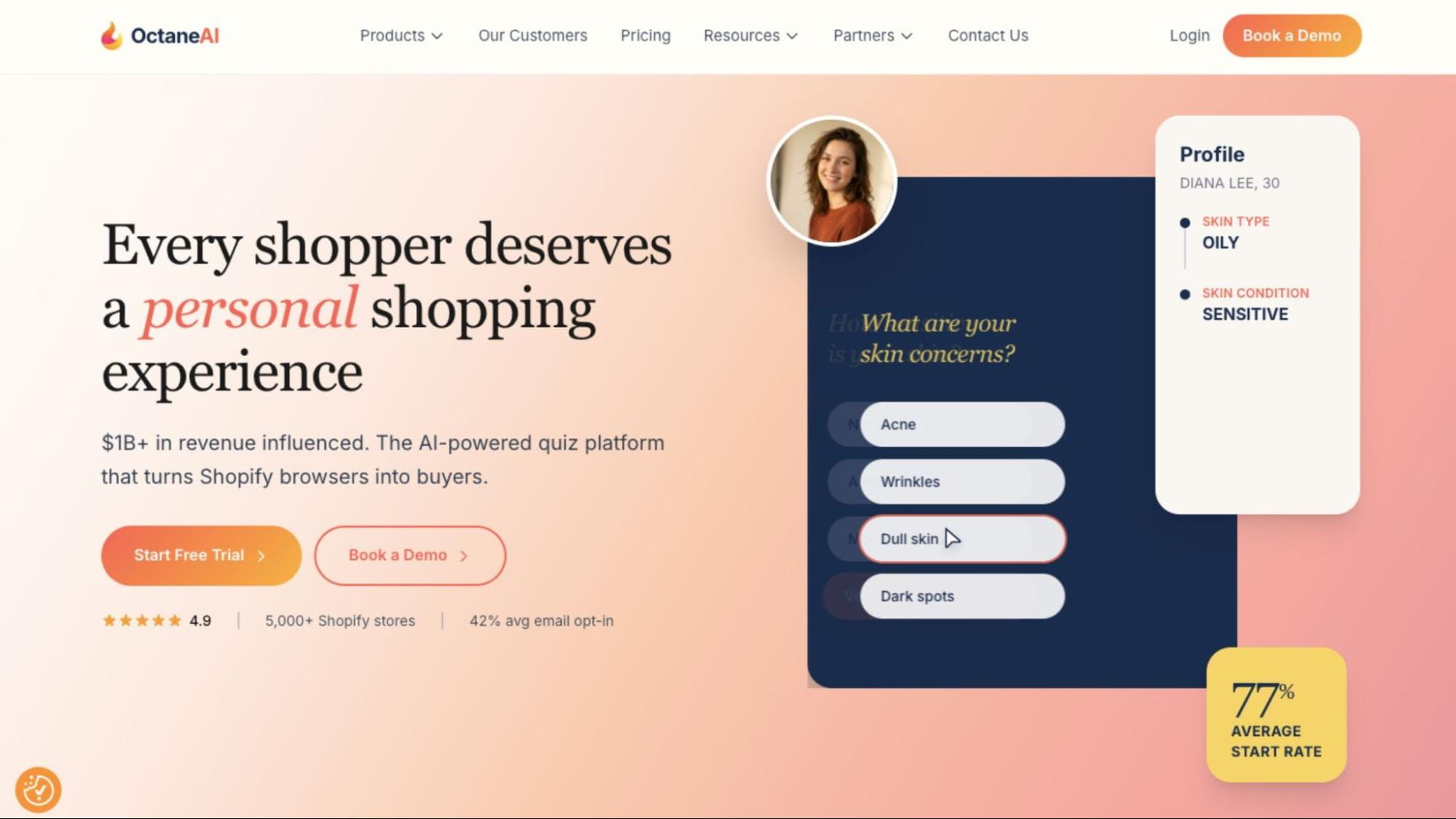
One great way to figure out what a customer wants is to actually ask them questions. And there is no better way to get loads of questions across than a quiz. Octane builds the quiz and gives the answers into personalized recommendation engines.
Best for: Octane is great for those selling more complex products
Pricing: free trial, and then there are monthly plans
Where it stops short: a quiz can’t reach people magically; you have to put it in front of them.
12. Bloomreach Clarity — Best for Conversational Merchandising & Personal Shoppers
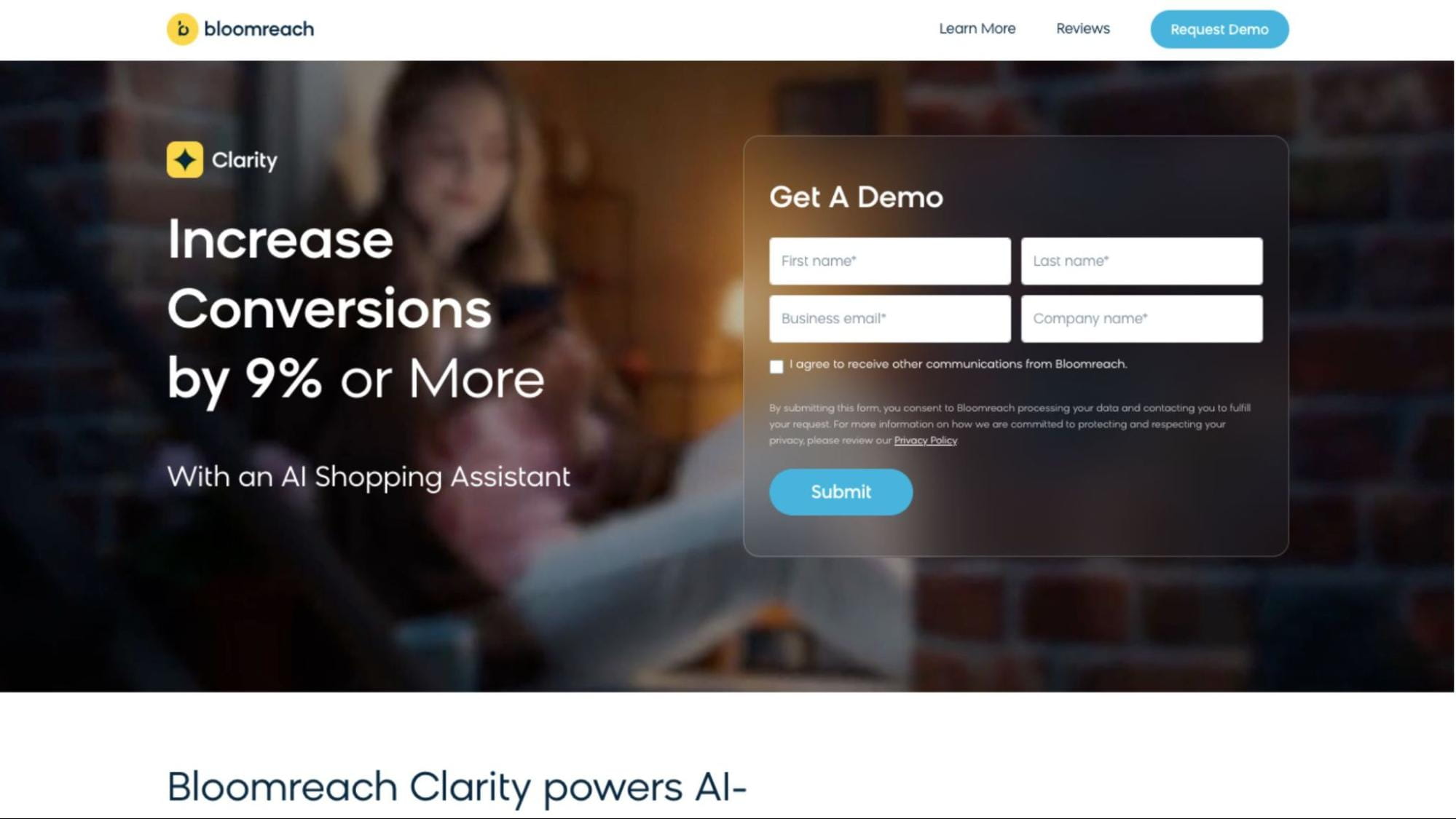
This is best described as a personal shopper. Conversational AI shopping assistants that keep information on what customers are doing on your website in real time.
Best for: Big enterprises that want to train their traffic
Pricing: custom.
Where it stops short: the implementation timeline is measured in months.
Category 4: Visual Sourcing, Virtual Try-On & Media Studio
Four tools that replace a photographer, a studio, and a model. Supplier photos go in, listings that look expensive come out.
13. Photoroom AI — Best for Product Image Studio Cleanups & Background Removal
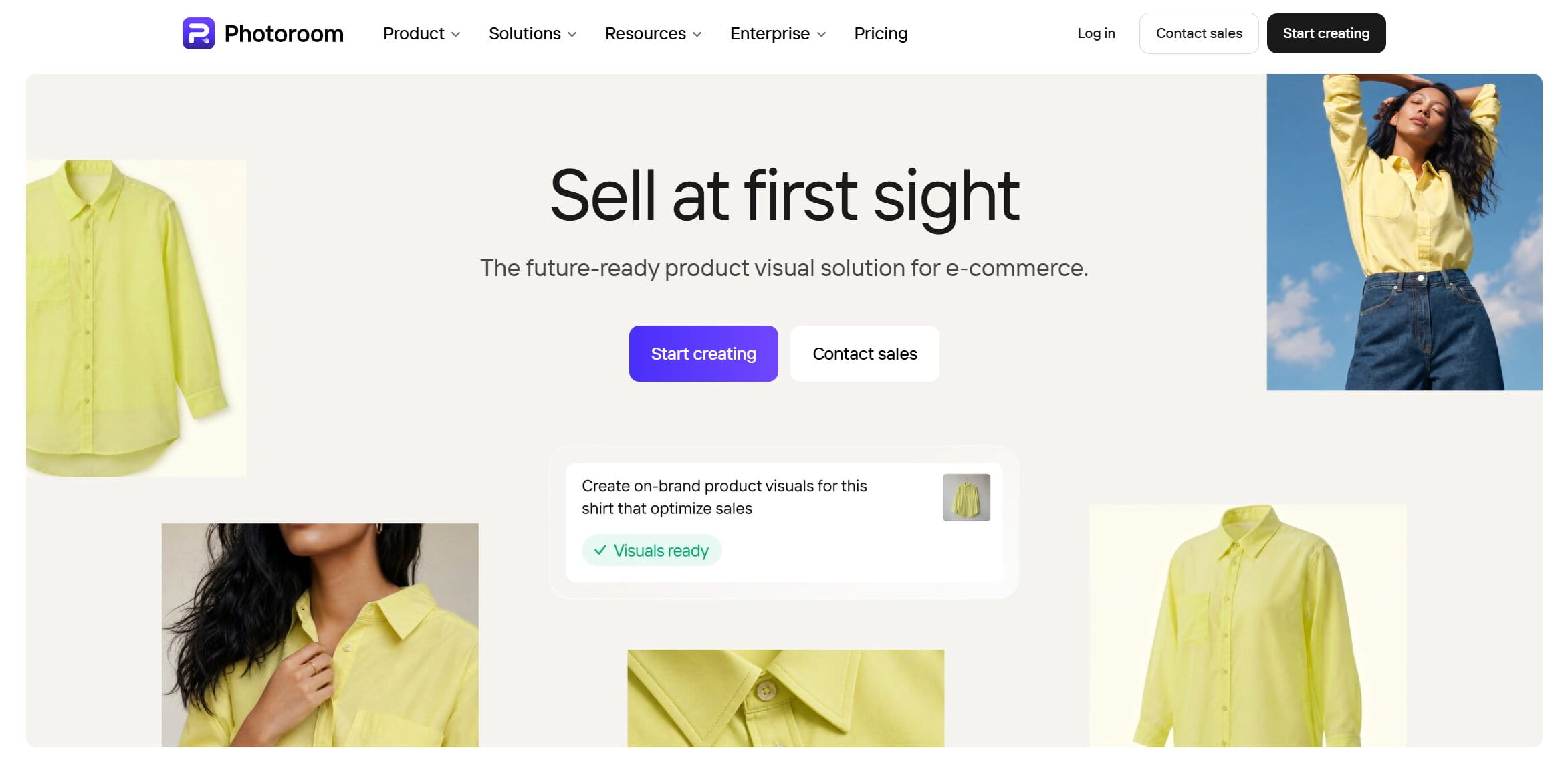
Supplier photography is usually terrible. A picture on a bed sheet taken off a phone. AI studio background removal strips that out in about two seconds, and with the product picture on a clean white or generated scene.
Say you’ve imported 200 products this week. Doing that by hand in Photoshop is a full day. Here it’s a batch upload and a coffee.
Best for: sellers importing supplier catalogues in large quantities
Pricing: free tier available, paid plans for batch processing.
Where it stops short: it can’t fix a photo that was out of focus to begin with.
14. ViSenze — Best for Visual Search & “Shop the Look” AI Engines
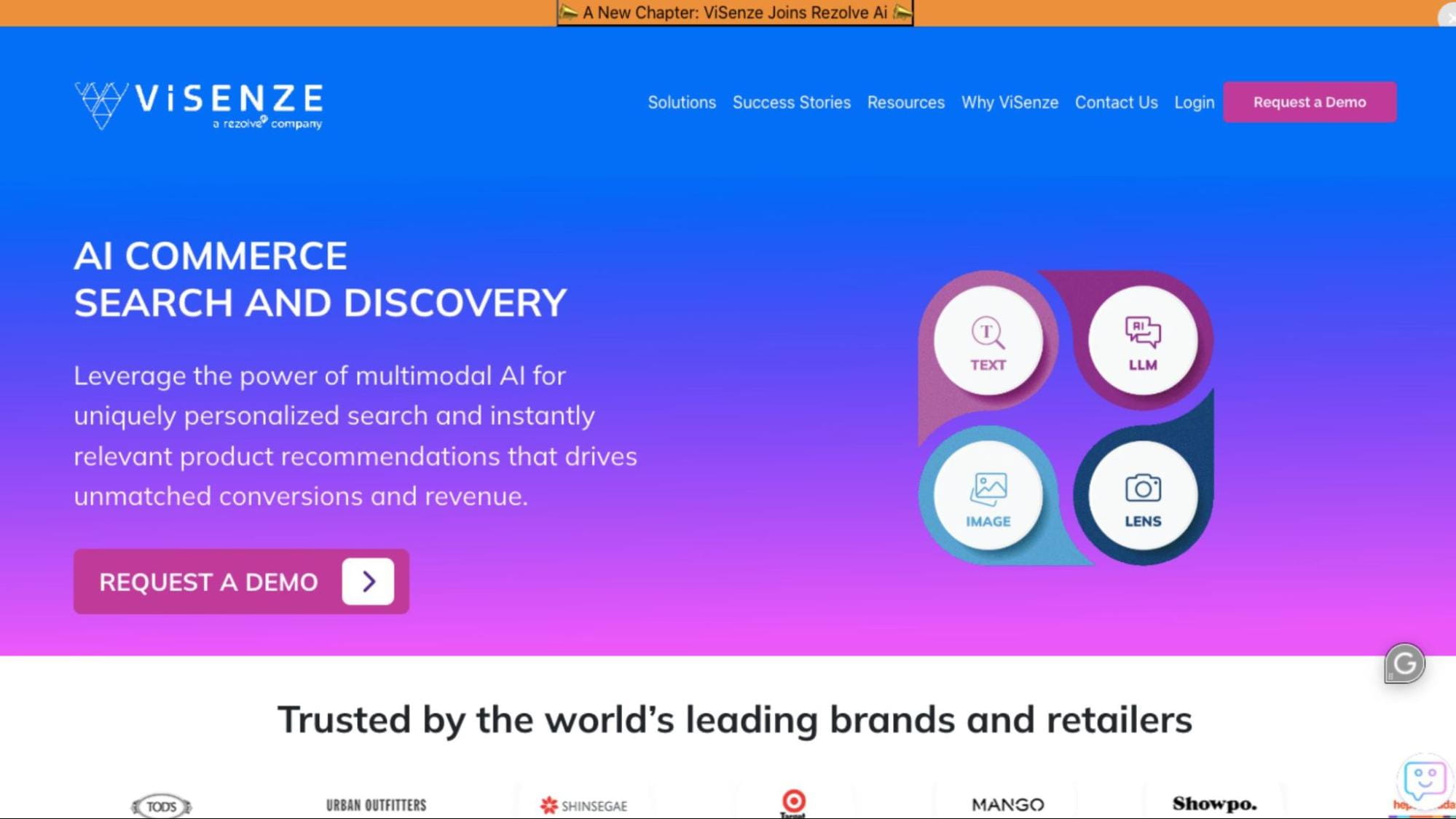
So sometimes customers can’t actually put into words what they are looking to purchase. ViSenze lets them upload an image instead and finds the closest match of a product in your catalog. Can also use it to see what competitors are selling well and find the most similar product in your catalog.
Strong point: visual and fashion retailers where customers shop by eye
Price: custom pricing
Where it falls short: It needs a catalog with decent imagery in place.
15. Vue.ai / Bodrum — Best for Virtual Try-On & On-Model Fashion Generation
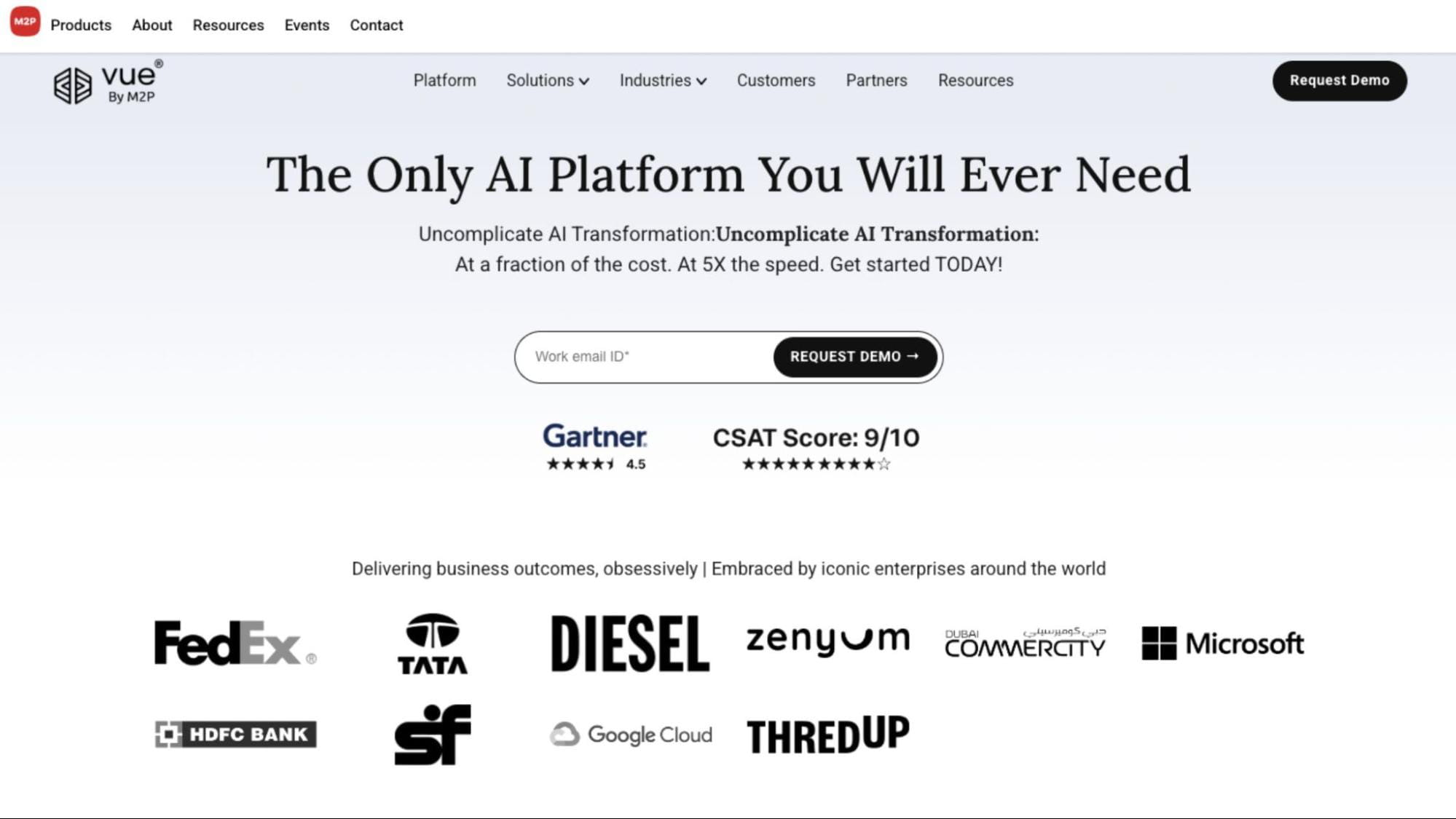
A model shoot for one apparel range runs into thousands. Virtual try-on technology generates on-model imagery from a flat product photo and puts it on different body types and skin tones. Show the same shirt on eight people for the cost of none. This also gets rid of returns as customers are literally getting what they see.
Best for: apparel and accessories brands.
Pricing: custom.
Where it stops short: results on complex fabrics and prints still need a human eye on them.
16. Pencil (by Brandtech) — Best for Predictive AI Ad Creative Generation
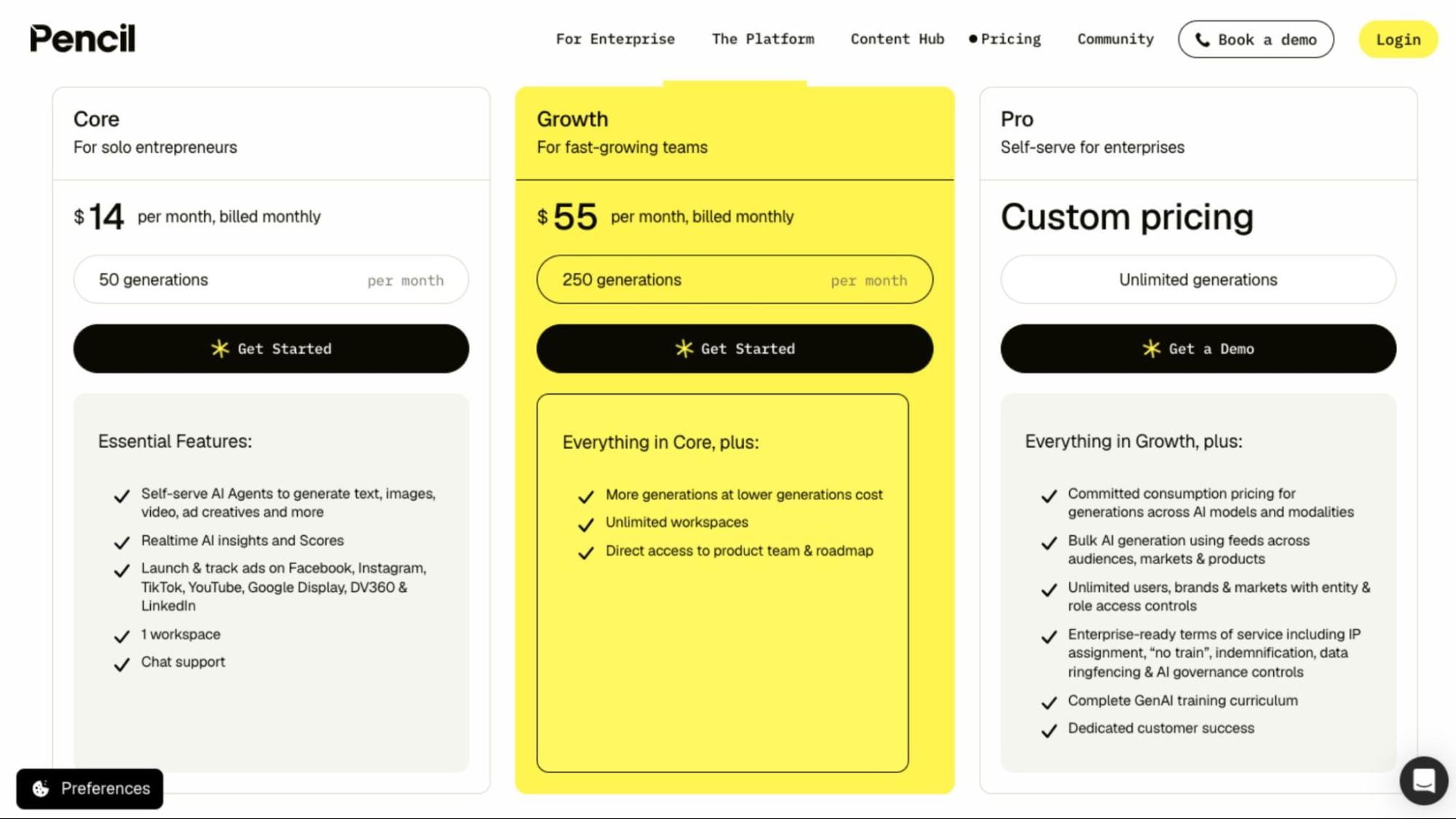
Ads take a lot of creative thinking, and they burn out quickly. Pencil will make you many different variations of your ad and then predict which one will perform the best. Generative ad creative scaling means that you have already tested 40 ad concepts by the time you would have been able to make 2.
Best for: performance marketers running paid social at scale.
Pricing: free trial, then paid plans.
Where it stops short: predictions are probabilities. The auction still gets a vote.
Category 5: Personalization, CRO & Dynamic Pricing
The last four squeeze more revenue out of traffic you already have. Cheaper than buying more of it.
17. Klaviyo AI — Best for Predictive Email Marketing & Churn Prevention
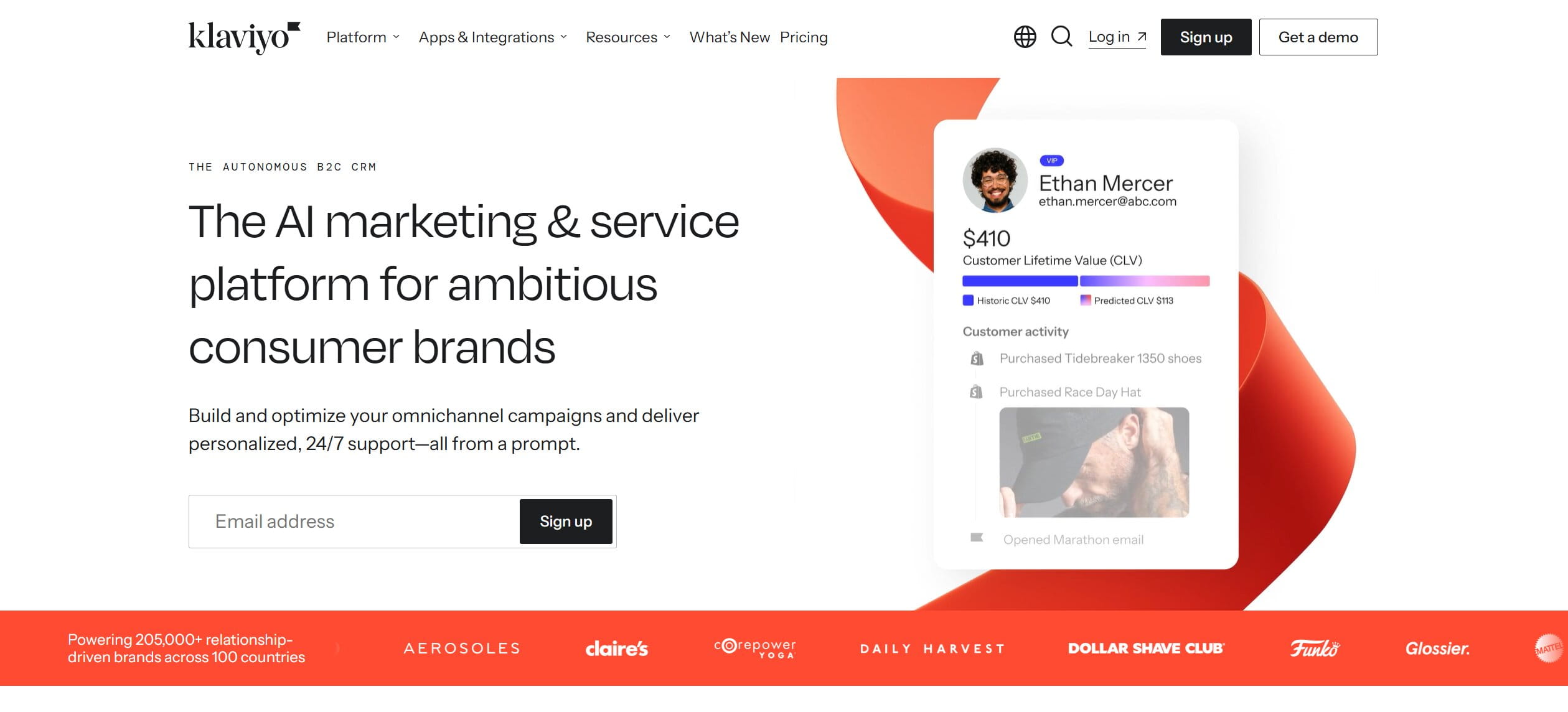
Klaviyo predicts when a customer is likely to buy again and sends the email then. Not on the Tuesday you scheduled it. Predictive churn analysis flags the ones drifting away while there’s still time to act.
Best for: DTC brands with repeat purchase behaviour worth predicting.
Pricing: free tier up to a contact limit, paid scaling after that.
Where it stops short: predictions need history. A new store has nothing to learn from.
18. Yotpo AI — Best for AI Review Summaries & UGC Analytics
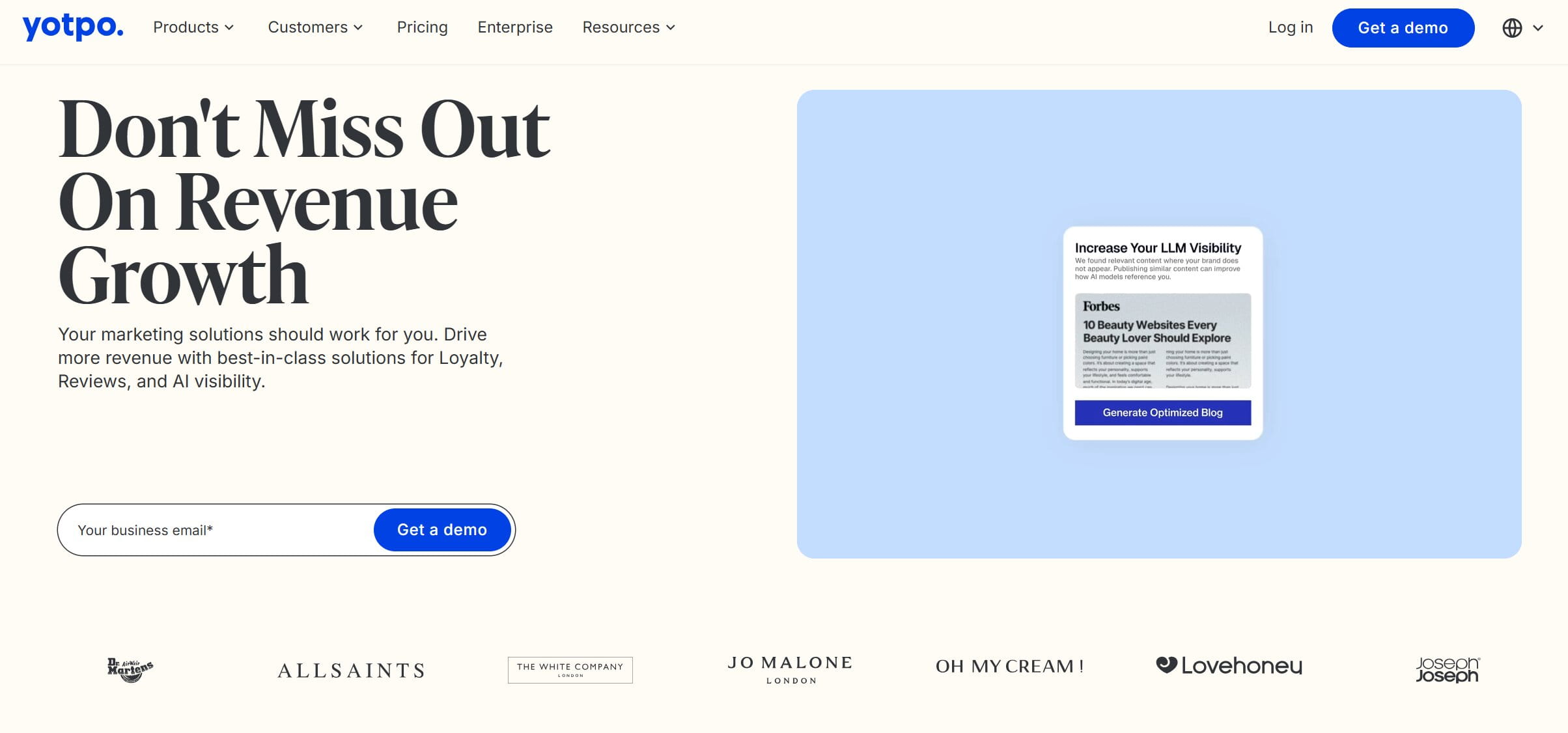
Nobody reads 400 reviews. AI review summarization pulls out the two or three things buyers keep mentioning and puts them at the top of the product page.
The analytics side is quietly more valuable. Forty reviews complaining about the same sizing issue is product feedback you’d otherwise never collate.
Best for: stores with high review volume sitting unused.
Pricing: free tier, paid plans by review volume.
Where it stops short: it summarises what you have. Getting reviews is a separate job.
19. Dynamic Yield (by Mastercard) — Best for Enterprise Personalization & A/B Testing

Dynamic Yield rearranges the page based on who’s looking. Location, browsing history, referral source. Two customers land on the same product page and see different layouts.
Best for: enterprise retailers with the traffic volume to reach significance.
Pricing: custom.
Where it stops short: below serious traffic, you’ll be personalizing to noise.
20. VWO / AB Tasty AI — Best for AI Conversion Rate Optimization (CRO)
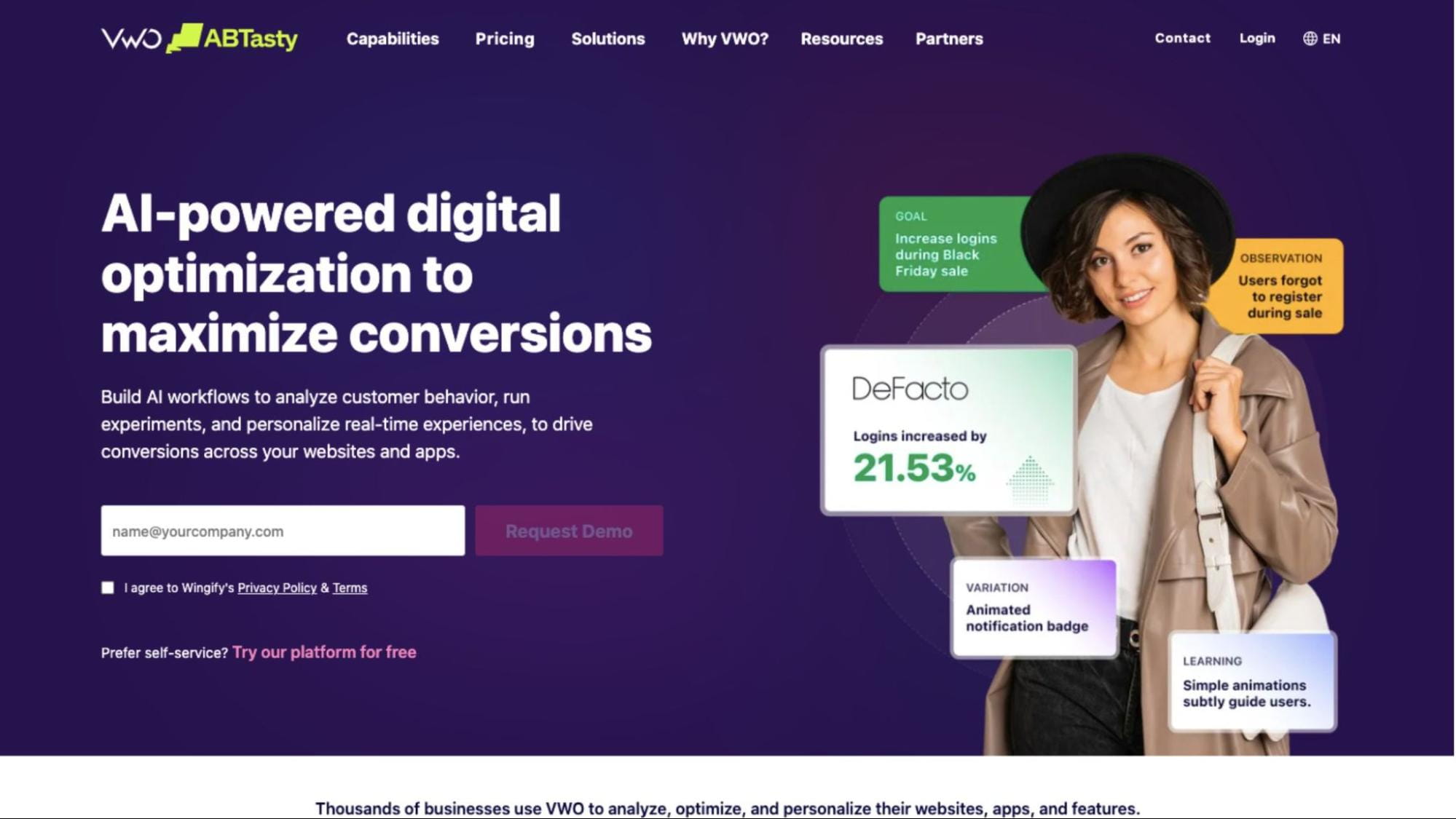
Traditional A/B testing is slow. You wait weeks, you learn one thing. VWO generates variants and calls winners earlier using predictive models. Testing becomes continuous instead of quarterly.
Best for: teams treating CRO as an ongoing process.
Pricing: free trial available, paid tiers by traffic.
Where it stops short: it betters what already exists. It won’t tell you that, based on the page, the wrong idea.
Summary Comparison Matrix: All 20 AI Tools
| Tool Name | Primary Category | Core AI Feature | Best For | Free Trial / Entry Pricing |
|---|---|---|---|---|
| Shopify Sidekick | Store Analytics | Conversational Store Insights | Shopify Merchants | Included in Shopify plans |
| Easync.io | Operations & Fulfillment | Auto-Fulfillment, 24/7 Repricing & Stock Sync | eBay, Amazon & Shopify Sellers | Start Trial available |
| Finaloop | Accounting & Bookkeeping | Real-time Payout Reconciliation | DTC Multi-Channel Brands | Paid plans from $245/mo |
| Signifyd | Fraud Protection | Autonomous Order Decisioning | Enterprise & High-Volume Stores | Custom pricing |
| Jasper AI | Catalog Copywriting | Bulk Product Description Generation | Marketing Teams & Content Managers | Free trial available |
| Feedonomics | Feed Management | AI Product Feed Standardization | Multi-Marketplace Sellers | Custom enterprise pricing |
| Akeneo AI | PIM & Catalog | Automated Attribute Enrichment | Large SKU Retail Catalogs | Custom pricing |
| CapCut AI | Video Marketing | Automated Short-Form Script-to-Video | TikTok & Instagram Sellers | Free tier available |
| Gorgias AI | Customer Support | AI Helpdesk & Instant Order Triage | Multi-Channel Support Teams | Free trial / Add-on tiers |
| Constructor.io | Search & Discovery | Semantic Vector Product Search | Large E-commerce Catalogs | Custom enterprise pricing |
| Octane AI | Recommendation Quizzes | Zero-Party Data Collection Quizzes | Shopify & DTC Brands | Free trial available |
| Bloomreach Clarity | Personal Shopping | Conversational Merchandising Engine | Enterprise Commerce | Custom pricing |
| Photoroom AI | Studio Visuals | Studio Background Cleanup & Removal | Product Photographers & Sellers | Free tier available |
| ViSenze | Visual Search | Reverse Image Product Sourcing | Visual & Fashion Retailers | Custom pricing |
| Vue.ai | Virtual Try-On | On-Model Fashion Generation | Apparel & Accessories Brands | Custom pricing |
| Pencil | Ad Creative | Predictive Social Ad Generation | Performance Marketers | Paid plans / Free trial |
| Klaviyo AI | Email Personalization | Predictive Next-Purchase Analytics | DTC Lifecycle Marketers | Free tier / Paid scaling |
| Yotpo AI | UGC & Reviews | Sentiment Summarization & UGC Analysis | Brand Stores with High Review Volume | Free tier / Paid plans |
| Dynamic Yield | Personalization | Dynamic PDP Layout Adjustment | Enterprise Retailers | Custom pricing |
| VWO AI | CRO & Testing | AI Variant Generation & A/B Testing | Conversion Optimization Teams | Free trial available |
How to Choose the Right AI Tool Stack for Your Store
Buy tools for the different bottlenecks that show up in your workflow. Solo sellers should automate labor-intensive activities first. Brands that are growing should add conversion and support layers second, and the enterprise stack should focus on infrastructure layers last.
These twenty tools are not a shopping cart. Buying or using all of them would cost more than most stores make. The question isn’t what are top ecommerce tools overall. The most important question is which bottleneck is costing you the most money.
All solo sellers generally have the same bottleneck: hours in a day. You’re the warehouse, the copywriter, the support desk, and everything in between.
Automate:
- The labor first. Easync fulfillment and repricing
- Photoroom on supplier images
- A writing tool for adverts and descriptions
Scaling between $10k and $100k, you officially have a different bottleneck. You’ve got traffic and loads of orders.
- This makes sense if you are currently in that bracket:
- Gorgias AI for conversations with customers
- Klaviyo AI for lifecycle email
- Finaloop for your books.
$1M a month or above? First off, congratulations. At this stage, the bottleneck is most probably infrastructure.
This AI stack would work well:
- Constructor.io on search, Signifyd on fraud
- Feedonomics on feeds
- Dynamic Yield on personalization.
One rule cuts across three stages. Free tools first, paid tools when the workload demands them, and never ever the other way around.
Frequently Asked Questions
What are the best free AI tools for e-commerce?
CapCut AI, Photoroom, and Klaviyo all run usable free tiers, and Easync.io offers a 7-day Start Trial with no credit card required.
How can AI improve e-commerce dropshipping?
AI removes the three manual jobs that cap dropshipping stores: monitoring supplier prices, placing orders, and syncing tracking numbers.
Can AI replace human customer support in e-commerce?
No. AI handles roughly 60 to 80% of repetitive tickets, and the rest still needs a person.
The Short Version
The stores doing the best in 2026 aren’t the hardest-working people in the room. They’ve handed the e-commerce parts to software and kept the parts that need judgment.
Pick your bottleneck. If it’s traffic, start with search and creative. If it’s a conversion, start with personalization and support.
If it’s hours, and for most sellers it is, start at the back office. That’s where Easync.io does its work, quietly placing orders and holding your margins while you’re doing something else.