Key Takeaways
- Dropshipping is a retail fulfillment method where suppliers store inventory and ship directly to the customer, allowing you to run an online store without purchasing inventory upfront or renting warehouse space.
- Success in 2026 depends on three pillars: selecting a profitable niche through thorough market research, partnering with reliable suppliers who can meet shipping expectations, and implementing effective marketing strategies to reach your target audience.
- Automation tools like Easync handle the heavy lifting automated product importing, real-time stock and price monitoring, auto-ordering, repricing rules, tracking synchronization, and multi-account workflows letting you focus on growth instead of manual tasks.
- A clear comparison between traditional e-commerce and dropshipping reveals that dropshipping offers lower financial risk and minimal upfront investment, while traditional retail models provide higher profit margins and greater control over customer experience.
- Most beginners can launch a dropshipping store for $200-500, though sustainable profitability typically requires 3-6 months of testing, iteration, and learning.
Introduction: Why Dropshipping Still Matters in 2026
Between 2020 and 2025, the e commerce landscape transformed dramatically. Global online sales surged from approximately $4.2 trillion in 2020 to projections nearing $7 trillion by 2025, fundamentally reshaping how people shop and how entrepreneurs think about starting a retail business. This explosive growth, initially accelerated by pandemic-driven shifts in consumer behavior, created unprecedented opportunities for online retailers willing to adapt to new realities.
By 2026, the dropshipping market is forecasted to reach $476.1 billion. Yet this maturation brings heightened competition that demands more than just launching a basic store and hoping for sales. The days of easy profits from arbitrage alone have passed. What remains, however, is a legitimate business model that continues to offer something rare in commerce: the ability to test products, build brands, and generate revenue without the crushing burden of inventory investment.
This guide serves as your comprehensive dropshipping 101 resource for 2026. Whether you’re exploring a side hustle, testing product ideas before committing to bulk purchasing, or building a fully remote business, you’ll find actionable guidance here. We’ll cover how does dropshipping work from order to delivery, walk through starting a dropshipping business step by step, examine common mistakes that sink beginners, and clarify when traditional e-commerce might actually serve you better.
Expect concrete numbers, realistic timelines, and honest assessments of both the benefits of dropshipping and its genuine challenges. No hype just a practical roadmap for building something real in today’s competitive market.
What Is Dropshipping?
Dropshipping represents a retail fulfillment method where you, the seller, never physically handle the products you sell. When a customer places an order on your online storefront, you forward the order details and payment to a third party supplier, who then packages and ships the product directly to the customer. Your role centers on building and maintaining the store, driving traffic through online marketing, and handling customer communication—while the supplier manages warehousing, inventory, and fulfillment.
This business model fundamentally differs from the traditional retail model where merchants pre-purchase inventory in bulk, store it in their own facilities or rented warehouse space, and handle shipping themselves. In that scenario, you might invest $10,000 or more in stock before making a single sale. With drop shipping, you purchase products only after customers have already paid you, eliminating the risk of sitting on unsold inventory.
The roles break down simply: you own the customer relationship and brand experience, handling everything from your own website design to marketing efforts to customer orders and support inquiries. Your dropshipping suppliers own the physical product lifecycle—they store items in their facilities, maintain stock levels, pick and pack orders when notified, and ship packages under your branding when possible. This division allows you to operate a legitimate e commerce business from a laptop anywhere in the world.
Typical use cases include side hustles for people testing entrepreneurship alongside full-time employment, product validation for entrepreneurs who want to confirm demand before investing in bulk inventory, and location-independent businesses for digital nomads. Historically, dropshipping traces back to the 1960s with mail-order catalogs, but it exploded digitally in the 2000s via platforms like eBay, evolved with Shopify’s rise in 2006, and matured significantly around 2015 with the integration of AliExpress supplier apps that automated much of the manual work.
How Does Dropshipping Work Step-by-Step?
Understanding the dropshipping process requires knowing three main actors: the customer, the retailer (you), and the supplier. Each plays a distinct role in a transaction that, when executed well, feels seamless to the buyer despite involving multiple parties.
The basic workflow begins when a customer visits your dropshipping store and places an order—let’s say a customizable wireless charger priced at $29.99. The customer enters shipping information and completes payment through your checkout system. Your e commerce platform collects the full retail price.
Next, your store’s software either through automated integrations or a few manual clicks—relays the order to your supplier. You pay the supplier their wholesale cost (perhaps $12.50) plus shipping fees (around $5 for this example), retaining the difference as your margin. The supplier receives the order notification, picks the product from their warehouse, packages it according to your specifications, and ships it with tracking information that syncs back to your store.
The supplier ships the product directly to the customer, often with your branding on the packing slip or even the packaging itself if you’ve arranged for private labeling. The customer receives their order 7-14 days later (for international shipping) or 2-7 days with domestic US suppliers. Throughout this process, automated emails keep customers informed about their order status.
Consider a concrete 2026 example: you’re targeting the US market with phone accessories from your Shopify store. A customer in California orders a $29.99 wireless charger. Through an app like DSers or Easync, the order automatically routes to your AliExpress supplier. You retain roughly $12.49 after costs, and the supplier handles everything from that point forward. You focus on customer support and marketing while the physical product never passes through your hands.
Select a Profitable Niche
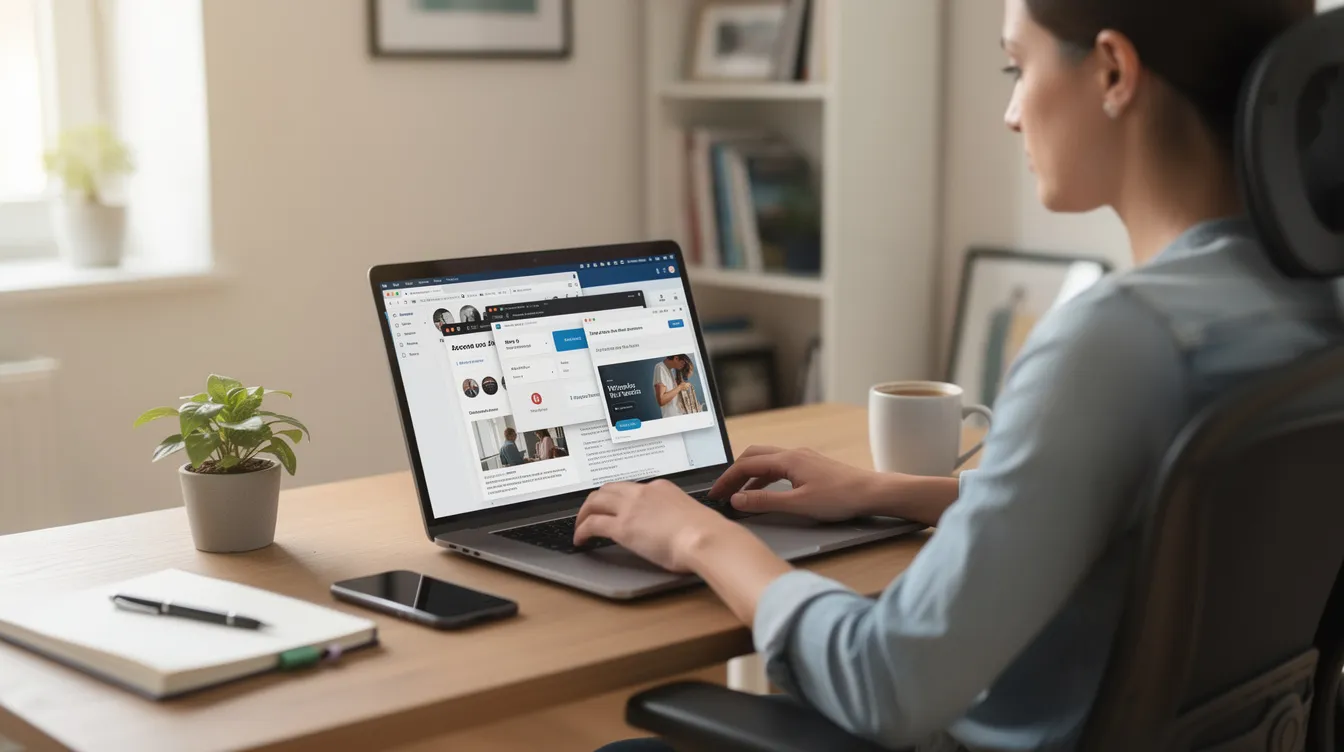
Choosing a focused niche represents your first major decision in starting a dropshipping business—and arguably the one that most determines success or failure. Research indicates that 80-90% of new dropshipping stores fail within the first year, often due to poor niche fit or attempting to compete in oversaturated markets.
A niche narrows your focus to a specific segment rather than broad categories. Instead of “electronics,” you might target “home office ergonomics.” Instead of “pet supplies,” you focus on “pet travel accessories.” This specificity helps you understand your target audience deeply, create more relevant content marketing, and compete against smaller players rather than Amazon behemoths.
Use tools to validate your chosen niche before committing. Google Trends reveals whether interest is rising, stable, or declining—search “pet travel accessories” and examine the trajectory from 2023-2026. Amazon Best Sellers shows what people actually buy, filtered by category. TikTok and Instagram hashtag research uncovers emerging trends that haven’t yet saturated traditional channels. Keyword tools can indicate competition levels and search volume.
The sweet spot lies between two extremes. Avoid ultra-saturated niches like generic fitness gear or phone cases where you’ll compete against established sellers with massive ad budgets and supplier relationships. Equally, avoid demand-free oddities—artisanal toothpicks might sound unique, but without buyers, uniqueness means nothing. Look for niches with demonstrable demand (rising Google Trends, active social media communities) but manageable competition (no single dominant player, opportunities for differentiation).
Your niche should also spark at least some genuine interest. Running a dropshipping venture requires persistence through months of testing and optimization. If you find your products boring, you’ll struggle to maintain the motivation needed to outlast the difficult early period. Balance passion with pragmatism.
Good beginner niches in 2026 often include home office accessories (sustained by ongoing remote work trends), pet travel gear (growing pet ownership and humanization), sustainable kitchen products, and wellness gadgets. Avoid starting with apparel (20%+ return rates and sizing complications), fragile items like glassware, or anything requiring certifications you don’t have.
Create a Basic Business & Legal Setup
Even a small dropshipping business benefits from establishing proper legal foundations early. While this section won’t replace professional advice tailored to your jurisdiction, understanding the basics helps you start correctly and avoid problems as you scale.
In the United States, most beginners choose between operating as a sole proprietor or forming an LLC (Limited Liability Company). Sole proprietorship requires almost no paperwork—you simply start operating—but offers no separation between personal and business assets. An LLC provides liability protection and looks more professional to suppliers and customers, though it involves state registration fees and ongoing compliance requirements. Other jurisdictions have equivalent structures; consult a local accountant or attorney for specifics.
You’ll need a tax identification number (EIN in the US for most structures) to open business bank accounts, work with certain suppliers, and file taxes properly. Registration requirements vary by location, so research your specific state or country’s requirements before launching.
Separate your business finances from personal accounts from day one. Open a dedicated business bank account and payment gateway (Stripe, PayPal Business) to maintain clean bookkeeping. This separation simplifies tax preparation, makes expense tracking effortless, and presents a professional image to suppliers who may verify your business legitimacy.
By 2026, marketplaces and payment processors enforce strict KYC (Know Your Customer) requirements. Expect to verify your identity, business registration, and banking details before processing transactions on platforms like Shopify Payments, Amazon, or eBay. Having documents organized in advance speeds up verification and prevents launch delays.
Find and Vet Reliable Suppliers
Your suppliers determine product quality, shipping times, and ultimately customer satisfaction. Understanding supplier types helps you source appropriately for your business goals.
Manufacturers produce goods directly, often offering customization options and the lowest per-unit costs. However, they typically require minimum order quantities that don’t suit the dropshipping model. Wholesalers buy from manufacturers in bulk and resell at discounted rates, sometimes offering dropship services with lower minimums. Dropshipping agents act as intermediaries who specialize in handling fulfillment for specific regions—they may source from multiple suppliers, consolidate orders, and provide faster shipping to your target market.
Common sourcing channels include supplier directories like SaleHoo (curated lists with verification), AliExpress-style marketplaces (vast selection but variable quality), brand websites (for authorized reselling), and trade shows (for building direct relationships). For US-based operations prioritizing fast shipping, platforms like Spocket connect you with domestic suppliers offering 2-7 day delivery, compared to 15-30 days from China-based alternatives.
Vet potential suppliers against concrete criteria: shipping times to your core markets (customers in 2026 expect tracking and reasonable delivery windows), product quality (request samples), responsiveness (aim for under 24-hour reply times), return policies (30-day windows provide customer protection), and tracking reliability (real tracking numbers that update, not fake numbers).
Always place test orders before listing products. Research suggests roughly 40% of initial supplier candidates fail quality or reliability tests upon closer inspection. Order products shipped to yourself, evaluate packaging, verify actual shipping times match promises, and assess product quality firsthand. This small investment prevents listing items that damage your reputation.
Watch for “fake wholesalers”—companies that charge $97/month membership fees while selling products at close-to-retail prices without genuine volume discounts. Legitimate suppliers make money on product sales, not access fees. If a supplier’s per-unit costs aren’t meaningfully below retail prices, they’re not providing wholesale value.
Set Up Your Online Store
Your store serves as your online storefront—the digital equivalent of a physical shop where customers browse, evaluate, and purchase. Platform choice affects everything from daily operations to available integrations.
Hosted platforms like Shopify ($29/month basic plan) handle technical infrastructure, security, and updates, letting you focus on products and marketing. They’re ideal for beginners without development experience. Self-hosted solutions like WooCommerce (free software on WordPress) offer more customization and lower monthly costs but require technical knowledge for setup, maintenance, and security. Marketplace selling (eBay, Amazon) provides built-in traffic but limits branding control and subjects you to strict platform policies.
For most dropshipping 101 scenarios, Shopify or similar hosted platforms offer the best balance of simplicity and capability. They integrate smoothly with automation tools like Easync that handle product importing and order routing.
Key store elements include a branded domain name ($10-15/year for a .com), a mobile-responsive theme that loads quickly (aim for 95%+ on PageSpeed Insights), clear navigation that guides visitors to products, and essential legal pages. Your shipping policy should honestly state delivery timelines (7-14 days for international suppliers, 2-5 for domestic). Your returns policy should align with what your suppliers actually support. Privacy policies need GDPR/CCPA compliance for customers in relevant regions.
Trust signals significantly impact conversion rates. SSL certificates (standard on most platforms), recognizable payment badges, customer reviews, and professional design elements can boost conversions by 20-30% compared to amateur-looking stores. Use high-quality product images, maintain consistent branding colors, and include clear calls-to-action on product pages.
Launch and Market Your Store
With your store built, products listed, and suppliers vetted, marketing transforms a website into an actual profitable business. In 2026, beginners benefit most from focusing on one or two channels rather than spreading thin across every platform.
TikTok short-form video and Instagram Reels offer strong organic reach potential, especially for visually interesting or demonstration-friendly products. Create content showing products in use, addressing customer pain points, or entertaining your target audience. Organic social media marketing requires consistency but minimal financial investment.
Paid advertising through Meta Ads or TikTok Ads allows faster validation. Start with small budgets ($50-100) to test whether products resonate before scaling. Aim for 2-3x ROAS (Return on Ad Spend) before increasing spend significantly. The average CPM on TikTok runs $0.50-$2 for targeted demographics, making it accessible for testing.
Search engine optimization provides long-term traffic but requires months to build. For beginners, basic on-page optimization (descriptive titles, quality product descriptions, relevant keywords) establishes foundations while you focus on faster channels.
Build your email list from day one. Exit-intent popups convert 5-10% of visitors into subscribers. Welcome sequences with value-driven content (not just sales pitches) yield 20-30% open rates and build relationships that drive repeat purchases. Email marketing remains one of the highest-ROI channels once you’ve built a subscriber base.
Resist the urge to launch on five platforms simultaneously. Master one traffic source, achieve profitability, then expand. Many dropshipping businesses fail from spreading resources too thin rather than from any single channel underperforming.
Core Pros and Cons of Dropshipping
Dropshipping isn’t “easy money”—anyone claiming otherwise is selling something. However, the model offers genuine structural advantages that make it worth considering, alongside real limitations you must understand before committing.
Core advantages include:
Minimal upfront investment compared to traditional retail. You can launch a dropshipping store for $200-500 covering domain registration, platform subscription, basic apps, and initial marketing. Traditional inventory-based e-commerce typically requires $10,000 or more in stock before your first sale.
Product testing agility lets you list 50+ products without financial risk. If something doesn’t sell, you simply remove it. No obsolete inventory sitting in a warehouse depreciating.
Location independence means you can operate from anywhere with internet access. No physical warehouse, no shipping stations, no geographic constraints.
Catalog scalability allows adding new products instantly through supplier integrations. Your capacity to list items isn’t limited by storage space or capital.
Core disadvantages include:
Thinner profit margins result from supplier costs, platform fees, and advertising expenses. Expect 20-40% lower margins compared to buying inventory at true wholesale prices. After a supplier takes their 50% and ads consume 20-30%, your take-home shrinks.
Limited control over shipping logistics and product quality creates customer experience risks. You can’t inspect items before they ship or guarantee carrier performance. This leads to 10-15% higher refund rates compared to merchants controlling their own fulfillment.
Intense competition from over 2 million Shopify stores (plus other platforms) means differentiation requires genuine effort in branding, customer experience, and marketing.
Third-party dependency creates risks. When a supplier runs out of stock, raises prices, or ships damaged goods, you absorb the consequences in customer complaints and refunds.
View dropshipping as a stepping stone rather than a final destination. Many successful e commerce businesses started with dropshipping to validate products and build customer bases, then transitioned to hybrid models—dropshipping slow sellers while bulk-ordering bestsellers for improved margins and control.
Comparison: Traditional E-commerce vs. Dropshipping
Beginners often confuse inventory-holding e-commerce with dropshipping, leading to misaligned expectations. Understanding both models helps you choose appropriately based on your resources, risk tolerance, and goals.
Traditional e-commerce means you purchase inventory upfront, store it yourself or through a fulfillment center, and handle shipping directly. You control the entire supply chain from warehouse to doorstep. Dropshipping means suppliers store inventory and ship orders on your behalf—you never touch products.
The following table breaks down key differences across factors that matter most for 2026 operations:
Side-by-Side Pros and Cons Table
| Aspect | Traditional E-commerce | Dropshipping |
|---|---|---|
| Startup Capital | Pros: Bulk buying enables 50-70% margins. Cons: Requires $5,000-$50,000 upfront for inventory, risking capital on unproven products. | Pros: Launch for $200-500 with minimal financial risk. Cons: No bulk discounts means permanently lower per-unit margins. |
| Risk Level | Pros: Full control over quality and fulfillment reduces dependency risks. Cons: Inventory obsolescence can cause 20-30% losses; products may not sell. | Pros: No inventory risk; test unlimited products without financial exposure. Cons: Supplier issues (stockouts, quality problems) directly impact your customers. |
| Profit Margins | Pros: Higher margins (50-70%) through wholesale purchasing power. Cons: Margins depend on successfully selling all purchased inventory. | Pros: Guaranteed margin on every sale (no unsold inventory). Cons: Thinner margins (20-40%) after supplier costs and fees. |
| Brand/Experience Control | Pros: Custom packaging, inserts, consistent quality, branded unboxing experience. Cons: Requires more operational complexity. | Pros: Focus entirely on marketing and customer relationships. Cons: Limited packaging customization; quality varies by supplier. |
| Logistics & Shipping | Pros: Control enables 1-2 day delivery matching marketplace expectations (Amazon Prime). Cons: Requires warehousing, staffing, or 3PL partnerships. | Pros: No warehousing or shipping operations to manage. Cons: Longer shipping times (7-30 days from overseas) frustrate customers conditioned to 2-day delivery. |
| Scalability | Pros: Established infrastructure can handle high volume efficiently. Cons: Scaling requires proportionally more capital and warehouse capacity. | Pros: Add unlimited products instantly; scale without proportional infrastructure investment. Cons: Dependent on supplier capacity; quality control harder at volume. |

The table reveals a clear pattern: traditional e-commerce suits entrepreneurs with capital to invest who prioritize brand control and margin optimization, while dropshipping serves those prioritizing low risk, testing velocity, and operational simplicity.
For many beginners, the smartest approach combines both models over time. Start with dropshipping to validate which products your target audience actually buys. Once you identify winners with consistent sales and strong margins, transition those specific products to bulk purchasing while continuing to dropship slower-moving items. This hybrid approach captures the testing benefits of dropshipping while building toward the margin advantages of traditional retail.
Essential Tools & Automation (Including Easync)
Manual dropshipping operations collapse once you manage more than a handful of products and 10+ daily orders. Tasks that seem simple—checking supplier stock levels, adjusting prices when costs change, copying tracking numbers to customer orders, forwarding order details to suppliers—multiply into hours of repetitive work that distracts from growth activities.
Automation tools bridge this gap by syncing inventory levels between suppliers and your store (preventing oversells that damage reputation), dynamically adjusting prices to protect margins when supplier costs fluctuate, routing orders to suppliers automatically upon payment, and pushing tracking updates to customers without manual intervention.
For dropshipping 101 setups, Easync automation proves particularly useful. The platform supports automated product importing from suppliers like AliExpress in bulk—what might take hours manually happens in minutes. Real-time stock and price monitoring updates your storefront every 15 minutes, ensuring you never sell out-of-stock items (a problem affecting 25% of non-automated stores). Auto-ordering triggers fulfillment automatically upon customer payment, eliminating manual forwarding. Repricing rules adjust your prices dynamically based on supplier cost changes and fee structures, protecting your 30% margins even when wholesale costs shift. Tracking synchronization pushes shipping updates to customers instantly, reducing “where’s my order?” inquiries. Multi-account workflows let you manage multiple stores or supplier relationships from a single dashboard, scaling operations without proportional staff growth. Together, these features reduce manual work by approximately 90%, enabling scaling to 100+ daily orders without hiring additional team members.
Beyond order management, automation extends to marketing. Email platforms like Klaviyo integrate with e commerce platforms to trigger abandoned cart sequences, post-purchase follow-ups, and win-back campaigns—generating 4x ROI on email flows without manual sending. The right tools transform your dropshipping business from a time-consuming job into a system that operates largely independently.
Store Platform & App Stack
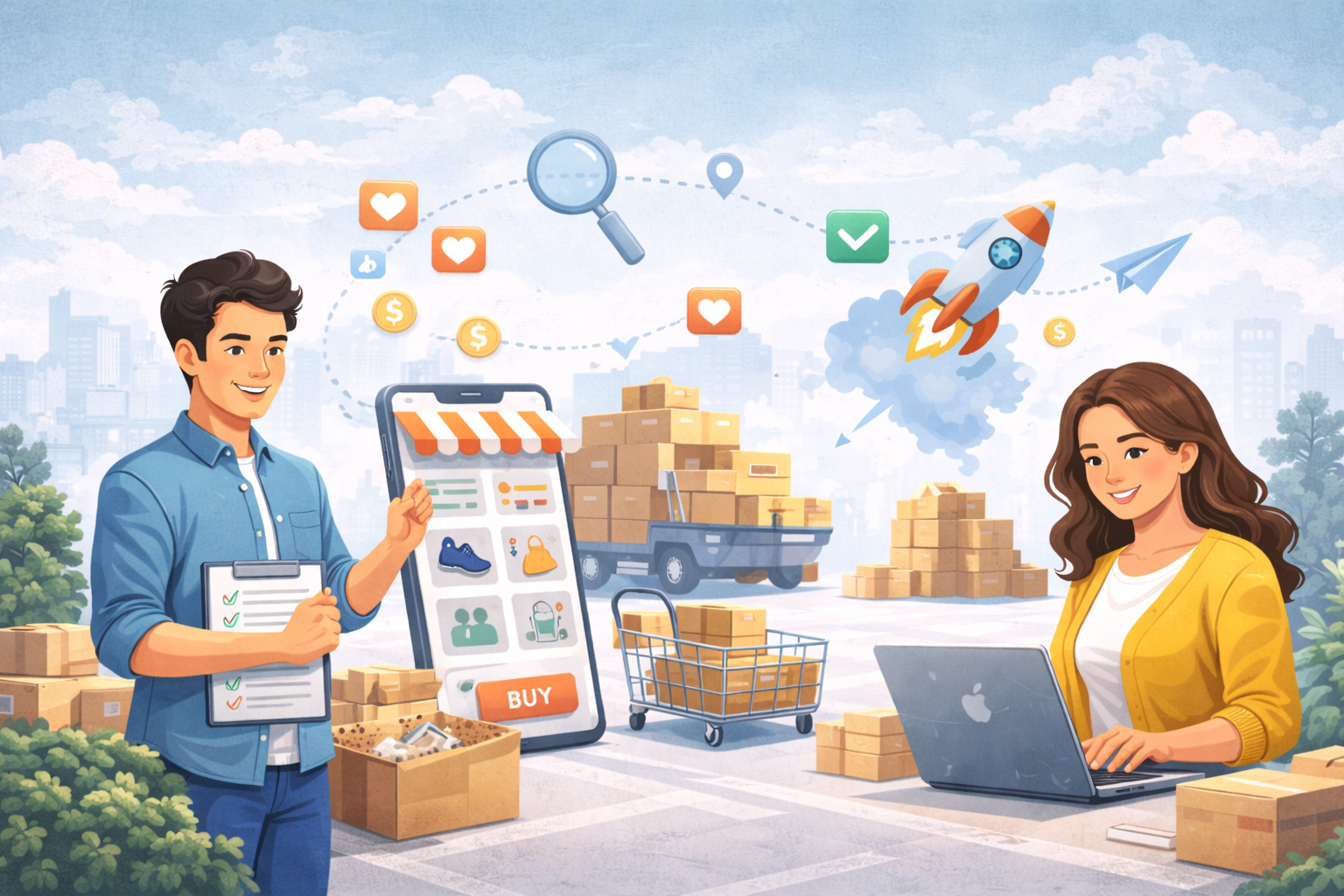
A simple tech stack for 2026 dropshipping combines your storefront platform with automation tools and communication systems. A typical beginner setup might include Shopify (or WooCommerce for those comfortable with WordPress), Easync for supplier integration and order automation, Klaviyo or similar for email marketing, and Google Analytics 4 for traffic and conversion tracking.
Integrations work through APIs (Application Programming Interfaces) that allow different software systems to communicate. When a customer places an order on your Shopify store, the platform sends order data to Easync, which routes it to the appropriate supplier. When the supplier generates tracking, that information flows back through Easync to your store and triggers customer notification emails through Klaviyo. This connected workflow eliminates manual data transfer between systems.
In 2026, platform selection should consider page speed (slow sites kill conversions), mobile user experience (majority of traffic is mobile), and built-in privacy compliance (GDPR/CCPA requirements). Modern platforms like Shopify handle these concerns by default; self-hosted solutions require more configuration.
Prioritize tools that reduce manual tasks over those offering exotic features you won’t use. A lean stack that you actually utilize beats a complex one that sits unused. Most successful dropshipping stores use fewer than five core tools well rather than fifteen poorly.
Analytics and Optimization Tools
Tracking performance tells you what’s working and what needs adjustment. Without data, you’re guessing—and guessing rarely builds a profitable business.
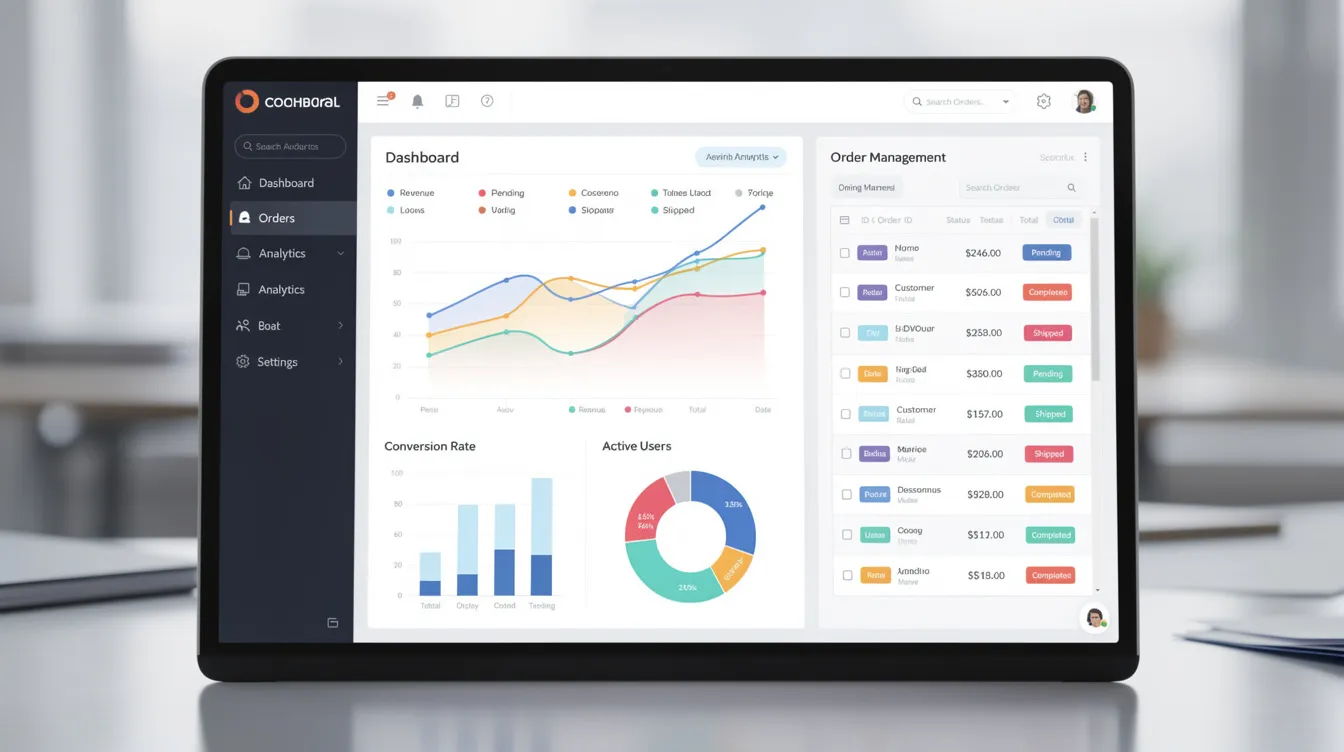
Built-in platform analytics (Shopify Analytics, WooCommerce reports) provide order data, revenue trends, and basic traffic metrics. Google Analytics 4 adds deeper insight into visitor behavior, traffic sources, and conversion paths. Together, these free tools cover most analytical needs for beginners.
Core metrics to monitor include conversion rate (percentage of visitors who purchase—aim for 2-5% depending on traffic quality), average order value (higher is better; use bundles and upsells to increase), refund rate (keep under 5% by vetting suppliers and setting clear expectations), and shipping-related complaints (under 2% indicates good supplier performance).
Simple A/B testing—changing product titles, swapping main images, adjusting prices—reveals what resonates with your audience. Most platforms include basic testing features, or you can run manual tests by tracking performance before and after changes.
These metrics feed back into product and supplier decisions. Products with high views but low conversions need better descriptions or pricing. Suppliers with elevated complaint rates need replacement. Data-driven decisions outperform hunches.
How to Choose Products That Actually Sell
Product selection, more than anything else, determines whether a beginner makes sales or joins the 80-90% of stores that fail. All the marketing optimization and beautiful store design in the world can’t sell products nobody wants.
Understanding the difference between trend chasing and portfolio building helps balance opportunity and stability. Viral TikTok gadgets can generate explosive short-term sales but often crash as trends fade. Evergreen products like pet grooming tools or desk accessories sell steadily month after month without viral spikes. Smart product selection mixes both: a few trend-driven items that might hit big, combined with stable products that generate consistent baseline revenue.
Reading customer reviews on Amazon, AliExpress, and niche forums reveals unmet needs your product descriptions can address. If dozens of reviews complain about a product’s poor grip, source a version with better grip and make that feature prominent in your marketing. Pain point identification creates differentiation in commoditized markets.
Tools like Easync make product testing faster by simplifying importing and repricing. The ability to list a product in minutes, test it with a small ad budget, and remove it if results disappoint lets you iterate through dozens of potential winners quickly rather than betting everything on a few guesses.
Key Product Criteria
Successful dropshipping products share common characteristics that beginners should evaluate before listing:
- Strong demand signals: Rising Google Trends lines, active social media discussions, strong Amazon Best Seller rankings within relevant categories
- Decent margins after all costs: Aim for 3x markup from supplier cost (a $10 item sells for $30); after ad spend and fees, you should retain $8-10 minimum
- Acceptable shipping times: Match your marketing promises; if you can’t offer 7-day delivery, don’t compete on speed
- Low return risk: Avoid size-dependent products (apparel returns run 20%+), fragile items, or anything requiring precise fit
- No regulatory complications: Skip products requiring certifications (medical devices, certain electronics) or prone to counterfeiting claims
Impulse-friendly price ranges ($20-80) work best for social media-driven traffic. Buyers scroll, see something interesting, and purchase without extensive comparison shopping. Higher-priced items can work in specific niches but require more trust-building.
Consider examples by category: ergonomic desk accessories (rising demand from continued remote work), pet grooming tools (evergreen with high repeat purchase potential), sustainable kitchen gadgets (alignment with consumer trends), and tech accessories (phone mounts, cable organizers) for consistent demand.
Avoid as a beginner: generic clothing (return nightmares), fragile glassware (damage claims), supplements (regulatory complexity), and anything from established brands (counterfeit risk and trademark issues).
Researching Demand in 2026
Systematic research separates successful product selection from random guessing.
Google Trends reveals seasonal patterns and geographic interest. Search your potential niche and examine the 5-year view for cyclical patterns (holiday spikes, summer dips). Compare interest by country to verify demand exists in your target market. Rising lines indicate growing opportunity; declining lines warn of shrinking demand.
Amazon Best Sellers, filtered by relevant categories, shows what people actually buy—not just what they search. Look for products with 4+ star ratings and visible sales velocity (reviews accumulating recently, not all from years ago). Etsy trends reveal handmade and craft-adjacent opportunities. TikTok’s “what I bought” content surfaces viral products before they saturate traditional channels.
Keyword tools and marketplace search suggestion boxes reveal what people actually type when shopping. Start typing product terms and observe autocomplete suggestions—these represent real search behavior. High-volume keywords with moderate competition indicate opportunity.
Before fully building a brand around products, validate with small paid advertising tests. Spend $50-100 driving traffic to product pages and measure actual conversion behavior. Products that convert at acceptable rates warrant further investment; those that don’t should be dropped regardless of how promising they seemed in research.
Customer Experience, Shipping & Returns
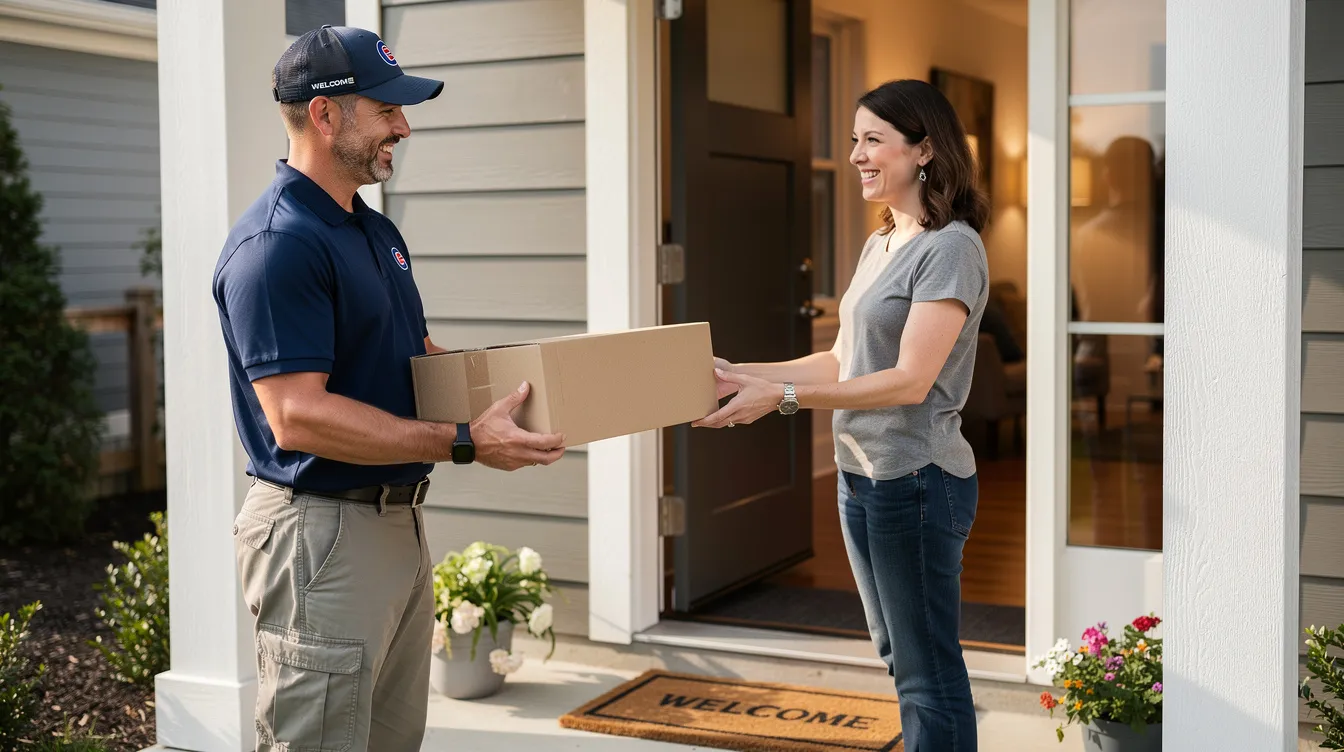
Even though your supplier ships the physical product, the customer only sees your brand. Every shipping delay, damaged item, or confusing return process reflects on you—not the supplier they’ve never heard of. This reality makes customer experience management crucial for building a sustainable online business.
Clear expectations around shipping times prevent the majority of complaints. If your suppliers ship from overseas with 7-14 day delivery windows, communicate this prominently before purchase. Don’t hide shipping times in fine print and hope customers won’t notice. In 2026, shoppers conditioned by Amazon Prime’s 2-day standard need explicit communication when delivery takes longer. Honesty upfront prevents chargebacks and negative reviews later.
Automated email flows maintain customer communication throughout the order lifecycle. Send confirmation immediately upon purchase (reassurance that the order was received), shipping notification with tracking when the label generates (excitement that it’s on the way), and delivery follow-up after arrival (opportunity for review requests and repeat purchases). These automated touchpoints cut “where’s my order?” inquiries by roughly 40%.
Align your policies with supplier capabilities. If your supplier offers 30-day returns, you can offer 30-day returns. If they don’t accept returns at all, you’ll need to handle refunds from your own margin. Promising what you can’t deliver creates customer satisfaction disasters.
Handling Problems: Delays, Damages, and Chargebacks
Problems happen in every business. How you handle them determines whether customers become detractors or advocates.
Common issues include late shipments (carrier delays, customs holdups), lost packages (tracking stops updating), damaged items (rough handling during transit), and wrong products shipped (supplier picking errors). Each requires a process.
When issues arise, investigate with your supplier first. Request photos from the customer, forward to your supplier with order details, and determine cause and responsibility. Most suppliers offer credits or replacements for their errors. For shipping delays beyond stated timeframes, proactive communication to affected customers prevents escalation.
Maintain a small cash buffer (around $500) to issue quick refunds without waiting for supplier credits. Fast resolution protects your reputation even when suppliers are slow to respond. Recover costs from suppliers afterward, but don’t make customers wait for your internal processes.
Track problem rates by supplier. If a particular supplier consistently generates complaints (exceeding 5% of orders), find an alternative. No margin is worth the reputation damage from chronic fulfillment problems.
Exceptional customer service often means simply responding quickly (under 24 hours), communicating honestly about issues, and resolving problems without lengthy back-and-forth. These basics differentiate you from the many dropshipping businesses that seem to disappear when something goes wrong.
Scaling From First Sale to Real Business
Your first 10-50 orders will likely feel manual and messy. You’ll check supplier stock manually, copy-paste order information, and handle customer inquiries one by one. This is normal and expected—use this phase to understand your processes before automating them.
The goal is building systems that let you scale beyond what you can personally handle. Start documenting SOPs (standard operating procedures) as you establish routines. Write down how you handle common customer questions, what criteria you use for product decisions, how you manage supplier relationships. These documents become training materials when you eventually hire help.
Once daily tasks become repetitive and consume hours, consider part-time virtual assistants ($5-10/hour depending on location and skill level). Delegate order monitoring, basic customer support, and supplier communication while you focus on growth activities—marketing, product research, and strategic decisions.
Reinvest early profits into improvements that compound: better product photography and video (user-generated content often boosts ad performance 2x), stronger branding (professional logo, consistent visual identity), or upgraded supplier relationships (domestic suppliers with faster shipping cost more but increase conversion rates).
The evolution path for many successful stores moves from pure dropshipping toward hybrid models. Once a product proves itself with consistent sales, negotiate bulk purchasing for 20% better margins. You might use a 3PL (third-party logistics) warehouse to stock bestsellers while continuing to dropship long-tail products. This combination captures dropshipping’s testing advantages while building toward traditional e-commerce’s margin benefits.
When to Double Down vs. Pivot
Not every niche or store deserves continued investment. Recognizing signals helps you make better decisions about where to focus energy.
Signals to double down:
- Repeat customers (10%+ of buyers return for additional purchases)
- Profitable ad campaigns (3x ROAS or better sustained over multiple weeks)
- Strong reviews (4.5+ star average with genuine positive sentiment)
- Organic word-of-mouth (customers tagging you in social posts, referring friends)
Signals to pivot:
- Chronically negative margins even after optimization (if $1,000 in ad spend generates $800 in net revenue, the math doesn’t improve at scale)
- High refund rates (10%+ indicates product quality or expectation mismatches)
- Declining niche demand (Google Trends showing sustained downward trajectory)
- Persistent supplier problems with no viable alternatives
Set simple numeric checkpoints before starting. For example: “If I haven’t achieved profitability after $500 in ad testing across 3 different products, I’ll reassess the niche.” Or: “If refund rates exceed 8% after two months of optimization, I’ll investigate different suppliers or exit the category.”
Don’t cling to a niche purely from passion if data consistently shows lack of demand or insurmountable margin pressure. The market doesn’t care about your enthusiasm—it rewards alignment between what you sell and what customers actually want to buy.
Balance realism with patience. Success stories rarely happen in weeks. Many profitable dropshipping businesses required 3-6 months of testing, 5-10 product iterations, and multiple strategy adjustments before finding their groove. The difference between success and failure often comes down to informed persistence—continuing to iterate while learning from each test—rather than blind stubbornness or premature abandonment.
FAQ
How much money do I realistically need to start dropshipping in 2026?
A lean launch requires roughly $200-500: domain registration ($12-15/year), Shopify subscription ($29/month), basic automation tool like Easync ($20-50/month during trial), and $100-150 for initial advertising tests. This gets you operational but limits how much testing you can do.
A more comfortable starting point runs $1,000-2,000: the same operational costs plus $500 for product testing ads, a premium theme ($150-200 one-time), and cash reserves for handling refunds while awaiting supplier credits.
Marketing spend dominates early costs, not software. You can run a functional store for under $100/month in platform and app costs, but validating products through paid advertising requires real budget. Many beginners underestimate ad costs and run out of testing money before finding winning products.
Dropshipping remains far cheaper than traditional inventory-based e-commerce ($10,000-50,000 in initial stock), but “zero budget” expectations set you up for disappointment.
How long does it usually take to get my first sale?
Timelines vary dramatically based on niche selection, traffic strategy, and budget. Stores with targeted paid traffic often see first sales within 7-30 days of launch. Stores relying purely on organic traffic (SEO, unpaid social) may wait months.
First sales and sustainable profit are different milestones. Many beginners achieve a handful of sales quickly, then struggle to find consistent profitability. Expect the journey from first sale to reliably profitable operation to take 3-6 months of iteration—testing different products, refining ad creatives, adjusting pricing, and optimizing conversion elements.
Focus on learning from each campaign rather than obsessing over hitting a specific date. Every test, even unsuccessful ones, provides data for better decisions. The entrepreneurs who succeed treat early failures as education rather than evidence of fundamental problems.
Is dropshipping still legal and allowed on major platforms?
Dropshipping is legal in virtually every jurisdiction, but it must comply with consumer protection laws (accurate product descriptions, honoring return policies, fulfilling orders as promised), tax regulations (collecting and remitting sales tax where required), and platform-specific rules.
Marketplaces enforce different policies. Amazon requires that you appear as the seller of record and handle returns—dropshipping is technically allowed but prohibited from most third-party retailers. eBay permits dropshipping with proper disclosure. Shopify allows dropshipping entirely as an independent store model.
Read and comply with each platform’s terms of service. Account bans for policy violations (representing someone else as the seller, failing to ship on time, excessive complaints) affect 5-10% of sellers who ignore guidelines.
Honest branding and clear policies reduce compliance risk. Don’t claim to be something you’re not. Clearly state shipping timeframes. Honor return commitments. These basics keep you on the right side of both platforms and regulators. For tax and legal specifics in your jurisdiction, consult a local professional.
Can I run a dropshipping business while working a full-time job?
Yes, approximately 70% of dropshippers start as side hustles, particularly in the first 6-12 months while establishing product-market fit and building systems.
Automation makes this feasible. Auto-ordering fulfillment, inventory sync, tracking updates, and even email responses can operate without your constant attention. Once set up, daily requirements may shrink to an hour or less of checking dashboards and handling exceptions.
Start with constraints that acknowledge limited time: a narrow product catalog (10-20 items rather than hundreds), one or two marketing channels rather than trying everything, and defined time blocks for business tasks (perhaps an hour each morning before work, a few hours on weekends for strategic work).
Before launching, review any employment contracts for non-compete clauses—particularly relevant if your dropshipping store operates in an industry related to your employer’s business. Most employment contracts don’t restrict outside businesses in unrelated industries, but verify your specific situation.
What should I do if my supplier suddenly goes out of stock?
Act quickly to protect customer experience. Immediately pause any paid advertising driving traffic to affected products. Update product pages to indicate unavailability or extend shipping timelines if restocking is imminent. Contact any customers who ordered in the last 24-48 hours proactively—inform them of the situation and offer alternatives (similar products, store credit, or refund).
Prevent future occurrences by maintaining backup suppliers for core products. Sourcing the same or similar items from multiple suppliers means you can redirect orders rather than refunding them.
Real-time stock monitoring in tools like Easync significantly reduces the risk of selling out-of-stock items. The system can automatically pause listings when supplier inventory hits zero, preventing orders you can’t fulfill. This automated protection catches stockouts faster than you could manually, especially across a catalog of dozens or hundreds of products.
Supplier changes are normal in dropshipping—expect them and plan accordingly. Products may discontinue, suppliers may exit business, quality may change. Treat supplier relationships as ongoing management tasks rather than set-and-forget arrangements.

Noah Edis is a freelance writer and systems engineer with a wealth of experience in modern hardware and software. When he’s not working on his latest project, you can find him playing competitive dodgeball or pursuing his personal interest in programming. At Easync, Noah helps thousands of sellers optimize their eBay and Amazon businesses by providing automation tools and practical guidance on account health, pricing, and inventory management.