
- articles
Louis Vuitton Dropshipping in 2026: Legal Reality, Safer Alternatives & Automation
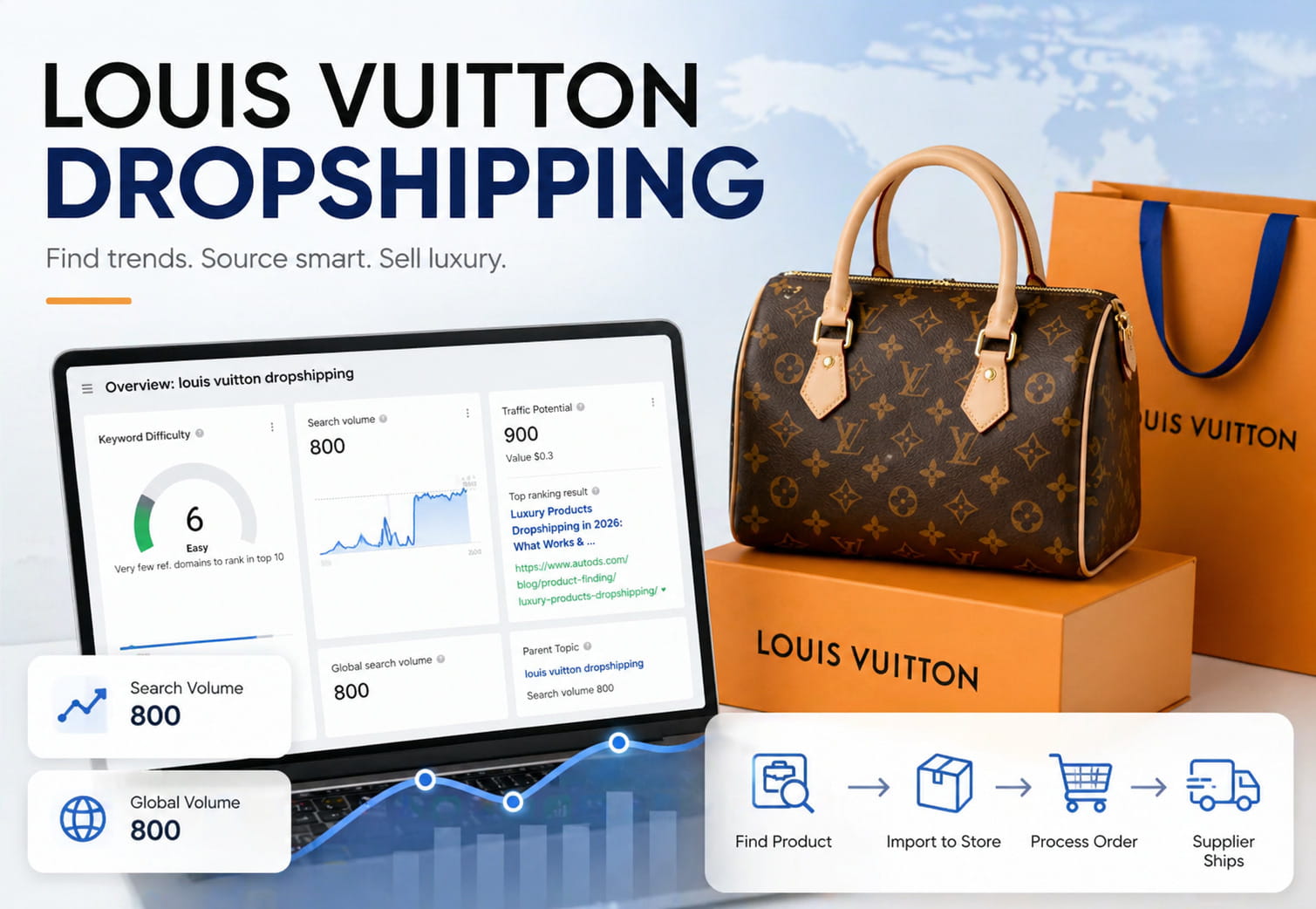
The search term “Louis Vuitton dropshipping” has exploded in popularity since 2023, fueled by TikTok tutorials promising $2,500 bag sales with minimal effort. But here’s what those videos don’t tell you: dropshipping louis vuitton products directly isn’t just difficult—it’s legally impossible without brand authorization that LVMH simply doesn’t grant to independent online sellers.
This guide cuts through the noise to give you the complete picture: what’s actually legal, what will get your store shut down, and how to capture luxury-level profits without the legal landmines.
Key Takeaways
- You cannot legally dropship new Louis Vuitton products without brand authorization or working through a fully verified reseller of authenticated pre-owned items. Louis Vuitton only sells through its own stores, official website, and LVMH-owned 24S.com.
- Most people searching for vuitton dropshipping really want high-ticket luxury profits. The smarter path is pivoting to luxury-inspired or non-branded premium products that deliver the same margins without trademark violations.
- Luxury dropshipping is not about selling famous logos but rather about perception, experience, and execution—focusing on quality products and premium branding that command high prices on their own merit.
- Automation tools like Easync are critical for running any luxury-style dropshipping model at scale. Features like automated product importing, real-time stock and price monitoring, auto-ordering, repricing rules, tracking synchronization, and multi-account workflows keep operations tight when customer expectations are highest.
- This article covers: legal boundaries around Louis Vuitton and established luxury brands, a full e-commerce vs. dropshipping comparison, product alternatives, sourcing strategies, and a step-by-step launch plan for 2026.
What “Louis Vuitton Dropshipping” Really Means in 2026
Search volume for “Louis Vuitton dropshipping” surged between 2023 and 2026, driven by the rise of high-ticket dropshipping tutorials on YouTube and TikTok. The appeal is obvious: if customers willingly pay $2,500 for a Neverfull bag, surely some of that margin can be captured through a simple Shopify store. But this assumption fundamentally misunderstands how luxury fashion distribution actually works.
When entrepreneurs search this term, they typically have one of three intents:
- “Louis Vuitton bag dropshipping 2026” — seeking automated suppliers who stock real LV inventory
- “LV replica supplier” — looking for counterfeit sources from DHgate or 1688
- “How to sell LV on Shopify without stock” — hoping for a no-inventory, high-margin model
The basic dropshipping model involves listing products on a store, marketing via Meta Ads or TikTok Shop, receiving orders, and forwarding them to a supplier who ships directly to customers. This workflow collides directly with Louis Vuitton’s tightly controlled distribution strategy. LVMH sells new items exclusively through its own boutiques, official website, and a limited network of authorized high-end retailers. There is no official dropshipping program or third-party wholesale partnership for independent online sellers.
The real opportunity in luxury dropshipping lies in selling luxury-inspired products that have premium appeal without the legal risks associated with authentic branded items. That’s what this guide focuses on—legal, sustainable approaches that capture the LV aesthetic without the trademark violations.
Can You Legally Dropship Louis Vuitton in 2026?
This section is a direct legal reality check. Many luxury brands have strict distribution policies and rarely engage in dropshipping, preferring to maintain control over their brand image and customer experience. Louis Vuitton is among the strictest.
Here’s what you need to know:
- No official dropshipping program exists. Louis Vuitton (LVMH) does not authorize independent sellers to dropship new products. The brand tightly controls retail through its own boutiques and a tiny network of authorized partners.
- Unauthorized sourcing violates trademark law. Selling new LV bags, belts, or wallets sourced from unofficial wholesalers—including most Chinese marketplaces—almost always violates trademark, distribution agreements, and platform policies. Selling authentic branded items without authorization can lead to legal action, account suspensions, and significant financial penalties due to trademark and intellectual property laws.
- Pre-owned is a legal edge case. Reselling authenticated pre-owned Louis Vuitton pieces (for example, a bag bought in 2019 and certified by a reputable authenticator like Entrupy or Real Authentication) may be legal under the first-sale doctrine in the US and similar EU exhaustion principles. However, this model is very rarely compatible with automated, scalable dropshipping workflows because each item is unique.
- Replicas are outright illegal. Listing replicas or “1:1 copies” with LV monograms or logos constitutes counterfeiting under 18 U.S.C. § 2320. Dropshipping replicas is illegal and can lead to severe penalties such as permanent bans from payment processors. LVMH’s aggressive enforcement has led to over 100,000 counterfeit seizures annually by US Customs since 2022, with global seizures valued at $500 million.
You cannot legally dropship authentic Louis Vuitton products unless you are an authorized reseller or source products from authorized suppliers, as doing so violates trademark and distribution rules.
The “Louis Vuitton Effect” in Luxury Dropshipping
Louis Vuitton generated $20.5 billion in 2025 revenue, with resale values holding 70-90% of retail price. A $2,500 Neverfull regularly resells for $1,800+ on StockX. This cultural dominance—amplified by celebrity endorsements from figures like Rihanna and billions of TikTok views—creates a psychological effect that benefits legal sellers indirectly.
Luxury items often retain or increase in value over time, making them attractive investment pieces for consumers. When customers see LV everywhere, they become conditioned to accept premium pricing for attractive, quality bags and accessories—even without the monogram. This is the “Louis Vuitton effect”: the brand trains consumers to pay $300-$800 for well-crafted items that signal status through design and materials rather than logos.
How this benefits your legal luxury dropshipping business:
- Customers transfer their aspirational associations to unbranded items that share LV’s aesthetic DNA—structured silhouettes, rich leather textures, gold hardware
- Editorial photography and storytelling that evokes exclusivity can achieve 2-5x higher engagement than low-ticket ads
- The same psychology extends beyond fashion to luxury home decor, luxury watches, fragrances, and tech accessories with premium design
Modern luxury dropshipping emphasizes perceived value over brand ownership, with customers prioritizing how products feel and perform rather than the brand name itself. Your job is to copy the feeling—strong storytelling, rich imagery, limited collections, and high perceived value—without copying the logo.
Legal & Ethical Boundaries Around Louis Vuitton and Luxury Brands
Legal compliance is the non-negotiable foundation of any 2026 luxury dropshipping business. Understanding where the lines are drawn can mean the difference between a thriving store and a terminated account with frozen funds.
Counterfeit vs. “Inspired” Products:
| Category | Definition | Legal Status |
|---|---|---|
| Counterfeit | Replicates protected monograms, logos, or trademarked patterns | Illegal |
| Inspired | Uses neutral patterns, premium materials, original branding | Legal when done correctly |
Using “Louis Vuitton,” “LV,” their logos, or product names (Speedy, Neverfull, Onthego, Pochette Métis, Dauphine) in product titles, ad creatives, or meta tags for non-LV products can trigger IP complaints. Using brand names, logos, or imagery in marketing without permission can trigger legal issues and violate the policies of e-commerce platforms, leading to account bans.
2024-2026 Enforcement Trends:
- Meta Ads disapprovals increased 40% year-over-year for luxury-related terms
- TikTok Shop suspensions affect 25% of luxury fashion listings attempting trademark misuse
- Shopify terminated 15,000 stores for IP violations in 2025
- Selling counterfeit Louis Vuitton products can lead to lawsuits, fines, and platform bans due to violations of copyright and trademark laws, with damages up to $2 million per willful infringement case
Before attempting any business that touches authentic or pre-owned LV at scale, consult with a real IP attorney. The stakes are too high for guesswork.
Luxury-Inspired vs. Authentic Louis Vuitton Products
Two paths exist for entrepreneurs drawn to the louis vuitton dropshipping concept: selling authentic LV (rare, complex, limited) or dropshipping luxury-inspired pieces (realistic, scalable, legal when done right).
The Authentic LV Path:
Some companies specialize in selling pre-owned luxury items, providing a way to sell authentic luxury goods while adhering to market standards and policies. To source Louis Vuitton products, one must work through specialized luxury B2B distributors. Platforms like The RealReal, Vestiaire Collective, or StockX offer authenticated items, but this model has significant limitations:
- Inconsistent inventory with unique SKUs
- Mandatory physical inspection and authentication
- Individualized photography requirements
- Scalability capped at manual handling of 10-50 items monthly
- 15-30% margins after authentication and shipping
Selling genuine luxury goods often requires authorized wholesalers, making it difficult to find reliable suppliers. This is more consignment business than dropshipping.
The Luxury-Inspired Path:
Quality leather or vegan leather bags, jewelry, scarves, sunglasses, shoes, perfumes, and home accessories with premium materials but no protected logos or trademarks. This path scales because:
- Consistent inventory from reliable suppliers
- Repeatable product listings
- Full automation potential
- Brand-building opportunities with your own logo, unique packaging, and storytelling
The key is transforming your store from a generic dropship operation into a boutique brand. Your own logo, custom dust bags, careful storytelling about materials and craftsmanship—these elements create perceived value independent of any luxury brand name.
How Easync Automation Helps With “Louis Vuitton-Style” Dropshipping
While you cannot legally auto-dropship new Louis Vuitton items, you can build a high-end, LV-inspired luxury dropshipping store and automate your operations with Easync to achieve scale without sacrificing the precision that luxury customers demand.
Dropshipping software Easync supports automated product importing from supported marketplaces, allowing you to curate 20-60 premium SKUs quickly without manual data entry;
- real-time stock and price monitoring ensures you never sell out-of-stock products or list items at outdated prices,
- which is critical when 80% of cart abandonments in luxury niches tie to stock inaccuracies;
- auto-ordering pushes customer orders to suppliers automatically the moment payment clears,
- eliminating delays that erode trust with demanding customers;
- repricing rules dynamically adjust your prices to maintain target 25-35% profit margins when supplier costs shift by 10-20%;
- tracking synchronization updates USPS or FedEx statuses directly in your Shopify store for 98% delivery transparency;
- and multi-account workflows enable you to manage 3-5 parallel luxury-style stores without drowning in manual tasks.
These features are especially valuable in a luxury context where luxury customers expect an impeccable experience, including high-quality product images, fast shipping, and premium customer service making Easync the operations backbone for any compliant, luxury-inspired fashion or accessories store that wants to move beyond a handful of manual orders per week.
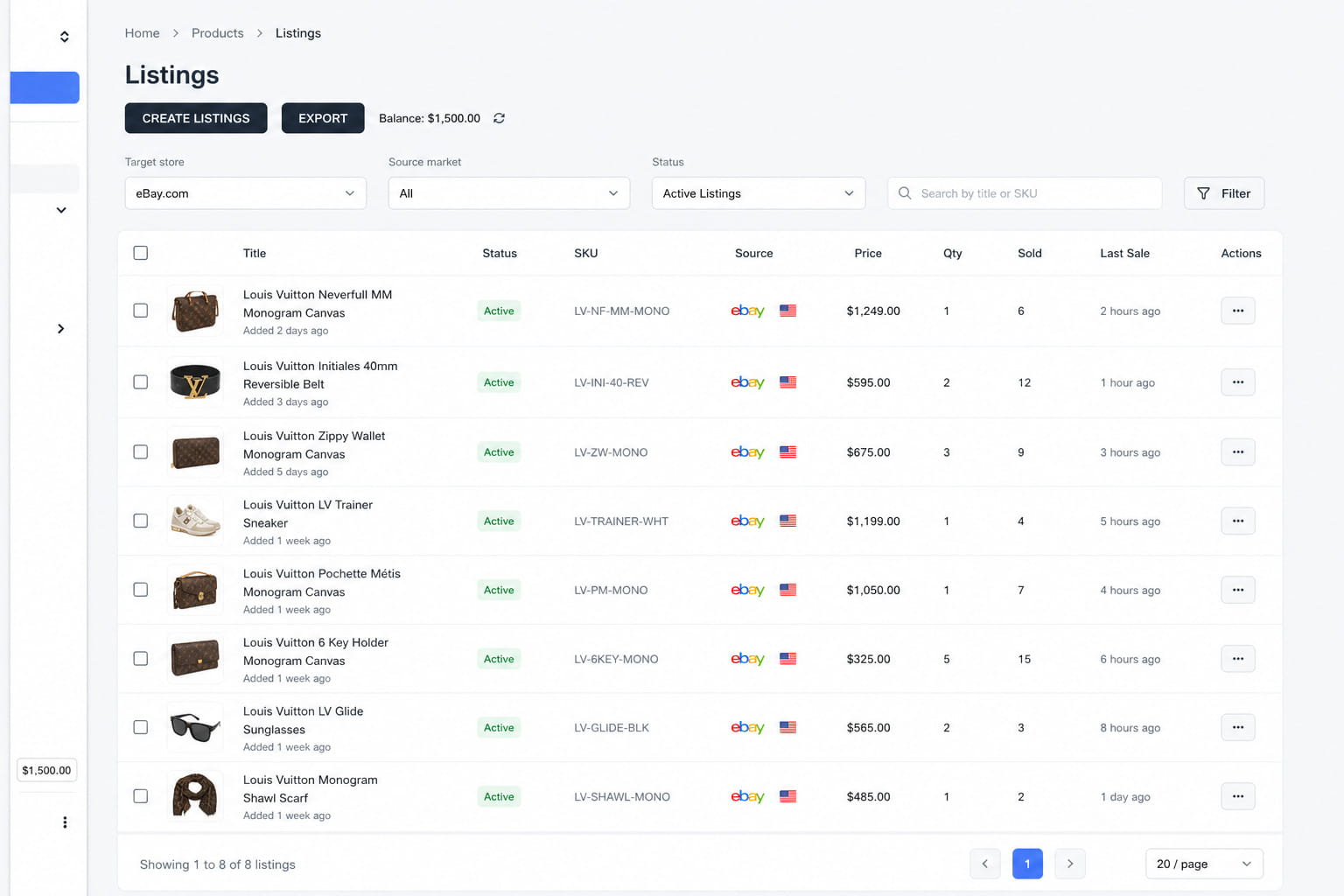
Best Product Types to Sell Instead of Louis Vuitton
You’re copying the aspirational lifestyle, not the logo. Here are the optimal product categories that capture the LV effect legally in 2026:
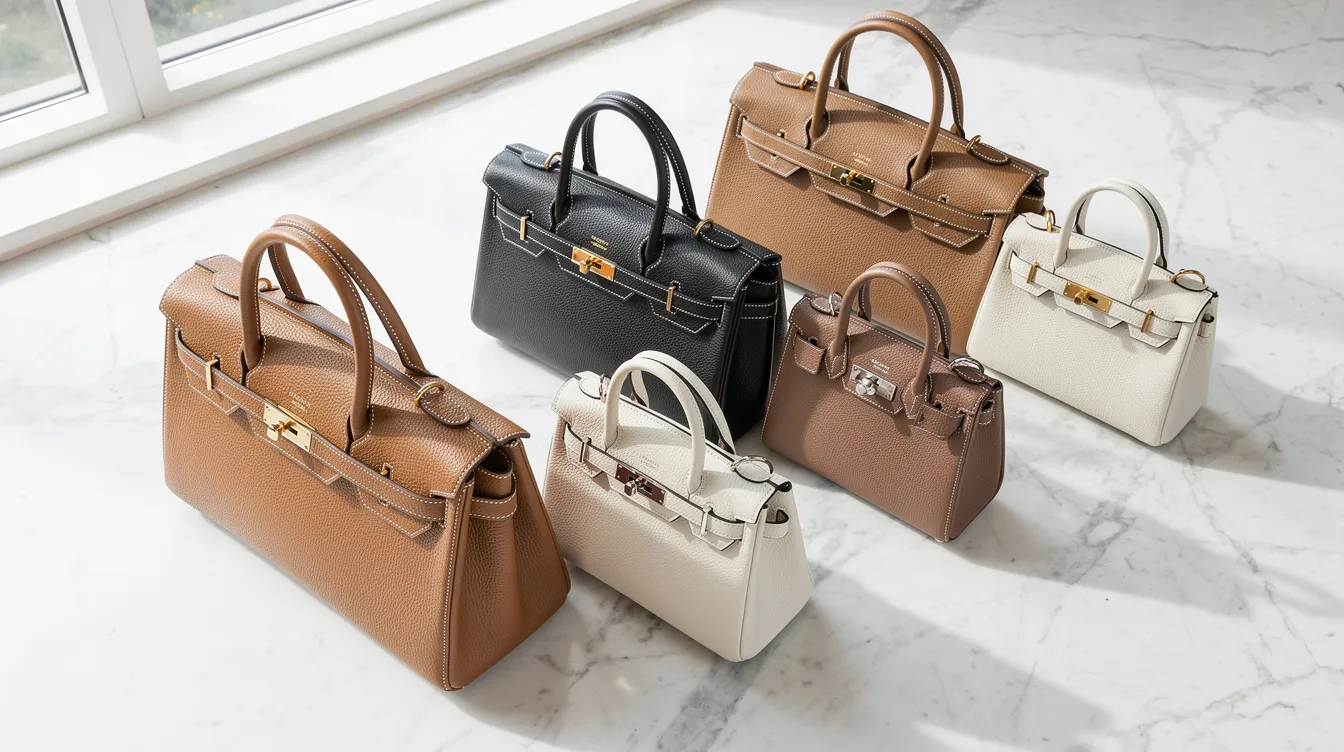
Luxury-Style Handbags & Totes Structured vegan leather totes, minimalist satchels, and croc-embossed shoulder bags priced between $120-280. Shoot with editorial-style photography: neutral backgrounds, soft lighting, close-ups of stitching and hardware. Target 30% margins through EU suppliers with 5-10 day shipping.
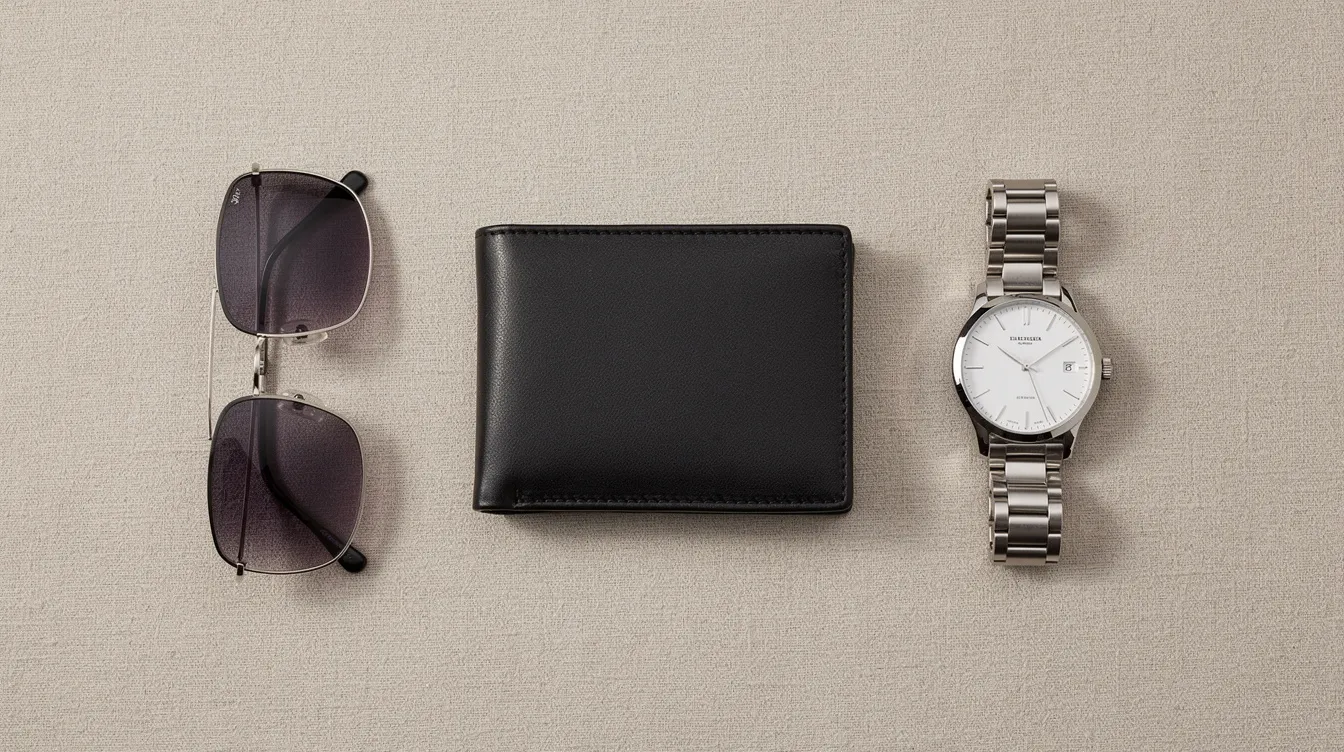
Small Leather Goods (SLGs) Premium wallets, cardholders, passport covers, and belts in the $60-180 range. Market these as “entry to luxury” for first-time luxury buyers looking to elevate their everyday carry. High repeat purchase potential.
Designer-Inspired Sunglasses & Watches Acetate frames, stainless-steel watches and bracelets with strong unbranded design. Sell via lifestyle UGC and short-form video, achieving 4-7% conversion rates on TikTok when executed well.
High-End Fragrances & Beauty Niche perfume dupes with original branding, luxury candles, and skincare bundles positioned as “self-care rituals.” Price points from $45-150, with subscription potential for recurring revenue.
Home & Lifestyle Decor Marble or brass desk accessories, sculptural vases, and premium throw blankets that photograph beautifully for Instagram and TikTok. Luxury furniture and decor items attract the same aspirational customer.
How to Source Luxury-Style Products Safely
Supplier quality and consistency represent the main risk factor in selling premium products. Dropshipping luxury products typically requires more extensive vetting processes and higher fees compared to general dropshipping due to the need for authenticity and quality assurance.
Prioritize Vetted Suppliers Over Random Marketplaces:
For 2026, source from vetted private suppliers, EU/US/UK warehouses, or curated dropshipping platforms like Spocket, CJdropshipping, or Brands Distribution. Random AliExpress sellers show defect rates of 15-25% versus 2-5% for private suppliers. The best luxury dropshipping suppliers are those that specialize in sourcing authentic, high-end products and provide verified branded goods, reliable shipping, and proof of authenticity.
Before Listing Any Product:
- Request material specifications (genuine vs. PU leather, hardware type, stitching details)
- Order samples ($50-200 each) to inspect quality firsthand
- Obtain real packaging photos—not supplier renderings
- Verify shipping times and tracking capabilities
Packaging Matters:
Neutral or white-label packaging allows you to add your own brand elements. Custom boxes, thank-you cards, and dust bags elevate the unboxing experience that luxury shoppers expect.
Luxury dropshipping works best when partnering with trusted platforms that have established relationships with wholesalers or distributors who have permission to resell authentic products. Keep a short supplier list of 2-4 strong partners and monitor defect rates, delivery times, and customer feedback monthly.
Pricing, Margins, and Customer Expectations in Luxury Dropshipping
Louis Vuitton-level perceived value demands LV-level pricing psychology, even when you’re selling your own brand. Underpricing kills luxury perception instantly.
Price Anchoring for Premium Products:
Anchor prices higher than typical AliExpress fashion. Luxury handbags should sit at $160-260, fashion accessories at $70-150. When customers see $29.99 on a “luxury” item, cognitive dissonance destroys trust.
Realistic Margin Calculation:
For a $200 handbag:
- Product cost: $80
- Ad spend: $40
- Payment/platform fees: $10
- Net margin: $70 (35%)
Target net margins in the 20-35% range after product cost, shipping, payment fees, and ad spend. Higher profit margins per order require investment in fast shipping, premium unboxing, and proactive customer support.
Managing Customer Expectations:
Luxury buyers have higher expectations than average e-commerce shoppers, expecting top-tier customer service, fast shipping, and premium packaging due to the premium prices they pay. With higher prices come higher customer expectations, including sensitivity to delays, unclear policies, and poor communication, which can lead to dissatisfaction and refunds.
Customers purchasing luxury items expect a seamless return process if the product doesn’t meet their expectations or arrives damaged, which is crucial for maintaining trust and satisfaction. Build 10-15% fashion return rates into your margin planning.
Exceptional customer service means 24-48 hour response times maximum. Anything slower destroys the luxury illusion.
Platform Rules & 2026 Policy Trends
Major platforms have dramatically tightened IP and counterfeit enforcement between 2022 and 2026. Understanding current policies protects your business from sudden termination.
Shopify: Zero tolerance for counterfeit LV products. Automated and manual reviews flag suspicious listings. Store termination risk for repeat offenders. IP policy mandates removal of infringing listings within 24 hours or store suspension.
Meta (Facebook/Instagram): AI flags LV keywords with 95% accuracy, leading to ad rejections and Business Manager bans. User and IP-owner reporting accelerates takedowns. Meta banned 20% more luxury ads in 2025 compared to 2024.
TikTok Shop and TikTok Ads: Stricter product review with required pre-approval for luxury categories. Frequent takedowns for trademark misuse in titles, captions, or creatives. TikTok Shop rejected 30% of high-ticket luxury fashion listings in 2025.
Amazon: Brand Registry enables one-click complaints resulting in 80% account closures for repeat offenders.
Treat “Louis Vuitton” and all other major luxury brand names as forbidden in product titles, descriptions, image overlays, and hashtags unless you are a formally authorized reseller.
Step-by-Step: How to Build a Legal “Louis Vuitton-Style” Store
This is the practical roadmap for readers who want LV-level vibes without legal risk. Follow these steps to launch a compliant luxury dropshipping store in 2026.
Step 1 – Define Your Niche
Choose a clear focus like “minimalist leather totes for professionals” or “luxury-inspired sunglasses and jewelry for women 25-40.” Specificity beats generic “luxury fashion” positioning. The luxury niche rewards focused brand identities.
Step 2 – Validate Demand
Use Google Trends to confirm rising search volume (e.g., “vegan leather tote” searches up 50% YoY). Check TikTok Creative Center and Meta Ad Library to verify competitors are running profitable ads on $100+ products. Market demand confirmation prevents wasted ad spend.
Step 3 – Choose Your Platform
Recommend Shopify or WooCommerce for maximum brand control. Select a clean, image-heavy, mobile-optimized theme like Dawn. Your online store must feel like a boutique, not a discount warehouse.
Step 4 – Select Suppliers and Connect via Easync
Import 20-60 curated SKUs from reliable suppliers. Set up auto-ordering, real-time stock and price monitoring, and tracking sync. This automation backbone keeps your luxury dropshipping works operations running smoothly as volume scales.
Step 5 – Craft Branding and Storytelling
Develop a luxury logo and consistent color palette. Write copy emphasizing craftsmanship, materials, and lifestyle—not discounts. “Crafted for the modern professional” beats “50% OFF TODAY.” This builds brand loyalty over time.
Step 6 – Launch Paid Traffic Tests
Start with small Meta or TikTok budgets ($20-50/day). Optimize creatives and landing pages based on click-through and conversion data. Target 2-3% conversion rates before scaling. A successful dropshipping business requires patient testing.
Comparison: E‑Commerce vs. Dropshipping for Luxury Products
Choosing between holding inventory and dropshipping involves real trade-offs in the luxury space. This comparison helps you decide which model fits your situation.
| Factor | E-Commerce (Inventory-Based) | Dropshipping (No Inventory) |
|---|---|---|
| Quality Control | Full control, 0% unexpected defects | Dependent on supplier (2-5% defect rates with vetted partners) |
| Shipping Speed | 2-5 day delivery with in-house stock | 5-10 days (US/EU warehouses) to 18-30 days (overseas) |
| Packaging | Custom luxury packaging, complete control | Limited to supplier options or white-label solutions |
| Brand Perception | Stronger, more established feel | More fragile, requires extra effort to build trust |
| Startup Capital | $10,000+ for inventory, storage costs | $500-$3,000 for samples, creatives, initial ads |
| Product Testing | Limited by capital, risk of dead stock | Wide flexibility to test 100+ SKUs |
| Logistics Complexity | Warehouse management, returns handling | Minimal—supplier handles fulfillment |
Key Insight: Many successful luxury dropshippers evolve into hybrid models once they identify winners, holding best-selling SKUs in small batches for faster shipping and quality control while continuing to dropship the rest of their extensive catalog.
Marketing Strategies That Work for Louis Vuitton-Inspired Stores
The goal is evoking a luxury experience across all touchpoints: ads, product pages, emails, and packaging. Competitive market conditions for luxury items can create barriers to entry for mass-market competitors—your premium branding becomes your moat.
Creative Direction:
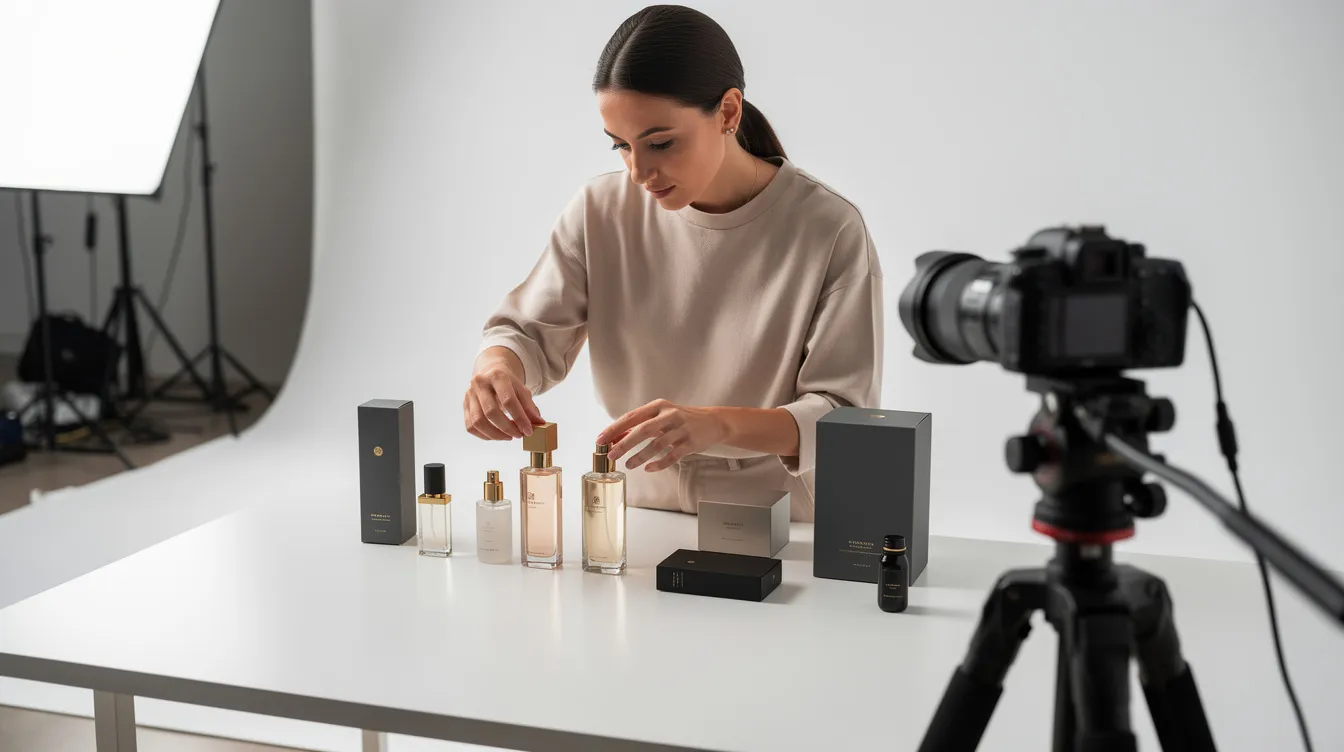
Minimalist, editorial-style creatives outperform loud discount banners. Use neutral backgrounds, soft lighting, and slow close-up videos of stitching, hardware, and textures. These details signal quality without words.
Platform Focus:
Concentrate on platforms where aesthetics drive purchasing: Instagram Reels, TikTok, Pinterest, and high-quality UGC on product pages. Luxury clothing and branded fashion sell through aspiration, not price comparison.
Building Social Proof:
Real reviews, before/after style transformations, influencer try-on videos, and customer unboxing clips build trust without misusing brand names. Never reference Louis Vuitton items in your marketing—let your products speak for themselves.
Email Marketing for Luxury Buyers:
Post-purchase care guides demonstrate investment in customer satisfaction. Styling tips position you as a fashion authority. Limited collection drops and VIP early access campaigns create urgency and build a loyal customer base. These flows drive 30% repeat purchase rates.
Common Mistakes in “Louis Vuitton Dropshipping” (and How to Avoid Them)
This section is a reality check for beginners tempted by shortcuts. Avoid these errors that tank most louis vuitton dropshipping business attempts.
Mistake 1: Listing Obvious Replicas from AliExpress or DHgate
Dropshipping louis vuitton replicas from Chinese marketplaces violates trademark law. Results include customs seizures, PayPal/Stripe account terminations, platform bans, and potential criminal penalties. Remove any such products immediately.
Mistake 2: Stuffing “Louis Vuitton” into SEO Text
Even for non-LV products, using the brand name in product tags, meta descriptions, or ad copy triggers IP complaints. Shopify data shows this causes 70% of luxury-related takedowns. Use generic descriptors instead.
Mistake 3: Underpricing “Luxury” Products at $29.99
Pricing a “luxury tote” at $29.99 signals cheap quality to customers conditioned by brands like michael kors and Louis Vuitton. Premium pricing isn’t optional—it’s how luxury products dropshipping works.
Mistake 4: Ignoring Post-Purchase Experience
Lack of order updates, cheap packaging, and slow support responses destroy trust in high-ticket niches. Excellence in customer service isn’t a differentiator—it’s table stakes.
Mistake 5: Running Everything Manually
Manual operations collapse at 50+ orders per week. Implement automation via tools like Easync early to maintain consistency as volume grows. Your dropshipping store needs systems, not heroics.
Is Luxury Dropshipping Still Profitable in 2026?
Addressing profitability directly with realistic expectations rather than hype.
Average order values in luxury-inspired dropshipping run $150-300, compared to $20-40 for low-ticket general stores. This means fewer sales needed to achieve substantial revenue. Louis Vuitton dropshipping can be highly profitable, particularly when dealing with authenticated pre-owned luxury items, as these products command premium resale prices and can yield net profit margins between 15% and 30% per sale.
The average order value for Louis Vuitton products is significantly higher than for typical dropshipping items, meaning fewer sales are needed to achieve substantial revenue. Selling Louis Vuitton products as authenticated pre-owned items allows dropshippers to tap into a market that values luxury and exclusivity, which can lead to a loyal customer base and repeat purchases.
Reality Check:
Ad costs for fashion and luxury audiences on Meta and TikTok have risen significantly from 2022-2026, with CPCs now at $2-5 for fashion keywords. Creative quality and brand positioning are critical—generic product photos no longer convert.
The most profitable operators treat their stores like real brands, not quick-test general stores. This means strong creatives, professional photography, and robust operations. Top performers achieve $50k+ monthly revenue through consistent ecommerce success strategies.
While dropshipping Louis Vuitton products can be profitable, it requires careful management of customer expectations and compliance with legal standards to avoid potential pitfalls. The sustainable path is building your own brand rather than borrowing someone else’s.

FAQ
Can I legally resell pre-owned Louis Vuitton items online?
In many countries, you can legally resell authentic, pre-owned LV pieces you own or have consignment rights to under first-sale doctrine principles. However, this is closer to a resale or consignment business than scalable dropshipping. Use professional authentication services like Entrupy or Real Authentication, keep all documentation proving provenance, and never suggest you are an official Louis Vuitton partner. Automating this with classic dropshipping software is difficult because each item is unique and stock is extremely limited—you’re essentially running a curated vintage business, not a dropshipping store.
Is it okay to write “Louis Vuitton style bag” in my product titles?
Many platforms and trademark holders treat “Louis Vuitton style” as problematic because it trades on the brand’s name and may confuse customers about the product’s origin. This can trigger IP complaints and listing removals. Instead, use generic descriptors like “luxury structured tote,” “designer-inspired minimalist handbag,” or “premium leather satchel” without mentioning any specific brand. Check each marketplace’s IP and keyword policy before publishing product titles and ads—what’s tolerated on one platform may result in instant suspension on another.
How much money do I really need to start a luxury-inspired dropshipping store?
For 2026, budget realistically: at least $300 for product samples to verify quality, $300-$1,000 for initial creatives and branding (photography, logo, packaging design), and $500-$2,000 for testing ads over the first 30-60 days. While you save on inventory costs compared to traditional e-commerce, you should not cut corners on photography, video, and copywriting if you want premium pricing to stick. Plan for a 3-6 month runway rather than expecting instant profitability—building brand recognition takes time.
What shipping times are acceptable for a luxury dropshipping brand?
In 2026, luxury buyers expect clear ETAs and generally prefer sub-10-day delivery to North America and Western Europe. Reliable shipping within this window is considered baseline acceptable. Shipping times of 18-30 days from overseas warehouses feel incompatible with premium positioning and should be avoided wherever possible. Use suppliers with regional warehouses or faster shipping lines, display honest timeframes on product pages, and provide tracking for every order. Transparency about delivery prevents the friction that erodes trust with luxury shoppers.
Can I use Louis Vuitton images or runway photos for my marketing?
Using official LV product images, campaign shots, or runway photos without explicit permission violates copyright and brand policies—full stop. This applies even if you’re selling completely different products and just want to evoke the aesthetic. Instead, create your own lifestyle shoots, flat lays, and UGC featuring your actual products. Original imagery not only keeps you compliant but also strengthens your brand identity independent of Louis Vuitton. Your free ecommerce tips for 2026: invest in photography that’s uniquely yours, and you’ll never face a takedown notice for borrowed content.