
- articles
- Shopify Dropshipping
What Is Shopify Dropshipping? 2026 Beginner Guide
Shopify keeps setting records, and that says something about where new sellers should be paying attention. In the quarter ending March 2026, merchants on the platform pushed more than $100 billion in gross merchandise volume, and Shopify’s own revenue came in at $3.17 billion — a 34% jump over the same quarter a year earlier, according to the company’s Q1 2026 results.
Those numbers matter to a beginner for one plain reason: they mean the platform is full of active buyers and mature tools, not a quiet corner of the internet. Shopify dropshipping is one of the lowest-risk ways to get a slice of that activity, because you never buy stock before someone buys from you.
This guide covers what the model actually is, how the money and orders move behind the scenes, what it costs in 2026, and how to launch without falling into the traps that sink most first stores.
What Is the Shopify Dropshipping Meaning?
The shopify dropshipping meaning is straightforward: you run a store on Shopify and sell products you never physically stock, and when an order comes in, a supplier ships it to your customer for you.
You handle the storefront, the marketing, and the customer conversations. Your supplier handles the warehouse, the packing, and the courier. The money you keep is the gap between what the customer pays you and what you pay the supplier, minus fees and advertising.
A lot of well-known brands started or scaled with some version of this idea. Gymshark tested demand before committing to inventory. Wayfair still runs much of its enormous furniture catalog on a ship-direct-from-supplier basis. That range — from a solo store to a public company — is a good hint that the model itself is sound, even though most individual stores never get past the experiment stage.
You aren’t limited to one type of product either. Plenty of stores mix standard dropshipped goods with print-on-demand items like mugs, tote bags, and shirts, all under one roof.
How Does Shopify Dropshipping Work? (The 3-Step Flow)
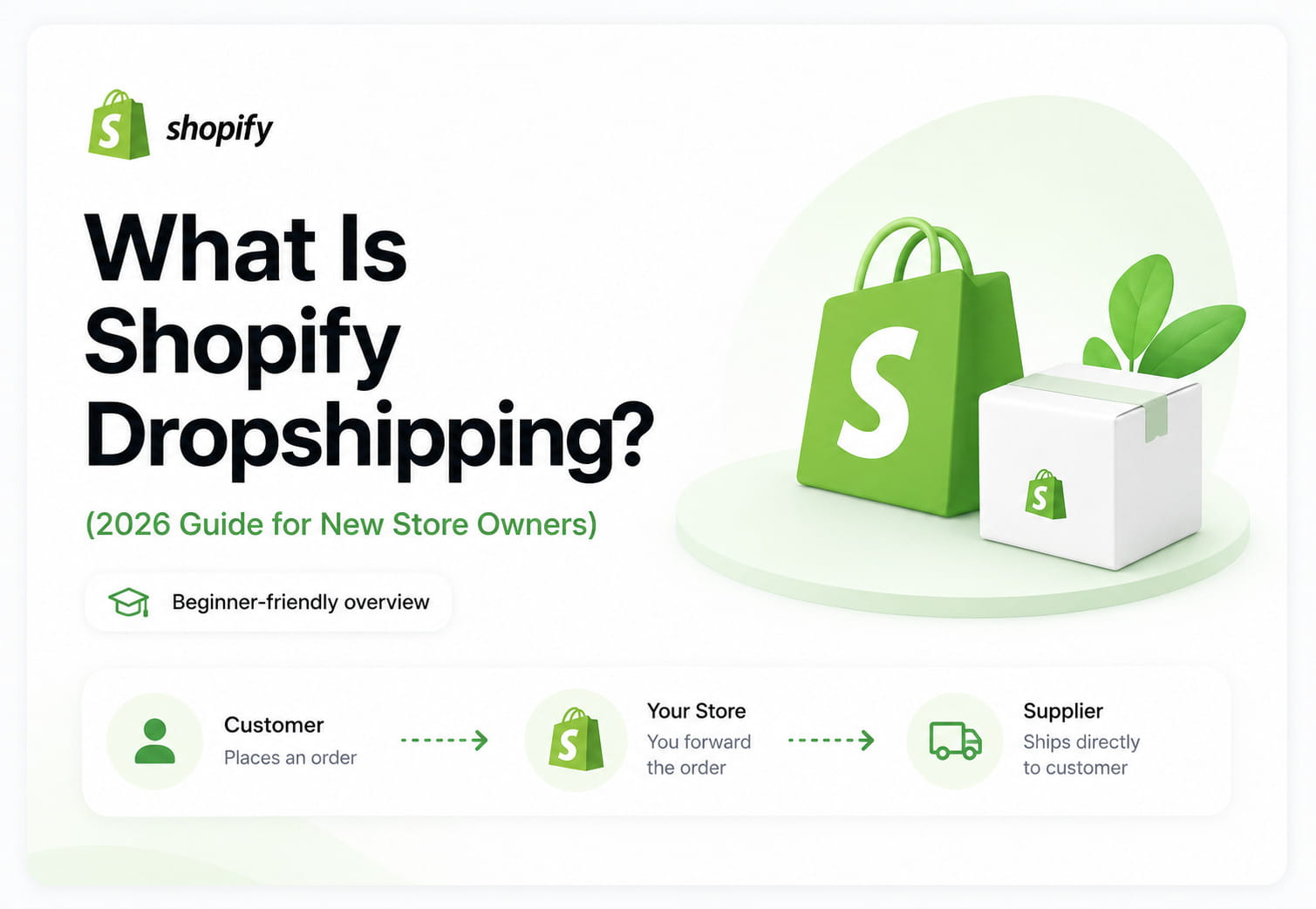
If you strip away the tools and the jargon, how does shopify dropshipping work comes down to three parties passing an order down a short chain.
- A customer buys from your store. They land on your Shopify site, add something to the cart, and pay your retail price at checkout. As far as they know, you’re the shop.
- You pass the order to your supplier. You pay the supplier their wholesale price and send them the customer’s shipping details. On most stores this happens through an app rather than by hand.
- The supplier ships straight to the customer. The parcel goes directly to the buyer, usually in plain packaging, and a tracking number comes back to you to forward on.
Understanding how shopify dropshipping works behind the counter is mostly about margin and accuracy. Your profit lives in that price gap, so anything that eats into it — an ad that converts poorly, a refund, a supplier raising their cost overnight — is the thing that decides whether a sale was worth making.
The chain only stays smooth while your product data matches reality. When a supplier sells out or bumps a price and your store doesn’t catch it, you either oversell an item you can’t fulfill or you ship at a loss. That single problem is why automation shows up later in this guide.
Dropshipping 101 Shopify: Why Choose Shopify in 2026?
Here’s the dropshipping 101 shopify version of the platform question. There are cheaper ways to put up a website, and WooCommerce technically powers more storefronts overall. What Shopify does better than most is remove the boring, breakable parts of running a shop so you can spend your hours on products and traffic instead.
A few things make it a sensible default for a first store.
Setup is genuinely fast. You can go from signup to a decent-looking store in an afternoon using a free theme like Dawn, with no code involved.
The app ecosystem is deep. Shopify’s App Store has thousands of apps, and the ones you’ll care about early — supplier connections, reviews, email, and SEO — mostly have free or cheap starter tiers. Its own built-in supplier network, Shopify Collective, lets you import products from vetted brands with pricing and stock that sync automatically.
Hosting, security, and checkout come handled. You get fast hosting with an SSL certificate included, so a traffic spike during a sale won’t knock your store over, and the checkout is one of the highest-converting in the industry.
It also grows with you. The same platform runs a store on its first week and a store doing seven figures. In 2026 Shopify even added an Agentic plan that lets AI shopping assistants like ChatGPT and Perplexity pull products from your catalog, which is a distribution channel that simply didn’t exist for small merchants two years ago.
How to Start a Shopify Dropshipping Store in 2026
The launch itself follows a predictable order. Rushing any of these steps is the most common reason a store burns through ad budget and quits, so treat each one as something to get right rather than tick off.
Step 1: Find a Highly Profitable Niche & Vetted Products
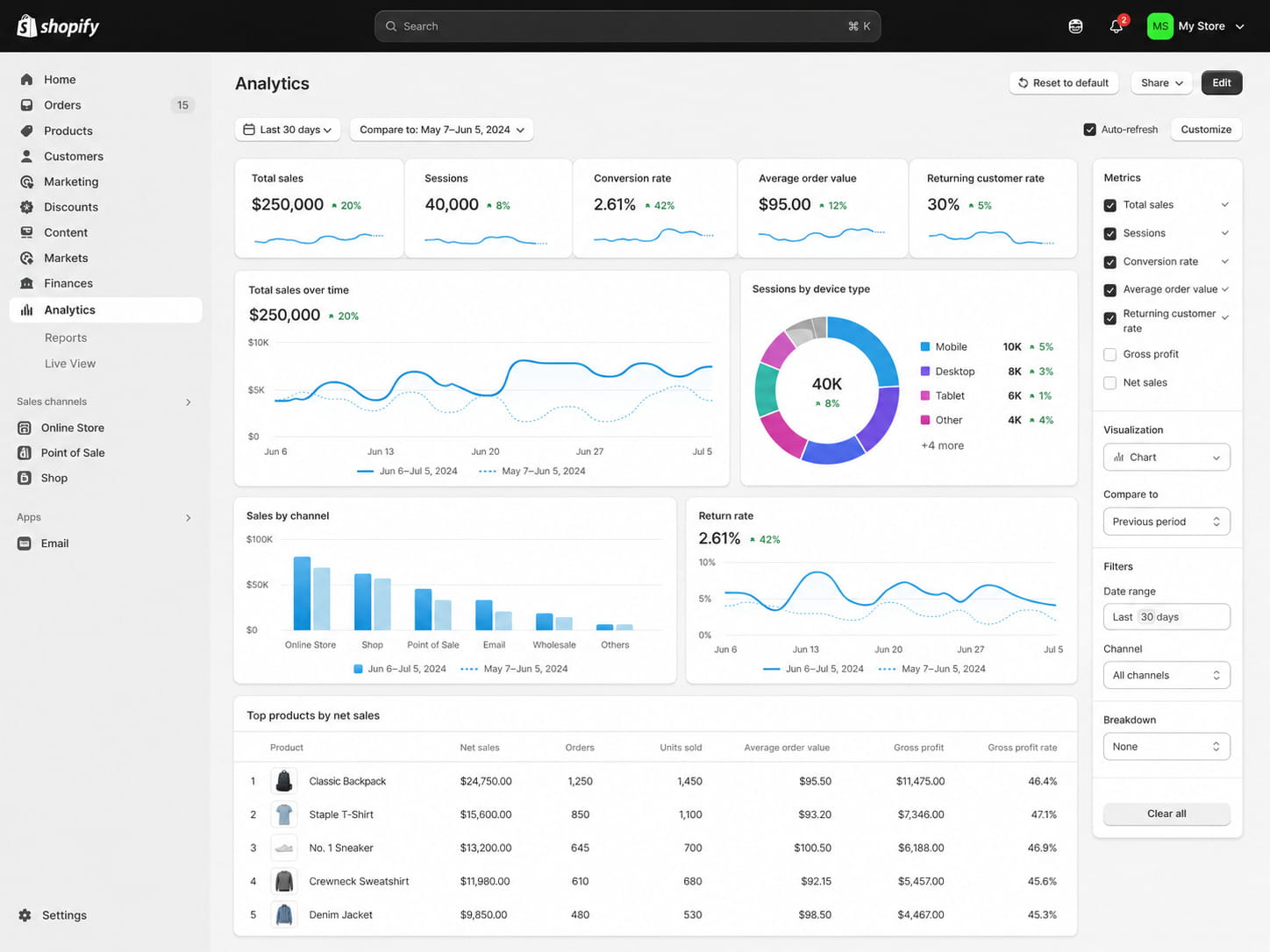
Your niche decides your ceiling before you sell a thing. Broad “everything for everyone” stores tend to lose to focused ones, so pick an audience with a clear problem and enough people who care about it.
Validate demand instead of guessing. Google Trends shows you whether interest is climbing or fading. TikTok and Instagram hashtag counts hint at how much organic attention a product type gets. Competitor reviews are a goldmine — the one-star reviews on a rival’s bestseller tell you exactly what to fix in your version.
Categories that have held up well include pet gear, fitness recovery, home and kitchen, and remote-work desk accessories. Fashion, beauty, and small electronics also move steadily, though competition there is heavier.
On margins, aim high enough to survive advertising. A common rule is a 2.5x to 3x markup over supplier cost, which sounds greedy until you subtract ad spend, payment fees, and the occasional refund. A $12 product that you sell for $30 leaves room to breathe; the same product at $18 usually does not once you’re paying to acquire the customer.
Step 2: Source Reliable Suppliers
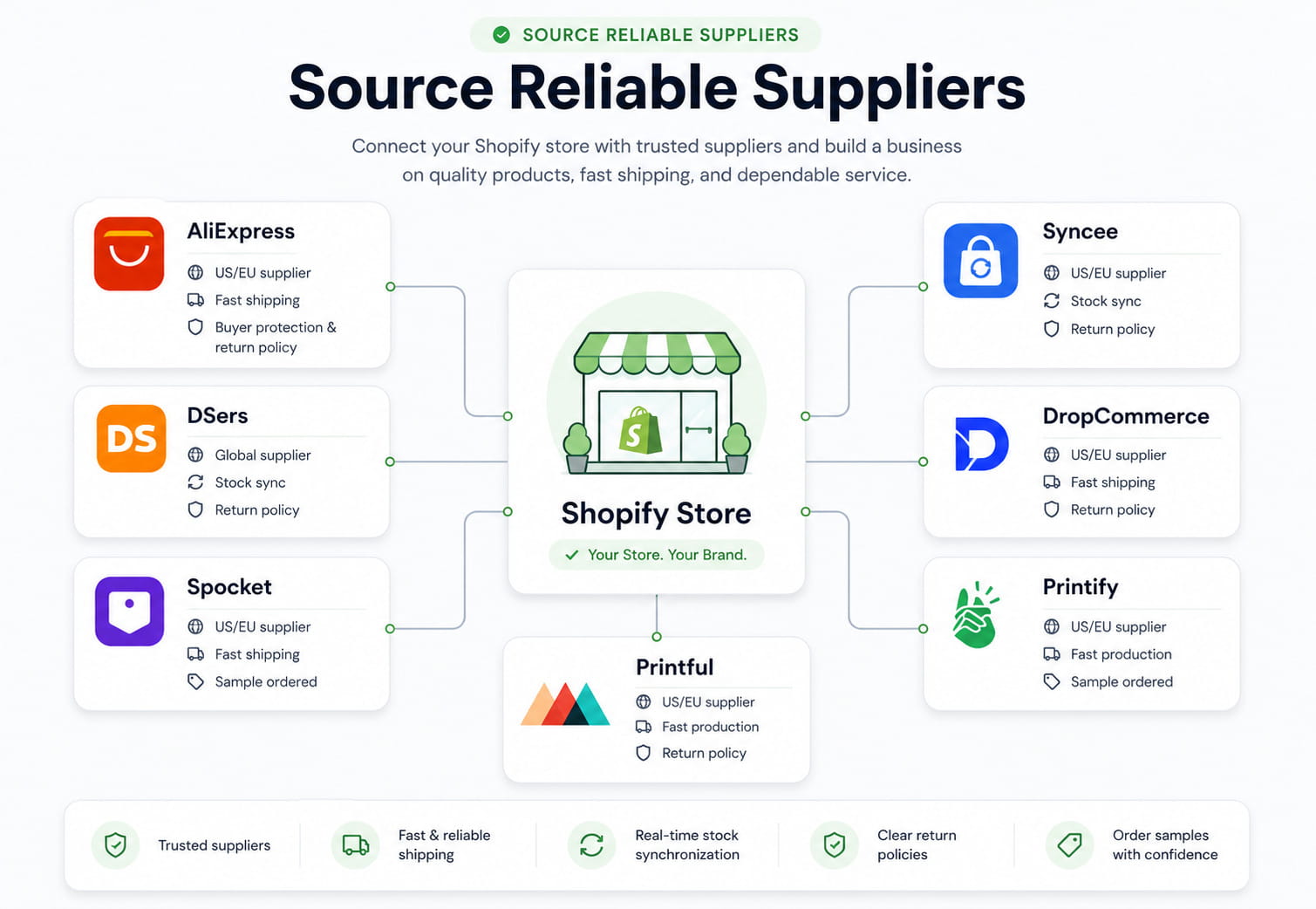
Your supplier is your fulfillment department, even though you’ll never meet them, so vet them like a hire. Order a sample yourself before you list anything. It’s the cheapest insurance you’ll buy, and it tells you what your customers will actually receive.
Most beginners choose between two rough camps. Domestic suppliers based near your customers ship in a few days and make returns simpler, though you pay more per unit. Overseas suppliers give you lower prices and a huge catalog at the cost of slower delivery and trickier returns.
There are solid apps for both. DSers connects Shopify to AliExpress and is the standard route for overseas sourcing. Spocket and Syncee lean toward US and EU suppliers, with Syncee listing well over 12,000 brands. DropCommerce focuses on North American suppliers with three-to-five-day shipping. For branded apparel and print-on-demand, Printify and Printful are the usual picks. One note on older guides: Oberlo, which nearly every tutorial used to recommend, was shut down back in 2022, so ignore any article still pointing you there.
Whatever you choose, spreading key products across more than one supplier protects you when one runs dry mid-week.
Step 3: Build and Brand Your Shopify Store
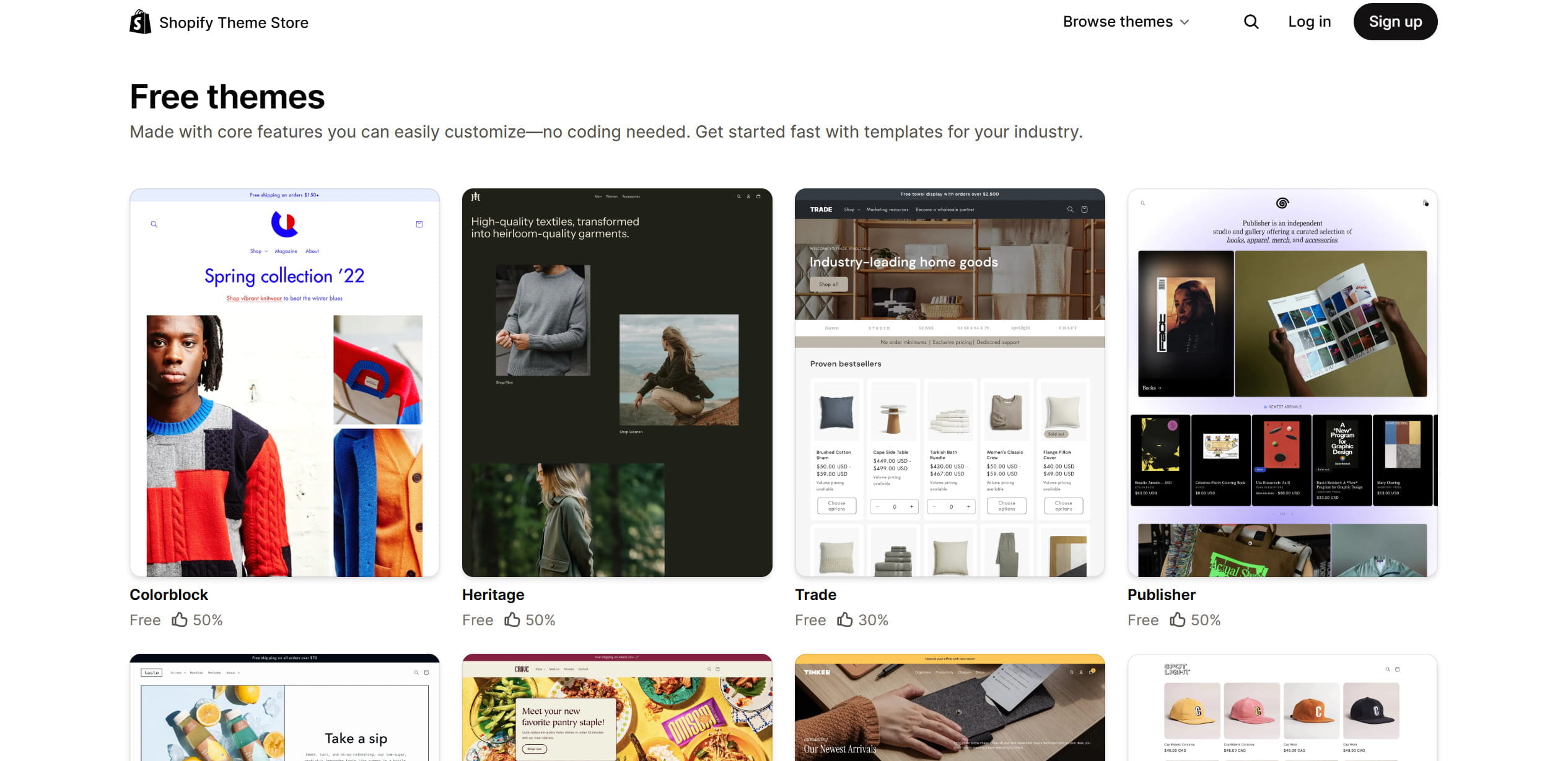
A store that looks improvised converts badly. You don’t need a designer, but you do need to look like a real business.
Rewrite every supplier description in your own words. Copy-pasted manufacturer text reads like copy-pasted manufacturer text, and it competes with dozens of identical listings. Add real benefits, clear photos, sizing details, and honest delivery estimates.
The pages people quietly check before trusting you are the ones beginners skip. Give your store a real Shipping policy with honest timelines, a Returns and Refunds page that sets expectations, a visible Contact page, and an FAQ that answers the delivery and sizing questions before they turn into support tickets. An About page that sounds like a person rather than a template does more for trust than most sellers expect.
Pick a fast, clean, mobile-first theme over a flashy one that loads slowly. The majority of your traffic will be on phones, and load speed feeds both conversions and Google rankings.
Step 4: Automate Your Business with Easync
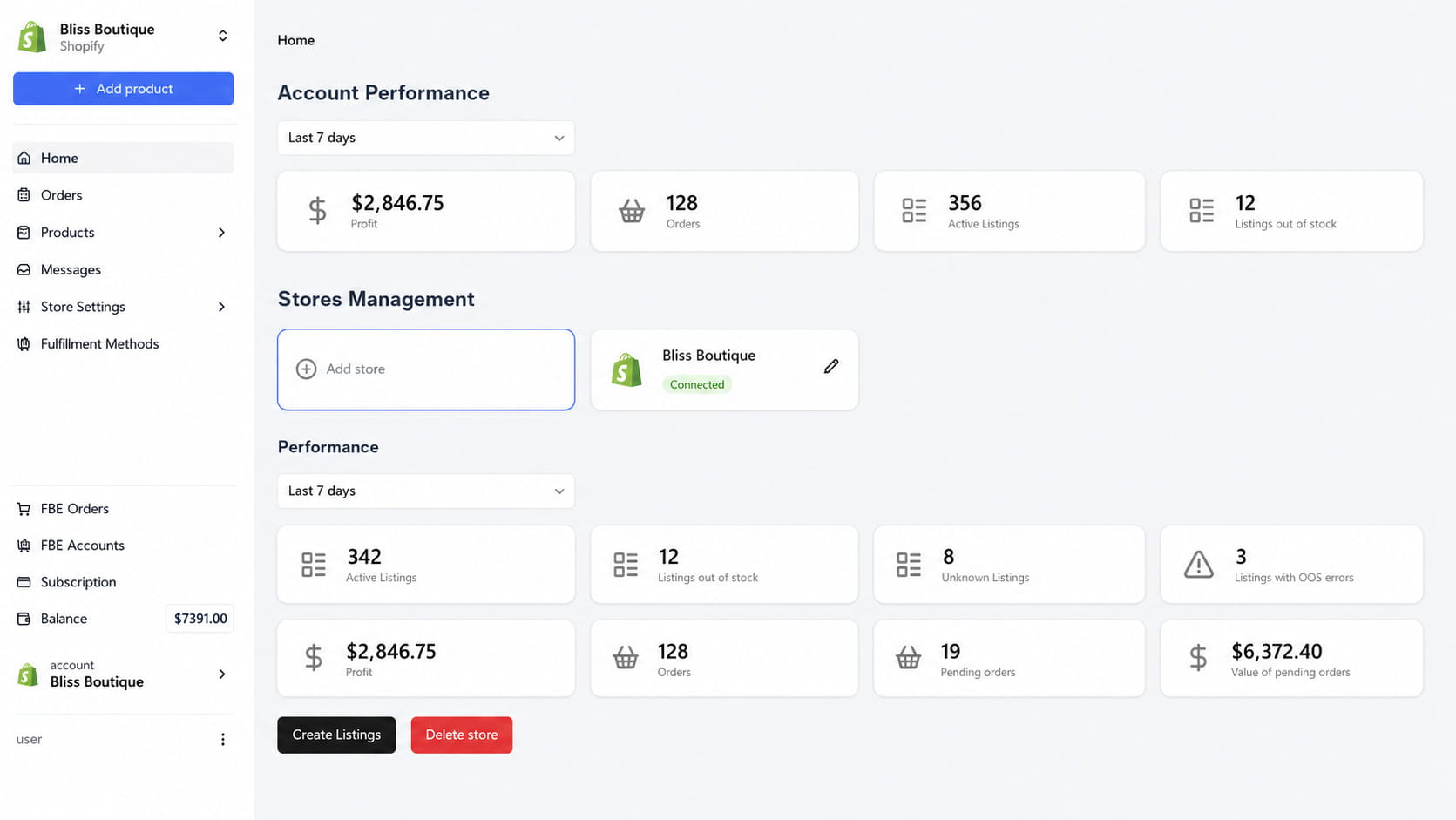
Everything above is manageable by hand right up until orders start arriving daily. Then the manual version quietly breaks. You’re checking a supplier’s stock page between customer emails, copying tracking numbers one at a time, and hoping nobody bought the thing that went out of stock an hour ago. A supplier can raise a price overnight, and if you don’t notice, you ship the next order at a loss.
This is the point where automation earns its keep, and it’s what Easync is built for. Easync is dropshipping automation software that works across eBay, Amazon, and Shopify, so the repetitive parts of running one or several stores stop depending on you being awake.
In practice it handles the tasks that cause the most damage when they slip. It imports products in bulk instead of one listing at a time. It watches supplier stock and prices in real time, so a sold-out item or a price spike gets caught before it reaches a customer. It places orders with your supplier automatically once a sale comes in, applies repricing rules that protect your margin when costs move, and syncs tracking numbers back to your store so buyers get updates without you touching anything.
Because it spans three sales channels at once, you can run an eBay presence, an Amazon listing, and a Shopify store from a single dashboard instead of juggling three tabs and a spreadsheet. If you want to see whether it fits your workflow, Easync offers a free trial — start a trial here and connect a store before committing to anything.
Learn More: How to Add a Shopify Store in Easync
SEO and Free Traffic Worth Building Early
Paid ads bring fast traffic and disappear the moment you stop paying. Content works the other way, slowly at first and then compounding, which is why the sellers who last usually build both.
A pet store can publish guides on harness sizing or safe car travel for dogs, then link those articles to the relevant products. Write real product titles and meta descriptions with the words shoppers actually type, and give your collection pages a paragraph of genuine copy instead of leaving them bare. None of this beats ads for speed, but over a year it can pull your customer acquisition cost down and make the store less fragile.
Pros and Cons of Shopify Dropshipping
The model is legitimate and the barriers are low, which is exactly why it attracts both serious builders and people chasing a quick win. An honest look at both columns keeps expectations where they should be.
| Pros | Cons |
|---|---|
| Low startup cost — no bulk inventory to buy | Thin margins that pricing and ad discipline have to protect |
| No warehouse, packing, or shipping on your end | Crowded niches where many stores sell the same items |
| Fast to test — you can validate a product in days | You depend on suppliers, and their mistakes land on you |
| Global reach from a single storefront | Longer delivery when suppliers are overseas |
| Runs from a laptop, anywhere with a connection | Limited control over packaging and branding |
Several of the downsides are operational rather than fundamental. Supplier price changes, stockouts, and slow tracking updates are precisely the failures that monitoring and auto-ordering tools are designed to catch, which is why so many stores treat automation as a cost of doing business rather than a luxury.
What Does It Cost to Start in 2026?
Dropshipping keeps your inventory cost near zero, but it isn’t free, and the sticker price of a Shopify plan is only part of the bill.
As of 2026, Shopify’s core plans are Basic at $39 a month, Grow at $105, and Advanced at $399, with roughly 25% off if you pay annually — Basic drops to about $29 that way. There’s a $5 Starter plan, but it only gives you checkout links rather than a full store, so most dropshippers want Basic. New accounts currently get three days free and then three months at $1 a month, though Shopify changes these offers often, so check the live pricing page before you sign up.
The costs people forget are the ones that scale with sales. On Basic with Shopify Payments, card processing runs about 2.9% plus 30 cents per online order, so a $50 sale costs you roughly $1.75 in fees before anything else. A custom domain is around $10 to $20 a year. Themes have free options like Dawn, or $100 to $400 once for a premium one. Apps range from free tiers up to $9–$99 a month each, and it’s easy to stack several without noticing.
Then there’s the money that actually decides whether you succeed: samples and marketing. Budget something for ordering products yourself, and expect to spend a few hundred dollars testing one or two ad channels before you find anything that converts. Because you aren’t tying cash up in stock, most of your budget can go here, which is the real advantage of the model over traditional retail.
A realistic first month for a careful beginner lands somewhere in the low hundreds of dollars, most of it marketing. Anyone promising you’ll be profitable in week one is selling a course, not describing reality.
How Much Can You Actually Make?
Income claims in this space are wildly inflated, so treat round numbers with suspicion. Shopify’s own commonly cited figure puts many dropshippers somewhere around $1,000 to $2,000 a month, with a smaller group scaling past $100,000 a year once they’ve nailed product, margins, and repeat customers. Those outcomes sit years apart in effort, not weeks.
Healthy stores tend to run 10% to 30% net margin after supplier cost, ads, fees, and refunds. Gross margin always looks prettier than net, and paid advertising is usually what closes the gap between the two.
Rather than chase an average, watch your own numbers. Cost to acquire a customer, refund rate, delivery time, net profit per order, and how often people come back tell you far more about whether a store is ready to scale than the top-line sales figure does. A store can post good-looking revenue and still lose money if the ad costs and refunds are quietly bleeding it.
Customer Service and Returns
Even though a supplier ships the box, your customer holds you responsible for everything inside it. That’s the part of the model beginners underestimate.
You’ll answer the “where’s my order” messages, process the refunds, and handle the returns. A workable approach when something goes wrong is to own the mistake first, make the customer whole with a refund or replacement, and then sort out the cost with your supplier afterward — a decent supplier covers their own errors. Trying to argue with the customer while you chase the supplier is how stores collect one-star reviews.
Most of this pressure eases if you set expectations before the sale. Clear shipping timelines, a fair return policy, and automatic tracking emails prevent a large share of support tickets from ever being written.
Common Mistakes That Sink New Stores
The failure pattern is remarkably consistent. Beginners import a product, slap the supplier’s photos on a page, and start spending on ads the same afternoon.
Copying supplier descriptions word for word is a slow killer, both for conversions and for SEO. Chasing whatever product is trending on TikTok this week, without checking margins or shipping times, is another. Launching with no shipping, returns, or contact pages tells careful buyers to close the tab.
The costliest mistake is scaling before the math works. A product can look profitable right up until you add ad spend, refunds, payment fees, and app costs, and only then does it turn out each sale loses a dollar. Get one channel genuinely profitable at a small scale before you pour money into it.
Frequently Asked Questions
Is Shopify dropshipping legal?
Yes. Dropshipping is a normal retail fulfillment arrangement, and Shopify fully supports it. The usual business rules still apply, though — register your business where your country requires it, report your income, and charge sales tax or VAT once you cross the relevant thresholds. Sell products you’re allowed to sell, and avoid counterfeits and trademarked goods.
How much money do I need to start dropshipping on Shopify in 2026?
A few hundred dollars is a realistic floor. That covers a Shopify plan, a domain, a couple of apps, some product samples, and a small first ad test. You aren’t buying inventory, so the bulk of that money should go toward testing products and traffic rather than toward the store itself.
Can I dropship from Amazon or eBay to Shopify?
You can, and this is where automation stops being optional. Keeping products, prices, orders, and tracking accurate across Amazon, eBay, and Shopify by hand is nearly impossible once volume picks up. Tools built for multi-channel selling, Easync among them, import products and then keep stock, pricing, and tracking in sync across all three from one place, which is the only sane way to run more than one marketplace at once.
How do returns work in dropshipping?
The customer contacts you, not the supplier, so you manage the conversation and the refund on your end and then coordinate the physical return according to your supplier’s policy. This is why reading a supplier’s return terms before you list their products — and writing a clear returns page — saves you real pain later. Vague policies produce disputes.
Is Shopify dropshipping still worth starting in 2026?
It’s worth starting, and it’s harder than it was five years ago. The easy wins on generic viral products are mostly gone. What still works is picking a real niche, treating the store like a brand, and being patient enough to build traffic that doesn’t vanish when you stop paying for it.
How many hours a week does this take?
Early on, expect something like 10 to 20 hours a week on setup, testing, and customer messages. Automation cuts the repetitive load considerably, but product research, marketing decisions, and customer care still need a human, so it’s a business rather than a passive income button.