Key Takeaways
- Affiliate marketing earns commissions by promoting other companies’ products through tracked links, while dropshipping sells physical products from your own online store without holding inventory.
- Both models have low startup costs and can be started quickly in 2026 with just a website, social media presence, or simple ecommerce store.
- Affiliate marketing is simpler and more hands-off with no customer support responsibilities, whereas dropshipping offers higher control over pricing, branding, and long-term customer relationships.
- Typical affiliate commissions range around 3–30%, while dropshipping profit margins often sit between 20–40% depending on niche and supplier relationships.
- Tools like Easync can automate much of the operational work in dropshipping, making it far more scalable with less manual effort.
Introduction: Affiliate Marketing vs Dropshipping in 2026
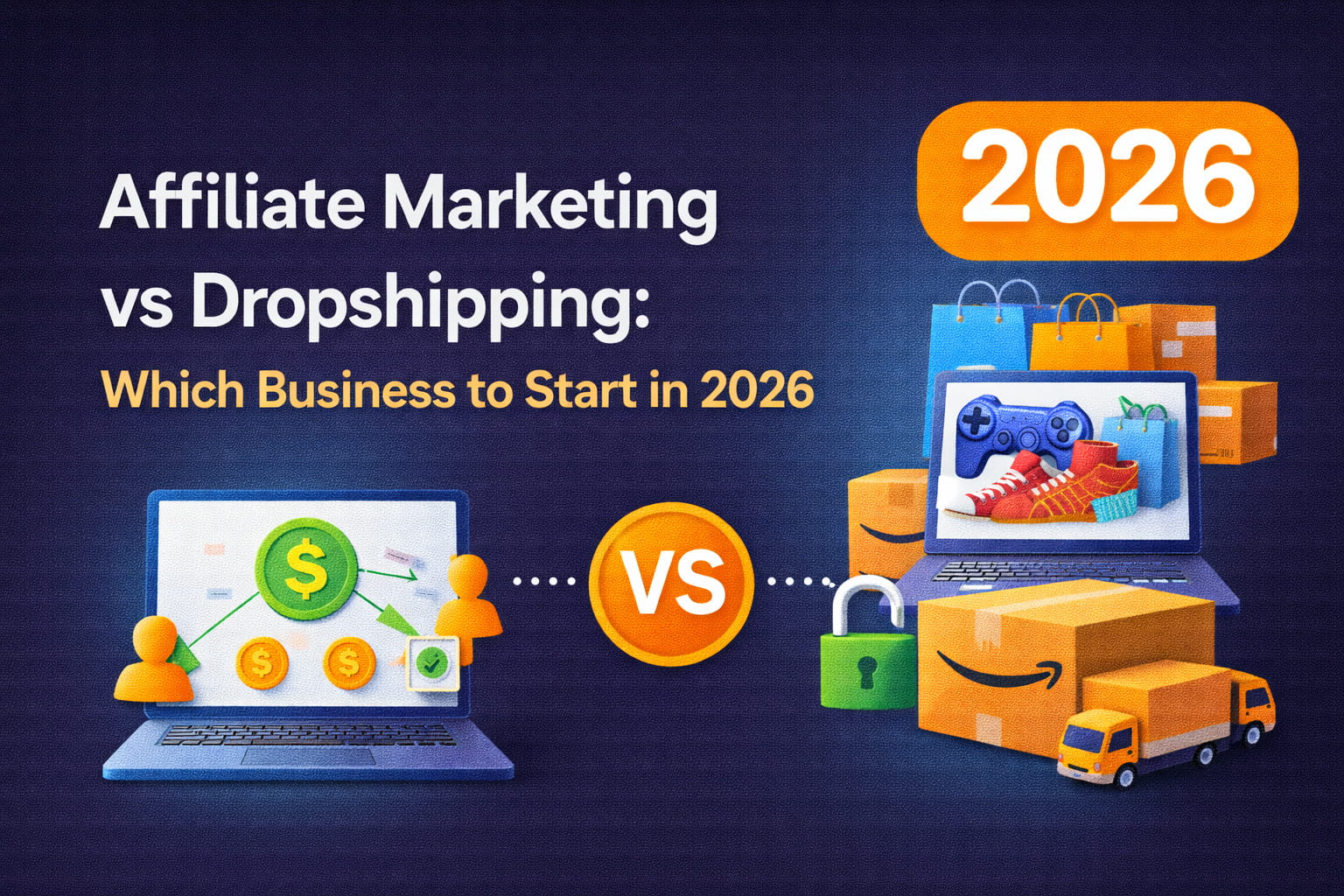
In 2026, affiliate marketing and dropshipping remain two of the fastest and cheapest ways to start an online business from home. Both let you earn money online without manufacturing products, managing warehouses, or investing tens of thousands upfront.
The global affiliate marketing business has grown into a $15+ billion industry, with projections exceeding $20 billion by 2030. Meanwhile, the dropshipping market is forecast to move toward the $400–500 billion range by the late 2020s, fueled by automation and improved supplier networks.
This article will compare how each business model works, their pros and cons, startup costs, earning potential, and who each is best suited for. The goal is to help you choose one model to start with in the next 30 days, not just give abstract theory.
Later, you’ll also discover how automation tools like Easync.io can simplify the dropshipping side of the equation for those who choose that path.
What Is Affiliate Marketing?
Affiliate marketing is a performance-based model where you earn a commission for promoting another company’s products or services via tracked links. You don’t create products, handle payments, or ship anything. The merchant owns the product and customer relationship entirely.
Here’s how affiliate marketing works in practical terms:
- You join an affiliate program or network (ShareASale, ClickBank, Amazon Associates, etc.)
- You receive a unique affiliate link with tracking parameters
- You promote products through content, reviews, or recommendations
- When someone clicks your affiliate link and makes an affiliate purchase, a cookie tracks the action
- You earn a commission—typically credited within 30–90 days depending on return windows
Tracking relies on cookies that last anywhere from 24 hours (Amazon) to 60+ days (many SaaS programs). Most affiliate programs use last-click attribution, meaning the final link clicked before purchase gets credit.
In 2026, common channels affiliates use include SEO blogs, TikTok and Instagram content, YouTube reviews, email newsletters, and comparison sites. For example, an affiliate marketer might create in-depth software reviews on their affiliate website, promoting tools through networks like ClickBank and earning 20–50% recurring commissions on subscriptions.
The key distinction: affiliates never handle payments, inventory or ship products, or customer support. You focus purely on marketing efforts and drive traffic to merchant offers.

Pros and Cons of Affiliate Marketing
Affiliate marketing is attractive for beginners due to low startup costs and low operational complexity. However, it comes with income volatility and limited control over the products you promote.
Advantages of Affiliate Marketing
- Minimal startup costs: Start with a domain, hosting, or even just social media. Many affiliates begin with a few hundred dollars or less.
- No inventory management: You never touch products. No warehousing, shipping fees, or logistics headaches.
- Multiple income streams: Join multiple suppliers and affiliate programs across different niches simultaneously.
- Geographic freedom: Work from anywhere with an internet connection.
- True passive income potential: Once content ranks or videos gain momentum, commissions flow with minimal ongoing effort.
Disadvantages of Affiliate Marketing
- Dependency on third parties: Merchants can change commission rates, close programs, or terminate affiliate partners without warning. Amazon famously cut rates across categories multiple times.
- Limited control: You can’t set your own prices or build direct customer relationships.
- Cookie and tracking limitations: Ad blockers and privacy changes reduce attribution accuracy.
- Slow initial income: First serious commissions often take 3–6 months of consistent content creation for new sites.
- Competition: Popular niches are saturated, requiring strong content marketing and SEO skills to stand out.
Success in the affiliate marketing route depends heavily on long-term audience building and quality content rather than fast paid advertising alone. Patience is essential most affiliate programs won’t make you rich overnight.
Comparison Table (Quick Reference)
| Metric | Affiliate Marketing | Dropshipping |
| Initial Investment | Very Low | Low to Moderate |
| Profit Margins | Fixed Commission | Flexible Markup |
| Customer Support | None (Handled by Brand) | You are Responsible |
| Complexity | Simple (Traffic focus) | Moderate (Store + Ops) |
What Is Dropshipping?
Dropshipping is an ecommerce business model where you list products in your own online store, and after a customer orders, a third-party supplier ships directly to them on your behalf. You never pre-purchase or hold store inventory.
The basic flow works like this:
- Customer places an order on your dropshipping store at the retail price you set
- You forward order details to your supplier
- Supplier ships the product directly to the customer
- You keep the margin between the selling price minus wholesale cost
For example, you might source a product at $10 wholesale and sell it at $30 retail. That’s a 67% gross margin before advertising and platform expenses.
Dropshipping can work with various product sources:
- Wholesale suppliers and manufacturers
- Apps like Collective, DropCommerce, and Syncee
- Print-on-demand providers
- Large marketplaces like AliExpress
Unlike affiliate marketing, with a dropshipping business model you own the customer list, control the storefront design, set your own prices, and build brand ownership. You’re responsible for providing customer service, handling returns, and managing the overall customer experience.
This is a real ecommerce store you just don’t handle fulfillment directly.
Pros and Cons of Dropshipping
Dropshipping offers higher control and earning potential than affiliate marketing, but demands more responsibility for operations and customer relationships.
Advantages of Dropshipping
- Higher profit margins: Achieve 20–50% gross margins by setting your own retail price and negotiating with reliable suppliers.
- Brand ownership: Build your own brand with a custom domain, design, and messaging.
- Customer ownership: Access to repeat business through email lists, upsells, and customer lifetime value strategies.
- Fast testing: Launch new products quickly with minimal risk since you don’t pre-purchase inventory.
- No pre-existing audience required: Paid advertising can generate customers and first orders within days.
Disadvantages of Dropshipping
- Managing customer service: You handle customer inquiries, refunds, and customer service issues even when problems originate with suppliers.
- Supplier dependency: Fulfillment delays averaging 10–30 days from overseas suppliers can damage your reputation.
- Operational complexity: More moving parts—payment processing, order routing, pricing strategies, and managing customer support.
- Competition: Popular products attract many sellers, compressing margins.
- Chargebacks and returns: Full liability for defects or late shipments, leading to 5–10% refund rates in some niches.
Operational stress points include handling lost packages, mismatched tracking, or product quality issues. While not your direct fault, these still impact customer experience and require structured processes to manage.
Affiliate Marketing vs Dropshipping: Direct Comparison
Understanding the core differences between dropshipping and affiliate marketing helps clarify which fits your situation. Here’s a side-by-side comparison:
| Factor | Affiliate Marketing | Dropshipping |
|---|---|---|
| Startup Cost | $0–$100 (domain, hosting) | $500–$5,000 (store, apps, ads) |
| Time to First Revenue | 2–6 months (organic) | Days to weeks (paid ads) |
| Typical Margins | 3–30% commission | 20–40% gross margin |
| Customer Ownership | No | Yes |
| Brand Building | Limited | Full control |
| Customer Service | None | Full responsibility |
| Inventory Risk | None | None (but supplier risk) |
| Scalability | High (content-based) | High (ad-based) |
Control
An affiliate marketer promotes pre-set offers with fixed commissions. You can’t adjust pricing or build direct customer relationships. The merchant controls everything post-click.
With a dropshipping model, you set your own prices, design your quality online store, build email lists, and own the brand. This creates a tangible asset you can sell or scale.
Responsibilities
Both affiliate marketing and dropshipping require strong digital marketing skills. But affiliates focus solely on driving traffic and conversions—no managing customer service, returns, or order fulfillment.
Dropshippers run a full lightweight ecommerce business. You’re responsible for support, refunds, order management, and maintaining supplier relationships. It’s more work, but you build something you fully own.
Time to Revenue
Dropshipping can generate initial sales in a few days with aggressive paid advertising. If your offers resonate and ads convert, revenue comes fast.
Affiliate marketing takes time without an existing audience. Building organic traffic through SEO or growing a social media presence typically means 3–6 months before meaningful commissions arrive. However, that content often generates customers future prospect for years.
Risk Profile
The affiliate model has almost no financial risk. If a program shuts down, you lose that income stream but haven’t invested capital. The risk is dependency on merchant growth prospect and algorithm changes.
Dropshipping carries more operational risk, ad spend that doesn’t convert, supplier failures, chargebacks. But you’re building an owned asset: brand, customer data, and store infrastructure worth real value.
Ease of Getting Started
Both models can be launched in under a week, but the steps differ in complexity.
Starting an Affiliate Marketing Business
The affiliate marketing route has minimal barriers:
- Pick a niche: Choose a topic you can create content about consistently
- Create a platform: Launch a blog on your own website, start a YouTube channel, or build social media presence
- Join affiliate programs: Apply to relevant affiliate programs or networks (Amazon Associates, ShareASale, ClickBank)
- Create content: Publish reviews, comparisons, tutorials, and recommendations with your unique affiliate link
- Drive traffic: Use SEO, social media, or email to attract visitors
Practical tools that lower barriers:
- WordPress or similar blogging platforms
- Email marketing services for newsletter monetization
- Link management plugins
- SEO tools for keyword research
Most affiliate programs are free to join. You can start affiliate marketing with essentially zero capital if you’re willing to invest time instead.
Starting a Dropshipping Business
Setting up a dropshipping store requires more initial configuration:
- Choose a niche: Research market trends and product demand
- Register a domain: Secure your brand name
- Build your ecommerce store: Use Shopify, WooCommerce, or similar platforms
- Connect with suppliers: Find reliable suppliers through apps or direct outreach
- Configure payments: Set up payment processing for credit cards
- Design product pages: Create compelling listings with strong imagery
- Launch advertising: Begin paid advertising to generate customers
The dropshipping business model requires more upfront work but provides more business-building opportunities from day one. You’re creating an own online store—a real commercial asset.
Skills You Need for Each Model
Both models require core digital marketing skills, but they emphasize different strengths.
Skills for Affiliate Marketing
- SEO and content creation: Writing articles, creating videos, understanding search algorithms
- Persuasive copywriting: Convincing readers to click and purchase products
- Audience building: Growing email lists, social media following, or website traffic
- Analytics: Tracking click-through rates, conversions, and optimizing content
- Transparency and credibility: Building trust so recommendations convert
Strong credibility matters because affiliate marketing works through trust. Readers follow recommendations from people they believe have their interests in mind.
Skills for Dropshipping
- Product research: Identifying winning products with profit potential
- Paid advertising management: Running Facebook, TikTok, and Google ad campaigns profitably
- Conversion rate optimization: Improving store design, product pages, and checkout flow
- Customer service systems: Handling customer inquiries efficiently
- Operations management: Creating SOPs for order handling, returns, and supplier communication
Dropshippers benefit from basic operations skills—systematizing repetitive tasks prevents burnout as order volume grows.
Investment and Ongoing Costs
Both models can start for a few hundred dollars or less, but their cost structures differ over time.
Affiliate Marketing Costs
| Expense | Initial Cost | Monthly Cost |
|---|---|---|
| Domain | $10–$15/year | — |
| Hosting | $50–$100/year | $5–$10 |
| SEO tools | — | $0–$100 |
| Email marketing | — | $0–$50 |
| Paid promotion (optional) | — | Variable |
Many affiliates start almost entirely with organic channels, trading money for time and patience while content matures. The low risk business models category includes affiliate marketing because you can test niches freely without significant investment.
Dropshipping Costs
| Expense | Initial Cost | Monthly Cost |
|---|---|---|
| Platform (Shopify) | — | $29–$79+ |
| Domain | $10–$15 | — |
| Apps and tools | — | $50–$200 |
| Product samples | $50–$200 | — |
| Paid advertising | — | $500–$5,000+ |
| Customer support VA | — | $200–$500 |
Dropshipping usually requires more consistent monthly spend, especially on ads. However, it also opens up faster, more direct revenue growth when campaigns perform well. Expect 1–3 months of losses while optimizing ad spend before reaching profitability.
Earning Potential and Profit Margins
Both models can reach six or even seven figures over time, but their profit structures are quite different.
Affiliate Marketing Income
Commission ranges vary widely:
- Physical products: 3–10% (Amazon averages 1–4%)
- Digital products: 20–50%
- SaaS and subscriptions: 20–50% recurring commissions
Affiliate income is often more passive once content ranks or videos gain momentum. Top affiliates in software niches earn $10,000+ monthly through recurring commissions. However, income depends heavily on maintaining traffic and relationships with programs.
The challenge: lower profit margins per sale require high volume. You need substantial traffic to generate significant income.
Dropshipping Income
Dropshippers typically aim for:
- 20–40% gross margins per product
- Net profit of 15–25% after ad costs and overhead
- Higher absolute profits per sale on high-ticket items
A beginner dropshipping store might generate $50,000 in first-year revenue but net $10,000 after advertising costs. Variance is high—80% of dropshippers fail in year one due to ad costs exceeding revenues.
The advantage: dropshippers can increase customer lifetime value via email marketing, upsells, and repeat business. Unlike affiliates, you control pricing strategies and can build relationships that generate recurring purchases without new acquisition costs.

Automating Dropshipping with Easync.io
Easync.io stands out as one of the best services for automating dropshipping operations in 2026. The platform streamlines key workflows through intelligent automation: product importing from major marketplaces, real-time price and stock monitoring, automatic order placement with suppliers, and tracking number updates back to customers.
Using AI-driven trend analysis across platforms like TikTok and Google Trends, Easync.io helps identify high-demand, low-competition items, reducing the guesswork in product research. By eliminating manual listing edits and order placements, a solo dropshipper can manage hundreds or thousands of SKUs without the daily grind that typically burns out new store owners.
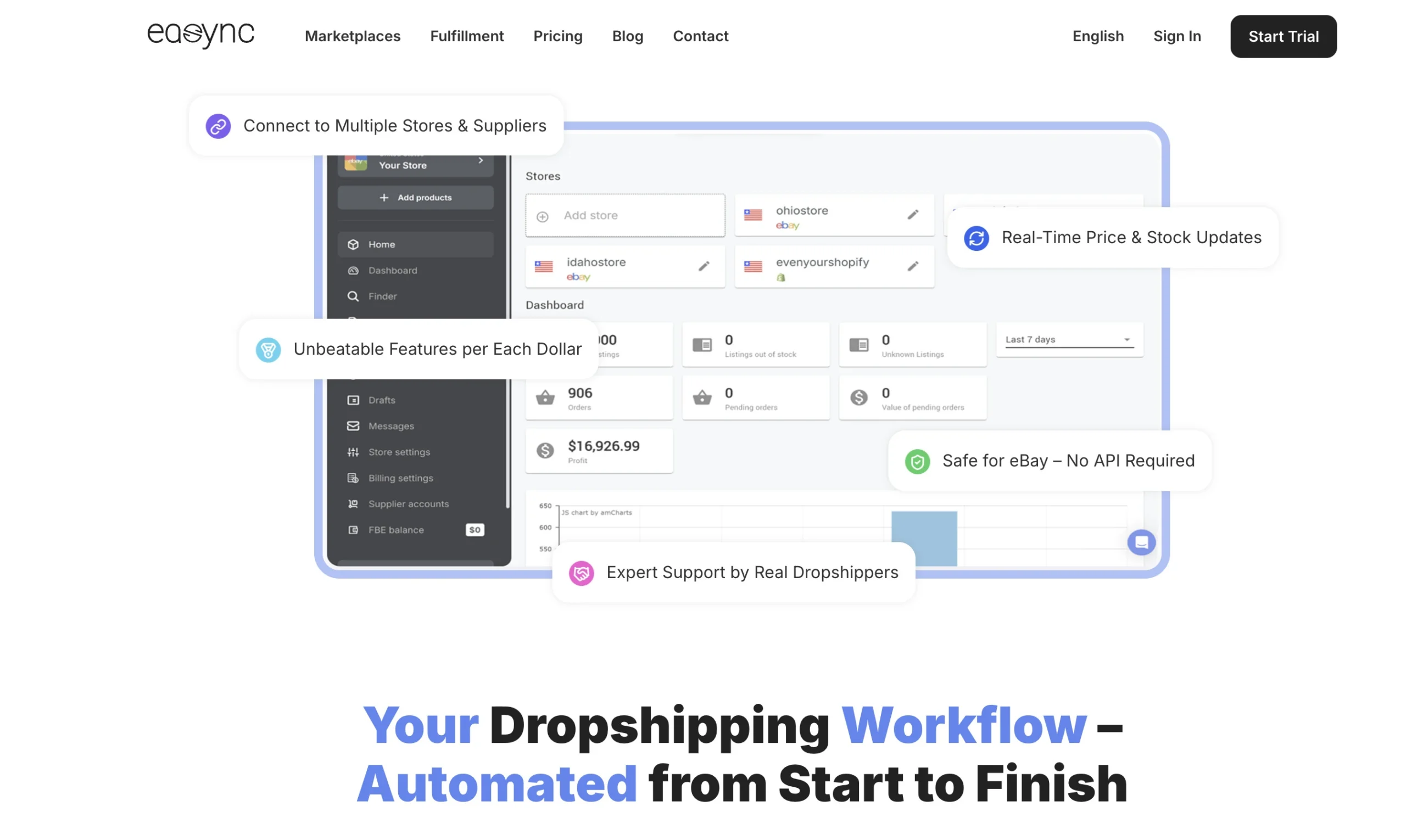
Users report 3x faster store launches and 25% higher net profits by cutting manual sourcing time from hours to minutes. For readers who decide dropshipping is their preferred model, Easync.io represents a practical next step to systematize operations from the beginning—letting you focus on marketing, branding, and scaling rather than repetitive admin work.
Which Model Should You Choose?
There is no one-size-fits-all winner between dropshipping and affiliate marketing. The choice depends on your personality, resources, and goals.
Choose affiliate marketing if you:
- Enjoy writing, video creation, and community building
- Are comfortable playing the long game for compounding traffic
- Want passive income potential with minimal ongoing operations
- Prefer promoting products without handling customer service responsibilities
Choose dropshipping if you:
- Prefer data-driven testing and rapid iteration
- Want to build your own brand with brand ownership
- Are willing to manage operations and customer experience
- Have budget for paid advertising to generate customers quickly
Scenario Matching
| Scenario | Recommended Model |
|---|---|
| Student with limited capital | Start affiliate marketing—build content while studying |
| Creator with existing audience | Affiliate marketing—monetize immediately with relevant offers |
| 9-5 worker with ad budget but little time | Dropshipping with automation (Easync)—systems handle operations |
| Agency owner wanting new revenue | Both—affiliate content attracts traffic, dropshipped products maximize revenue |
Some entrepreneurs eventually combine both affiliate marketing and dropshipping. They use affiliate content to attract organic traffic, then offer their own dropshipped products to maximize revenue per visitor. Starting with one model doesn’t lock you in forever.
FAQ
Is affiliate marketing or dropshipping better for making money fast?
Dropshipping usually offers a faster path to initial revenue if you can afford to test paid advertising. Some stores see first sales within days of launch, though profitable consistency typically takes 3–6 months of optimization. Affiliate marketing takes longer starting from zero because you must first build traffic or followers, first meaningful commissions often appear after 2–4 months of consistent content. Fast income carries higher risk in either model, so neither should be relied upon for emergency cash. Readers with absolutely no budget and more time than money will find affiliate marketing a more realistic starting point.
Do I need to show my face to do affiliate marketing or dropshipping?
Neither model strictly requires showing your face. Many affiliates run anonymous niche blogs or faceless YouTube channels with voiceovers and stock footage. Many dropshippers operate behind brand names without personal branding—focusing on product and lifestyle imagery rather than the founder. Showing your face and building a personal brand can increase trust and conversion rates, especially for affiliate reviews and educational content, but it’s optional. Choose a visibility level you’re comfortable sustaining for years rather than forcing a style that feels unnatural.
Can I switch from affiliate marketing to dropshipping (or vice versa) later?
Transitioning between models is common as skills and resources grow. Many affiliates later launch their own dropshipping brands, and many dropshippers add affiliate content to monetize visitors who don’t purchase products. Audience-building skills from affiliate marketing—SEO, content creation, email marketing, transfer directly to dropshipping, helping reduce ad dependence. Ecommerce experience from dropshipping grounds your recommendations when you later promote tools and platforms as an affiliate. Start with the model matching your current constraints, knowing you can layer or pivot after validating demand.
Is it realistic to run affiliate marketing or dropshipping part-time?
Both models can be started part-time alongside a job or studies, but expectations must be realistic—progress will be slower than for someone working full-time. Affiliate marketing is generally easier to maintain on limited hours because content can be batched and automated, with fewer daily operational tasks. Dropshipping on limited time works best when supported by automation tools like Easync.io and clear processes for handling orders and support quickly. Aim for a consistent weekly time budget—10–15 hours—and focus on one main growth channel at a time to avoid spreading efforts too thin.
Do I need a business registration or company to start?
In many countries, you can start as a sole proprietor for both affiliate marketing and dropshipping, then formalize into a company once income becomes regular or hits tax thresholds. Dropshipping often triggers earlier formal registration because you take payments directly from customers, handle VAT or sales tax, and may need business accounts with payment processors. Check local laws or consult an accountant regarding tax obligations, invoicing rules, and consumer protection requirements in your specific country. Treating either model as a real business from day one—tracking income, expenses, and legal obligations makes scaling and future transitions smoother.

Noah Edis is a freelance writer and systems engineer with a wealth of experience in modern hardware and software. When he’s not working on his latest project, you can find him playing competitive dodgeball or pursuing his personal interest in programming. At Easync, Noah helps thousands of sellers optimize their eBay and Amazon businesses by providing automation tools and practical guidance on account health, pricing, and inventory management.