
- articles
eBay Selling Tips: Sell Faster & Maximize Profit
Key Takeaways
- Beginners can sell on eBay profitably by using good photos, keyword-rich titles, complete item specifics, and a fair price based on sold listings.
- Shipping costs can make or break profit. Free shipping can work, but only when postage and packaging are built into the price.
- A great ebay listing builds trust, improves visibility, and increases your chances of a sale.
- Fast replies, honest product descriptions, and clear return rules help prevent negative feedback and increase buyer confidence.
- Automation tools like Easync help serious sellers save time, manage inventory, and scale across multiple marketplaces.
Introduction: Why Selling on eBay Still Works in 2026
eBay still works in 2026 because it has a massive buyer base: reports place eBay at about 135–136 million active buyers worldwide, with Q1 2026 GMV around $22.2 billion. That means there are still interested buyers for used clothes, collectibles, refurbished electronics, new items, and almost anything with proven demand.
This guide focuses on practical ebay selling tips for beginners and small sellers who want to save money, avoid common mistakes, and turn extra money into a serious side hustle or business. You’ll learn how to choose a product line, create better listings, set the right price, manage shipping, answer questions, build feedback, and use tools when you’re ready to scale.
Quick-Start: How to Sell on eBay in 10 Simple Steps
Here is the short version if you want to start selling this week:
- Create an ebay account and connect your bank account for payouts.
- Research similar items using Sold and Completed listing filters.
- Take pictures in daylight from multiple angles.
- Write a title with brand, model, size, color, and condition.
- Fill out item specifics with all necessary information.
- Write a short description with important details and flaws.
- Choose auction or Buy It Now.
- Set shipping cost, postage, carrier, and handling time.
- Post the listing and check how it appears in search results.
- Answer questions quickly, ship fast, and confirm the buyer receives tracking.

What Beginners Need to Start Selling on eBay in 2026
Before creating your first listing, make sure the basics are ready. Selling on eBay is not only about uploading a product photo. Beginners also need a working account, a payout method, basic product research, clear photos, accurate item specifics, and a simple plan for shipping, returns, and tracking.
| What you need | Why it matters | Beginner action | Common mistake to avoid |
|---|---|---|---|
| eBay account | Gives you access to listing, selling, and payout tools | Create an account and complete any verification steps | Listing too many items before the account is ready |
| Bank account for payouts | Lets eBay send your earnings after a sale | Connect a valid bank account before listing | Spending expected profit before payouts clear |
| Product research | Helps you price based on real demand | Check Sold and Completed listings | Pricing from active listings only |
| Clear product photos | Builds buyer trust and improves clicks | Take original photos from multiple angles | Using blurry photos or hiding flaws |
| Keyword-rich title | Helps your listing appear in eBay search | Include brand, model, size, color, and condition | Writing vague titles like “nice item” |
| Item specifics | Helps buyers find your listing through filters | Fill in brand, size, condition, model, and category details | Leaving important fields empty |
| Shipping plan | Protects profit and buyer satisfaction | Weigh the item and choose postage before publishing | Offering free shipping without adding the cost |
| Return policy | Reduces hesitation and disputes | Set clear return terms before the sale | Making return rules unclear |
| Basic tracking system | Keeps orders, costs, and profit under control | Use a spreadsheet or automation once volume grows | Managing sales from memory |
Once these basics are in place, beginners can list products with fewer mistakes and better profit control. Start with a few simple items, learn how buyers respond, and improve your pricing, photos, shipping, and customer service before scaling into higher-volume selling.
Choosing What to Sell on eBay
Picking the right item is half the battle. Beginner-friendly categories include used phones, branded clothing, video games, headphones, smart watches, sneakers, vintage toys, trading cards, and small electronics.
Before you create a listing, search the item on eBay, then filter by Sold listings and Completed listings. This shows what actually sold, not just what sellers hope to get. For example, a 2019 Nike hoodie may sell around a much stronger price than a generic hoodie because the brand creates search demand.
Avoid restricted or prohibited items, including counterfeit branded goods, some health products, weapons, and certain cosmetics. Check eBay’s prohibited and restricted items policy before you sell things in an unfamiliar category.
Creating High-Converting eBay Listings
A great eBay listing not only displays your product, but it also builds trust, improves visibility, and increases your chances of a sale. Your title, pictures, item specifics, and description all matter because potential buyers compare you against other sellers in seconds.
Write Keyword-Rich Titles That Match Buyer Searches
Using a keyword-rich title that includes the brand name, item type, size, and condition can significantly improve your listing’s visibility in search results. Use the full title space when possible and avoid empty words like “wow,” “nice,” or “awesome.”
Weak title: “Nice Shoes”
Strong title: “Nike Air Force 1 Men’s Size 11 White 2023 – Excellent Condition”
Another strong example: “Apple iPhone 12 64GB Black Unlocked – Very Good Condition.”
Scan top-selling listings and adapt common keywords. Do not copy another user word-for-word, but do learn which details buyers search for.
Use Clear, Honest Photos That Build Trust
High-quality, well-lit images taken from multiple angles can help customers feel confident in what they’re purchasing, making them more likely to buy. Use daylight, a neutral background, and close-ups of tags, serial numbers, flaws, packaging, and special features.
eBay allows up to 24 images per listing, and sellers should take full advantage of this by showcasing their items from multiple angles and highlighting unique features. For used or higher-priced products, aim for at least 6–8 good photos.
Light smartphone editing is fine: crop, brighten, and straighten. Do not hide damage or make colors look wrong.

Fill Out Item Specifics Completely
Item specifics are structured fields such as brand, size, color, model, style, material, and condition. Buyers often filter search by these details, so incomplete fields can keep your ebay listing out of filtered results.
For Levi’s jeans, enter information such as waist, inseam, fit, wash, color, and style number. Accurate item specifics reduce buyer questions and help prevent “item not as described” returns.
Write Descriptions That Inform, Not Overwhelm
Detailed and transparent item descriptions that include dimensions, materials, and any flaws can boost buyer confidence and reduce returns. Keep the description simple: what it is, condition, what’s included, and anything the buyer should know.
Example description:
“Used Nintendo Switch Pro Controller in good working condition. Light surface wear from normal use. No repairs. Includes controller and USB charging cable; original box not included. Please review all pictures before purchase.”
Use plain language, short paragraphs, and no all-caps. The description should match the photos and item specifics exactly.
Pricing Strategy: Auctions, Buy It Now, and How to Save Money on Fees
Pricing is where many beginners get stuck. If the price is too high, your listing sits. If it is too low, fees, shipping, and packaging erase your profit.
eBay’s final value fees often land around 12.7%–15.3% depending on category and store status, plus a small per-order fee. Sellers also need to watch any listing fee after free monthly listing allowances.
Use sold data from the last 30–60 days. If five similar items sold between $38 and $45, pricing at $80 usually will not work unless yours has a clear benefit.
When to Use Auctions on eBay
Auction-style listings can work well for rare, collectible, or in-demand items, allowing the market to determine the final price and potentially sparking bidding wars that drive up the sale amount. Auction listings are useful when recent prices vary widely or there are not many comps.
A 7-day auction ending on Sunday evening can attract more bidders. For valuable items, consider a reserve price so the item does not sell below your minimum.
Avoid auctions for mass-produced products with hundreds of identical listings. Those usually perform better with Buy It Now.
When to Use Buy It Now (Fixed Price)
On eBay, 88% of sales happen through Buy It Now (BIN) listings, which work well for high-volume, lower-value, or evergreen items where buyers are looking for quick and predictable transactions.
Buy It Now is best for clothing, accessories, electronics, and everyday products with clear market prices. Price slightly above average if you want room to accept offers.
Worked example: You sell a used Nintendo Switch game for $40, and the buyer pays $5 shipping. Total sale is $45. If fees are about 13.25%, that is $5.96 plus a small order fee. If the label costs $5 and your purchase cost was $15, your rough profit is about $23 before supplies.
Managing Shipping Cost, Packaging, and Delivery Speed
Shipping can make or break your profit. Many beginners undercharge and lose money, while others overcharge and scare away potential buyers.
In 2026, a 1 lb U.S. package often costs roughly $8–$12 depending on carrier, distance, and service. Use eBay’s calculator and weigh packages before listing whenever possible.
Setting the Right Shipping Cost
Calculated shipping lets eBay determine the shipping cost automatically based on the buyer’s location, package size, and carrier, ensuring buyers pay a fair rate. It is useful for heavy or bulky items.
Flat-rate shipping works when the package size is predictable. Free shipping works best for small items when the cost is built into the item price.
Listings with free shipping are favored by eBay’s Best Match search algorithm, and 71% of eBay purchases include free shipping, which can boost visibility and drive conversions. Free shipping is a proven way to boost visibility and drive conversions, with 71% of eBay purchases including free shipping.
Use discounted eBay labels when available to save money compared with retail counter rates.
Packaging to Protect Items and Your Reputation
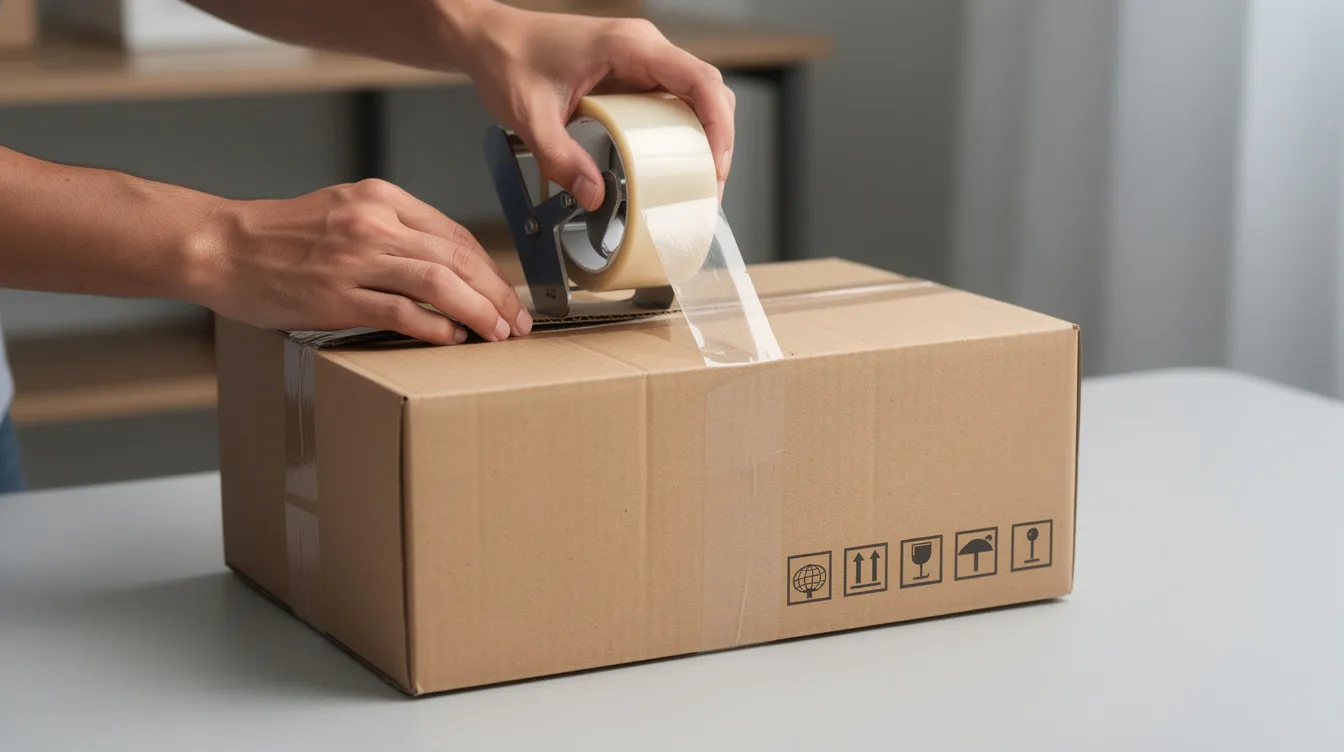
Use bubble mailers for small durable goods and sturdy boxes for fragile products. Double-box glass, collectibles, and electronics. Add padding so the item cannot move inside the box.
Good packaging reduces damage-related returns and protects feedback. Recycled materials can save money, but the package should still look professional.
Customer Service: Answer Questions, Handle Issues, and Build Feedback
Buyers rely on seller feedback and communication speed, especially when comparing similar items. According to buyer behavior research commonly cited in ecommerce, 72% of buyers say they only purchase after reading positive reviews, making seller feedback critical for building trust.
Respond within 24 hours when possible. Give clear answers, keep all communication on eBay, and update the listing if the same question appears repeatedly.
eBay allows sellers to set their own return policies, although it is suggested that sellers do offer returns to increase buyer confidence and improve conversion rates. You can accept returns for 30 days in many categories, inspect returned products carefully, and stay firm but fair.
20-30% of satisfied buyers leave feedback, whereas unhappy buyers speak up 90% of the time, highlighting the importance of excellent service to maintain a positive reputation. Achieving Top Rated Seller status on eBay enhances visibility, seller protections, and access to exclusive benefits, which can significantly boost sales.
Automating and Scaling: Using Easync for Smarter eBay Selling
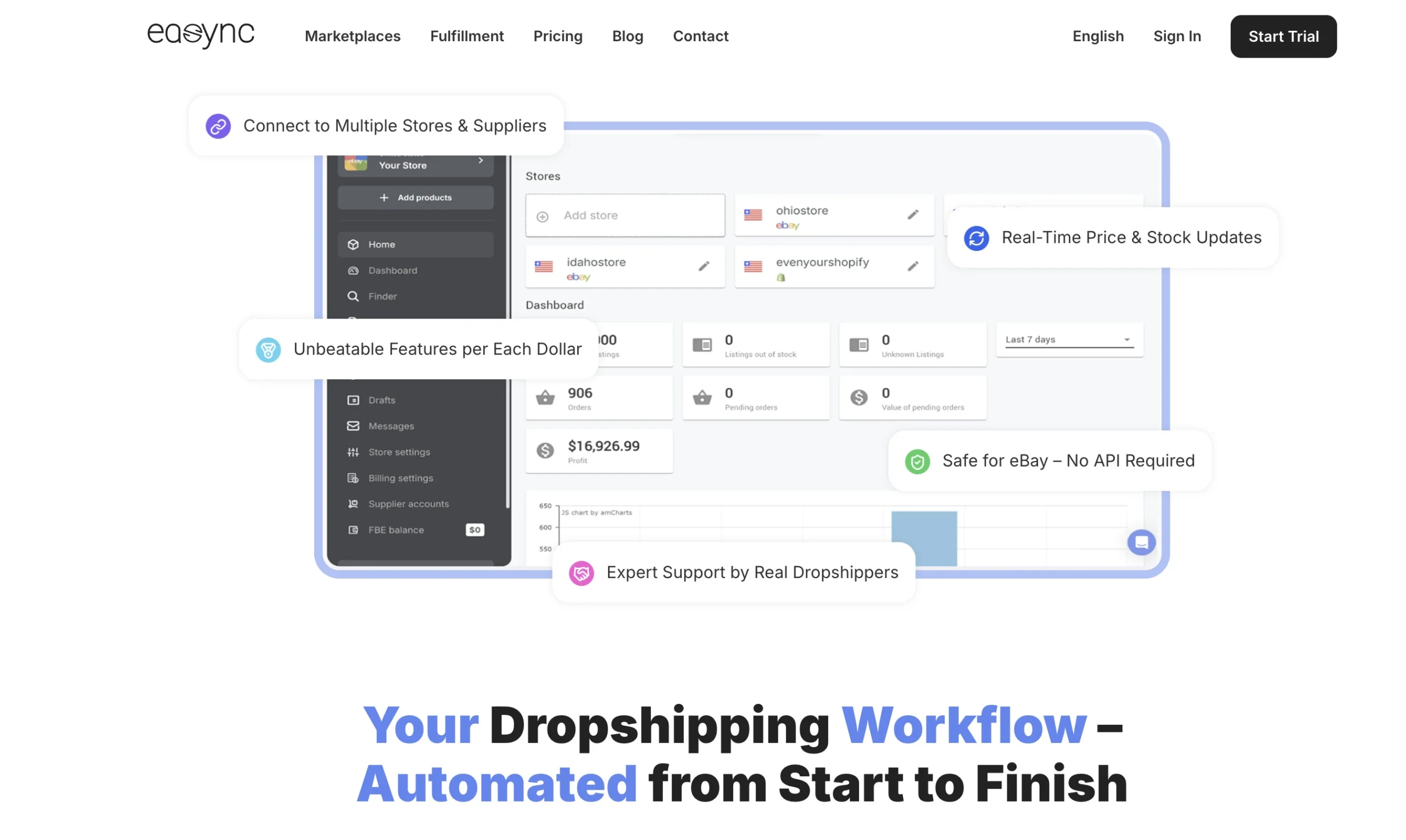
For ebay selling tips and tips for selling on ebay for beginners who want to grow beyond a few casual listings, it is useful to use Easync automation. Dropshipping software Easync supports automated product importing, real-time stock and price monitoring, auto-ordering, repricing rules, tracking synchronization, and multi-account workflows. These features help sellers manage inventory, reduce overselling, keep pricing in line, forward orders to suppliers, sync tracking so the buyer receives updates, and manage multiple marketplaces or accounts from one workflow.
A smart path is to start manually, learn what sells, then add Easync once sales become consistent. Automation can save time, prevent stock mistakes, and let you focus on product research, customers, and better listings.
Routine Maintenance: Tracking Results and Improving Over Time
Successful selling is not a one-time setup. Review Seller Hub weekly to see which items generate sales, which sit unsold, and where profit disappears.
To effectively manage inventory on eBay, sellers should keep detailed records of each product sold, which simplifies analysis of sales and profitability. Track purchase cost, fees, shipping, packaging, sale price, and final profit.
Using an integrated inventory system can help sellers manage their online store and eBay listings in one place, reducing the risk of overselling and improving efficiency. Sellers should aim to list new items daily on eBay, as consistent activity can improve visibility in search results and signal reliability to the platform.
Test one change at a time: photos, price, shipping, or title. Measure results for 30 days before deciding what worked.
FAQ: Common Questions About Selling on eBay
Do I need a business to start selling on eBay, or can I use a personal account?
You can start with a personal account if you only want to sell things from home. Upgrade to a business account when you sell regularly, operate under a brand name, or need better reporting. Check local tax rules because casual selling can become business activity depending on volume and profit.
How often does eBay pay out my earnings?
In 2026, eBay payouts can usually be set to daily or weekly once payments clear and orders are not on hold. Funds go to your linked bank account. New sellers may see temporary holds until they prove reliable shipping and positive feedback.
Are there limits on how much a beginner can list and sell on eBay?
Yes. New sellers often have monthly selling limits based on item count and total value. These limits can increase after you ship on time, avoid defects, and maintain good feedback. Start small, learn the process, then request higher limits when ready.
Is it safe to ship internationally as a new eBay seller?
Offering international shipping can expand the number of potential buyers and increase sales opportunities for sellers on eBay. However, it also adds customs forms, longer delivery times, and higher shipping cost. Beginners should usually master domestic shipping first, then use eBay’s international programs where available.
What should I do if a buyer doesn’t pay or stops responding?
Send a polite reminder through eBay messages. If the buyer still does not pay, follow eBay’s current unpaid order process and cancel after the required waiting period. Then relist the item and block repeat non-payers if necessary.