Every week, thousands of new sellers Google “how to start Amazon to eBay dropshipping.” Most of them get halfway through a tutorial, get scared by the policy warnings, and quit before they ever list a single product.
I’ve been doing Amazon to eBay arbitrage for years. I’ve seen accounts get banned, and I’ve also seen sellers run stores with 50,000+ listings without a single suspension. The difference was never luck, it was knowing exactly how the model works, where the real risks are, and which tools remove those risks entirely.
This guide gives you the full picture: what’s actually allowed in 2026, how to find profitable products, how to calculate your real margin after all fees, and how to automate the process so you’re not glued to your screen repricing listings at midnight.
Let’s get into it.
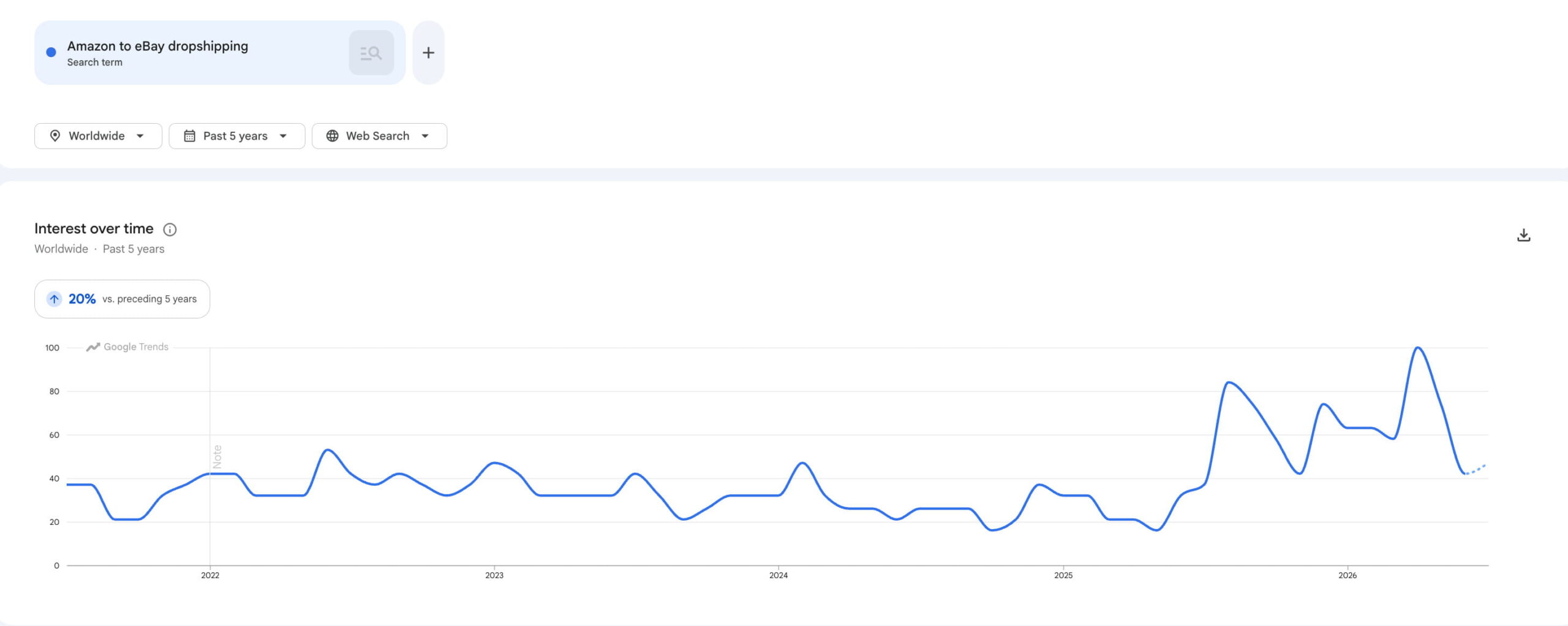
Your only job is to accept an order while your supplier fulfills it, and if you’ve been thinking about venturing into dropshipping, you might want to try out Amazon to eBay arbitrage.
What is Amazon to eBay Dropshipping, Arbitrage?
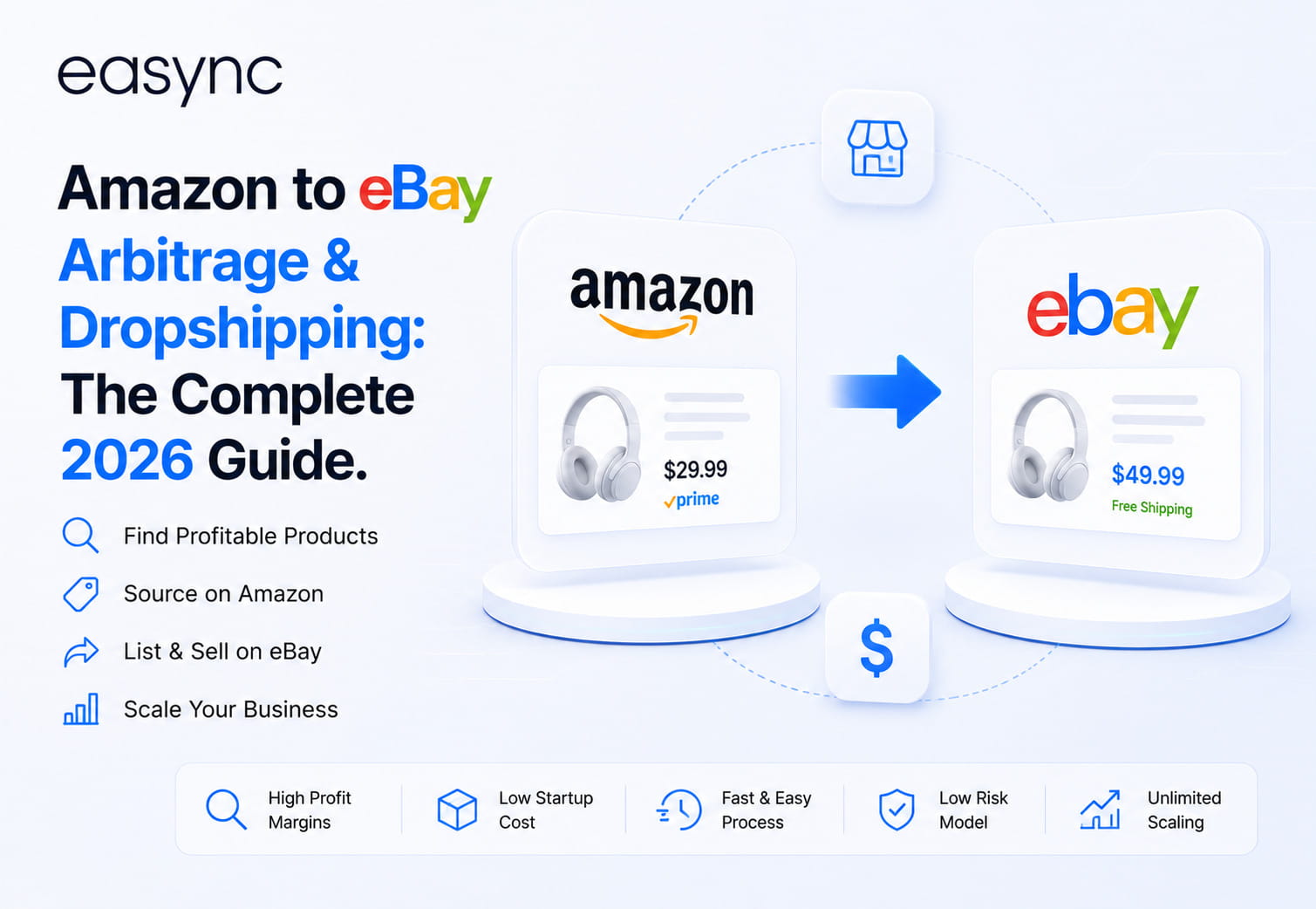
Amazon to eBay dropshipping sometimes called retail arbitrage is a business model where you list products on eBay at a higher price than they sell for on Amazon. When a buyer purchases from you on eBay, you place the same order on Amazon using the buyer’s shipping address. Amazon ships the product directly to your customer. You keep the price difference as profit.
Here’s a simple breakdown of the flow:
- You find a product on Amazon priced at $28.00
- You list it on eBay for $39.99
- A buyer purchases from your eBay store
- You order from Amazon using the buyer’s address
- Amazon ships directly to the buyer
- You collect ~$6-8 net profit after eBay fees
The key appeal: you never touch the product, never hold inventory, and never pay for stock upfront. You only buy when you’ve already been paid.
The term “arbitrage” specifically refers to profiting from the price gap between two markets in this case, Amazon (cheaper) and eBay (buyer willing to pay more for convenience, faster shipping, or simply because they don’t know Amazon sells it for less).
The difference between dropshipping and arbitrage in this context: They’re often used interchangeably, but arbitrage implies you’re actively hunting for price gaps, while dropshipping refers to the fulfillment method. In practice, most sellers do both simultaneously.
Is dropshipping from Amazon to eBay legal?
This is the question that stops most beginners. Let me give you a straight answer: it’s not illegal, but both platforms have policies that complicate it.
What eBay’s Policy Actually Says
eBay updated its dropshipping policy in 2023–2024 with one major change: retail dropshipping is now officially prohibited. Their exact position is that you cannot source products directly from another retailer (like Amazon or Walmart) and have those items shipped to your eBay buyers.
eBay explicitly allows dropshipping only when:
- You work with a wholesale supplier who has authorized you to resell their products
- You are the seller of record — responsible for the sale and customer satisfaction
- You can fulfill orders on time and as described
In practice, thousands of sellers still source from Amazon every day. eBay’s enforcement focuses on outcomes — late shipments, Amazon-branded boxes, customer complaints rather than proactively auditing your supplier. The risk isn’t the model itself; it’s doing it sloppily.
What Amazon’s Policy Says
Amazon’s terms prohibit using their platform to fulfill orders on behalf of another marketplace. They specifically restrict the use of Prime accounts to buy products for resale on platforms like eBay.
Again, Amazon doesn’t have a mechanism to detect this unless your purchase patterns trigger a flag (sudden volume spikes, multiple addresses, gift card payments).
The Bottom Line
The model operates in a gray area, and people make real money in it. The risk is real but manageable with the right approach:
| Risk | How to mitigate |
|---|---|
| eBay account suspension | Use automation tools that keep tracking, messaging, and metrics clean |
| Amazon account flag | Use managed purchasing accounts (e.g., Easync FBE) instead of your personal Amazon |
| Amazon-branded packaging | Configure all orders as gift orders — no invoice, no Amazon branding visible |
| Late delivery defects | Use auto-ordering tools that place orders within minutes of a sale |
| Price loss on Amazon spike | Use real-time repricers that update your eBay listing instantly |
The sellers who get banned are the ones doing this manually. When you’re manually placing 50 orders a day, you inevitably miss a price change, forget a tracking number, or ship 3 days late. Automation closes all of these gaps.
WHY AMAZON AS SUPPLIER
Why Amazon Makes an Exceptional Supplier
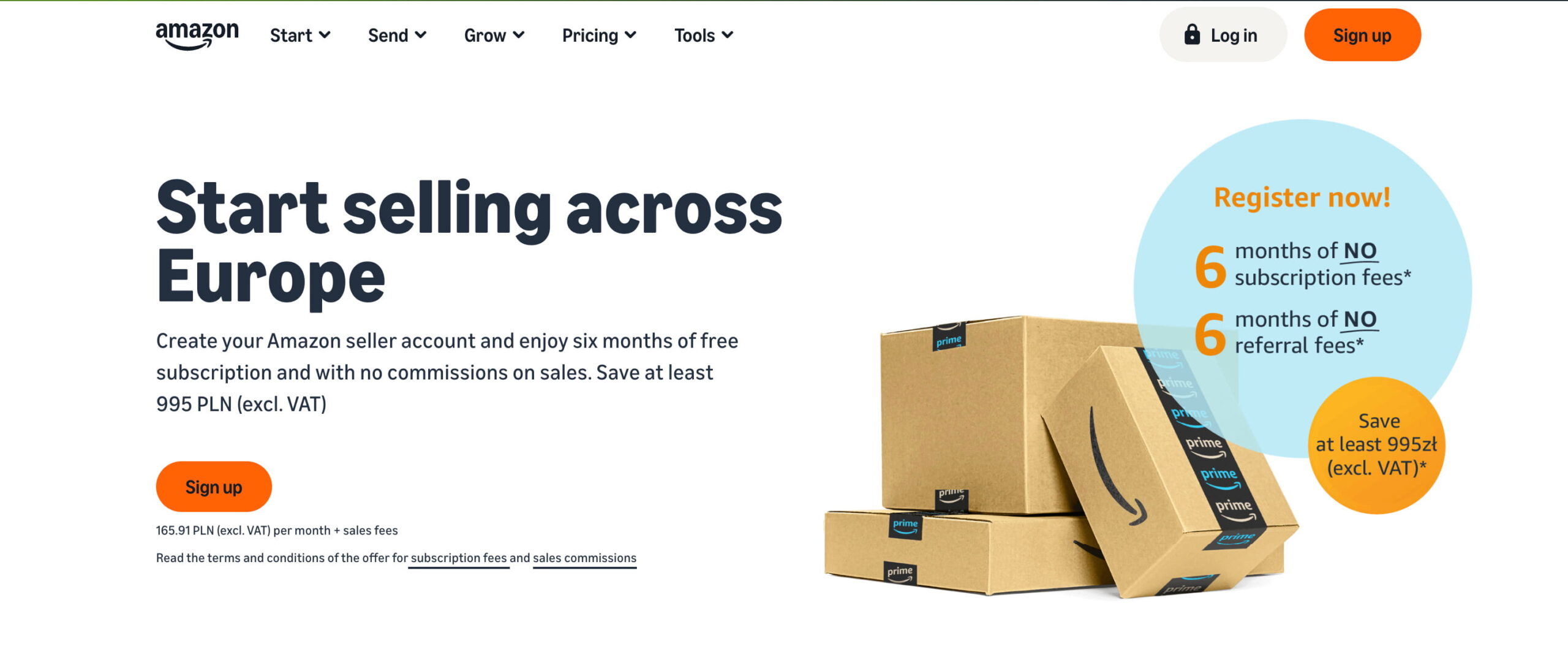
Before you can understand why this model works, you need to understand why Amazon specifically is worth the policy complexity.
1. Delivery Speed That Beats Every Alternative
Amazon Prime delivers to most U.S. addresses in 1–2 business days. For eBay buyers, this is competitive with — and often faster than — what eBay’s own managed delivery promises. Fast delivery means better feedback scores, fewer “Where’s my order?” messages, and a stronger seller reputation from day one.
Compare this to AliExpress (10–30 days), or even many domestic wholesalers (5–7 days). When a buyer gets their order on Tuesday and you promised delivery by Thursday, they leave five stars without a second thought.
2. A Catalog Nobody Else Can Match
Amazon stocks over 12 million products across every imaginable category. You can test a gardening niche on Monday, pivot to pet supplies on Wednesday, and try fitness equipment on Friday all from the same supplier, with no minimum order requirements, no SKU commitments, no supplier negotiations.
For a beginner, this means you can experiment until you find what sells. For a scaled seller, it means you can build a 10,000-listing store without ever exhausting your product pool.
3. Built-In Buyer Trust Works in Your Favor
Amazon has spent decades building trust: reliable tracking, easy returns, consistent packaging. When your buyer receives a package that arrives on time and in perfect condition, they associate that quality with your eBay store even if they don’t know Amazon was involved.
This is a real edge over sourcing from unknown overseas suppliers where quality control is inconsistent.
4. Price Competition Keeps Your Costs Low
Amazon’s marketplace model means suppliers compete aggressively on price. For many product categories, Amazon prices sit significantly below retail or what eBay buyers expect to pay. That’s the arbitrage gap and it’s wider than most people assume when they first start looking.
Why eBay Is the Right Platform to Sell On
Shopify gets more hype. Amazon FBA sounds more sophisticated. But for this specific business model sourcing from Amazon, selling without inventory eBay has structural advantages that neither of those platforms can replicate.
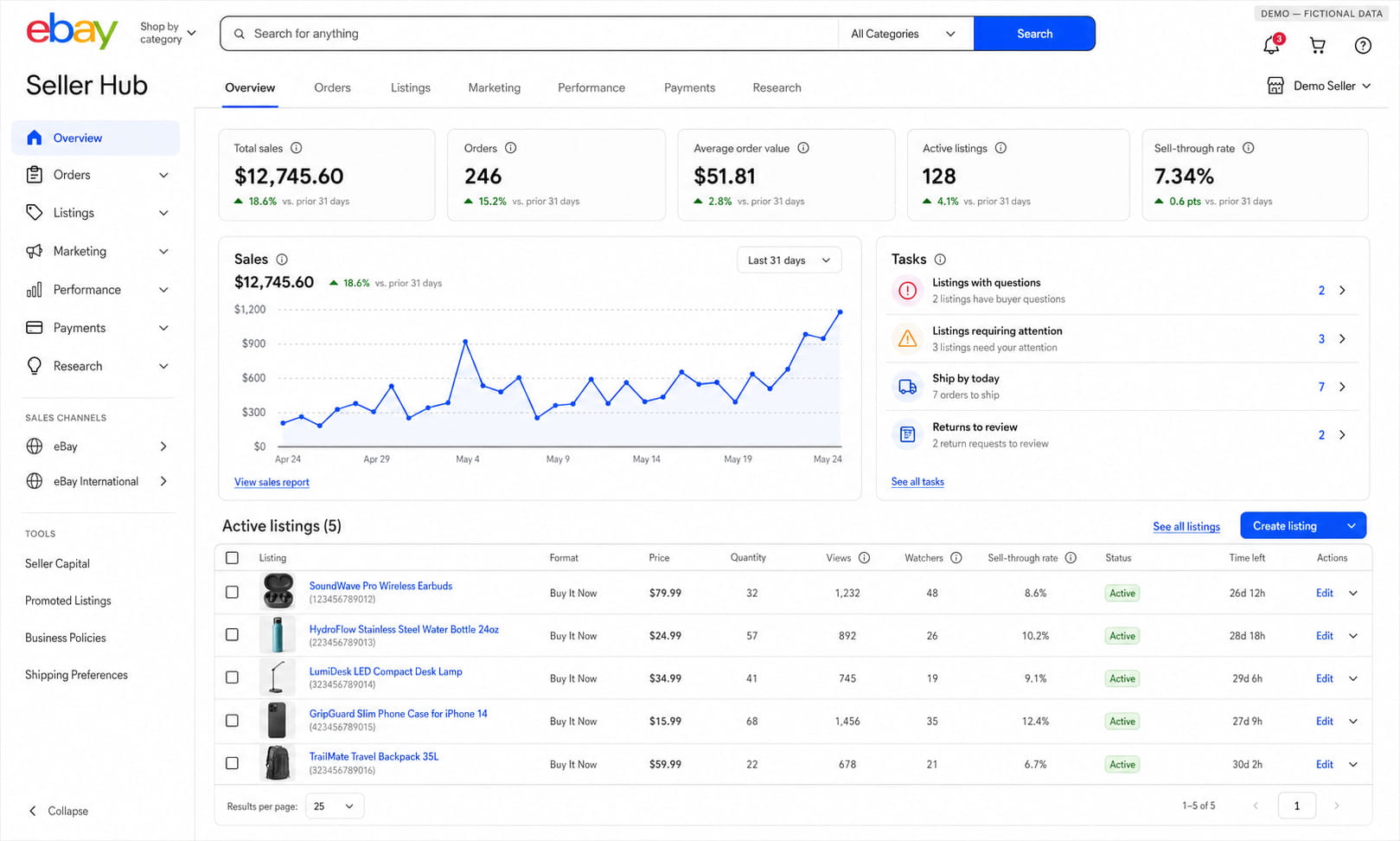
Organic Traffic: No Ad Budget Required
eBay has 133 million+ active buyers who show up with credit cards ready. You don’t build landing pages, run Google Shopping campaigns, or test Facebook creatives. You list a product, optimize the title for eBay’s search algorithm, and buyers find you.
Compare this to launching a Shopify store, where your first month is usually spent burning ad budget testing audiences before you’ve proven a single product sells. On eBay, you know within 7–14 days whether a product has demand — because real buyers either buy it or they don’t.
Low Barrier: You Can List Your First Product in Under an Hour
There are no setup fees, no theme purchases, no developer costs. Create a seller account, set up your payment method, and start listing. The learning curve is a weekend, not a month.
eBay Buyers Have High Purchase Intent
People searching on eBay are ready to buy. They’re not browsing Pinterest for inspiration or scrolling Facebook ads skeptically. eBay’s search intent is closer to Google Shopping than social media — which translates directly to higher conversion rates on properly optimized listings.
eBay’s Global Reach Multiplies Your Opportunity
eBay operates in 190 countries. Your U.S. listings can be visible to UK, Canadian, and Australian buyers. As your store matures, you can expand to dedicated eBay.co.uk or eBay.com.au accounts and essentially run multiple regional businesses with the same product catalog.
Pros and Cons of Amazon to eBay Dropshipping
Before you start, know what you’re signing up for. This model has real advantages and real downsides — and the sellers who scale successfully are the ones who planned for both.
✅ Pros
- Zero upfront inventory cost.
You only spend money after a buyer has already paid you. No warehouse, no bulk orders, no products collecting dust in your garage. Your startup budget goes toward tools and eBay fees, not stock. - Access to 12+ million proven products.
Amazon’s catalog is a giant database of products with existing demand. You’re not guessing what might sell — you’re finding items people already buy daily and listing them in a new marketplace. - Fast U.S. delivery builds your reputation.
Amazon Prime’s 1–2 day shipping means your eBay feedback improves naturally. Buyers who get their order fast leave positive reviews without being asked. - Organic eBay traffic is free.
Unlike Shopify or your own website, you don’t need to pay for advertising to get eyeballs on your listings. eBay’s buyer base does that work for you. - Fully automatable.
Once you have the right tools in place, orders are placed, tracked, and managed automatically. Sellers run stores with thousands of listings without spending more than 1–2 hours per day.
❌ Cons
- eBay’s retail dropshipping policy.
eBay officially prohibits sourcing from Amazon or Walmart. The risk is real eBay can limit or suspend accounts. Mitigation is possible, but you need to take it seriously. - Amazon account flagging.
Unusual purchase patterns trigger Amazon’s systems. High volume, multiple delivery addresses, and gift card payments are all red flags. Using a service that handles purchasing through managed accounts eliminates this risk entirely. - Amazon-branded packaging.
Every Amazon order arrives in Amazon packaging, which can confuse buyers or erode trust. Configuring orders as gift shipments removes the price invoice, but the box still says Amazon. This is manageable, but you need to set expectations. - Thin margins.
Amazon isn’t a wholesale supplier. You’re buying at close to retail and selling at a slight markup. Margins of 10–20% are achievable, but you need volume to make serious money. This is not a model where you profit $30 per sale, it’s a model where you profit $5–$8 per sale across hundreds of transactions. - Price volatility.
Amazon prices change constantly sometimes multiple times per day. If you’re manually managing listings, a $28 product becomes $38 overnight and you’ve just sold it at a loss. Real-time repricers are not optional; they’re the foundation of the model.
How to Calculate Your Real Profit: A Practical Example
This is where most beginners make their first mistake. They see a $10 price gap between Amazon and eBay and think that’s their profit. It isn’t.
Here’s how to calculate your actual net margin correctly:
The Full Fee Breakdown
| Line Item | Amount |
|---|---|
| eBay Sale Price | $39.99 |
| Amazon Purchase Price | – $28.00 |
| eBay Final Value Fee (13.25%) | – $5.30 |
| eBay Listing Fee (if applicable) | – $0.35 |
| Payment Processing Fee (~2.5%) | – $1.00 |
| Net Profit | $5.34 |
| Margin | 13.4% |
Note: eBay’s Final Value Fee varies by category electronics run higher (13.25%), collectibles can be lower. Always check the current fee schedule for your category before listing.
The Rule Every Arbitrage Seller Needs to Know
Your minimum viable price gap is roughly 20–25% above the Amazon price to walk away with a 10–15% net margin after all fees.
If you see a product at $30 on Amazon and eBay comps are at $36 skip it. After fees, you’re making $1.20 on a good day, or losing money on a bad one if Amazon prices spike.
If you see a product at $30 on Amazon and eBay comps are at $42 list it. After fees, you’re looking at $6–8 net, which is a healthy margin worth scaling.
Quick Mental Math Formula
Minimum eBay price = Amazon price × 1.30
Comfortable eBay price = Amazon price × 1.40- For the product at $28:
- Minimum list price: $36.40
- Comfortable list price: $39.20
If eBay comps show buyers paying $39.99, you’re in business.
Use the Easync eBay Fee Calculator
Rather than doing this math every time, use the eBay Fees Calculator to check the exact margin on any product in seconds. It accounts for category-specific fees and shows you the breakeven point instantly.
CREATE YOUR EBAY SELLER ACCOUNT
Step 1: Create Your eBay Seller Account
Your eBay seller account is the foundation of everything. Get this part right and the rest of the setup is straightforward.
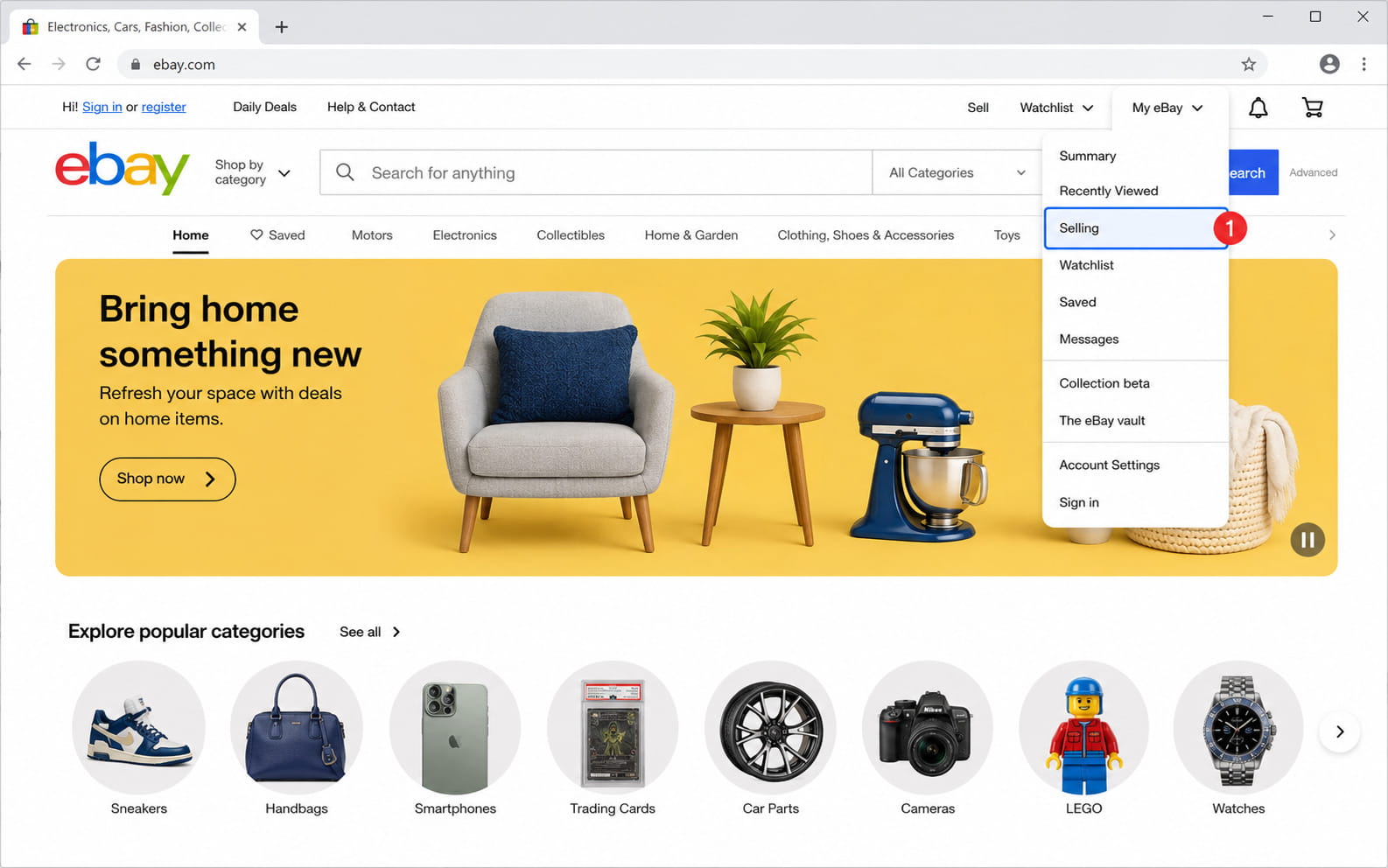
Go to ebay.com → My eBay → Selling → Create an account. You’ll choose between a personal account and a business account.
Personal account — the right choice if you’re starting out, testing the model, or operating as a sole trader. You get access to all selling features, and you can upgrade to a business account later without losing your history or feedback score.
Business account — required if you’re registering as a company, or if you plan to sell at volume from day one (1,000+ listings/month). Business accounts unlock higher selling limits faster and allow you to display a business name on your store page.
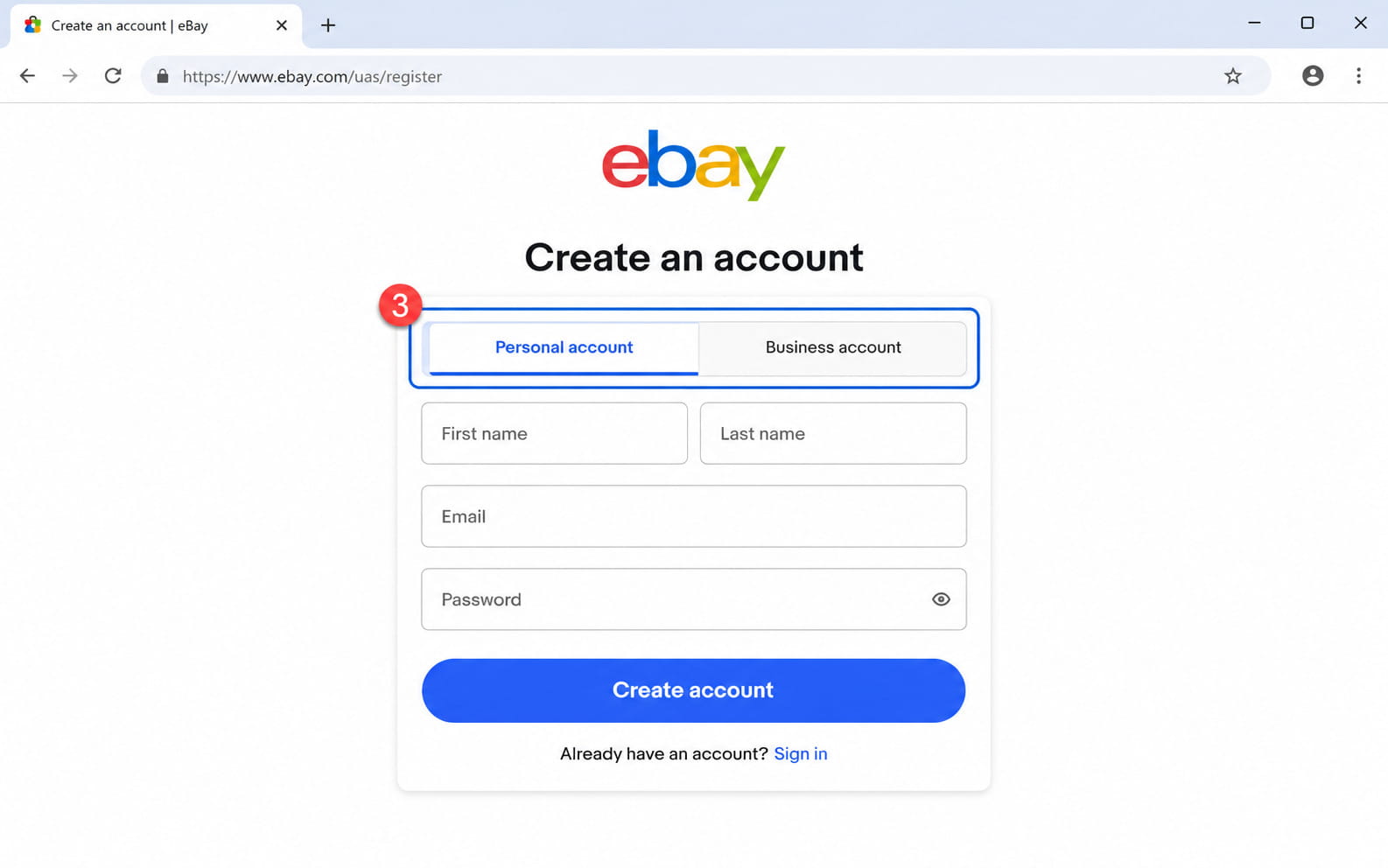
What you’ll need to register:
- Full legal name (or business name)
- Email address
- Phone number for verification
- Bank account for receiving payments (eBay Payments is now the standard, no more PayPal dependency).
Once registered, do these three things before listing a single product:
1. Verify your identity. eBay will ask for identity confirmation before you can withdraw funds. Do this immediately — sellers who skip it get their first payout held for 3–5 business days.
2. Set up eBay Managed Payments. Go to Seller Hub → Payments → Get started. Link your bank account. This is how you receive money from every sale, directly to your account within 1–2 business days.
3. Understand your selling limits. New accounts start with restrictions — typically 10 items or $500/month. This is eBay’s standard protection against fraud. Call eBay seller support after your first 10 sales and politely request a limit increase. Most accounts get raised to 100–250 items within the first month.
New seller tip: Your first 30 days on eBay matter more than any other period. Focus on fast shipping, clean communication, and earning your first 10–20 positive feedbacks. eBay’s algorithm rewards newer sellers with higher initial visibility to help them build reputation, but only if your metrics stay clean. One late shipment in your first week can set you back significantly.
EBAY POLICY SETUP — SHIPPING & RETURNS
Step 2: Set Up Your Shipping and Return Policies
Most new sellers skip this step and pay for it later with bad feedback scores. Your policies set buyer expectations — and mismatched expectations are the #1 cause of eBay disputes.
Go to: Seller Hub → Listings → Settings → Business Policies → Create Policy
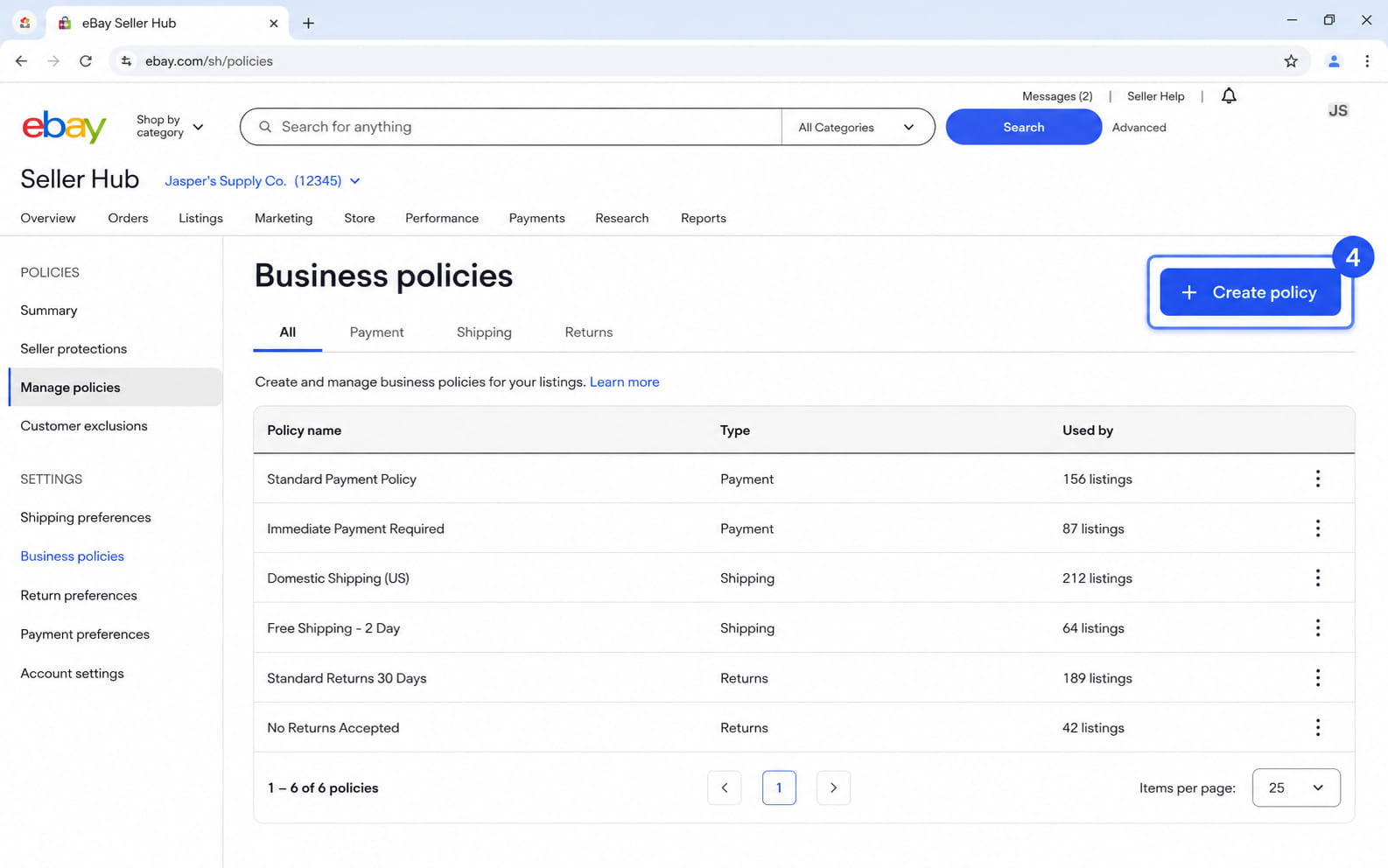
Shipping Policy — What to Set
Handling time: 1 business day. This is the standard buyers expect. If you’re using auto-ordering, your Easync tool places the Amazon order within minutes of a sale — so this is achievable.
Shipping service: Choose “Economy Shipping (7–14 business days)” or “Standard Shipping (5–8 business days)” depending on what Amazon typically delivers. Don’t promise 3-day delivery if you’re relying on standard Amazon shipping — that’s the fastest way to rack up late shipment defects.
Free shipping vs. charging for shipping: Free shipping wins more sales and eBay’s algorithm favors it. Build the shipping cost into your listed price instead. If the Amazon product ships free with Prime, you have room to absorb this.
International shipping: Start with U.S. only until your account metrics are stable. Expand to Canada and UK once you have 50+ transactions and a 99%+ feedback score.
Return Policy — What to Set
Return window: 30 days. This matches Amazon’s policy, so any return that comes back to you, you can handle through Amazon’s return system.
Who pays return shipping: “Buyer pays” is standard for most categories. “Free returns” boosts your listing visibility in eBay’s algorithm, so consider it for higher-margin products.
Condition for returns: “Item must be returned in original condition.”
One thing most tutorials miss: Your handling time and delivery estimate together form the “estimated delivery date” that eBay shows buyers. Make sure these numbers reflect Amazon’s actual delivery performance in your target geography not wishful thinking.
How to choose Best items to drop shipping from amazon to eBay?
Step 3: Product research
Product research is where Amazon to eBay arbitrage either works or doesn’t. Here’s the methodology that produces consistent results not guesswork.
Method 1: Start on Amazon, Validate on eBay
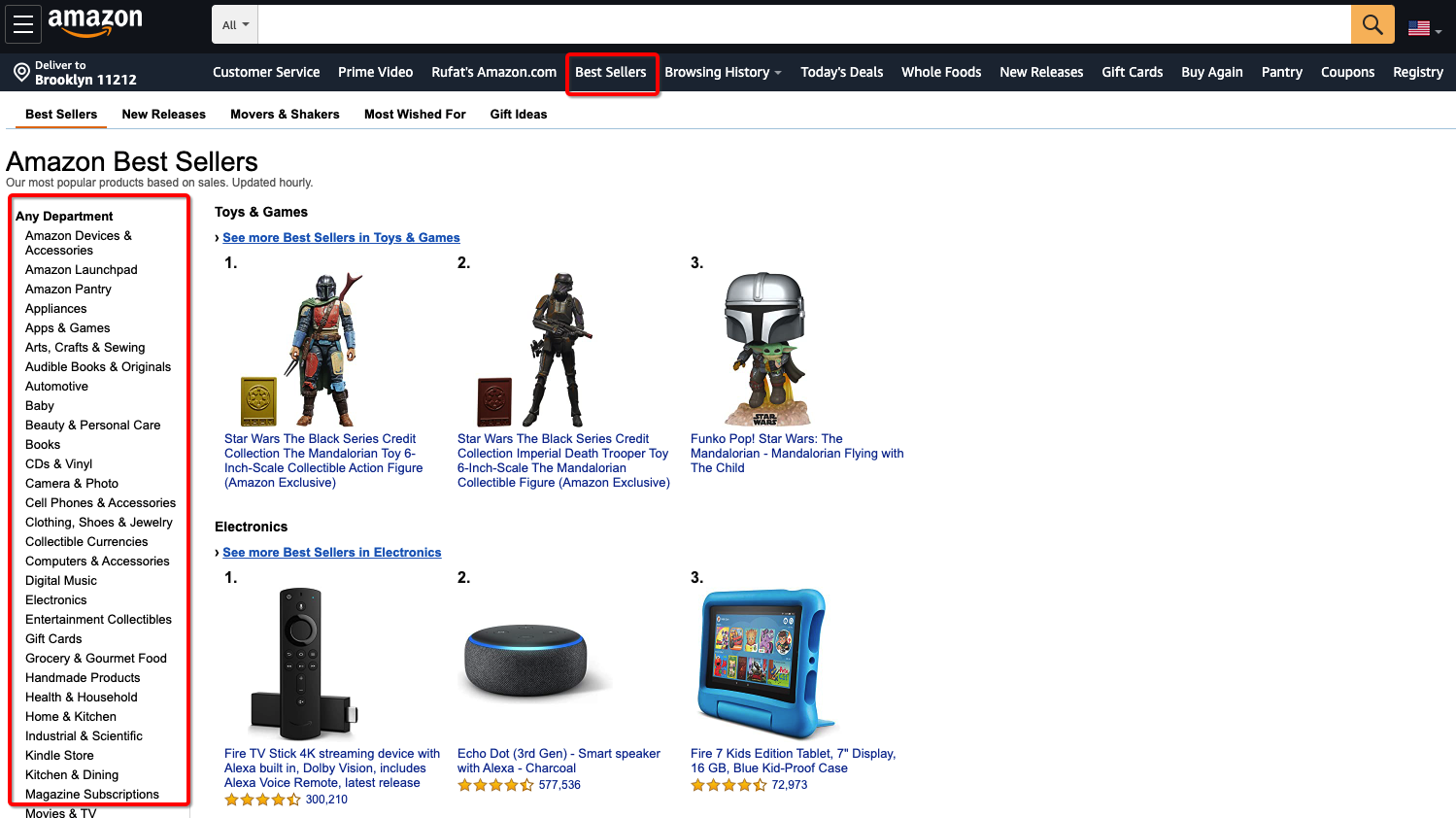
This is the most straightforward approach.
- Go to Amazon’s Best Sellers list in any category
- Filter for non-branded, generic items (branded items carry VeRO risk on eBay)
- Note the Amazon price on any item that catches your eye
- Switch to eBay, search for the same product
- Filter eBay results by Sold Listings — this shows what buyers actually paid, not what sellers are asking
If the sold price on eBay is consistently 30%+ above the Amazon price — and multiple sellers are making sales — you’ve found a product worth testing.
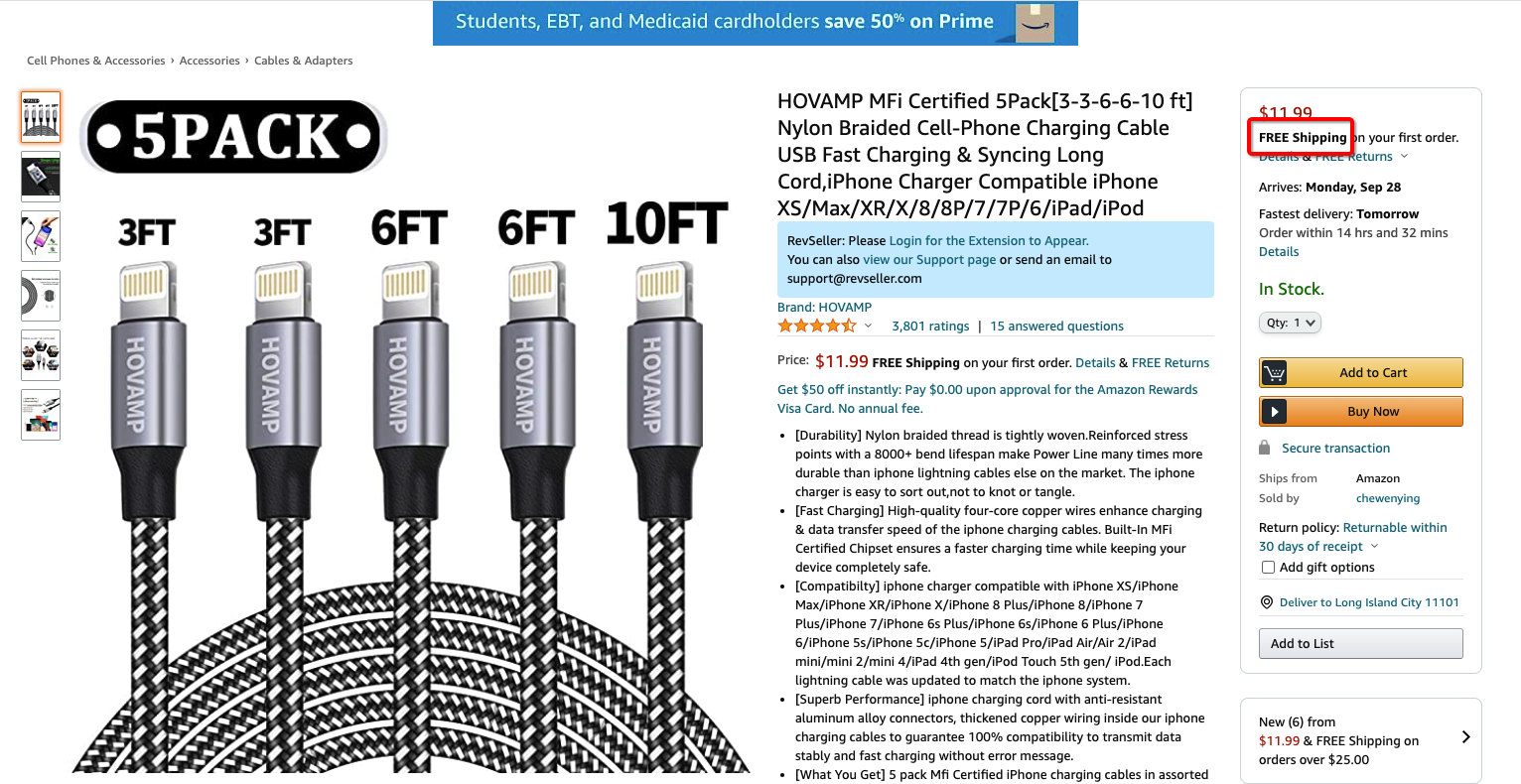
What makes a product worth listing:
- Sold 10+ times on eBay in the last 30 days at your target price
- At least 3 different sellers making sales (proves demand isn’t tied to one store)
- No dominant brand owner dominating eBay (that signals VeRO risk)
- Amazon stock is stable — not “only 2 left” or frequently out of stock
Method 2: Reverse Research (Start on eBay, Source on Amazon)
This is the method experienced sellers prefer, because you’re starting with proven demand.
- Search eBay for any product category
- Sort by “Most Watchers” or “Best Match” in completed listings
- When you find a listing with 20+ sales, copy the product name or key identifiers
- Search Amazon for the same product
- If Amazon price is 25–40% below the successful eBay sale price — list it
Real example:
- eBay: Rain shower head, 62 sales at $33.98
- Amazon: Same shower head, $22.99 with free Prime shipping
- Margin calculation: $33.98 – $22.99 – $4.50 (eBay fee) – $0.85 (payment fee) = $5.64 net profit
- At 20 sales per month: $112.80/month from one SKU
Scale that to 500 products with similar performance: you see why volume is the point.
Method 3: Use Easync Finder for Scale
When you’re doing manual research, you might evaluate 30–50 products per hour. Easync’s Finder tool scans Amazon subcategories up to 100,000 products at a time and identifies items where the Amazon price sits below current eBay sold prices.
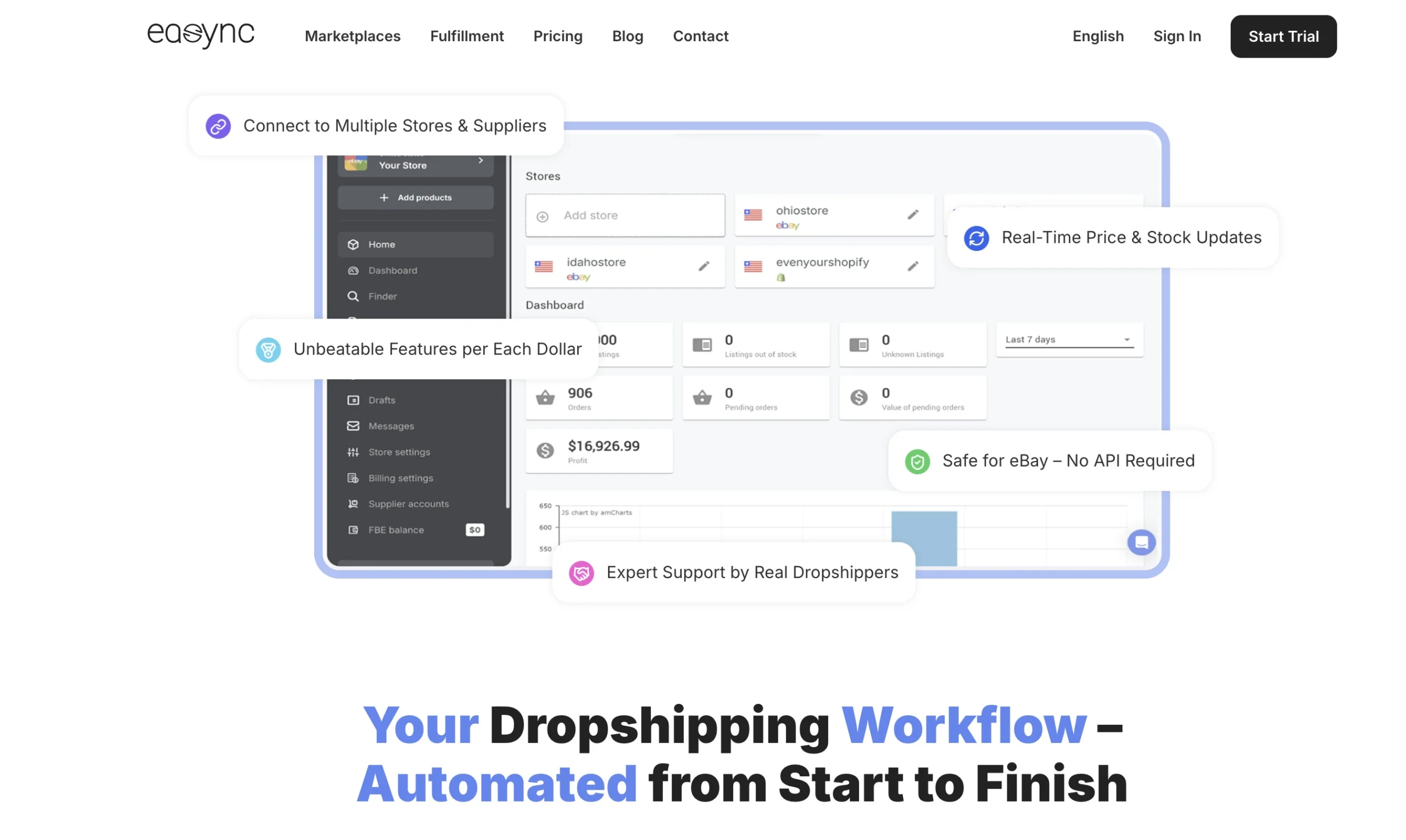
This turns a 10-hour research week into a 30-minute setup.
Products to Avoid
Not every Amazon product is a good candidate. Avoid:
- Branded items from Apple, Nike, Sony, or any company registered in eBay’s VeRO program — your listing will be removed and your account flagged
- Items with fewer than 10 eBay sold listings — unproven demand means you might hold a dead listing for weeks
- Fragile items — damage claims are an eBay seller’s nightmare
- Items under $15 — fees eat your margin to almost nothing at low price points
- Electronics with serial numbers — return fraud is common in this category
- Anything with “Prime-only” purchase restrictions — you can’t buy it without a specific account type.
LISTING OPTIMIZATION
Step 4: Optimize Your eBay Listings for Maximum Visibility
Listing a product is easy. Listing it so eBay’s search algorithm (called Cassini) shows it to buyers is the skill that separates sellers who make money from those who wonder why nothing sells.
Write Titles That Match How Buyers Search
eBay gives you 80 characters for your title. Use all of them. Think about what a buyer types, not what a marketer would write.
Bad title: Premium Rain Shower Head for Modern Bathrooms | High Quality | Best Price
Good title: Rain Shower Head 8 Inch Stainless Steel Rainfall High Pressure Chrome Bathroom
The good title hits the exact words buyers type. The bad title burns character space on adjectives nobody searches for.
Title formula:
[Product Name] + [Key Spec 1] + [Key Spec 2] + [Material/Color] + [Use Case]Use the Easync eBay Title Builder to identify which keywords have the highest search volume in your category.
Fill Out Every Item Specific
eBay uses Item Specifics brand, material, size, color, MPN, UPC to match your listing to filtered searches. A buyer searching for “8 inch shower head, chrome” won’t see your listing unless you’ve filled in the size and finish fields.
This takes 3 extra minutes per listing. It directly determines whether you appear in filtered search results, which account for a significant portion of eBay’s buyer traffic.
Images: Quality Over Quantity (But Use Both)
Amazon’s product images are usually professional-grade. Use them if they’re high-resolution (minimum 500px on the longest side). eBay allows up to 24 photos include:
- Main product shot (white background, fills 85% of frame)
- Multiple angles: front, back, side
- Close-up of any important feature (connector type, material texture)
- Size reference (product next to a common object)
- Lifestyle image if available
Never use images with watermarks, text overlays, or borders. eBay’s algorithm deprioritizes listings that violate image guidelines and buyers trust clean, professional images more.
Pricing: Be Competitive, Not the Cheapest
Beginners default to undercutting every competitor. This is wrong for two reasons: it destroys your margin, and eBay’s algorithm doesn’t purely favor the lowest price, it weights seller metrics, item specifics completeness, and listing quality heavily.
Price within 5–10% of the median selling price in your category. Check eBay sold listings (not active listings anyone can list at any price; sold listings show what buyers actually pay).
How Amazon eBay Arbitrage Software helps to speed up the process?
Don’t worry, if you decide to start an Amazon to eBay dropshipping business, you won’t need to manually list items individually in future.
Software can make all the difference to the success of an arbitrage seller. Prices on Amazon fluctuate continuously, and if an arbitrageur does not track them, they may sell products on eBay at a loss. When that happens, the options are either to take a hit and place the order anyway, or cancel the order and damage their eBay performance metrics. Not a great choice.
Profit margins using Amazon to eBay arbitrage can be paper thin, so bulk listings are where the real money is often made. Manually checking prices and adjusting listings for more than a few products is not practical, let alone for the number of listings required to make it worthwhile – which can be up to hundreds of thousands.
Here are 9 ways that using software helps to make the dropshipping process quicker and easier:
1. Reprice eBay listings when Amazon prices change
If you manually list items from Amazon to eBay, you run the risk that the price on Amazon rises and you sell items at a loss. But by using an eBay repricer like Easync, you can let the software automatically change your prices according to the price on Amazon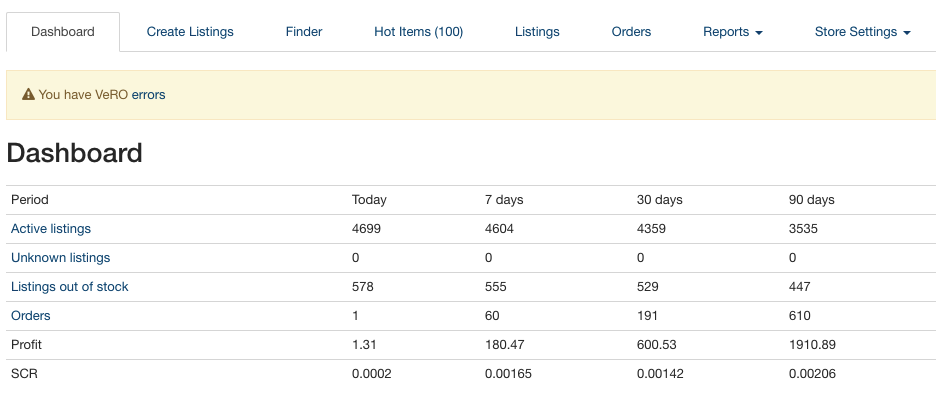
2. Listing items
If you managed to find a thousand hot Amazon items manually, you’d easily listing them all just by one click. If you’ve found items using market research software, you can normally import the items via a CSV file and then mass-list them to eBay. Alternatively, you can use Easync Finder or Easync Hot items that can automatically create listings in your store.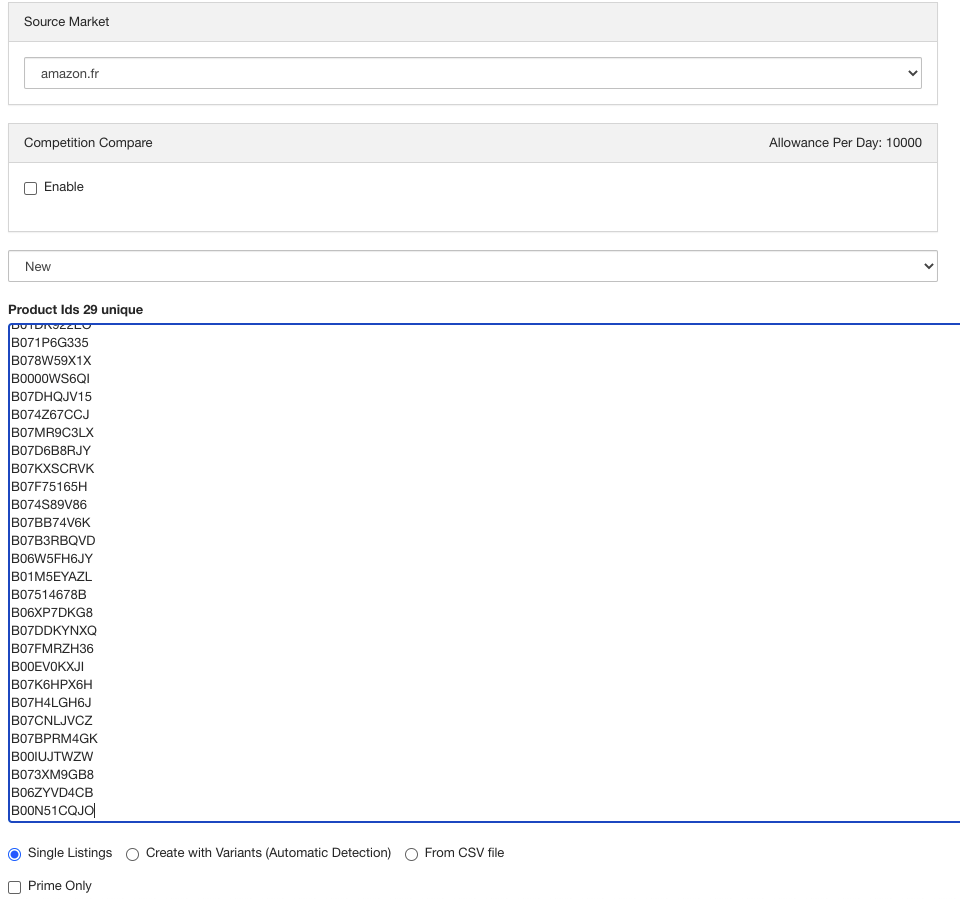
3. Finding items to sell
To make money dropshipping from Amazon to eBay, you need scale. While you aren’t likely to make much profit with 100 listings, once you start creating thousands of listings you have many more opportunities to sell. But to create thousands of listings, you need to find thousands of hot items to sell. That’s why software like Easync include Finder that can scan Amazon(All Amazon Markets) subcategories with up to 100,000 items at a time in a few clicks.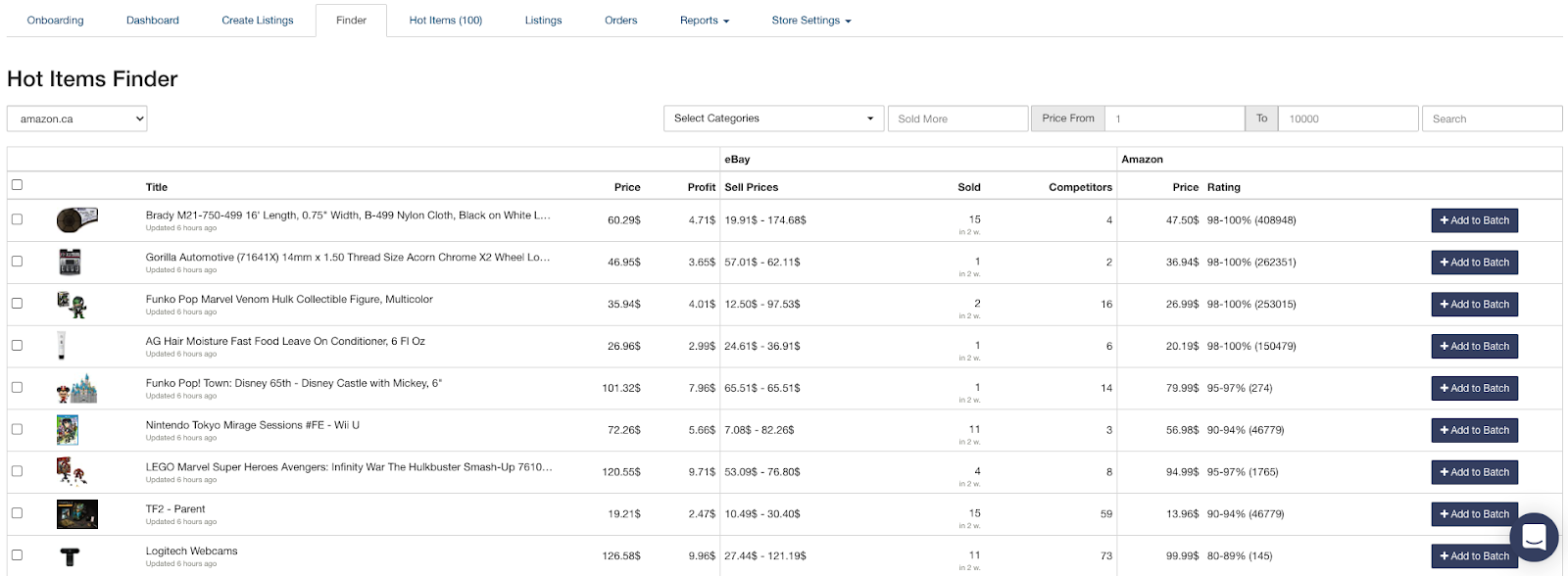
4. VeRO protection
Checking if the items you want to list are in breach of eBay’s VeRO program manually would take a long time, and you could quite easily miss if a brand is registered for protection with eBay.
But if you use an established eBay dropshipping software like Salefreaks, you benefit from having access to a comprehensive VeRO list with millions of banned items that the software will scan your listings for and automatically prevent you from listing.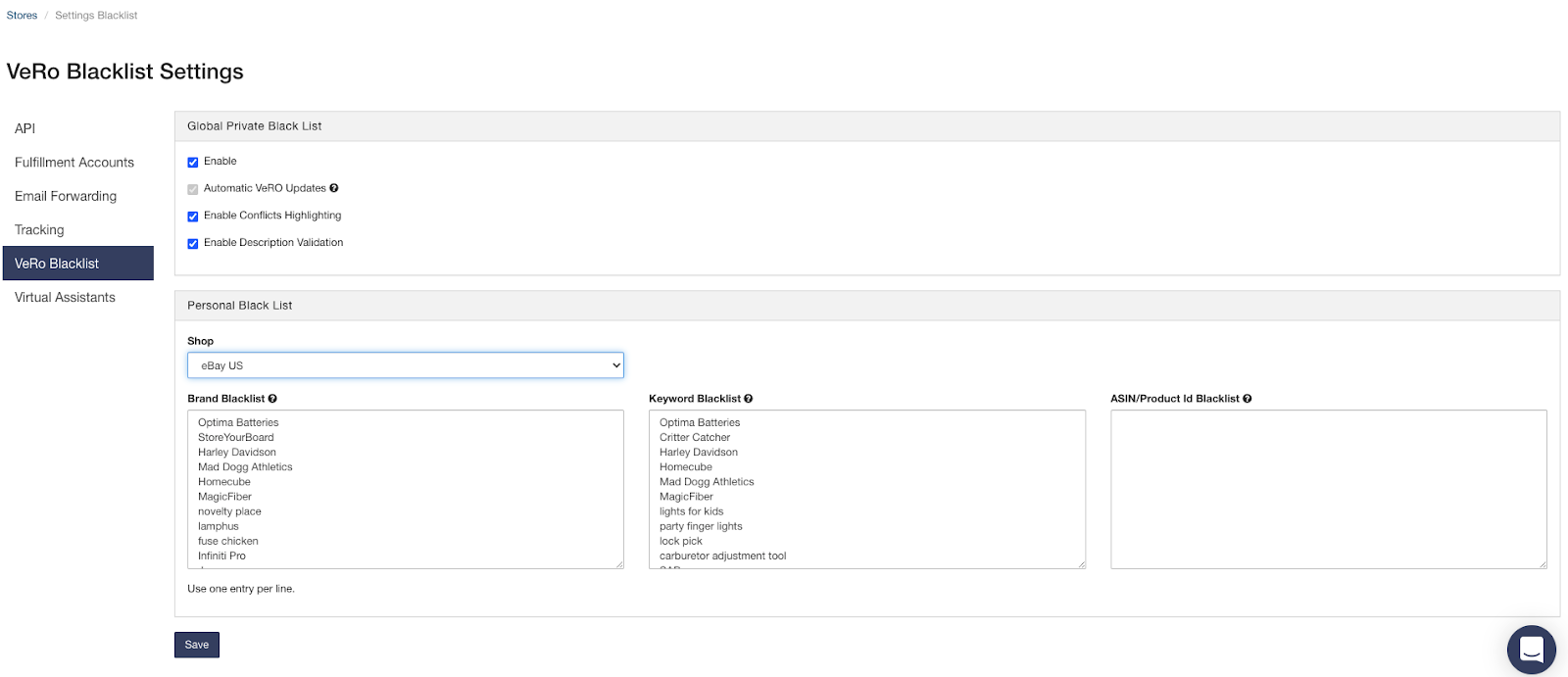
5. Auto-ordering items
Likewise, if you manually list items from Amazon to eBay, you run the risk that the item falls out of stock before you place your order. That’s why it’s important to find eBay dropshipping software that includes an auto-order function.
Auto-order tracks sales made on eBay and then automatically orders the corresponding item for you from Amazon within minutes of the sale going through, meaning that out of stock items rarely occur.
Or you can use our managed accounts FBE Service ( Fulfil by Easync)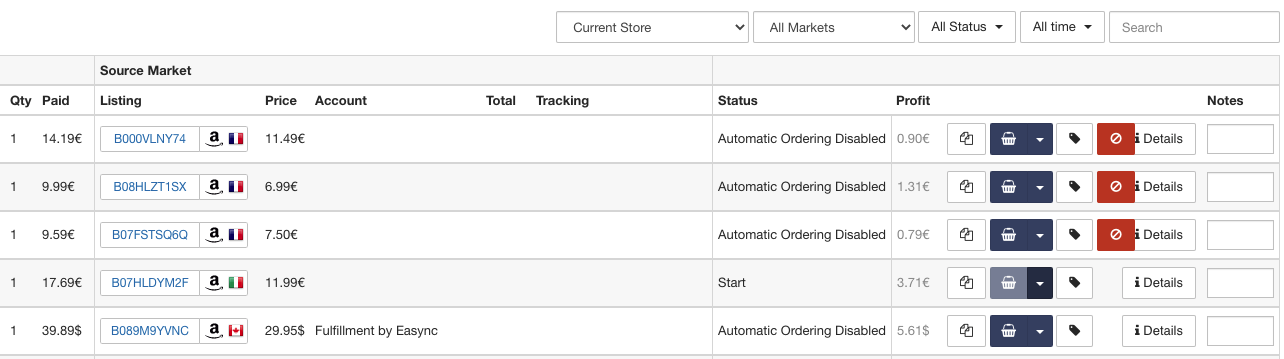
6. Filtering items and optimizing your store
Finding items to sell, and listing them onto eBay is one thing. But you also need to regularly remove items that don’t sell to keep your store optimized. If you don’t, your costs with eBay will be unnecessarily high and could lose your search ranking.
Using software like Easync allows you to easily filter all your listings according to your needs such as; finding listings with no sales in 60 days or finding listings that only have a few views.
7. Using a CRM to deal with customer service issues
It’s possible to deal with customer service tickets without a CRM (customer relationship management software). However, when you start to create multiple eBay stores and multiple Amazon accounts the task becomes much harder. All in one place.
A CRM can display all the information you need in one place making it much easier and quicker for you to respond to customers and be accurate in your answers.
8. Sending Automatic 3 messages to Customers + leave feedback
In Easync it’s much easy to send Automatic messages to customer : When the user purchase items from our store( thanks message) Item on the way with tracking number update. We remind the customer to not forget to leave positive feedback in our eBay store. And as well automatic feedback for every purchase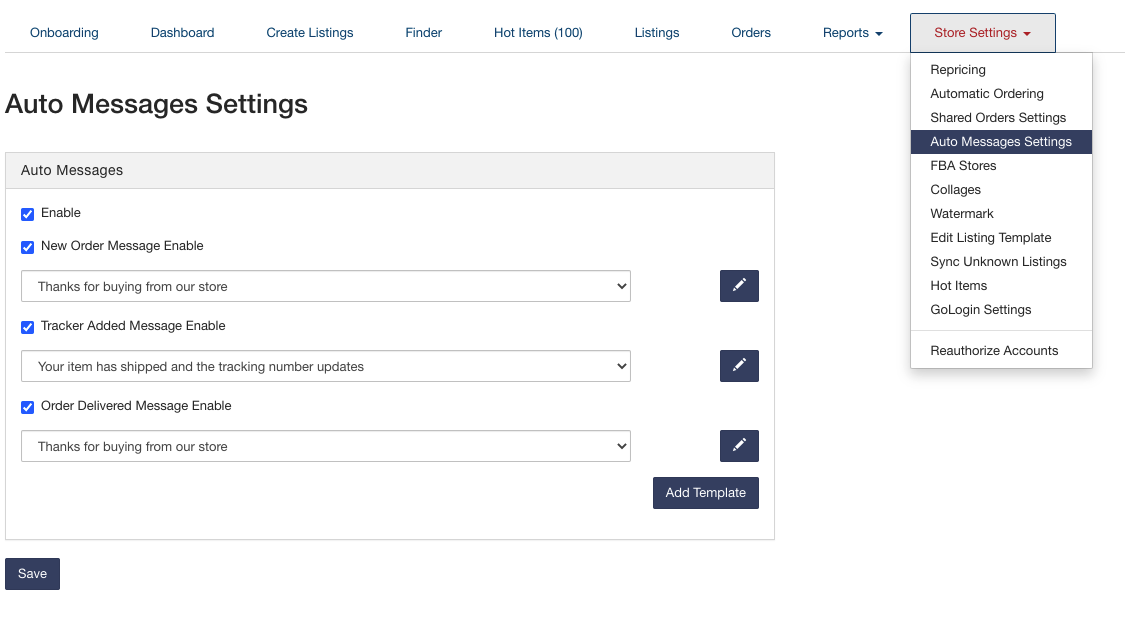
9. Tracking Numbers
Post tracking information back to eBay when the order is dispatched by Amazon in this case your item will never get defect rate on eBay.
Thanks for reading the article Easync Team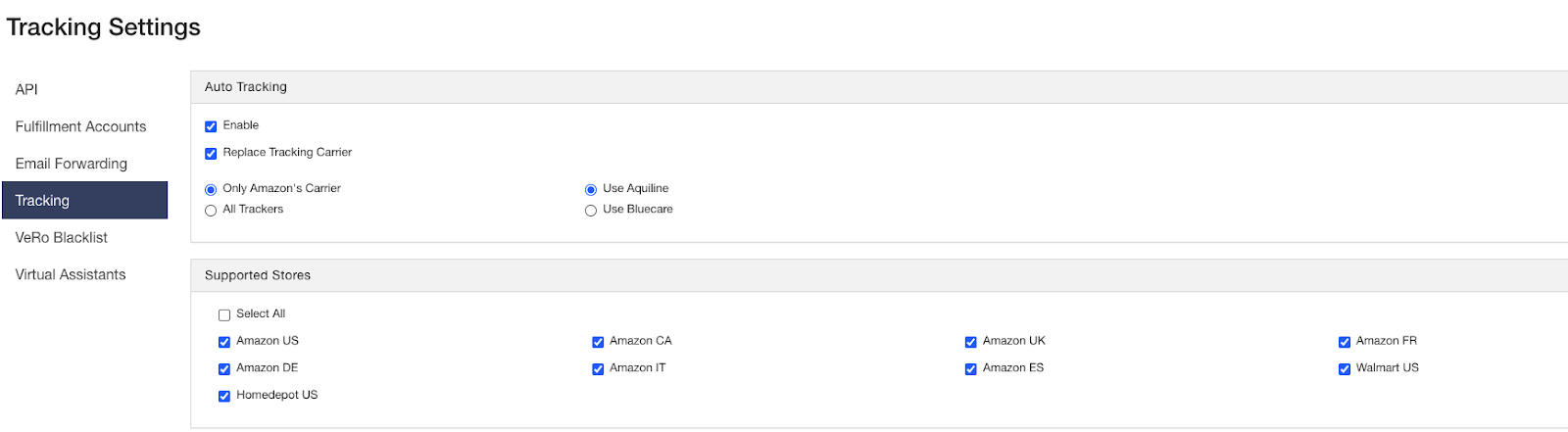
Top 15 Products for Amazon to eBay Arbitrage in 2025
- Wireless Earbuds: Popular for their convenience and compatibility with various devices.
- Smart Home Devices: Items like smart bulbs, plugs, and security cameras are in high demand.
- Fitness Trackers: With health consciousness on the rise, fitness trackers remain popular.
- Portable Chargers: Essential for on-the-go device charging, making them a hot commodity.
- Kitchen Gadgets: Items like air fryers, electric pressure cookers, and blenders.
- Phone Accessories: Cases, screen protectors, and charging cables.
- Pet Supplies: Automatic feeders, grooming tools, and interactive toys.
- Bluetooth Speakers: Portable and waterproof models are especially sought after.
- Home Office Equipment: Ergonomic chairs, standing desks, and noise-canceling headphones.
- Gaming Accessories: Controllers, headsets, and gaming chairs.
- Beauty Tools: Hair straighteners, curling irons, and skincare devices.
- Outdoor Gear: Camping equipment, portable grills, and hiking accessories.
- Fitness Equipment: Resistance bands, dumbbells, and yoga mats.
- Baby Products: Monitors, diaper bags, and safety gates.
- Fashion Accessories: Trendy watches, sunglasses, and bags.
These products are trending in 2026 and offer significant opportunities for arbitrage, given their popularity and the potential for price differences between Amazon and eBay.
USA/UK GEO SECTION
Amazon to eBay Dropshipping in the USA 🇺🇸
The U.S. is the largest and most competitive eBay market in the world and for good reason. eBay.com has over 133 million active buyers, Amazon.com ships Prime orders in 1–2 days to virtually every zip code, and the price gap between the two platforms remains consistently wide across hundreds of product categories.
If you’re starting out, the U.S. market is where you build your model. Here’s what makes it unique and what you need to optimize for specifically.
Why the U.S. Market Is the Best Starting Point
Volume. eBay.com processes more transactions per day than any other regional eBay site. More buyers means more data: you can validate whether a product sells within 7–14 days, rather than waiting months for meaningful results.
Amazon Prime coverage. Amazon’s U.S. fulfillment network is unmatched. Over 90% of U.S. Prime members receive orders in 2 days or less. That delivery speed feeds directly into your eBay feedback score and keeps your late shipment rate at zero when you’re using auto-ordering.
Price gap depth. Amazon’s U.S. marketplace has the most aggressive third-party seller competition in the world, which keeps Amazon prices lower than comparable products on eBay. More price gap = more arbitrage opportunity.
U.S. Tax Considerations: Sales Tax Nexus
Since 2019, all U.S. states with a sales tax have passed economic nexus laws — meaning eBay is required to collect and remit sales tax on your behalf for buyers in most states. As an eBay seller, you do not need to collect or file sales tax separately for the states eBay covers under Marketplace Facilitator laws.
However, if you have a physical business presence (nexus) in a state an office, warehouse, or employees you may have additional obligations. Consult a U.S. tax advisor if you’re scaling past $50,000/year in revenue.
Best-Performing U.S. Categories for Amazon to eBay Arbitrage
U.S. buyers on eBay have distinct purchasing patterns. These categories consistently produce the best sell-through rates and margins for Amazon-sourced products:
| Category | Why It Works | Avg. Margin |
|---|---|---|
| Home & Kitchen | Massive Amazon selection, generic brands, high eBay demand | 12–20% |
| Tools & Home Improvement | Non-branded items, low VeRO risk, steady demand | 14–22% |
| Sports & Outdoors | Seasonal spikes, wide price variance, high buyer intent | 12–18% |
| Pet Supplies | Repeat purchases, loyal buyers, low return rate | 10–16% |
| Health & Personal Care | High volume, fast-moving SKUs, price-sensitive buyers | 10–15% |
| Toys & Games | Strong seasonal (Q4) spikes, wide variety of generic products | 15–25% |
What to avoid on eBay.com: Electronics (high return fraud risk), designer fashion (VeRO minefield), and anything with a dominant brand registry presence on Amazon. Stick to generic, unbranded products in the categories above when you’re starting.
Amazon to eBay Dropshipping in the UK 🇬🇧
Everything covered above applies to the U.S. market. But the UK is a significant opportunity that most guides ignore entirely — and for sellers already on eBay.co.uk, or thinking about expanding there, the fundamentals are the same with a few important differences.
Amazon.co.uk as Your UK Supplier
For UK-based sellers (or U.S. sellers targeting eBay.co.uk), source from Amazon.co.uk rather than Amazon.com. UK Prime delivers in 1–2 days to UK addresses, keeping your feedback scores competitive. Cross-border shipping from the U.S. to UK buyers is slower, more expensive, and creates customs complications you don’t want as a new seller.
UK VAT: The Tax Consideration Nobody Warns You About
If your annual eBay.co.uk sales exceed £90,000, you are required to register for VAT in the UK. This affects your pricing model significantly — you effectively add 20% to your tax burden on sales above that threshold.
For sellers below £90,000/year, there’s no VAT obligation. But if you’re scaling aggressively, account for this early.
eBay.co.uk’s Best-Performing Categories
UK buyers have different purchasing habits than U.S. buyers. Categories that overperform on eBay.co.uk compared to the U.S.:
| Category | UK eBay Performance |
|---|---|
| Fashion & Clothing | Very High |
| Collectibles & Trading Cards | Very High |
| Home & Garden | High |
| Vehicle Parts & Accessories | High |
| Health & Beauty | High |
| Electronics | Moderate (high competition) |
UK Shipping Carriers to Know
Currency and Fees
eBay.co.uk charges fees in GBP. Final Value Fees are comparable to U.S. rates (typically 12.8–13.25% depending on category). Use the Easync eBay Fee Calculator UK to model your margins in British pounds before listing.
UK arbitrage opportunity: Because eBay.co.uk has fewer active sellers than eBay.com, many product niches have far less competition. A product with 50 sellers on the U.S. marketplace might have 5 on the UK one — giving you significantly higher visibility with the same listing quality.
Amazon vs. Other Suppliers: When to Use What
Amazon isn’t your only option. As you scale, you’ll likely diversify your sourcing to protect margins and reduce policy risk. Here’s an honest breakdown:
| Supplier | eBay Policy Risk | Avg. Delivery (US) | Typical Margin | Best For |
|---|---|---|---|---|
| Amazon.com | High (retail) | 1–2 days | 10–18% | Volume, speed, reliability |
| Walmart.com | High (retail) | 2–4 days | 8–15% | Complementary to Amazon |
| AliExpress | Low | 10–25 days | 25–45% | Higher margins, patient buyers |
| Alibaba | Very Low | 7–20 days (air) | 35–60% | Wholesale, eBay-compliant |
| CJ Dropshipping | Very Low | 5–15 days | 20–40% | Balance of speed and compliance |
| Domestic Wholesalers | None | 3–7 days | 15–30% | Full eBay compliance |
The Blended Approach (What Experienced Sellers Actually Do)
- Successful sellers rarely rely on a single source. A common structure:
- Amazon for fast-moving, proven products where speed matters
- AliExpress or CJ Dropshipping for products where buyers are willing to wait 2–3 weeks in exchange for lower price (or you can price competitively)
- Alibaba for your top 20 products, buy small wholesale quantities, hold local stock, eliminate sourcing risk entirely
This diversification means your eBay store is less exposed to any single platform’s policy changes, price volatility, or stock-outs.
How to Scale: From 100 to 10,000 Listings
The Amazon to eBay model doesn’t reward people who work harder, it rewards people who build systems that work without them. Here’s what the scaling roadmap actually looks like:
Stage 1: Validation (1–100 listings)
Goal: Find your first 10 profitable SKUs. Prove the model works for you before automating it.
At this stage, manual research is fine. Spend a few hours each week using Amazon Best Sellers and eBay sold listings. Focus on one or two categories so you develop real intuition for what prices are realistic.
Revenue expectation: $200–$800/month with consistent effort.
Stage 2: Systematizing (100–1,000 listings)
Goal: Replace manual tasks with automation. Your job becomes managing the tools, not managing the orders.
Set up Easync’s auto-ordering and repricer. Configure automatic tracking number updates so eBay always knows when orders shipped. Build templates for customer messages (order confirmation, tracking update, feedback request). Use Finder to source products at scale instead of searching manually.
Revenue expectation: $1,500–$5,000/month.
Stage 3: Scaling (1,000–10,000 listings)
Goal: Run multiple eBay stores across different niches. Use Easync’s Fulfilled by Easync (FBE) service to eliminate Amazon account risk entirely.
At this scale, the biggest risks are account health and sourcing diversity. Monitor your eBay metrics weekly (late shipment rate, defect rate, feedback score). Diversify suppliers mix Amazon with AliExpress or domestic wholesalers for your top-performing SKUs.
Revenue expectation: $8,000–$30,000/month.
Stage 4: Enterprise (10,000+ listings)
Goal: Delegate and systematize everything. Hire a virtual assistant for customer service. Use Easync’s API or managed account services. Consider building a team around specific categories where you have deep pricing knowledge.
At this level, you’re running a real eCommerce operation, not a side hustle. Your competitive advantage is operational efficiency, not the arbitrage gap alone.
Frequently Asked Questions
Is Amazon to eBay dropshipping still profitable in 2026?
Yes, but it requires automation. Manual sellers struggle because Amazon’s prices change multiple times per day and margins are thin. Sellers using automated repricers, auto-ordering, and bulk listing tools consistently report $2,000–$10,000/month in profit, depending on their scale. The model hasn’t died; it’s just evolved. Sellers who treat it like a business with systems and tools continue to grow.
Did eBay ban Amazon to eBay dropshipping?
eBay updated its policy in 2023–2024 to explicitly prohibit retail dropshipping, meaning you cannot use Amazon or Walmart as your supplier if you’re sourcing on a per-order basis. However, eBay’s enforcement is outcome-based: they penalize sellers whose customers receive Amazon-branded packages, experience late delivery, or file complaints. Thousands of sellers continue to operate this model by using automation tools that eliminate these failure points.
How do I avoid getting my eBay account suspended for dropshipping?
The three most common causes of eBay suspensions in this model are: (1) late shipments, (2) customers receiving Amazon-branded packages and complaining, (3) selling out-of-stock items. Auto-ordering tools eliminate (1) and (3) by placing orders immediately and monitoring stock in real-time. Enabling “gift order” on Amazon eliminates the invoice from packages. Keeping your late shipment rate below 2% and your defect rate below 1% keeps you in eBay’s good standing.
What profit margin can I expect from Amazon to eBay arbitrage?
Realistic net margins after all fees run 10–18% per sale. On a $40 eBay sale sourced at $28 from Amazon, you’d net approximately $5–7 after eBay fees (~13%), payment processing (~2.5%), and any shipping cost. The model becomes lucrative through volume: 500 listings averaging 1 sale/month each at $6 net = $3,000/month. Top sellers run 5,000–50,000 listings.
How do I deal with Amazon-branded packaging on eBay orders?
Always select the “This is a gift” option when placing Amazon orders. This removes the price invoice from the package. The box will still be Amazon-branded (there’s no way around that currently), but the buyer won’t see what you paid. Most buyers don’t care about the box, they care about receiving their order on time and in good condition. Easync sets the gift option automatically on every order.
Can I do Amazon to eBay dropshipping in the UK?
Yes — and the UK market is particularly attractive because there are fewer active sellers on eBay.co.uk than on eBay.com, meaning less competition for the same product. Source from Amazon.co.uk for fast UK delivery. Be aware of the £90,000 VAT registration threshold if you scale aggressively. Use the eBay UK Fee Calculator to model your margins in GBP.
What is the difference between Amazon to eBay dropshipping and Amazon to eBay arbitrage?
The terms are often used interchangeably, but there’s a technical distinction. Dropshipping refers to the fulfillment method — you never hold inventory; the supplier ships directly to the customer. Arbitrage refers to the profit strategy, exploiting a price gap between two markets. Amazon to eBay involves both simultaneously: you’re fulfilling via dropship (Amazon → buyer) and profiting from arbitrage (Amazon price vs. eBay price).
Do I need an Amazon Prime account to dropship on eBay?
You don’t need one if you use a managed fulfillment service like Easync’s Fulfilled by Easync (FBE). FBE uses Easync’s own Amazon accounts to place your orders, so you never need to manage or risk your personal Amazon account. If you prefer to use your own Amazon account, Prime membership is recommended for faster shipping which directly improves your eBay feedback scores.
How many eBay listings do I need to make $1,000/month?
A realistic calculation: if your average net profit per sale is $6, and your average listing sells 2 times per month, you need approximately 85 active, selling listings to generate $1,000/month. In practice, not all listings sell expect 20–40% sell-through rate across your catalog. That means having 250–500 active listings to reliably hit $1,000/month. Scale to 2,000+ listings for $5,000+/month.

Eugene Stepnov – Author
Eugene is a senior e-commerce strategist with over 10+ years of experience in dropshipping, online arbitrage, and marketplace compliance. At Easync. Eugene has experience in developing multi-account management technologies, such as Gologin and secure browser solutions, providing Easync users with a head start in regulatory compliance and platform changes.

Reviewed by: Louis Profits
Louis is a marketplace dropshipping practitioner and educator specializing in eBay and Facebook Marketplace. He turns complex ops into simple, repeatable playbooks—covering winning-product frameworks, listing hygiene, pricing levers, and post-sale workflows.
At Easync, Louis contributes field-tested guides you can ship the same day: eBay launch checklists, FBM research sprints, and automation blueprints that tie directly into Easync (stock/price sync, auto-ordering, tracking updates, and KPI safeguards). Expect concise steps, screenshots, and templates geared to help you scale responsibly and protect your metrics.