
- articles
Is Dropshipping a Scam? Is Dropshipping Legit in 2026?
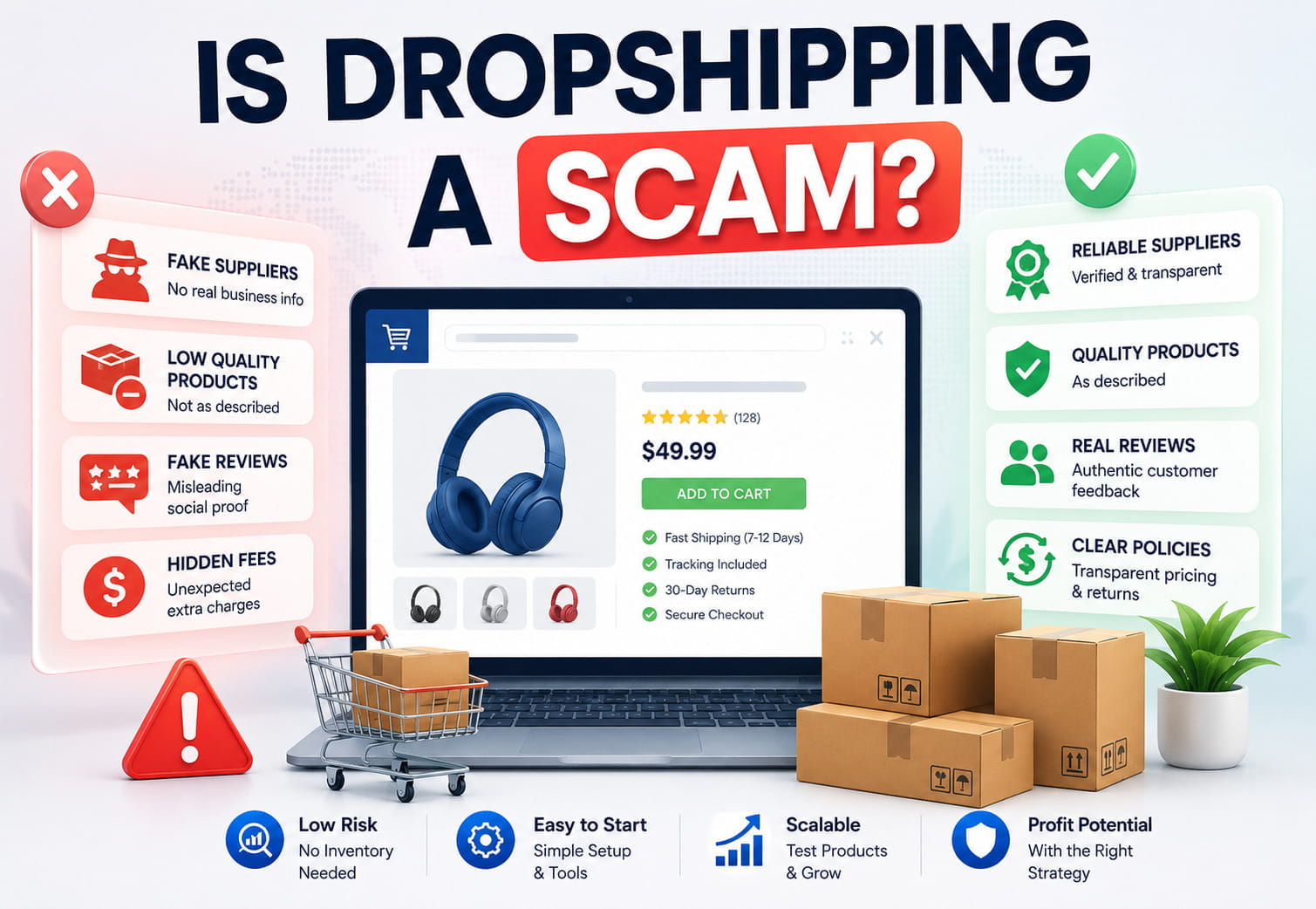
The question “is dropshipping a scam” appears in search results constantly, often followed by another common concern: “is dropshipping legit?” The short answer: dropshipping is a legitimate retail fulfillment method, but the longer answer requires understanding why so many people get burned anyway.
- Drop shipping is a legitimate e commerce model used by major platforms like Shopify, WooCommerce, and Amazon, but it’s surrounded by real dropshipping scams and unrealistic promises that give it a bad reputation.
- Most problems come from bad suppliers, fake reviews, poor product quality, and store owners overhyping offers, not from the dropshipping business model itself.
- Profit margins are often thin (typically around 20%), you have limited control over fulfillment, and long-term success requires brand building and honest product descriptions rather than quick arbitrage.
- Tools like Easync automation can help you avoid dropshipping scams by monitoring stock, prices, and fulfillment performance in real time, reducing manual errors that cost money.
- The rest of this article will show you how to avoid dropshipping scams, pick reliable suppliers, and decide whether this model fits your goals for 2026 and beyond.
What Is a Dropshipping Business, Really?
A dropshipping business works like this: a customer places an order on your online store, you forward that order to a supplier (paying their wholesale price), and the supplier ships directly to the customer. You never touch inventory. Your profit comes from the difference between the retail price you charge and the wholesale cost plus fees.
The terms “drop shipping” and “dropshipping” mean the same thing, both have been standard e commerce terminology since the mid-2010s when platforms like Shopify launched dedicated dropshipping apps and acquired tools like Oberlo.
Three roles define the model:
- Retailer (you): Handles marketing, storefront, and customer service
- Supplier: Manages inventory, packaging, and shipping
- Customer: Buys from your store, often unaware of the supplier’s involvement
Major platforms like Shopify, WooCommerce, and Amazon provide official support and infrastructure for dropshipping, indicating the model’s legality. eBay allows it under specific disclosure rules. This widespread platform acceptance proves the structure itself is legitimate.
The catch? Because you never see products before they reach customers, you depend heavily on the supplier for product quality, shipping speed, and returns handling. This dependency creates most of the problems people mistake for the business model being a scam.

Is Dropshipping a Scam or Legit? The Direct Answer
No, dropshipping is not inherently a scam; it’s a fulfillment method. But there are many dropshipping scams and scammy behaviors surrounding it that create confusion.
You need to differentiate between three things:
- The legitimate dropshipping model: Used by established brands to test products or expand catalogs without inventory risk
- Scammy dropshipping stores: Ghost stores that collect payments but never ship, or sell counterfeit products
- Scammy courses and programs: “Get rich quick” offerings that promise overnight success while hiding the real work required
By 2026, the dropshipping market is expected to reach $537.8 billion, nearly double its 2023 value, indicating its growing popularity among entrepreneurs. This growth wouldn’t exist if the model didn’t work for legitimate operators.
Dropshipping can be a legitimate business model, but it requires careful supplier selection, product quality checks, and clear customer communication to avoid potential pitfalls. Legitimate dropshippers often focus on faster shipping, thorough vetting of suppliers, and offering exceptional customer service to avoid being perceived as a scam.
Dropshippers provide value through curation, marketing, and customer service, offering a branded experience to customers. Regulatory bodies in the US, EU, and UK treat dropshipping like any other business retail activity, issues arise from execution, not structure.
Is Dropshipping Legit in 2026?
Yes, dropshipping is legit in 2026 when it is treated as a real retail business rather than a shortcut to fast money. The model is legal and widely used: a seller lists products online, a supplier handles storage and fulfillment, and the customer receives the order directly. The problems usually start when beginners choose unreliable suppliers, hide long shipping times, copy product pages without checking quality, or promote products with unrealistic claims.
Dropshipping: Legit Business vs Common Scam Patterns
Understanding the difference between a legitimate dropshipping business and a scammy store is critical before investing time or money into the model. The table below highlights the biggest differences buyers and sellers should watch for in 2026.
| Factor | Legitimate Dropshipping Business | Scammy Dropshipping Store |
|---|---|---|
| Product Delivery | Orders shipped with valid tracking numbers | Orders never shipped or fake tracking provided |
| Product Quality | Realistic descriptions and tested products | Misleading photos and counterfeit or low-quality goods |
| Shipping Times | Clear and transparent delivery estimates | Unrealistic or hidden shipping timeframes |
| Customer Support | Responsive support and refund handling | No replies after payment or unresolved complaints |
| Supplier Relationships | Verified suppliers with clear policies | Anonymous or fake suppliers with no transparency |
| Reviews & Social Proof | Authentic customer reviews with mixed feedback | Fake five-star reviews and manipulated testimonials |
| Pricing Strategy | Competitive but realistic pricing | “Too good to be true” prices designed to attract impulse buyers |
| Business Approach | Long-term brand and customer trust focus | Short-term cash grab strategy |
| Refund Policy | Public and clearly explained return process | Missing, vague, or misleading refund policies |
| Payment Methods | Secure checkout with buyer protection | Crypto-only or unsafe direct payment requests |
Common Dropshipping Scams and Red Flags
While the dropshipping model is legitimate, certain supplier and store-owner behaviors qualify as classic dropshipping scams. Understanding these patterns helps you protect both your profit margins and brand reputation.
The most common scam patterns include:
- Fake supplier websites and ghost stores
- Counterfeit or generic products misrepresented as branded
- Fake reviews and manipulated social proof
- Get-rich-quick courses promising unrealistic returns
- Shady payment requests outside normal channels
Let’s examine each so you know what to look for when browsing supplier directories or evaluating social media ads.
Fake Supplier Websites and Ghost Stores
Fake “wholesale” or “dropship program” sites take payments but never ship orders. They use stolen product photos from AliExpress, provide no verifiable company information, and often operate from .co or .xyz domains with hidden WHOIS data.
Ghost dropshipping stores sell trending products (like viral TikTok gadgets) at suspiciously low prices, then disappear after collecting orders. The Better Business Bureau logged over 12,000 dropshipping-related complaints in 2024-2025, with 40% involving non-delivery.
To avoid dropshipping pitfalls, always verify your suppliers thoroughly by checking their business number, physical address, and active phone number, as scammers often provide fake information. Legitimate businesses provide a physical address, a clear return policy, and responsive customer support, unlike “ghost stores” used by scams.
Red flags to check:
- No physical address verifiable on Google Maps
- Support inquiries go unanswered for 48+ hours
- Only vague five-star reviews with no specifics
- Prices dramatically below market rates
Counterfeit Products and Misleading Product Quality
Some suppliers offer unrealistically cheap “branded” goods, Nike shoes at $25, Apple accessories at $10, luxury bags at $30. These are almost always counterfeits.
The dropshipping model is fully legal, but legal issues can arise if suppliers sell counterfeit or trademarked products without authorization. Amazon suspended 50,000 accounts in 2024 for counterfeit-related violations. Beyond account bans, you face chargebacks (averaging 2.5% per Stripe data) and potential intellectual property lawsuits.
Common dropshipping scams include misleading product quality, where suppliers send inferior products or use misleading images, leading to customer dissatisfaction and negative reviews.
Warning signs:
- Prices well below normal retail for recognized brands
- Glossy product descriptions avoiding specifics on materials or certifications
- No clear manufacturer information
Before offering a product, it’s advisable to order samples, test shipping speeds, and verify accuracy in product descriptions to ensure quality assurance from suppliers.
Fake Reviews and Manipulated Social Proof
In 2020, 42% of reviews on Amazon were found to be fake, highlighting the prevalence of fraudulent reviews in the dropshipping industry. This problem extends across supplier sites and individual dropshipping stores.
Look for detailed and specific feedback in product reviews, as generic praise or clusters of positive reviews posted on the same day can indicate fake reviews, which are a red flag for potential scams.
Patterns of manipulation:
- Identical phrases across multiple reviews
- Many reviews posted on the same date
- Generic compliments like “Great product!” with no specifics
- Reviewers with no profile history or purchase verification
Cross-check reviews across platforms, Amazon, AliExpress, Trustpilot, Reddit threads, instead of trusting only on-site testimonials. Genuine reviews typically include some negatives and specific details about product quality and shipping.
Get-Rich-Quick Courses and “Secret Methods”
Many dropshipping scams in 2022-2026 shifted from selling products to selling “systems,” “blueprints,” or private communities promising overnight riches without effort.
Claims that suggest making $10,000 in the first week with zero effort in dropshipping are likely deceptive; the model requires substantial work in marketing and customer support. Dropshipping scams often promise unrealistic profits and quick success, which can lure inexperienced sellers into paying for unhelpful courses or programs.
Be skeptical of:
- “No experience needed” promises
- “$0 ad spend” claims
- Screenshots showing income without verifiable context
- Courses costing $997+ for information available in free resources
Most foundational knowledge about running a dropshipping business—store setup, product research, basic ads—is available free through Shopify Academy and YouTube. If you choose paid education, look for instructors who honestly discuss thin margins, testing requirements, and long-term brand building.
Shady Payment Requests and Hidden Fees
Legitimate suppliers typically accept traceable methods like credit cards, PayPal, or platform-managed payments with invoices.
Many dropshipping scams involve suppliers requesting payment outside of official channels, such as wire transfers or cryptocurrency, which increases the risk of financial fraud. Be cautious of suppliers that request payment outside of official channels, as legitimate suppliers typically offer secure payment options like credit cards or reputable online payment platforms.
A significant red flag for dropshipping scams is the presence of sub-wholesalers or middlemen who sell products at inflated prices, harming the profit margins of legitimate dropshippers. Legitimate wholesalers usually charge per order or have a verified application process, whereas some suppliers that charge membership fees may be scams.
Hidden fees to calculate:
- Per-order handling surcharges
- “Account setup” fees
- Inflated shipping costs
- Payment processing fees
Always calculate total landed cost per unit, product, shipping, platform fees, ad costs, supplier extras, before listing anything.
Real Drawbacks of Legitimate Dropshipping (That Feel Like a Scam If You Don’t Expect Them)
Even when everyone operates honestly, dropshipping has structural weaknesses that surprise beginners. Understanding these limits before starting prevents disappointment and helps you plan a more sustainable business.
Common risks associated with dropshipping include lack of inventory control, low profit margins, high competition, and reliance on unreliable suppliers, often resulting in high failure rates.
Low Profit Margins and Rising Costs
Because suppliers cover storage, packaging, and labor, your markup room is smaller than traditional retail. Dropshipping can be profitable, but it typically has lower profit margins compared to traditional retail, often around 20%, and requires a higher sales volume to be effective.
Typical 2026 cost stack for a $50 product:
- Product cost: $20
- Shipping: $8
- Payment gateway: ~3%
- Ad spend: $15-20 per sale (Meta CPC now $2.50+, up 20% year-over-year)
This leaves $0-5 profit on many items. Thin margins mean even small increases in ad costs or return rates flip products from profitable to loss-making. Successful dropshipping businesses often rely on strong traffic, optimized pricing, and a compelling customer experience to maintain profitability despite lower margins.
Limited Control Over Product Quality and Customer Experience
In a typical dropshipping business, you never see most items your customers receive. Sellers in dropshipping often lack quality control as they do not see the product before it reaches the customer, which can lead to high return rates.
Reliable dropshipping suppliers typically communicate clearly, provide accurate inventory data, and fulfill orders consistently, which directly affects product quality and customer satisfaction. But any defect, wrong color, or late shipment is blamed on your brand, not the supplier.
Periodically ordering from your own store helps audit what customers actually receive. Clear product descriptions, realistic shipping estimates, and visible return policies soften the impact of this limited control.
Shipping Delays, Returns, and Platform Risk
Extremely long shipping times can result from products being shipped directly from international suppliers, impacting customer expectations. Deliveries from China to the US commonly take 15-25 days, triggering chargebacks and negative feedback.
Marketplaces enforce strict thresholds:
- Amazon: <4% defect rate or suspension
- eBay: 95% on-time delivery required
Dropshipping is often perceived as a scam due to high-risk factors that lead to poor customer experiences, including long shipping times, low-quality products, and poor customer service. Poor customer service experiences may arise from product issues such as broken or late delivery, leading customers to believe the store is a scam.
Set clear expectations on product pages about shipping times. Track all shipments and proactively contact customers if delays occur.
How to Avoid Dropshipping Scams and Protect Your Store
Prevention costs far less than fixing reputation damage or handling mass refunds after a bad supplier experience. Combining manual checks with automation tools reduces both obvious scams and subtle profitability-killing issues.
Vetting Suppliers Like Business Partners
Supplier red flags include vague business addresses, unclear return policies, extremely low wholesale prices, and slow, inconsistent communication, which can indicate unreliability.
Verification steps:
- Check tax IDs, company registration, and warehouse addresses using official databases
- Use Google Maps to verify physical locations
- Ask about stock levels, average shipping times, and damaged-item policies
- Test support responsiveness—legitimate suppliers answer within 48 hours
- Compare prices with broader market rates to detect middlemen
Treat suppliers like long-term partners, not anonymous vendors. Reputable ones are transparent about capabilities and limitations upfront.
Testing Products, Descriptions, and Customer Experience
Ordering samples of products before listing them for sale is crucial to ensure quality and to experience the customer journey, helping to avoid potential dissatisfaction and negative reviews.
Testing workflow:
- Order 5-10 samples to different addresses
- Inspect build quality, packaging, missing parts
- Compare to listed product descriptions
- Photograph items yourself to avoid sharing generic catalog images with other stores
- Rewrite descriptions with honest details on materials, sizing, dimensions
Use early customer feedback and returns data to refine which products stay in your catalog.
Safe Payment Practices and Clear Policies
Use payment methods providing buyer protection, invoices, and dispute mechanisms. Avoid paying large upfront balances until suppliers prove reliability over months.
Publish transparent policies covering:
- Realistic shipping time estimates
- Return and refund procedures
- Warranty information
Add order tracking and automated notifications so customers stay informed. Consistency in handling refunds builds trust and reduces chargebacks.
Using Automation and Easync to Run Dropshipping Safely and Profitably
As a dropshipping business scales beyond a handful of daily customer orders, manual tracking becomes dangerously error-prone. Selling items that are out of stock, missing price changes that destroy margins, or forgetting to update tracking numbers all make legitimate stores look scammy to buyers.
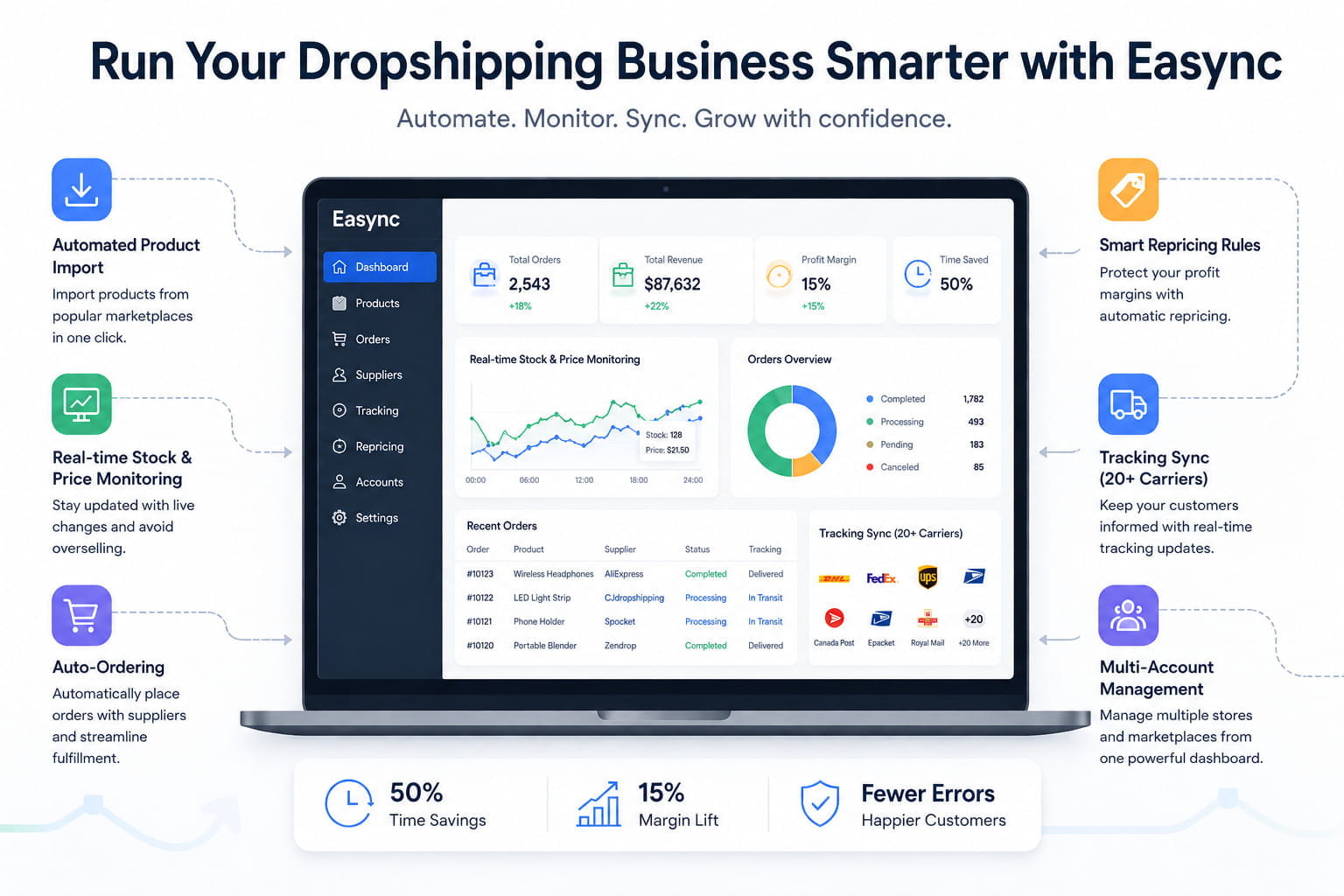
This is where dropshipping software Easync supports store owners seeking efficiency and accuracy. Easync offers automated product importing from supported marketplaces, real-time stock and price monitoring to prevent overselling, auto-ordering that places orders with suppliers automatically, repricing rules that protect profit margins when supplier costs change, tracking synchronization across 20+ carriers to keep customers updated, and multi-account workflows for managing multiple stores or marketplaces from one dashboard. Users report 50% time savings and a 15% margin lift when using systematic automation versus manual processes.
By continuously syncing product data and tracking, Easync reduces the chance of selling out-of-stock items or shipping late, both mistakes that erode customer trust even when unintentional. Pairing manual supplier vetting with tools like this creates a more resilient, scalable operation.
How to Use Dropshipping Strategically (Instead of Being Trapped by It)
The smartest operators in 2024-2026 treat dropshipping as a tool inside a broader e commerce strategy, not the entire business forever. Brands often begin with dropshipping to test ideas, then bring proven products into traditional inventory or white labeling programs.
Think in phases: validate demand, refine offers, then invest in deeper stock and branding once metrics look solid.
Market Research and Product Testing With Low Risk
Dropshipping lets you add new products quickly and see real sales data before committing capital. Use tools like Google Trends and Ecomhunt to identify niches.
Simple workflow:
- Select 5-10 products in a focused niche
- Test with small ad budgets ($100-200 per product)
- Track conversion rates, return rates, and product quality feedback
- Kill items with <1% conversion or >10% returns
- Scale winners with 3x ROAS
Once products prove reliable and profitable, negotiate better supplier terms or bring them into your own inventory for higher margins. This test-and-scale cycle remains dropshipping’s biggest genuine advantage.
Building a Brand Beyond Generic Product Arbitrage
Long-term success comes from brand trust, not finding temporary arbitrage gaps in market pricing. Selling the same item as dozens of other stores creates high competition and price pressure.
Steps to differentiate:
- Pick a focused niche aligned with a clear customer profile
- Customize product listings with your own photography and descriptions
- Build an email list with post-purchase sequences providing value
- Use consistent packaging where suppliers allow (custom inserts cost $1-2/unit)
As brand strength grows, reliance on low-quality suppliers and aggressive short-term tactics should shrink. Your focus shifts from spending money on ads to building a customer base that returns organically.
Final Thoughts: Is Dropshipping Worth It in 2026?
Dropshipping is not a scam, but it’s a demanding business model with unique vulnerabilities. The dropshipping market is expected to grow significantly, reaching $537.8 billion by 2026, indicating a rising interest in this business model among entrepreneurs, but that growth includes both legitimate operators and scammy stores.
Success depends on:
- Rigorous supplier vetting with check reviews and sample orders
- Honest product descriptions that match what customers receive
- Realistic shipping time expectations clearly communicated
- Disciplined profit margins management using proper calculations
Automation tools like Easync, combined with testing and data-driven decisions, make it much easier to avoid dropshipping scams and protect your reputation. View dropshipping as an entry point into e commerce, use it to learn, validate, and evolve toward stronger branding and better control.
Dropshipping isn’t a good to be true shortcut to overnight success. Building any sustainable business requires hard work and consistent effort. But for patient, informed operators willing to treat it as a real own business rather than a get rich quick scheme, it remains a viable part of a long-term strategy in the growing ecommerce market.

FAQ
Is dropshipping legal in my country?
Dropshipping is generally legal in most countries including the US, Canada, UK, EU members, and Australia. The model itself isn’t restricted, legal problems typically arise from selling counterfeit goods, violating platform rules, or failing to meet consumer protection standards.
Before launching, verify local requirements like business registration, VAT or sales tax obligations, and return policies. Marketplaces like Amazon and eBay have their own dropshipping policies requiring disclosure and performance standards. Consulting a local accountant or lawyer once sales become consistent helps you stay compliant with tax obligations.
How much money do I realistically need to start a dropshipping business?
While you don’t buy inventory upfront, you still need budget for store platform fees ($29+/month for Shopify), apps or tools, test orders, and especially marketing. A realistic range is $1,000-$3,000 depending on your ad strategy and tooling choices.
Underfunding marketing is why many dropshippers never gather enough data to find winning products. Set aside a buffer for refunds and chargebacks during early testing. Expect several months of experimentation before clear profits appear, this isn’t a make money quickly model despite what some courses claim.
Do I need to register a company and pay taxes for dropshipping income?
In most jurisdictions, you must report income from a dropshipping business even as a side hustle. Once revenues become consistent, registering a legal entity (LLC, limited company, or sole proprietorship) is typically wise or required.
Sales tax and VAT rules for cross-border e commerce are complex. Payment processors and marketplaces often demand verification documents once you hit certain volume thresholds. Keep accurate records of revenue, costs, and refunds from day one, your future self will thank you during tax season.
Can I make passive income with dropshipping, or does it require daily work?
Dropshipping is not fully passive. It requires ongoing work in product research, marketing skills development, customer service, and supplier management. Anyone describing it as completely hands-off is selling you something.
Automation tools like Easync significantly reduce manual tasks, importing, stock monitoring, repricing, tracking sync, but don’t eliminate strategic decisions. After setup, the business might require fewer hours weekly but still needs monitoring, optimization, and occasional problem-solving. This is a real drop shipper responsibility, not a set-and-forget income stream.
What kinds of products are best for a beginner dropshipping store?
Avoid heavily regulated, branded, or counterfeit-prone categories (big-name electronics, luxury fashion, health supplements) as a beginner. These invite legal trouble and high competition.
Focus on mid-priced ($20-80), problem-solving products in a clear niche with reasonable shipping size and weight. Choose quality products where you can write strong product listings showing clear benefits. Test a small range first, then lean into items with good reviews, low return rates, and sustainable profit margins.
The “best” product in 2026 fits your audience, brand story, and operational capabilities, not just whatever is trending on social media this week.