Amazon analytics tools help sellers calculate accurate profits, sales, returns, customer behavior, market segmentation, and differentiate winning products. I reviewed each analytics tool based on their features, use case and pricing.
- Amazon Brand Analytics: Free first-party tool by Amazon that provides decent reports on sales, customer behavior, segmentation, and keyword volume and trends.
- Sellerboard: The most affordable analytics tool for P&L and profitability tracking.
- Easync: Best automation tool for experts who want to resell Amazon products on Shopify, eBay, and WooCommerce.
- Helium 10: Famous analytics tool which is costly but best for product research, operations, and analytics, all under 1 giant subscription.
- Jungle Scout: Strong tool for product research, competitor benchmarking and comparing historical data.
- Novadata (Nova): Best for brands that want deep reporting, custom analytics and detailed profitability data with the option to create custom dashboards.
- Conjura: My choice for well established brands who want greater depth into their ad spend, sales, profits, etc. Conjura lets you connect to Amazon, Meta, GA4, etc.
- Shopkeeper: A simple and affordable way for smaller Amazon sellers to monitor profitability and inventory.
- Gorilla ROI: For people who love Google Sheets, Gorilla ROI queries, filters and syncs your Amazon Seller Central data into Google Sheets.
- Scale Insights: Strong automation software to create actions based on rules. Excellent for Amazon PPC and advertising automations.
For detailed reviews, and some bonus free tools, read the blog.
Amazon analytics tools are specialized software that connect with Amazon Selling Partner API to access your sales data, and create real-time dashboards on profit, sales, inventory, and other important metrics for your Amazon store. These tools save sellers hours of manual labour, spreadsheets, tracking every individual metric and making sense of it. You connect your Amazon account, and the analytics tool automatically gathers all the data about your store and converts it into an actionable dashboard.
In 2026, Amazon analytics tools are even more important because markets are saturated, competition is fierce and margins are thin. You need every bit of useful insight to plan your next step, detect a stockout in time, optimize your ad spend, find the best keywords, lower your CPC and more.
In this blog, I’ve listed down 10 best Amazon seller Analytics tools that you would find useful in 2026. Most of these tools offer different features and target different pain points so this guide isn’t a comparison between them, but a review of each so you can decide which tools would solve your problems.
Core Metrics Every Amazon Analytics Tool Must Track
It doesn’t matter if the tool is for sales analytics, profits tracking, ad spend optimization, or inventory tracking, every tool tracks profits, sales, and cost because these are the fundamental KPIs for any business. A complete analytics platform covers net profit and loss, cost of sales, cost of advertising, inventory velocity, and keywords and sales attribution. Tools that don’t cover one of these metrics will fail to provide proper insights.
True Net Profit & P&L Modeling
True net profit metrics calculate revenue minus every possible expense in Amazon sales from fees to delivery to subscriptions and refunds. A great analytics tool should give a complete breakdown of the whole P&L image, view of each SKU, time frame, and where their most revenue goes. This would give them better insight into which areas to optimize to increase their profits.
I saw Sellerboard include every Amazon fee in their dashboard. They let you choose your COGS method (FIFO or average) so that your P&L stats are accurate. They tie gross profit and net profit stats with every cost line to the fundamental level.
TACoS (Total Advertising Cost of Sales)
ACoS measures ad spend on direct sales while TACoS shows ad spend as a percentage of total sales. This stat reveals the true impact of ads in overall growth. ACoS tells you how effective your campaigns and their conversion rates are but TACoS tells you whether your ads are actually eating from your organic sales and are costing you more money in reality.
Amazon Inventory Management & Sales Analytics
Amazon inventory metrics like stock forecast, sell-through percentage are tracked to avoid overstocking or lost sales. A good Amazon analytics tool will alert you about low stock, forecast how quickly it will run out based on sales trends, and recommend restock quantities. Without these metrics, a top-selling SKU can suddenly vanish from the platform and lose revenue.
Organic vs. Paid Keyword Share
You should track how much sales and traffic come from organic search and how much of it is sponsored (meta ads, Amazon ads, Google Ads, etc). Amazon lets you track these metrics so tools like Conjura can show you comparisons of organic and sponsored revenue. If most of my sales only come from ads, I might choose a new keyword or reduce ad spend.
The 10 Best Amazon Seller Analytics Tools Reviewed
Here is my review of Amazon seller analytics tools. I’ve reviewed each tool on how functional, easy to use, costly, and effective each tool is and what pain points they solve along with user feedback from Trustpilot.
1. Amazon Brand Analytics (Native Free Tool) & Search Query Performance
Amazon Brand Analytics is a free first-party tool by Amazon built into the seller dashboard. It provides search and sales data, search volume, conversions from each query, and what percentage of sales came from which keywords. I would say that it is a great research tool to decide what keywords are working, which ones to try next, what customer demographic to target and how your customers behave etc.
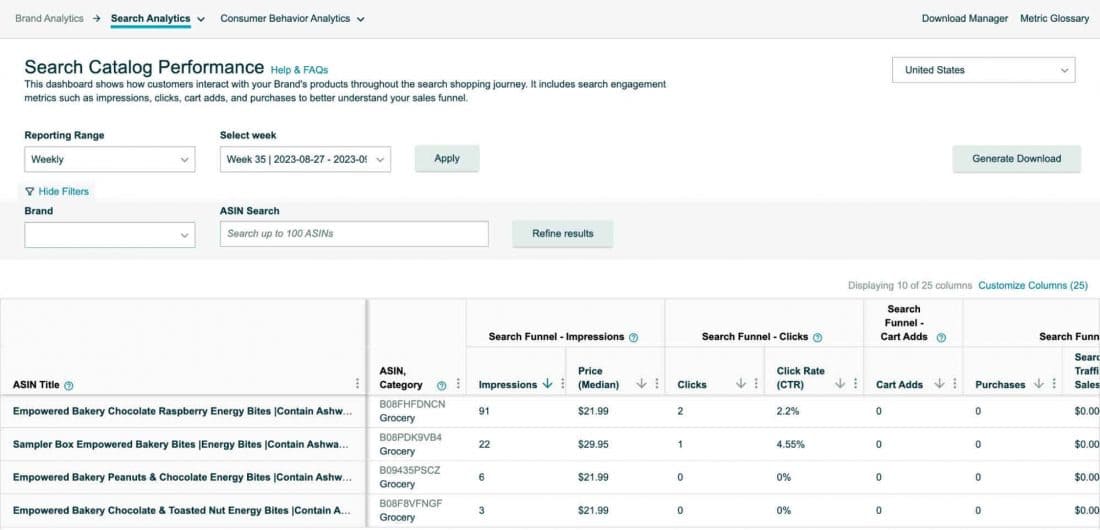
It is a basic search query tool with a simple UI but I love the clarity, and simplicity of the dashboard. It is definitely not an all-in-one analytics tool and is more focused towards keyword research and customer demographic understanding. Moreover, it’s a free tool built into your seller dashboard so who’s complaining.
Amazon Brand Analytics is split across Customer Journey Analytics, Customer Loyalty Analytics, Search Analytics, and Consumer Behavior Analytics, which together show how shoppers discover products, move through the funnel, and behave after purchase. I can use Search Catalog Performance and Search Query Performance to see how products perform across impressions, clicks, and purchases, while Repeat Purchase Behavior, Customer Segments, and Demographics are great for understanding who is buying and what products shoppers frequently purchase together.
The only con of this tool is that it only works for brand-registered sellers, not for everyone. Moreover, it does not show you P&L and TACoS metrics. There are separate tools for that and Amazon Ads dashboard is separate, not integrated into this one. I would suggest you to use it for early research along with other third-party analytics platforms.
2. Sellerboard: Best for Real-Time P&L & Low-Cost Profit Tracking
Sellerboard is an excellent Amazon analytics tool for profit forecasting, all types of costs, COGS, etc. You get a complete pre-configured dashboard with net profit, gross profit, sales, ad spend, and other costs. Each card is clickable and opens up to more insights about that specific metric with graphs and tables.
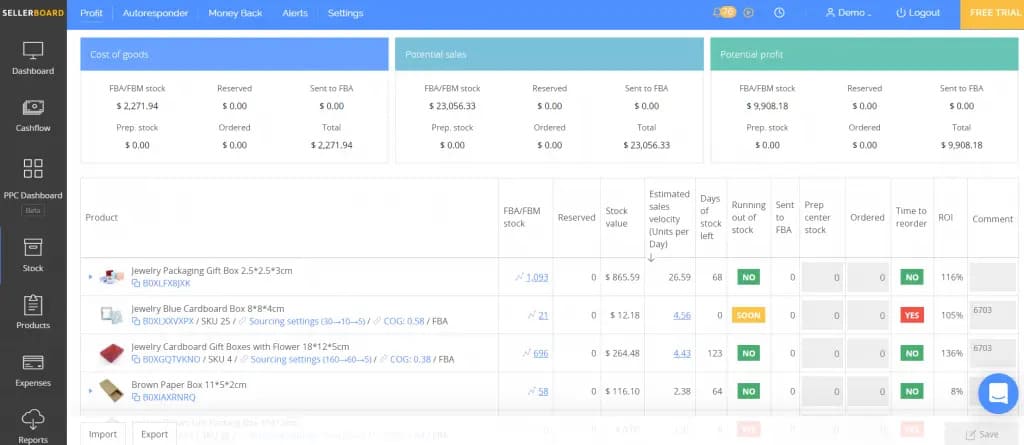
You get insights about cash flow, revenue, inventory, ad spend and conversions, best performing products, and much more. This multi-dimensional data allows you to find patterns like which products are selling organically instead of ads, are ads effective or just eating your organic conversions, etc.
Sellerboard shows true P&L stats because it accounts for every detail including the hidden Amazon fees for storage, shipping, FBE services, ad spend, COGS etc to create a complete picture of where you’re spending and how much. You get future forecasts based on inventory and history.
However, with so many great features for P&L, TACoS, COGS, Sellerboard is still an accounting/reporting tool at the end of the day. It isn’t an operational tool for order tracking, customer management, order management, etc. In their $15 plan, you get all the features with a 3000 order cap, and 150 follow-up emails.
3. Easync.io: Best for Operations, Inventory Analytics & Auto-Fulfillment
Easync is not a traditional P&L or inventory forecasting analytics tool like the rest. It is an automation software for sellers who resell from Amazon to Shopify, eBay and WooCommerce as well and track those additional profits and sales analytics. You’re not getting insights into how much profit you made on Amazon, you’re getting features and insights to resell your Amazon products to Shopify and eBay without managing those storefronts separately.
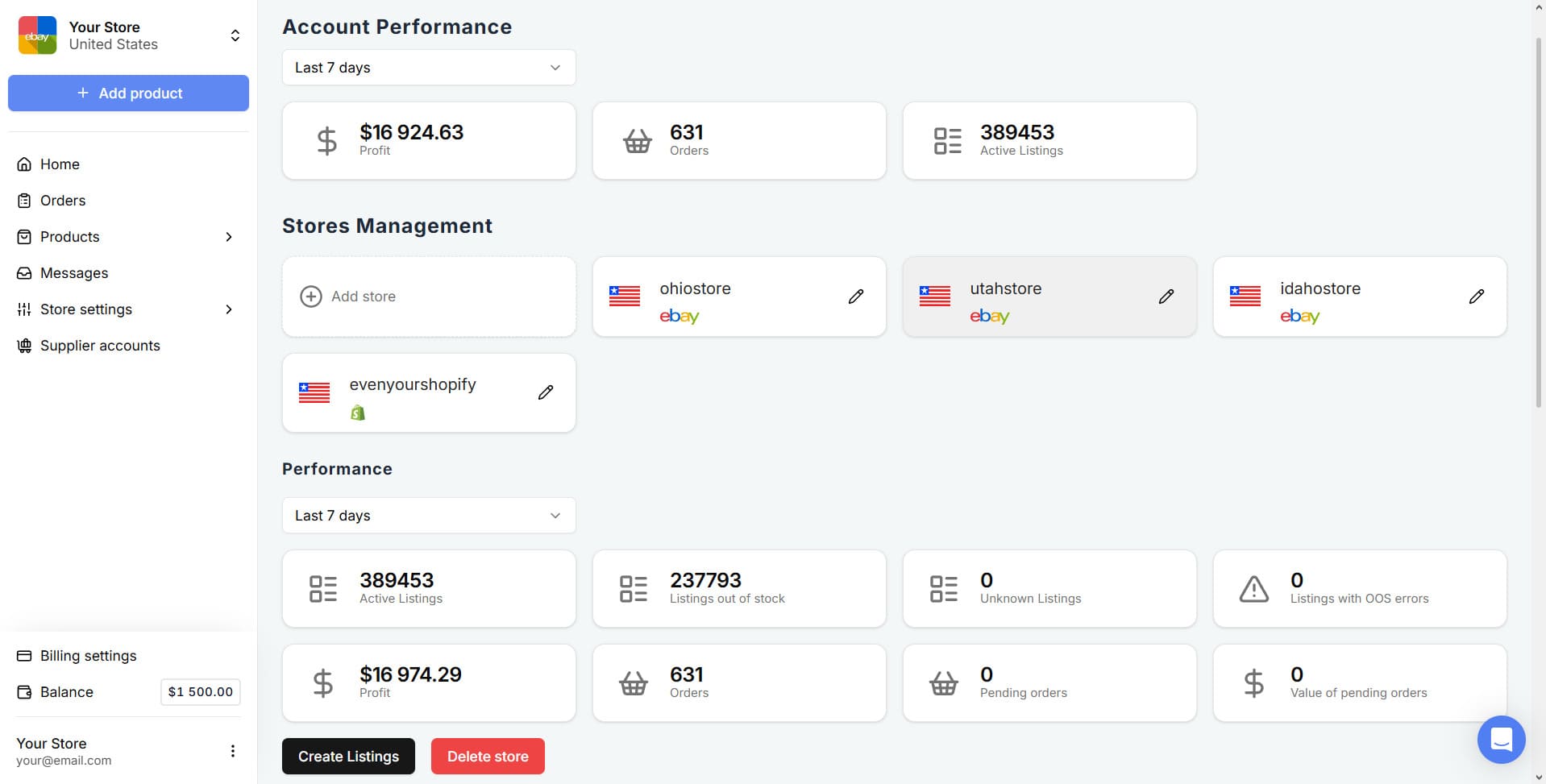
With Easync, you can re-list your Amazon products on Shopify, eBay and WooCommerce to increase the number of sales channels. If that is the case, Easync gives you end-to-end automation features to ensure your time is saved. Your products get automatically synced across stores, your prices get automatically updated when you make a change on Amazon, and all the orders from Shopify and other storefronts are placed on Amazon through Easync’s FBE (fulfillment by Easync) feature.
Within 60 seconds, Easync tracks the purchase coming in from Shopify/eBay, places an order on Amazon, and syncs tracking ID back to Shopify for the customer. This way, you only manage all your sales and shipping on Amazon without being overwhelmed by multiple storefronts. Easync helps you with automations like order placement, automatic price update by detecting change on Amazon, automatically delisting out of stock products, and showing sales and profit metrics.
The only downside of Easync is that their plans start at $49/mo for 2000 repricing listings after a 7 day free trial which might seem a lot for beginners but given the use case, I doubt that beginners are trying to sell their own Amazon products on other storefronts either.
4. Helium 10: Best All-in-One Seller Ecosystem
Helium 10 is one of the most popular and most talked about Amazon analytics tools. It has been a game changer for many businesses for product hunting, keyword research, product and sales insights, etc.
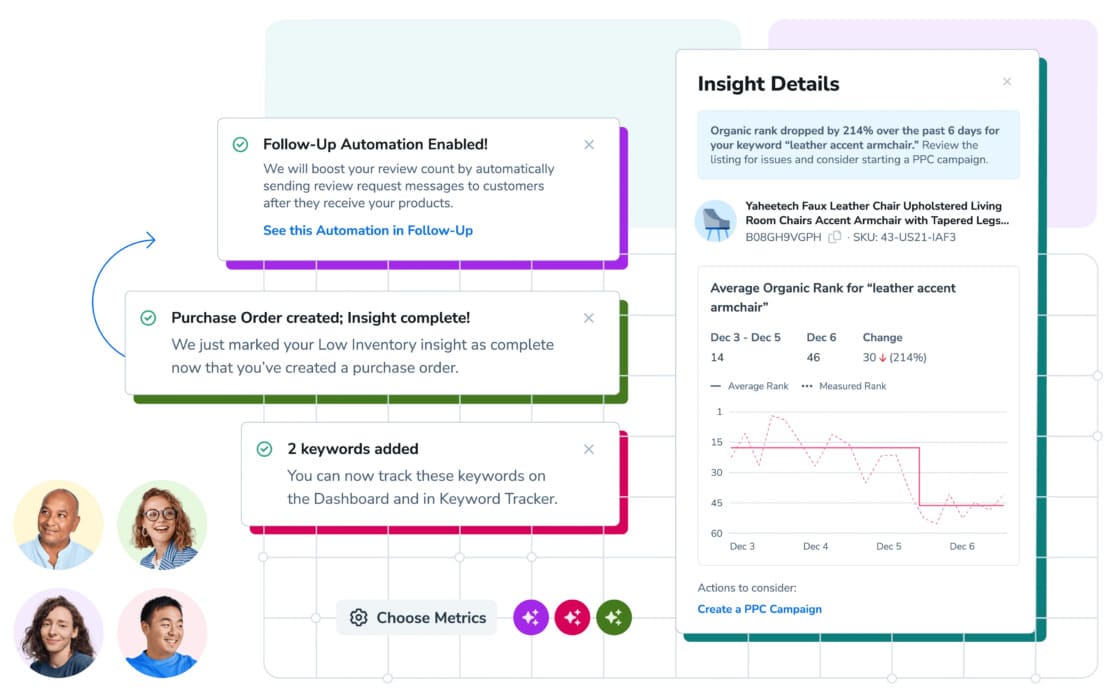
Helium 10 has a wide range of products for product ads, search engine optimization, product research, daily operations, and performance analytics. You get Chrome extensions, built-in tools in their web dashboard, and Amazon connections to give you a highly personalized data experience.
I loved their interface, the way they organize all the important metrics on dashboard, P&L, units sold, revenue, margins, etc. All the data is pulled from Seller Central in real-time and Helium queries it to show you best performing products and calculate break-even ACoS.
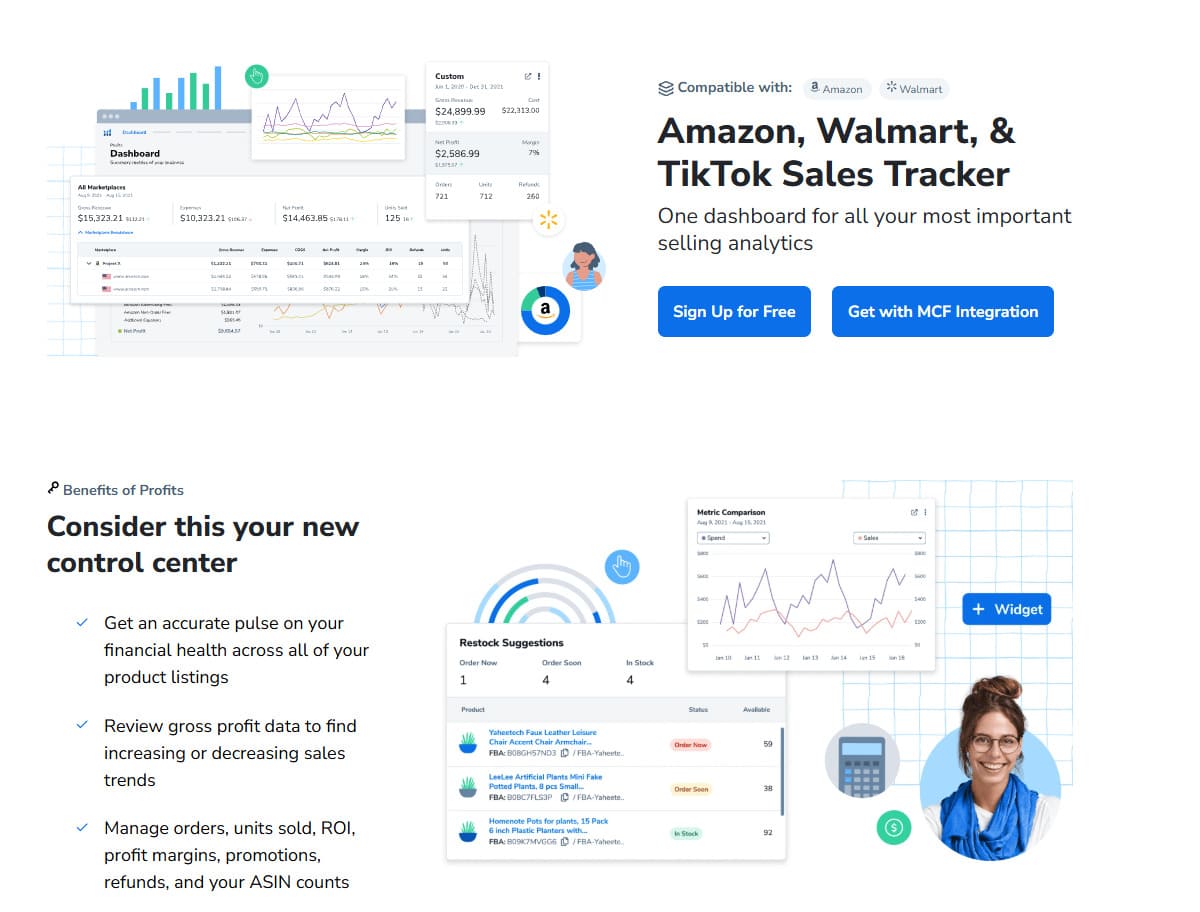
What I don’t like about Helium 10 is the price. Charging $129/mo for the lowest plan that only offers basic forecasting and keyword research is too much for any business. They regularly market their new AI agent at every screen but that comes in at $359/mo plan. Customers on Trustpilot have also complained about the sudden price hikes. One customer said that not getting multi-channel support at this price is disappointing. It is a great research tool but I hardly think it would become anyone’s core decision making platform given how expensive it is to fully utilize all its features.
5. Jungle Scout: Best for Competitor Benchmarking
After using Jungle Scout for a while and reading customer reviews, I would say that the platform’s most useful offering is their decade of data collection on Amazon products, trends, product volumes and insights into how sellers operate. These insights are what make Jungle Scout an interesting pick for benchmarking competitors, markets, which categories have how much volume, and what percentage of market share you own.
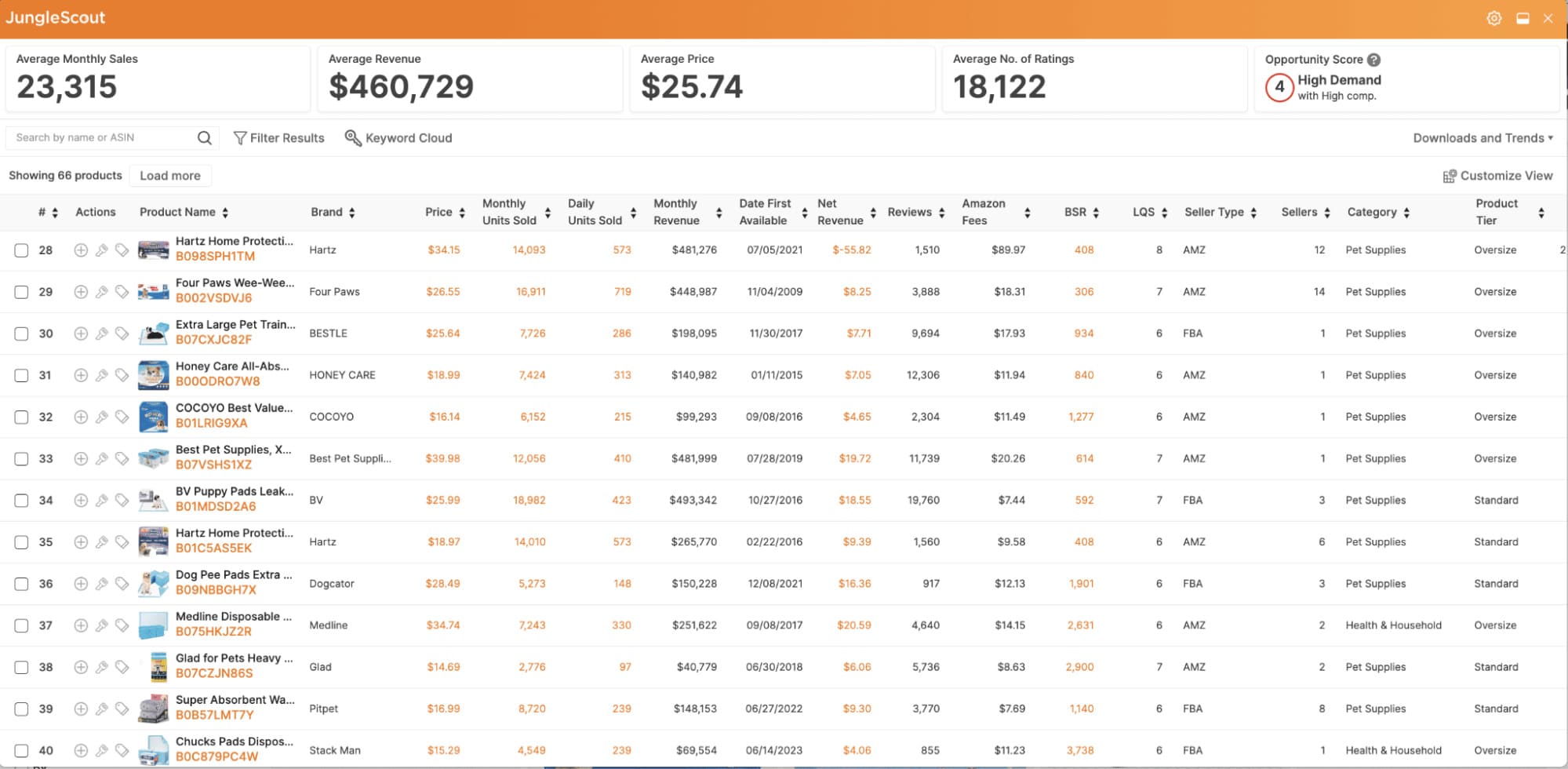
You can access every ASIN with revenue, orders, PPC spend, and margin. I could click a SKU to drill into that product’s sales trends and see weekly and monthly sales and ad costs to calculate other metrics from it. Jungle Scout has launched several new categories of products like AI assist, their own MCP tool for AI-agents, etc. to help you make sense of your own data and competitor volumes. Connecting your tool to Claude or ChatGPT means you can let AI do the keyword research and competitor analysis and give you a report.
With their MCP, you can access core Jungle Scout services like sales analytics for PPC data, ACoS and TACoS, use competitor estimate features to benchmark my product against another listing, and track ad spend and ROI metrics.
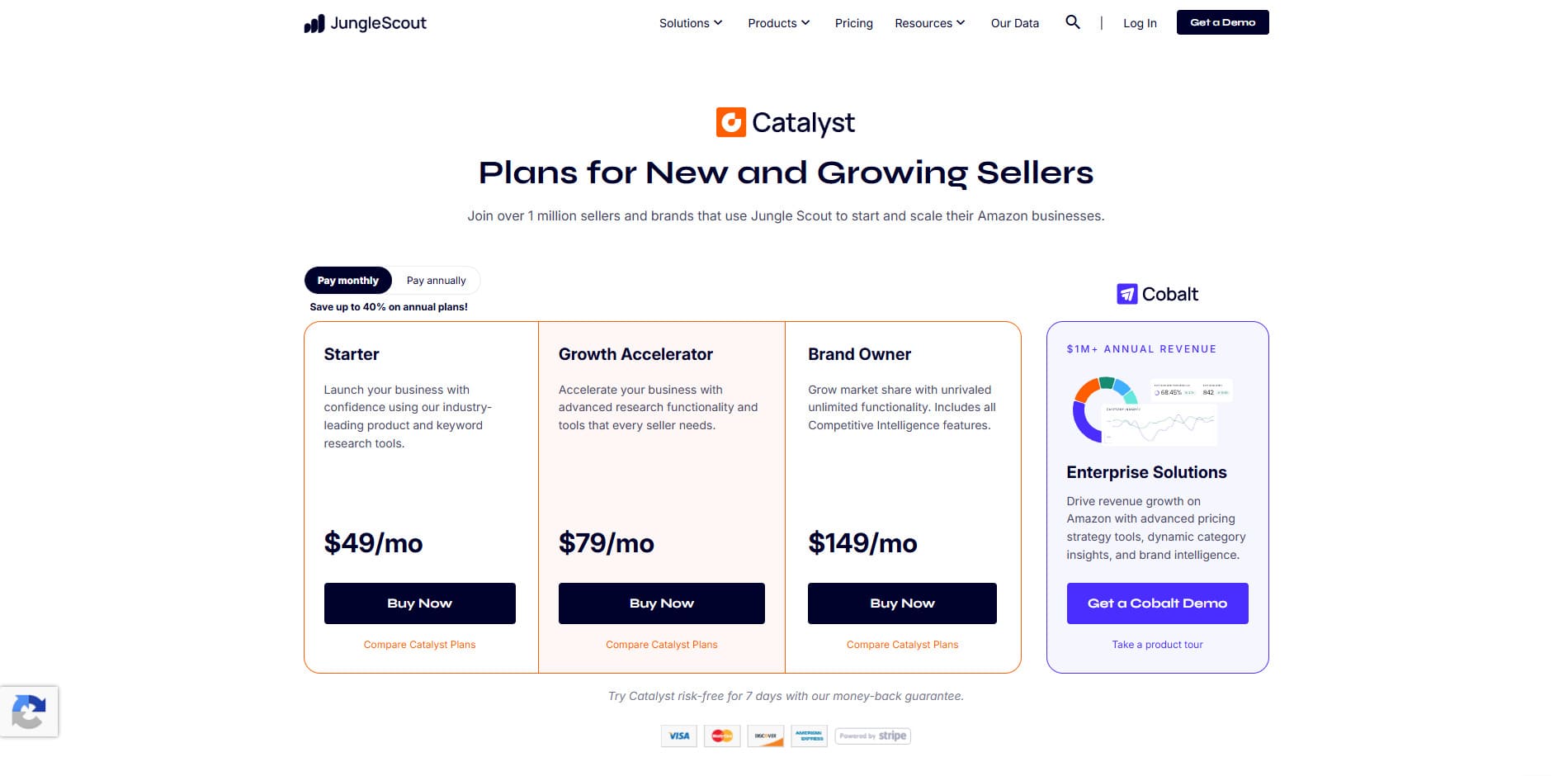
Jungle Scout is only for experienced sellers who can afford paying thousands of dollars in subscription fees annually. If we choose Jungle Scout Catalyst, it starts at $49/mo and includes practically nothing. All the good insights, reports, searches, ad research, keyword research tools are locked to their higher plans. With a bit of effort, you can do most of the stuff manually that you get in $49/mo. That’s where economics doesn’t make sense for beginners. Great tool, high costs just like Helium 10.
6. Novadata(Nova): Best for Enterprise Data Accuracy & Fee Auditing
Novadata (branded as Nova) is another extremely good Amazon seller analytic tool for profit tracking, PPC tracking, inventory management, and other reporting features. Nova’s value proposition is that you can compare multidimensional data from any date and time, create custom reports, and make sense of all the data you have collected from your Amazon sales and customers.
Novadata’s website claims a 99.8% accuracy on profit calculation by accounting for 500+ metrics and many reviewers report that their P&L features are impressive. I love the overall UI and user experience where I could see top SKUs, sales and ad spend, and other important charts at a glance, drill down deeper into per SKU stats and ad campaigns, etc.
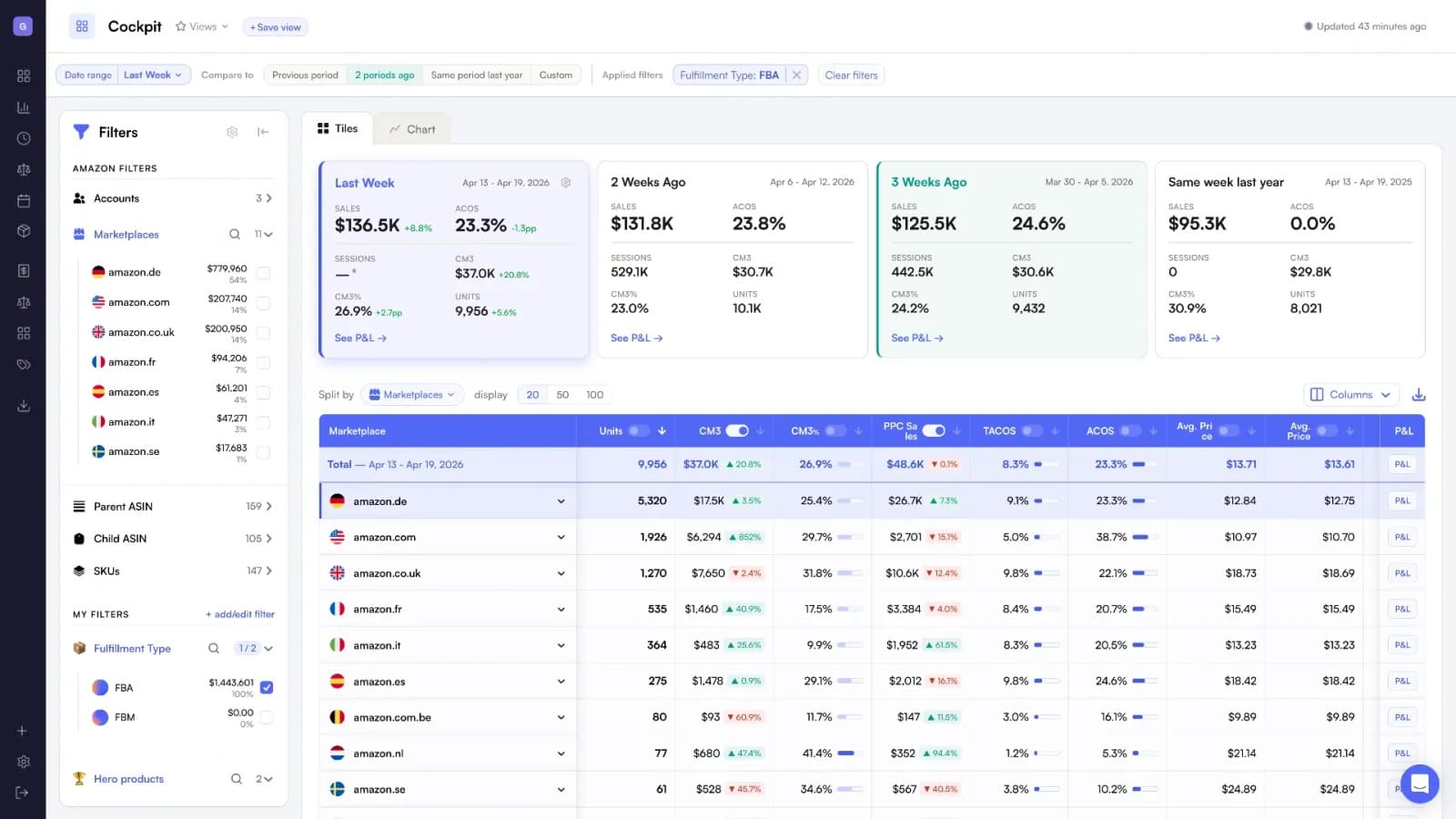
Advanced teams can create custom analytics by using their reporting builder feature which I think is great for enterprises and big sellers who want more out of their data but all these analytics tools fall short on it.
However, I can’t recommend Nova blindly because only extreme use can identify whether this fairly new analytics tool with around 3000 sellers is something to pick over Helium 10 or Sellerboard. Moreover, Novadata feels like an overkill for a small seller since they don’t have a lot to track, and don’t need custom reporting features that Nova prides itself for. Nova’s website also lists eBay, Shopify and Walmart as upcoming platforms but only supports Amazon as of now.
7. Conjura: Best for Multi-Channel Ecommerce BI
Conjura is an omnichannel business intelligence platform that not only supports Amazon but also integrates Shopify, eBay, Walmart and ad platforms into one dashboard to track your sales, revenue, profit, ad spend, customers, conversion rates, paid vs organic sales and so much more.
Conjura (although still relatively small in terms of users) is built for pros who want all of their data sources like Google Analytics and Meta Ads to Amazon and Shopify together in a unified dashboard. Imagine having almost every possible data point on how your customers react, buy, abandon carts, etc. You decide what metrics and flows are important for your niche and you can create it in Conjura.
If you don’t customize your dashboard, the standard home screen has widgets that compare multiple sales channels, same SKUs and their performance across them, ad spend, TACoS metrics, and trend charts.
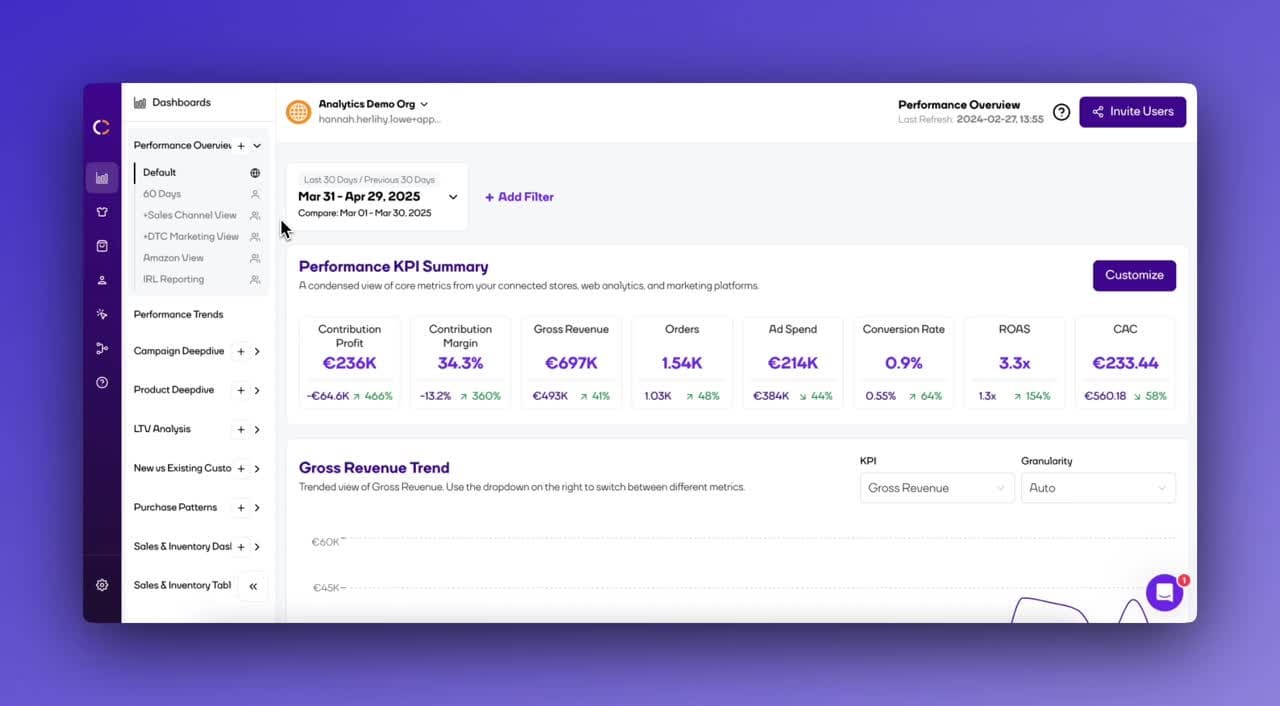
Conjura has specialised views for eBay and Walmart integrations but since we’re talking about Amazon, Conjura can even show you the real profit after Amazon takes its cuts via commissions, FBA fulfillment, returns, storage, etc to show you ‘real cash left’ stats. Even the ad spend is extremely accurate since Conjura pulls data from all ads platforms.
The drag and drop dashboards are great, and I love the option to connect your own analytics sources to improve data accuracy. However, for only Amazon sellers, Conjura might be an overall start. It is targeted at big brands who sell on multiple storefronts because their lowest plan starts at $299/mo for ad account integrations. Other platforms in this list heavily emphasize MCP integrations but Conjura’s Owl AI is additional $199/mo to use.
8. Shopkeeper: Best for Visual SKU Profit Tracking & Mobile Analytics
Shopkeeper is a dedicated Amazon analytics tool built to track profits, product growth, trends, and sales data. It connects with Amazon seller central and provides near accurate profits by tracking 150+ Amazon fee metrics.
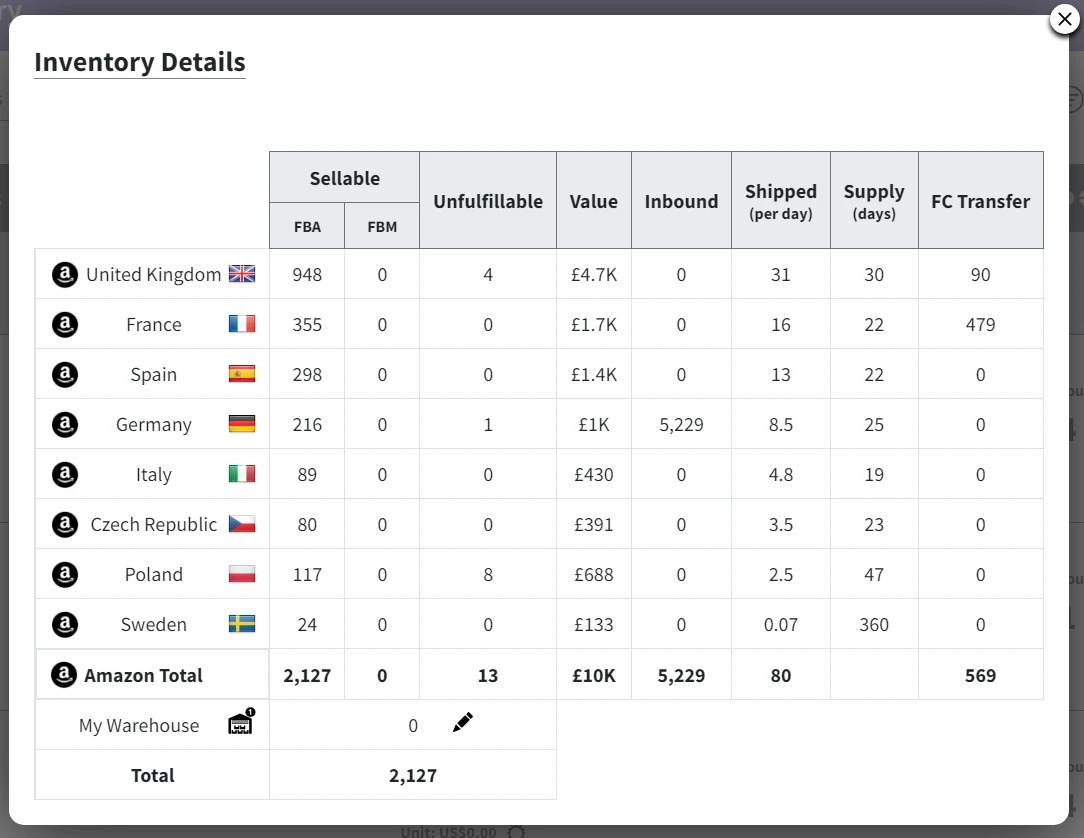
With Shopkeeper, you can set inventory alerts, customize views and alerts per SKU, track every penny made and spent, get PPC and sales insights, integrate shipping tools and help calculate accurate profits for each FBM product. I love the product, I love the simplicity and I love that it is mobile-friendly so you have key stats and inventory alerts available on the go.
Many people don’t like their website design and the way it is put together since it is a pre-AI product but personally, I think it’s easy to use and does the job pretty well. It is also one of the most affordable analytics tools in this list starting at $20/per month and provides all features. The shopkeeper does not gatekeeper their features in any plan. It just charges more when you exceed 250 orders per month which makes perfect sense for beginners and smaller sellers. Use everything and only pay us more if you get tons of orders flowing in.
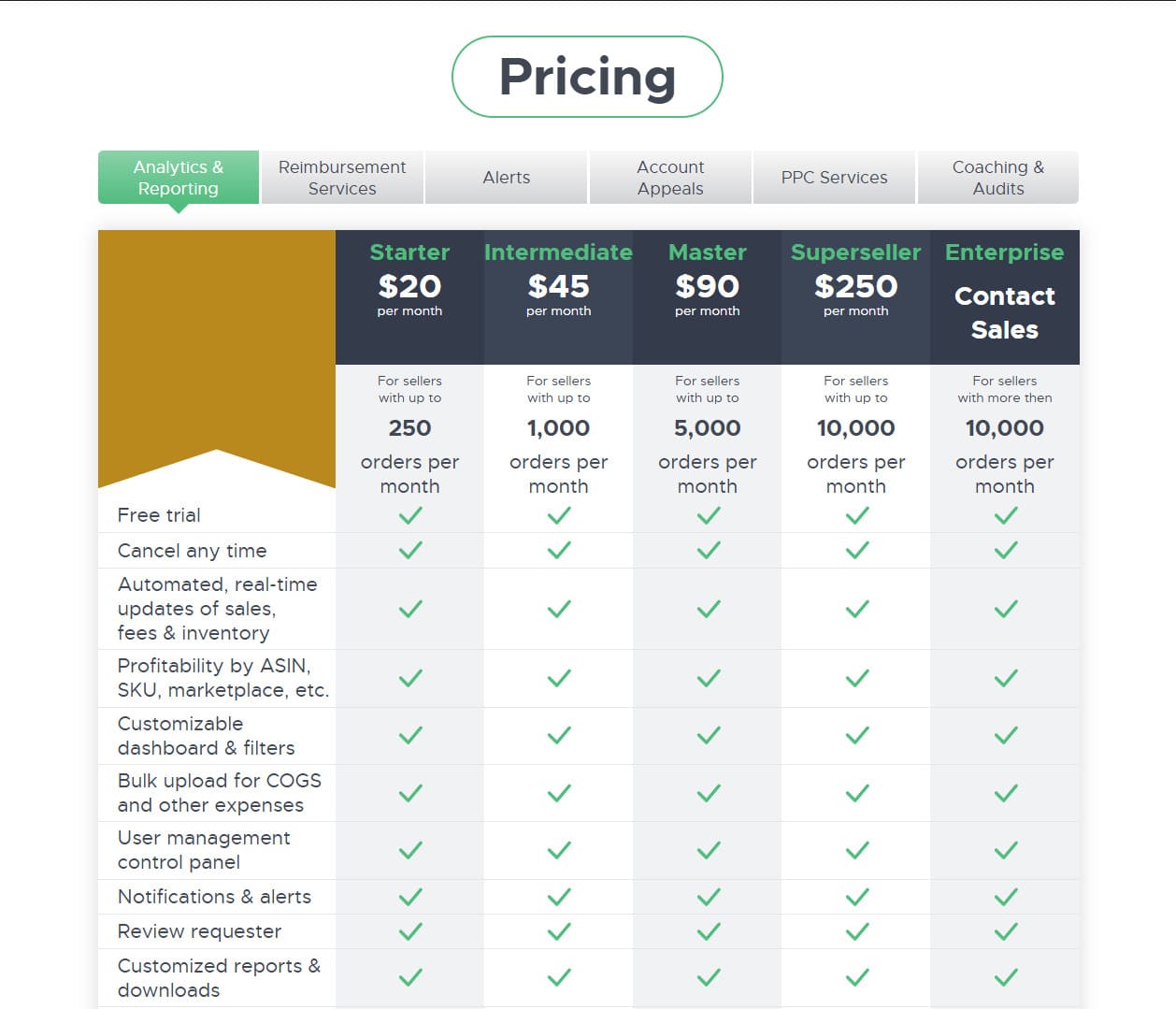
I would highly rate Shopkeeper for beginners and small sellers. Although it might not be super quick to set up for many people, it is affordable, has a generous free trial and does the job for those who don’t sell on multiple channels and don’t need almost every bit of little data insight.
9. Gorilla ROI: Best for Custom Google Sheets Data Pipelines
Gorilla ROI is a very different analytics tool in this list. It isn’t a separate dashboard, or AI assistant or MCP to give you insights into your data and profits, it is literally a Google Sheets integration. Everything you do in Amazon Seller Central gets called by Gorilla ROI, converted into sheets and organized in pre-configured templates. You get all these profits, net sales and other metrics inside Google Sheets.
For some, it is better than SaaS dashboards, while for others, Google Sheets don’t make sense in 2026. I included it because apparently there are people who prefer Google Sheets over web dashboards.Gorilla ROI is not bad at all. It accurately calculates ACOS, TACoS, ROAS, and other sales and profit metrics but the final output is in Google Sheets. Think of it as a query engine between Amazon Central and Google Sheets.
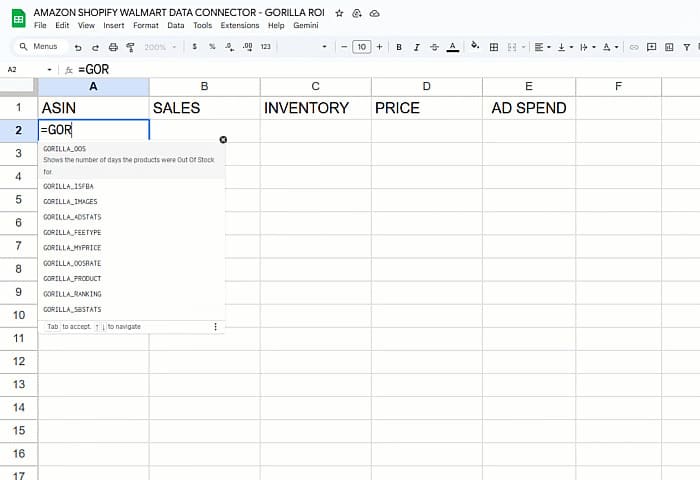
Personally, I am not a Google Sheets person in 2026 when AI MCPs are the hot thing. If I can have a conversation about my data with Claude and create custom dashboards, I wouldn’t want to manage Google Sheets. Any misclick on a field can change values without me noticing and would mess up the stats.
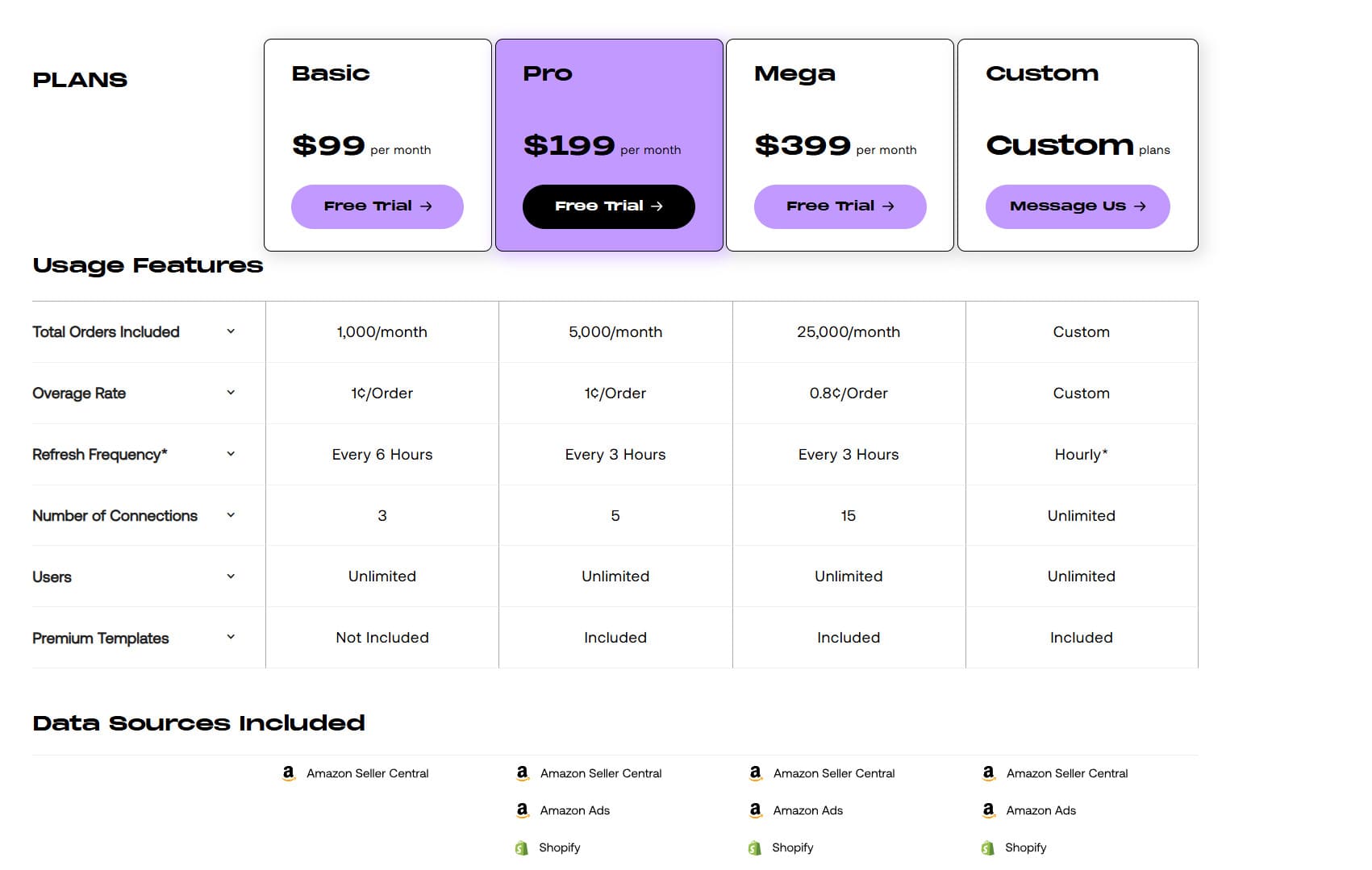
The beauty of Gorilla ROI is flexibility and the good old sheets but you must be technical, understand Google Sheets, careful to not ruin any data point or change formulas. Moreover, the starter plan is insanely costly. You have to pay at least $99 to get started? I would have initially thought it’s around $15-$20 since they provide no dashboard or AI, only sheets.
10. Scale Insights: Best for AI PPC & Advertising Profitability
Scale Insights is not just an Amazon analytics tool, it is an automation tool like Easync for your Amazon related workflows. Apart from showing you organic vs PPC stats, trends and inventory restock information, Scale Insights lets you create automations. Apparently, automations are only limited by your imagination (or as their landing page claims).
Scale Insights emphasizes AI automation of bids and budgets, but the UI lets you see the effect. Trustpilot testimonials on their site say “The interface is incredibly intuitive and the insights helped me optimize my campaigns and increase ROI”, which matches my impression. The “Insights” section provided recommendations, like pausing low-ROI ads or adjusting budgets. On the TACoS side, Scale Insights produced a neat chart comparing how ad spend was boosting (or not) organic sales, which is what a seller would want to see.
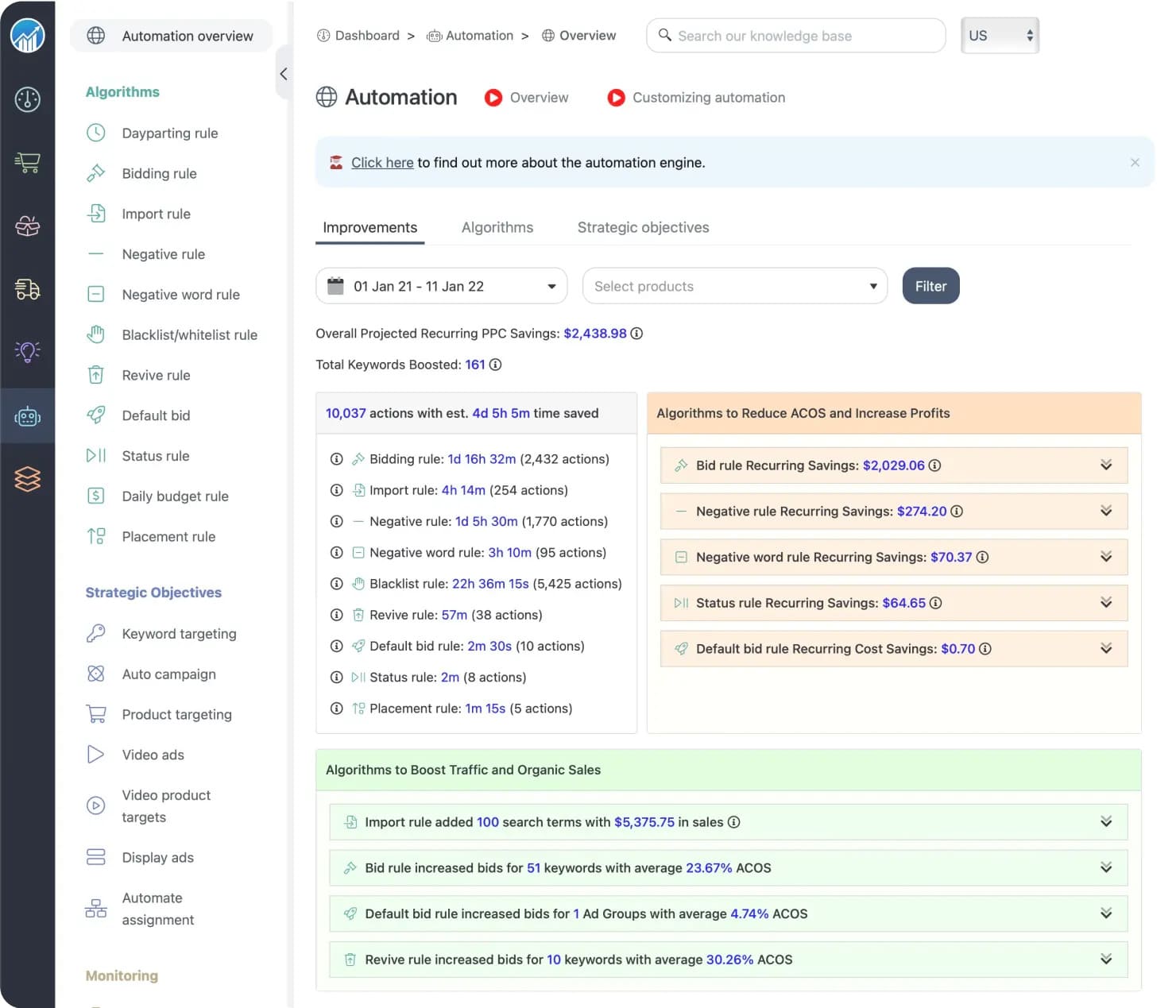
However, I like the idea of creating your own automations like when to increase prices, what to restock, when to get alerts on restock or orders, or fulfilment disputes, etc. Users are creating rules like increasing ad bid when TACoS is still below a certain threshold etc to truly automate their Amazon ads and product management.
I love that Scale Insights also includes every feature in all the plans. You only pay more if you want to automate more ASINs. Otherwise, you can stay on smaller plans if automations are not your primary concern (but it should be, given how good reviews are). You can start with a $78/mo plan with 5 automations which is a bit high in my opinion but given the level of customization you can do in your automations, the decision is how easily you can afford keeping a high subscription.
Comparison Table: Best Amazon Analytics Tools
| Tool Name | Primary Specialty | Key Analytics Features | Inventory Management | Free Plan / Trial Availability | Starting Price |
|---|---|---|---|---|---|
| Amazon Brand Analytics | Free native customer insights | Search Query Performance, Market Basket | Basic Seller Central reports | 100% Free (Brand Registry required) | $0 |
| Sellerboard | Affordable P&L & profit tracking | Real-time profit dashboard, FBA fee audit | Basic restock alerts | 1-month free trial | $19/month |
| Easync.io | Operations, Inventory & Auto-Fulfillment | 24/7 Price/Stock Monitoring, Margin Tracking | Automated Repricing & Auto-Fulfillment | Start Trial available (7-day free trial) | $49.99/month |
| Helium 10 (Profits) | All-in-one suite & keyword analytics | P&L tracking, Keyword rank, Market share | Inventory planner module | Free limited tier / Paid plans | $129/month |
| Jungle Scout | Sales & PPC performance analytics | AccuSales estimator, Ad spend attribution | Inventory manager | Paid plans with money-back guarantee | $49/month; Amazon Analytics features from $79/mo |
| Novadata | Enterprise BI & FBA fee reconciliation | SP-API raw data lake, profit attribution | Advanced FBA fee audits | Custom enterprise pricing / Demo | $29/month |
| Conjura | Multi-channel ecommerce BI | Blended TACoS, LTV analysis, Cross-channel | Multi-channel inventory visibility | Custom pricing / Demo | $299/month |
| Shopkeeper | Visual SKU profit tracking & mobile | SKU margin cards, 72+ FBA fee tracking | Inventory restock alerts | Free trial available | $20/month |
| Gorilla ROI | Google Sheets API data pipeline | Native spreadsheet formulas, custom P&L | Custom inventory formulas | Free trial available | $99/month |
| Scale Insights | AI PPC & ad profit attribution | TACoS vs Organic flywheel, Dayparting | Basic restock velocity | Free trial available | $78/month |
Bonus: Free Amazon Analytics Tools
If you’re a beginner, or on a budget, here are some free tools that you can use. Some of these are free while others have a free tier with the option to upgrade later. With decent effort, you can create your own dashboards, track sales, research product demand, and estimate profits.
- Amazon Brand Analytics: As mentioned above, Amazon Brand Analytics tool is great for Amazon keyword search, customer segmentation and behavior. With the help of API key, and some Claude, you can create your custom dashboards that pull data from Amazon Brand Analytics and calculate your own metrics.
- Seller Central Business Reports: Amazon’s Seller Central provides business reports which are a great starting point to track sales, traffic, ASIN level performance, etc. You can have detailed reports on performance, traffic, sales, etc that you can download and analyze with an AI tool.
- Amazon FBA Revenue Calculator: Amazon FBA Revenue calculator is a free tool to estimate fees, fulfillment costs, delivery costs, margins, and potential profit before you source a product. It is a great research tool by Amazon that provides a close to accurate estimate of what I can expect if I want to sell a product that I know the price and dimensions of.
- Keepa: Keepa has historical data on over 7 billion Amazon products including price hikes, drops and trends. Although it is not exactly an analytics tool for sellers, it is great to keep track of your competitor products, research product trends, and decide how to price your own product. With the paid plan, you can unlock some seller analytics benefits but the free extension is generous enough.
How to Choose the Right Amazon Analytics Stack
You might need more than 1 product from this list if you have a seriously large sales operation. For beginners, I would recommend starting with Amazon Brand Analytics and Seller Central’s own reports. If you want a tool, Sellerboard is a great starting point since it’s cheap and provides decent reporting.
For larger operations, consider Helium 10 and Conjura. You can pair any one of these with Easync.io if you also sell across multiple channels. Since Conjura takes data from Shopify, eBay and other sources, it pairs perfectly with Easync to create order repricing and auto-fulfillment automations.
If you want to only track profits, Nova is great. I would not suggest you Gorilla ROI in any use case except if you love Google Sheets. Other than that, Sellerboard, Scale Insights and Conjura are really great picks. Every tool has a slightly different value proposition and it depends on what metric you want to track. If you prefer ad spend tracking over profits, go for a tool that is designed for that.
Frequently Asked Questions (FAQ)
What are the best free Amazon analytics tools?
Amazon Brand Analytics tool is the best free tool to track your products, sales data, and ad spend. If you want to track profits, generate better insights from your inventory data, and ROAS and TACoS metrics, you can go for a paid tool like Sellerboard, or Helium 10 which have a free trial but paid plans.
Why is Amazon inventory management sales analytics critical for FBA sellers?
Inventory issues directly hit your profits and tools that track sell-through rates and stock prevent stockouts and overstocking. Many tools like Sellerboard, Novadata, Conjura, Shopkeeper include inventory forecasting or alerts as a part of their standard offering. Keeping the right stock levels across FBA warehouses ensures you don’t waste money or miss sales.
How does Easync differ from static Amazon analytics tools?
Easync is not an Amazon analytics tool, it is designed to automate sales across Shopify, eBay, Walmart and Amazon storefronts. Easync lets you list the same Amazon products on other platforms, track orders, autoplace them in Amazon, and sync all the data while calculating basic metrics like sales, orders, and profits.
What’s the best Amazon Inventory Management and Analytics Tool?
Sellerboard is one of the best Amazon inventory management and sales analytics tools for sellers who want accurate profit tracking, inventory visibility, outstocked and overstocking insights and alerts. It is also one of the most affordable Amazon sales analytics tools in the market for beginners and small sellers.
How much do Amazon analytics tools cost?
Amazon’s own brand analytics tool is free. Third party tools like Helium10, Easync, and Sellerboard etc operate on subscriptions starting from $20 to several hundred for Helium 10 and Conjura. Costs depend on tiers which unlock AI features and more reporting functionality.
What’s the best analytics tool for multi-channel sellers using Amazon, eBay, and Shopify?
For multichannel analytics, Easync and Conjura are the best tools but service a completely different use case. Easync is an automation software to resell your Amazon inventory to Shopify, eBay, WooCommerce stores without managing additional infrastructure. It tracks your profits and orders and auto-fulfill orders on Amazon. Conjura is purely an analytics tool which combines data from multiple channels to provide detailed insights.
Do I need a separate tool for TACoS and PPC tracking?
Not necessarily. Many Amazon seller analytics tools already calculate ACoS, TACoS, ROAS, and advertising profitability, but dedicated PPC platforms provide much deeper campaign optimization and automation.

Eugene Stepnov – Author
Eugene is a senior e-commerce strategist with over 10+ years of experience in dropshipping, online arbitrage, and marketplace compliance. At Easync. Eugene has experience in developing multi-account management technologies, such as Gologin and secure browser solutions, providing Easync users with a head start in regulatory compliance and platform changes.