Key Takeaways
- Focus on proven niches like clothing, tech accessories, pet supplies, and eco-friendly products rather than chasing random trends in 2026.
- Automation tools like Easync handle product importing, real-time stock monitoring, auto-ordering, repricing, tracking sync, and multi-account workflows—saving hours daily.
- Profit comes from healthy margins (15-30%), reliable suppliers, and solving clear problems for a specific target audience.
- Start small with 10-30 products, test with modest ad budgets, and scale only after consistent sales and positive feedback.
- This article includes a comparison table of traditional e-commerce versus dropshipping, plus a FAQ section addressing common beginner questions.
What Is Dropshipping & Why It’s Beginner-Friendly in 2026
Dropshipping is a business model where you sell products through your online store without holding any inventory. When a customer orders from your dropshipping store, you forward that order to a dropshipping supplier who ships the product directly to the buyer.
The order flow is straightforward: customer places order → your store receives it → supplier ships to customer → you keep the margin.
In 2026, the global dropshipping market continues its rapid expansion. After reaching approximately $243 billion in 2024, projections suggest the market could hit $500 billion by 2026, growing at nearly 29% annually. E-commerce now accounts for roughly 24.5% of global retail sales, creating massive opportunities for new sellers to sell online.
Why it works for beginners:
- Low upfront costs (often under $500 to launch)
- No warehouse or inventory storage needed
- Location-independent operations via cloud-based tools
- Easy testing of product ideas with minimal upfront investment
Before diving into the niches, here are three terms you’ll encounter throughout:
- Niche: A focused market segment (e.g., “eco-friendly pet toys” rather than “pet products”)
- Supplier: A platform or company that holds inventory and fulfills orders
- Automation tool: Software that handles repetitive tasks like price monitoring and order forwarding
10 Beginner-Friendly Dropshipping Niches to Try in 2026
This section covers concrete, proven niches suitable for first-time dropshipping store owners. Each niche below explains why it works in 2026, lists example products, and provides a simple marketing angle.
The goal is to give you business ideas you can realistically launch with limited budget and experience—not vague categories, but actual products you can start researching today.
Clothing & Apparel
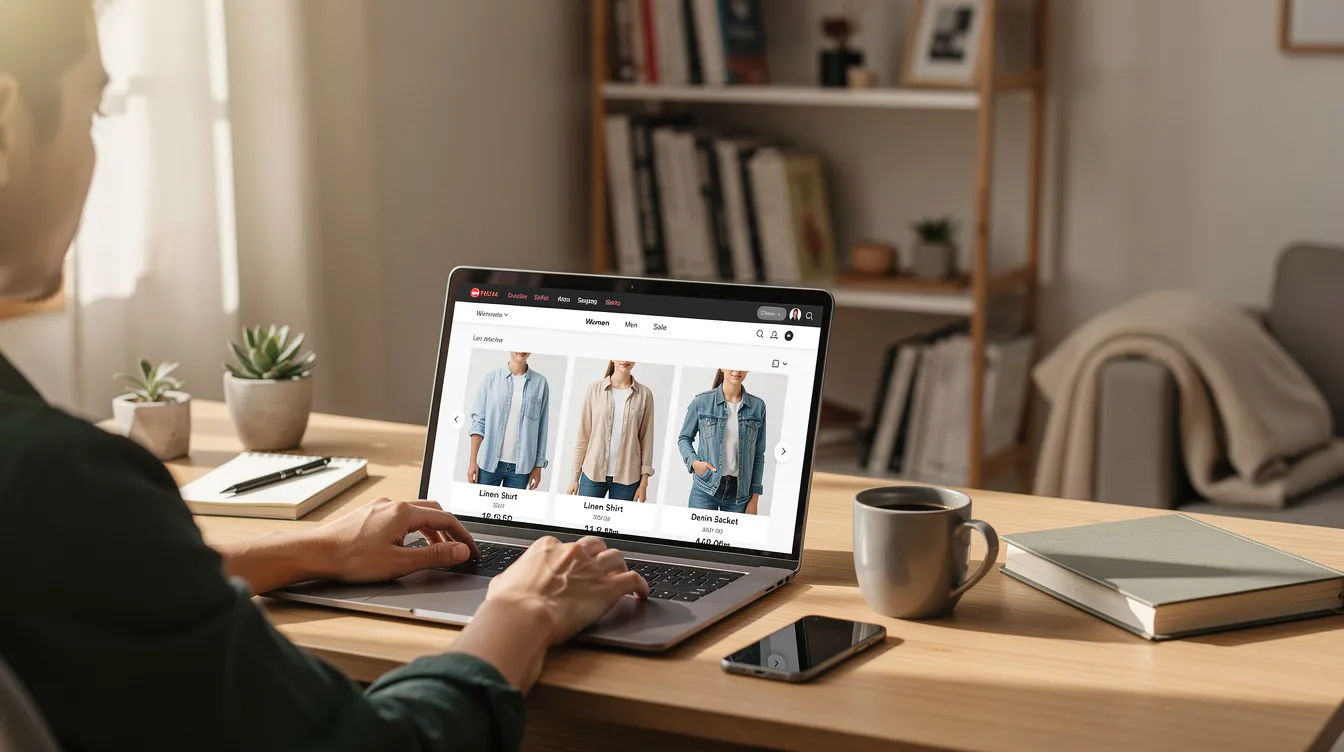
Clothing remains one of the best dropshipping business ideas because demand never disappears. Fashion cycles constantly, sub-niches are endless, and customers frequently buy multiple items.
Concrete sub-niche ideas:
- Custom t-shirts with anime or gaming graphics
- Hoodies for streetwear enthusiasts
- Gym wear like seamless leggings
- Vintage-inspired tees
- Dog-owner merch (e.g., “Dog Mom” shirts)
Print-on-demand services like Printful eliminate sizing inventory risk entirely. You create designs, the supplier produces only after orders, and you test quickly without buying stock upfront. Profit margins typically range from 30-50% on items costing $5-10 to produce and selling for $25-40.
Marketing angle: Instagram Reels showing outfit transitions, TikTok user-generated content, and SEO targeting long-tail keywords like “anime hoodies for teens” (1,000-5,000 monthly searches with low competition).
Focus on 1-2 specific clothing niche segments first rather than launching a massive general catalog.
Tech Accessories
Constant device upgrades fuel steady demand for tech accessories through 2026. Global smartphone accessory sales exceed $100 billion in 2025, with consistent 10% yearly growth.
Drop-ready products:
- Phone cases and screen protectors
- USB-C cables and wireless earbuds
- Power banks (lightweight, under 100g)
- Laptop sleeves and car phone mounts
- Compact chargers
These items are light, cheap to ship, and perfect for bundling. A case + protector + charger bundle can boost average order value by 40%.
Position your ecommerce store around a clear angle: “rugged travel tech,” “cute kawaii cases,” or “eco-friendly charging gear.” Marketing through TikTok unboxing videos, Reddit communities like r/techdeals, and short demos showing durability can drive conversion rates up to 3%.
Pet Products & Supplies
Rising pet ownership makes pet supplies ideal for repeat business and emotional branding. US pet industry spending hit $147 billion in 2024 with 8% annual growth, driven by “pet humanization” trends where pet owners treat animals like family members.
Product ideas:
- Durable chew toys ($3-7 cost)
- Personalized collars and tags
- Harnesses for small dogs
- Orthopedic pet beds
- Slow-feeder bowls and grooming gloves
- Travel carriers
Focus on a specific pet segment—small dogs, indoor cats, or aquarium hobbyists—to stand out in this market. Safety and durability matter significantly here, so order samples and pick suppliers with strong reviews.
Marketing angle: Pet TikTok content featuring funny costume videos, partnering with micro-influencers (under 10k followers, $50-200 per post), and running seasonal promotions like Halloween dog costumes.

Baby & Toddler Essentials
Births happen every year regardless of economic conditions, creating evergreen demand for baby products. The global market exceeds $90 billion and grows approximately 6% annually.
Dropship-safe items:
- Organic cotton onesies ($4-8 cost)
- Bibs and muslin swaddles
- Silicone feeding sets
- BPA-free sippy cups
- Soft teething toys
- Montessori nursery decor
Trust and safety are critical in this dropshipping niche. Highlight certifications (GOTS organic, CPSIA compliant), materials (BPA-free, organic cotton), and clear age labels. Target new-parent pain points: convenience, easy cleaning, and baby-safe materials.
Market through parenting blogs, mom groups on Facebook, and Pinterest boards focused on nursery decor or baby shower gifts. Pinterest delivers high-intent traffic with 4x ROI on baby-related pins.
Home Decor & Organization
Remote work persistence and social media aesthetics keep home improvement popular through 2026. Online home goods sales reach $200 billion in 2025, growing 12% annually.
Beginner-friendly items:
- Printable wall art ($2-5 cost)
- LED string lights
- Throw pillows and small rugs
- Acrylic desk organizers
- Fabric storage bins
- Motivational posters
Avoid heavy furniture—shipping costs are 5x higher and returns are complicated. Start with lightweight decor pieces.
Curate collections around themes like Scandinavian minimalism, boho, cottagecore, or gamer setups. Visual before/after photos boost conversions by 25%. Heavy use of lifestyle photography, room shots, and Instagram/Pinterest mood boards drives inspiration-based purchases in the home decor market.
Fitness & Wellness Gear
Wellness culture and home workouts continue expanding through 2026. The global wellness industry is projected to reach $7 trillion, up from $5.6 trillion in 2024.
Specific products:
- Resistance bands ($3-6 cost)
- Non-slip yoga mats
- Foam rollers and massage balls
- Water bottles with time markers
- Ankle weights and jump ropes
Avoid overly technical or regulated products like supplements. Focus on simple, safe gear anyone can use.
Position the store around clear angles: gear for busy professionals, travel-friendly workouts, or beginner-friendly home routines. Marketing through short workout tutorials on TikTok/Instagram Reels and free PDF workout guides as lead magnets can convert 15% of downloads into subscribers.
Beauty & Skincare Accessories
For beginners, focus on tools and accessories rather than complex formulations to avoid regulatory complications. The global beauty tools market reaches $25 billion, growing 8% annually.
Example products:
- Synthetic makeup brush sets ($2-5)
- Silicone beauty blenders
- Jade facial rollers
- Reusable makeup remover pads
- Cosmetic bags and vanity organizers
These items pair well with social proof and can be branded around self-care rituals. High quality products with excellent customer reviews build credibility quickly.
Collaborate with micro-influencers for honest reviews and simple tutorial videos. UGC showing real skincare routines can lift sales 10-20% at low cost.
Eco-Friendly Everyday Products
Consumer concern for sustainability grows steadily into 2026. The eco-friendly products market was valued at $12 billion in 2024, expanding at 25% annually.
Concrete products:
- Insulated reusable bottles ($4-8)
- Stainless-steel straws and bamboo cutlery
- Organic tote bags
- Beeswax food wraps
- Reusable coffee cups
- Glass spray bottles
Be transparent about materials and certifications (e.g., Ocean Bound Plastic) to avoid greenwashing accusations and build trust with eco-conscious shoppers.
Brand around low-waste lifestyles: “zero-waste starter kits” or “plastic-free kitchen bundles.” Content marketing showing before/after waste reduction drives 30% repeat buys from loyal customers focused on customer satisfaction.
Gaming & Streaming Accessories
The expanding gaming and creator economy keeps this niche in high demand. The global gaming market reaches $250 billion in 2026, up 12% year-over-year.
Product ideas:
- RGB mouse pads ($5-10)
- Wireless gaming headsets
- Controller stands and grips
- Cable organizers and desk sleeves
- Microphone boom arms
- Decorative LED light strips
Choose either console, PC, or mobile gaming as a primary focus to simplify branding. Create themed bundles like “starter streaming setup” or “RGB desk makeover kit” to raise average order value by 50%.
Promote through Twitch clips, Discord communities, and TikTok “before/after” desk setup videos. Gaming communities show 5x higher loyalty when engaged authentically.
Print-on-Demand Gifts & Merch
Print-on-demand lets beginners sell customized gifts without holding inventory—perfect for birthdays and holidays throughout 2026. Holiday sales can represent 40% of annual revenue.
POD items:
- T-shirts and hoodies with custom designs
- Mugs with dates and names
- Canvas family prints
- Phone cases and posters
- Tote bags and desk calendars
Focus on specific audiences: teachers, new parents, dog lovers, or gamers. Tailor designs to their inside jokes and lifestyle. Mockups showing products in realistic scenarios convert 2x better than plain photos.
Use seasonal events (Valentine’s Day, Mother’s Day, Christmas 2026) to plan limited-time designs and promotions.
Using Automation Tools like Easync to Simplify Beginner Dropshipping
For beginners who lack time and experience, automation tools are essential for running a profitable dropshipping business without burning out. Manual order processing, stock checking, and price updates consume hours daily and lead to costly errors.
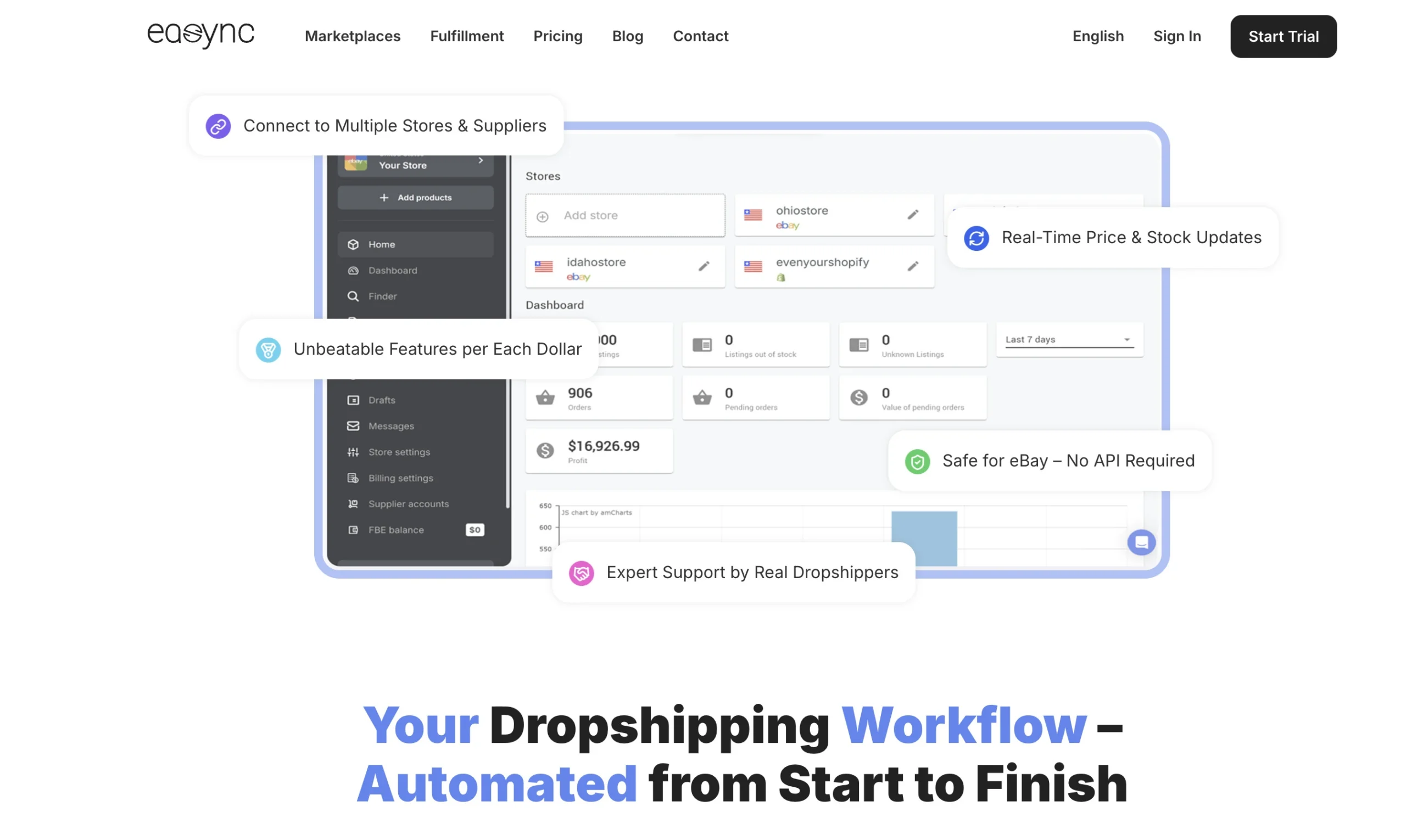
Dropshipping software Easync supports automated product importing from marketplaces like AliExpress or Amazon, real-time stock and price monitoring to prevent overselling out-of-stock items, auto-ordering directly to suppliers when customer orders come in, repricing rules that dynamically adjust prices to maintain 20-30% profit margins amid competitor changes, tracking synchronization that uploads shipment statuses to your store for customer notifications, and multi-account workflows for managing listings across Shopify, eBay, and Amazon simultaneously.
These features reduce operational time from hours to minutes daily and minimize errors like stock discrepancies that plague 40% of novice dropshippers. By automating the repetitive tasks, you free up time for marketing, customer service, and strategic decisions that actually grow revenue.
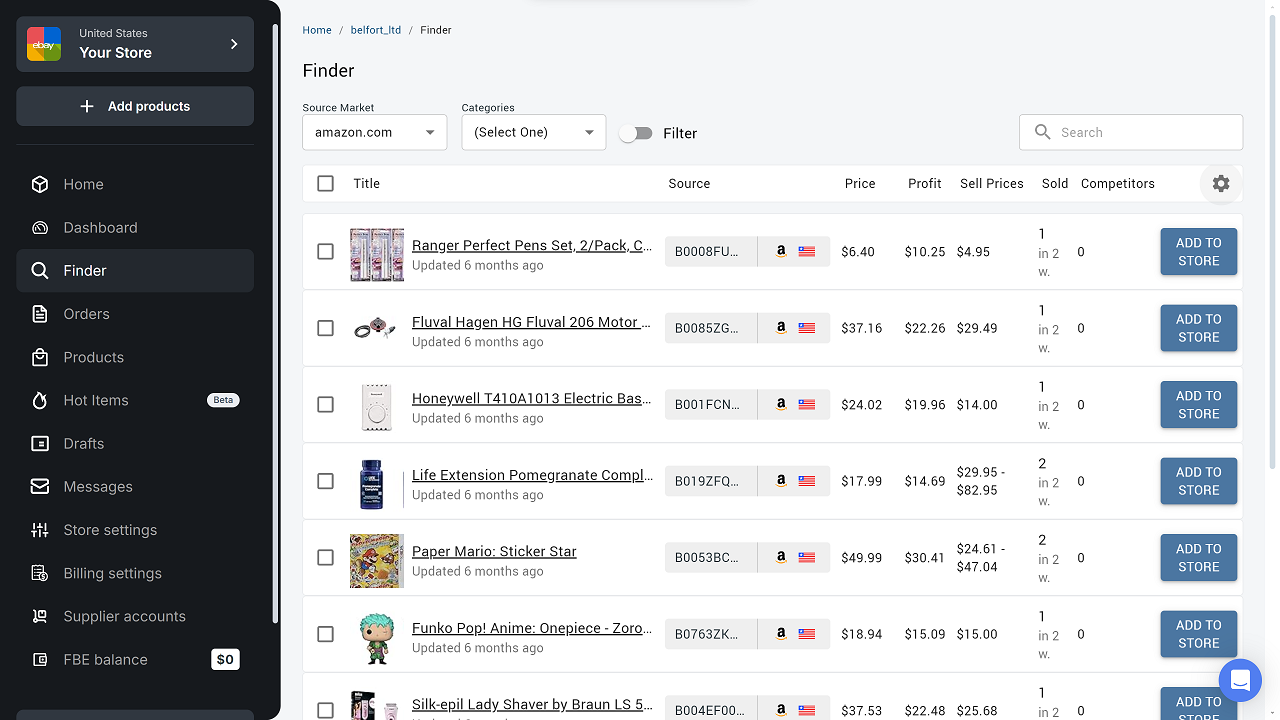
Start with just a few automated rules basic repricing and stock updates and expand as your store grows. Using automation early makes scaling to more products and sales channels smoother and less stressful. User reports indicate 90% error reduction and 5x faster scaling when automation is implemented from the beginning.
How to Choose the Right Dropshipping Idea as a Beginner
Not every profitable business idea is right for every person. Fit and genuine interest matter because you’ll spend months building something passion niches retain beginners 2x longer than random selections.
Steps to narrow down your dropshipping ideas:
- Assess personal interests and knowledge areas
- Validate demand using market research tools
- Analyze competition and potential profit margins
- Calculate realistic margins after all costs
- Test with small ad spend before full commitment
Focus on solving a clear problem or desire for a specific target audience rather than picking random trending products. Combine qualitative checks (do you understand this audience?) with quantitative checks (search volume, competition, expected margin).
Commit to one idea long enough to test properly. Constantly switching niches is the fastest path to failure.
Validate Demand with Simple Research
Use Google Trends to check whether interest in a product category is rising, stable, or falling over 2023-2026. A 20-50% upward trend signals viability.
Practical steps:
- Search your niche keyword on Google Trends and adjust the timeline to 2-3 years
- Scan Amazon, eBay, and TikTok Shop bestseller lists—top 100 items average 1,000+ reviews
- Read customer reviews to find recurring complaints and unmet needs your store could address
- Note which products appear in “frequently bought together” sections for bundle ideas
Start with a small set of products and use basic ad tests ($10-50) or organic posts to see which items get clicks and saves. A 2%+ conversion rate validates demand before scaling.
Understand Competition and Profit Margins
Search your main keywords and note leading stores, their pricing, and how they present products. Look for gaps you can exploit: poor photos, missing size guides, slow shipping estimates, or weak branding.
Calculating rough margins:
| Component | Example Cost |
|---|---|
| Product cost | $10 |
| Shipping | $3 |
| Platform fees (5%) | $1.25 |
| Ads (10%) | $2.50 |
| Total cost | $16.75 |
| Retail price | $25 |
| Margin | $8.25 (33%) |
Aim for 15-25% sustainable margins after all costs. Avoid ultra-low-price items where the margin disappears after ads.
Focus on dropshipping products with enough perceived value to justify a healthy markup—bundles, branded sets, or items solving specific problems command higher prices.
Practical Steps to Launch Your First Dropshipping Store
This section provides a simple roadmap from idea to first sale for 2026 beginners. The logical flow: pick niche → choose platform → find suppliers → connect automation like Easync → build product pages → test marketing.
Keep the store small at launch—10-30 products maximum. Quality listings with clear product photos, honest descriptions, and straightforward policies matter more than catalog size.
Set a modest timeline of 30-60 days from research to launch. Perfectionism kills more dropshipping businesses than competition.
Find and Vet Suppliers
Choosing reliable suppliers involves evaluating product quality, shipping times to your target market, communication speed, and return policies.
Vetting checklist:
- Order 3-5 samples to test build quality and packaging
- Verify actual delivery time to major markets (aim for 7-14 days)
- Confirm tracking numbers are provided consistently
- Check real-time stock availability through supplier dashboards
- Review supplier reliability ratings and merchant feedback
Integrate suppliers with automation tools like Easync to keep stock and prices synced automatically. When the supplier ships, your customers receive tracking updates without manual work.
Document a simple comparison checklist to evaluate suppliers side by side before committing.
Set Up Your Store and Product Pages
Choose a beginner-friendly e-commerce platform that supports dropshipping and automation tools. Shopify ($29/month basic) remains popular, with free-tier dropship apps available.
Key elements of high-converting product pages:
- Strong title with primary keywords
- Clear benefits (not just features)
- Dimensions, materials, and shipping timeframes
- Real-life photos showing products in use
- Size charts where applicable
Add basic trust elements: contact page, simple returns info, and social proof once reviews accumulate. A store sells better when customers feel confident about support.
Test pages on mobile first—85% of 2026 shoppers browse and buy on phones.
Drive Your First Traffic and Sales
Low-budget traffic strategies for beginners:
- Organic TikTok/Instagram content (10-20 posts weekly)
- Joining relevant Facebook groups and providing value
- Basic SEO-optimized blog posts targeting long-tail keywords
- Small, tightly targeted ad tests ($5/day) to one hero product
Collect email addresses from day one with a basic newsletter signup or discount popup. Email lists become valuable assets for encourage repeat business.
Track early metrics: click-through rate, add-to-cart rate, and conversion rate. These numbers reveal where to improve. Use early customer feedback to refine product selection, photos, and descriptions quickly.
Comparison: E-Commerce vs Dropshipping (Pros & Cons)
Dropshipping is one form of e-commerce, but beginners should understand the trade-offs between holding inventory versus using the drop shipping model. Each approach suits different situations, budgets, and goals.
Comparison Table
| Model | Main Pros | Main Cons |
|---|---|---|
| Traditional E-Commerce | Higher profit margins (40-60%), full branding control with custom packaging, faster shipping (2-5 days), stronger customer loyalty through consistent experience | Requires $5,000-50,000 upfront capital, needs warehouse storage (10-20% of costs), fulfillment operations burden, dead stock risk (30% unsold inventory typical) |
| Dropshipping | Low startup cost ($100-500), no inventory storage required, easy product testing and pivoting, simple scaling to hundreds of products, location-independent operations | Lower margins (20-40%), less control over shipping speed and packaging, supplier dependency, potential 15-20% of complaints relate to delivery delays |
Who each model suits:
Traditional e-commerce works better for established brands with capital, wanting full control over customer experience and willing to manage operations. Dropshipping suits beginners testing market demand, those with minimal upfront investment available, and entrepreneurs prioritizing flexibility over maximum margins.
Many successful dropshipping business owners eventually transition to hybrid models—holding bestsellers in inventory while dropshipping slower movers.
Common Mistakes Beginners Make (and How to Avoid Them)
Many beginners fail for predictable, avoidable reasons. According to industry data, 80% of trend-chasing stores fail within 90 days.
Typical mistakes and fixes:
| Mistake | Fix |
|---|---|
| Chasing every viral trend | Focus on evergreen niches with consistent demand |
| Ultra-saturated generic niches (e.g., plain phone cases) | Target micro-niches with specific audiences |
| Ignoring 10-20 day shipping times | Check supplier shipping estimates upfront; 50% cart abandonment comes from slow delivery concerns |
| Underpricing products below 20% margin | Calculate all costs including ads before setting competitive pricing |
| Relying on single supplier | Maintain backup suppliers; outages hit 25% of single-source stores |
| Skipping sample orders | Always test product quality before listing |
Treat the first store as a learning project. Adjust based on sales data rather than emotions. Most profitable dropshipping business owners failed multiple times before finding what works.
Final Thoughts: Turning a Beginner Idea into a Real Business
Success in 2026 dropshipping comes from choosing a clear niche market, finding reliable fulfillment partners, and using tools like Easync to handle repetitive tasks. The most profitable dropshipping products aren’t necessarily the trendiest—they’re items with consistent demand, healthy margins, and audiences you understand.
Starting small, validating with market research, and improving step by step beats waiting for a “perfect” idea that never comes. Pick one niche from this list, set a 30-60 day launch goal, and commit to testing and learning from real customers.
Dropshipping is not instant riches. It’s a low-risk way to learn e-commerce, build customer loyalty, and potentially grow your own brand over time. The global market opportunity exceeds $500 billion—there’s room for beginners willing to put in consistent effort.
FAQ: Dropshipping Business Ideas for Beginners
These questions address common concerns that weren’t fully covered in the main sections above.
How much money do I need to start a dropshipping business in 2026?
Many beginners can start with $200-1,000 covering store platform fees (Shopify basic at $29/month), a domain ($15), initial test ads ($100-200), and sample products ($50-100). Costs increase if you purchase premium themes, professional branding assets, or run aggressive ad campaigns.
The main investment is learning and testing, not bulk inventory purchases. Unlike traditional e-commerce requiring 20-50% of revenue in inventory, dropshipping lets you start lean and reinvest profits.
Do I need a registered business to begin dropshipping?
Legal requirements vary by country and region. Many beginners start by researching and testing ideas as a sole proprietorship, then formalize a legal entity once they see traction (typically around $1,000/month profit).
Check local tax obligations and consider consulting a small-business advisor for specific legal guidance. In most jurisdictions, you can legally test the business model before incorporating.
How long does it usually take to get my first sale?
Timelines vary, but motivated beginners actively driving traffic often see a first sale within 1-4 weeks. Passive approaches (“build it and they will come”) rarely work—marketing efforts are needed from day one.
Expect 0.5-2% conversion rates initially. Track progress weekly and tweak product pages, pricing, or ad targeting based on early data rather than waiting passively. Each adjustment teaches you what your target market actually responds to.
Can I run a dropshipping store while working a full-time job?
Yes—many people run dropshipping as a side project in 2026. The key is using automation tools to reduce manual work. With software like Easync handling auto-ordering, price monitoring, and tracking updates, you can manage a store in 5-10 hours weekly.
Batch tasks (content creation on weekends, supplier communication during lunch breaks) and choose a small catalog with simple marketing strategies to avoid burnout.
How do I know when it’s time to scale or add more products?
Scale after several products consistently sell, your store maintains 2%+ conversion rates, and customer reviews are positive. Use sales data to decide which related products or bundles to add successful items suggest what your target audience wants more of.
Expand gradually so high quality products, shipping reliability, and provide excellent customer service remain consistent as the catalog grows. Adding 5-10 related products at a time prevents operational overwhelm while building customer loyalty through reliable experiences.

Noah Edis is a freelance writer and systems engineer with a wealth of experience in modern hardware and software. When he’s not working on his latest project, you can find him playing competitive dodgeball or pursuing his personal interest in programming. At Easync, Noah helps thousands of sellers optimize their eBay and Amazon businesses by providing automation tools and practical guidance on account health, pricing, and inventory management.