
Key Takeaways
- Amazon does allow multiple seller accounts in 2026, but only for clear, legitimate business reasons such as separate brands, distinct legal entities, or different geographic markets.
- All related accounts are effectively linked in Amazon’s systems: a suspension or policy breach on one account can quickly jeopardize every connected account you operate.
- Every seller account must have its own complete set of unique details, separate bank accounts, distinct tax IDs, unique contact information, and individual login credentials. Sharing or “cloning” details between accounts is a common cause of related-account suspensions.
- Before opening additional accounts, document your business justification thoroughly and be prepared to present this documentation to Amazon if questioned during verification or audit.
- This guide walks you through when adding accounts makes strategic sense, how to open them correctly, and concrete tactics to manage multiple seller accounts safely at scale.
Introduction: Why Sellers Use Multiple Amazon Accounts
Amazon selling has transformed dramatically between 2015 and 2026. What started as a side hustle for many has evolved into a sophisticated multi-brand, multi-marketplace business model. Serious sellers now routinely consider operating more than one Seller Central account not to game the system, but to structure their growing empires effectively.
When we talk about multiple Amazon seller accounts, we mean more than one active professional Seller Central account operated by the same person, company, or group of related companies. Yes, you can have multiple Amazon seller accounts in 2026, but only if each account has a defensible business purpose and remains compliant with Amazon’s policies.
Consider these real-world scenarios: A US brand launching a separate EU entity in 2025 to handle VAT and local regulations. A manufacturer running separate D2C and wholesale accounts to serve completely different customer segments. A brand house separating its premium and budget labels to protect positioning and prevent cross-contamination of reviews. These represent the kind of legitimate business structures where multiple accounts make sense.
This article covers Amazon’s official rules, when extra accounts genuinely make sense, the pros and cons you should weigh, the correct setup process, day-to-day management best practices, and how Amazon detects connections between accounts.
Can You Legally Have Multiple Amazon Seller Accounts?
Amazon’s default position is clear: one account per seller per region. This “one account per seller” principle exists because Amazon’s quality control systems depend on consistent identity tracking. However, since policy updates around 2020-2021, Amazon has explicitly allowed multiple accounts where there is a legitimate business need.
Let’s address the legal question directly. Having more than one Amazon account is not illegal under law in the US, UK, EU, or India. Amazon is a private platform with contractual terms of service that sellers agree to upon registration. What matters is compliance with Amazon’s specific policies. That said, violating Amazon’s internal rules, such as circumventing suspensions, manipulating reviews, or evading policy bans can lead to permanent bans across all your selling accounts.
Amazon has historically accepted several types of legitimate business justification:
- Operating separate registered companies with distinct legal structures
- Managing distinct brands with different market positioning and customer bases
- Providing manufacturing or 3PL services for unrelated clients
- Operating in clearly separate product categories or business models (for example, FBA private label versus FBM wholesale)
- Expanding to different regions where separate legal entities are required for tax compliance
Amazon’s list of legitimate reasons is intentionally non-exhaustive. Any justification must be defensible if Seller Performance audits your account. Keep documents ready: incorporation papers, brand registrations, supplier contracts, and any other evidence demonstrating genuine business separation rather than artificial account multiplication.
One non-negotiable rule applies across all scenarios: all accounts must be in good standing. Opening a new account to escape bad metrics, negative feedback, or a past suspension is considered policy abuse. Amazon’s systems are specifically designed to detect this behavior, and accounts opened for evasive purposes are highly likely to be shut down, often taking your legitimate accounts with them.

When Does It Make Sense to Add a Second (or Third) Seller Account?
Not every seller needs multiple accounts. The complexity and risk generally only make sense once revenue, catalog size, or brand architecture justify the additional overhead. Before expanding, consider whether the strategic benefits outweigh the operational burden.
Launching a distinct brand with different positioning. In 2025, you might spin off a budget-friendly product line targeting price-sensitive customers. Keeping this on a separate account prevents negative reviews or aggressive pricing from affecting your premium flagship brand’s reputation.
Creating a separate legal entity for a successful product line. A private label brand that has grown into its own profit center might warrant its own company structure for liability protection, potential future sale, or investor requirements.
Expanding to new geographic markets. Moving from Amazon.com to Amazon.de, Amazon.co.uk, and Amazon.in often requires separate entities for tax compliance. VAT registration in Europe or GST registration in India may necessitate distinct accounts with their own tax IDs.
Serving two completely separate companies or business models. If you manufacture products for your own brand while also providing white-label services to unrelated clients, separate accounts keep operations, inventory, and customer relationships cleanly divided.
Acquisition or exit planning. Isolating a brand in its own Amazon seller central account with its own financial records simplifies due diligence when selling that brand or bringing on investors.
Before opening a new account, run this internal test: Does the new account have its own P&L? Its own legal entity or brand registration? Its own geography or customer segment? Could a single seller account handle the plan without added risk? If you can accomplish your goals with one seller central account using brand separation within that account, the simpler approach is usually better.
Advantages of Running Multiple Amazon Seller Accounts
When multiple accounts align with genuine business needs, they offer meaningful strategic benefits:
- Risk diversification. If one account faces a listing error, stranded inventory, or temporary suspension, your entire company doesn’t go to zero overnight. Revenue spreads across accounts and marketplaces, providing a safety net.
- Cleaner data and analytics. Each account focuses on a single brand, region, or business model. Measuring advertising ROAS, repeat purchase rates, and inventory turns becomes straightforward without cross-contamination from unrelated products.
- Brand positioning flexibility. Separate amazon accounts allow entirely different branding, pricing strategies, A+ Content tone, and customer service scripts tailored to each target audience. Your luxury brand doesn’t share a storefront with your discount outlet.
- Simplified acquisitions and exits. Selling just one brand or region is far easier when it already lives in its own seller account with its own financial records and performance history. Buyers appreciate clean separation.
- Organizational control. User permissions and access can be limited per account. Different teams for EU marketplaces versus North American marketplaces reduce internal errors and fraud risk.
- Testing and experimentation. A secondary account can serve as a testing ground for new product categories, pricing strategies, or operational approaches without risking your primary revenue stream.
Disadvantages and Added Risks of Multiple Seller Accounts
The risks of managing multiple accounts are often underestimated, especially by sellers attracted to the idea of unlimited expansion.
Account linkage creates cascading risk. Amazon’s internal systems link related accounts. A serious policy violation—inauthentic complaints, review abuse, counterfeit flags—on one account can rapidly trigger suspensions on all associated accounts. Your entire Amazon business could go dark because of one problem.
Workload multiplies significantly. Each account requires daily monitoring of customer messages, returns, catalog hygiene, inventory levels, VAT/GST or sales tax filings, and performance notifications. What seems manageable with one account becomes overwhelming with three or four.
Financial and administrative overhead increases. Separate business bank accounts, credit cards, tax registrations, and bookkeeping are required for each account. Accounting, legal, and compliance costs rise accordingly.
Duplicate listing risks. Listing the same ASIN across multiple accounts you control (without legitimate reason) can trigger enforcement for manipulating the marketplace or creating artificial competition.
Appeals become complex. When an account is suspended for “related accounts,” you often must explain the full structure and history of all linked accounts to regain access. Inconsistencies between accounts’ explanations can permanently damage credibility with Seller Performance.
Operational mistakes compound. Accidentally logging into the wrong account, mixing up inventory shipments, or applying the wrong pricing across accounts creates problems that wouldn’t exist with a single seller account.
How to Correctly Open a Second Amazon Seller Account
Before walking through the process, one warning bears repeating: never open a “backup” account to escape poor metrics, bad feedback, or a suspension. Amazon’s systems are designed to detect exactly this behavior, and attempting it typically results in losing both accounts.
For a seller operating a healthy account who has genuine business reasons for expansion, here’s how to approach opening a second account in 2026:
Step 1: Define your business rationale. Write down specifically why a separate account is necessary. Are you launching a new amazon seller account for a distinct brand? Expanding to a new region? Separating business models? This documentation becomes your defense if Amazon asks.
Step 2: Establish a separate legal entity if applicable. For maximum clarity and protection, many sellers create a new LLC, corporation, or international subsidiary for each account. This isn’t always required, but it strengthens your legitimate business justification.
Step 3: Gather unique documentation. Each account needs its own:
| Account Element | Requirement |
|---|---|
| Bank account | Separate bank accounts for deposits |
| Credit card | Different credit cards for billing |
| Email address | Separate email address for the account |
| Tax ID | Unique EIN, VAT, or GST number |
| Business address | Distinct business address if possible |
| Phone number | Dedicated phone line |
Step 4: Register truthfully. While Amazon no longer always requires pre-approval for every additional account, be completely honest in registration forms about the real owner and business links. Misrepresentation is grounds for immediate termination.
Step 5: Prepare to contact Amazon seller support. Have your written explanation ready if Amazon questions the relationship between accounts. Proactive transparency is always better than defensive explanations after a problem arises.
Example scenario: A US company that opened its first account in 2021 decides in 2026 to expand to Europe. They incorporate a UK limited company, open a European business bank account, register for UK and EU VAT, and create a new Amazon seller central account for the European marketplace with all distinct details. Each account operates independently while the parent company documents the legitimate relationship.
After creating accounts, verify every detail legal name, address, tax info, deposit method—matches your uploaded documents exactly. Mismatches between registration data and supporting documents are a frequent cause of early account verification failures.
Critical Rules to Remember When Operating Multiple Seller Accounts
The safest approach is to treat each Seller Central account as a fully independent business while understanding that Amazon can see they are related at the ownership level. This mindset shapes every operational decision.
Policy red lines you cannot cross:
- Using additional accounts to relist blocked ASINs
- Bypassing category restrictions or gating requirements
- Escaping poor account health or performance metrics
- Manipulating pricing, Buy Box rotation, or competitive positioning
- Generating artificial reviews or sales velocity across accounts
Amazon expects only one seller account per region by default. Regions include North America (US, Canada, Mexico), Europe (UK, Germany, France, Italy, Spain, etc.), Japan, Australia, and the Middle East. Separate accounts per country within a region are sometimes required for tax or legal reasons—particularly in India, where GST numbers create legal separation requirements and sellers cannot maintain multiple accounts under the same GST number.
All accounts must maintain strong performance metrics. Order defect rate, late shipment rate, valid tracking rate—repeated failures on any one account can trigger broader compliance reviews across all linked accounts. Amazon’s enforcement doesn’t exist in silos.
Keep consistent, accurate business documentation for each account. Invoices, supplier contracts, and brand authorization letters should be organized and accessible. Amazon may request this evidence without much notice following unusual listing expansion or customer complaints.
Build an internal “compliance file” documenting how and why each account was set up: dates, entities involved, brands managed, and the specific legitimate business need each serves. This simplifies responses if Amazon ever audits your account structure.
Best Practices for Day-to-Day Management of Multiple Amazon Seller Accounts
Managing multiple accounts demands systems and discipline. Without structure, operational chaos leads to mistakes that trigger suspensions.
Assign clear internal ownership. Each account should have a responsible manager who monitors account health, performance notifications, customer messages, and payouts daily. Accountability prevents things from falling through cracks.
Create standardized SOPs. Document your processes for listing creation, price changes, inventory replenishment, customer support responses, and returns handling. When standards remain consistent across all accounts, quality stays high and training new team members becomes straightforward.
Use Amazon’s user permission system. Never share primary login credentials. Instead, invite staff with limited roles—Inventory Manager, Advertiser, Customer Service—to each account they need to access. This limits damage from employee mistakes or departures and creates audit trails.
Consolidate reporting externally. Even though accounts operate separately, leadership needs visibility across the entire account management structure. Build a central dashboard or spreadsheet tracking weekly sales, margins, advertising spend, and key metrics per marketplace. Patterns and problems become visible faster.
Audit access regularly. At least quarterly, remove user accounts for former employees and agencies. Rotate passwords and 2FA devices, especially on the primary owner login for each account. Former contractors with lingering access represent both security and policy risks.
Where Dropshipping and Automation Fit Into Multi-Account Amazon Operations
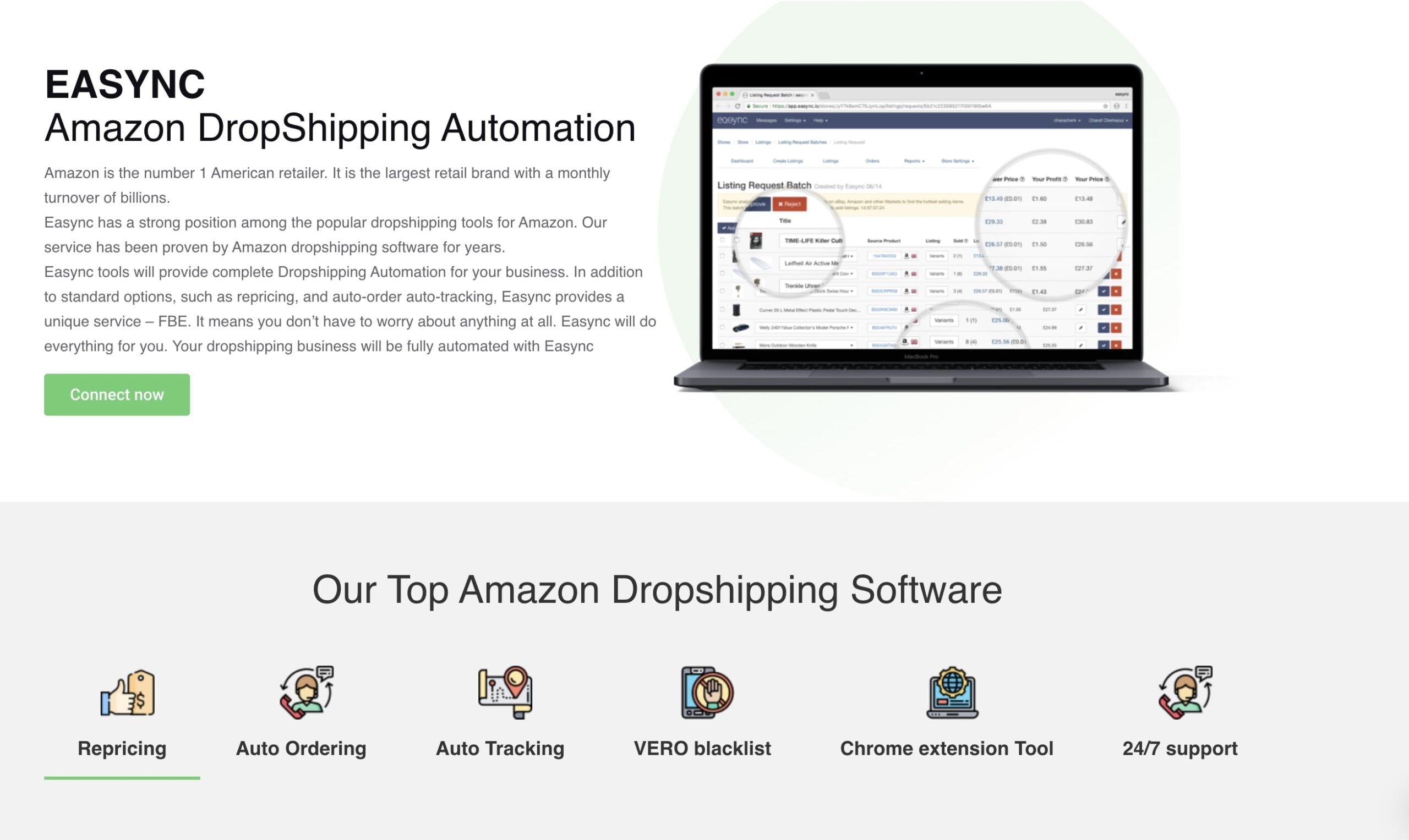
For sellers using Amazon dropshipping as part of a multi-account strategy, operational accuracy and access control become increasingly important as scale grows. Each seller account must maintain up-to-date inventory data, process orders within Amazon’s handling-time requirements, and upload valid tracking information consistently.
Automation platforms such as Easync.io are often used to connect Amazon accounts with reliable suppliers, automate order placement, synchronize stock levels, and submit tracking details without manual intervention, reducing the risk of fulfillment errors that can damage account health. At the same time, sellers managing multiple accounts or teams benefit from keeping login environments clearly separated.
Anti-detection browsers help organize access by isolating cookies and session data for each account, minimizing the risk of accidental cross-logins. Browsers like Gologin are widely regarded as suitable for managing multiple Amazon seller accounts, especially in team settings, as they allow controlled access and clean separation between accounts while still requiring full compliance with Amazon’s policies.
Technical Hygiene: Devices, IPs, and Digital Fingerprints
This section explains technical considerations for security and stability, not for hiding policy violations or evading detection.
Amazon can link accounts through multiple data points: device IDs, browser fingerprints, cookies, IP addresses, and login patterns. Even when obvious identifiers like bank accounts differ, these technical markers create connections in Amazon’s systems.
Maintain stable, consistent access patterns. Log in from the same secured office internet connection or consistent business VPN endpoints. Constantly changing networks—coffee shops, hotels, different residential connections, can look suspicious, especially combined with other risk factors.
Many sellers worry about same ip address issues. The reality is that legitimate businesses operating multiple accounts from the same location are common, and Amazon understands this. The problem isn’t shared IP, it’s using that shared access to run abusive schemes or circumvent policies.
Dedicate devices or user profiles where practical. Using separate browser profiles for each account prevents accidental cross-logins and cookie contamination. This is especially important if you manage client accounts or maintain a personal Amazon account alongside business accounts.
Limit third-party contractor access. Never give agencies or freelancers full owner credentials. Grant tailored permissions from within Seller Central. This reduces risk that their other seller clients create unintended related-account linkages through shared device fingerprints or login patterns.
All technical setups must comply with Amazon’s terms of service. The goal is keeping accounts secure and well-organized not creating artificial separation to hide policy violations.
How Amazon Detects and Links Multiple Seller Accounts
Amazon has spent over a decade building internal systems to detect related accounts and coordinated abuse. Assume these systems are sophisticated, even though exact algorithms remain secret.
Data points Amazon uses to link accounts:
| Category | Specific Identifiers |
|---|---|
| Legal/Business | Entity name, owner identity, business address |
| Financial | Bank account numbers, credit card details |
| Tax | Tax IDs, VAT/GST numbers |
| Contact | Phone numbers, email addresses, email domains |
| Technical | IP addresses, device identifiers, browser fingerprints |
| Operational | Overlapping product catalogs, brand registrations |
Sometimes accounts are linked legitimately same owner, different brands operating different seller accounts under documented business structures. This is acceptable as long as policies aren’t violated and performance remains strong. Amazon detect multiple accounts all the time; detection itself isn’t the problem.
Related account suspensions work like this: one account is suspended for a violation, Amazon identifies another account with strong links, and automatically suspends the second to prevent circumvention. This cascade effect makes it critical that every account in your portfolio maintains clean compliance.
Heavy overlap in behavior same ASINs, similar pricing and messaging, identical customer service patterns, adds to the risk of linkage being treated as abusive rather than legitimate. If your accounts truly serve separate business purposes, their operations should reflect that separation.
Keep records showing why accounts are separate but related. For example, document that your parent company operates two subsidiaries, each with its own Amazon presence for distinct product lines. Clear structure documentation simplifies appeals if you ever face a mistaken linkage or unfair suspension.
What to Do If One of Your Multiple Accounts Gets Suspended
When suspension hits, remain calm and avoid reactive decisions. Creating a “replacement” account after suspension almost always makes the situation worse Amazon specifically watches for this behavior.
Follow this order of operations:
- Identify the root cause of the original suspension
- Resolve issues on the suspended account first
- Do not create new accounts or shift operations during the appeal process
- Document everything for potential cross-account implications
Amazon frequently requires that the “oldest related account” be reinstated before other linked accounts are fully reactivated. Trying to work around this by opening a new amazon seller account triggers additional red flags.
Components of a strong Plan of Action (POA):
- Factual root cause analysis. What specifically went wrong? Don’t guess or offer generic explanations. Be precise about the violation—whether it involved inauthentic items, late shipments, policy misclassification, or something else.
- Concrete corrective actions already implemented. What have you already done to fix the immediate problem? Show receipts, updated SOPs, supplier changes, or whatever evidence demonstrates action.
- Long-term preventive measures. What systems are now in place to avoid account suspension in the future? Amazon wants to see that you’ve addressed the underlying business process, not just the symptom.
When multiple accounts are involved, your POA should acknowledge the broader business structure. Confirm that the same corrective measures are being implemented across every related account to prevent recurrence.
Document all communication with Amazon Seller Performance. Avoid contradictory explanations across different cases or accounts. Inconsistencies undermine credibility and can doom otherwise solid appeals.
For serious cases significant revenue at stake, complex multi-account structures, or repeated failed appeals, consider specialized e-commerce legal or compliance advisors with experience in multi-account suspensions and complex reinstatements.

Conclusion
Multiple Amazon seller accounts can be powerful tools for growing brands, but they magnify both opportunity and risk. The complexity is only justified when there’s a clear strategic, legal, or operational reason for each additional account.
The core message is simple: use extra accounts only where legitimate business need exists, and never as a shortcut around Amazon’s rules or a band-aid for poor performance. Accounts opened to escape problems or create artificial advantages rarely survive, and they often take legitimate accounts down with them.
Take time to audit your current structure. Confirm that each existing account has a documented business purpose, clean metrics, distinct details, and consistent, provable documentation. If you’re considering opening additional seller accounts, prepare your justification before you begin the registration process.
Treat compliance and account health as central assets of your Amazon business. Protecting those assets is more valuable than any short-term advantage gained from aggressive multi-account tactics. The sellers who thrive long-term on Amazon are those who build sustainable, policy-compliant operations—whether that means one account or several.
FAQ
How many Amazon accounts can one business have in practice?
Amazon does not publish a hard numerical limit such as “two accounts maximum.” Instead, they evaluate whether each account has a separate, legitimate business reason. Large brand groups and aggregators sometimes operate many accounts across regions and brands, but they typically have multiple legal entities, robust compliance teams, and documented structures supporting each. For smaller sellers, start with one additional account at most, prove you can manage it well for at least 6-12 months, and only then consider further expansion if there is a clear need.
Can I share the same warehouse or 3PL for multiple Amazon accounts?
Sharing physical logistics infrastructure between accounts is common and acceptable. Using the same FBA prep provider, warehouse, or fulfillment center for different accounts does not violate Amazon’s policies, as long as the accounts themselves follow Amazon’s rules. Keep inventory separated and clearly labeled by account and brand to prevent fulfillment errors or commingling issues that could lead to inauthentic complaints. Document all logistics arrangements so that if Amazon requests supply chain evidence, each account can provide clear invoices, packing lists, and shipping documents.
Is it safe to run multiple seller accounts from the same home or office internet connection?
Many legitimate businesses operate multiple accounts from a single office network, and Amazon is aware of this reality. Family members in the same household may each have legitimate selling operations. The main risks come not from shared internet alone, but from using extra accounts to bypass suspensions or run abusive schemes. Behavior and ownership structure matter more than IP addresses by themselves. Maintain consistent, secure login practices, use dedicated browser profiles or devices for each account where feasible, and ensure every account has a clean, policy-compliant purpose.
Can different family members each have their own Amazon seller account?
Amazon accounts are tied to real individuals and businesses, so in principle, separate adults in the same household can each operate their own legitimate business account. However, if Amazon detects that multiple household accounts are effectively controlled by the same person or used to circumvent policies, they may be treated as related accounts and face joint enforcement. Family members should maintain separate businesses with distinct legal entities, separate bank accounts, different tax IDs, and different product lines. Avoid coordinating in ways that mimic a single operation spread across duplicate accounts.
Do I need a new trademark for every additional Amazon seller account?
Amazon does not require a unique trademark per account. However, each brand participating in Brand Registry must have its own valid trademark in each region where protection is sought. Some sellers keep multiple brands (each with its own trademark) under one account, while others prefer to give major brands their own dedicated accounts for strategic or organizational reasons. Plan your trademarks and Brand Registry structures around long-term brand strategy first, then align account structures to match that plan, rather than creating accounts and brands in an ad hoc way.

Noah Edis is a freelance writer and systems engineer with a wealth of experience in modern hardware and software. When he’s not working on his latest project, you can find him playing competitive dodgeball or pursuing his personal interest in programming. At Easync, Noah helps thousands of sellers optimize their eBay and Amazon businesses by providing automation tools and practical guidance on account health, pricing, and inventory management.