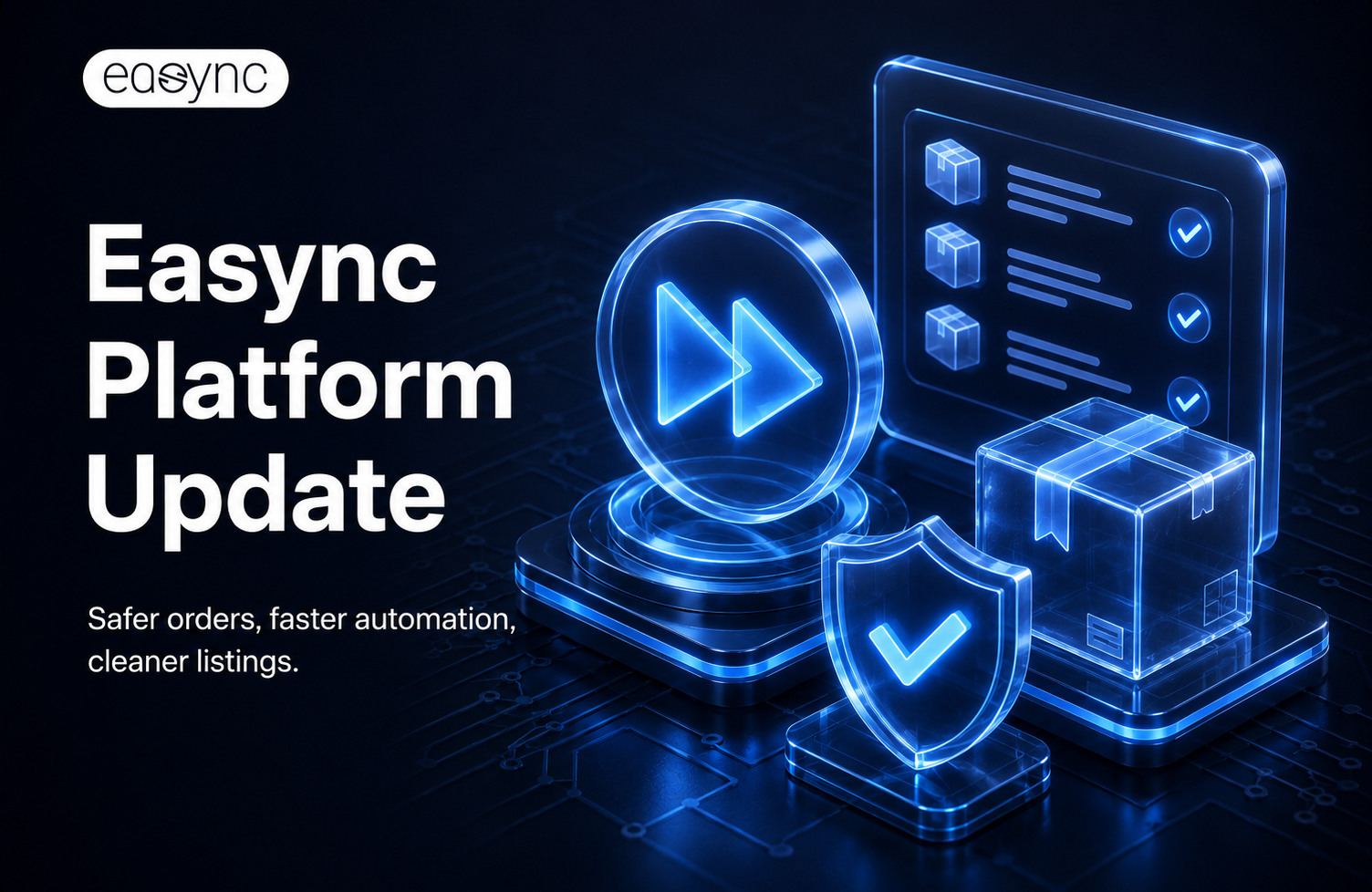
Easync Platform Update: Stronger Auto Ordering, Reliable Store Management, and a Smoother Selling Experience
This release focuses on the parts of the platform that sellers depend on every day. The priority was reliability: making sure orders are placed and confirmed without manual checking, stores stay connected as marketplaces change their requirements, and listings publish with accurate information.
The improvements span several core areas, including Auto Ordering stability, eBay store management, listing accuracy, and the billing experience. Together they reduce the number of moments where a seller has to step in and fix something by hand, which is exactly what an automation platform should be working toward.
Auto Ordering received the most attention in this update, since it sits at the center of order fulfillment. Alongside it, this release strengthens store connections, sharpens category mapping, and makes subscription payments more predictable.
Key Takeaways
- Faster Auto Ordering for gift card sourcing, so balance checks no longer slow down the order queue and checkout moves through more quickly.
- More stable order processing during peak activity, reducing the chance of stuck, missed, or interrupted orders.
- Automatic browser updates for Auto Ordering, helping orders keep pace with Amazon changes and avoid failures caused by outdated browser versions.
- Stronger protection against duplicate supplier orders, lowering the risk of double charges and fulfillment mistakes.
- Reliable Shopify subscription syncing across multiple stores, so each connected store keeps the correct plan without mix-ups.
- More dependable tracking updates, keeping delivery information current for both sellers and buyers.
- More accurate eBay category mapping, helping listings publish into the right categories and stay compliant with marketplace policies.
Taken together, these updates reinforce the reliability of the platform’s most important automation workflows. Order fulfillment becomes smoother, listings publish more accurately, and store management stays consistent across marketplaces, which means fewer manual corrections and a more predictable day-to-day operation.
Faster and More Reliable Auto Ordering
Auto Ordering received several improvements aimed at keeping orders moving cleanly through checkout, even during busy periods.
Previously, sellers who use gift card balance for sourcing could see balance checks accumulate in the ordering queue, which slowed down processing for everyone behind them. That bottleneck has been resolved. If you source with gift card balance, your orders now move through checkout faster and with fewer delays.
The platform also addressed cases where long-running ordering processes could stop during heavy activity. This is an important reliability gain: it reduces the chance of orders becoming stuck or being missed entirely when volume spikes, which is exactly when uninterrupted fulfillment matters most.
Finally, Auto Ordering now keeps its browser environment updated automatically. Marketplaces like Amazon change their pages and behavior regularly, and outdated browser versions are a common cause of order failures. By staying current automatically, the platform maintains compatibility and reduces failed orders without any action from you.
Because Auto Ordering is a core part of the platform, these improvements help ensure more reliable fulfillment workflows and reduce operational interruptions. For sellers running at scale, that translates into fewer failed orders, less manual intervention, and smoother order processing day after day.
Lower Risk of Duplicate Orders
One of the more costly issues in any automated fulfillment system is placing the same supplier order twice. Duplicate orders can mean duplicate charges, unnecessary refunds, and confused buyers.
This release adds an extra layer of protection that prevents an order from being processed again once a fulfillment confirmation has already been sent. In practical terms, the platform now recognizes when an order has already moved forward and avoids repeating it.
For sellers, this is a meaningful safeguard. It significantly reduces the risk of double-charging a supplier account and the cleanup work that follows a duplicate order. As order volume grows, protections like this become increasingly valuable, because a single overlooked duplicate at scale can quickly affect margins and customer trust.
This improvement reinforces the dependability of the platform’s core fulfillment process, helping orders flow through once, correctly, and without surprises.
Better Shopify Subscription Sync
For sellers managing one or more Shopify stores, keeping the correct subscription plan linked between Shopify and Easync is essential for predictable billing and uninterrupted access to features.
This update fixes subscription syncing so your active plan now stays correctly connected between Shopify and the Easync app. Just as important, plans are now tracked separately for each connected store. This prevents the kind of subscription mix-ups that can occur in multi-store setups, where the wrong plan could otherwise be applied to the wrong store.
The result is clearer billing and more reliable store management. Sellers operating multiple Shopify storefronts can trust that each one reflects its own correct plan, which removes a common source of confusion and reduces the need to verify billing manually.
More Reliable Tracking Updates
Accurate tracking information is one of the simplest ways to keep buyers informed and reduce support requests. When tracking stops updating, it creates uncertainty for both the seller and the customer.
This release fixes issues that could cause tracking events to stop updating for some orders. Tracking information now stays current more consistently, which lowers the chance of outdated delivery details reaching your buyers.
For sellers, this means fewer “where is my order” questions, less time spent investigating delivery status, and a smoother post-purchase experience. Reliable tracking supports better marketplace metrics and helps maintain buyer confidence, both of which matter for long-term account health.
More Accurate Category Mapping
Listing creation works best when products land in the right place. Incorrect categories can hurt visibility, trigger policy mismatches, and create manual cleanup work.
This update corrects inaccurate assignments in the Category Mapper. Listings should now publish into more accurate eBay categories, which directly improves how and where products appear to buyers.
The benefits here extend across the listing workflow:
- Listings are more likely to appear in the categories shoppers actually browse, improving visibility.
- Fewer category mismatches mean a lower risk of policy issues on eBay.
- Less manual correction is needed after publishing, which makes listing creation faster and easier to scale.
Accurate category mapping improves listing reliability and reduces failed or misplaced publishing, helping sellers expand their catalogs with greater confidence.
Strengthening the Platform for Scale
This release reflects a continued focus on the foundations that sellers rely on most. Auto Ordering, the engine behind reliable fulfillment, is now faster and more resilient under heavy load, with automatic browser updates that help it stay compatible with marketplace changes over time.
Stability improvements reach across the platform. Stronger duplicate-order protection guards against costly fulfillment mistakes, while more reliable tracking updates keep delivery information accurate for both sellers and buyers. These are the kinds of refinements that may go unnoticed on a quiet day but make a significant difference at volume.
Store management also becomes more dependable. Improved Shopify subscription syncing keeps billing accurate across multiple stores, and more accurate category mapping helps listings publish correctly the first time. Each of these reduces manual oversight and frees sellers to focus on growth rather than corrections.
For dropshippers and eCommerce sellers running daily automation, the practical impact is straightforward: fewer interruptions, fewer failed orders, clearer billing, and more accurate listings. That combination supports steadier operations and easier scaling as catalogs and order volume grow.
As the platform continues to evolve, updates like these help ensure automation remains reliable, scalable, and easy to manage for growing eCommerce operations.