Key Takeaways
- Reverse dropshipping means sourcing premium products from developed countries like the US, Canada, EU, and Japan, then selling them to consumers in emerging markets such as India, Brazil, UAE, and Southeast Asia. This flips the traditional China-to-US model on its head.
- The model focuses on high quality products branded, often luxury items that command higher profit margins and face less competition than the crowded gadget-selling market targeting Western consumers.
- Success depends on finding reliable suppliers who can ship internationally, mastering customs and duties, and understanding local demand and regulations in each target market.
- Automation tools like Easync eliminate most operational headaches by handling product importing, real-time price and stock monitoring, auto-ordering, repricing rules, tracking synchronization, and multi-account workflows.
- This guide covers benefits of reverse dropshipping, best product categories, how reverse dropshipping works step by step, a practical 2026 startup plan, common pitfalls, and a reverse dropshipping FAQ.
What Is Reverse Dropshipping?
Unlike traditional dropshipping, where merchants sell low-cost goods from China to buyers in the US and EU, reverse dropshipping flips the sourcing geography. You ship premium products from developed markets think US, Germany, or Japan—to buyers in emerging markets like Indonesia, Mexico, or Saudi Arabia.
The core mechanics remain familiar: you don’t hold inventory. You list products in your online store, collect payment when a customer orders, then forward that order to your supplier who ships directly to the buyer abroad.
Consider these examples: a US-based seller sources organic skincare from brands like Dr. Bronner’s and sells into Indian metro cities where 60% of urban women seek “clean beauty” but face counterfeit products locally. Another seller forwards Japanese mirrorless cameras from Sony to Latin American photographers dealing with limited local stock and inflated prices.
The key value proposition is access to authentic, high quality goods that are scarce, overpriced, or simply unavailable in target countries through 2026. This reverse dropshipping model can work B2C (direct to consumers via your dropshipping website) or B2B (selling to local boutiques and resellers).
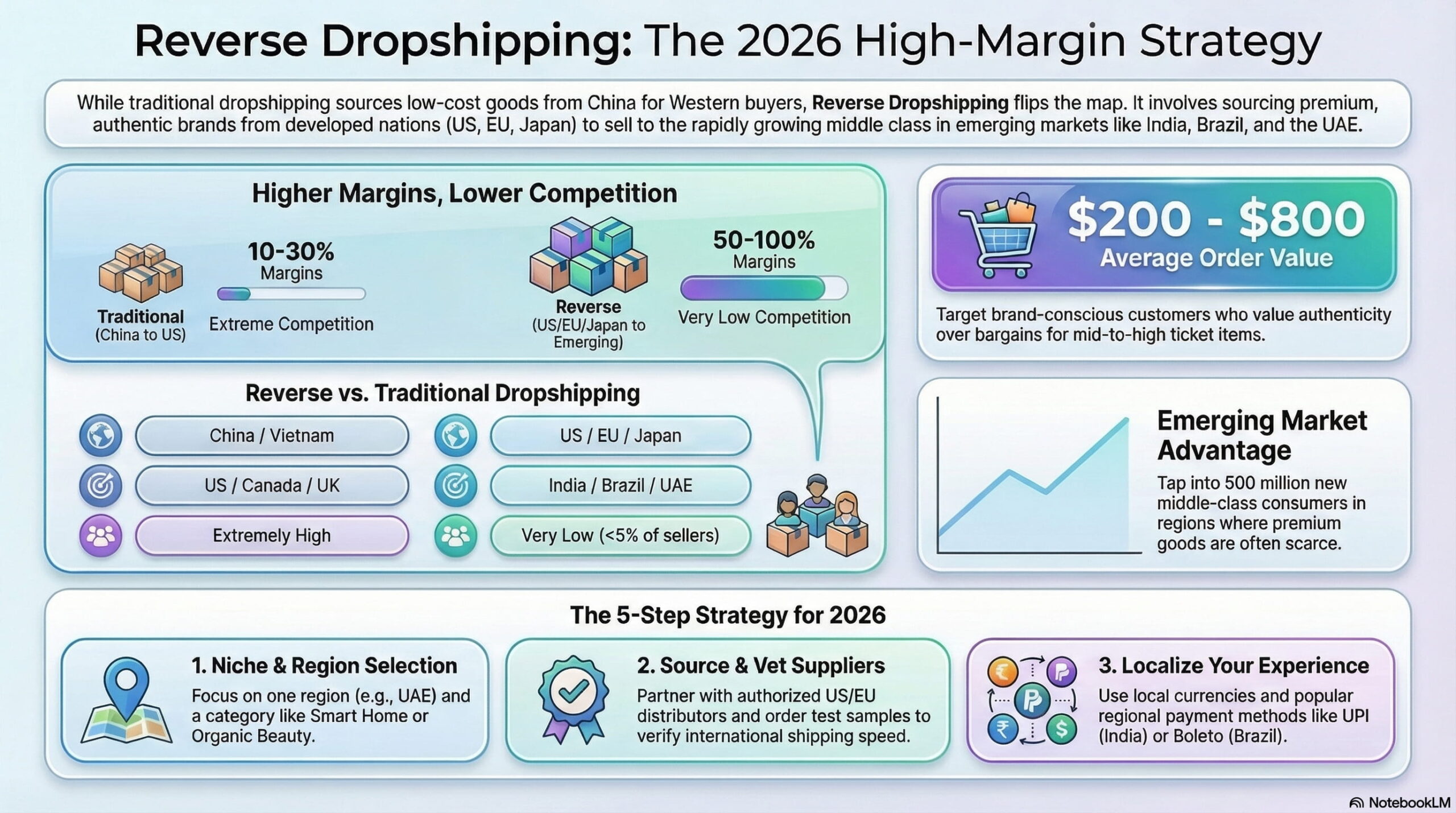
Dropshipping vs. Reverse Dropshipping
Understanding the distinction between these business models helps clarify why reverse dropshipping attracts entrepreneurs seeking less competition and potentially higher profit margins.
| Factor | Traditional Dropshipping | Reverse Dropshipping |
|---|---|---|
| Source Region | China, Vietnam | US, Canada, EU, Japan, South Korea |
| Target Markets | US, Canada, UK, EU | India, Brazil, UAE, Philippines, South Africa, Malaysia |
| Product Price Point | Low-cost ($10-$50) | Mid to high-ticket ($100-$2,000) |
| Competition Level | Extremely high (millions of stores) | Lower (<5% of dropshippers target these markets) |
| Customer Mindset | Price-sensitive, expects fast free shipping | Brand-conscious, values authenticity over bargains |
| Average Order Value | $20-$50 | $200-$800 |
| Margins | 10-30% typical | 50-100% achievable |
The traditional dropshipping model attracts price-sensitive customers expecting 3-7 day delivery. Return rates run 20-40% due to quality issues from unvetted overseas suppliers.
Reverse dropshipping demands better customer service across time zones and compliance with customs regulations, but offers substantially higher margins. Brand trust and perceived value drive purchasing decisions, not bargain hunting.
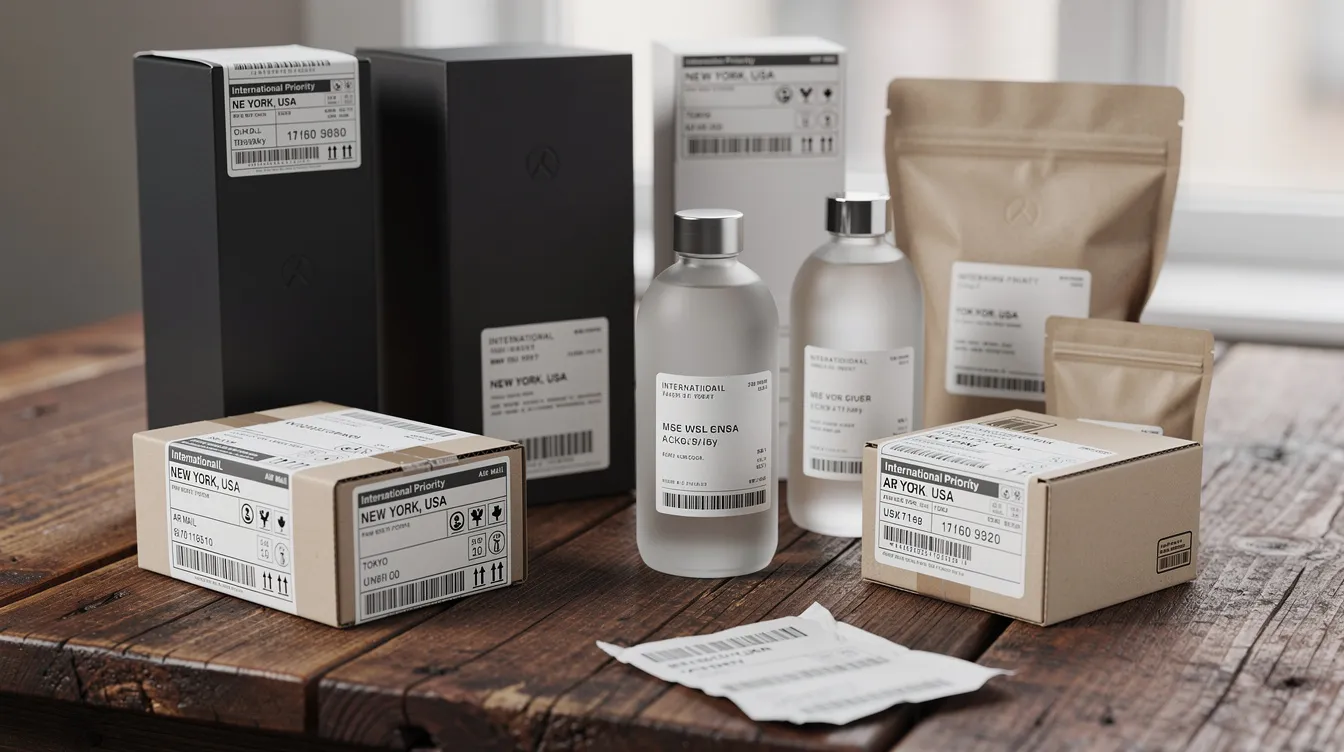
Why Consider Reverse Dropshipping in 2026?
Macro trends favor this dropshipping business model entering 2026. Over 500 million new middle-class consumers are emerging in Asia and Africa, smartphone penetration exceeds 70% in most target markets, and demand for authentic Western and Japanese brands continues rising.
Access to niche demand is your competitive edge. Many global consumers in developed markets want specific products—US-made supplements, German cookware, Korean skincare—but face counterfeits or inflated local prices. Counterfeit luxury goods plague 20-30% of items in markets like India and UAE.
Less competition makes customer acquisition more achievable. Far fewer sellers import authentic premium goods into these regions compared to the millions running dropshipping stores selling cheap gadgets to Americans on Shopify.
Consider this margin example: source a $120 US Vitamix blender, ship to Brazil, sell at $220-$260 factoring in 15% duty and shipping costs. Net profit reaches $60-90 per order. Compare that to the $3-8 margins typical in traditional models.
The strategic advantage extends beyond single orders. You can build customer loyalty and recurring revenue from professionals, expats, and affluent urban consumers who value quality products over racing to the bottom on price.
How Reverse Dropshipping Works (Step-by-Step)
The operational flow mirrors classic dropshipping but requires more attention to customs, duties, and product authenticity. Here’s how reverse dropshipping works:
Step 1: Niche and Country Selection Choose a target region (e.g., GCC countries in the Middle East) and 1-2 product categories based on demand and import rules. Conduct market research using Google Trends, local platforms, and social media to validate interest.
Step 2: Supplier Sourcing Find wholesalers, brand-authorized distributors, or manufacturers in developed countries. Verify business credentials, request samples, and confirm they can handle international shipping to your chosen target markets.
Step 3: Store Setup Create your ecommerce site with localized language, currency, and payment methods popular in your target region—UPI in India, Boleto in Brazil, or local card processors in the UAE.
Step 4: Listing and Pricing Import products with real images and specifications. Factor in shipping, customs, taxes, and healthy margin to set final prices. Clarify whether prices include duties (DDP) or not.
Step 5: Order Flow Customer places an order, you forward it to the supplier (ideally automated), supplier ships from the origin country, and tracking syncs to the customer. This is where automation becomes essential for inventory management.
Step 6: After-Sales Service Establish clear policies for returns, warranty claims, and defective items. Coordinate with suppliers to resolve issues without destroying your margins. Plan to offer excellent customer service despite time zone challenges.
Best Products and Niches for Reverse Dropshipping
Ideal reverse dropshipping products share common traits: they’re durable, hard to counterfeit, brand-sensitive, and clearly superior to local alternatives. Premium pricing works when international customers recognize genuine quality.
Before committing to any niche, verify import legality in your target markets. Electronics with radios, lithium batteries, supplements, and cosmetics face varying restrictions across countries.
Smart Home Devices and Home Automation
Smart home devices from brands like Philips Hue, Google Nest, Amazon Echo, Ecobee, and Arlo carry strong brand recognition in North America but often cost significantly more in markets like India, Thailand, and South Africa.
Strong candidates include thermostats, smart plugs, WiFi lighting kits, security cameras, video doorbells, and smart locks. Affluent city dwellers and remote workers drive demand for better home security and energy efficiency.
Technical considerations matter: check voltage standards (110V vs. 220V), plug types, and WiFi frequency compatibility (2.4 GHz is standard). Some countries require local certifications—BIS in India, ANATEL in Brazil—for wireless devices. Ignoring this results in seized shipments.
Premium Fitness Trackers and Smartwatches
Health awareness is surging in cities like São Paulo, Jakarta, Dubai, and Lagos. Fitness trackers and smartwatches represent high demand products with strong aspirational appeal.
Target products include Apple Watch Series 9, Samsung Galaxy Watch6, Garmin Forerunner and Venu lines, Fitbit Charge and Versa, and Polar Ignite for serious athletes. These devices benefit from frequent model refresh cycles and limited official distribution in many emerging markets.
Clarify regional compatibility (LTE bands, Apple Pay or Samsung Pay support, language availability) in your product offerings. Position these as lifestyle upgrades, not just tech gadgets, using influencer content from target countries.
High-End Fashion and Designer Accessories
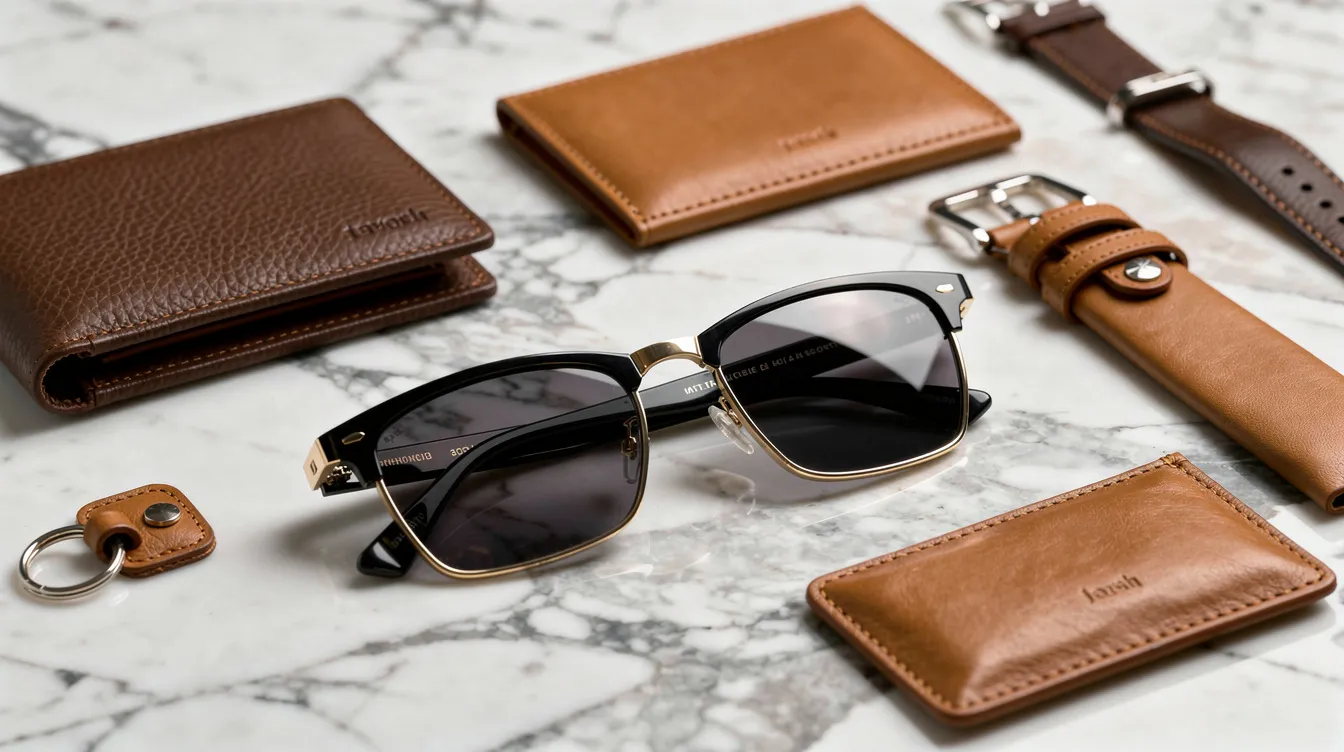
Genuine luxury brands like Gucci, Prada, Ray-Ban, and Rolex face heavy counterfeiting in developing markets—up to 80% fakes in Gulf markets. This creates opportunity for authentic sellers.
Focus on high-ticket items that ship easily: sunglasses, watches, belts, wallets, leather bags, and limited-edition sneakers. Source only from authorized distributors to avoid legal issues and include authenticity guarantees.
Consider cultural factors: preference for modest luxury in Gulf countries, specific colors considered lucky or unlucky in parts of Asia. Emphasize unboxing experience and warranty information to justify premium prices.
Organic Beauty, Luxury Cosmetics, and Advanced Skin Care Devices
Young professionals in Mumbai, Manila, and Hanoi increasingly seek Western and Korean beauty brands that are unavailable locally or frequently counterfeited. This niche offers excellent margins.
Concrete examples include Dr. Bronner’s and Burt’s Bees for organic beauty products, US-certified vitamin C serums, K-beauty brands, and at-home devices like Foreo Luna, NuFACE, and LED therapy masks.
Products benefit from trust in strict US/EU cosmetic regulations and “clean beauty” labeling. Check regulatory requirements: ANVISA registration in Brazil, SFDA in Saudi Arabia, and proper labeling in destination languages. Include usage guides and before/after visuals to build trust.
Premium Kitchen Appliances and Cookware
Affluent home cooks and food content creators in emerging markets seek US and European kitchen brands they discover on YouTube and Instagram.
High-value examples include Vitamix and Blendtec blenders, Breville and De’Longhi espresso machines, KitchenAid stand mixers, All-Clad and Le Creuset cookware, and Japanese chef knives from Shun or Global.
These high-ticket, durable items justify higher shipping costs. Practicalities include heavy shipments requiring double boxing and insurance, plus voltage and plug compatibility checks. Emphasize long warranties and “invest once, use for years” messaging.
Tech Gadgets, Laptops, and Professional Cameras
Creators, freelancers, and gamers in Vietnam, Egypt, and Colombia crave cutting-edge tech that may be overpriced or unavailable locally—MacBook Air/Pro, Dell XPS, Sony A7 series cameras, Canon R series, and DJI drones.
Opportunities exist in pro audio gear, streaming equipment, gaming laptops, and high-end monitors. Handle warranties correctly: clarify whether manufacturer coverage applies internationally or if you provide your own.
Research customs rules for lithium batteries, drones, and radio-transmitting devices carefully. Include region-specific power cords and adapters to reduce friction and returns.
Specialty Health Supplements and Wellness Products
Health consciousness is rising in India, UAE, and Malaysia, with strong trust placed in US/Canadian supplement standards (NSF, GMP certifications).
Products include omega-3 capsules, whey protein from well-known brands, multivitamins, collagen powders, and premium pet food supplements. Many pet owners in these markets also seek imported nutrition products.
This category is highly regulated. Research each target country’s rules on importing supplements—FSSAI in India, health ministries in Gulf countries. Focus on transparent labeling and third-party lab tests. Include disclaimers that products don’t replace medical treatment.
Finding and Vetting Reverse Dropshipping Suppliers
Supplier reliability makes or breaks a successful reverse dropshipping business. You’re depending on them for product authenticity, proper packing, and on-time international shipping to meet customer satisfaction expectations.
Where to find reverse dropshipping vendors:
- Official brand wholesale programs
- Regional distributors in the US/EU
- Trade shows (CES, Ambiente)
- B2B marketplaces (Faire, Tundra)
- Referrals from existing merchants
Vetting process:
- Verify company registration (DUNS numbers, business licenses)
- Request recent invoices or references
- Order paid samples shipped to your address to test packing speed, carrier choice, and customs labeling
Negotiate key terms:
- Minimum order quantities (ideally none for single-item dropshipping)
- Handling fees ($5-10 per order is reasonable)
- Allowed export markets (some brands restrict territories)
- Return and damage policies
Building long-term relationships pays off. Consistent volume, honest communication, and reliability can yield 10-20% discounts or territorial exclusivity over time. Finding reliable suppliers takes effort upfront but protects your reverse dropshipping business long-term.
Using Automation (Easync) for Reverse Dropshipping Operations
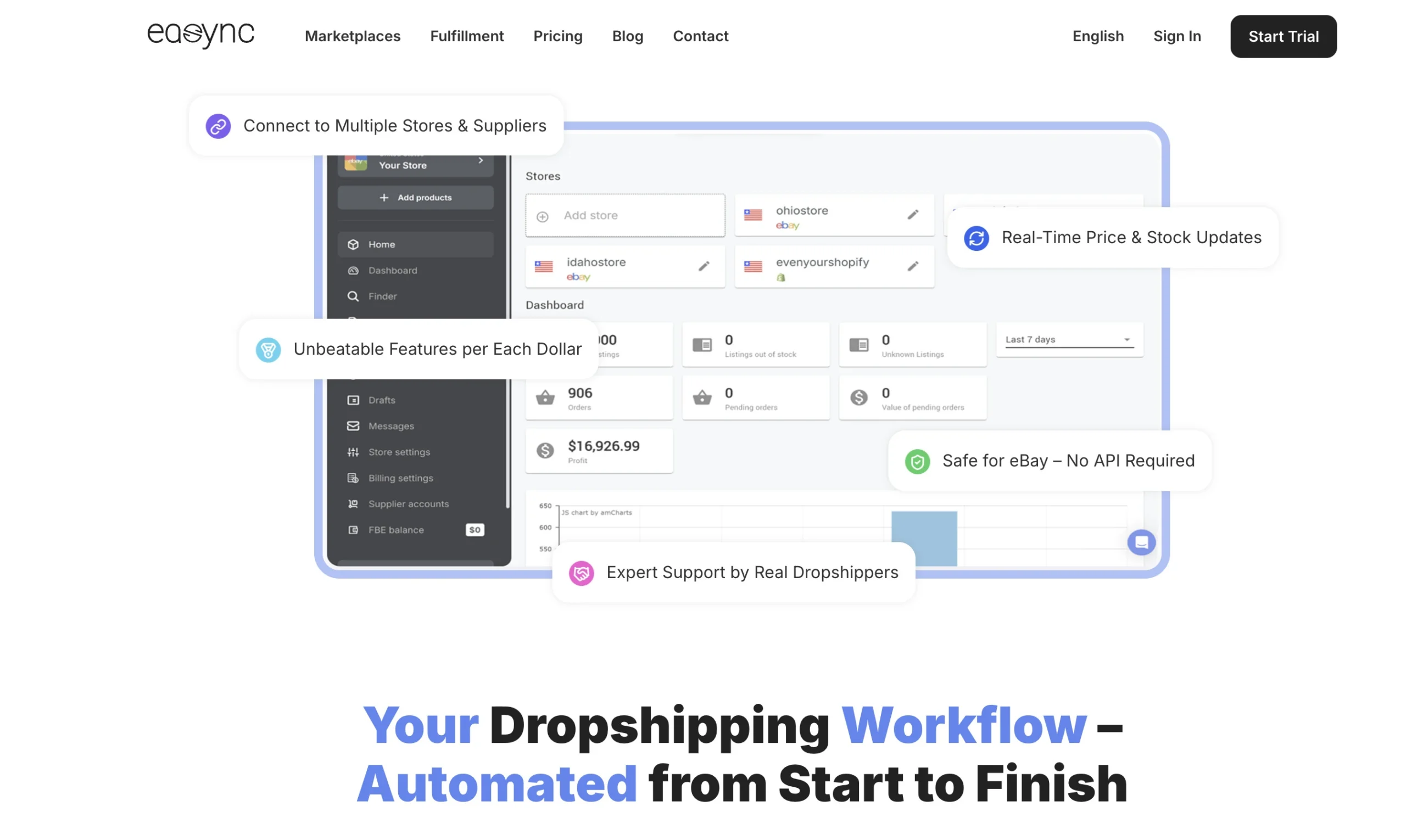
Managing dozens or hundreds of high-value cross-border orders manually invites errors, oversells, and customer complaints. For reverse dropshipping, using automation like Easync removes most operational headaches: Easync supports automated product importing from supplier catalogs directly into your store, real-time stock and price monitoring to prevent selling out-of-stock or mispriced items, auto-ordering that instantly forwards customer payments to suppliers with complete customs details, repricing rules that adjust automatically for currency fluctuations or supplier changes to protect margins, tracking synchronization that keeps international customers informed in their local time zones, and multi-account workflows enabling you to sell the same catalog across multiple stores or regions simultaneously.
These robust tools slash fulfillment time by up to 80%, reduce cancellation rates significantly, and free you to focus on market research, marketing strategies, and brand-building instead of copying and pasting orders.
How to Get Started with Reverse Dropshipping (Practical Plan)
This section provides a concrete 30-60 day action plan for beginners launching in 2026. Pick one region and one or two product categories initially don’t try serving the entire global market at once.
Step 1: Choose Your Target Market and Niche
Select 1-2 countries based on internet penetration, ease of doing business, and appetite for imported brands. India and UAE make strong 2026 starting points.
Use Google Trends, local marketplaces (Flipkart, Mercado Libre, Shopee), and social media hashtags in local languages to spot unmet demand. Look for complaints about fakes or poor quality—signals that reverse dropshipping could work.
Narrow to one primary category: “US organic skincare for Indian millennials” or “German cookware for Brazilian foodies.” Create a spreadsheet documenting niche ideas, average selling price, estimated landed cost, and potential margin for your business plan.
Step 2: Research Regulations, Duties, and Shipping Options
Before listing products, check customs rules, restricted items lists, and duty/tax rates using official government portals or logistics providers. India charges 18% GST plus 10-28% customs on electronics; Brazil’s combined import taxes can reach 60%.
Calculate landed cost scenarios for 2-3 core products: supplier price, outbound shipping, import duties, VAT/GST, and last-mile fees. Choose between DDU (duties unpaid) and DDP (duties paid) shipping models—be transparent on product pages about who pays what.
Compare carriers (DHL Express vs. postal services) on speed, tracking, and rates. Standardize on 1-2 carriers with good reliability in your region. Document assumptions before building your store.
Step 3: Source and Test Suppliers
Start with 3-5 serious dropshipping suppliers rather than a long unvetted list. Prioritize those with experience shipping to your target market since 2022-2024.
Place test orders shipped to your own address (or a trusted contact in-country) to evaluate real delivery times, packaging quality, and customs paperwork. Check invoice values and descriptions for accuracy and legality.
Agree on SLAs around dispatch time (within 2 business days), packaging standards, return handling, and stock update frequency. Capture photos and unboxing videos from test orders for marketing and product pages.
Step 4: Build and Localize Your Online Store
Choose a platform supporting cross-border selling (Shopify, WooCommerce) and set up essential pages: home, catalog, product pages, shipping & returns, and FAQ.
Localize for target customers: currency in local units (INR, BRL, AED), local language content, familiar payment options (local cards, wallets, COD where viable), and clear delivery time estimates. Highlight “authentic products imported directly from [origin country]” throughout.
Include trust-building elements: customer reviews, detailed specs, high-resolution original images, and security badges. Integrate Easync during setup to streamline product importing and order routing from day one.
Step 5: Launch, Market, and Optimize
Start with a soft launch: 10-30 carefully chosen SKUs and limited ad budget to gather data over 2-4 weeks. Use social media marketing channels effective in emerging markets—Instagram and TikTok short videos, YouTube reviews, and niche Facebook or Telegram groups.
Create content emphasizing authenticity: show original packaging, demonstrate the origin country, compare with common local sellers’ alternatives. Focus on concrete benefits like durability and performance.
Track key metrics: conversion rate, average order value, refund rate, and net margin per order. Use data to decide which products to scale and which to drop. Iterate pricing monthly and expand into neighboring countries once showing consistent profit.
Risks, Challenges, and How to Avoid Them
While reverse dropshipping offers high profit margins, specific risks require attention that typical “start a store in a weekend” advice ignores.
Major challenges:
- Higher shipping costs ($20-80 per order for express)
- Customs delays (10-20% of shipments in some markets)
- Regulatory compliance for electronics, cosmetics, supplements
- Counterfeit or grey-market stock entering your supply chain
- Currency volatility eroding margins (BRL fluctuations, for example)
Mitigation strategies:
- Choose compact, high-value products to optimize packaging and shipping costs
- Use reliable express carriers with strong tracking
- Research import rules thoroughly; insist on official invoices
- Revise prices periodically for exchange rate movements
- Set realistic customer expectations on shipping times and warranty handling
Keep an emergency budget for shipments lost or damaged in transit. Exceptional customer service and transparency reduce disputes and chargebacks significantly.
FAQ
This reverse dropshipping FAQ addresses practical questions that potential customers and new sellers commonly ask, covering legality, startup costs, and operational details relevant through 2026 and beyond.
Is reverse dropshipping legal in most countries?
Reverse dropshipping is generally legal, but compliance depends on following each country’s import rules, product regulations, and tax requirements. Electronics may require local certifications (BIS, ANATEL), supplements face ingredient restrictions, and cosmetics need registration in markets like Brazil. Before scaling, consult official customs websites or a trade lawyer familiar with your key markets. As long as you declare items accurately, pay applicable duties, and avoid restricted products, operating a reverse dropshipping business remains legitimate.
How much money do I need to start a reverse dropshipping business?
A lean launch works with $1,500-$5,000 covering store setup ($350/year for Shopify), test orders and sample shipments ($500-1,000), initial marketing ($500-1,500), and a cash buffer for refunds. More aggressive launches involving influencer partnerships, larger catalogs, and professional content creation may require $10,000 or more. The reverse dropshipping business model requires more capital than traditional dropshipping due to higher product costs, but returns justify the investment.
Can I run reverse dropshipping part-time?
Many founders start part-time during research and testing phases. However, time-intensive tasks like customer support across time zones, dealing with customs issues, and supplier coordination may eventually demand dedicated hours. Once you’re processing 50+ orders monthly, consider hiring a virtual assistant ($300-500/month) to handle support tickets and order tracking while you focus on growth.
Do I need my own company in the target country?
In most cases, you can sell online cross-border without a local entity by using international shipping and collecting payment online. However, some countries and payment gateways require local business presence for tax and compliance. India mandates GSTIN registration above certain thresholds, Brazil has complex import rules for commercial sellers, and EU markets require VAT registration for significant sales. Check specific requirements for your target countries before scaling operations.
Can I use multiple suppliers for the same product category?
Using multiple suppliers reduces stockout risk and prevents dependency on a single source. This approach requires careful inventory management and pricing synchronization exactly where automation tools like Easync help by tracking stock levels across suppliers and applying consistent repricing rules. Establish clear priority rules for which supplier handles orders based on stock availability, shipping speed to specific regions, or cost. This redundancy protects your business when one supplier faces delays or price increases.

Noah Edis is a freelance writer and systems engineer with a wealth of experience in modern hardware and software. When he’s not working on his latest project, you can find him playing competitive dodgeball or pursuing his personal interest in programming. At Easync, Noah helps thousands of sellers optimize their eBay and Amazon businesses by providing automation tools and practical guidance on account health, pricing, and inventory management.